
Affiliate disclosure: This post may contain affiliate links. Please see our Privacy Policy.
Edible lilacs (Syringa vulgaris) are one of the most delightful surprises of the spring kitchen, and yes, you really can eat them. Between the fragrant flowers and the short bloom window, lilacs have become one of my favorite things to preserve and cook with each May on our Vermont homestead.
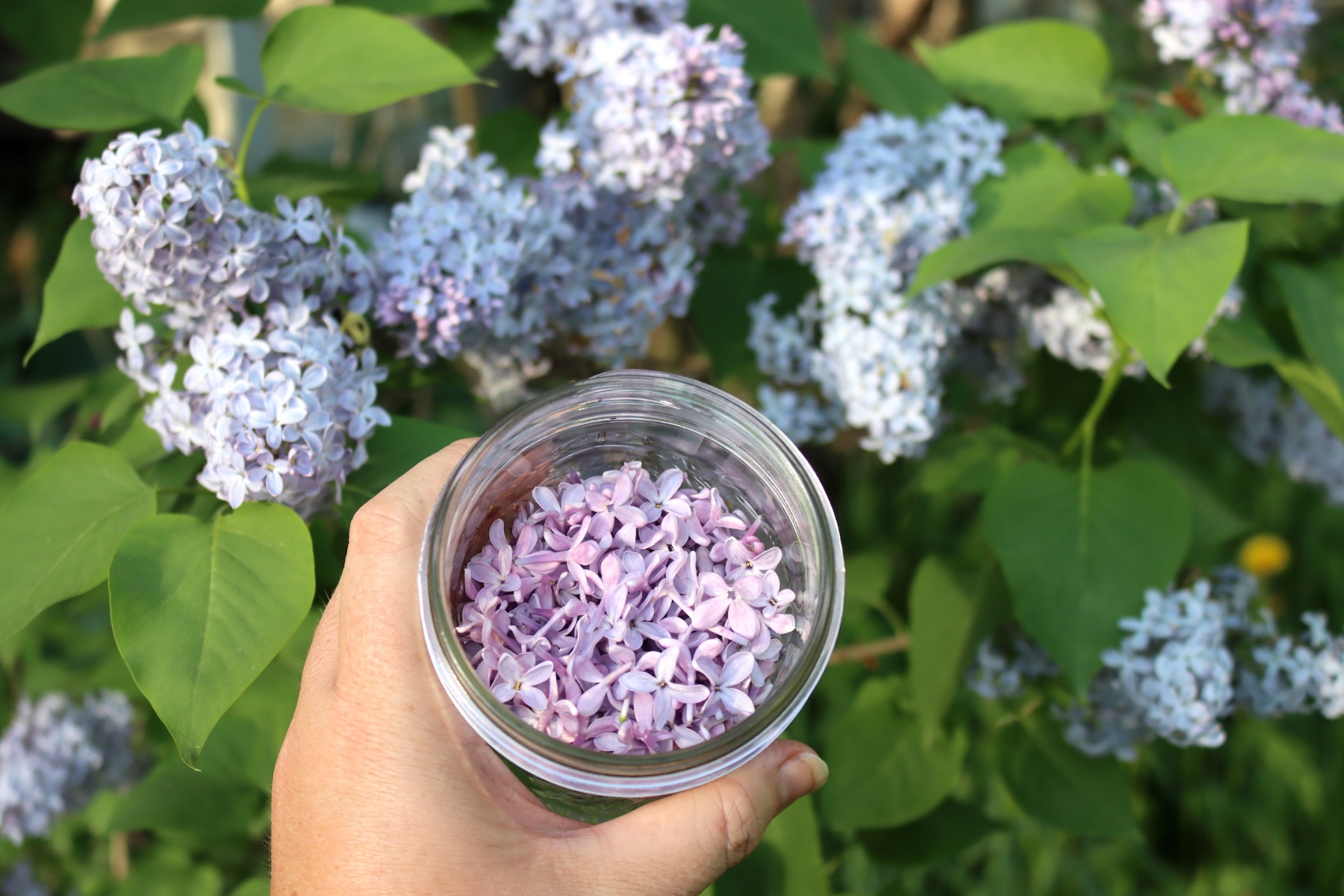
Table of Contents
- Can You Eat Lilacs?
- How to Harvest Lilacs for Cooking
- Lilac Recipes
- Lilac Jelly
- Lilac Wine and Mead
- Lilac Sugar, Syrup, and Infused Honey
- Lilac Ice Cream, Custards, Pudding, and More
- Lilac Cake Recipes
- Lilac Cookies & Donuts
- Lilac Tarts, Cheesecakes, and Pavlovas
- Lilac Drinks
- Lilac Body Products
- Medicinal Uses of Lilacs
- Lilac FAQs
- More Edible Flower Guides
Every year I wait for the sweet smell of lilacs to announce the arrival of real spring. While they only bloom for a few short weeks, their intoxicating scent fills the air and lifts my spirits after a long Vermont winter, and I’d plant them just for their beauty.
But lilacs have one more gift to offer: they have edible flowers, and they turn into some of the most beautiful preserves, drinks, and desserts too!
Lilacs are on just about every old Vermont homestead, and you can even find them growing wild in the woods, marking spots where a stone foundation once supported a house. The lilacs have outlived both the gardener and the building, and they still smell sweet with no one around but the bees.
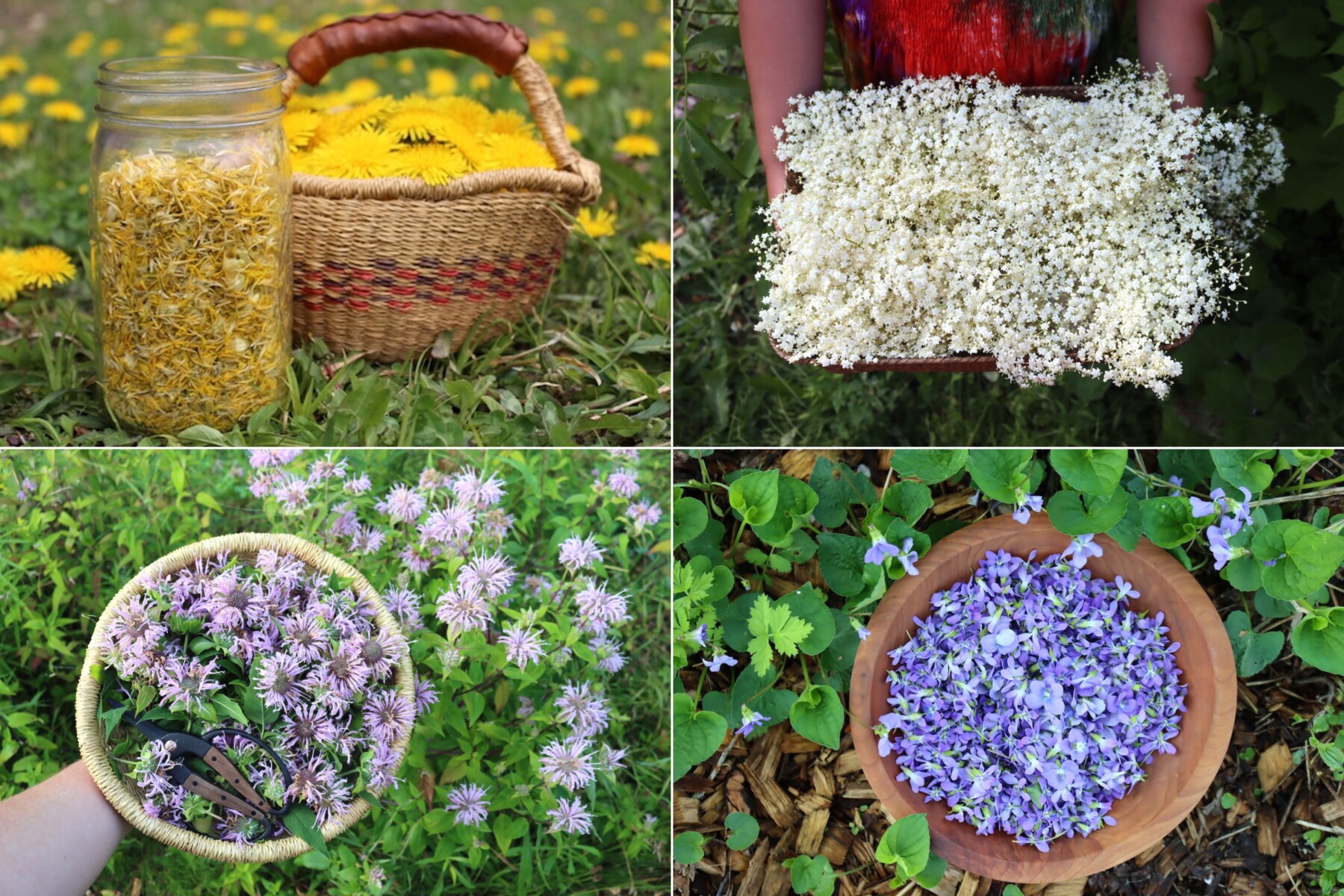
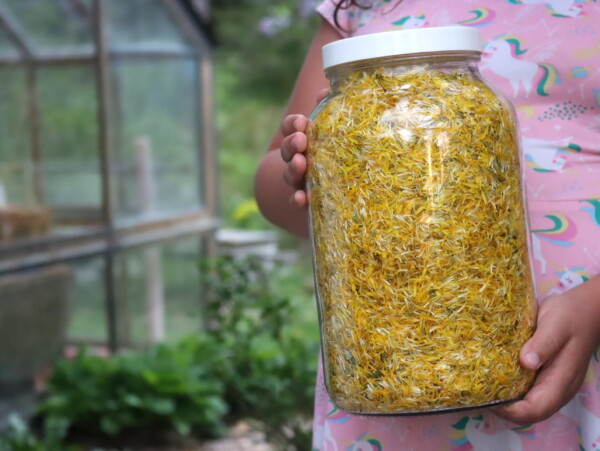
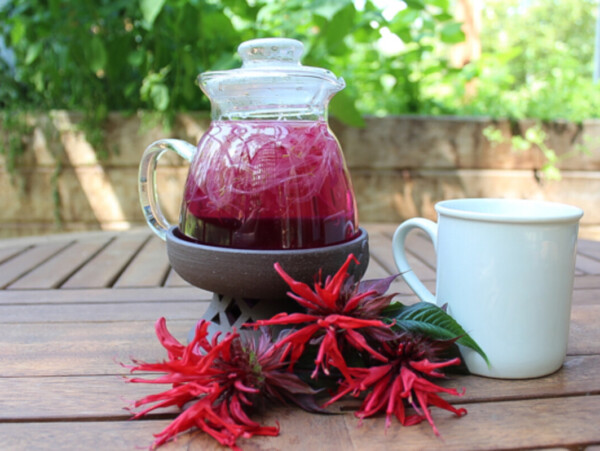
Lilacs start the edible flower season around here, but our homestead has delicious blooms to enjoy all summer long. We’re foraging dandelions for dandelion flower recipes at the same time as the lilacs, then wild violets come on for violet flower recipes, and elderflowers show up a few weeks later for elderflower recipes. The old perennial patch of bee balm by the kitchen door is edible and medicinal too, so the homestead kitchen stays fragrant with one bloom or another from May right through August.
Can You Eat Lilacs?
Yes, common lilac (Syringa vulgaris) flowers are edible. The florets have a delicate floral flavor with a hint of astringency, and they work in jellies, syrups, infused honeys, baked goods, cocktails, and skincare. Purple, white, pink, and lavender varieties are all equally edible, though flavor and color intensity can vary between cultivars.
Only the flowers are used; the leaves, bark, and seed capsules are not part of traditional culinary preparations and are sometimes noted as bitter or mildly toxic.
Of course, it’s always possible to have a reaction to new foods, so start small and make sure they agree with you. Lilacs are part of a broader world of edible flowers that show up on the homestead each spring, right alongside wild violets, dandelion flowers, and eventually roses.
Note that not every plant called “lilac” is the same species, and there is a wild weed known as French lilac (Galega officinalis) that is not edible. It’s a completely different plant, and looks more like sweet peas or vetch than bushy lilacs. They just have a similar name.
How to Harvest Lilacs for Cooking
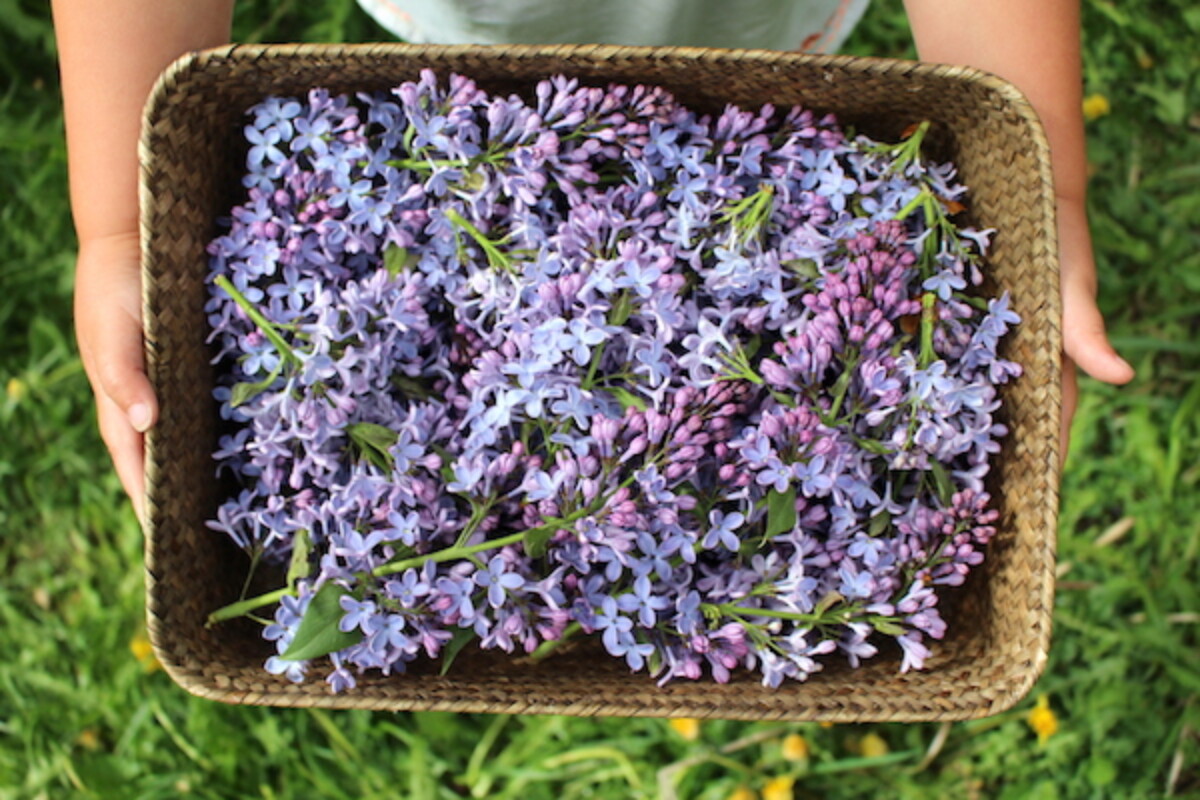
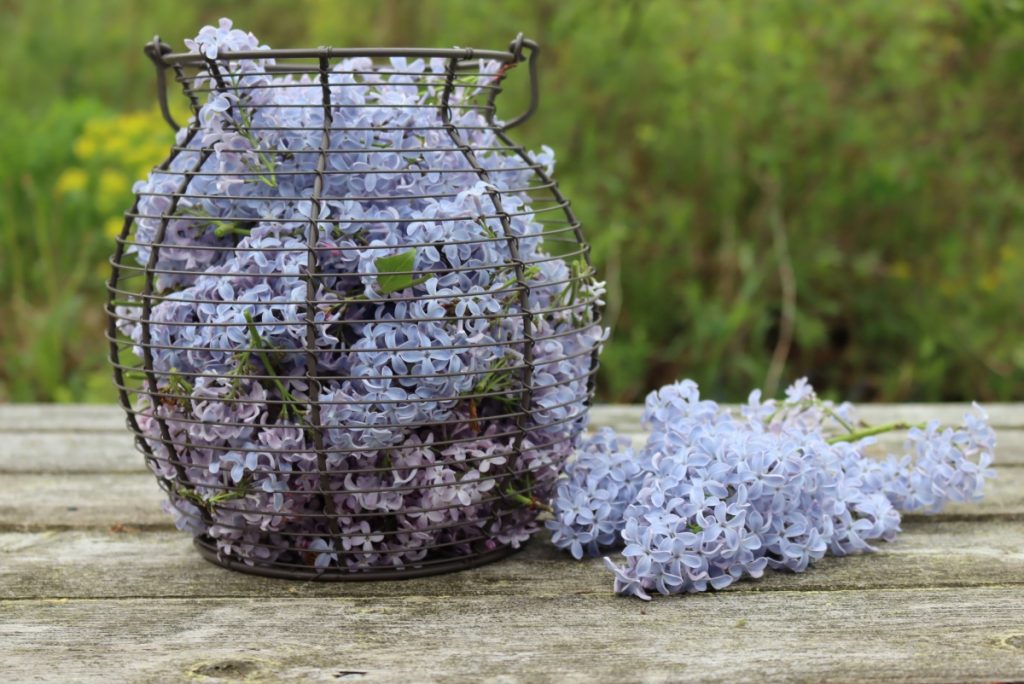
The best time to harvest lilacs for the kitchen is when most of the individual florets on a spray have opened but before any of them start to brown. Pick in the morning after the dew has dried but before the heat of the day, when the fragrance is strongest.
Snip full sprays with scissors, leaving the developing buds at the base of each branch intact so the shrub will continue blooming.
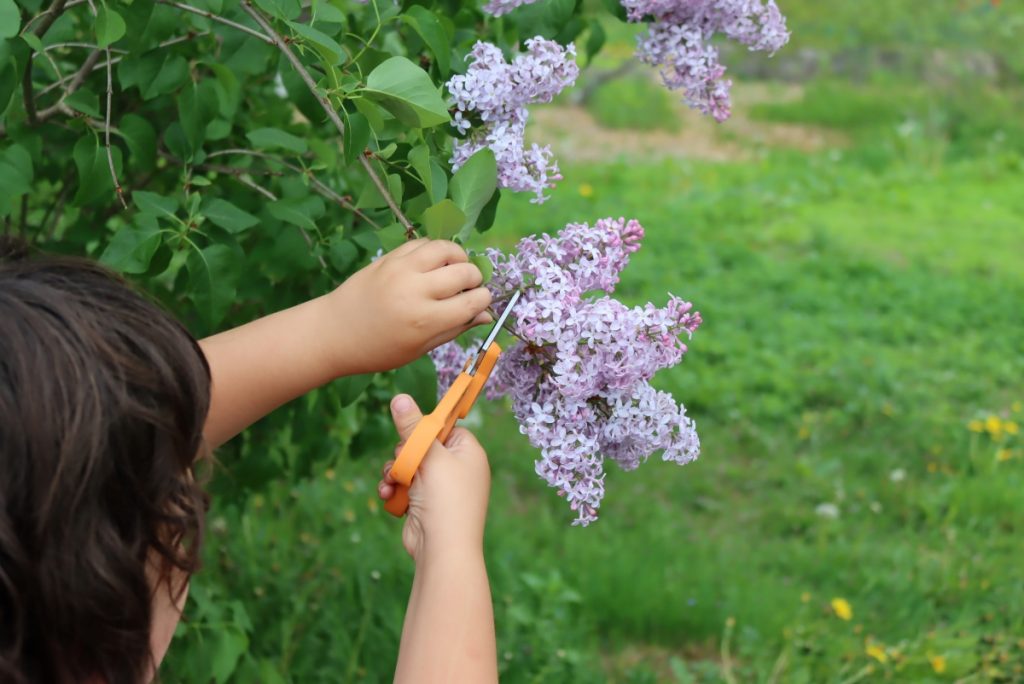
Once you’re back in the kitchen, the fiddly part begins: stripping individual florets from the woody stems AND pinching off the small green flower bases at the bottom of each floret. Those green bases (the calyxes) are noticeably bitter and will throw off any preparation you’re making if you leave them on, so take the time to remove them along with the stems.
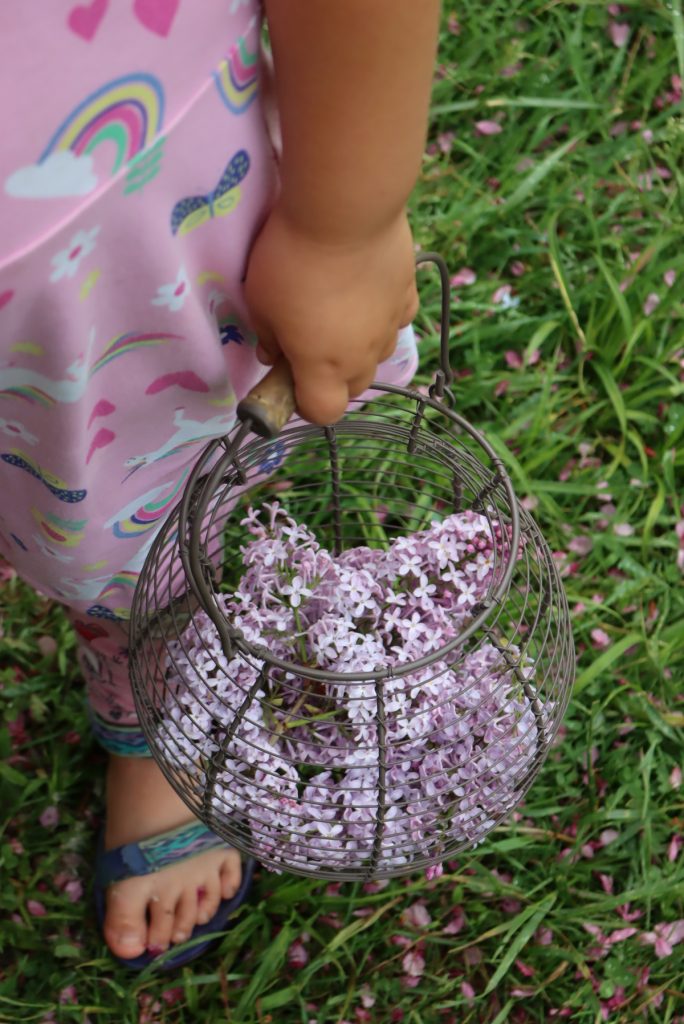
I find that they’re easy to pinch off with your fingers, and I usually put my littles on this task. They can work through a whole bowl of lilacs quickly, and it’s the perfect job for tiny hands.
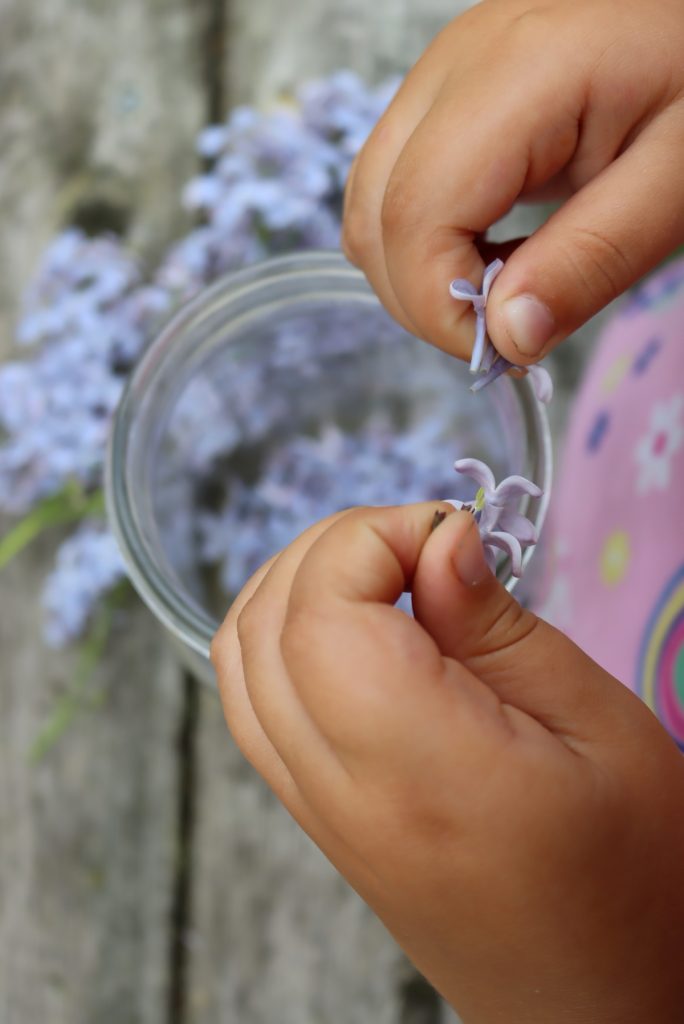
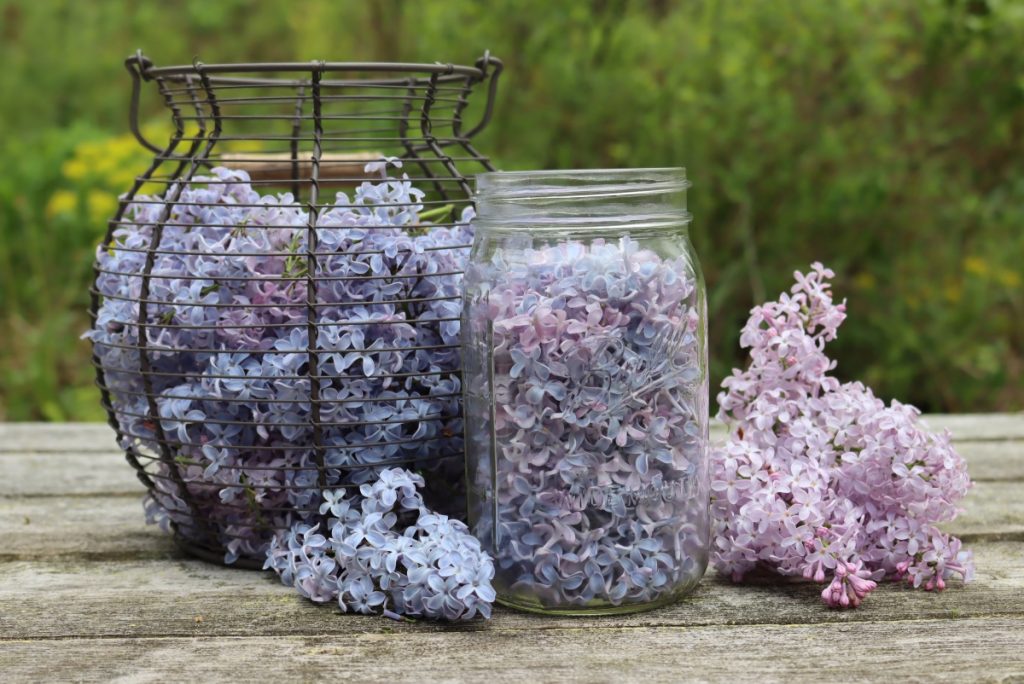
A full gallon of loose sprays yields about a quart of cleaned florets, which is plenty for a small batch of jelly or a quart of syrup.
Only harvest from shrubs that haven’t been sprayed with pesticides or herbicides, and avoid lilacs growing right alongside busy roads. If you don’t have a lilac of your own, ask a neighbor with an established shrub, as most lilac owners are happy to share during a good bloom year.
Lilac Recipes
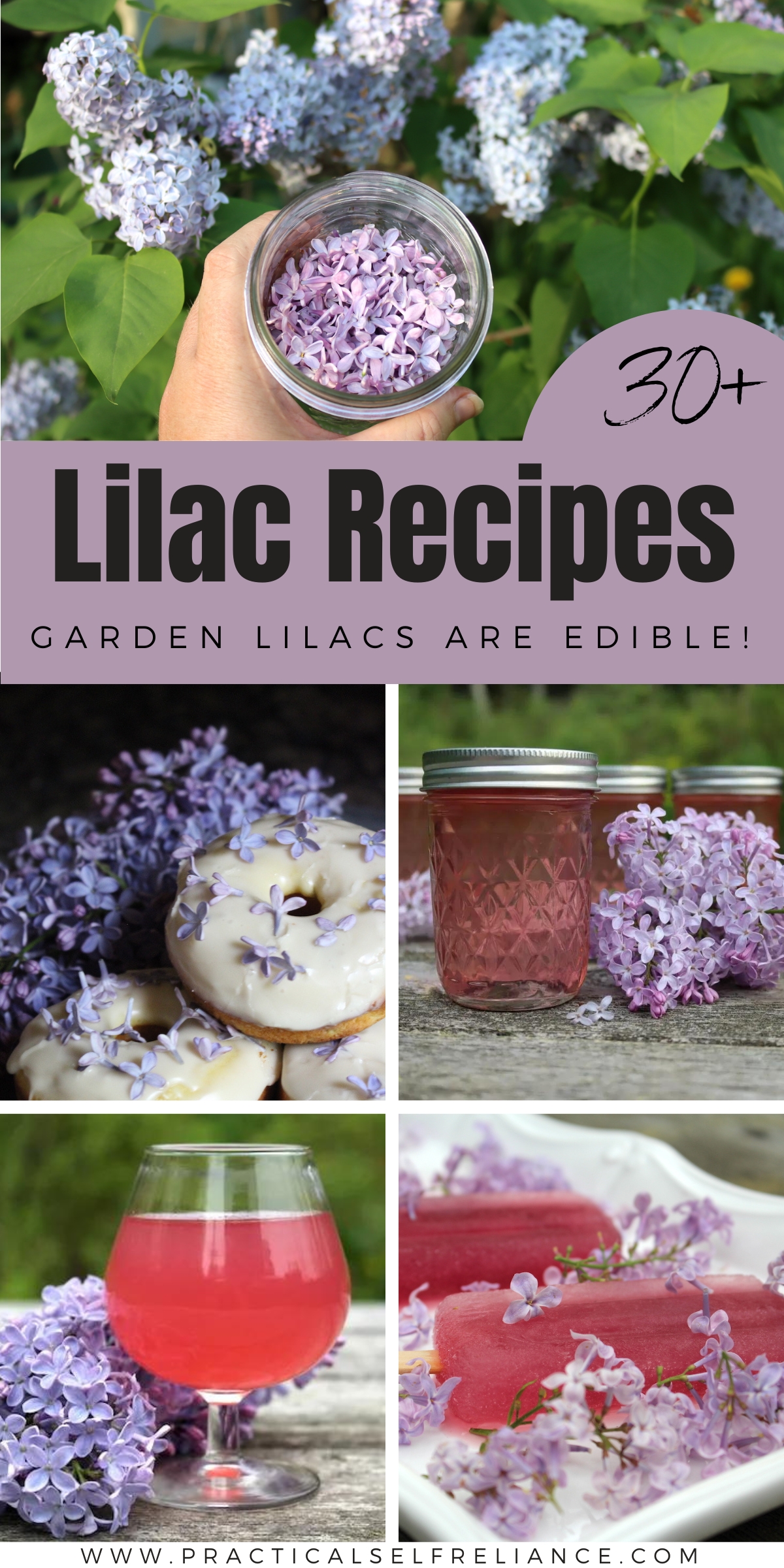
Once you’ve got a fragrant bowl of cleaned florets, the question is what to make with them. Here are the recipes worth trying with your lilac harvest, starting with the two preserves I make every year (lilac jelly and lilac wine) and then moving through the lighter infusions, frozen desserts, baked goods, drinks, and homemade body products.
Most are quick afternoon projects, and several double as beautiful gifts.
Lilac Jelly
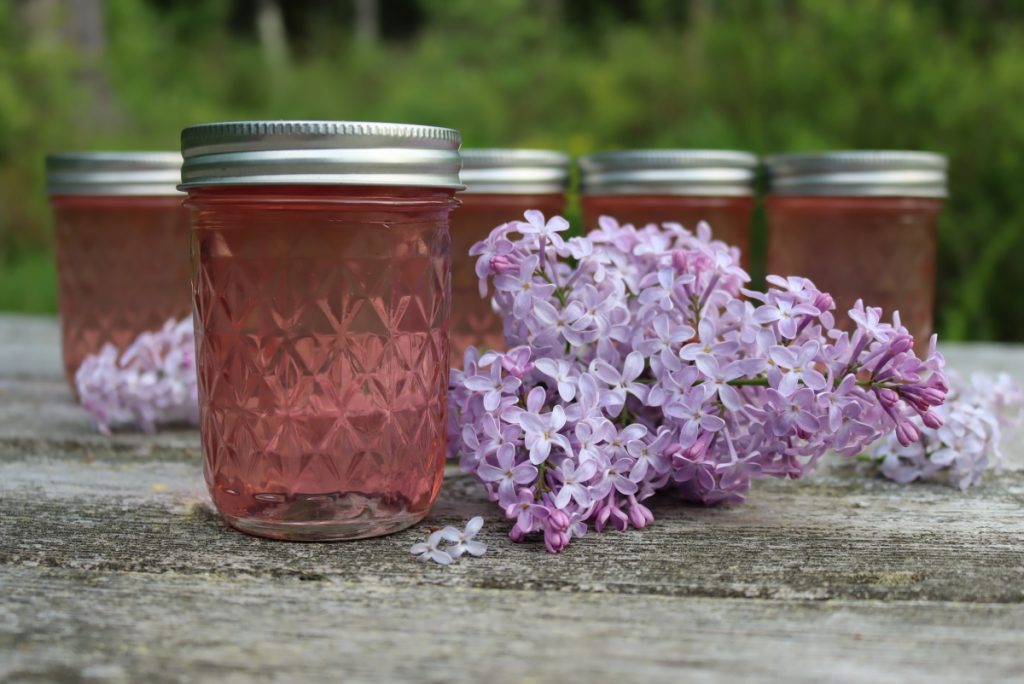
Lilac jelly is the first thing I make every spring because it’s the fastest way to capture the flavor in a shelf-stable form, and the finished jars are some of the prettiest preserves on our pantry shelf. The flavor is mild and honey-sweet rather than aggressively floral.
The technique is the same one you’d use for making any floral jelly: brew a strong lilac infusion (the “tea”), combine it with sugar and pectin, bring to a gel stage, and either water-bath can or refrigerate. The same basic method works for dandelion jelly, violet jelly, peony jelly and other floral preserves, with lilac landing somewhere between dandelion’s honey-sweetness and violet’s floral intensity.
Lilac Wine and Mead
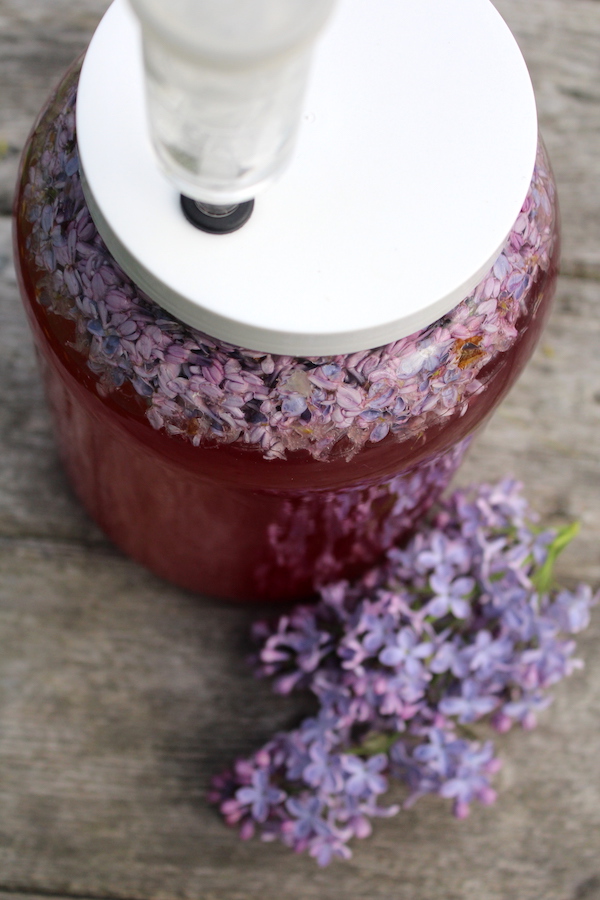
Lilac wine is the slow project of the lilac season, the one I start in May and don’t open until well into the following winter. The flavor mellows from sharp and floral when young to soft and almost honey-like once it’s had a year in the bottle. It’s become the household favorite for the adults, and a glass of it in February tastes exactly like the day in May we picked the flowers.
The method is the same as any other flower wine or mead, with sugar and water replacing the natural sugars and water in fruit. To make a mead or honey wine instead of a plain wine, just substitute honey for the sugar at a roughly 1:1 ratio by weight.
Lilac Sugar, Syrup, and Infused Honey
If you’re not in the mood to can or ferment, the simple lilac infusions are the fastest way to get that floral flavor into your kitchen. Lilac sugar is just clean dry florets layered with granulated sugar in a jar, left for a week or two until the sugar takes on the scent. Lilac simple syrup is the liquid version of the same idea, perfect for cocktails, lemonades, and drizzling over berries.
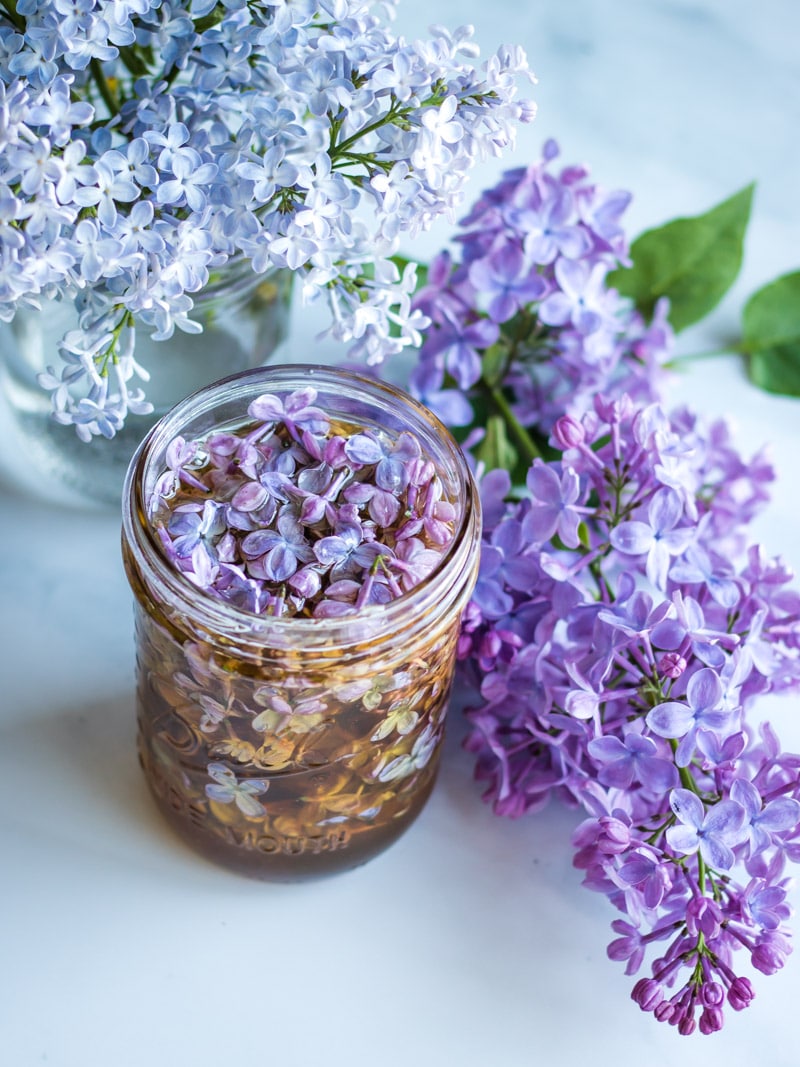
Lilac infused honey might be the prettiest of all, with the petals visible in the jar like an edible arrangement. All three preparations make beautiful gifts when packed into small jars with a ribbon, and they all keep for months as long as they’re stored in a cool spot.
Lilac Ice Cream, Custards, Pudding, and More
As temperatures start to warm up in spring, I start planning ahead for ice cream, and the floral flavor of lilac translates beautifully into a custard base. Steep clean florets in warm cream for about thirty minutes, strain, and then proceed with whatever ice cream method you usually use. The floral note is gentle enough that it doesn’t overpower the cream. A few springs back I made dandelion and honey ice cream using the same approach, and it works just the same with lilacs.
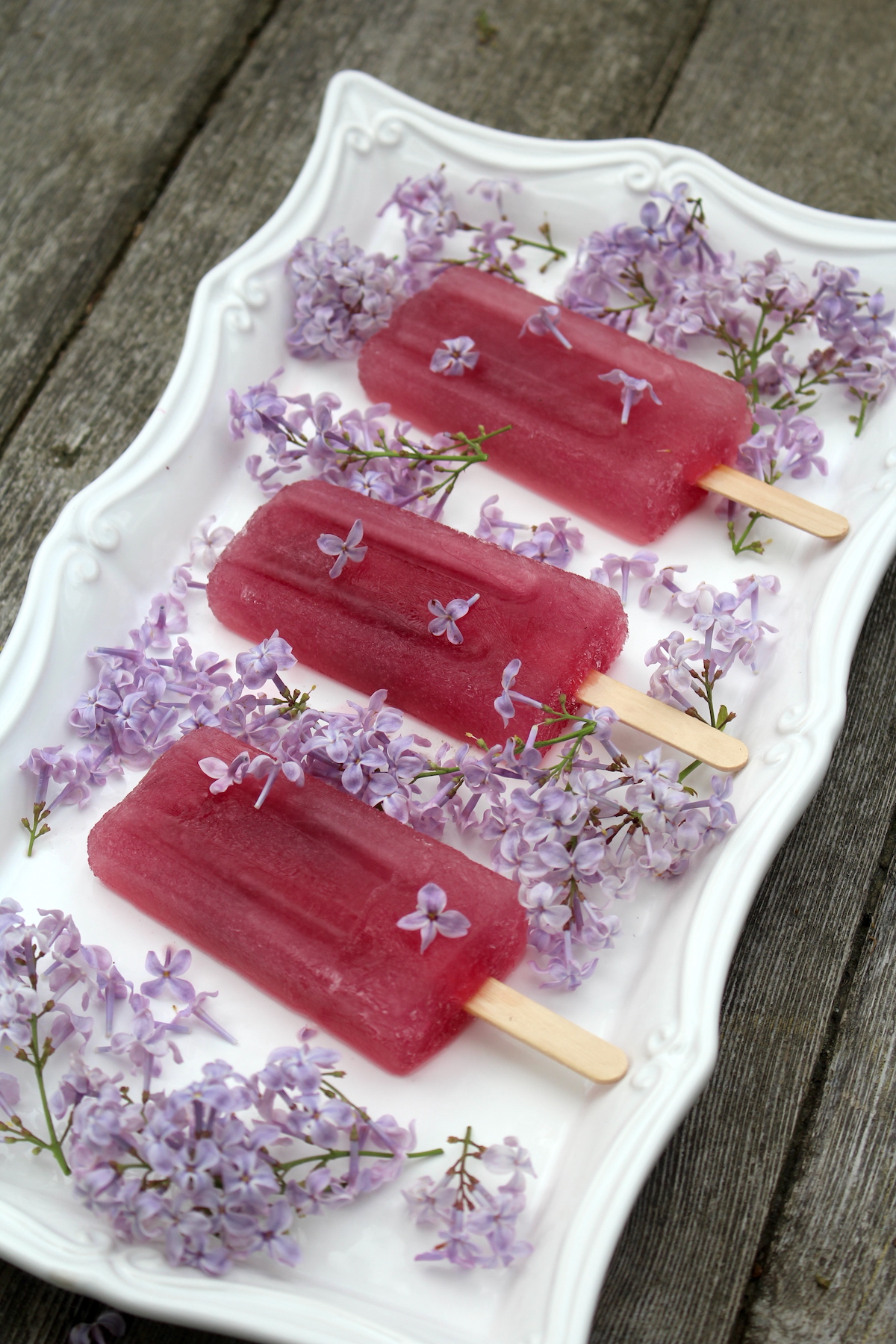
Beyond ice cream, lilac plays well with all the creamy desserts of late spring: rice pudding, posset, panna cotta, sherbet. Lilac popsicles are the easiest, and they work whenever the kids are too impatient for the ice cream churn.
- Lilac Lemon Grapefruit Sherbet
- Lilac Ice Cream
- Lilac Honey Posset (old-fashioned custard)
- Lilac Rice Pudding
- Lilac Popsicles
Lilac Cake Recipes
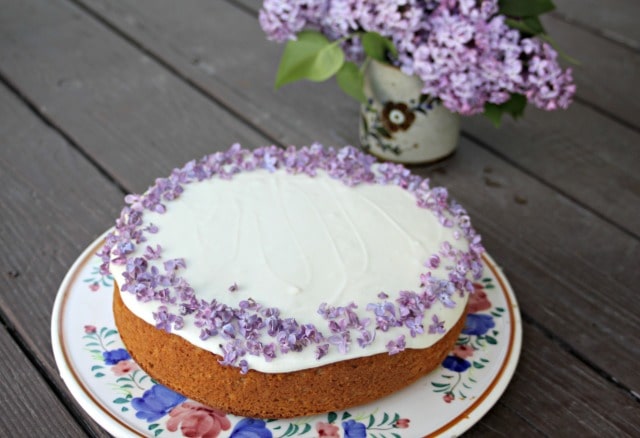
The sweet floral qualities of lilacs make for a delightful cake, and the easiest entry point is folding lilac sugar or lilac syrup into a basic batter you already love. The flavor pairs beautifully with lemon and almond, and a lilac-infused buttercream over a simple vanilla layer cake is one of those desserts that looks like a special occasion without much extra effort.
They work well in classic cakes, as well as bundt cakes, cupcakes and shortcakes too!
- Giant Lilac Scented Strawberry Shortcake
- Lemon & Lilac Bundt Cake
- Small Batch Lilac Chocolate Cupcakes
- Lilac Cake with Matcha Glaze (Gluten Free)
- Lilac Honey Cake
Lilac Cookies & Donuts
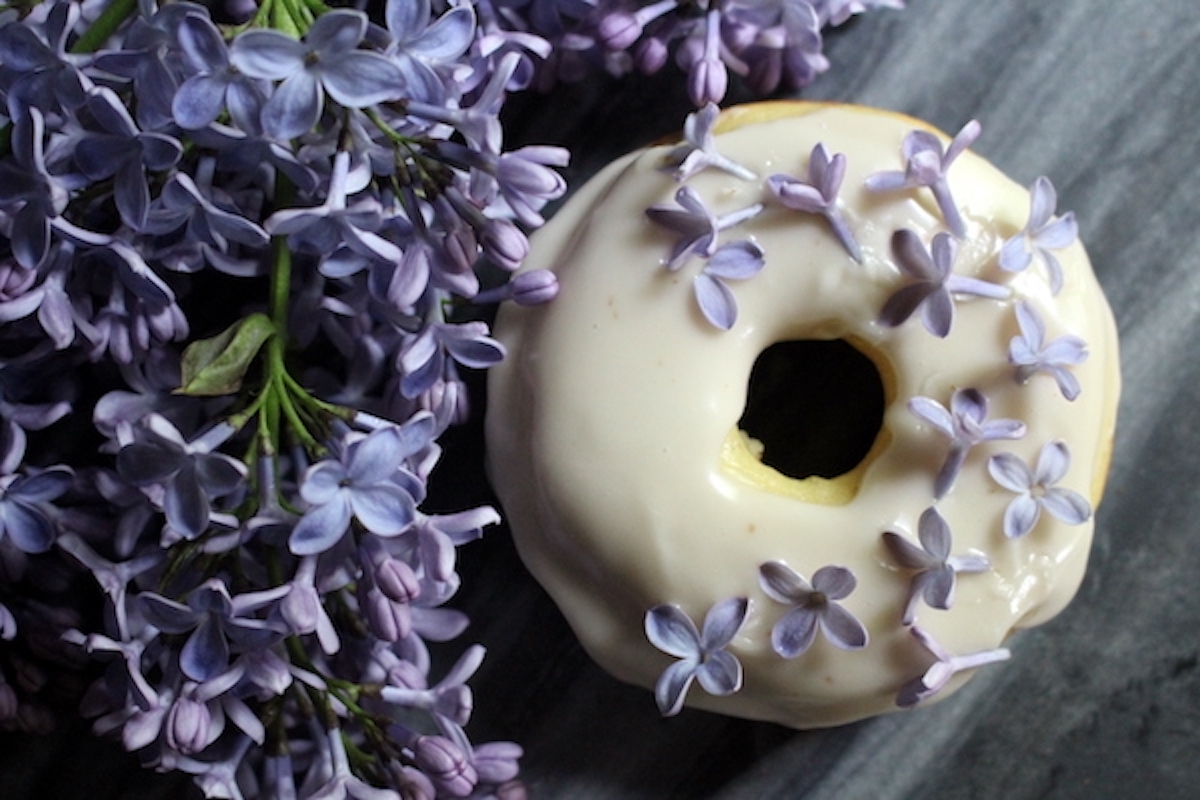
Smaller-format desserts are arguably the most fun way to use a lilac harvest. A dusting of lilac sugar on the outside of a warm donut, folded into a cornmeal cookie, or sprinkled across a batch of scones carries the floral flavor without needing any complicated technique.
Scones are a good first project, and baked donuts are just as easy.
- Lilac Cornmeal Cookies
- Lilac Shortbread
- Lilac and Almond Scones
- Strawberry Jelly Donuts with Lilac Sugar
- Baked Lilac Donuts
Lilac Tarts, Cheesecakes, and Pavlovas
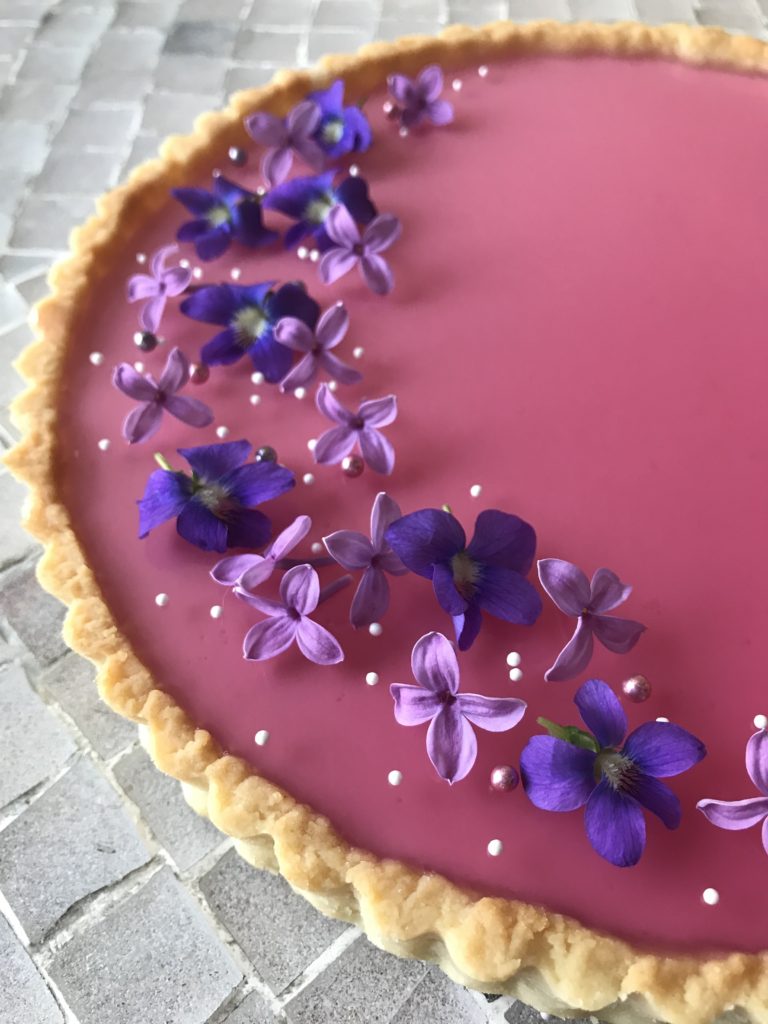
Some desserts give lilacs the spotlight in a way the simpler cakes and cookies can’t, and tarts, cheesecakes, and pavlovas really impress. The unifying trait is open structure: a cheesecake’s creamy expanse, a tart’s visible filling, and a pavlova’s marshmallowy meringue all give the floral note room to come through without competing with heavy batter or frosting.
They’re also some of the prettiest lilac desserts you can put on a table, which makes them favorites for spring parties and Mother’s Day brunches.
Lilac Drinks
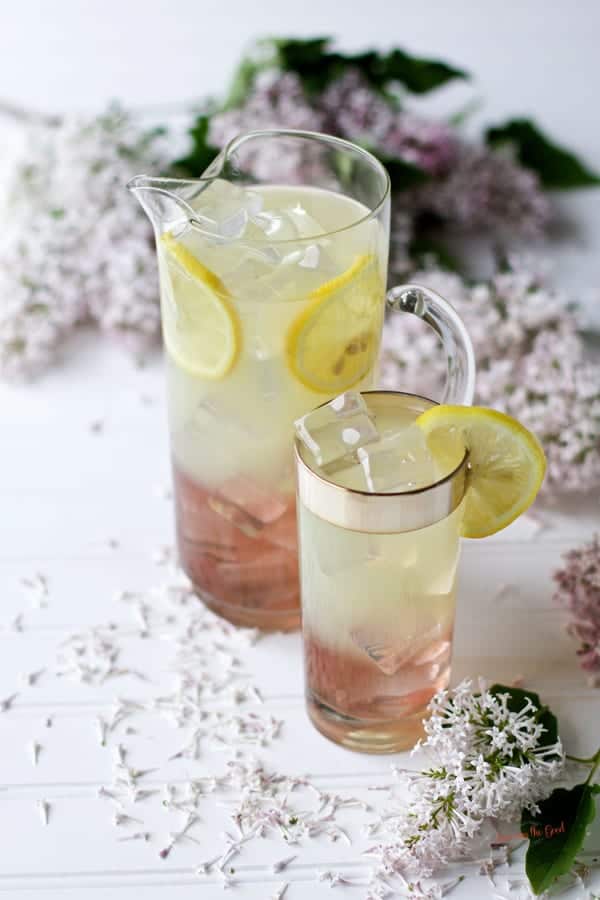
Spring is when we put away the heavy winter drinks and bring out the light, floral cocktails and mocktails, and lilac is the perfect bridge ingredient for that shift. Most lilac drink recipes lean on either lilac simple syrup or a lilac cordial as the base, both of which keep for weeks in the fridge and make assembling the actual drinks easy.
You can make fancy cocktails or mocktails, or keep it simple with something like lilac lemonade or tea.
Cocktails and Mocktails
Zero Proof Drinks
Lilac Body Products
Beyond just eating lilacs, the same astringent quality that gives them their slight pucker on the tongue makes them a great addition to homemade body products. Lilac florets infused into witch hazel for a week or two make a gentle face toner, and the same infused base works for splash-style astringents and refreshing skin sprays.
Years ago I picked up a lilac solid lotion bar at a farmer’s market and loved using it on special occasions. When it finally ran out I missed it terribly, and that’s part of what got me thinking about making more of my own lilac body products at home. Bath truffles, milk baths, and infused face creams are all very giftable, and they all do well with lilacs as the featured fragrance.
Medicinal Uses of Lilacs
Though I cannot find much in the way of modern verification or clinical studies around the medicinal uses of lilacs, the flowers have a long history of use in folk herbalism. The most often-cited reference is Mrs. M. Grieve’s classic A Modern Herbal, first published in 1931, which describes the following traditional folk-remedy properties:
- Antiperiodic. Lilac flowers were historically used as a folk remedy to help strengthen the system and prevent the recurrence of disease after a patient had healed, said to be specifically useful after cases of malaria.
- Astringent. Tasting the raw flowers you can pick up some of the astringent qualities, as they make your mouth dry and pucker a bit along with their floral flavors. This astringent quality is what makes them useful in skin care products.
- Vermifuge. As another folk remedy noted by Grieve, lilacs have been used for intestinal worms, as well as for gastric discomfort and gas.
Regardless of the purpose, the most common medicinal lilac preparation is a tincture, made the same way as the lilac cordial, but without the added sugar. These historical uses are shared for reference and not as medical advice. If you’re interested in using any herb medicinally, work with a qualified herbalist or healthcare provider, especially if you’re pregnant, nursing, or taking medications.
Lilac FAQs
All color varieties of common lilac (Syringa vulgaris), including purple, white, pink, and lavender, are equally edible. The flavor and color of the finished preparation can vary between cultivars, with the darker purple varieties producing the most intense color in jellies and syrups. White lilacs make the most subtle-tasting and palest preparations.
Purple lilacs give a more intense color to jellies, syrups, and sugars, sometimes a lovely pink or violet depending on the pH of the recipe. White lilacs still have the same fragrance and are perfectly edible, but they produce nearly colorless finished products. Flavor is generally similar between the two, though some cultivars taste more strongly floral than others.
No, those are two different plants. Common lilac (Syringa vulgaris) is the fragrant flowering shrub covered in this post. The plant historically associated with the development of Metformin is Galega officinalis, sometimes called French lilac or goat’s rue, which is an entirely different plant in the pea family. The recipes here use only Syringa flowers and are not a substitute for Galega or any medication.
The leaves and bark of lilac are not typically used in food or modern herbal preparations. Traditional kitchen and home remedy recipes focus on the flowers only. Stick with the florets for any culinary or skincare use.
Fresh lilacs are best used the day they’re harvested for peak fragrance, but they’ll hold for a day or two in a sealed container in the fridge. For longer storage, dry the florets on a screen out of direct sunlight, then keep them in a sealed jar for use in teas, sugars, and infusions. You can also freeze clean florets in a single layer, then transfer them to a freezer bag for year-round use in syrups and jellies.
Did you find this edible lilacs guide helpful? Tell me in the 📝 comments below how YOU use lilacs on your homestead, I’m always looking for new ideas for the spring harvest!
And make sure you stay in touch with me by following on social media!
More Edible Flower Guides
Find the perfect recipe
Searching for something else? Enter keywords to find the perfect recipe!








Are yellow lilacs edible too?
I don’t have any yellow lilacs, but some quick research says yes. All colors are edible, provided they’re actually lilacs, so be careful on your identification. Each cultivar has a slightly different taste though, so start with a small batch to see how you like it.
Interesting. I didn’t know this.
Any thoughts about flavour profile of white lilac compared to purple? I know my syrup won’t be as pretty, but wondering if it will still taste nice.
I personally have never tried the white but I am very curious to know how they taste. If you decide to try it, let us know.
How do you tell french lilac’s from other lilac?
I would like to know more about using lilacs in teas also. I have heard of the drug Metiformin is derived from French Lilacs.
Are there any uses for the leaves & or bark at all? If so what are they & can the leaves be substituted for the flowers & receive the same medicinal properties from the leaves?
Good question, but I honestly don’t know the answer to that one.
In terms of medicinal use, the drug Metformin is derived from French Lilac, just an FYI.
I’d love to know about leaf teas and other such ways the plant was cultivated for those remedies you mentioned!
Awesome. My daughter and I are exploring ways to use lilacs this summer.
Where can I buy edible lilacs. I live in San Francisco
I will try that. Never heard that before. Dandelions nice in meals.
I never knew you could use any type of plant in so many ways. I really enjoyed your post, it had lots of information and ideas!