
Affiliate disclosure: This post may contain affiliate links. Please see our Privacy Policy.
Grape jam is one of those lost recipes that no one seems to make any more. Every grade school kid knows about grape jelly, but grape jam has long since gone by the wayside. Grape jam is darn delicious, and it’s time it made a comeback!
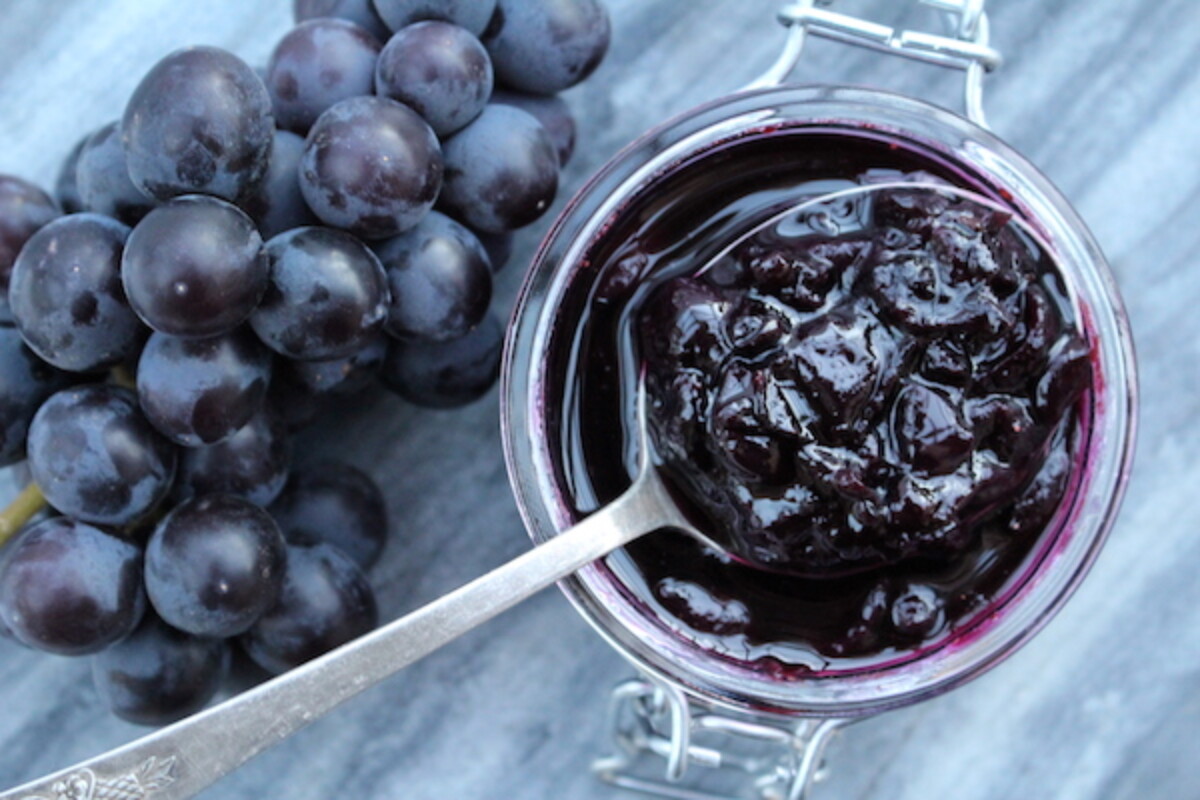
In truth, there’s a good reason why grape jam fell out of favor. Traditionally it required a lot of work, namely to remove large grape seeds in heirloom grape varieties. The first seedless grapes weren’t developed until the 1980s, and by that point, grape jelly was long since entrenched in our national cuisine.
To make a really fine grape jam, you need to remove the seeds from grapes. They much larger than raspberry or blackberry seeds, and once you’ve cooked a batch down, if you haven’t removed the seeds, there are a lot of grape seeds in the finished jam.
Seedless grapes mostly solve this problem, but not completely, because even “seedless” grapes still have tiny seeds. If you’re using “seedless” grapes, removing the seeds is optional, but I’ll take you through the process either way.
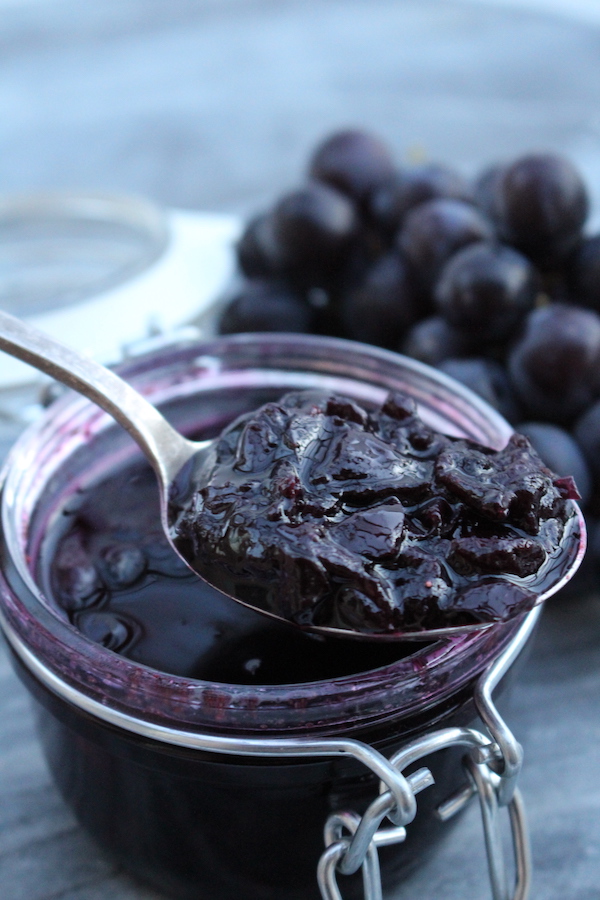
Removing Seeds from Grapes
To make grape jam, the essential part is keeping the grape peels. The idea is to filter out the seeds from the pulp, but leave the peels still in the jam. How on earth does that work?
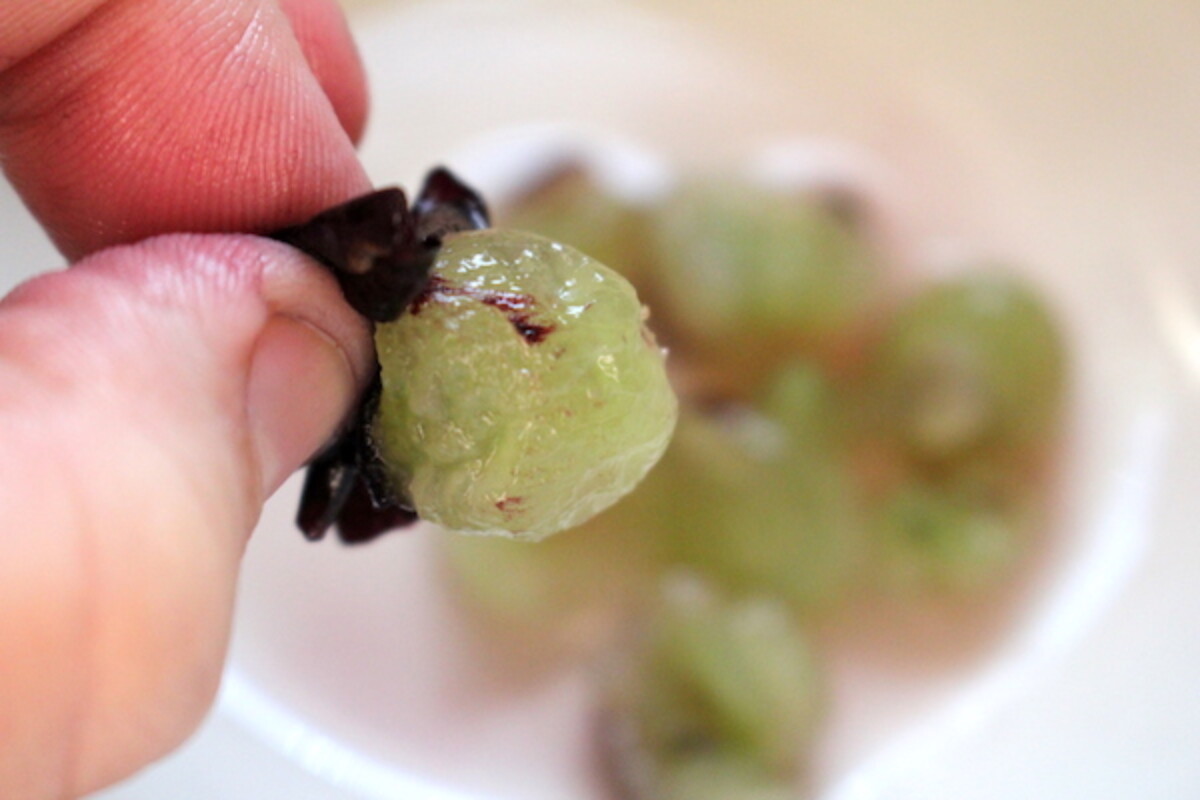
The Ball Book of Canning and Preserving suggests starting with uncooked grapes and separating the peels from the pulp. Start by peeling back a bit of the grape skin from one end of the grape and then squeeze out the inside. The grape pulp goes into one bowl, and the peels go into another.
I know, peeling grapes sounds tedious. So is shelling peas and all manner of tasks grandma filled her days with staying useful. For me, making jam is something I love to do with my toddlers. They love jam, and they love everything about helping make it. The cooking and canning parts are a little to hazardous for them, but since they’re at the end, once their attention is waning, it works out wonderfully.
Before the cooking process, the more steps the better. Idle baby hands take to coloring the walls, but babies happily put to work peeling grapes take an active part in preparing the food they’ll be eating later. If you don’t have easily entertained toddlers, keep in mind the seeding part is completely optional if you’re working with seedless grapes. Really it’s optional with seeded grapes, if you don’t mind the occasional crunchy grape seed.
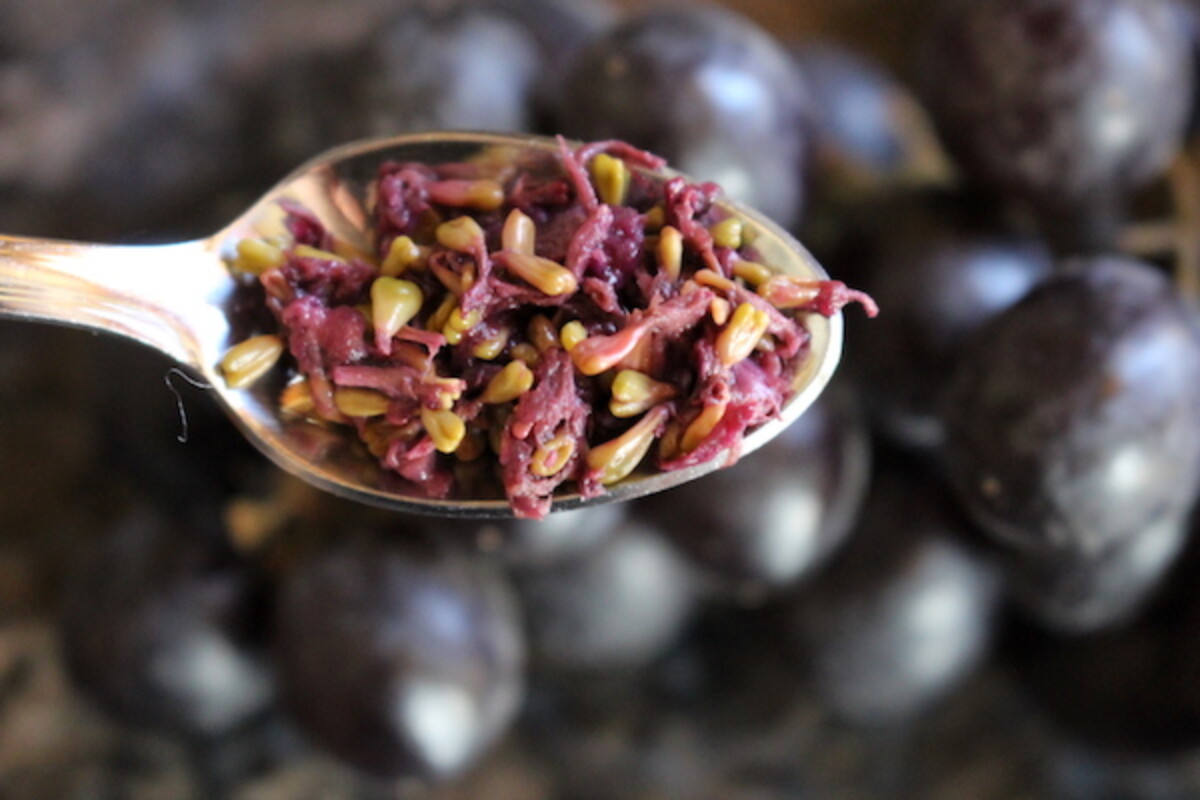
Leaving the bowl of grape skins set to one side, the next step is to cook down the grape pulp. Allow the pulp to simmer on the stove until it has pretty well dissolved. Give it a few mashes with the back of a spoon to help it along, but it won’t take long. Pass the pulp through a fine mesh strainer to remove the seeds. Even with “seedless” grapes, there are still quite a few tiny seeds.
How to Make Grape Jam
At this point, combine the grape skins and the filtered grape pulp and add the sugar. If you’d like to make a low-sugar grape jam, you can reduce the sugar by half without a problem. Remember that a reduced sugar jam will yield considerably less because you’ll have to cook down the mixture further to reach gel stage. Either way, it’s darn delicious.
Add the pulp/skin mixture and sugar to a saucepan and bring to a boil over medium heat. Cook for about 10-15 minutes, until much of the juice is evaporated, and the bubbles in the jam begin to change consistency. This jam comes together really fast, quicker than any other no pectin added jam I’ve ever made.
If you’ve made jam before, you’ll recognize this change as the jam approaches gel stage. Place a plate in the freezer and use it to test the jam’s consistency by putting small amounts on the cold plate. Alternately, generally gel stage is around 220 degrees F, and you can test the jam with a candy thermometer.
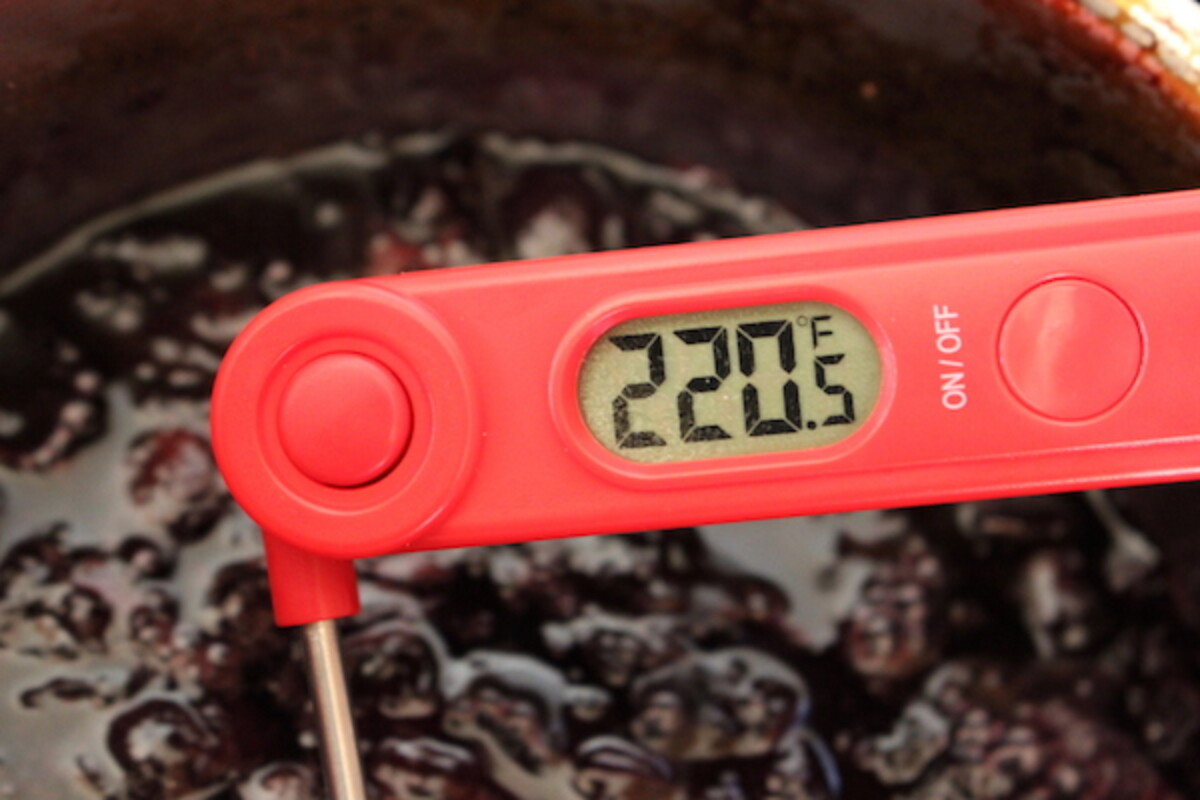
Once the jam reaches gel stage or consistency that you like, pour it into prepared canning jars leaving 1/4 inch headspace. Process the grape jam in a water bath canner for 10 minutes and then turn off the heat. Allow the jam jars to sit for an additional 5 minutes before removing them to a towel on the counter to cool.
At this point, it can take a while for the jam to fully gel. Give the jam about 48 hours to rest before you open and test one. If you find it’s too thin, you can pour them back out, recook for a while and re-can the grape jam without issue. If it’s too thick, similarly, you can pour them back into the jam pot and add a bit of water to re-cook. If you tested the jam ahead of time with a plate or thermometer, it should be just fine with no need to retry, but it’s nice to know that options there if you need them.
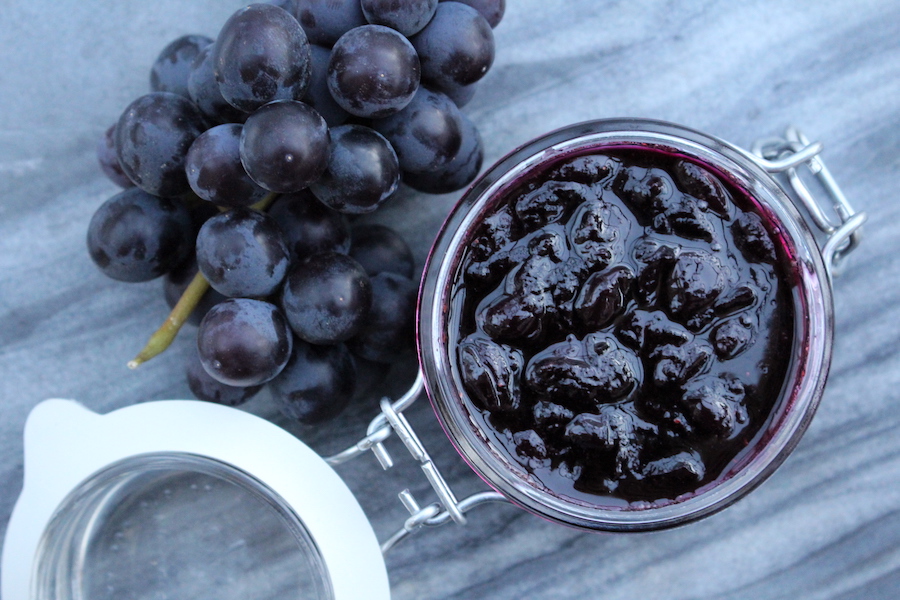
Choosing Grapes for Grape Jam
Most recipes these days are for “concord grape jam” perhaps because that’s the most popular type of grape for grape jelly. It’s a flavor we’re used to for jelly, thus it’s what they suggest for grape jam. The thing is, it can be hard to find concord grapes for sale in the store. Most of them go directly into jelly or juice, and the few I have seen on supermarket shelves didn’t look too appetizing. I assume they must not keep well, thus the reason they’re always preserved rather than sold as table grapes.
There is no reason you can’t make grape jam with just about any variety of grape. Dark purple or blue grapes make a particularly dramatic presentation, but a bright green Thompson seedless grape jam would have its own beautiful green appeal.
The Ball Book of Home Canning suggests using Concord, Muscadine or Scuppernong grapes. None of those varieties grow up in cold climates. Here in vermont we’re limited to cold hardy grapes for zone 4, which are mostly wine grapes. Most places, you’ll only find generic green or red grapes in the store.
Don’t worry, just get creative with what you can get (or grow) where you live. Trust me, it’s all good.
Old Fashioned Grape Jam (No Pectin Added)
Ingredients
- 8 cups grapes, stemmed
- 6 cups sugar
Instructions
- Seed grapes as discussed above by squeezing the grape flesh out of the skin and then cooking the pulp down. Put the pulp through a fine mesh strainer and then re-combine the filtered pulp with the grape skins.
- Add the skins and pulp into a saucepan along with the sugar and cook the mixture until it reaches gel stage, about 10-15 minutes. Experienced jam makers can watch for when the type of bubbles change and take on a glossy look. To be sure, test the consistency on a plate that’s kept in the freezer or with a candy thermometer.
- Pour the jam into prepared canning jars, leaving 1/4 inch headspace. Store in the refrigerator for immediate use, or process in a water bath canner for 10 minutes. Turn off the heat and allow the jars to sit in the canner for an additional 5 minutes before removing them to cool on a towel on the counter.
- Allow the jars to rest for 24 to 48 hours to completely gel.
Notes
Nutrition
Nutrition information is automatically calculated, so should only be used as an approximation.
Preserving Grapes
Looking for more ways to preserve grapes?










Can I use frozen grapes?
Yes, you can, Lila!
Do you still have to peel the grapes if you aren’t removing seeds?
If you aren’t removing the seeds I don’t think there would be any need to remove the skins.
I never remove the skins.I use seedless grapes and after cooking them down I use my immersion blender.Works really well.Is very smooth.Thanks for the recipe!
You’re so welcome.
Made this for the first time as hubs overbought red grapes. I didn’t want them to go to waste but I didn’t want to go to the store to look for pectin. How fun was this! And so delicious. Yes, it was tedious peeling the grapes but I kept telling myself that of a mom could do this with toddlers, this retired Nana should be able to do it as well. After a while it was very relaxing. Maybe getting my aggression out on the grapes? 7 cups of grapes yielded almost 3 cups of jam. We were eating the hot jam on crackers to see how it was, and then more because it was delicious. Thanks for all the great info along the way! I learned a lot about jam, which I never thought I’d be making.
Wonderful! I’m so glad you tried it =)
Would it work to skip peeling the grapes and just put the cooked mixture through a food mill?
I haven’t tried it, but I would think so.
Yes that is what I do. You still have the pulp so it is really good.
I do that too. But have had problems with tartrate crystals?
Wondering why you leave the skins in?
Can they be left out for a smoother consistency?
Yup, you could leave the skins out, and that process is a lot easier. Just look up recipes for grape jelly instead of grape jam. Grape jam with the skins is a labor of love, but the skins have a distinctive flavor that makes for a unique jam. They have a bit of tannin in them, which plays well against the sugar in the jam. Think of it like a red wine, where the tannin gives the wine body and character. That’s why they’re in there. But yes, if you want a smooth version, you can just leave them out.
Thank you for this recipe, the flavor is fabulous and just what I was looking for. Something I did however made the final product very thick and gummy and hard to spread. What did I do wrong? Boil too long? Appreciate your insight, so I can make it with a better outcome this year!
It sounds like it’s overcooked. If it goes too far past gel stage the sugar starts to candy a bit, so it’ll get gummy (more like a strange-looking caramel). Stop the cooking a bit earlier next time. Good luck!
This is fantastic! I only had 3 lbs of grapes. So I cut the sugar to 3 cups but kept all the lemon juice. I added a little sage too. Thanks for the tip whoever suggested that one.
Thanks for your recipe! I have made 2 jars of jam by modifying it and it is delicious!
It was not as hard as it sounds,though it really would be worth the effort!
Really love this recipe!!! Easy to make!! My cooking time was a bit longer as the jam took a while longer to set (reach curl point) but happy days never thought I would cook my own jam. Thank you!
I have searched for Grape Preserves with the skins FOREVER. This has to be the one like my Grandma made. If you haven’t had Grape Preserves with the skins, you are in for a real treat. Put that spoon of grape preserves with some of those delicious skins on a hot buttered biscuit and you’ll almost swear you are in heaven. I remember this from my childhood and helping my Mom and my Grandma make these delicious wonders. My Grandma had a huge concord grape vine and OMG… I would help squeeze those lovelies and get all their goodness into the bowls. THANK YOU. Now if only I could purchase this and not have to dig out my canner and find some grapes. LOL.
I have home grown grapes and have no idea what type they are. The skins are pretty tough even after cooking them. The second batch I made I processed the skins in a small food processor. The texture is a lot better and there is more flavor to the jam. Thanks for this great recipe!
Do you measure grapes before or after removing skins?
I measured them at the start, before doing anything to them.
Hi, I have both purple and green seedless grapes, not sure what kind, and was wondering if you’ve ever combined the two colors? Wondering if there would be a big difference in flavor. I made a strawberry jam this morning, my 1st time canning, and throughly enjoyed the process and outcome.
Thanks for this recipe!
They do have different flavors, and combining them will likely be delicious. Different probably than two separate batches though. Good luck and let me know how it goes!
I have a question. Do you have a problem of tartrate crystals in jam when you used it after few months?
I haven’t had a problem, but different varieties have different amounts. Wild grapes are supposed to be much higher, and probably wouldn’t be a good candidate for this recipe.
If you’re having that problem with your grapes, start out the same and peel the grapes, then cook the pulp and strain it to remove the seeds. Place the strained pulp in a jar (keep skins separate) and allow the crystals to settle out overnight in the fridge. Then carefully pour off the clean juice, leaving the crystals behind in the jar. Recombine the juice with the skins to make the jam (or leave the skins out for jelly).
Good luck!
I’ve made two batches out of my wild grapes: one having in fridge overnight and then strain, second one without cooling down. After two months I opened both batches and found crystals in both jars. The average diameter of crystals is till 10 mm ( 0.4 inch). Then I strained it, warmed it and close in jars again. Now it’s without crystals.
If you’re using wild grapes they contain tartaric acid, which is an irritant that can cause some pretty intense throat discomfort. For wild grapes, I’d suggest making grape jelly instead. Make the juice, allow the tartaric acid crystals to settle out and then carefully decant, leaving those irritants behind. Wild grapes make a fine jelly, you just have to get the acid crystals out first.
For jam, it’s trickier, and I imagine you could do it, taking the skins off, then juicing the insides, allowing it to settle before decanting and putting the skins back in…but tricky since they’re so small.
How did you strsin it ? I have 12 jars of grape jam with tartrate crystals in it. I didnt think a jelly bag would work for jam. Jam.
I only used a fine mesh strainer to remove the grape seeds. Carefully pour off the clean juice, leaving the crystals behind in the jars. Recombine the juice with the skins to make the jam (or leave the skins out for jelly).
I have And can’t find any info out there on how to resolve problem. All info is on jelly and wine.
can your recipe be doubled
Yes, this recipe should double just fine. I wouldn’t increase it much beyond that though, or it may cook unevenly and not gel properly.
First time I made my own jam with my own grapes.
Thanks.
Wonderful!
I have a question. I’m not a big fan of having to do the water bath/canning method. Is there any reason this same recipe couldn’t be put into containers and frozen like strawberry and raspberry jam? I have searched the internet for Concord Grape FREEZER Jam and all the recipes and blogs can the grape version and freeze the other kinds. Just wondering if you have a recommendation on that, Thanks!
Yes, you can totally make this as a freezer jam! Just use the same freezing instructions from any other jam, same thing.
Thanks Ashley! I have a bushel of concords. I got about half done tonight. I appreciate your quick response! I’ll be putting all of it into the freezer!!
Fantastic, it took me 2 1/2 hours from start to getting my precious jars out the canner.
Do you measure grapes before, or after, peeling?
Before.
Hi Ashley! I’ve already cooked my grapes down. Any idea how many cups you use after it’s turned into pulp??
I’m not sure. Most recipes only have a measurement for the grapes prior to being cooked down.