
Affiliate disclosure: This post may contain affiliate links. Please see our Privacy Policy.
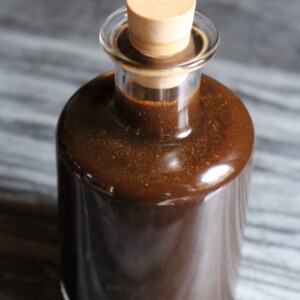
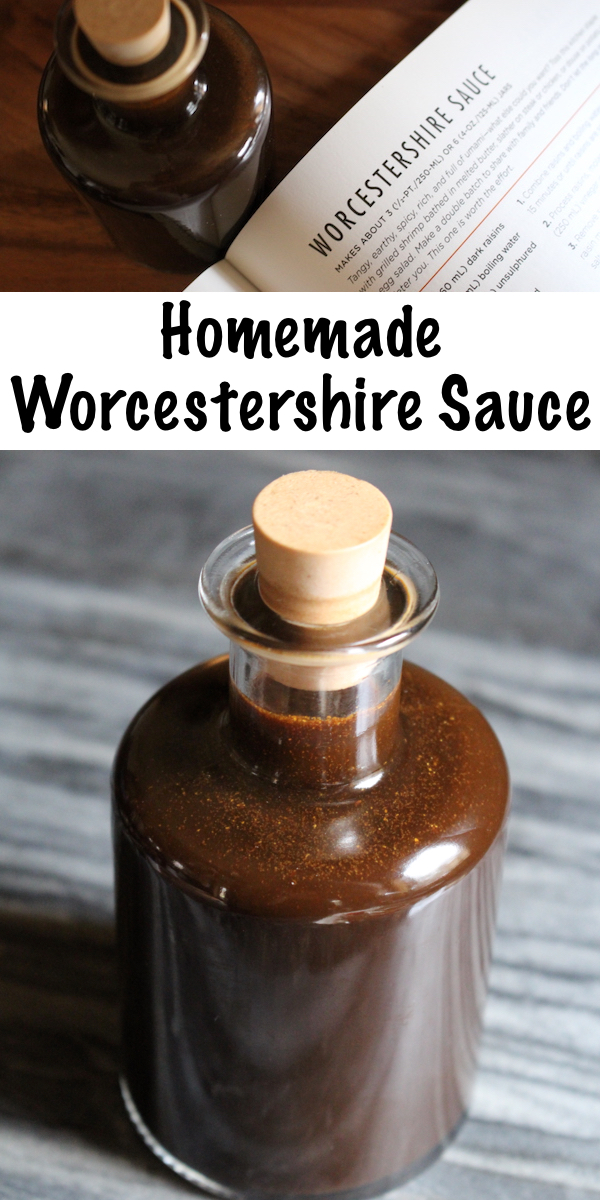
This homemade Worcestershire sauce recipe takes about 30 minutes of active work, then ages on the pantry shelf for a month. The result is a deeper, more rounded sauce than anything you can buy. It’s full of real umami from whole anchovies, fruity tartness from tamarind, and warmth from cardamom, cloves, and cinnamon.
This simple homemade version is crafted in your kitchen with high-quality ingredients you can actually pronounce. One batch fills a quart jar and keeps for a year.
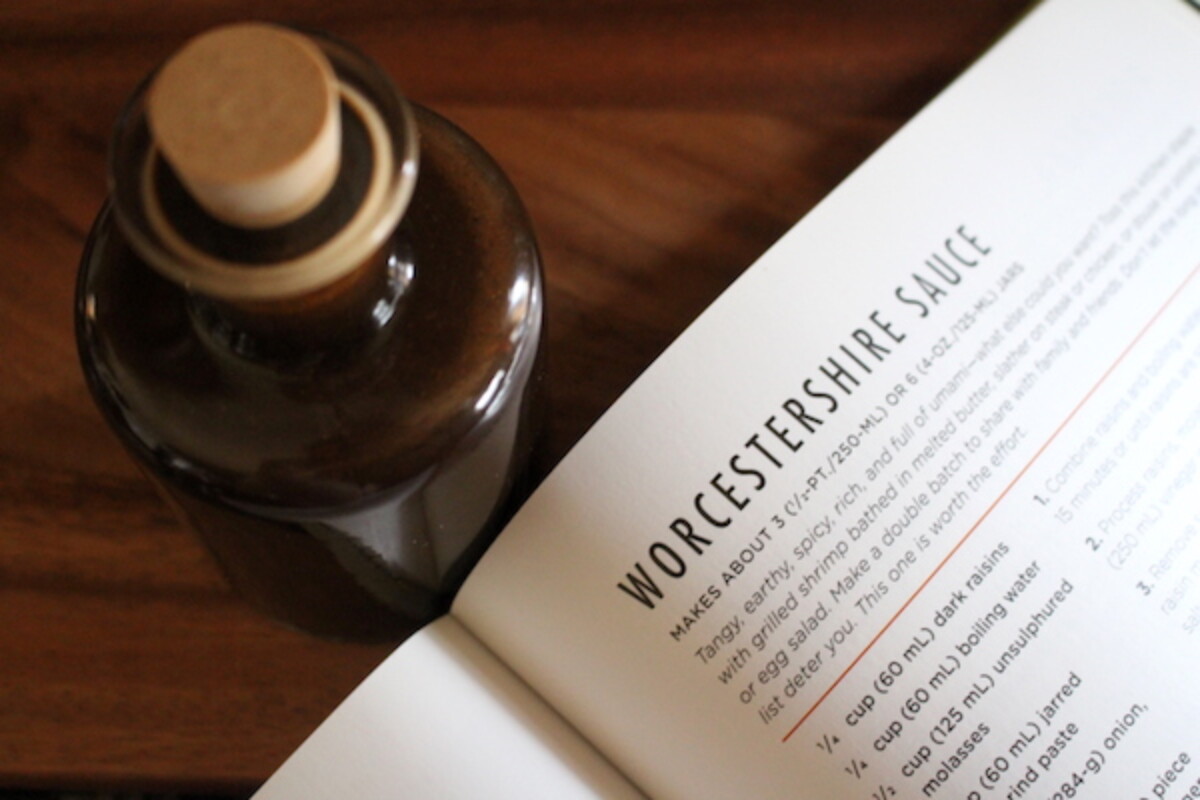
Table of Contents
- What Is Worcestershire Sauce?
- What Does Worcestershire Sauce Taste Like?
- Why Make Your Own?
- Ingredients You’ll Need
- How to Make Homemade Worcestershire Sauce
- Substitutions and Variations
- How to Use Homemade Worcestershire Sauce
- Storage and Shelf Life
- Worcestershire Sauce FAQs
- Preserving Favorites
- Homemade Worcestershire Sauce Recipe
- From-Scratch Pantry Staples
- Preserving Recipes
I started making my own Worcestershire sauce after realizing how often I splash it into just about everything… soup, chili, marinades, gravy, and even popcorn. It’s the secret weapon that makes savory food taste more savory. Once I started reading the ingredient label on the bottle, I figured I could probably make it from pantry staples I already had on hand.
Turns out, you can. And it’s very, very good.
What Is Worcestershire Sauce?
Worcestershire sauce is a fermented or aged condiment made from vinegar, anchovies, tamarind, molasses, onion, garlic, and warming spices. It originated in Worcester, England in the 1830s when chemists John Lea and William Perrins tried to recreate a sauce a customer had brought back from India. Their first batch tasted terrible, so they put it in the cellar and forgot about it. A year or two later, they tried it again and discovered the aging had transformed it into something extraordinary.
Modern Worcestershire sauce has a complex, savory-tangy flavor that’s hard to pin down. The anchovies provide umami without tasting fishy. The tamarind gives it a fruity tartness. The molasses adds depth. And the spices (clove, cinnamon, cardamom, mustard) round it out into something you can splash into almost any savory dish to make it taste better.
What Does Worcestershire Sauce Taste Like?
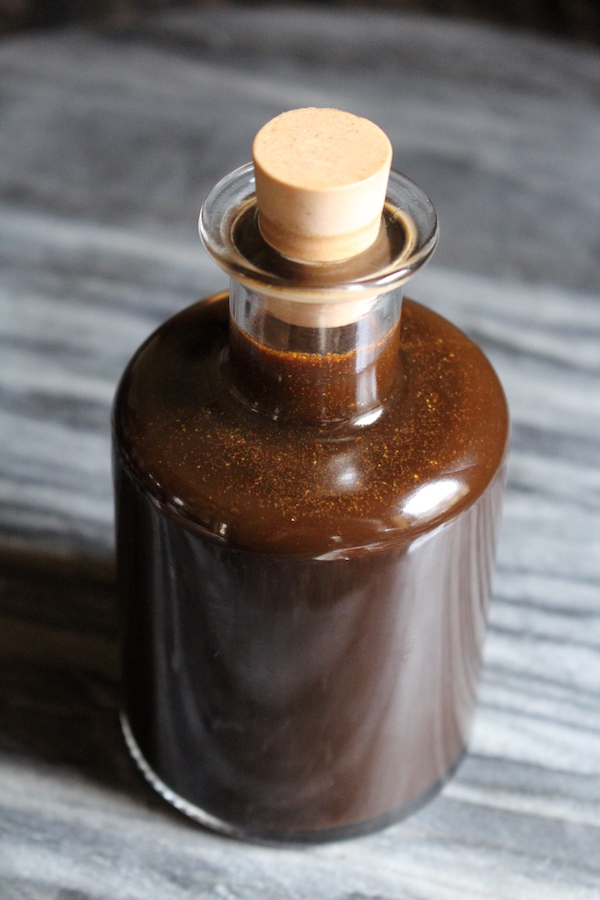
Tangy, savory, slightly sweet, with a deep umami backbone. It tastes pungent and a little funky on its own. Obviously, most people don’t drink it straight but when added by the spoonful to soups, stews, marinades, gravies, or burger meat, it brings out the savory notes in everything around it. It’s why a tiny dash transforms a bland pot of chili.
This homemade version is rounder and more complex than what you’ll find in a store-bought bottle. The whole anchovies bring more umami than the small amount used in commercial brands (in the same family of intense savory ingredients as salt cured egg yolks or aged cheddar cheese), the cardamom and fresh ginger add warmth that doesn’t come through in mass-produced versions, and a month of aging integrates everything into a sauce that tastes intentional rather than manufactured.
Why Make Your Own?
A few good reasons:
- The flavor is genuinely better. Commercial Worcestershire is built around a small amount of anchovy paste and a lot of fillers. Homemade uses a full can of whole anchovies, fresh ginger, real spices, and a month of aging. The result has more depth, more roundness, and more actual umami.
- You control the ingredients. Commercial sauces sometimes contain “natural flavorings” (which can mean anything), high-fructose corn syrup, or — for people with celiac disease — wheat that isn’t always disclosed clearly. Lea & Perrins has reportedly varied their formula over the years, occasionally including wheat. Making your own means knowing exactly what’s in the bottle.
- Allergies and dietary restrictions. If you can’t eat soy (in vegan brands like Annie’s) or wheat (sometimes in commercial brands), homemade gives you full control.
- It’s a fun kitchen project. A long ingredient list, a month of aging, and a quart of really good sauce at the end. Worth doing once, even if you don’t end up making it regularly.
- Bonus byproduct. When you strain the finished sauce, you’re left with a flavorful paste that’s amazing stirred into soups by the spoonful, or dehydrated into Worcestershire powder.
This recipe doesn’t really save money compared to a $5 bottle of commercial Worcestershire, and unless you’re growing your own tamarind and catching your own anchovies, it’s not exactly a homestead-from-scratch project either. But it tastes wonderful, and there’s real satisfaction in pulling a jar of homemade Worcestershire off your own shelf a year after you made it.
I have made this Worcestershire sauce recipe and I must say, ‘it came out amazing’! I am busy with my second batch already. You mentioned to make use of the solids too. Well, this came as a gift to us, because back home they sell a BBQ salt called Worcestershire sauce BBQ salt! We have to buy it from an importer here in New Zealand at a crazy expensive price. So, now by drying and making a lovely powder as you suggested, we actually are creating our own Worcestershire BBQ salt! Thank you very, very much for sharing your lovely recipes and experience.
Ingredients You’ll Need
The ingredient list is long but most of these are pantry staples. The two specialty items — tamarind paste and anchovies — are essential. Skip them and you’re making a different sauce. See the recipe card below for exact quantities.
- Anchovies — provide the umami backbone. Use canned, oil-packed (the brining is what gives them the right intensity).
- Tamarind paste — adds the signature fruity tartness that defines Worcestershire. Available in the international aisle of most grocery stores or any Asian market.
- Molasses — provides depth, color, and a touch of bitter-sweetness. Unsulphured for a lighter profile, blackstrap for a darker, richer sauce.
- Raisins — natural sweetness and body, plus a subtle fruity note that complements the tamarind.
- White vinegar — the preservative backbone and the medium that pulls flavors from all the other ingredients during aging.
- Onion — aromatic foundation, provides savory depth.
- Fresh ginger — adds warmth and a slight sharpness that brightens the whole sauce. (We actually use our own homegrown ginger. Yes, it grows in Vermont!)
- Garlic — pungent base note that mellows beautifully during the aging process.
- Brown sugar or maple syrup — balances the vinegar’s sharpness and rounds out the sweet-savory profile. I use our homemade maple syrup.
- Cardamom pods — one of the warming spices that gives this version its distinctive depth.
- Whole cloves — for warm, aromatic complexity.
- Black peppercorns — gentle heat and earthy notes.
- Dry mustard powder — subtle bite and emulsifying properties.
- Ground cinnamon — warm sweetness that ties the spice profile together.
- Crushed red pepper flakes — a low background heat (not overtly spicy in the finished sauce).
- Kosher or canning salt — flavor and shelf stability. Don’t skip or substantially reduce; the salt and vinegar work together to keep the sauce stable at room temperature.
How to Make Homemade Worcestershire Sauce
The process is simple:
- Soak the raisins in boiling water for 15 minutes to soften them, then drain.
- Blend the raisins with molasses, tamarind, anchovies, onion, ginger, garlic, and half the vinegar in a food processor until smooth.
- Combine the puree with the remaining vinegar and all the spices in a saucepan. Bring to a boil and remove from heat.
- Jar and age. Pour into a quart canning jar, cap with a plastic lid, and store in a cool, dark place for at least a month. Longer is better.
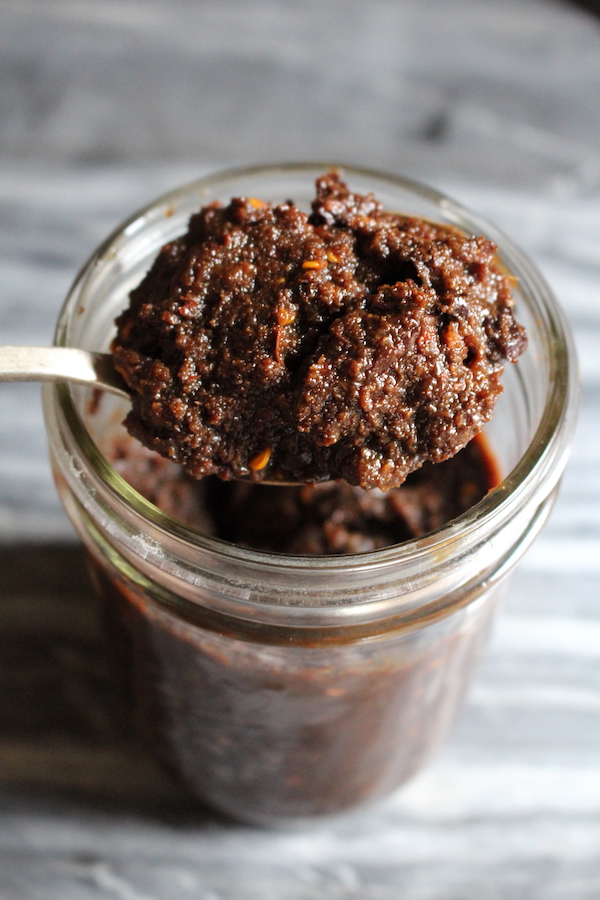
- Strain through a fine mesh sieve before using. Save the leftover paste — it’s great in soups, or dehydrated into Worcestershire powder.
That’s it. Active time is maybe 30 minutes. The hard part is waiting.
Substitutions and Variations
This recipe is more flexible than it looks. Here’s what works (and what doesn’t):
Anchovies. The 2-oz can of oil-packed anchovies is the version I prefer — Lea & Perrins lists anchovies as the second ingredient, and a full can gets you closest to that flavor. Dried anchovies work too; rehydrate them in boiling water first and adjust salt to taste, since dried anchovies vary widely in saltiness. Fresh anchovies are actually the wrong substitute — they’re mild and almost sweet, which is the opposite of what Worcestershire needs. Use canned. Fish sauce (2–3 Tbsp) can substitute in a pinch, but the result will be noticeably different.
Tamarind paste. Genuinely hard to substitute because it provides a unique fruity tartness. The closest workaround is equal parts lime juice and brown sugar, plus a small amount of pomegranate molasses if you have it. The flavor will be different but the function (sweet-tart-fruity) will be approximately right.
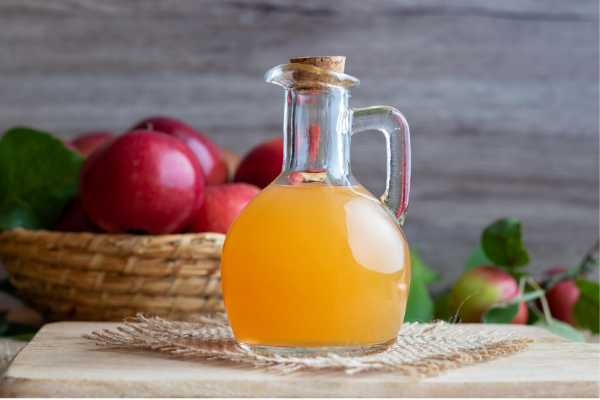
Vinegar. White vinegar is standard because it’s neutral and lets the other flavors lead. You can substitute apple cider vinegar — including homemade apple cider vinegar — for a slightly fruitier, more rounded final flavor, though the sauce will be a touch less sharp.
Molasses. I usually use blackstrap because that’s what I keep on hand. The original recipe specifies unsulphured for a slightly lighter flavor profile. Either works — blackstrap will give you a darker, richer sauce with more mineral notes; unsulphured will be slightly cleaner and sweeter. With this much else going on flavor-wise, the difference is subtle.
Sweetener. Brown sugar, maple syrup, or honey are all interchangeable here. Coconut sugar would also work. I use our homemade maple syrup.
Garlic and onion (allium-free version). If you have an allium allergy, asafoetida powder (also called hing — find it at any Indian grocery) is the traditional substitute. Use ¼ teaspoon of asafoetida powder for each clove of garlic in the recipe, and skip the onion entirely or substitute ¼ tsp asafoetida for the onion. The sauce will taste different but still good.
Mustard. The recipe calls for dry mustard powder, not prepared mustard. If you only have prepared yellow mustard, use 1 Tbsp prepared per 1 tsp dry — but the result will be more pungent and slightly less integrated.
Salt reduction. You can reduce the salt by up to half, but you’ll need to refrigerate the finished sauce instead of storing it on the pantry shelf. The salt and vinegar work together for shelf stability.
Vegan version. Skip the anchovies and add 2 Tbsp of soy sauce or tamari plus 1 Tbsp dried mushroom powder (porcini works well). It won’t taste like traditional Worcestershire but it will be a pleasant savory sauce with similar applications.
Fresh ginger. Substitute with ½ tsp ground dried ginger if needed. Fresh is much better here.
How to Use Homemade Worcestershire Sauce
A few drops or a splash transforms a surprising number of dishes. Here’s how I actually use it:
In meats and grilling. Mix 1 Tbsp into each pound of ground beef before forming burger patties. This is the single best thing you can do for a homemade burger. Add 2 Tbsp to a basic steak marinade with olive oil, garlic, and black pepper. Splash into pan drippings when making gravy from a roast.
In long-simmered savory dishes. A glug into beef stew (about 2 Tbsp per pot) deepens the broth dramatically, and the same goes for chili and Brunswick stew. Sloppy joes, cottage pie, and shepherd’s pie all rely on Worcestershire as their secret weapon.
In dressings and dips. Caesar salad dressing is non-negotiable. Bloody Mary cocktails want at least ½ tsp per drink. Whisk it into mayonnaise for a quick remoulade.
The unexpected uses. A few drops on hot popcorn (sounds odd, tastes incredible). Stirred into scrambled eggs while they’re cooking. Brushed on cheese toast before broiling.
Substitution ratio: Use homemade 1:1 with commercial Worcestershire in any recipe that calls for it. The strength is similar.
Storage and Shelf Life
Once aged and strained, this sauce keeps:
- Pantry: Up to a year in a sealed jar
- Refrigerator: Indefinitely (will keep 2+ years cold)
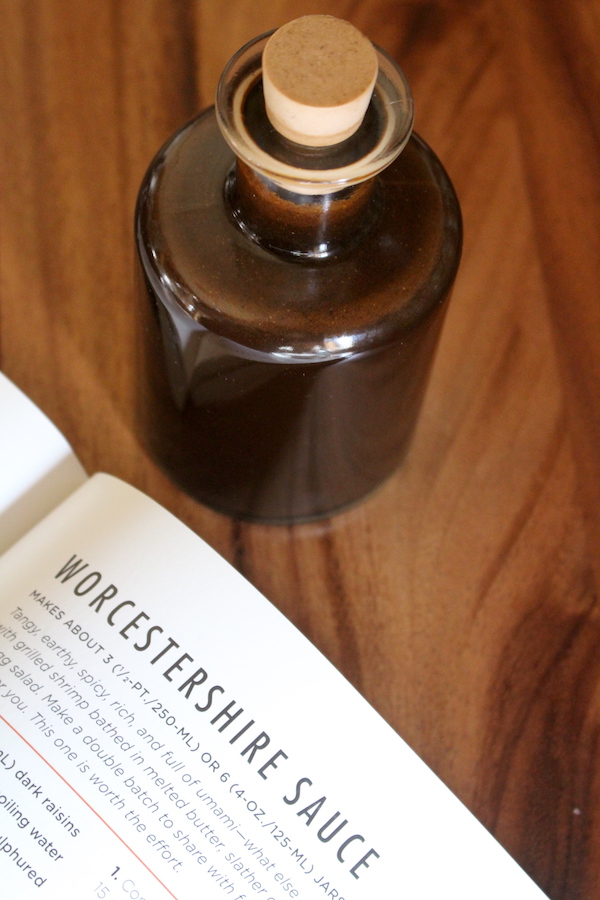
The combination of vinegar (2 cups), salt (2 Tbsp), and a month of aging makes this shelf-stable at room temperature. If you’ve reduced the salt or vinegar from the recipe, refrigerate to be safe.
Worcestershire Sauce FAQs
Active time is about 30 minutes — soaking the raisins, blending, and a quick boil. Then it needs to age in a sealed jar for at least one month before using, with three months giving noticeably better flavor. There’s no shortcut to the aging step; the time is what transforms sharp vinegar and raw spices into the complex, integrated flavor that defines real Worcestershire sauce.
This recipe is naturally gluten-free as written — none of the ingredients contain wheat or gluten. This is one of the main reasons people make their own: commercial Worcestershire sauces have historically contained wheat, and Lea & Perrins has reportedly varied its formula over the years. If you have celiac disease or gluten sensitivity, making your own gives you certainty about every ingredient.
You don’t need to. With 2 cups of vinegar and 2 tablespoons of salt, the finished sauce is shelf-stable in a sealed jar for up to a year, and indefinitely in the refrigerator. Water bath canning would be unnecessary and might affect the delicate spice flavors. Store it in a clean canning jar with a plastic lid (vinegar will corrode metal lids over time).
This is technically aged, not fermented. The brief boil pasteurizes the mixture, which kills off any wild bacteria or yeast that would drive a true fermentation. What happens during the month of aging is flavor integration and mellowing — the spices infuse into the vinegar, the harsh edges round off, and the whole thing becomes more than the sum of its parts. Traditional cask-fermented Worcestershire ages for 18 months in oak, which gives it a different character than this aged-not-fermented version. If you want a truly fermented sauce project to compare, fermented hot sauce is a good starting point. But this aging method is much more accessible for a home kitchen, and the result is genuinely excellent — deeper and more complex than commercial sauces, even with a much shorter aging window.
Don’t throw it away. Two great uses: stir it into soups, stews, or chili by the spoonful as a flavor booster; or dehydrate the paste at 135°F until dry and brittle, then grind into Worcestershire powder. The powder is incredible on popcorn, in spice rubs, or as a finishing seasoning for roasted vegetables. (For more on the dehydrating side of homestead cooking, see vegetables to dehydrate for winter soups — the same principles apply.) One batch yields about a half-pint of paste, which makes roughly ¼ cup of powder.
Preserving Favorites
If you tried this Worcestershire sauce recipe, or any other recipe on Practical Self Reliance, leave a ⭐ star rating and let me know what you think in the 📝 comments below!
And make sure you stay in touch with me by following on social media!
Homemade Worcestershire Sauce
Ingredients
- 1/4 cup raisins
- 1/4 cup boiling water
- 1/2 cup un-sulfured molasses
- 1/4 cup tamarind paste
- 2- ounce can anchovies
- 1 large onion, coarsely chopped
- 1 inch fresh ginger, peeled & chopped
- 6-8 cloves garlic, crushed
- 2 cups white vinegar, divided
- 2 whole cardamom pods
- 2 Tbsp. kosher or canning salt
- 2 Tbsp. brown sugar, or maple syrup
- 1 Tbsp. crushed red pepper flakes
- 1 Tbsp. dry mustard
- 1 tsp. whole cloves
- 1 tsp. black peppercorns
- 1/2 tsp ground cinnamon
Instructions
- Soak raisins: Pour boiling water over raisins in a small bowl and let stand 15 minutes to soften. Drain and discard water.
- Blend the base: In a food processor, combine softened raisins, molasses, tamarind paste, anchovies (with their oil), onion, ginger, garlic, and 1 cup of the vinegar. Process until smooth.
- Combine and boil: Pour the puree into a saucepan. Add the remaining 1 cup vinegar and all spices (cardamom, salt, sugar/syrup, red pepper flakes, mustard, cloves, peppercorns, cinnamon). Bring to a boil over medium-high heat, then immediately remove from heat.
- Jar and age: Cool slightly, then pour into a 1-quart canning jar. Cap with a plastic lid (vinegar will corrode metal). Store in a cool, dark pantry for at least 1 month. 3 months is better.
- Strain: Pour the aged sauce through a fine mesh sieve into a clean jar. Reserve the strained-out solids. They're great stirred into soups by the spoonful, or dehydrated into Worcestershire powder.
Notes
Nutrition
Nutrition information is automatically calculated, so should only be used as an approximation.
From-Scratch Pantry Staples
If you enjoyed this Worcestershire sauce project, here are more pantry-staples you can make from scratch:
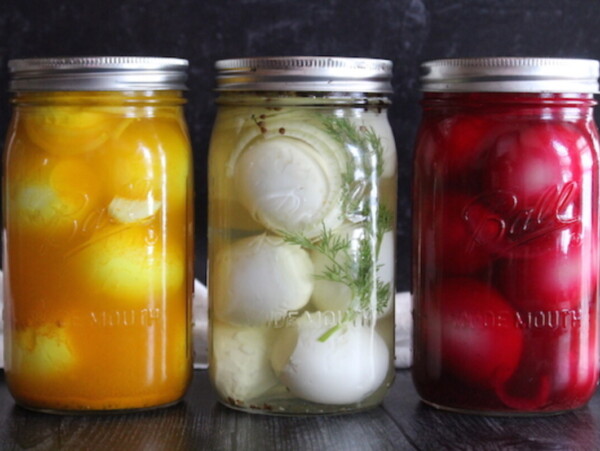
- Pickled Eggs Recipe — the classic farmhouse snack that disappears the moment you open the jar; quick fridge method or shelf-stable canned version
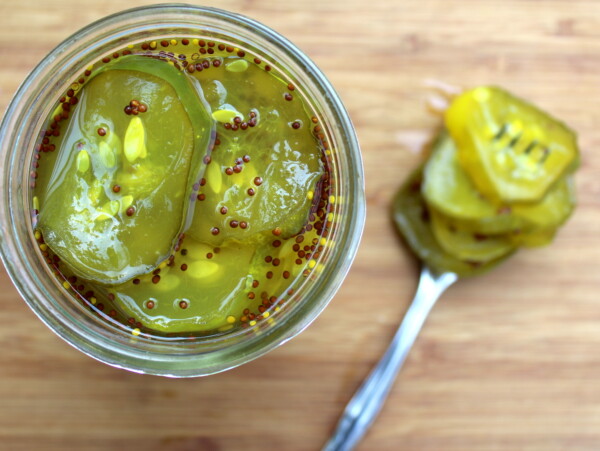
- Dill Pickle Canning Recipe — crisp, garlicky water-bath pickles that beat anything from the grocery store, with the food-safety details you actually need
- Pickled Garlic Recipe — turns sharp raw garlic into a mellow, snackable condiment in a week; the secret weapon for cheese boards, salads, and martinis
- Fermented Garlic Honey — two ingredients, no work, and a year on the shelf; the homestead remedy that doubles as the best glaze you’ll ever drizzle on roasted vegetables
- Homemade Apple Cider Vinegar — turns the apple peels and cores you’d otherwise compost into rich, raw vinegar with real depth — for free
- Salt Cured Egg Yolks — the umami-rich finishing ingredient that fancy restaurants charge $4 for and that you can make at home with two ingredients and a week of patience
- Homemade Maple Syrup — yes, you really can tap your own trees and boil down real maple syrup, even with just a few backyard maples and a stockpot
Find the perfect recipe
Searching for something else? Enter keywords to find the perfect recipe!
Preserving Recipes













Thank you so much for this recipe. This was my first time making homemade Worcestershire sauce. I had hoped to ferment it for 6 months, but I needed some today so I did decant it after 2-1/2 months. My husband said the taste was excellent.
I’m so glad to hear it!
Can I use ground cardamom? If so, how much should I try to use?
Yes, ground works fine. Use about 1/4 teaspoon to substitute for the 2 whole pods in the recipe. Ground cardamom infuses more aggressively than whole pods, so start there and only go higher (up to 1/2 tsp) if you want more warmth.
Wow this is an amazing recipe- I have been making it for years, surely more than 10?
I’ve made some changes to fit our tastes..300gms home grown NZ Garlic., white wine vinegar instead of apple cider. I also strain it & squeeze darn hard the remains.
We’re on the last bottle I made 5 years ago. I made x2 batches last year but they all went to friends.
I’m in South Island New Zealand.
Fully on the grid but love to make.
Thank you for sharing.
I’m so glad to hear it!
Sounds like a winner and I can’t wait to try it . How much is “one onion coarsely chopped ” in cups or weight ? Thank you !
A large onion is roughly 10 to 12 oz by weight (about 280 to 340 g), which works out to about 1.5 to 2 cups coarsely chopped. Exact precision doesn’t matter much here since everything gets puréed and aged for a month. Enjoy!
I want to try this! Assume the jar must be sterilized. Does it ferment, as in do I need to leave the lid loose?
Thank you in advance for your time and answers.
Yours Truly,
Janet
A clean jar is all you need, washed in hot soapy water and rinsed well. It doesn’t ferment, it just ages. The quick boil at the start pasteurizes it, so nothing is bubbling away in there and you can screw the plastic lid on snug like normal. Enjoy!