
Affiliate disclosure: This post may contain affiliate links. Please see our Privacy Policy.
Marsh marigold is one of the first wild greens to push up out of the mud each spring, long before the garden wakes up. People have gathered it as a cooked potherb for generations, welcoming it to the table after a long winter of stored food.
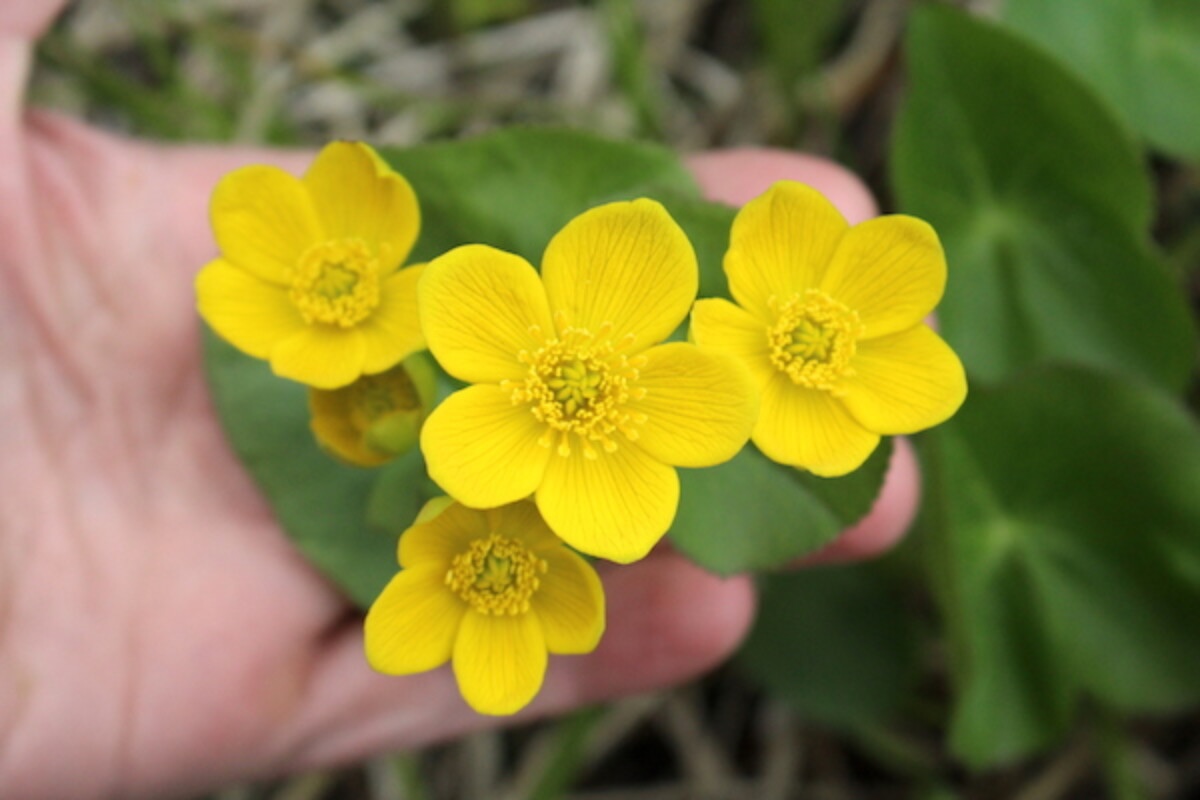
Table of Contents
- Notes from My Homestead
- What is Marsh Marigold?
- Is Marsh Marigold Edible?
- Always Cook Marsh Marigold Before Eating
- Where to Find Marsh Marigold
- Identifying Marsh Marigold
- Marsh Marigold Look-Alikes
- Harvesting Marsh Marigold
- Cooking Marsh Marigold
- Ways to Use Marsh Marigold
- Marsh Marigold FAQs
- Spring Foraging Guides
- Edible Wild Weeds
Spring is always slow to arrive here in the North Country, and we don’t see our first dandelions until mid-May. Contrary to popular belief, though, dandelions are nowhere near the first flowers of spring. Months earlier, hardy greens like marsh marigold, stinging nettle, chickweed, yellow dock, and burdock are already sending out tender edible leaves.
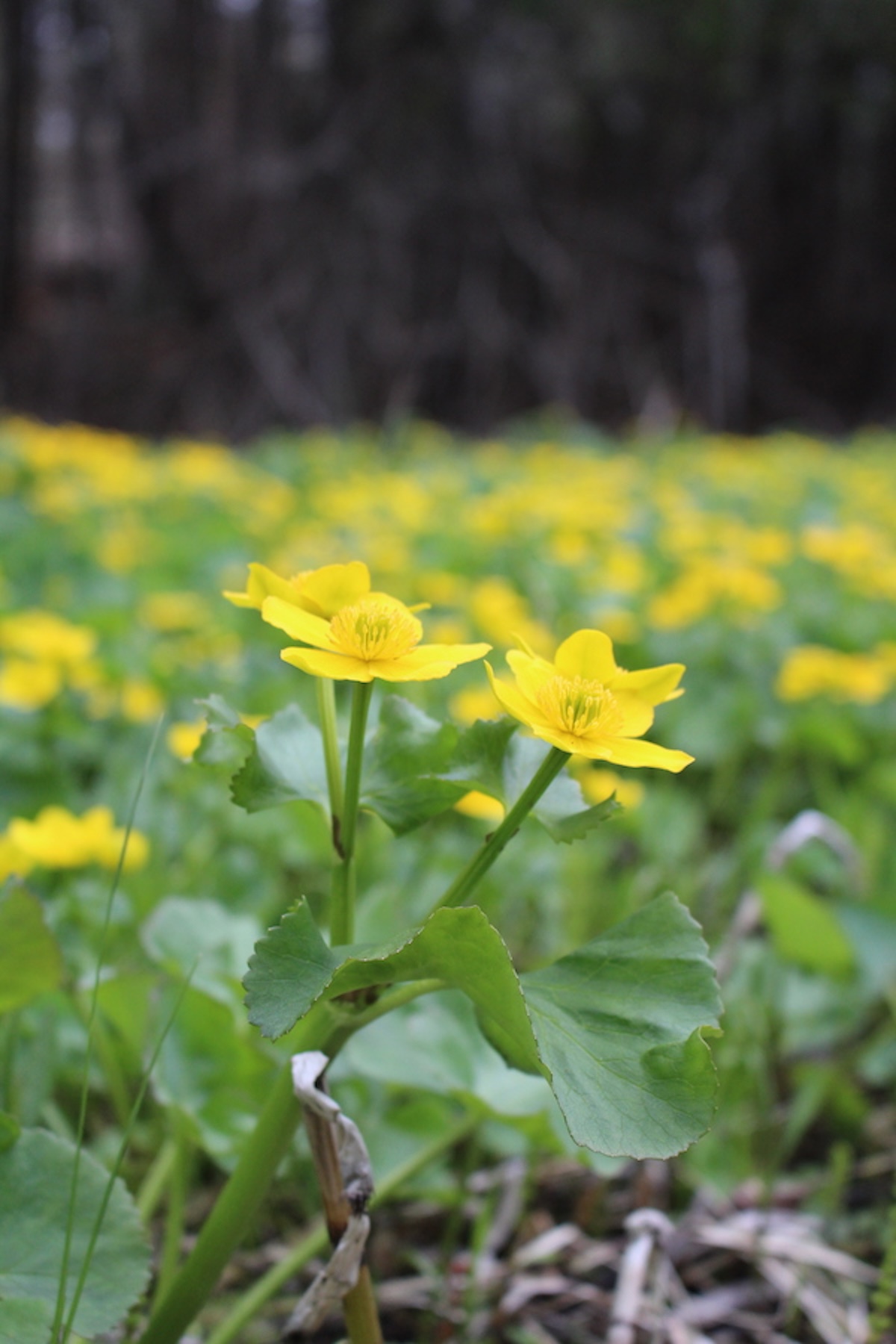
Not long after that, the bees go to work on sweet maple flowers high in the trees, then make their way down to the swamps to sample the nectar from whole carpets of marsh marigold blossoms.
Most of the year, the plant hides in plain sight as low, indistinct green foliage, easy to walk right past. Then for a few weeks every spring, that same patch lights up with bright yellow flowers you couldn’t miss if you tried.
Notes from My Homestead

I’ll be honest with you, I’m not much of a cooked greens person. I won’t touch cooked spinach, and I’d usually rather eat my greens raw in a salad. So it surprised me as much as anyone when I fell for marsh marigold. Even after a good long simmer, it keeps an agreeable, almost succulent texture, closer to purslane than to a limp pile of spinach, and I found the flavor mild and pleasant even after only brief cooking.
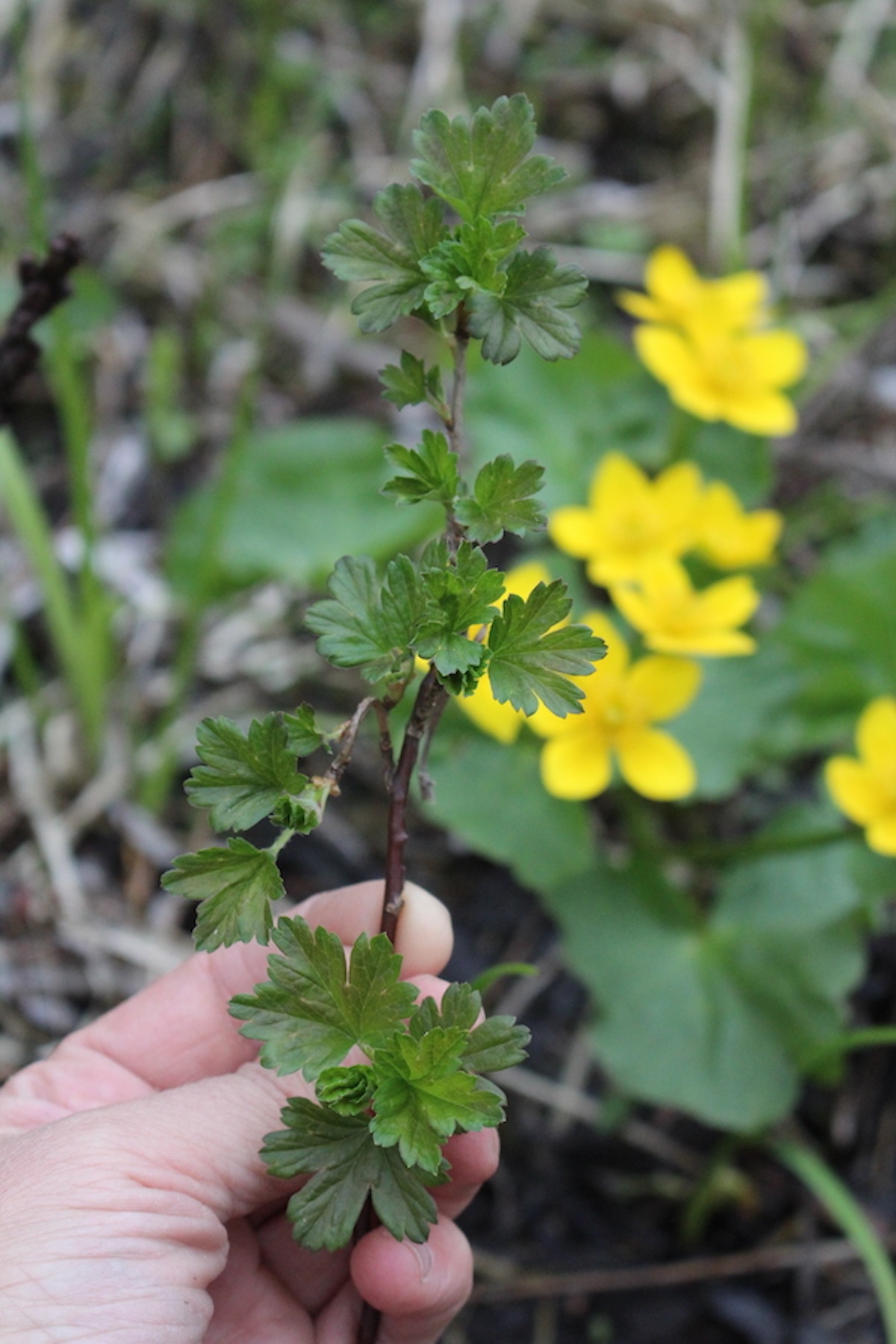
What I love most, though, is that marsh marigold got me foraging in a whole new place. I’m not usually one to go poking around in boggy ditches, but while I was down there hunting greens, I started noticing everything else those wet spots had to offer. I spotted willow flowers, autumn olives, highbush cranberries, and a big patch of wild gooseberries. Before long I’d developed a real soft spot for the fruits of these out-of-the-way wet places, and fell for wild raisins, nannyberries, and all manner of wild edible fruits I’d never have found if I hadn’t ventured off the beaten path.
My Dad harvested these since before I was born! Next to nettles, it was my favorite spring green!! We harvested only when the buds were closed… on the last boil, Dad added a little bacon, then when cooked we added butter and vinegar.
What is Marsh Marigold?
Marsh marigold (Caltha palustris) is a low-growing perennial in the buttercup family, and despite the name, it isn’t related to the true marigolds you’d grow in a flower bed. It’s a plant of wet ground, and you’ll almost always find it with its feet in the mud.
Caltha palustris is native to most of the United States, especially in the north (range map here), along with all of Canada and much of Europe and Asia.
Is Marsh Marigold Edible?
Marsh marigold is edible, but only after it’s been cooked. The young leaves, leaf stalks, and unopened flower buds are all gathered as food. I’ve read reports of people eating it raw, but that isn’t advised. Like other members of the buttercup family, marsh marigold contains a small amount of a toxin called protoanemonin. It’s very mild in marsh marigold and is easily removed by boiling, which is why it’s always eaten as a cooked green rather than a salad leaf.
Some people report a mild skin reaction from handling the raw leaves, so be aware that’s possible. I don’t tend to react to much, and marsh marigold has never given me any trouble, but it’s worth knowing if you have sensitive skin.
Always Cook Marsh Marigold Before Eating
Marsh marigold should never be eaten raw. Boiling breaks down the mild protoanemonin it contains, so cook the leaves and buds before eating and don’t nibble them fresh in the field the way you might with a milder wild green.
Where to Find Marsh Marigold
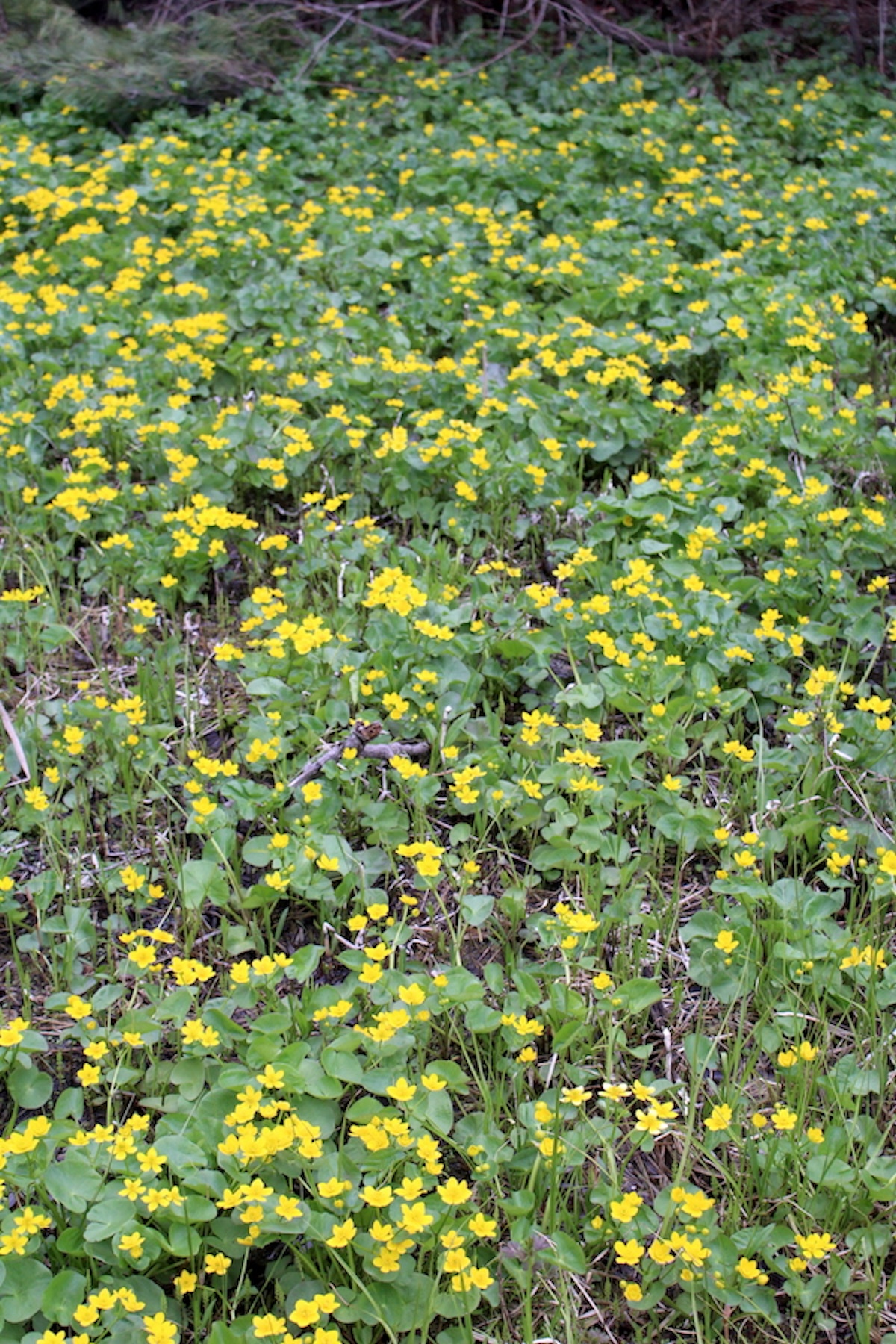
As the name suggests, marsh marigold thrives in wet soil. Much of the ground around our woodland homestead sits on shallow clay, and the low spots stay wet for a few days after any heavy rain. Add a bit of shade to that, and you’ve got just the conditions marsh marigold loves.
Look for it in wet ash and alder stands, in swampy ditches, near springs, and around the edges of ponds. These are the same rich, wet pockets where you’ll turn up other early spring treasures like fiddlehead ferns, so it pays to slow down and look closely once you’re in the right habitat.
Identifying Marsh Marigold
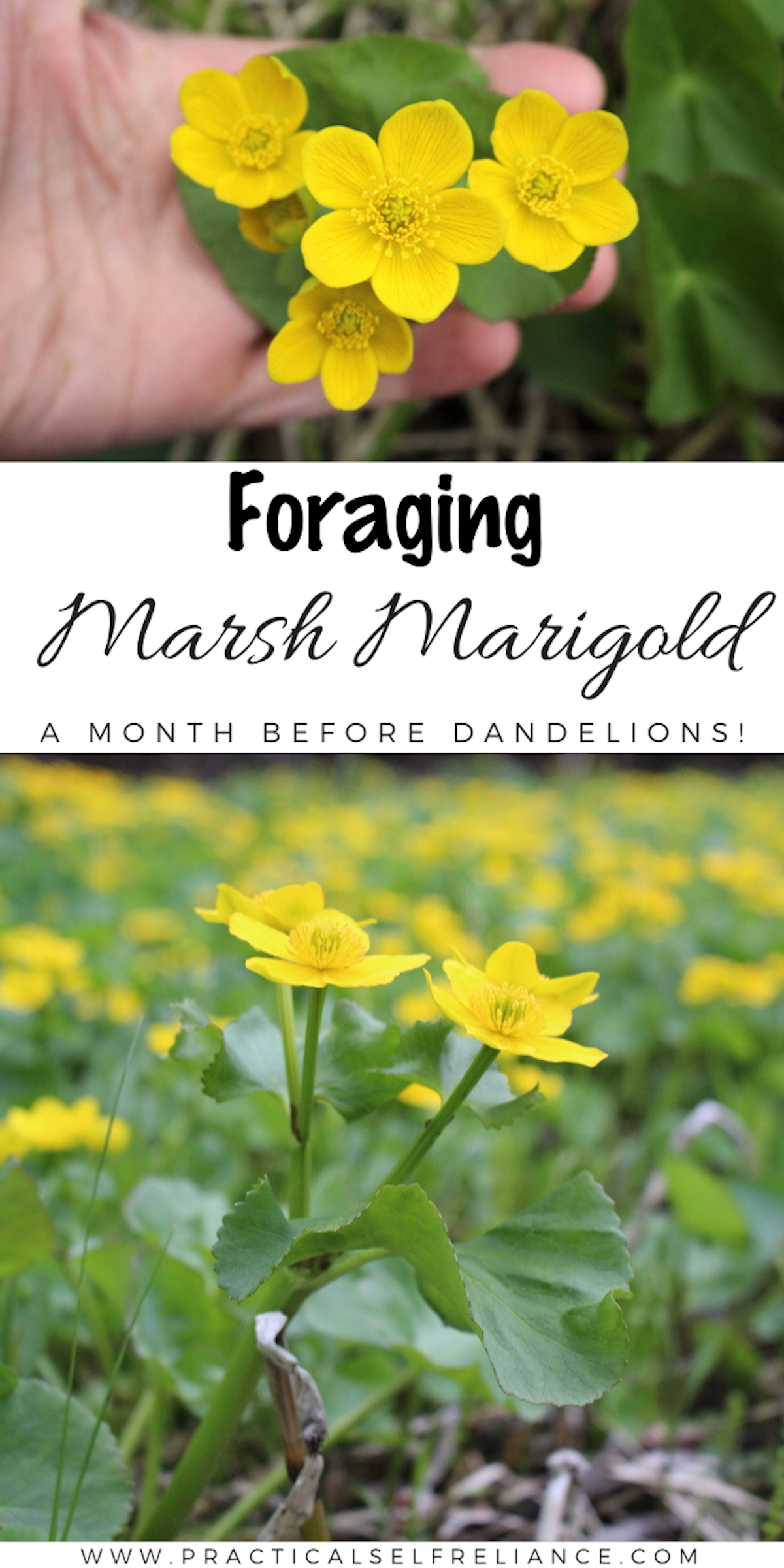
Marsh marigold is a low, mounding plant, 12 to 18 inches high at most, that grows in clumps rather than spreading into a solid carpet. Here’s what to look for.
Leaves
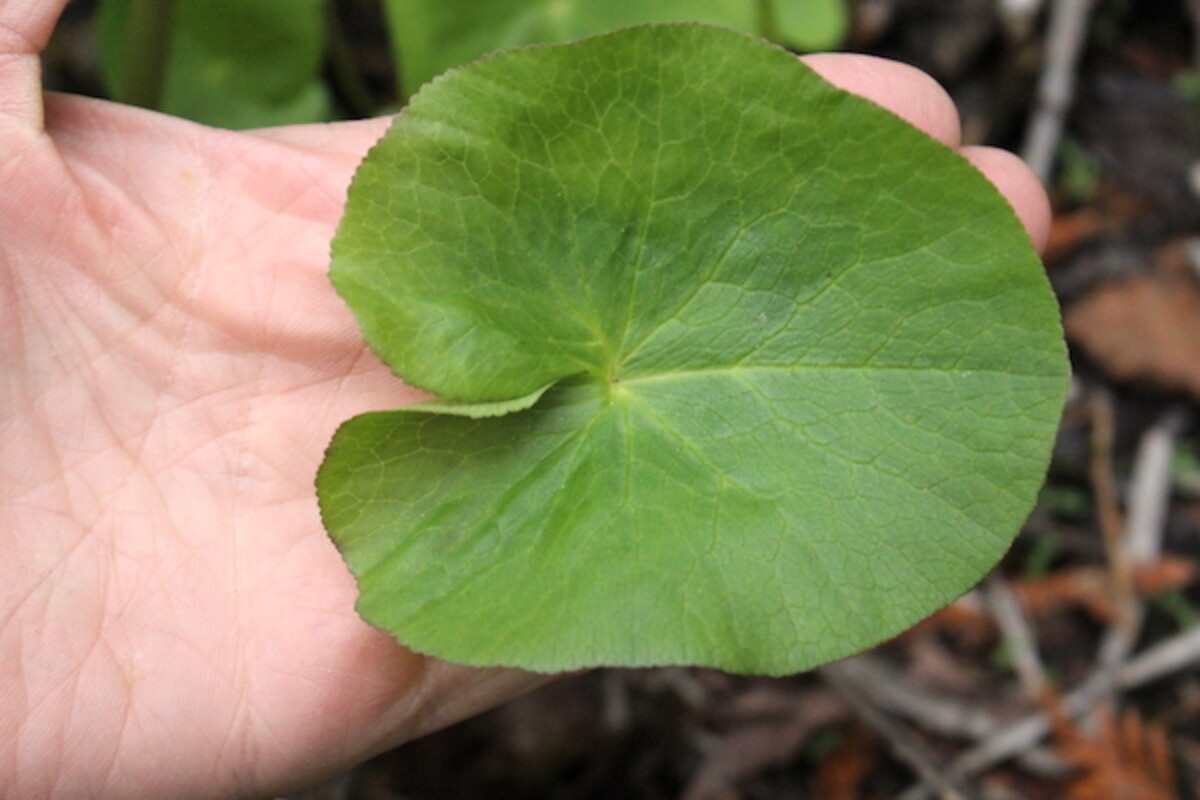
Marsh marigold leaves are kidney-shaped and slightly toothed along the edges, with a slightly waxy, glossy surface.
From a distance they look round, but on closer inspection you’ll see a deep cut, or notch, where the stem attaches at the bottom of the leaf.
Flowers
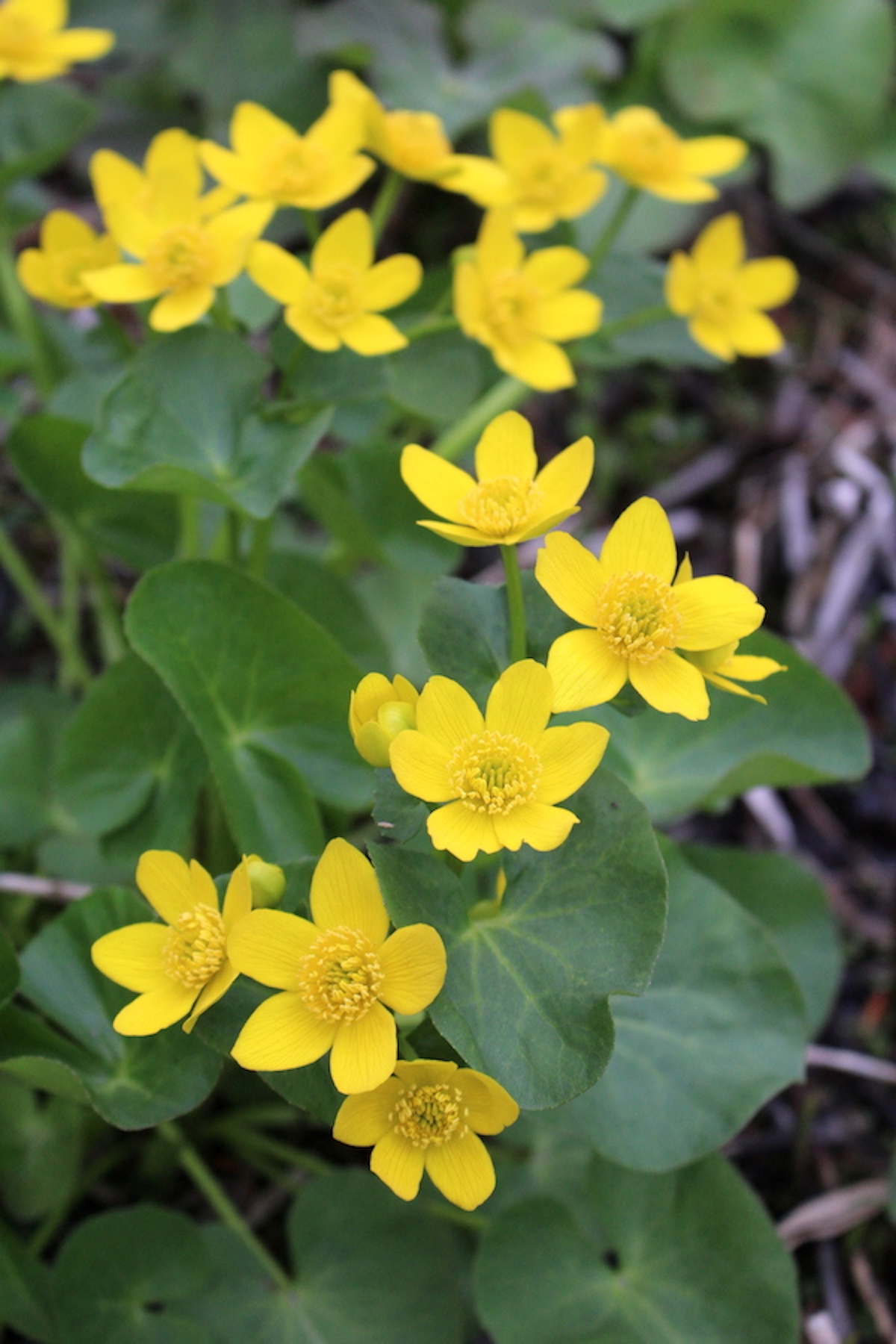
As a member of the buttercup family, marsh marigold has bright yellow, buttercup-like flowers with 5 to 9 “petals” that are actually sepals that look like petals.
I’ve only ever seen them with 5 around here, but sources say they can have 5 to 9, generally in odd numbers, and readers have written in describing 9-petaled blooms further south.
Marsh Marigold Look-Alikes
Marsh marigold is a fairly distinctive plant, but it does have one important look-alike worth learning: lesser celandine. A reader also pointed out, quite rightly, that any wet-ground forager should keep water hemlock in mind, not because it resembles marsh marigold, but because it grows in the same soggy places.
Lesser Celandine (Ficaria verna)
Lesser celandine (Ficaria verna), also called fig buttercup, is a non-native, highly invasive plant that has spread through much of the northeastern United States and is now turning up in the Midwest and Pacific Northwest. It’s in the same buttercup family as marsh marigold, it likes the same moist ground, and it blooms with similar glossy yellow flowers in early spring, which is exactly why the two get confused. A few reliable differences will keep them straight:
- Look behind the flower. Lesser celandine has 3 small green sepals sitting behind its yellow petals. Marsh marigold has no green sepals at all, because its “petals” are the sepals.
- Count the petals. Lesser celandine typically has 7 to 12 narrow, glossy yellow petals. Marsh marigold has 5 to 9 broader petal-like sepals.
- Check the roots. Lesser celandine grows from finger-like underground tubers and produces small cream-colored bulbils at the leaf bases. Marsh marigold has plain fibrous roots and makes neither tubers nor bulbils.
- Watch the growth habit. Lesser celandine forms a dense, spreading mat or carpet across the ground. Marsh marigold grows in distinct clumps and is generally a larger, taller plant.
Lesser celandine is in the generally toxic buttercup family and contains protoanemonin, so it isn’t a plant to gather casually for the pot. If you’re at all unsure which one you’re looking at, leave it be. The Wisconsin DNR has a helpful side-by-side on telling the two apart.
Western Marsh Marigold (Caltha leptosepala)
There’s also a related species, western marsh marigold (Caltha leptosepala), that’s also reported to be edible. It looks very similar to our eastern plant but has white flowers instead of yellow.
As for water hemlock and the other genuinely dangerous plants that love wet ground, they look nothing like marsh marigold, so this isn’t a case of true look-alikes. Still, when you’re foraging anything, pay attention and don’t just grab handfuls of leaves carelessly. Careless harvesting in a mixed wet meadow is where people get into real trouble.
Harvesting Marsh Marigold
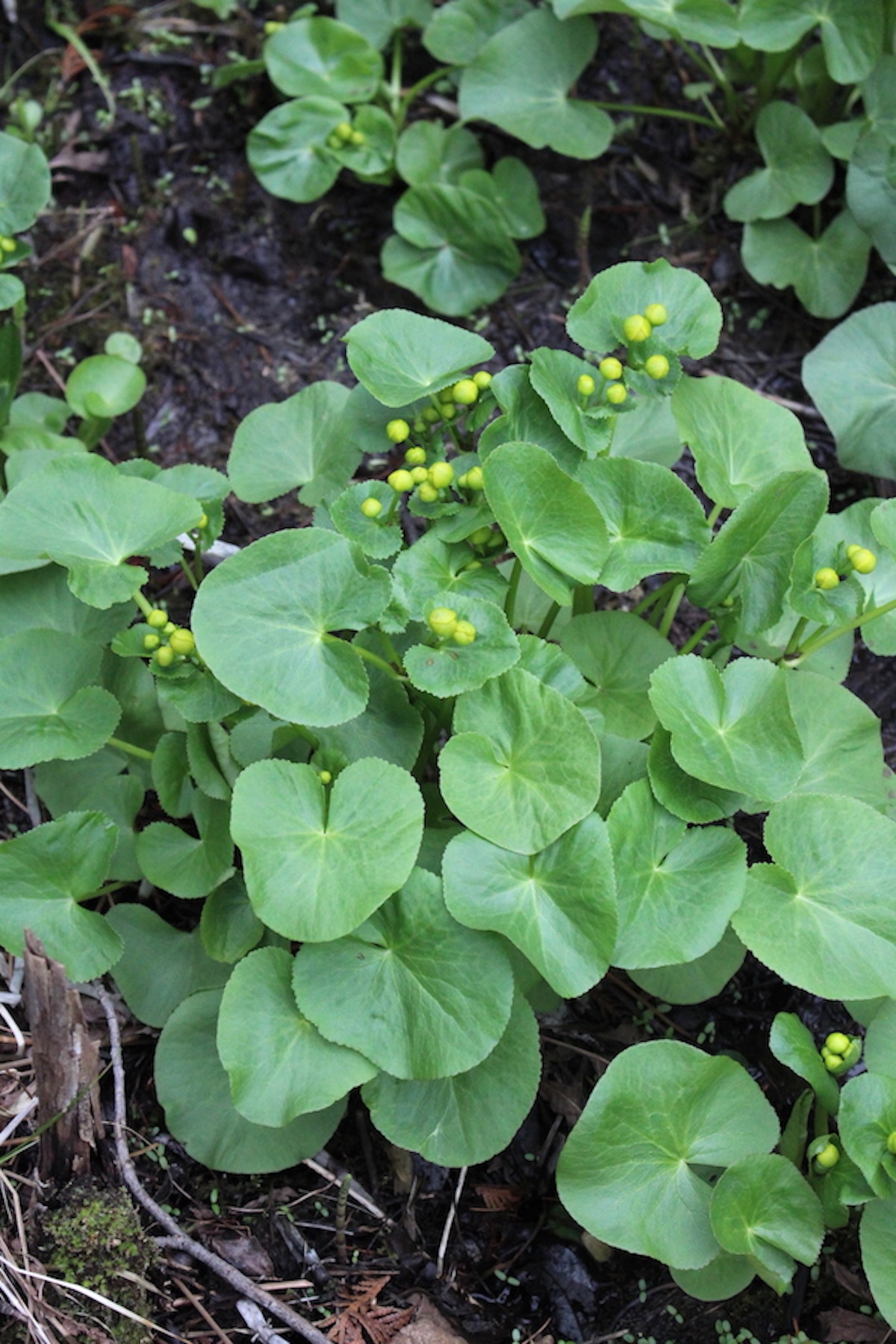
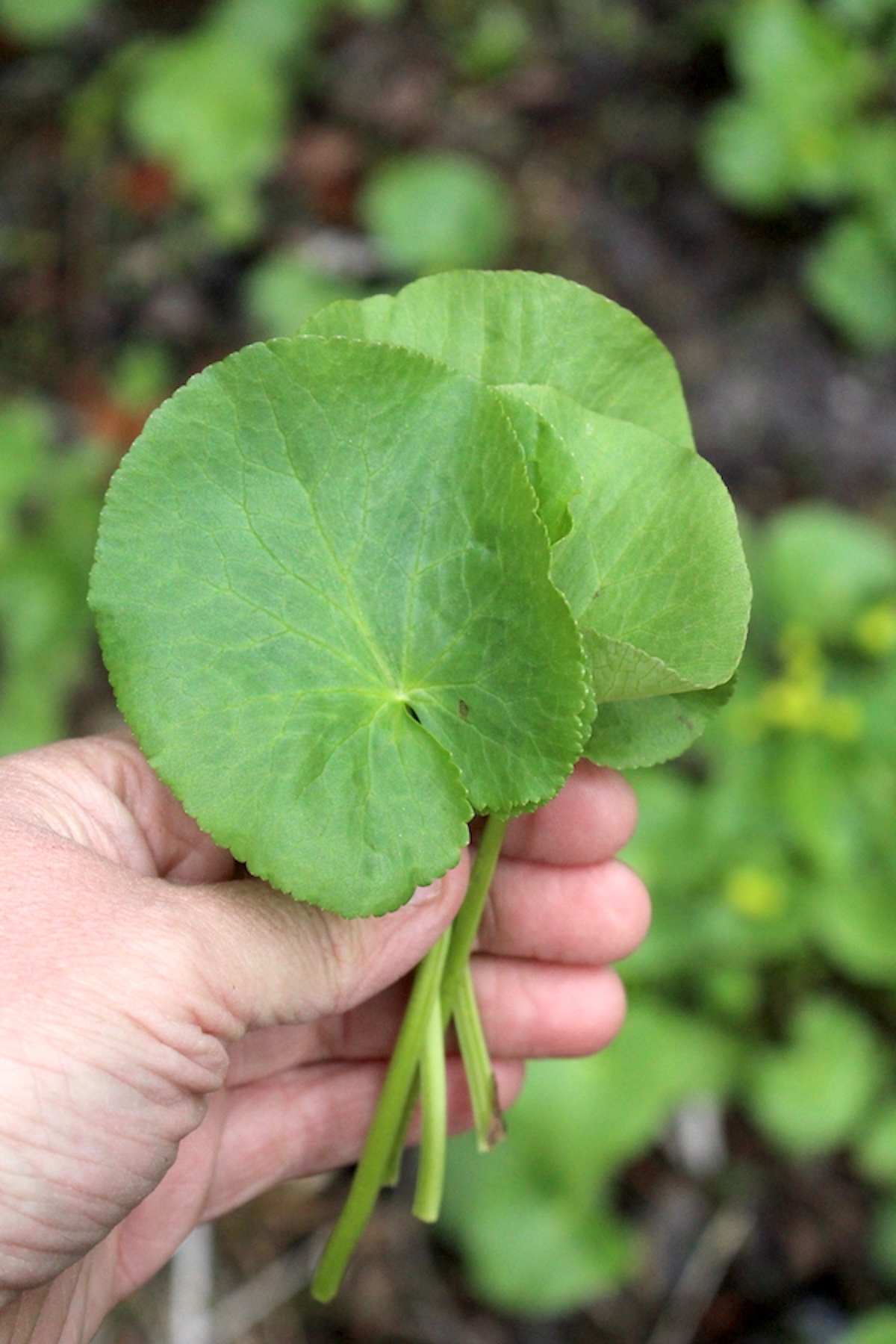
Like most greens, marsh marigold is worth gathering while it’s young and tender. Harvest young leaves and stems when they’re 1 to 3 inches across, and keep in mind they shrink dramatically once cooked, so you’ll want to gather quite a bit to make a meal. The leaf stalks and young, unopened flower buds are edible too, and those closed buds are a treat in their own right.
Ideally, you want to catch a plant early, just as it’s breaking bud but before the flowers open. Here in Vermont that’s mid to late April, though the leaves can often still be harvested through the end of May, well before the first dandelions hit their stride.
The leaves stay tasty right through the bloom cycle, so you can still gather them when those bright yellow flowers make the plant easy to identify. Once the blossoms fade, though, the plant is past its harvest window.
Cooking Marsh Marigold
Directions for cooking marsh marigold vary quite a bit, largely down to personal taste. Some folks suggest boiling for 20 minutes, then straining and rinsing. Others go for a full 60 minutes, changing the water every 20 minutes.
The longer you cook it, the milder the flavor becomes, though I found it plenty mild even after just a brief simmer. If you’re trying it for the first time, start at 20 minutes and add time from there until it suits you.
It’s not much to look at in a bowl, I’ll grant you, but the greens hold an agreeable texture even after long cooking and carry a succulent quality not unlike purslane. I happen to love it, but I know I’m in the minority. I’ve read others who treat it as a survival food or call it barely palatable, while others still use it as a base for gravy or just slather it in salt and butter.
Those closed flower buds can also be pickled and used much like capers, the same trick that works so well with dandelion buds.
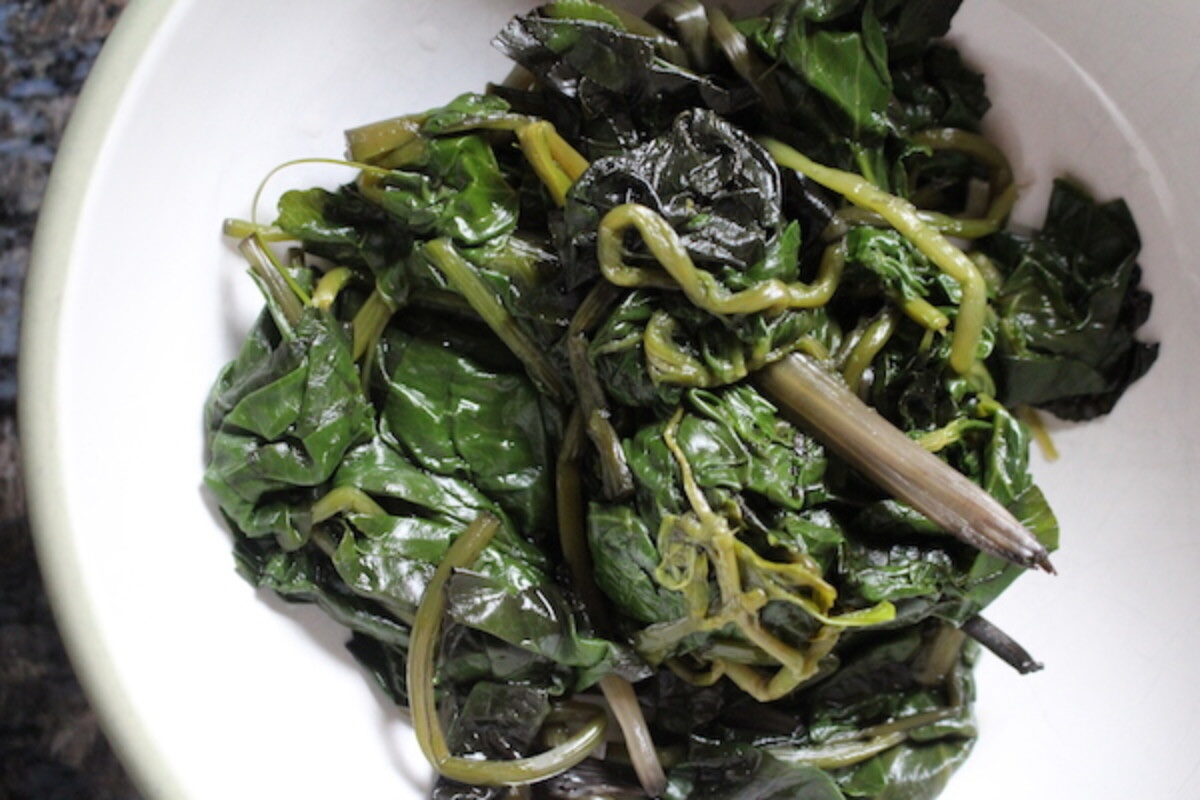
Most foragers, I’ve found, treat marsh marigold more as a historical curiosity than a staple, a memory of a time before year-round salads shipped in from warmer climates.
Sam Thayer captures that sentiment well in A Forager’s Harvest, where he notes that its main attraction is being abundant and easy to recognize, offering itself up as a potherb a full month ahead of the earliest garden produce, back when a springtime craving for fresh vegetables meant more to backcountry folk than the instant gratification of flavor.
Ways to Use Marsh Marigold
The simplest way to enjoy marsh marigold is as a cooked spring green, boiled and then dressed with butter, salt, and a splash of vinegar, or cooked down with a little bacon the way one reader’s family always did. The closed buds are worth setting aside to pickle like capers. It’s a natural fit alongside the other early wild edibles that come up around the same time, so I’ll often cook a mixed pot with whatever else the season is offering, from ramps to miner’s lettuce to wild asparagus.
If marsh marigold has you itching to get out and gather, it’s a good gateway into the wider world of spring foraging. There’s a whole spring’s worth of edible garden weeds and wild edible plants to get to know, and other early-season standouts like Japanese knotweed and lilacs aren’t far behind marsh marigold on the calendar.
Marsh Marigold FAQs
No. Marsh marigold contains a mild toxin called protoanemonin, common to the buttercup family, so it should never be eaten raw. Boiling breaks the compound down, which is why marsh marigold is always eaten as a cooked green rather than a salad leaf.
Yes, the kidney-shaped leaves are often described as waxy or glossy on the surface. That slightly shiny, smooth feel is one of the details foragers use to help confirm identification.
Look behind the flower and at the roots. Lesser celandine has 3 small green sepals behind its glossy petals, plus underground tubers and small bulbils at the leaf bases. Marsh marigold has no green sepals, plain fibrous roots, and grows in clumps rather than a spreading carpet.
Yes. The young, unopened flower buds are edible when cooked, and many foragers rate them as the tastiest part of the plant. They can also be pickled and used much like capers.
Recommendations range from 20 to 60 minutes. Start with 20 minutes, then taste and add time to suit your preference. The longer it cooks, the milder it gets, and some foragers change the water every 20 minutes over a full hour.
Spring Foraging Guides
Did you find this marsh marigold foraging guide helpful? Tell me in the 📝 comments below how you gather and cook marsh marigold on your own homestead!
And make sure you stay in touch with me by following on social media!
Edible Wild Weeds
Find the perfect foraging guide
Searching for something else? Enter keywords to find the perfect wild edible!








I’m in my 50’s now and have moved to Florida. This is one of the reasons I miss the north (along with dandelions) my Dad harvested these since probably before I was born! We did the bring to a boil, cook for 20 minutes and change the water and repeat 2x more (the 60 minute cook) next to nettles it was my favorite spring green!! We harvested only when the buds were closed (those were yummy themselves) . On the last boil, Dad added a little bacon then when cooked we added butter and vinegar…… YUMMMMMMMM
Sounds absolutely wonderfully. Thank you for sharing.
Not sure it grows in my area, Pacific Northwest, but am going to look into the western variety you mentioned. Here, in the desert of south eastern Washington “Biscuit Root,” also called “Desert Parsley, along with Cottonwood buds are the name of the game right now.
https://pfaf.org/user/Plant.aspx?LatinName=Ficaria+verna
À le Euell Gibbons. He suggests making capers from the early bud clusters.
Here is a good link explaining the differences between Marsh Marigold and Lesser Celandine: https://www.lhprism.org/blog/invasive-lesser-celandine-vs-native-marsh-marigold
I was just wondering what these pretty flowers were! They are starting to bloom now in Central PA. The ones I’ve seen have 9 petals.
Would you say Marsh Marigold has a bit of a waxy leaf? Just want to be sure on identification…
Yes the leaves are often described as waxy.
Hi…
I just found a patch of Marsh Marigolds and am curious to try them. Will you tell me how you prepare them please..? I don’t want to overcook the goodness out of them but, I don’t want to leave any toxins either. Also…do you cook the leaves and flower buds together..?
The recommendation is 20 to 60 minutes. I would start off with 20 minutes and then add additional time according to your taste preference. They will become milder in taste, the longer they are cooked.
Please be very careful when foraging marsh marigold in the Midwest. There is an insipid invasive look-alike called Lesser Celandine, which has been taking over lawns and gardens here. It dies back after the spring bloom and ten the bare spots sport clumps of new growth from seeds of many other opportunistic weeds.
That’s very interesting. Thank you for sharing.