
Affiliate disclosure: This post may contain affiliate links. Please see our Privacy Policy.
Edible wild berries are a sweet reward for any forager, and unlike roots and greens, most of them need no peeling or cooking. They’re easy for beginners and a little instant gratification on the trail. Wild strawberries start in June, and rose hips hang on long enough to poke out of the snow.
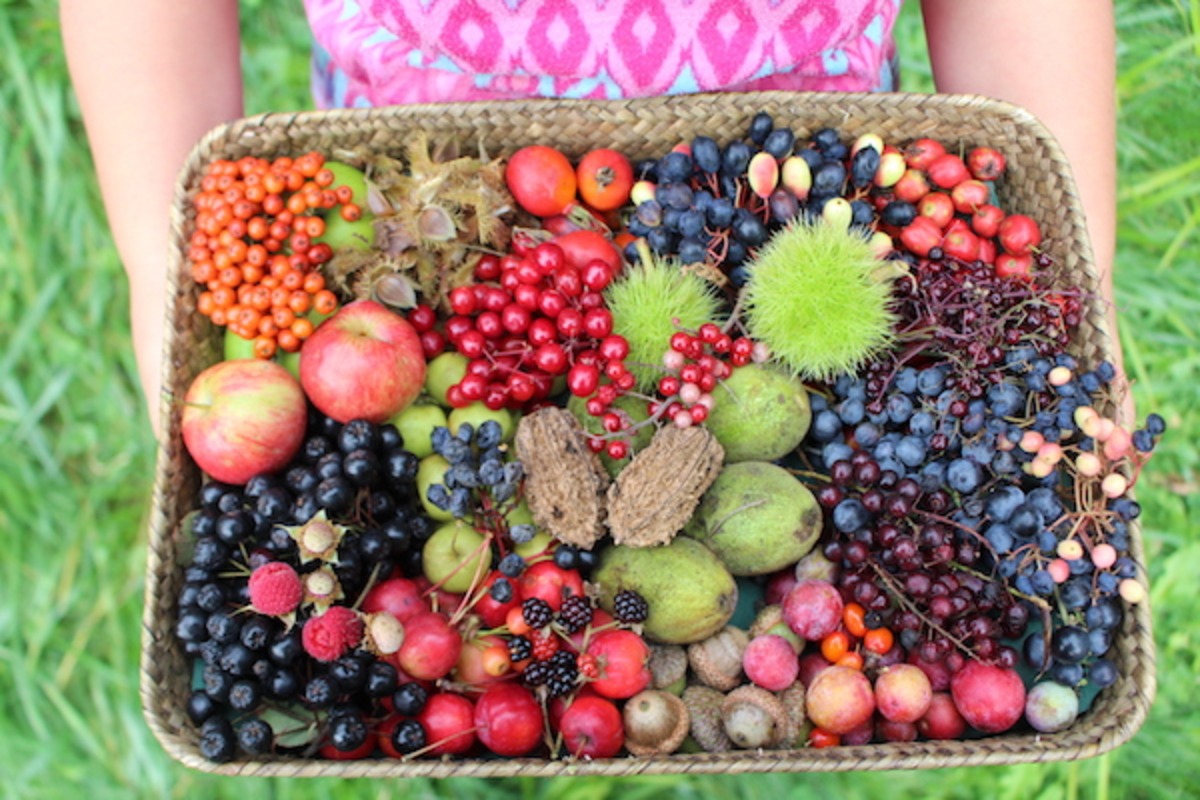
Table of Contents
- Forager’s Notes
- List of Edible Wild Berries & Fruit
- Apples and Crabapples (Malus sp.)
- Aronia Berries (Aronia sp.)
- Autumn Olive (Elaeagnus umbellata)
- Barberry (Berberis sp.)
- Bearberry (Arctostaphylos uva-ursi)
- Blackberry (Rubus sp.)
- Blackcaps or Black Raspberries (Rubus occidentalis & R. leucodermis)
- Black Cherry (Prunus serotina)
- Blueberry (Vaccinium sect. Cyanococcus)
- Buffalo Berry (Shepherdia sp.)
- Bunchberry (Cornus canadensis)
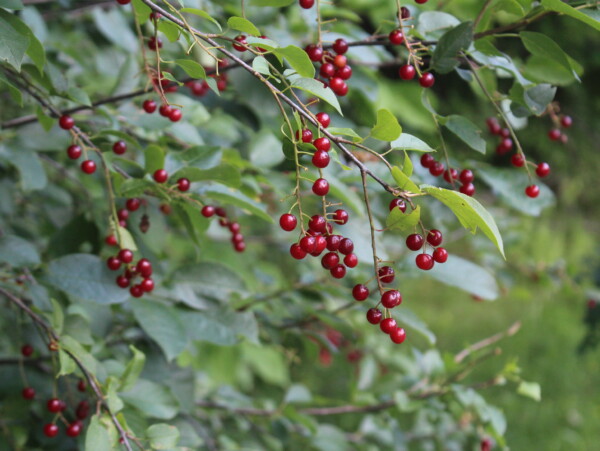
- Chokecherry (Prunus virginiana)
- Cloudberry (Rubus chamaemorus)
- Cranberry (Vaccinium sect. Oxycoccus)
- Crowberry (Empetrum nigrum)
- Currants (Ribes sp.)
- Dewberries (Rubus flagellaris)
- Elderberries (Sambucus canadensis & S. nigra)
- Fairy Bell (Prosartes sp.)
- Gooseberry (Ribes sp.)
- Grapes (Vitis sp.)
- Groundcherry (Physalis sp.)
- Guelder Rose or Highbush Cranberry (Viburnum opulus, V. trilobum or V. edule)
- Hackberry (Celtis occidentalis)
- Hawthorn (Crataegus sp.)
- Hobblebush (Viburnum lantanoides or V. alnifolium)
- Honeyberry (Lonicera caerulea & L. villosa)
- Huckleberry (Gaylussacia sp. and Vaccinium sp.)
- Lingonberry (Vaccinium vitis-idaea)
- Mayflower (Maianthemum canadense)
- Mock Strawberry or Indian Strawberry (Duchesnea indica)
- Mountain Ash or Rowan Berry (Sorbus sp.)
- Mulberry (Morus sp.)
- Nannyberry or Sheepberry (Viburnum lentago)
- Oregon Grape (Mahonia aquifolium)
- Partridgeberry (Mitchella repens)
- Passion Fruit (Passiflora sp.)
- Pawpaw (Asimina sp.)
- Persimmon (Diospyros sp.)
- Pin Cherries (Prunus pensylvanica)
- Plums (Prunus americana)
- Prickly Pear Cactus (Opuntia sp.)
- Raspberry (Rubus sp.)
- Red Blackberries (Rubus pubescens)
- Rose Hips (Rosa sp.)
- Salal (Gaultheria shallon)
- Salmonberry (Rubus spectabilis)
- Saskatoon Berries (Amelanchier sp.)
- Sea Buckthorn (Hippophae rhamnoides)
- Solomon’s Plume or False Solomon’s Seal (Maianthemum racemosum)
- Strawberry (Fragaria sp.)
- Teaberry (Gaultheria procumbens)
- Thimbleberry (Rubus parviflorus and R. odoratus)
- Watermelon Berry (Streptopus amplexifolius)
- Witherod or Northern Wild Raisin (Viburnum cassinoides or V. nudum)
- Other Wild Edible Plants
- Edible Wild Berries FAQs
- More Wild Fruit Guides
- More Foraging Guides
Wild fruits in the same family tend to like the same habitat. When you stumble onto one patch of wild berries, there are usually other tasty edibles nearby.
One fall, my kids and I harvested 23 different kinds of wild berries and fruits on a single two-hour hike. That same day we came across four kinds of nuts and nearly a dozen edible and medicinal mushrooms.
Our world really is bursting with wild edibles, as long as you know where to look. Don’t get me wrong, I love a good foraging challenge.
I’ll happily cook up thorny bull thistle or grind birch bark into flour. Sometimes, though, I just want something I can pop right into my mouth without a fuss.
There are few things that beat the deep, rich flavor of a ripe Saskatoon berry. Most years, you can pick wild apples by the truckload in rural areas with very little effort.
You don’t have to be out in the sticks to find wild fruit, either. Native berries are popular in strip mall parking lot plantings, since they’re low maintenance, bloom beautifully in spring, and feed songbirds all summer. Those same shrubs are prime spots for urban foraging.
Just be sure of every plant you pick. Yews are common in those same plantings, and the seed inside each red yew berry is deadly. Landscaped shrubs can be sprayed, too, so skip anything that looks freshly treated.
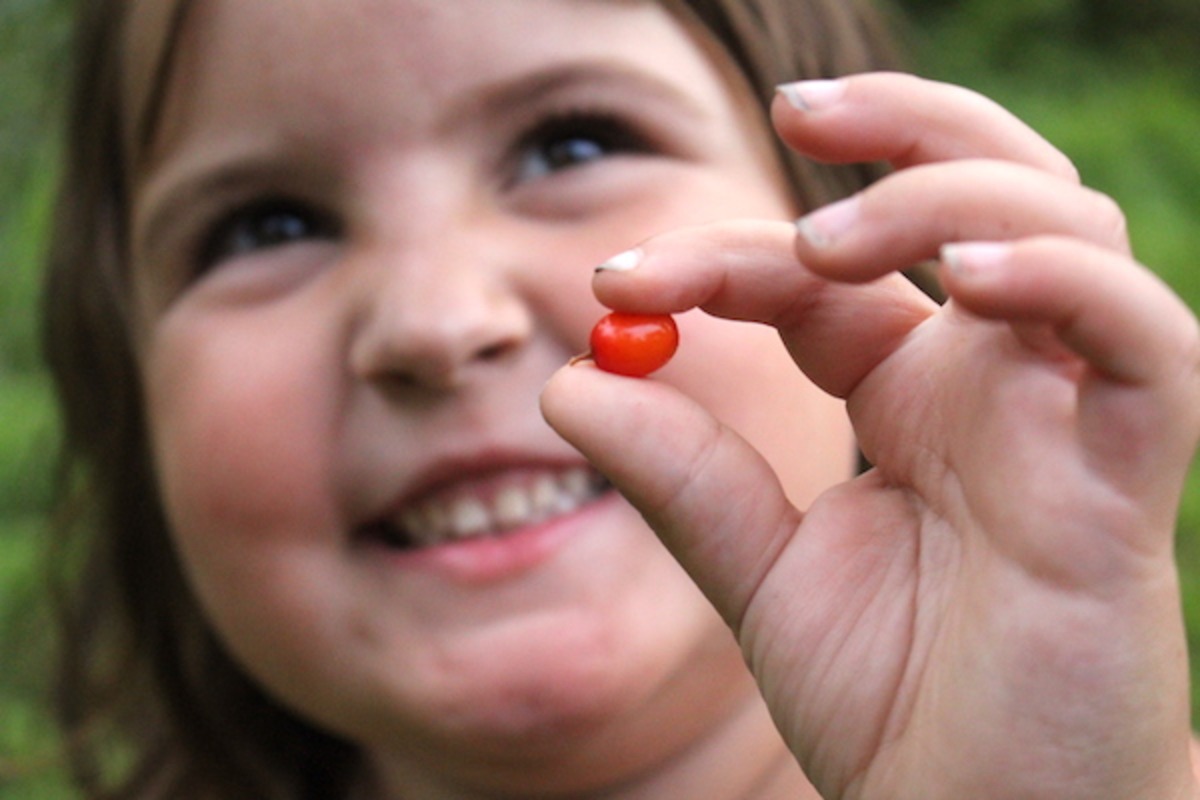
When my kids were preschoolers, most of my foraging happened with them along for the adventure. When you’re foraging with kids, wild berries are always a winner.
The promise of berries in the parking lot would get a reluctant toddler to head for the car. Nothing motivated an impromptu hike like thimbleberries. Sometimes you’ve gotta use every trick in the book with a stubborn two-year-old, and I’d rather bribe with wild berries than just about anything else.
If you’re building your own forager’s bucket list, start with wild fruit. Before you pick anything, get to know the poisonous berries that grow near you. A few of them look a lot like the good ones.
Forager’s Notes

As soon as my daughter could talk, she’d point at a wildflower or berry on our hikes and ask, “Is this an eating one, mama?” My son was the same way. His favorite trails were the shady town trails near home, where bunchberries, red blackberries and Solomon’s plume grow right at toddler height. I mostly handed him the red berries.
Those little hands couldn’t pick them fast enough, and the only fruit he loved more was thimbleberries. Watching my kids learn the woods one berry at a time has been such a joy, and every hike still turns into a snack.
List of Edible Wild Berries & Fruit
These are the wild berries and fruits I know, in alphabetical order. I’ve picked many of them with my kids here in Vermont, and a few I’ve only read about so far.
Some of these fruits are hard to find locally, but Foraged market sells many of them fresh in season or frozen year-round. Cloudberries are one of the few things we can’t harvest here, and this way, I can try them without a trip to Scandinavia.
If I’ve missed one that you know, leave me a note in the comments. I’m always excited to learn about new wild edible plants.
Apples and Crabapples (Malus sp.)
Wild apples are easy to spot in the landscape, since wild apple trees look a lot like domestic ones, just a bit wilder. Without pruning, they grow much less uniform. Without thinning in spring, they often bear huge crops of smaller fruit, since the tree only has so much energy to go around.
Since apples don’t come true to seed, every chance seedling is a new variety with its own flavor, for better or worse. Some are sour or acidic, while others are heavy on tannins. That balance is exactly why wild apples make great hard cider, since a good batch needs more than the plain sweetness of modern apples.
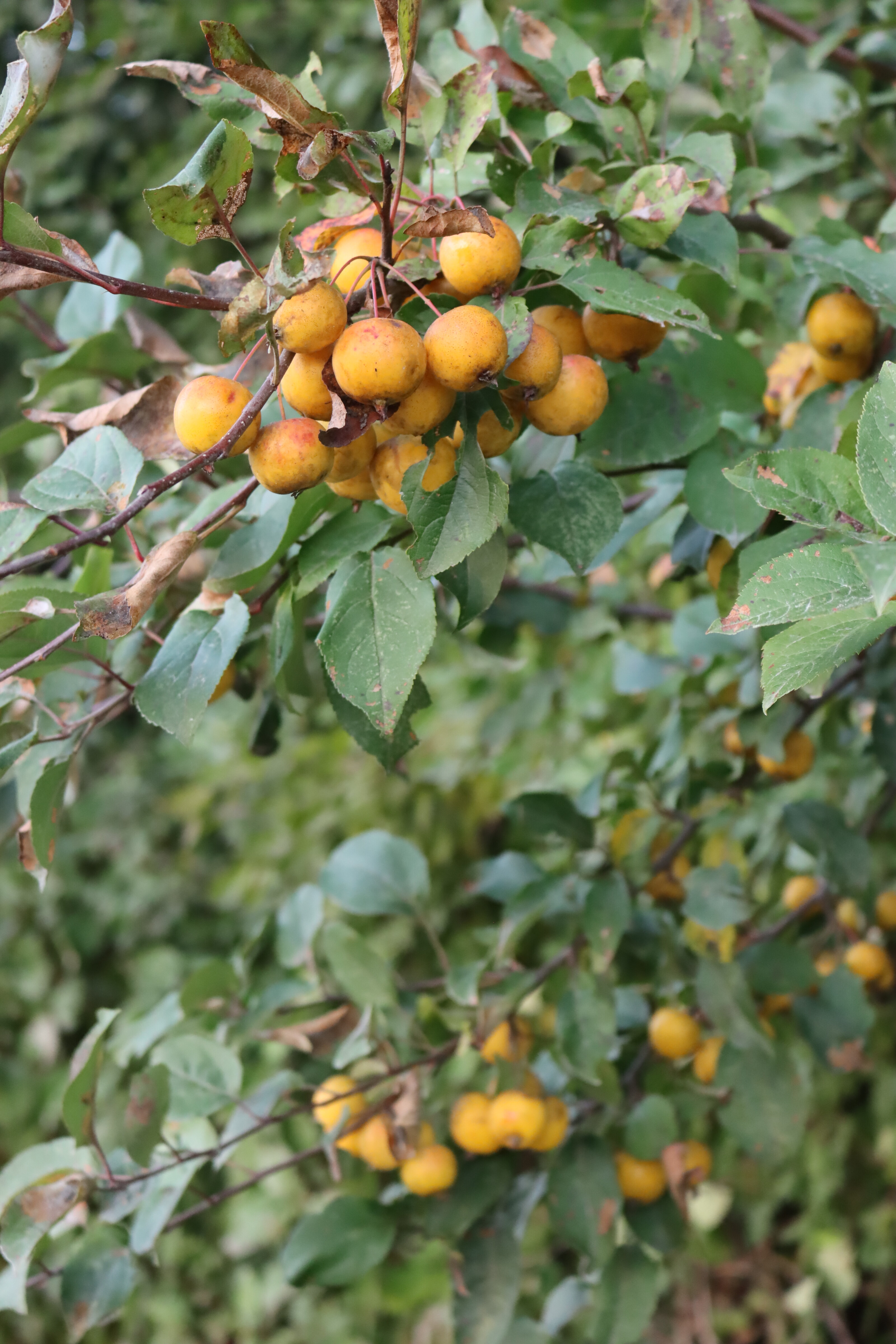
Crabapples range from golf ball size down to the size of a pea. Many are only good for jelly, but some have excellent flavor fresh off the tree. Most of our wild apple harvest goes into cider and crabapple jelly, and there are dozens more ideas in my list of crabapple recipes.
If you’re new to them, start with my wild apples and crabapples guide. It has photos of the fruit, flowers and bark to help you tell them from hawthorn.
Aronia Berries (Aronia sp.)
Aronia is a small genus of native shrubs with two, or possibly three, species. They were originally called chokeberries, and now they’re getting attention as a superfood because of their high antioxidant content.
I’d never heard of aronia until I spotted a few plants at a local permaculture nursery, tagged as a native shrub for wet soils. Much of our land is wet, so I brought some home. Once I’d watched them through a full year, I started seeing wild black chokeberries everywhere.
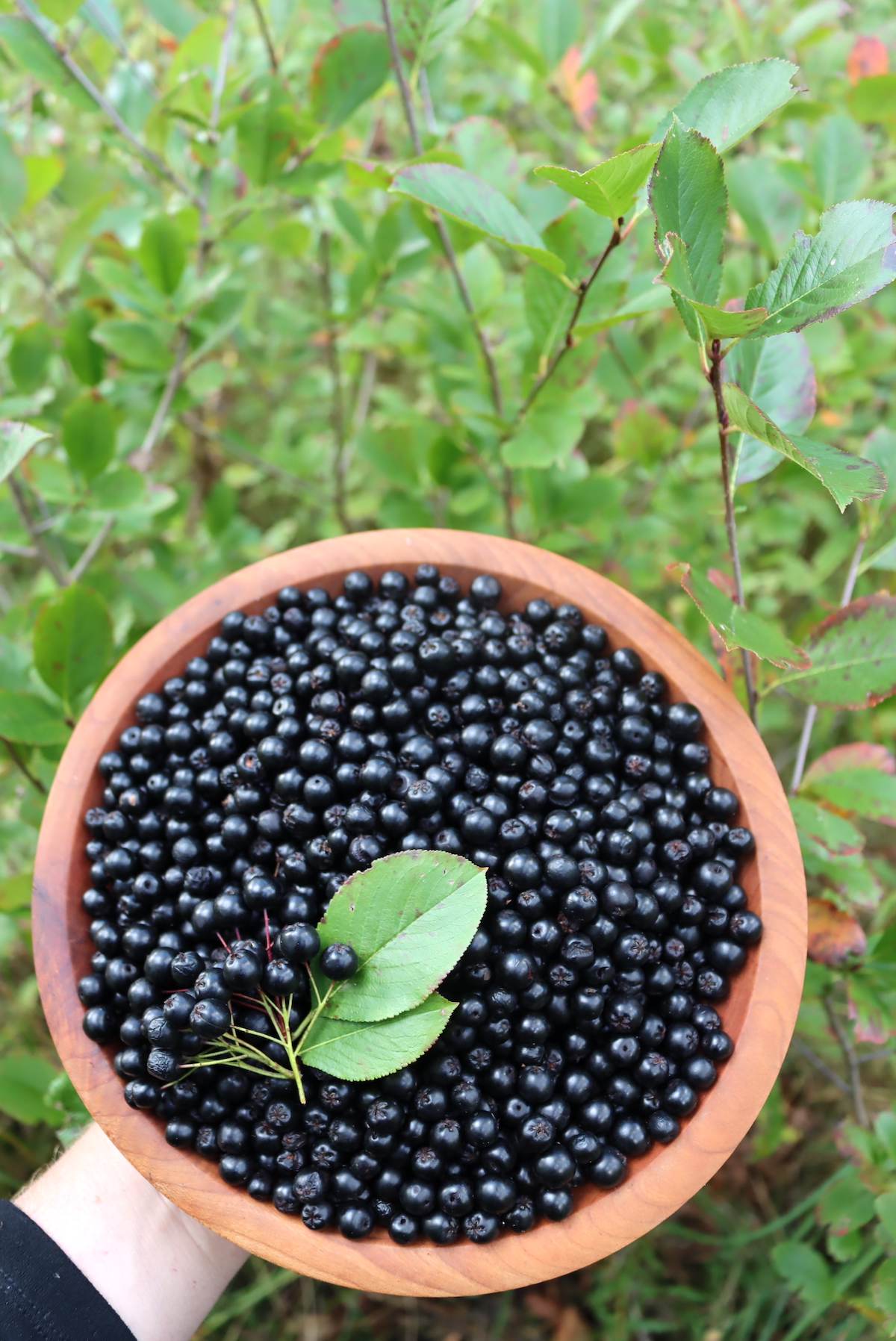
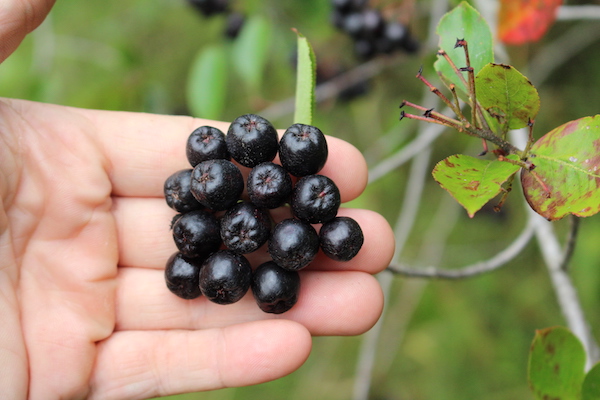
Black chokeberry (Aronia melanocarpa): Savvy marketers call this native fruit aronia berries. You’ll find the juice bottled up in the superfood section of most health food stores.
It grows wild across the eastern half of the U.S. and Canada. Despite the name, the berries are quite tasty, with a deep, red wine flavor and hints of blueberry, mildly sweet and just a bit bitter.
Red chokeberry (Aronia arbutifolia): In my opinion, it’s not nearly as tasty as its black cousin. The growth habit and range are similar, but the berries are smaller and bright red, and I found them dry and mealy. Still, it’s an edible wild berry that’s common along the East Coast.
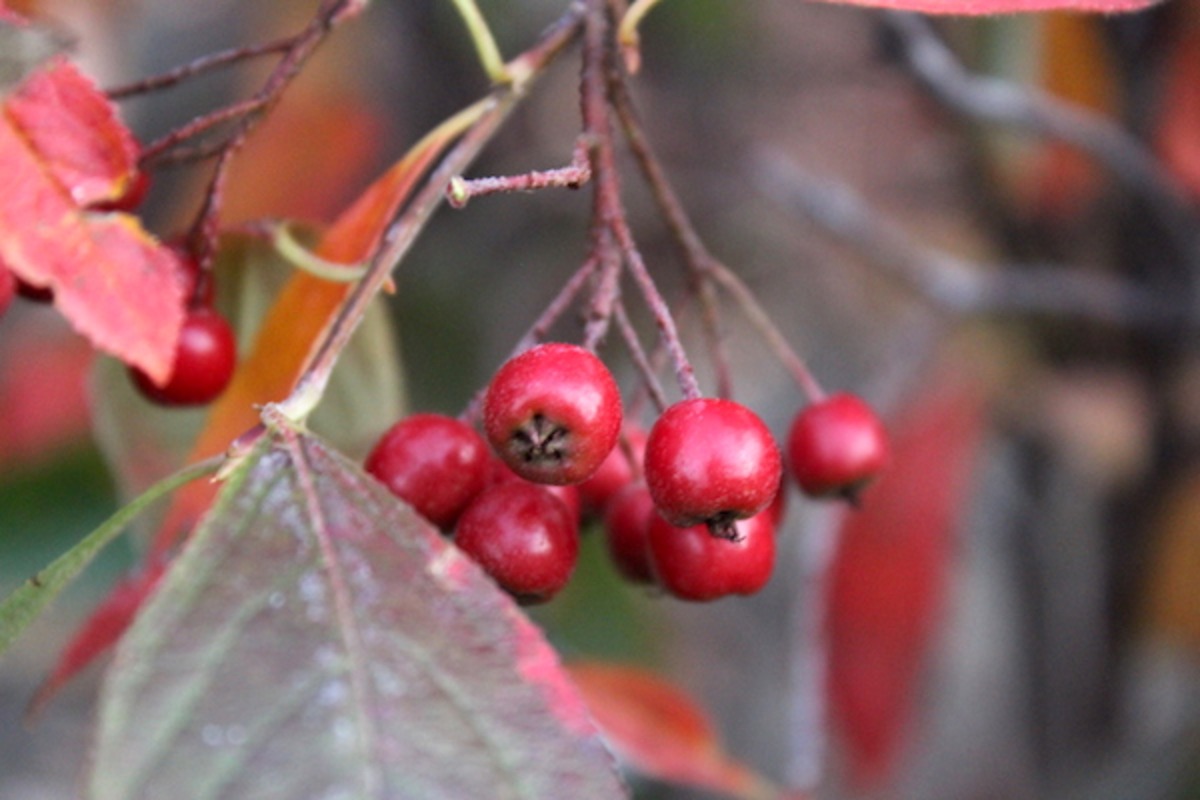
Purple chokeberry (Aronia prunifolia): Most people think this is a natural hybrid of the black and red species, rather than a species of its own.
If you think you’ve found black aronia, my guide to identifying aronia berries has photos of the bark, flowers and fruit. The berries are astringent raw, so I like them best in aronia wine or aronia jelly.
Autumn Olive (Elaeagnus umbellata)
Considered invasive in many areas, autumn olive is just darn good at getting by in neglected spots. Roadsides and old fields are prime places to find it, along with anywhere a bird might have dropped a seed.
The fruits are small, about 1/4 inch across, and round or oblong with silvery speckles. Ripe autumn olives are juicy and sweet-tart, and they’re good fresh or cooked down into autumn olive jam.
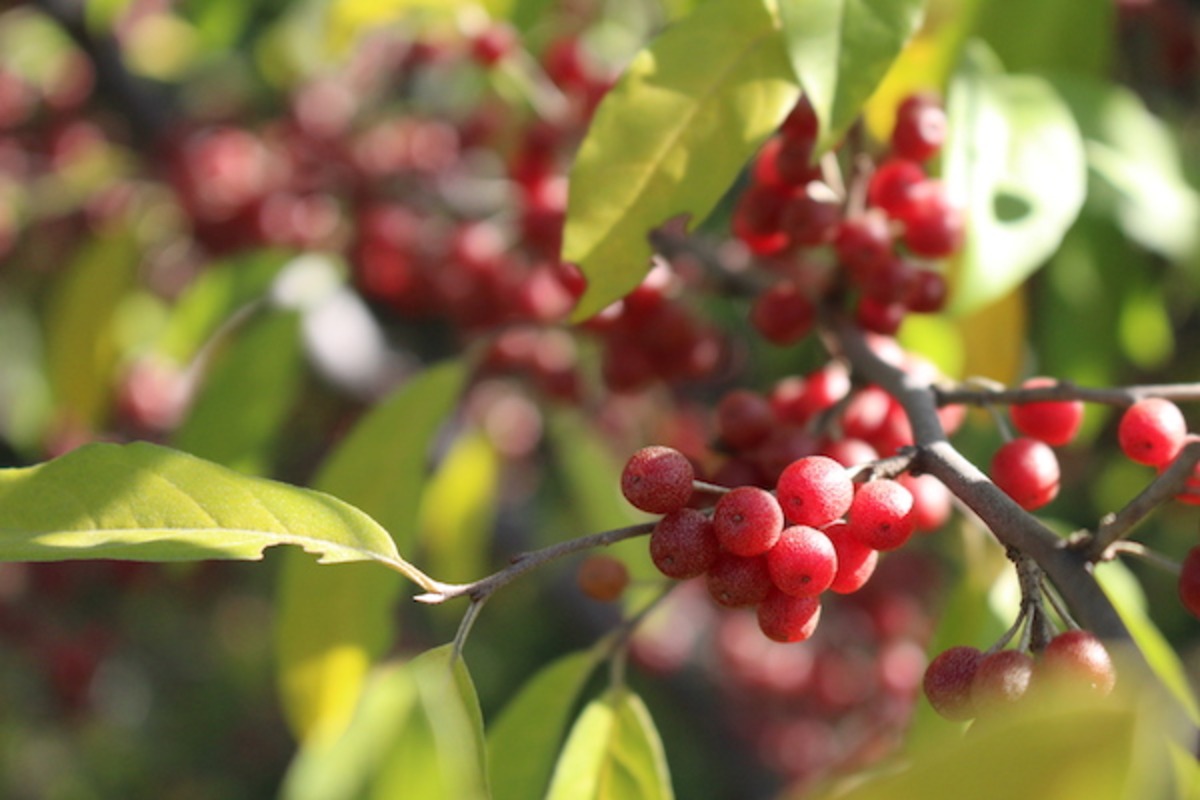
The fruits are high in lycopene, and some foragers use them as a tomato substitute in autumn olive ketchup, which I’ve yet to try. There are more ideas in my list of autumn olive recipes.
Autumn olive plants don’t come true to seed, and wild bushes vary quite a bit. Some aren’t nearly as sweet as others, so if you find a particularly tasty one, mark that spot for years to come. My autumn olive identification guide shows the leaves, bark and fruit up close.
Barberry (Berberis sp.)
Barberries first caught my eye in one of my Middle Eastern cookbooks, in a full-page spread of bright red, oval berries. I instantly recognized them from a bush growing in our woods. A little research told me they were the same plant, common barberry (Berberis vulgaris).
There’s a native species, American barberry (Berberis canadensis), but you’re far more likely to find the imported common barberry or Japanese barberry (B. thunbergii). People planted both as hedges, and they escaped into the wild as birds carried off their bright red fruits.

Japanese barberry is incredibly common at woodland edges anywhere that gets at least part sun. In the fall, the red berries are hard to miss. The rest of the year, you’re more likely to find it by its sharp spines as they catch a pant leg.
The berries are pulpy and tart, but decent for fresh eating. They’re better as jelly or barberry jam, since they’re full of natural pectin. I think the Japanese ones taste fine, but my husband can’t stomach them and says they’re too bitter.
All three kinds have their own photos and identification notes in my guide to foraging barberry.
Bearberry (Arctostaphylos uva-ursi)
The Latin name uva-ursi means bear grape, which is more or less how bearberry got its common name. The fruits grow in small clusters on a low, trailing evergreen plant, and bears eat them readily.
The berries themselves are more like cranberries than grapes. They’re edible but dry and mealy, and most foragers cook them rather than eat them fresh. Bearberry grows across the northern latitudes around the world, including much of Canada and the northern and western U.S.
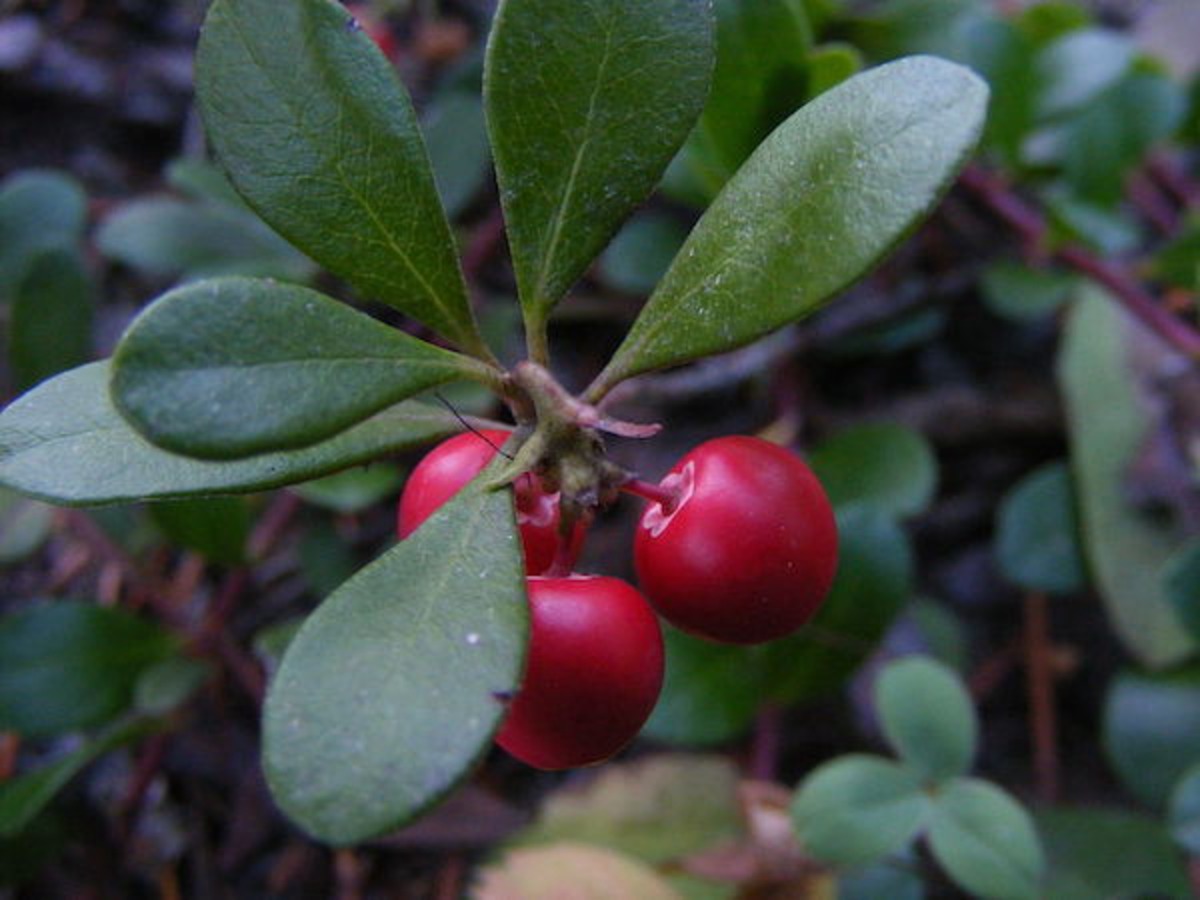
The leaves are the better-known part of the plant. Herbalists use them for urinary tract issues, much like cranberries. I keep uva ursi tincture on hand to take at the first hint of trouble.
Check with your doctor before using it, especially if you take other medications. Uva ursi is only for short-term use, about a week at most, and it isn’t for children, pregnant or nursing women, or anyone with kidney problems.
Bearberry is also called kinnikinnick, an Algonquian word for a traditional smoking mixture, since the leaves went into those blends. It also goes by mealberry, sandberry and fox-plum. For photos of the plant and fruit, here’s a detailed bearberry identification guide.
Blackberry (Rubus sp.)
Blackberries are great for beginning foragers, and they often bear huge crops in late summer. Most people already know what they look like, and the dense, thorny brambles are a dead giveaway.
The main look-alikes are other edible Rubus species, like dewberries, which taste quite similar anyway. Black raspberries can look like blackberries at a glance, but they pull off the plant hollow, like a thimble, while a blackberry keeps its core.
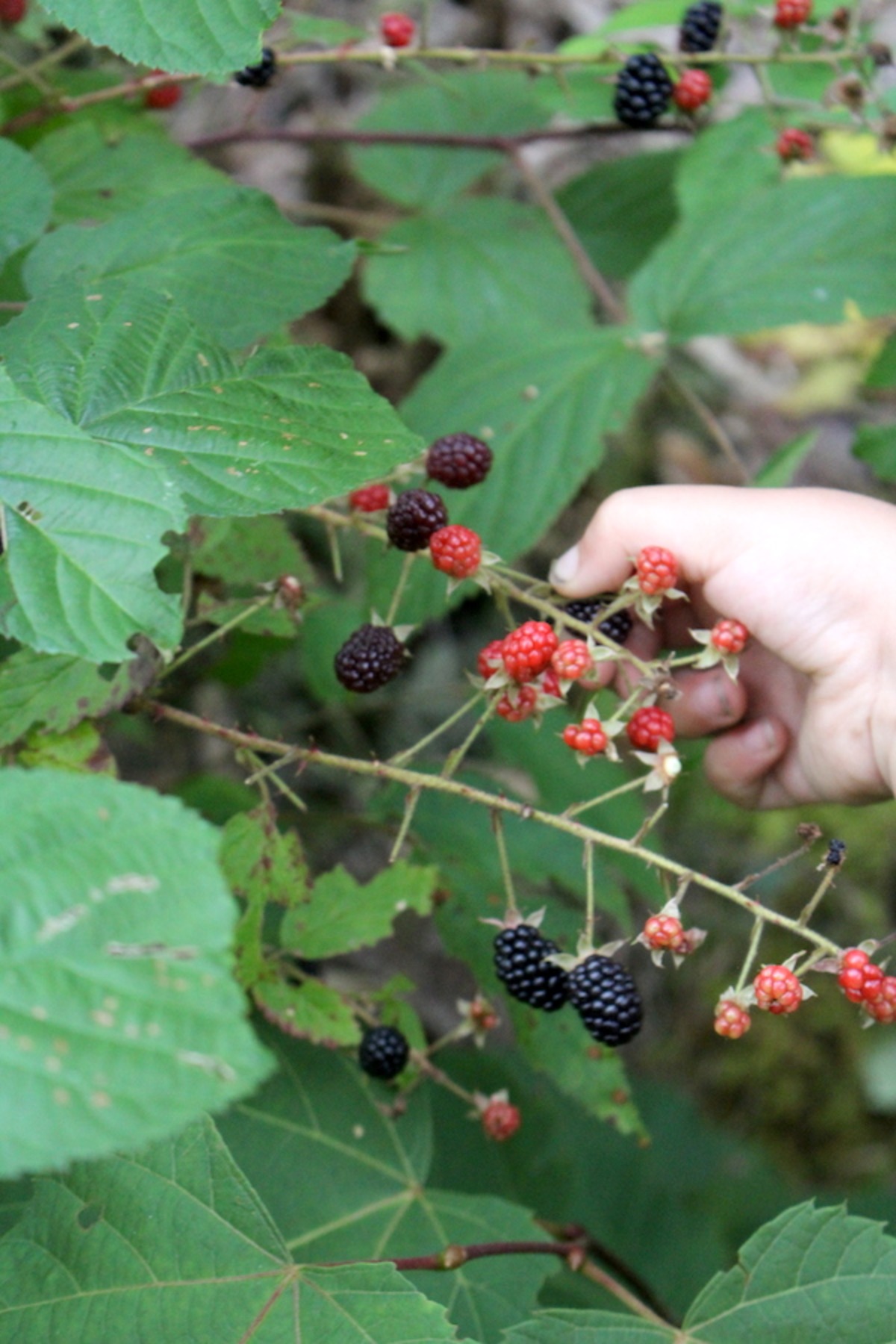
When you’re picking wild blackberries by the gallon, have jars ready at home for blackberry jam or canned whole blackberries. There’s always blackberry wine for the more adventurous, and plenty more ideas in my list of ways to preserve blackberries.
For more on the canes, flowers and fruit through the seasons, here’s an in-depth forager’s guide to wild blackberries.
Blackcaps or Black Raspberries (Rubus occidentalis & R. leucodermis)
Blackcaps are closely related to both blackberries and raspberries, but they have a flavor all their own. The arching canes have a whitish, waxy coating, and their tips root wherever they touch the ground.
The thorns are generally much smaller than blackberry thorns, and the ripe fruit pulls off hollow, just like a raspberry. Wild black raspberries grow throughout the Northeast, and a closely related western species, Rubus leucodermis, has similar fruit out west.
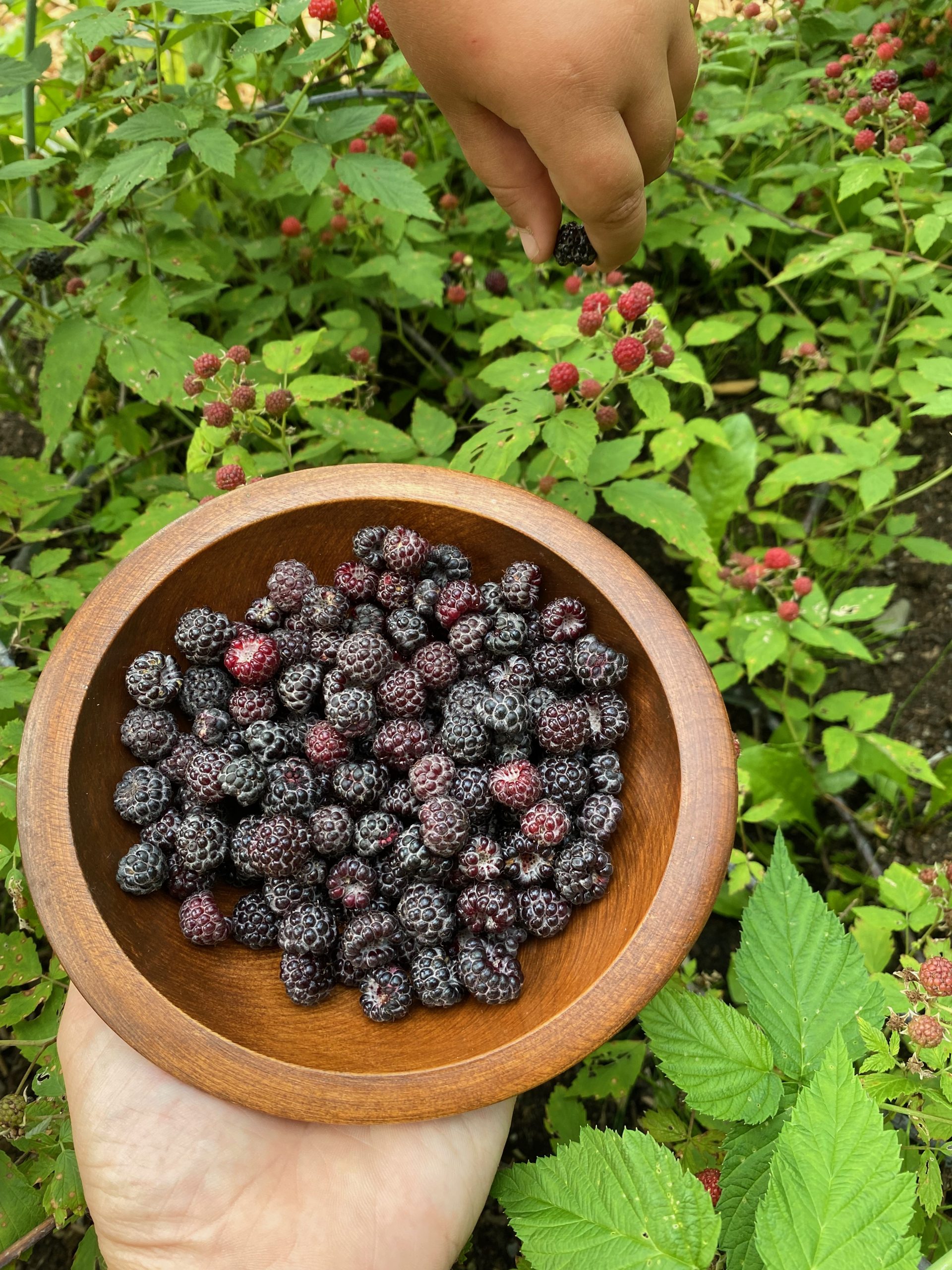
We have a wild patch of our own, and I’ve shared how we went about taming wild black raspberries into a productive berry patch. Black raspberry jam is a classic way to use them, and there are more ideas in my list of black raspberry recipes.
My guide to foraging wild black raspberries has photos of the canes, leaves, flowers and fruit for a sure identification.
Black Cherry (Prunus serotina)
The small fruits of wild black cherry are a real treat, but they can be tricky to harvest. They grow in drooping clusters like chokecherries, but while chokecherries grow on bushes, black cherries are full-sized trees. Imagine trying to beat the birds to sweet fruit 30 to 50 feet up in the air.
I’ve had luck harvesting from black cherry trees at the edges of hayfields. The hay mower cut them back several times while they were young, so they resprouted with many smaller trunks. They grew into short, bushy trees with 8 to 12 trunks.
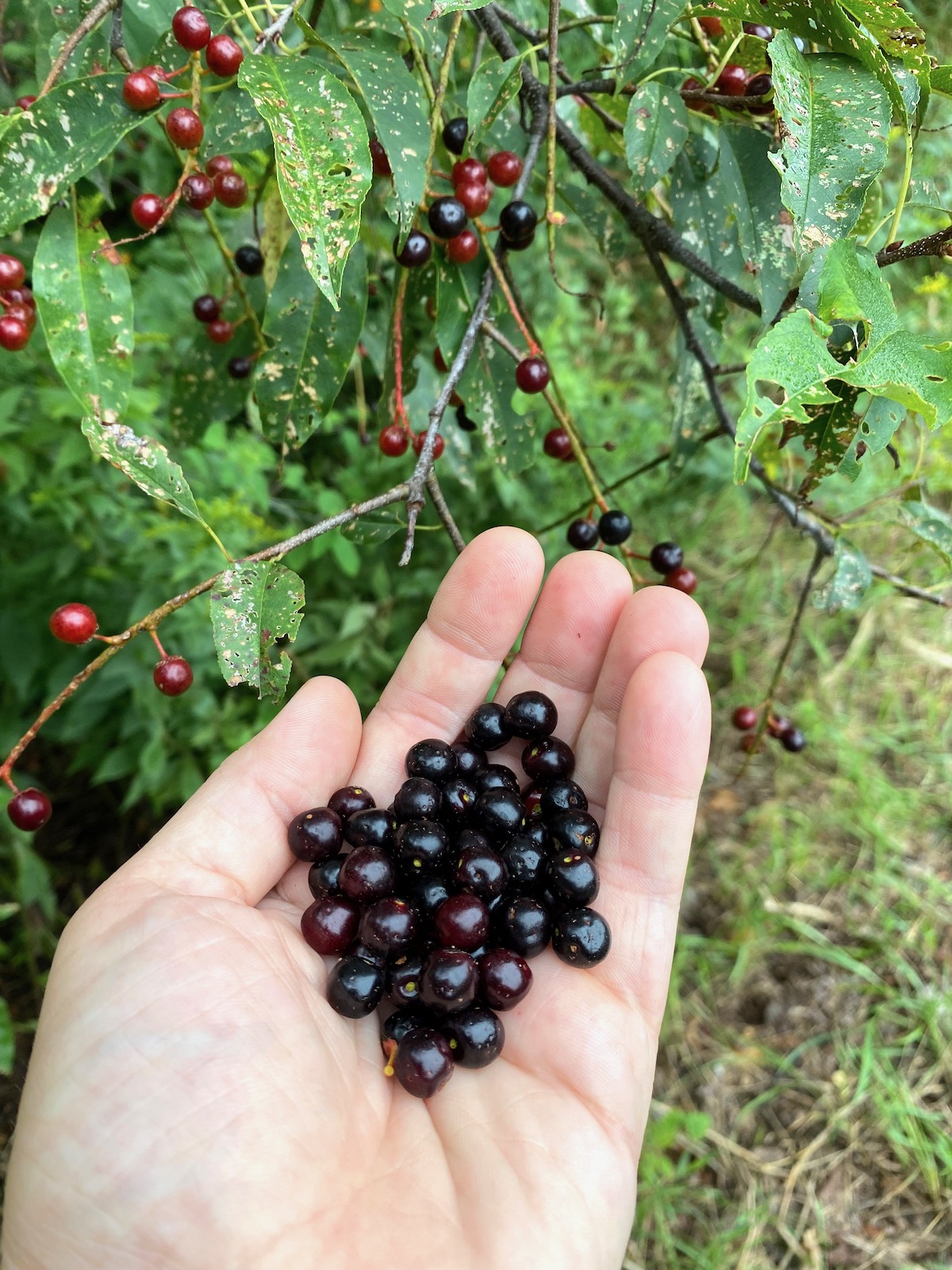
I’ve heard that in the South, the crops are so large that the fruit drops to the forest floor before the birds can eat it all. I’ve been watching our trees for a decade here in Vermont, and I’ve yet to see a single fruit hit the ground.
The fruit is sweet, without the astringency of chokecherries, and the pits come away cleanly. Spit out the pits and never crush them, though, since the pits and leaves of all wild cherries contain cyanide compounds. My wild black cherry guide shows how to tell it apart from other wild cherries, leaf by leaf and fruit by fruit.
Blueberry (Vaccinium sect. Cyanococcus)
When people think about wild blueberries, most picture the famous lowbush blueberries of Maine, harvested with rakes. Those tiny berries have become synonymous with wild blueberries, but plenty of wild species are highbush, like the average garden blueberry.
Blueberries belong to the genus Vaccinium, along with cranberries, lingonberries and some huckleberries. Botanists group the blueberries themselves in a section of the genus called Cyanococcus, which holds more than a dozen wild species.
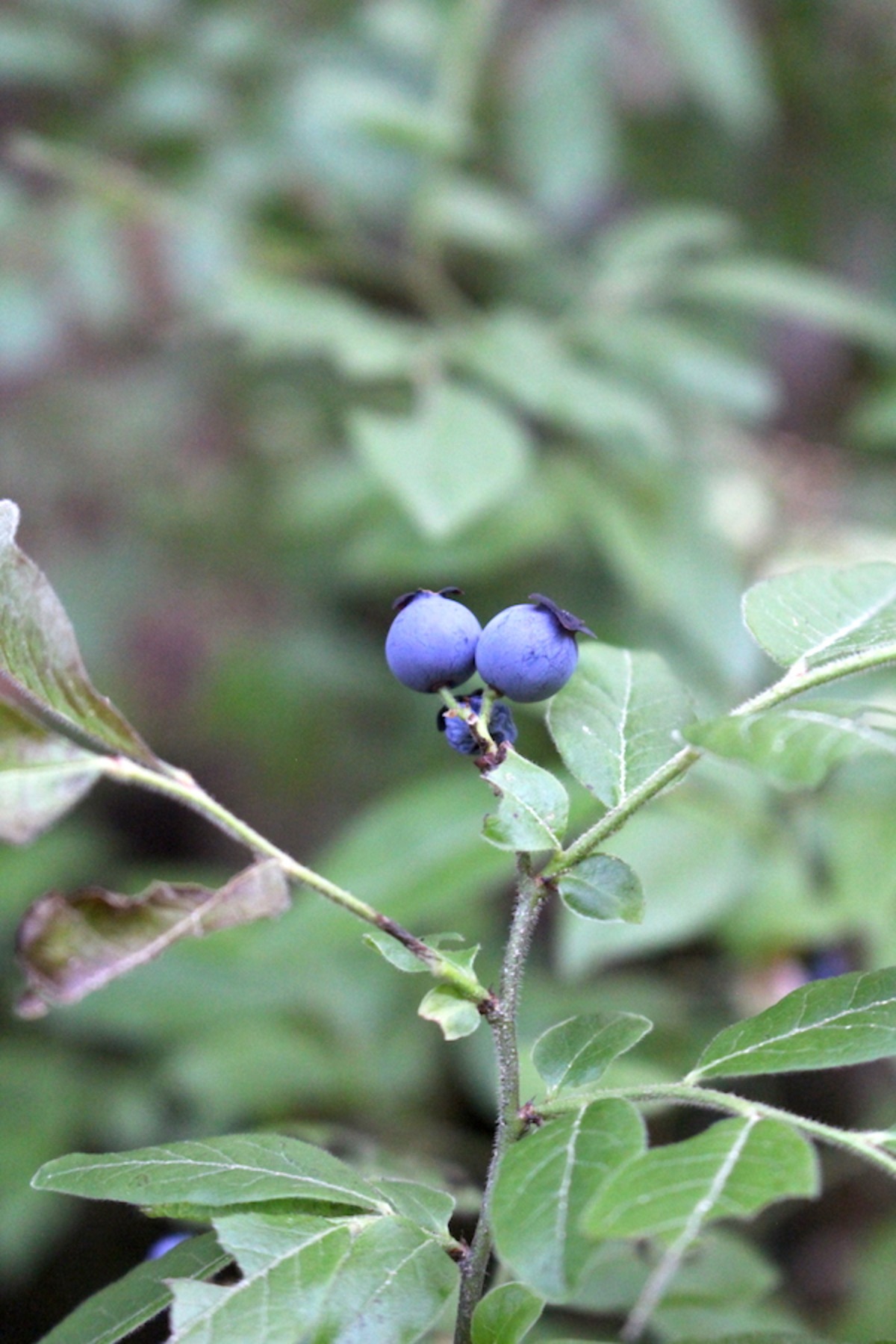
They like acidic soils, and pine barrens are great places to find them. Since they prefer such specific soils, it’s common to find several kinds growing together at one site.
The leaves look more or less identical to cultivated blueberry leaves. The fruit often hides under the branches, but sometimes it just hangs out in plain sight along a hiking trail.
Not every blue fruit is a blueberry, though. On one late summer hike, my son found a cluster of blue cohosh seeds and asked if they were blueberries. They’re poisonous, and unlike blueberries, they don’t have the little five-pointed crown on the bottom of the fruit.
For a closer look at the plants and their look-alikes, here’s a helpful guide to foraging wild blueberries. Once you’ve filled a bucket, try canning blueberries for winter.
Buffalo Berry (Shepherdia sp.)
Buffalo berries are closely related to autumn olive and sea buckthorn. Like them, they can fix nitrogen from the air, so they thrive in poor soils where other shrubs struggle.
The growth habit is similar too, with small red berries held tight against the branches. There are three species, all native to North America and separated mostly by region.
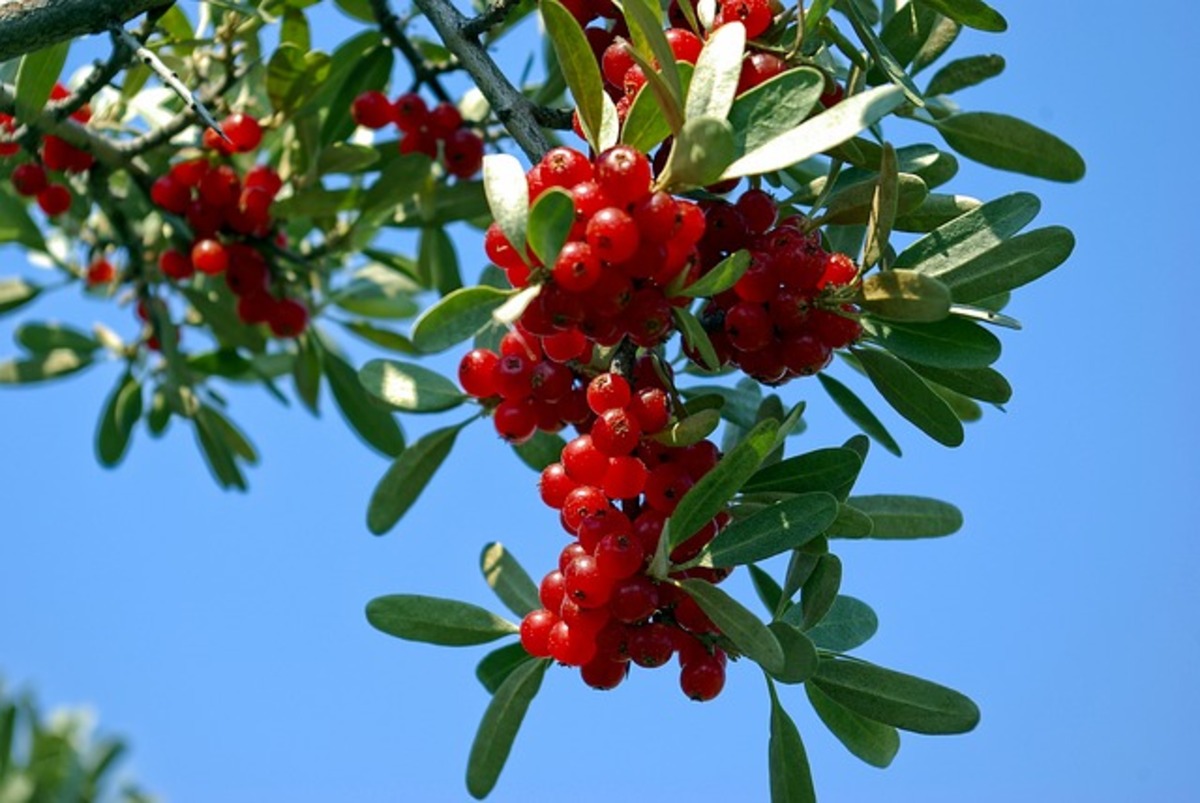
Canada buffaloberry (Shepherdia canadensis): Also called soapberry or russet buffaloberry, it grows across Canada and the far northern and western U.S. The berries are bitter and a little soapy, and they were traditionally whipped into a sweet, frothy treat.
Silver buffaloberry (Shepherdia argentea): Native to the north central and western U.S., with tart red berries that taste better after a frost.
Roundleaf buffaloberry (Shepherdia rotundifolia): This one only grows in southern Utah and northern Arizona, and it has small, round, silvery leaves.
One species is supposed to grow in far northern Vermont, but I’ve yet to find buffalo berries in the wild. For photos and notes on all three, here’s a useful guide to soapberries and buffalo berries.
Bunchberry (Cornus canadensis)
When a friend first introduced me to bunchberries, he described them as a survival food worth knowing about, but thoroughly unpleasant. I tried them anyway, and honestly, I find them delicious.
Bunchberries are quite sweet, which is refreshing when you spend your time foraging tart sea buckthorn and aronia. Beyond the sweetness, there’s not much flavor at all. The texture is what turns people off, since the pulp is full of mucilage, which makes them a bit, well, mucus-like.
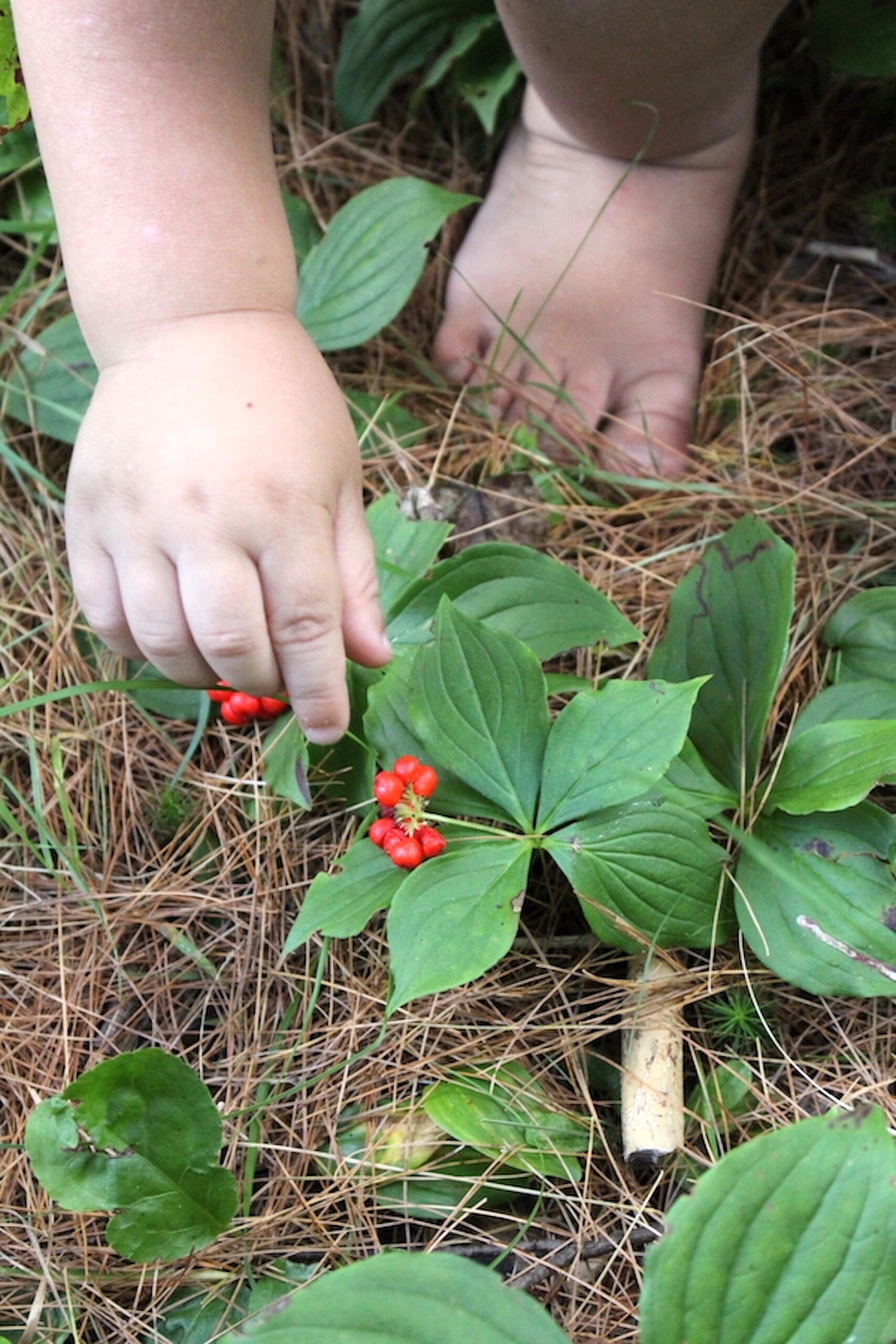
Texture be darned, my kids really go nuts for them. Maybe it’s because they grow just a few inches off the ground, right at kid height. Maybe it’s because they grow in big colonies with plenty to go around, or maybe it’s just the sweetness.
Identifying bunchberries is easy, and there’s really not much else that looks like them. I forage other mucilaginous plants like wild violets too, and to me, the sweetness more than makes up for any texture issues.
Chokecherry (Prunus virginiana)
Also called bitter berry and bird berry, chokecherries don’t have common names that sell them. Historically, though, they were an important food for Native American peoples across the continent. They went into traditional foods like pemmican, a staple for native peoples and fur trappers on the frontier.
The trouble with chokecherries is that they’re bitter and astringent until they’re dead ripe. At that point, the bitterness fades and they’re really delicious eaten fresh off the plant. The fruits start out bright red and ripen to nearly black.
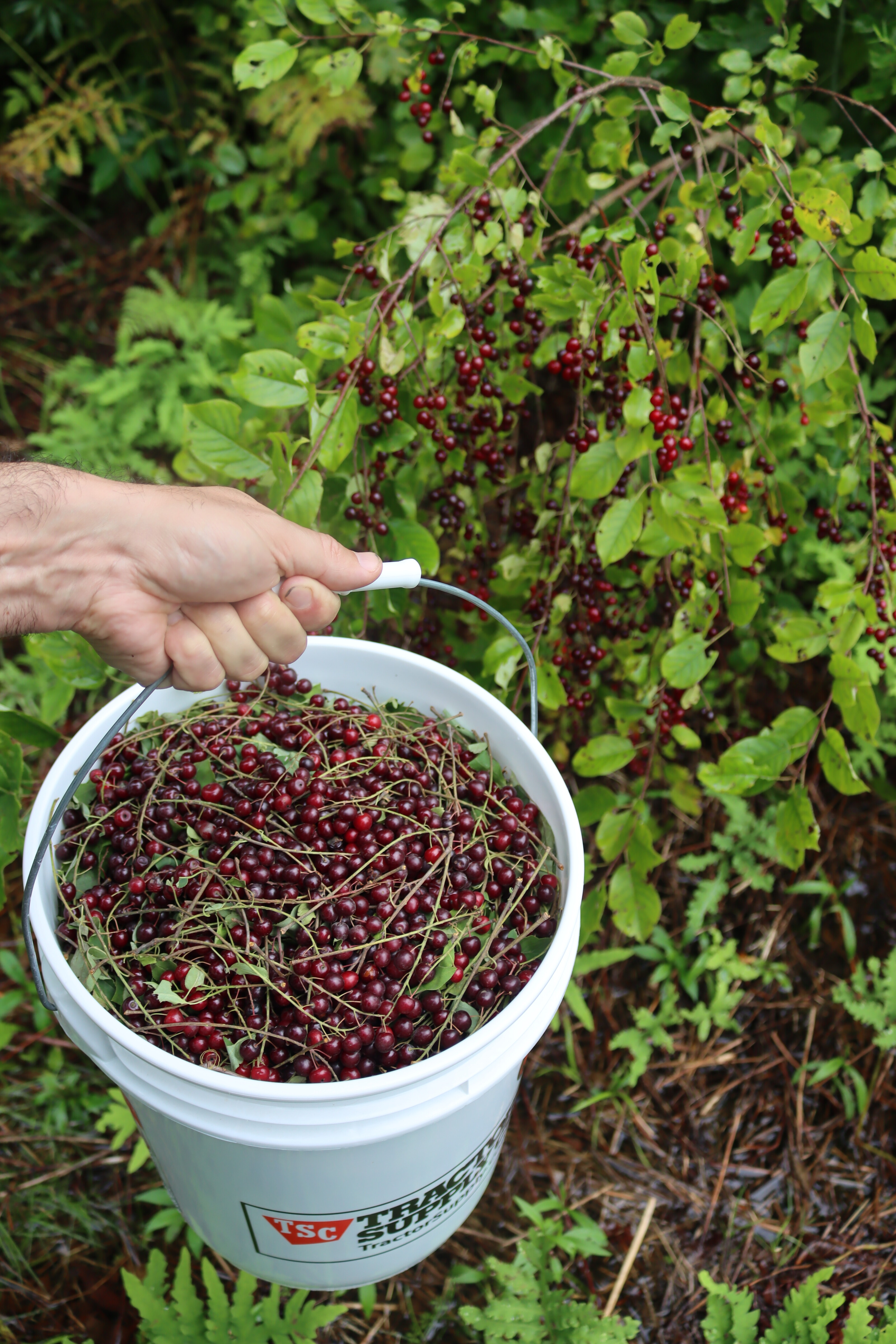
Each chokecherry has only a small amount of flesh around a large pit, and the raw pits contain toxins, just like most stone fruits. Traditionally, people pounded the fruits, pit and all, into a paste, then formed it into patties and dried them in the sun.
Sun-drying was said to neutralize the toxin, so one harvest gave both sweet fruit and a nutritious nut. Don’t try crushing or blending raw pits at home, and leave the leaves, twigs and bark alone, since they’re toxic too.
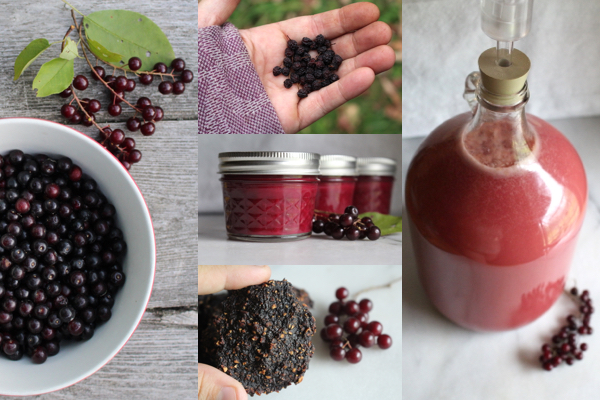
People broke those dried chokecherry patties up into pemmican or cooked them into a berry pudding called wojapi. Chokecherries also make an excellent chokecherry jelly, a rich chokecherry syrup and a lovely chokecherry wine.
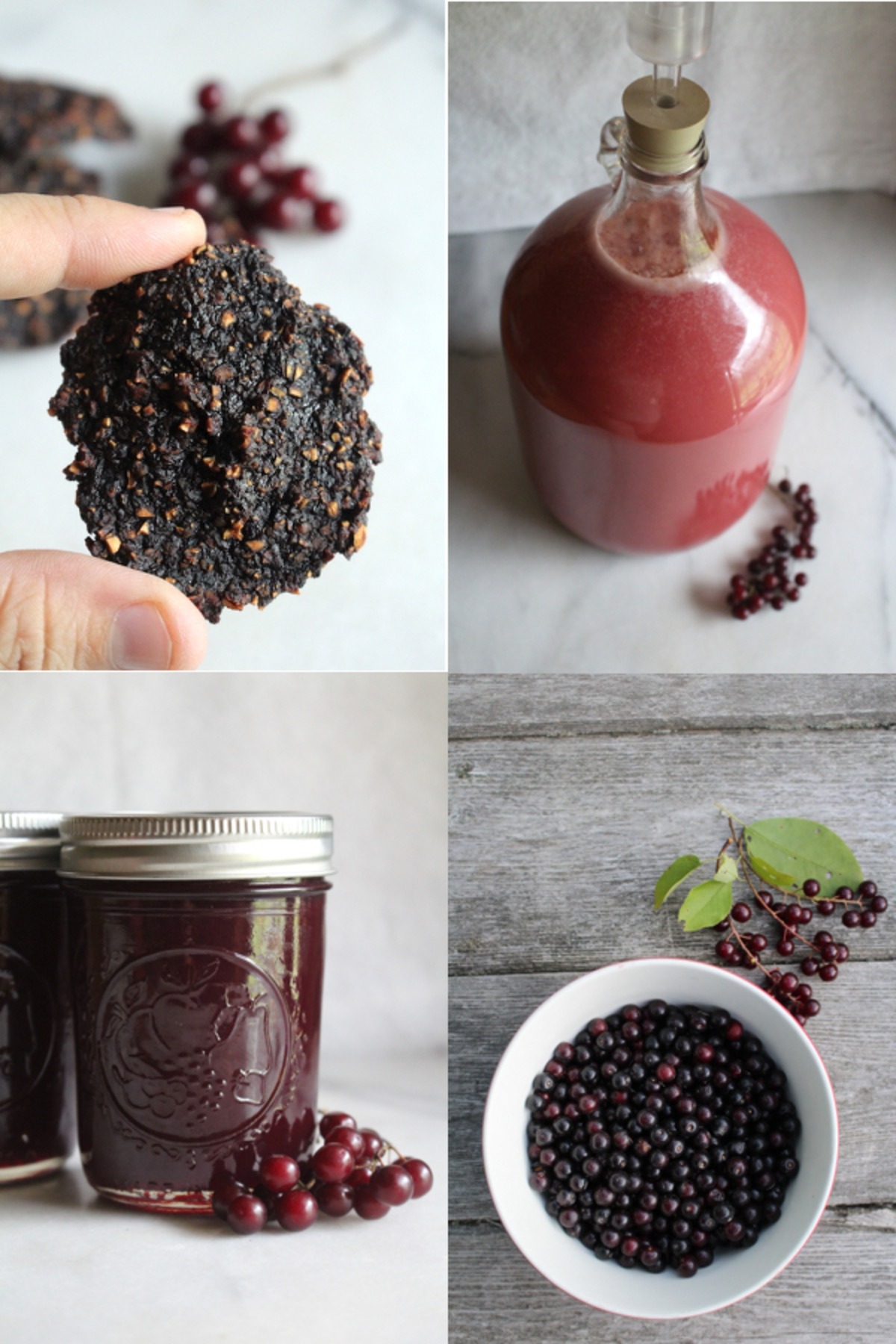
My list of chokecherry recipes has plenty more ideas for a big harvest. Identifying chokecherries is pretty easy, and they’re most often confused with wild black cherry, which is also edible.
The one to watch for is common buckthorn, whose dark berries cause serious stomach upset. Buckthorn leaves grow opposite or nearly so, while chokecherry leaves alternate along the twig.
Cloudberry (Rubus chamaemorus)
A staple for boreal foragers, cloudberries only grow in the far north. I think of Vermont as the heart of the north woods, but it isn’t far enough north for this fruit.
Cloudberries grow in bogs and tundra across the far north of the world, and they’re well loved in the Scandinavian countries. In North America, they grow across Canada and Alaska, with a few scattered bogs in northern New England.
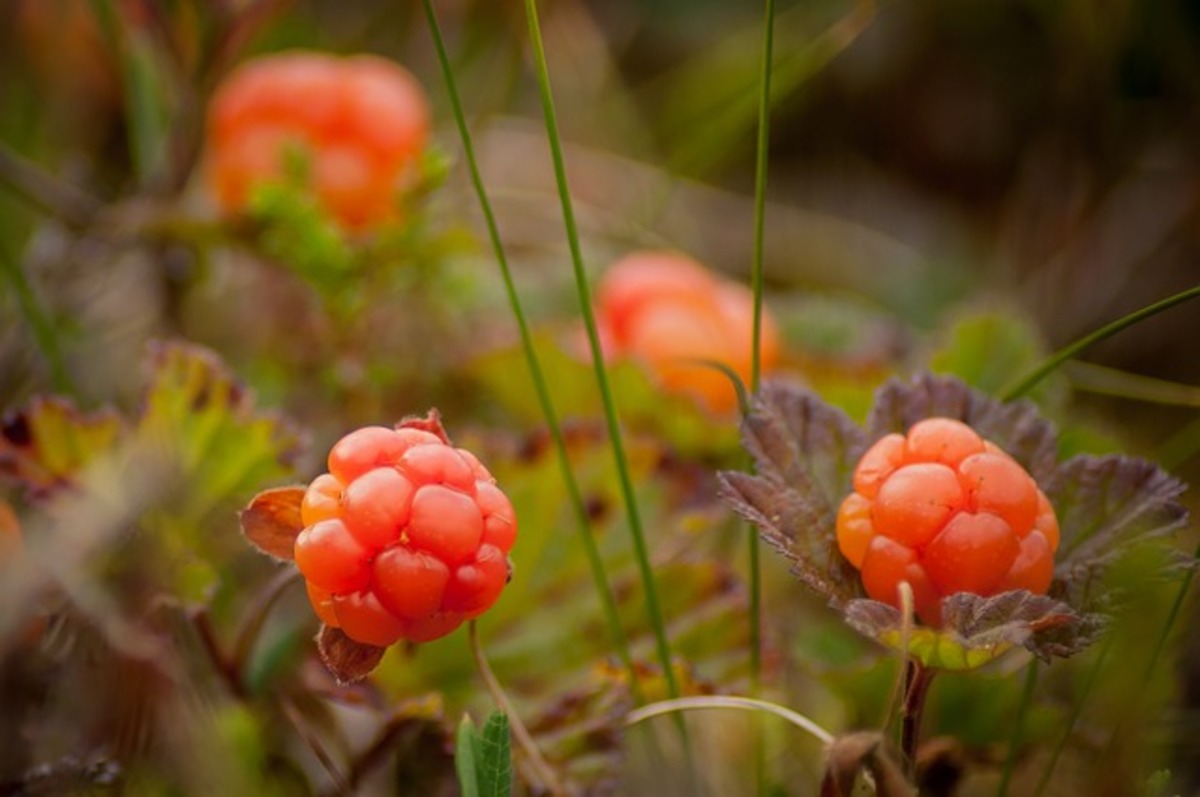
In Newfoundland and Labrador, they’re called bakeapples, and in Scandinavia they’re treasured for jam. Someday perhaps I’ll forage farther north.
Until then, this cloudberry identification guide is a good place to start if you live where they grow.
Cranberry (Vaccinium sect. Oxycoccus)
Most people only know cranberries as a jelly that dresses the holiday table, but they’re a tasty wild berry you can forage just as well. They grow wild in wet, acidic bogs across the northern U.S. and Canada.
Cranberries have two main wild species.
The large cranberry (Vaccinium macrocarpon) is the same species farmers grow, and the small cranberry (V. oxycoccos) has tiny, pointed leaves. Both are low, trailing evergreen vines, and both are edible.
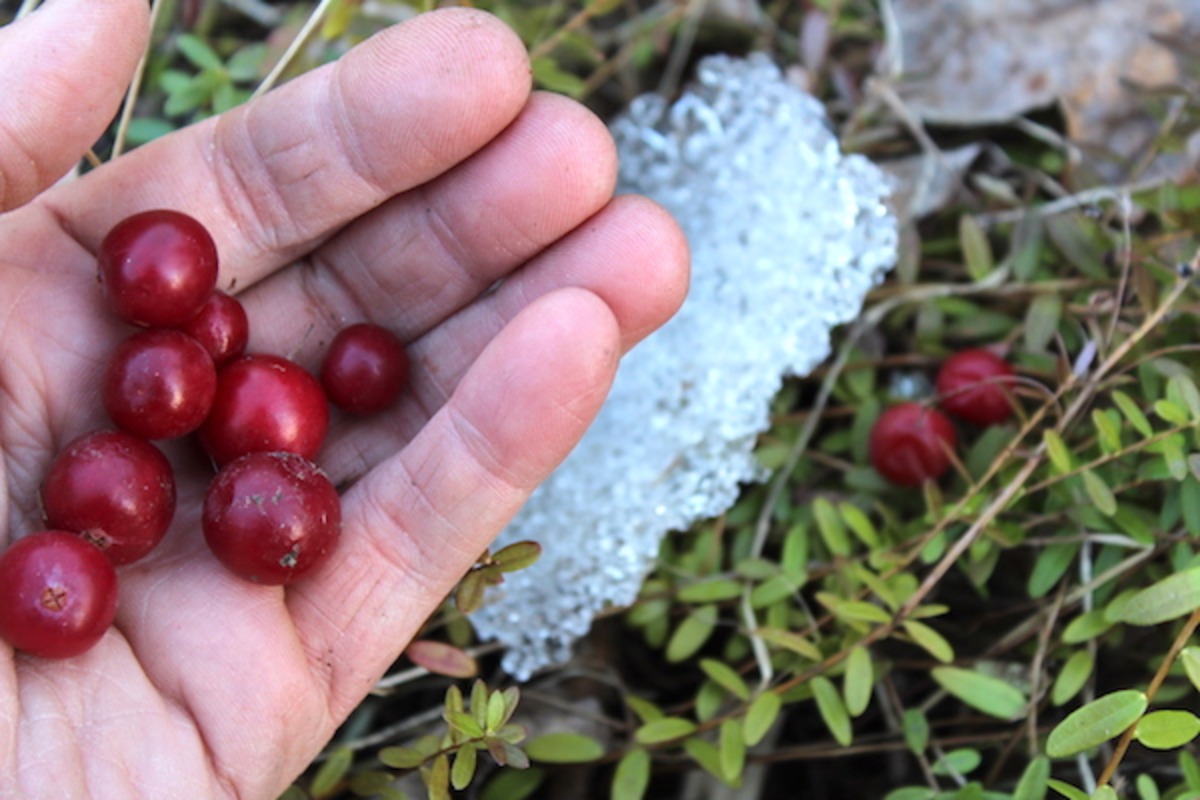
Cranberries freeze well in our modern freezers, and they also freeze well under the snow in the wild. You can harvest wild cranberries in early spring, just as the snow melts. They’re soft after the thaw, but they’re still as tasty as the day they froze.
Watch your step out in a bog, since the floating mats of moss can give way underfoot. This guide to finding wild cranberries has more on where they grow. Back home, they’re great for canning whole cranberries or cranberry juice.
Crowberry (Empetrum nigrum)
I’ll admit this is one I’ve only read about. Crowberry is a low, spreading evergreen shrub that looks a bit like heather, with small black berries scattered through the mat.
It grows in cold places across the far north, on open, rocky heaths, bogs and tundra. In North America, that means Alaska, Canada, the Pacific Northwest coast, and some mountaintops and coastal headlands in the Northeast.
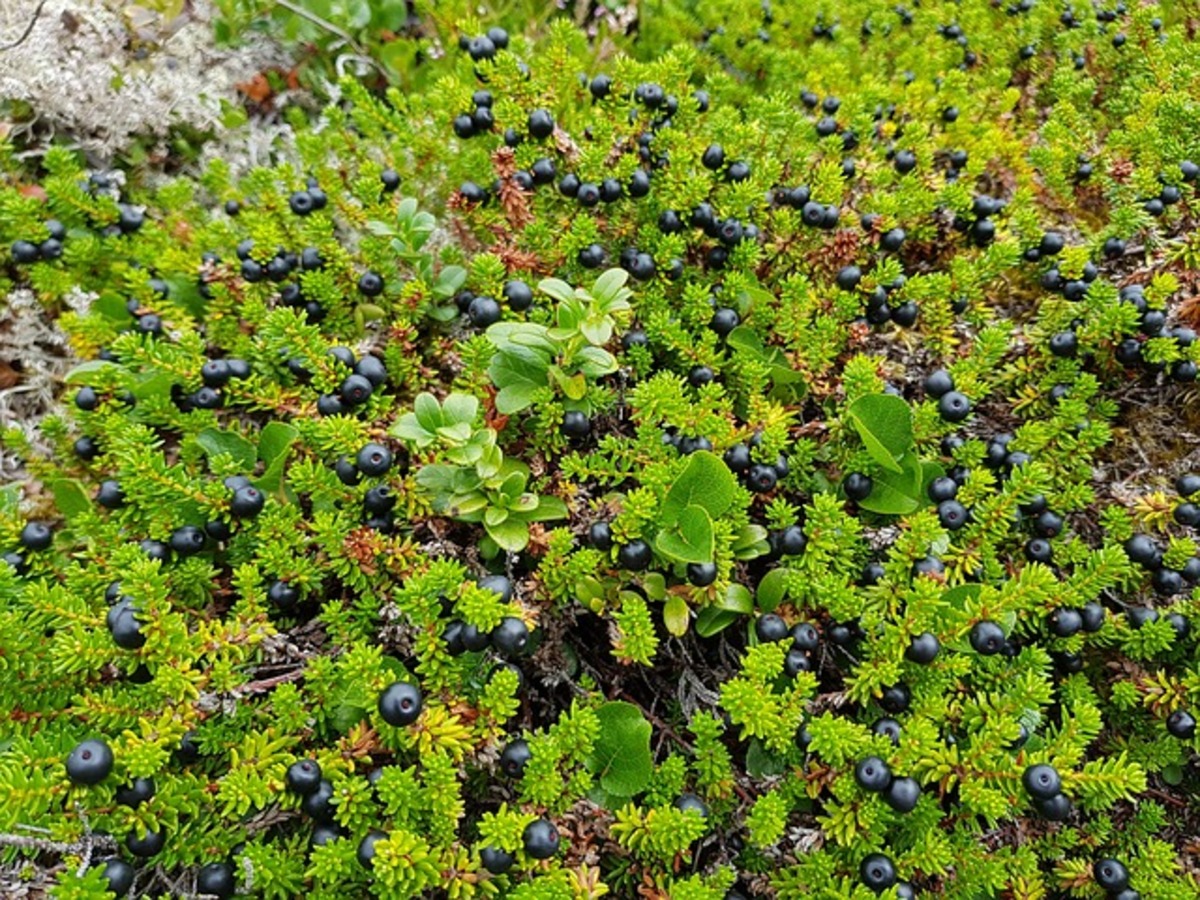
The berries are juicy but mild, and they were an important food for the Sámi in northern Scandinavia and for Indigenous peoples in Alaska. They hang on the plants into winter, which made them especially valuable.
I’m adding this one to my foraging bucket list. It does grow on a few high summits and ledges here in Vermont, so I may not have to travel far to find it. Here’s a helpful crowberry identification guide with photos of the plant and fruit.
Currants (Ribes sp.)
Vigorous, heavy-cropping wild fruits that bear in full shade and wet soils? Could it be true? Currants are a forest farmer’s dream come true, and they bear heavy crops where it seems downright impossible.
They’re commonly grown in gardens these days, but they’re also a tasty woodland berry that thrives in the shade without care. There are dozens of wild species, with black, red and golden fruit, and the leaves look a bit like small maple leaves.
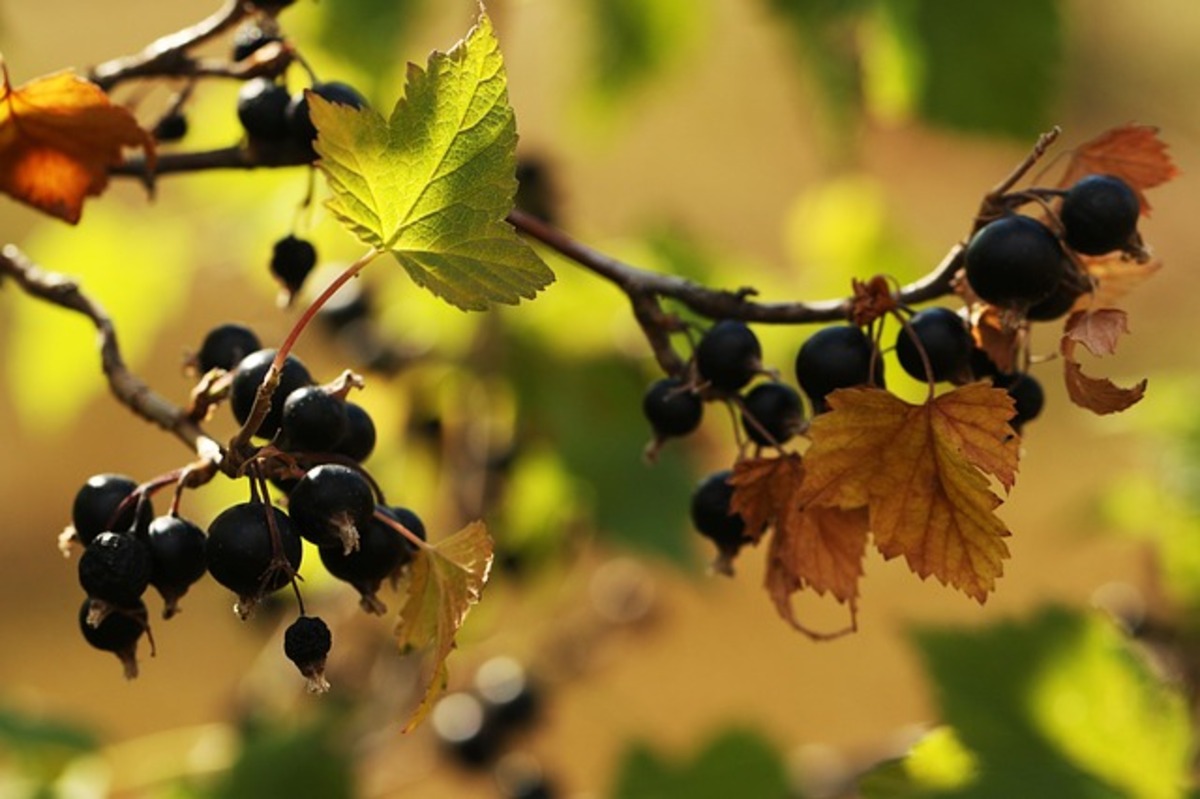
Currants are close cousins of gooseberries, but their stems don’t have spines, which makes picking a lot more pleasant. Here’s a good guide to foraging wild currants for identifying the wild species.
We grow currants on our homestead too, and they become blackcurrant jam and red currant jelly every summer. There are dozens more ideas in my list of ways to use blackcurrants.
Dewberries (Rubus flagellaris)
Also known as trailing blackberries, these low-growing wild berries are quite common. If you find blackberries that trail across the ground instead of growing on thorny, arching canes, you’ve likely found dewberries instead.
The downside is that dewberries don’t usually crop heavily, and they’re not as juicy or sweet as wild blackberries. Still, they grow in marginal spots that won’t support larger fruits, from the central to eastern U.S. and from Texas up into Canada.
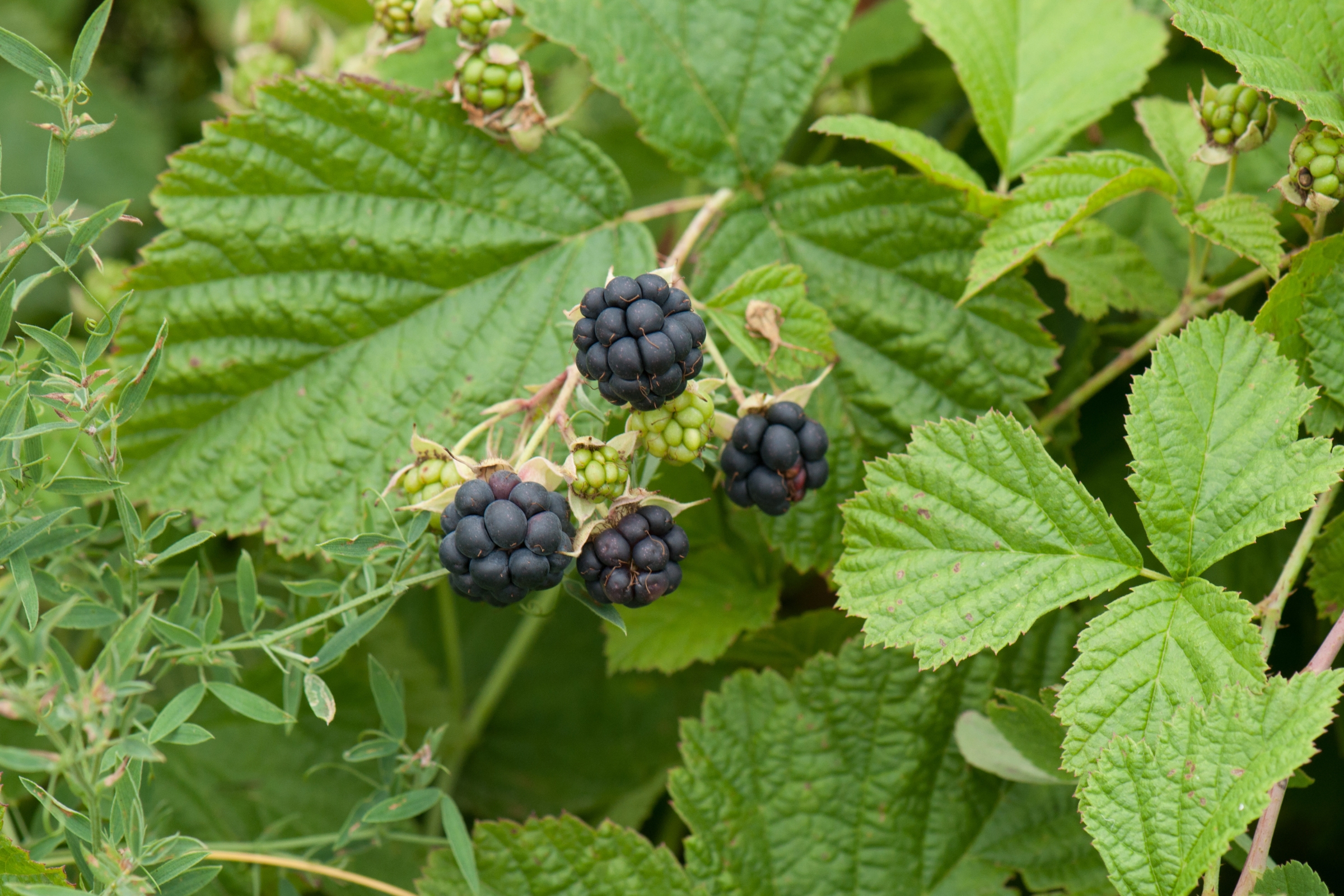
Dewberry is also a catch-all name for many low-growing Rubus species, which makes things confusing. My guide to wild dewberries has photos of the runners, leaves and flowers, so you can tell northern dewberry from its cousins.
Elderberries (Sambucus canadensis & S. nigra)
Elderberries are best known for their place in herbal medicine, where they’re a traditional ingredient in remedies for colds and flu. Herbalists often use convenient dried elderberries, but fresh ones are abundant in the wild. Check with your doctor before using elderberry as a remedy.
They ripen in early to mid-September here in Vermont, but my West Coast foraging friends tell me they harvest elderberries as early as June. It all depends on your climate. The berries ripen about two to three months after the shrubs flower, and wild elderflowers are distinctive and hard to miss.
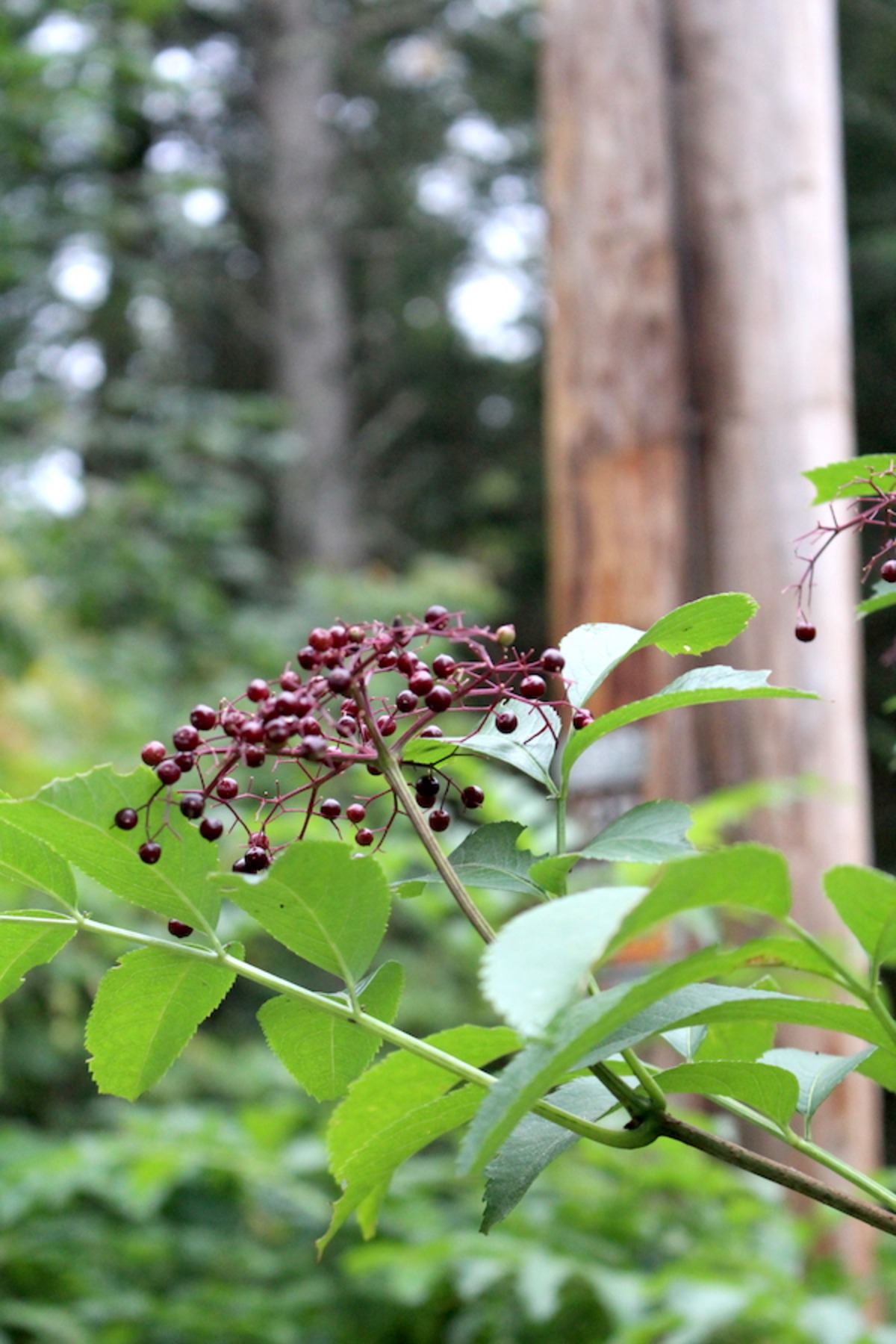
Always cook elderberries before eating them. Leave out the stems, leaves and unripe green berries, and stick to the dark blue-black berries. Red elderberry (Sambucus racemosa) is a different plant, and its berries can make you sick without careful preparation, so leave those to experienced foragers.
Once they’re cooked, elderberries are delicious. Try a homemade elderberry syrup, a simple elderberry jelly or an elderberry pie. The blossoms are edible flowers too, and they make a lovely elderflower cordial.
We’ve planted our own elderberries too, and propagating elderberries from cuttings is easy. My wild elderberry guide has photos for a sure identification, along with the look-alikes to watch for.
Fairy Bell (Prosartes sp.)
Fairy bells are a woodland wildflower in the lily family, with drooping, bell-shaped flowers that turn into small edible berries. There are several species, each with a somewhat different look and range.
Several are native to the Pacific Northwest and western Canada, and a few are native to the Appalachian Mountains. None grow wild here in Vermont, though.
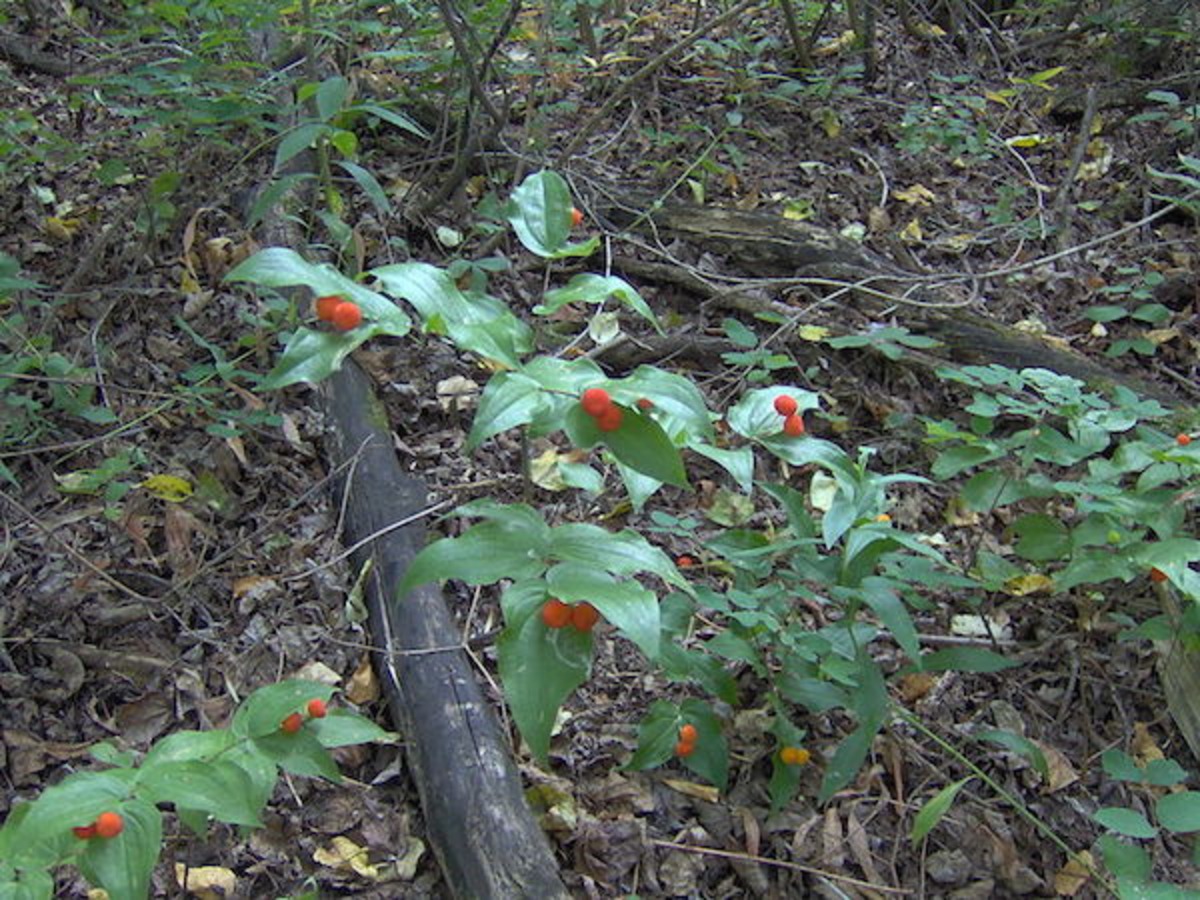
The berries are said to be bland but sweet. This breakdown of fairy bell species will tell you which ones you might find in your area.
Gooseberry (Ribes sp.)
Finding wild gooseberries always brings a smile to my face. The spiky, globe-like fruits seem downright improbable, but there they are, hanging along many a shady path.
Gooseberries like wet, shady places, and they’re reasonably common along the damp stretches of woodland trails. I most often find them in wet spots alongside other moisture-loving plants like marsh marigold.
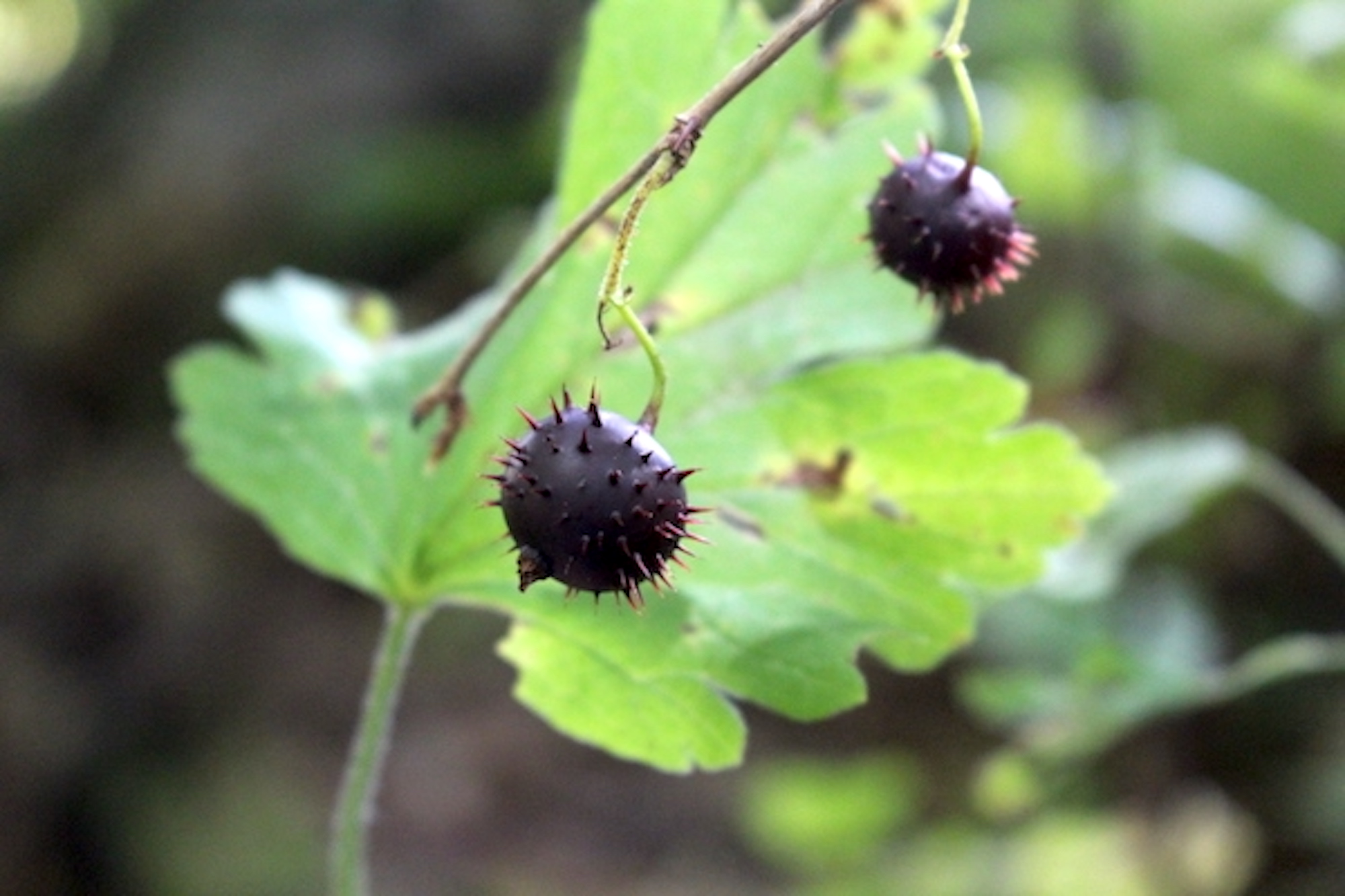
The spikes on the fruit are all show, and you can eat them easily enough. The spines on the stems, on the other hand, aren’t messing around. Picking gooseberries is like tangling with a rose bush, so harvest carefully.
We grow cultivated gooseberries too, and the wild ones look a lot like them, just smaller and spikier. They make a lovely gooseberry jam, and there are dozens more ideas in my list of gooseberry recipes. My wild gooseberry guide has photos of the leaves and stems to help you identify them.
Grapes (Vitis sp.)
Wild grapes are easy wild fruits to spot, largely because they look so similar to domestic grapes. They’re often much smaller and quite tart, so they’re not great fresh.
Wild grapes climb a fence on our property, and most of what we pick goes into wild grape jelly and wild grape wine. The juice is so tart that we let it sit overnight in the fridge first, so the tartaric acid crystals can settle out.
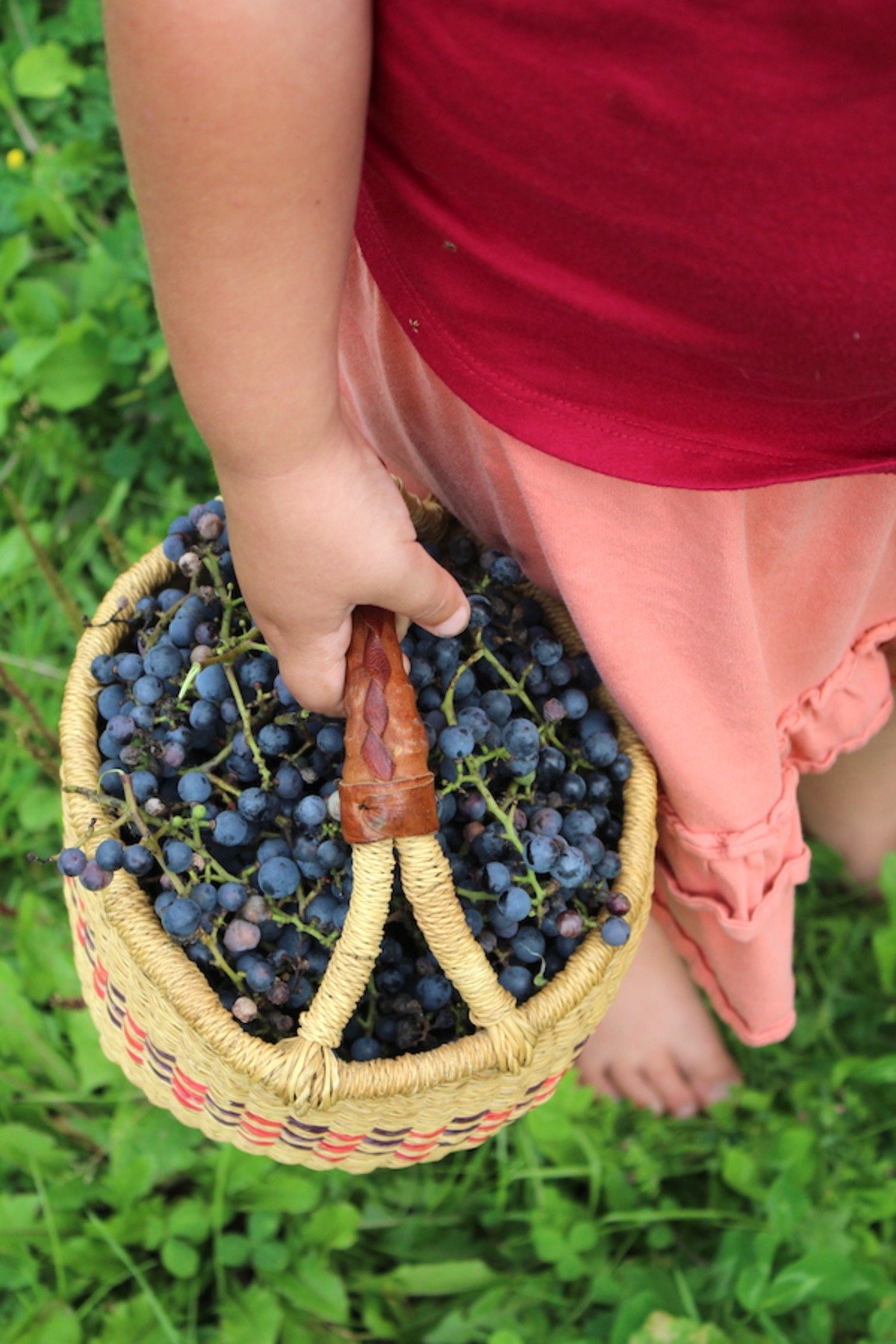
Watch out for moonseed (Menispermum canadense), a toxic vine that looks like wild grapes. Moonseed berries have a single crescent-shaped seed, while wild grapes have several round seeds. My guide to poisonous berries has more on telling them apart.
Virginia creeper climbs the same fences and has poisonous blue-black berries too, but its leaves have five leaflets instead of one broad grape leaf. My wild grape guide shows the vines, leaves and fruit through the seasons.
Groundcherry (Physalis sp.)
Also known as husk cherries, ground cherries have bright orange or yellow fruit inside a papery husk. Several species grow wild across much of the U.S., and gardeners grow the garden ground cherry as an annual crop up here in the Northeast.
We grow ground cherries in our garden every year, and the birds steal some to spread the seed. As a result, we find plenty of wild volunteers around our land, often fruiting in dense hayfields without any trouble.
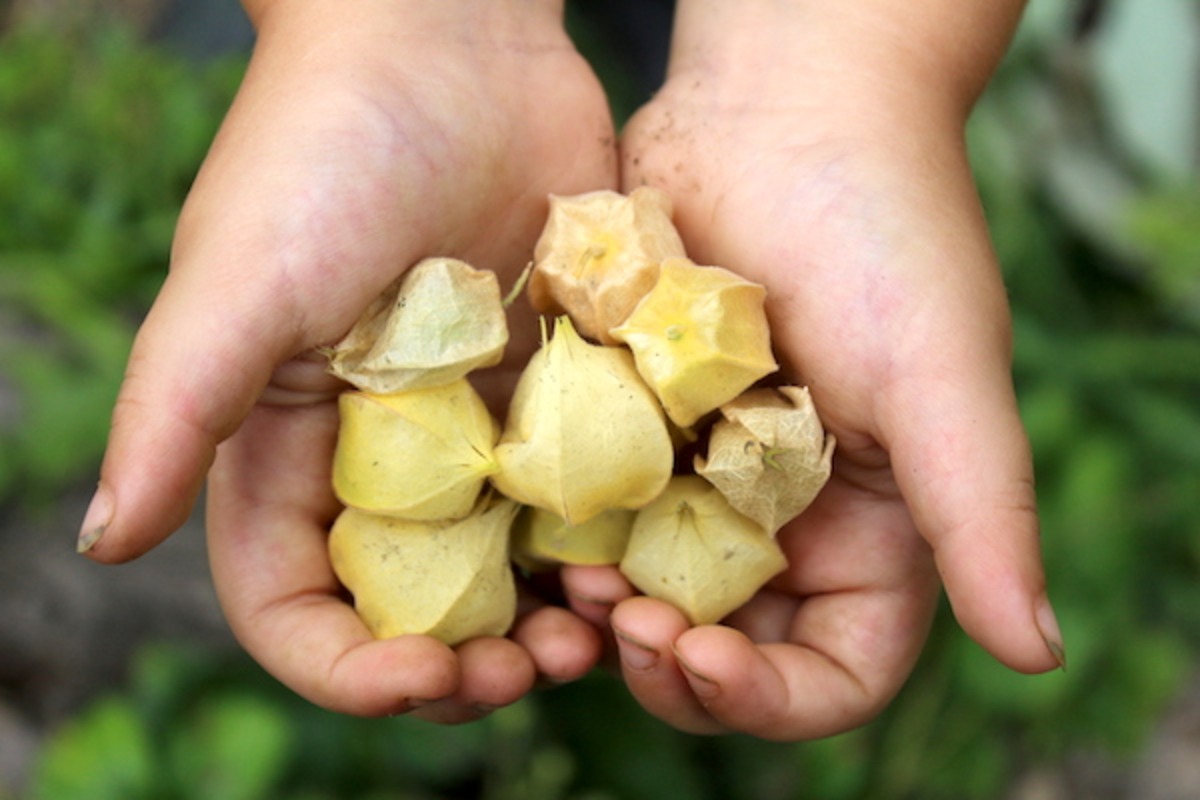
Pick only ripe ground cherries, the ones that drop from the plant inside a dry, papery husk. The leaves, husks and unripe green fruit are toxic, so leave them out. Nightshade berries can look similar, but they grow without a husk.
Ground cherry jam is delicious, and there are lots of ways to use ground cherries that show off their bright, tropical flavor. For identifying the wild species, here’s a good guide to wild ground cherries.
Guelder Rose or Highbush Cranberry (Viburnum opulus, V. trilobum or V. edule)
Highbush cranberry is a great name for these edible viburnum fruits. They taste more or less like cranberries, but they grow on large bushes, and each one has a single large, flat seed.
There are a lot of common and Latin names for this fruit. That’s largely because there are both European and North American species, and they’ve interbred in the wild. The Latin names have gotten a bit confused, and honestly, I’m not even sure which one to use.
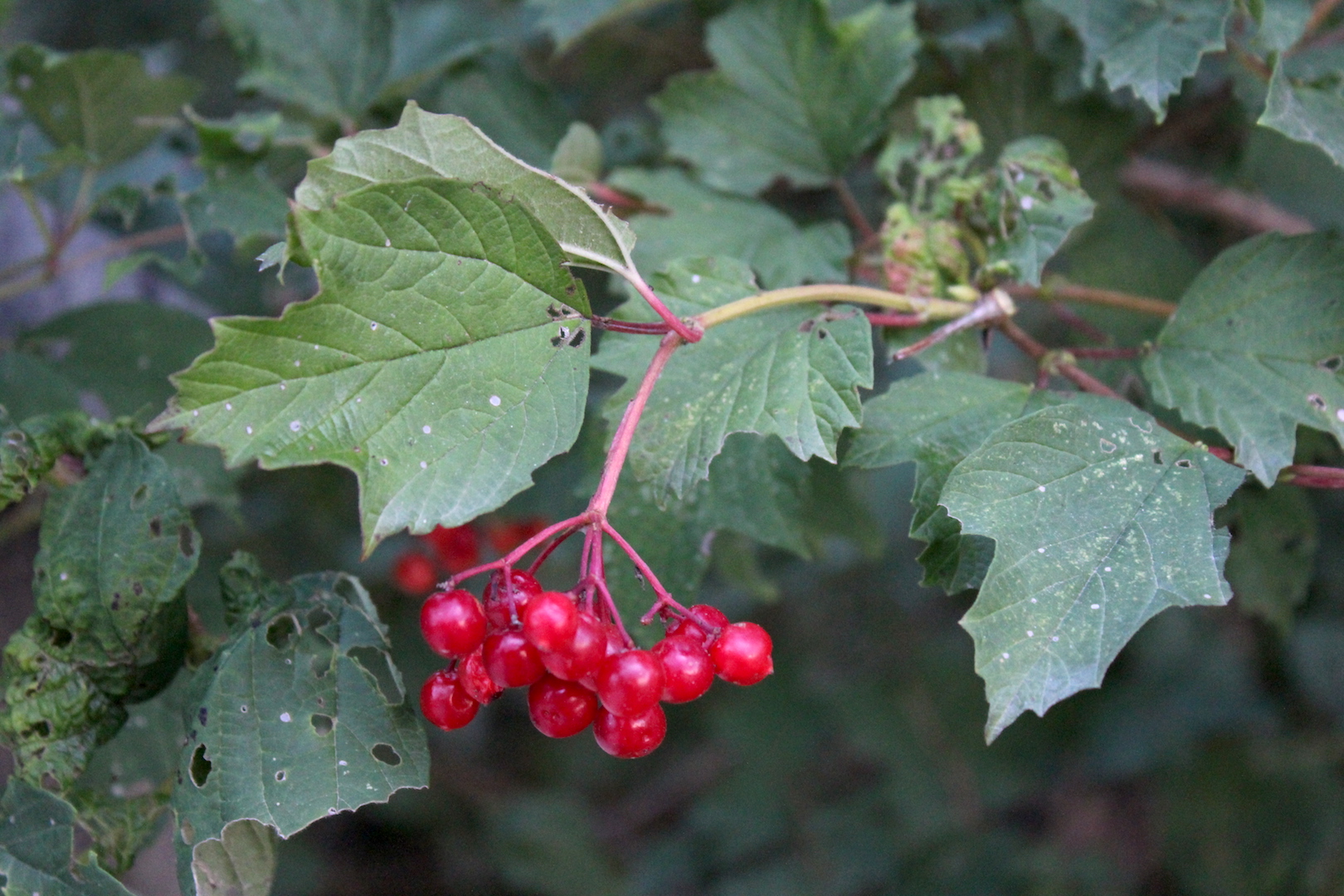
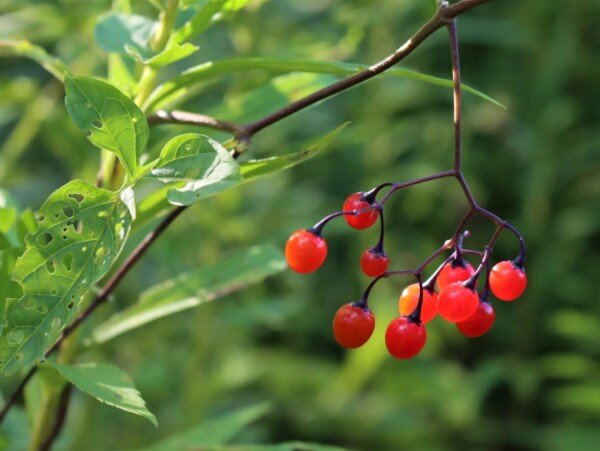
Be sure of the plant before you taste anything. Bittersweet nightshade has shiny red berries in the same wet thickets, but it’s a vine, and every part of it is toxic. Once you know you have highbush cranberry, taste every bush before you harvest.
The first time I foraged highbush cranberries, I bit into one from a showy roadside bush and spit it right out. I spit five more times, and I still regretted the little bit I swallowed.
That was almost certainly the bitter European species. A scrubbier bush down the same hedgerow had sour but tasty fruit.
The bark has a long history in herbal medicine for cramps, which gives the plant another common name, crampbark. Check with your doctor before using it as a remedy.
Whatever you call it, highbush cranberries are easy to identify, and the good-tasting ones make a lovely jam or juice.
Hackberry (Celtis occidentalis)
While the name is uninspiring, hackberries are a sweet wild fruit that’s more or less a fruit and a nut packed into one. A thin, sweet, date-like skin surrounds a crunchy shell with a tiny edible seed inside.
The fruits hang on the bare branches well into winter, which makes them a handy winter foraging find. The trees are easy to spot by their corky, warty bark, and they’re often planted as street trees in older neighborhoods.
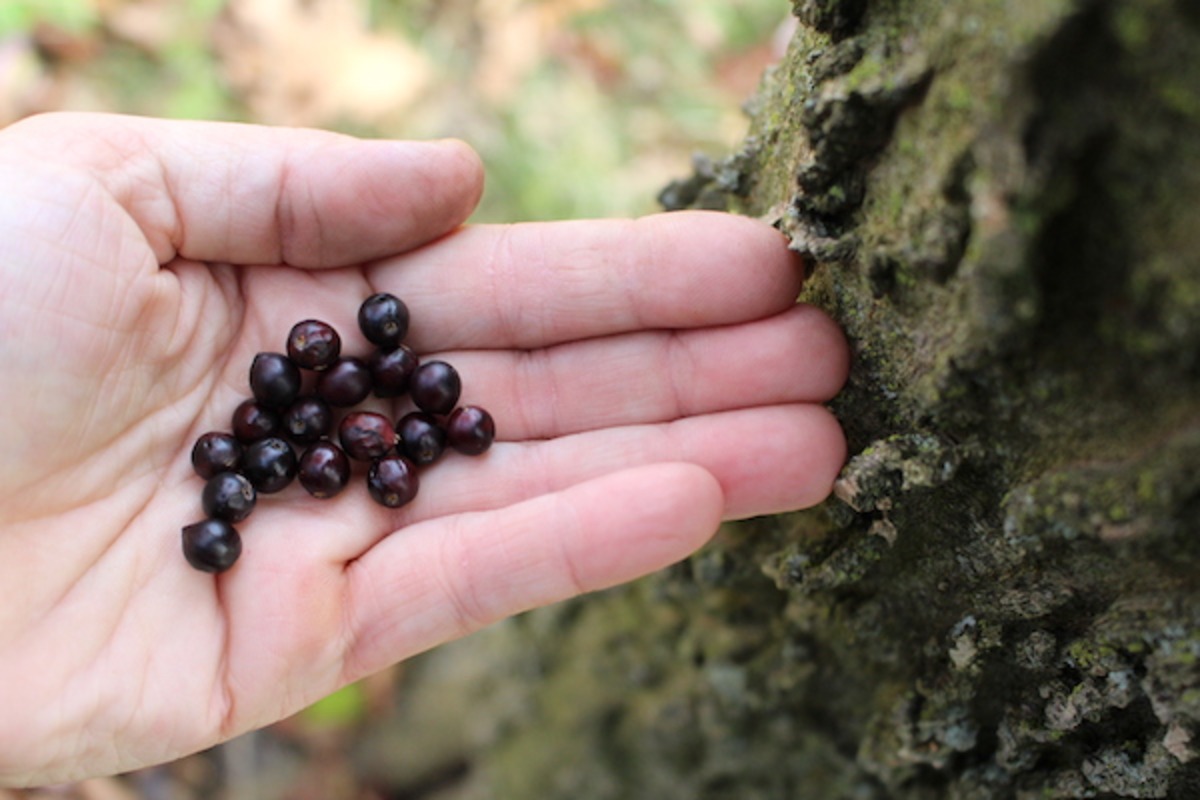
Foragers eat them out of hand, pound them into trail bars, or simmer the crushed berries into a naturally sweet hackberry milk. They’re high in fat, protein and carbohydrates, and people have eaten and stored them for thousands of years.
My hackberry foraging guide has photos of the bark, leaves and fruit, plus how to tell the trees apart from look-alikes like slippery elm.
Hawthorn (Crataegus sp.)
Sometimes called thorn apples, hawthorn fruits resemble crabapples and grow on trees that look a lot like wild apples, but with large thorns. The thorns can be several inches long and are extremely sharp, so use caution when foraging hawthorn.
A few years back, I ran across a breathtaking tree at the edge of the woods in early June. White flowers covered it from top to bottom, with a heady, sweet scent. I plucked a few leaves and identified it as hawthorn, and now I see them everywhere.
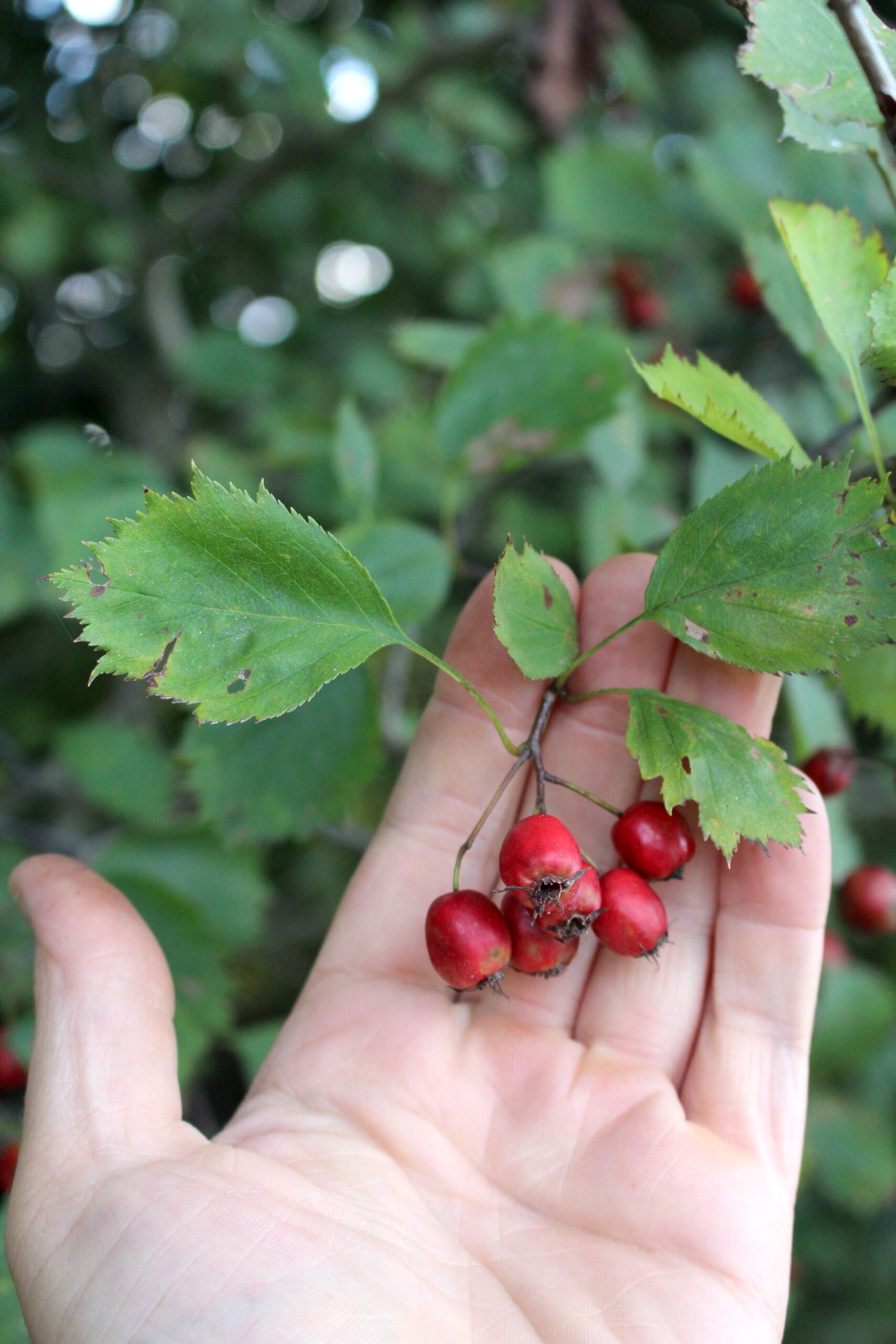
The leaves are edible too, and in Britain people ate them so often that they called them bread and cheese. I’ve tried them here and didn’t find them particularly appealing, but perhaps the European species taste better.
The fruit varies a lot from tree to tree. Many have bitter fruit that’s not great raw, but I’ve found a few wild trees with lovely, mildly sweet fruit. Eat the flesh and spit out the seeds, and save the rest for hawthorn jelly or hawthorn syrup.
Hawthorn also has a long history in herbal medicine for heart health. It can interact with heart medications, so check with your doctor before using it as a remedy. My hawthorn guide has photos of the flowers, leaves and fruit.
Hobblebush (Viburnum lantanoides or V. alnifolium)
Hobblebush is another edible viburnum, along with highbush cranberry, wild raisin and nannyberry. It grows a bit differently than the others, with a sprawling habit and gigantic leaves.
I found my first one in late summer, and once I had my eye tuned to them, I found hundreds of hobblebushes by early fall. At a casual glance, the big leaves make the plants look like young linden trees, but watch closely and you’ll see clusters of berries.
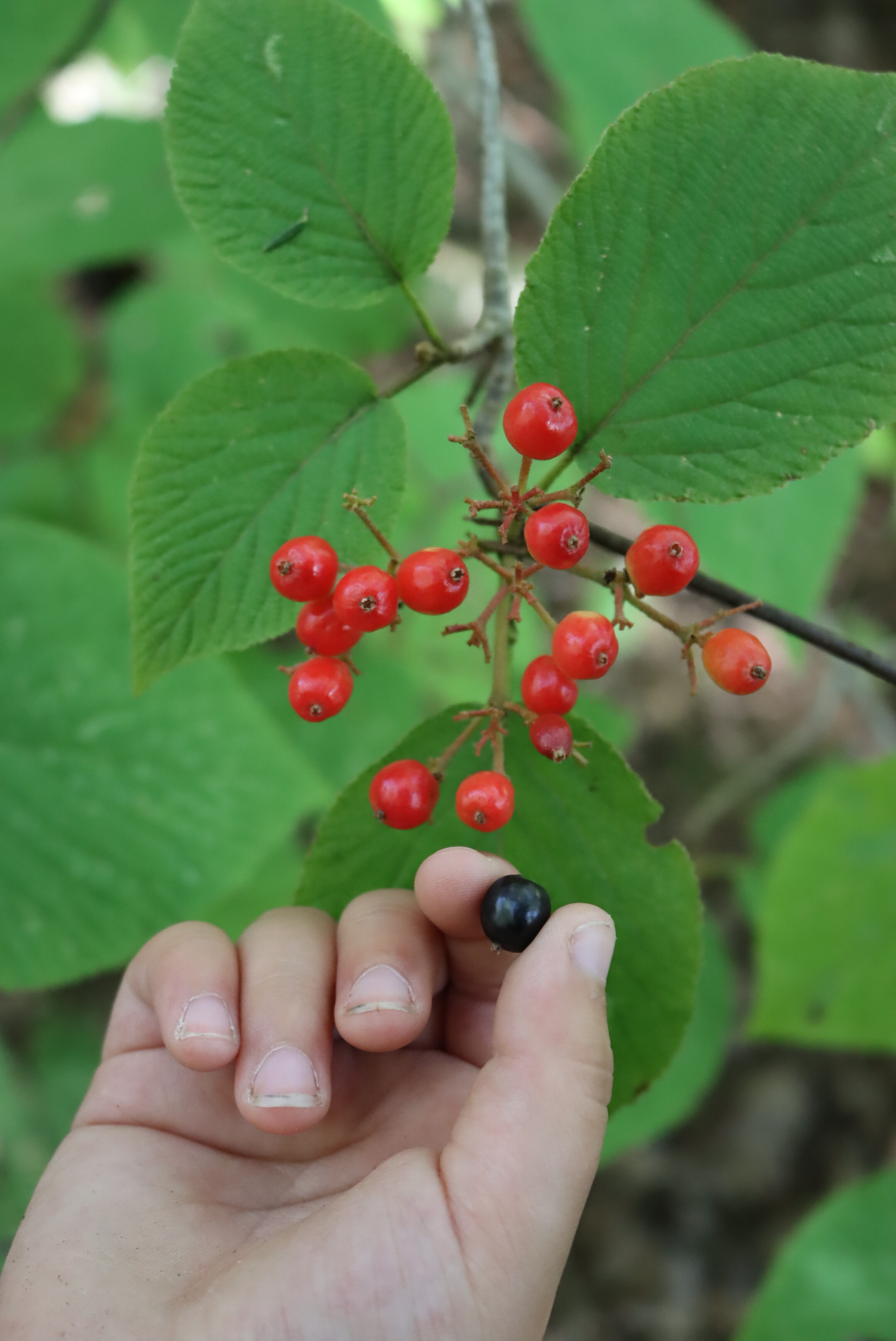
The berries start out red and ripen to black. Each one is a mass of very sweet pulp that tastes a bit like prunes and molasses. Inside is a large, flat seed like the other edible viburnums.
The birds love them as much as I do, so check your patches often. My guide to wild hobblebush has photos of the plant through the seasons.
Honeyberry (Lonicera caerulea & L. villosa)
Honeyberries, also called haskap, are an edible honeysuckle with oblong blue berries that taste a bit like blueberries. We grow lots of them on our homestead. One year the robins took half our crop, so I’m sure they’ll be growing wild around here soon enough.
The wild species are mostly northern. Mountain fly honeysuckle (Lonicera villosa) is native to the Northeast, and other blue honeysuckles grow wild across Canada and Alaska.
Be careful with this one, since most honeysuckle berries aren’t edible. Identify the plant itself rather than going by berry color. Japanese honeysuckle has blue-black berries too, and they aren’t safe to eat, while the red and orange berries of the common bush honeysuckles are best left for the birds.
If you’d rather grow your own, Stark Bro’s sells a Northern Lights honeyberry collection. My guide to growing honeyberries has everything you need to start.
We love them in haskap jam and honeyberry recipes like ice cream. For the wild plants, here’s a good guide to foraging honeyberries.
Huckleberry (Gaylussacia sp. and Vaccinium sp.)
A number of huckleberry species grow wild, mostly in the Pacific Northwest and Canada. The fruits are sweet and look a lot like blueberries, and out west, huckleberries are Vaccinium species, close cousins of blueberries.
In the Northeast, huckleberries are usually in a different genus, Gaylussacia. Black huckleberry (Gaylussacia baccata) even grows here in Vermont. Eastern huckleberries have 10 hard little seeds inside, which makes them crunchier than blueberries, along with tiny gold dots on the undersides of the leaves.
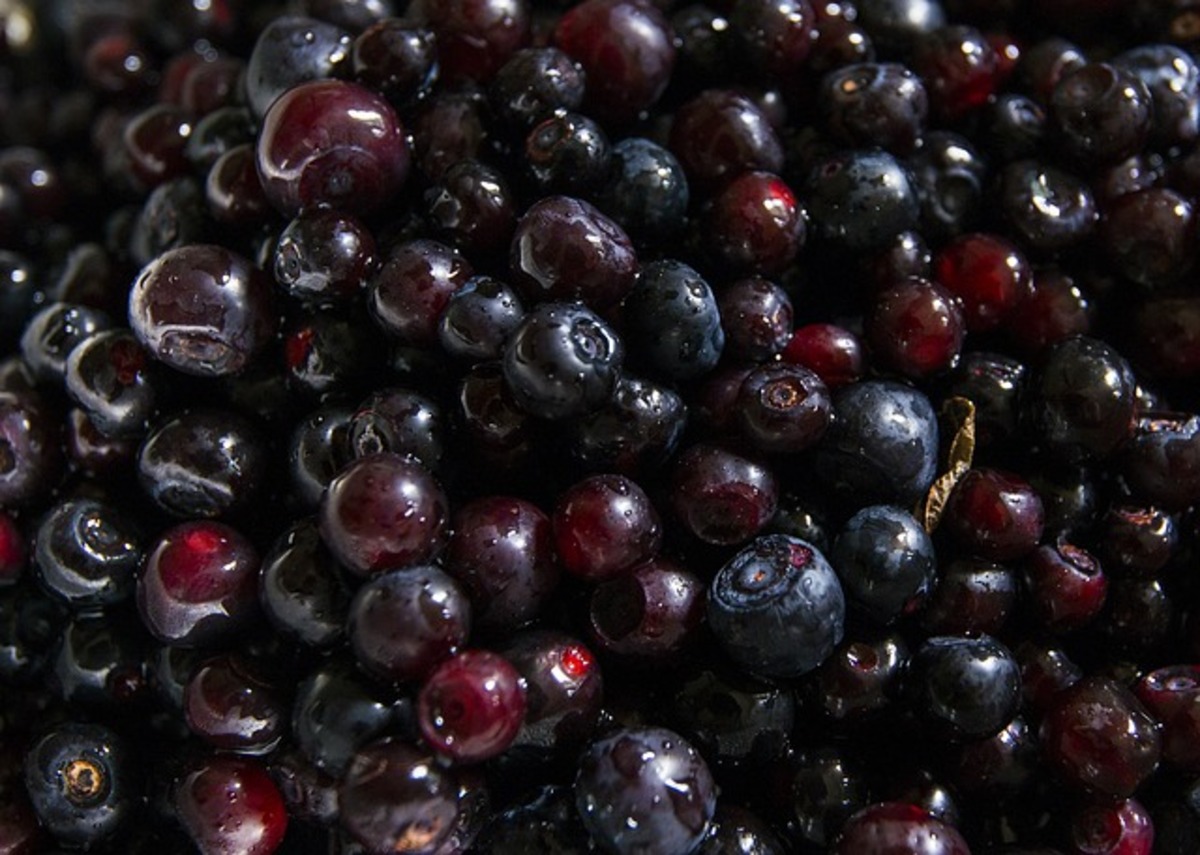
Huckleberries are also called whortleberries or hurtleberries, and they come in blue, black and red. For more on telling huckleberries from blueberries, here’s a helpful guide to eastern huckleberries.
Lingonberry (Vaccinium vitis-idaea)
Lingonberries are a tart red cousin of blueberries and cranberries, growing on a low evergreen shrub with small, glossy, oval leaves. They’re a classic wild fruit in Scandinavia, where families pick them by the bucket for jam.
They grow wild across the far north of the world, in rocky, acidic soils, bogs and northern forests. In North America, they’re also called mountain cranberry or cowberry. In Newfoundland they’re known as partridgeberries, which is easy to confuse with Mitchella repens, the partridgeberry most of us know.
Bearberry is the closest look-alike, but lingonberry leaves have tiny dark dots on the undersides, and bearberry leaves don’t. For identifying wild lingonberries, here’s a good guide to lingonberries and cranberries.
We grow lingonberries on our homestead too, and growing lingonberries is a good option if there aren’t any wild ones near you.
Mayflower (Maianthemum canadense)
Also known as Canada mayflower or false lily of the valley, these little woodland plants pop up in early spring. We used to jokingly call them bass lilies, because they grow in the same spots as trout lilies and they’re about the same size.
Don’t mix them up with true lily of the valley (Convallaria majalis), which spreads through the woods in some areas. Every part of it is poisonous, including its orange-red berries.
Each plant sends up a stalk of tiny white flowers that turn into berries in the fall. They’re closely related to Solomon’s plume, which is also in the Maianthemum genus. The berries go through the same red and white speckled stage before ripening to bright red.
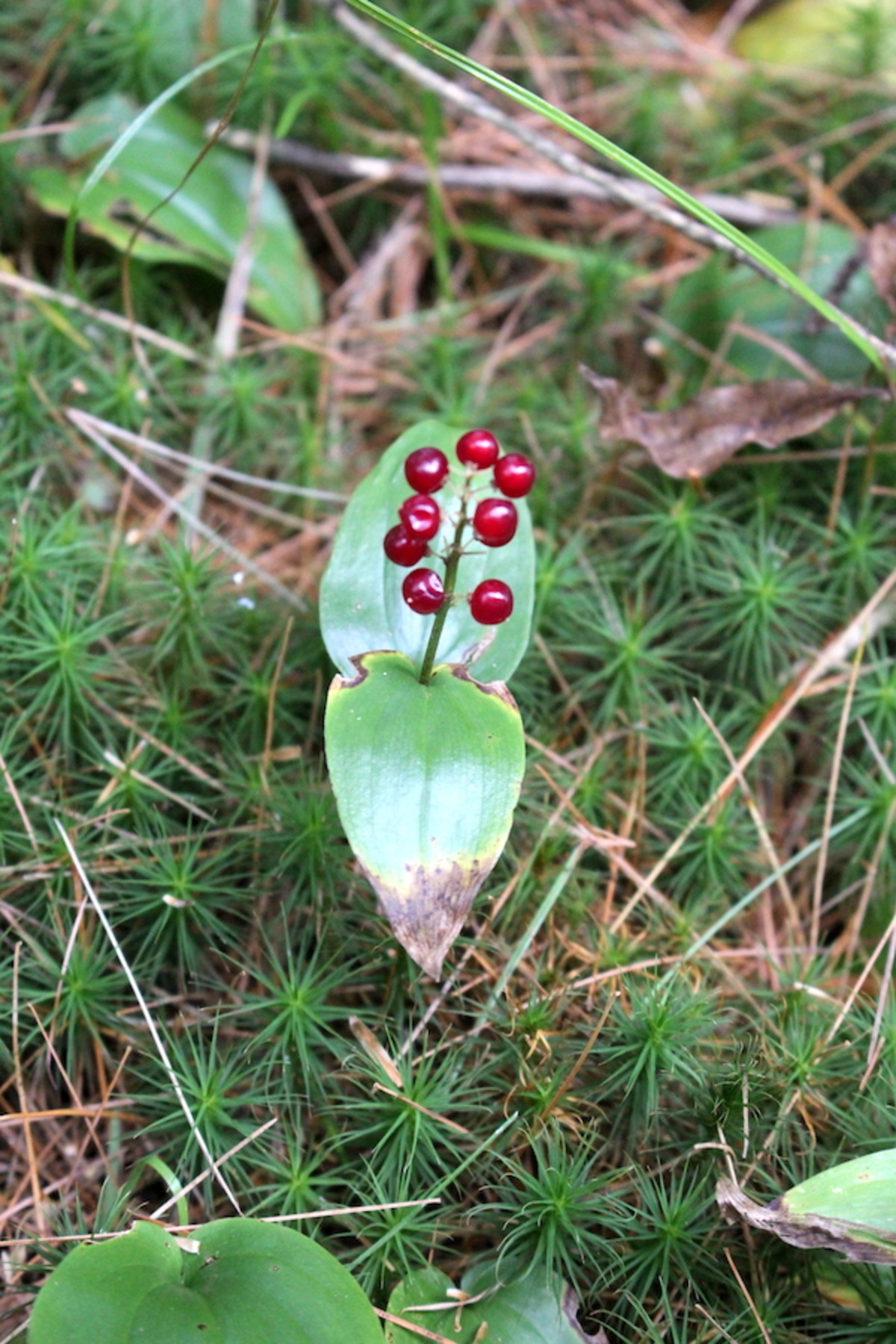
Each stalk only has a few berries, but they’re really delicious, and the plants often grow together in big colonies. Eat them in small amounts, since a big handful can upset your stomach.
Here’s a detailed Canada mayflower identification page with photos of the leaves, flowers and fruit.
Mock Strawberry or Indian Strawberry (Duchesnea indica)
Sometimes called false strawberries, these little strawberry look-alikes also happen to be edible. Edible doesn’t mean tasty, though, and to my palate they taste like nothing at all.
Mock strawberries have yellow flowers instead of the white flowers of real strawberries, and the seeds sit up on the surface of the fruit. Botanists now call the plant Potentilla indica.
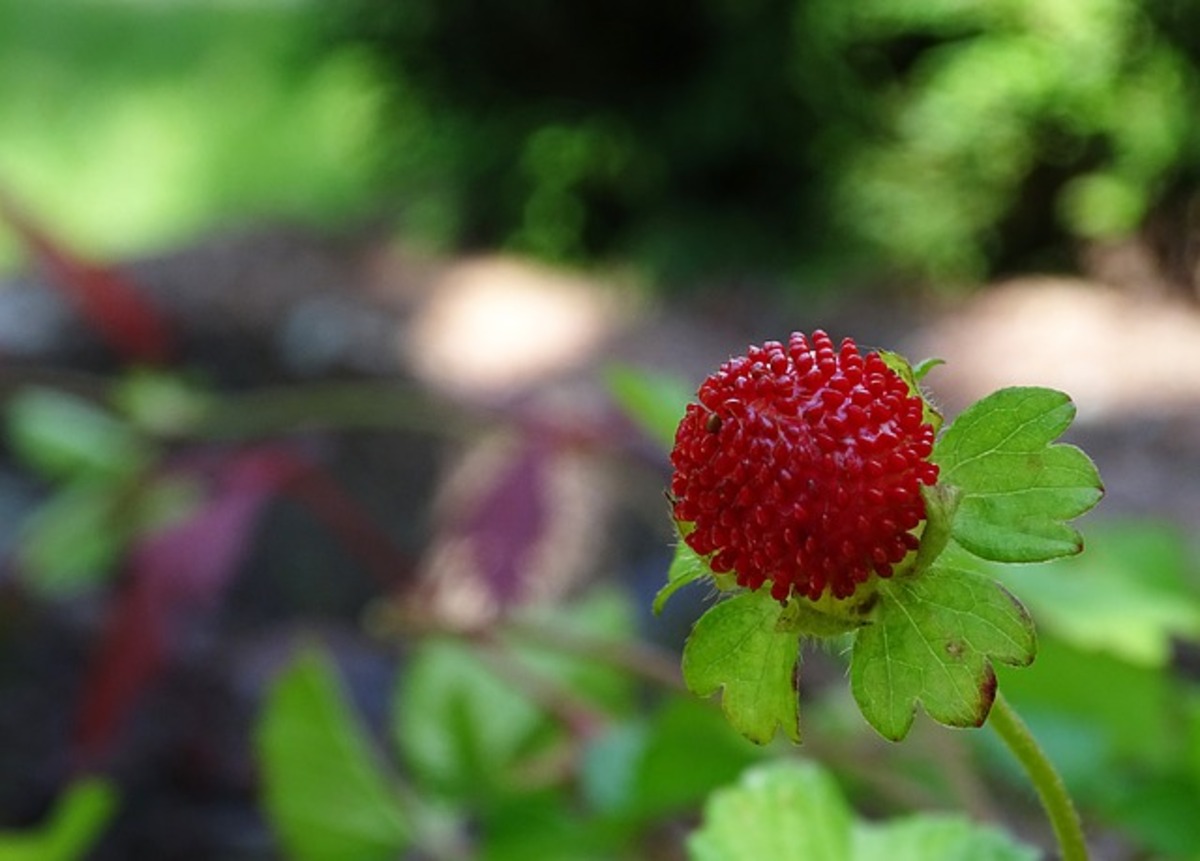
If your little ones eat a few mock strawberries, they may be disappointed, but they’ll be safe. Here’s a helpful guide to mock strawberry with more on telling it from the real thing.
Mountain Ash or Rowan Berry (Sorbus sp.)
It’s hard to miss the bright red fruit clusters of mountain ash in the fall. The fruits are mildly sweet and somewhat bitter, so they’re not great for fresh eating, and there’s a big difference between edible and tasty.
My son and I found our first rowanberries one autumn, hopping across rocks on a wet woodland trail. He was busy looking down for bunchberries. When he found red berries scattered on the trail, he assumed someone had dropped their haul, until I pointed up at the fruit hanging overhead.
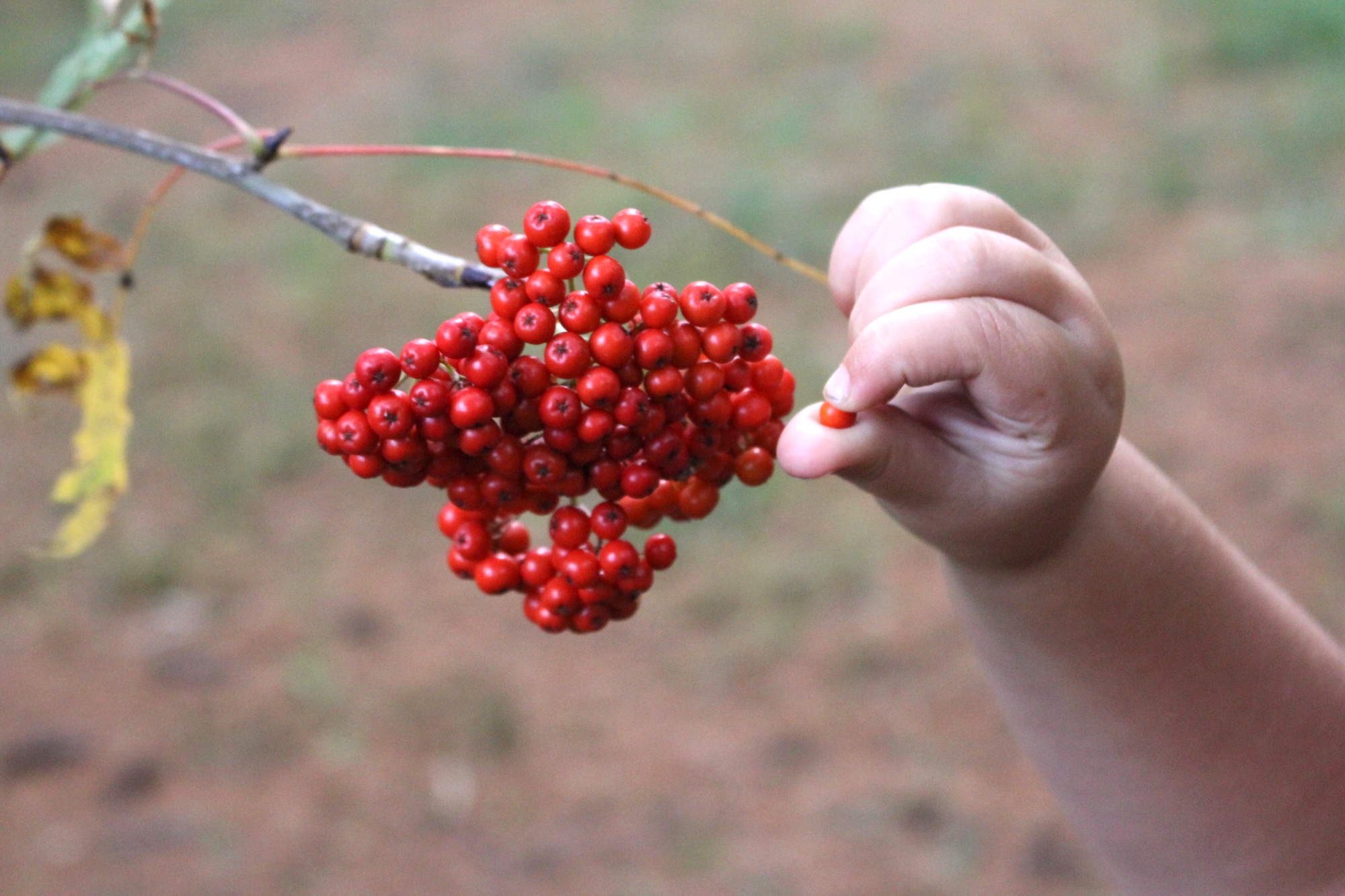
Rowanberries hang on the trees well into winter, long after the leaves drop. You’ll see the clusters swaying in the wind under tiny mounds of snow. Their bitterness softens after a few hard frosts, and Europeans have eaten them since ancient times.
Cook rowanberries before eating them, since the raw berries contain parasorbic acid, which can upset your stomach. If you’re interested, Forager Chef has an excellent guide to cooking with rowanberries. My guide to identifying rowanberries has photos of the leaves, bark and fruit.
Mulberry (Morus sp.)
Blackberries that grow on trees? If you find a blackberry tree, you’re actually looking at a wild mulberry.
They can be tricky to identify unless they’re covered with fruit. The leaf shapes vary a lot within a species, and even on a single tree. You’ll see several different leaf shapes coming off the same branch.
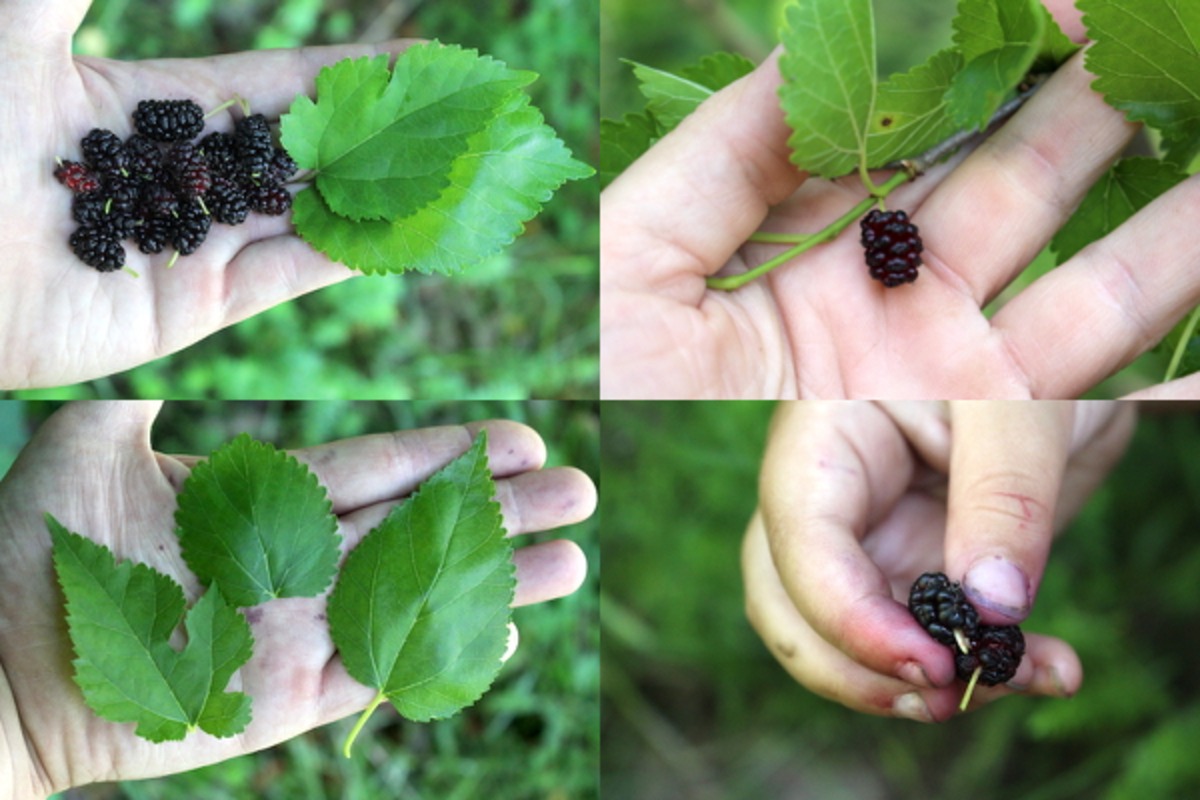
Wild mulberries ripen dark purple or white, depending on the tree. The pale ones don’t stain fingers and clothes, but they also tend to have less flavor. When you’re foraging the dark ones, everything from your fingers to your mouth and clothes will turn purple, and it’s a beautiful thing.
My guide to foraging mulberries has photos of the bark, leaves and fruit, plus how to tell our native red mulberry from white mulberry. If you’d like a tree of your own, I’ve also written about growing mulberries in your backyard. Grow Organic sells several kinds of mulberry trees.
Nannyberry or Sheepberry (Viburnum lentago)
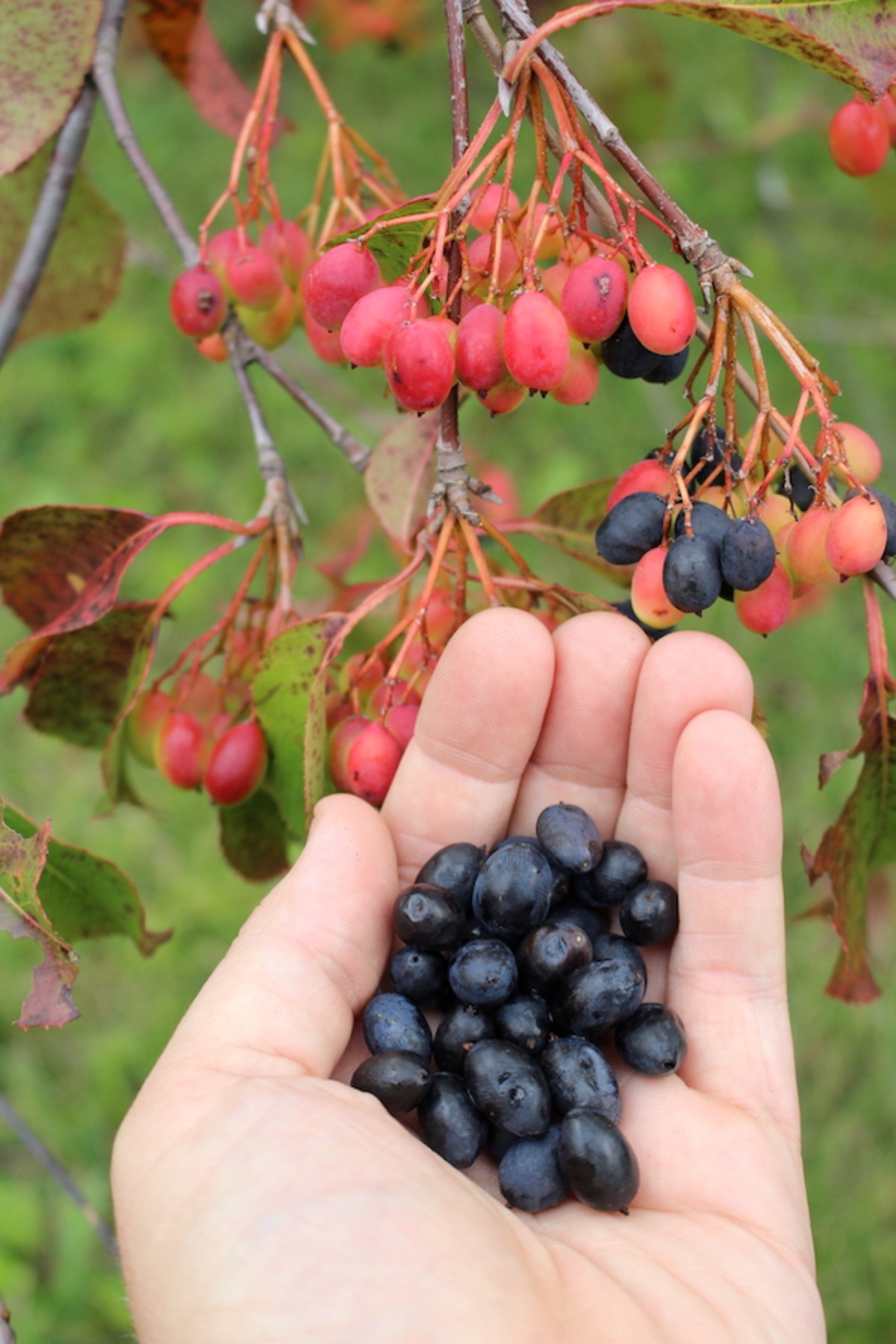
Nannyberries are a bit unusual as wild berries go. They’re more of a starchy fruit, a bit like a banana, with a sweet pulp around a large, flat seed. They grow in drooping clusters.
The taste is hard to describe, somewhere between banana, prunes and raisins, and very sweet. Put the berries through a hand-crank food mill to remove the seeds, and you’re left with a pulp as thick as pudding that you could stand a spoon in.
One summer I spent just about every day foraging with my two- and four-year-old foraging buddies. Even with dozens of wild fruits to choose from, nannyberries were one of my daughter’s favorites. I’ve even baked them into nannyberry bread using my favorite maple banana bread recipe.
Nannyberries like wet, clay soils and some shade, and you’ll often find them along stream banks and around ponds. The fruits start out yellow, turn bright pink, and then ripen to a dark blue-black. Not your average wild berry, but definitely worth the effort.
There are several other edible viburnums that are very similar, mostly differing by native range, like rusty blackhaw (Viburnum rufidulum) and blackhaw (Viburnum prunifolium). My guide to foraging nannyberries has photos for identifying them.
Oregon Grape (Mahonia aquifolium)
A common woodland edible in the Pacific Northwest, Oregon grape has small purple-blue fruits and holly-like leaves. Native peoples have used it as a food for thousands of years.
They’re not really grapes, though they grow in clusters that look a bit like grapes. The plant is actually in the barberry family, and another common name, hollyleaf barberry, is more descriptive, if not as catchy.
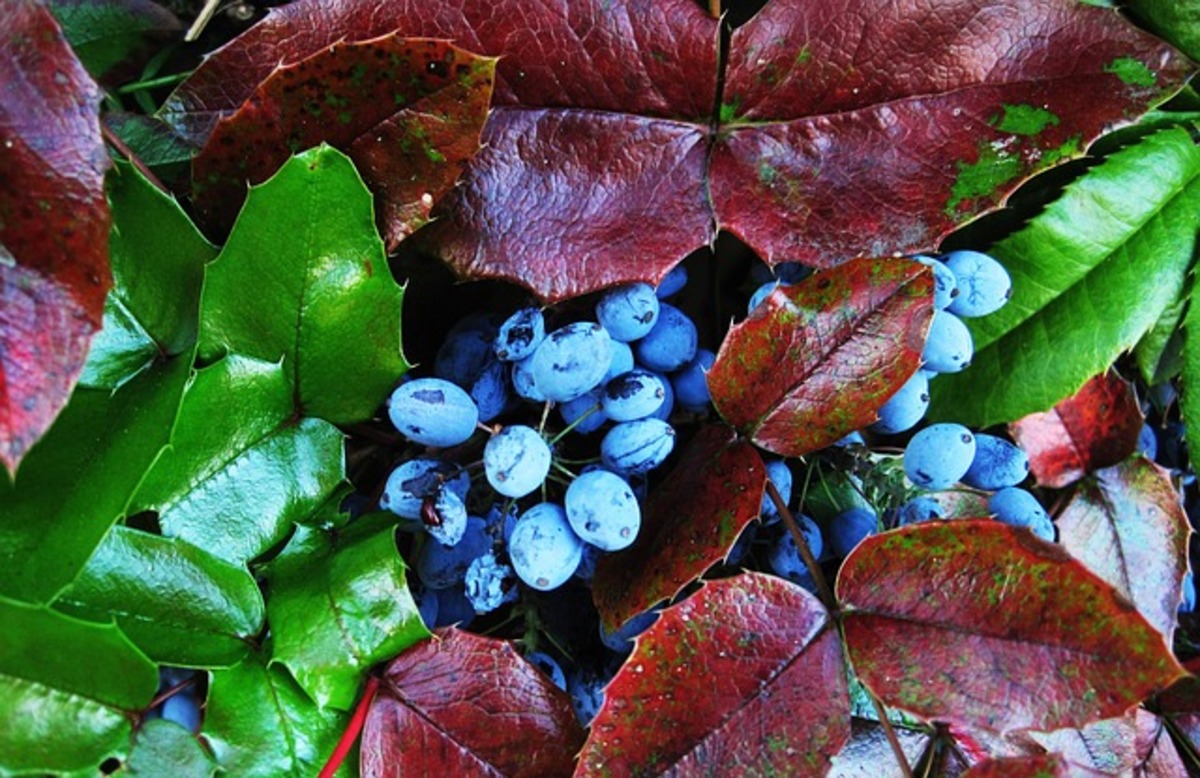
The fruits are very tart, so foragers often mix them with sweeter fruits. My friend Devon makes an Oregon grape curd that sounds spectacular, using the tartness to balance an otherwise sweet curd.
United Plant Savers lists Oregon grape root as an at-risk plant, since herbalists dig it for medicine. Pick only the berries, harvest lightly, and never take the whole plant. My friend Colleen has a helpful guide to foraging Oregon grape if it grows near you.
Partridgeberry (Mitchella repens)
A creeping woodland groundcover, partridgeberries are a fun find deep in the woods, along hiking trails or near shady stream banks. Each berry forms from a pair of flowers, so look closely and you’ll see two little dimples on every fruit.
Partridgeberry was among the first wild plants I learned in the Northeast. In college, my work-study job had me surveying woodland plants for a researcher. She had me taste one, said it tasted like absolutely nothing, and told me that’s how I’d know it was teaberry.
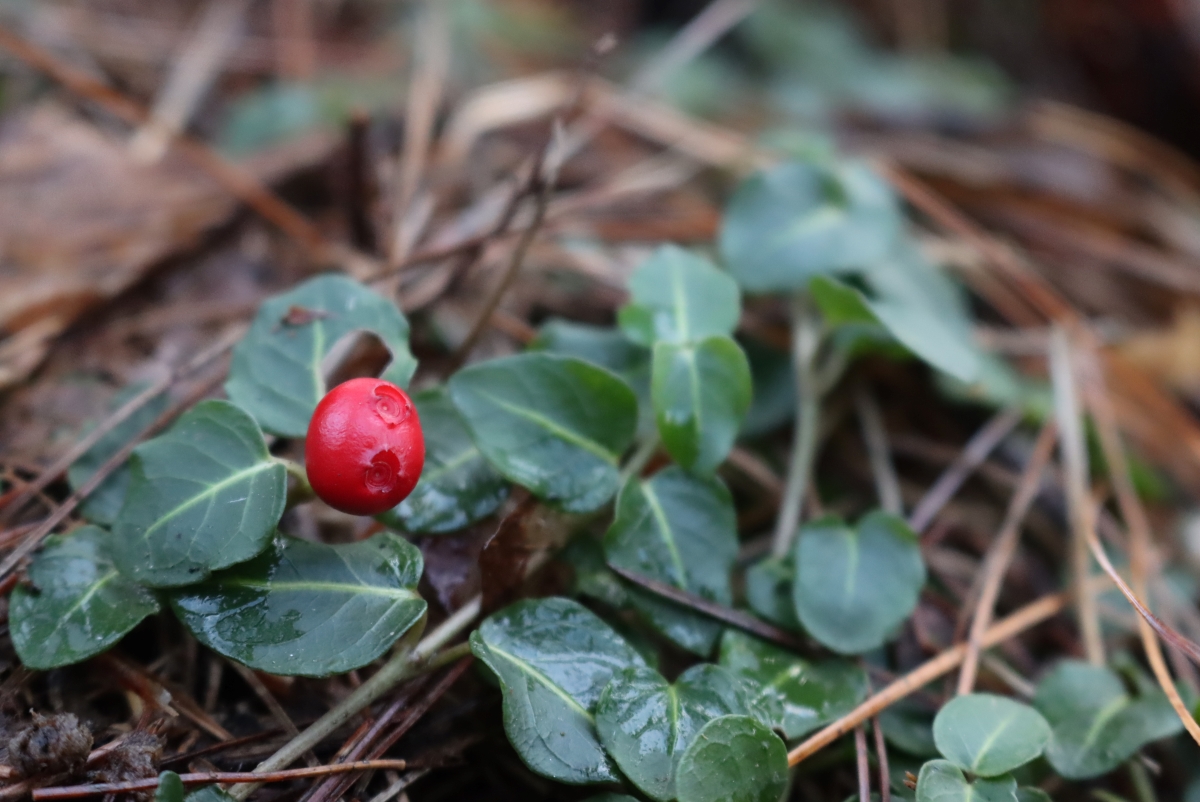
She had the two mixed up, and I dutifully marked them as teaberry on my survey. I didn’t think they tasted like nothing, either. They have a subtle sweetness and a mild berry flavor that I quite liked.
The berries persist under the snow all winter long, and I’ve harvested them on winter foraging trips when the snow melted away in patches. Partridgeberry is on United Plant Savers’ at-risk list, so pick lightly.
Partridgeberries are easy to identify, and their only close look-alike is teaberry, which is also edible but tastes strongly of wintergreen.
Passion Fruit (Passiflora sp.)
I remember the first time I came across a passionflower vine growing wild near my childhood home in Southern California. It was climbing a fence at the edge of an aqueduct, thriving without any care or attention. The gigantic, exotic-looking flowers are hard to miss.
The flowers later turn into passion fruit, which are sweet and delicious. You can eat them fresh or turn them into passion fruit juice or passion fruit jelly.
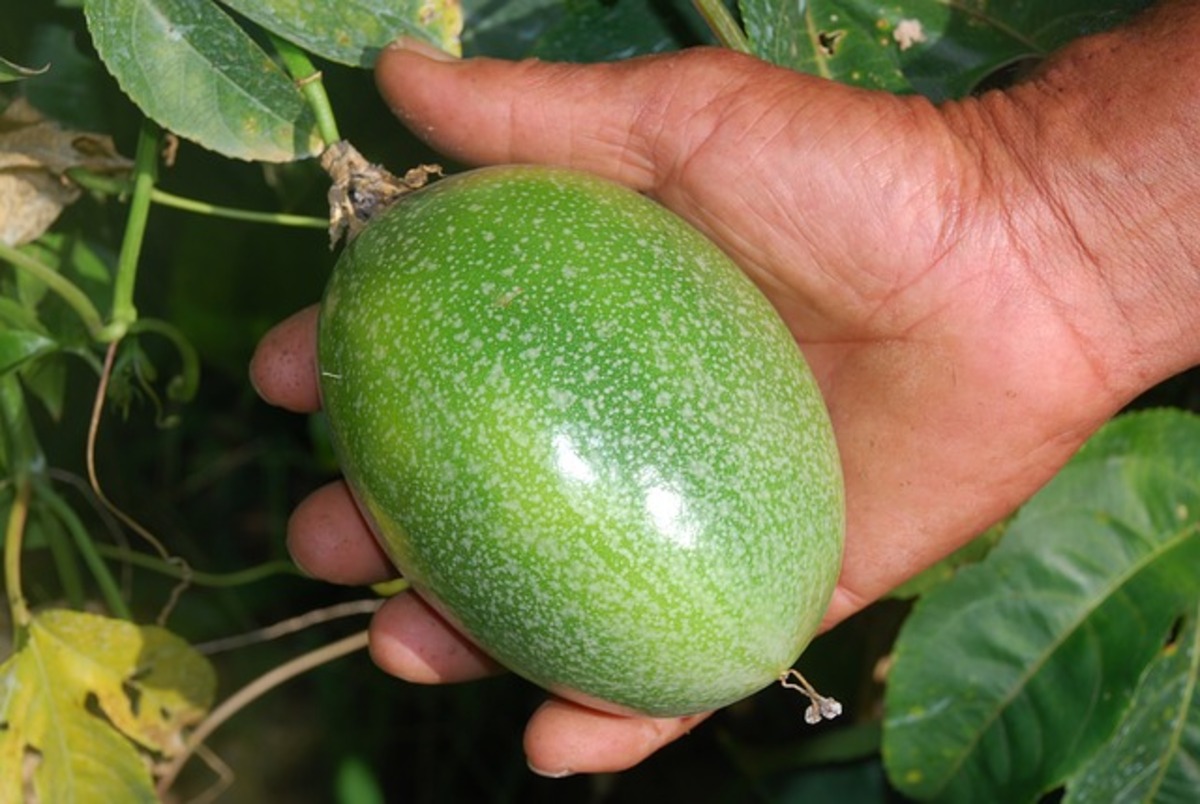
In the eastern U.S., the native passion fruit is the maypop (Passiflora incarnata), which grows wild from Pennsylvania south to Florida and west to Texas. The egg-shaped fruits ripen from green to yellow, and the pulp-covered seeds inside are the part you eat.
Here’s a good guide to foraging maypops if they grow near you.
Pawpaw (Asimina sp.)
I really long to find wild pawpaws, but they’re only hardy to about zone 5 and won’t survive our harsh Vermont winters. They grow wild in the eastern U.S., from southern Ontario and western New York south to Florida and west to Texas.
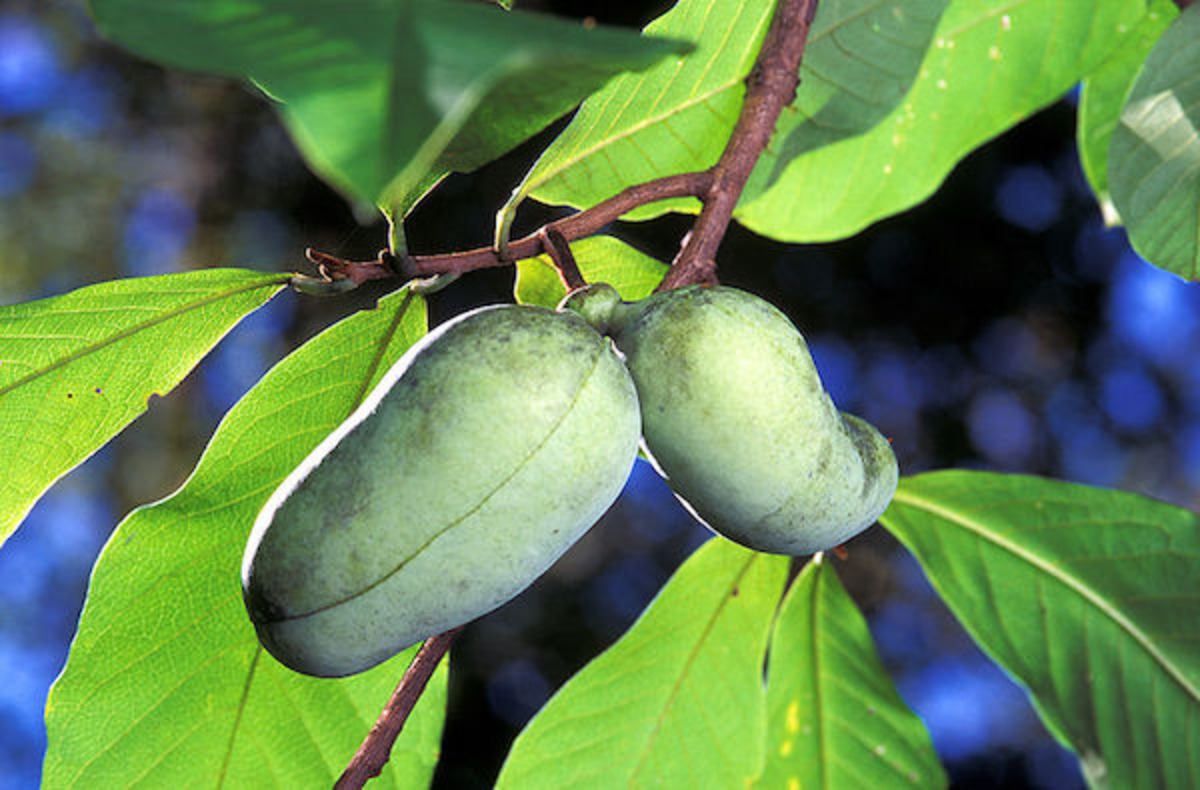
Pawpaws are the largest native fruit in North America. They taste tropical, with a smooth, custardy texture like a banana. Wildlife usually finds them first, so a ripe wild pawpaw is a real prize.
Eat only the flesh, since the skin and seeds can upset your stomach, and some people get a rash from handling the fruit.
If you live in pawpaw country, here’s a good guide to finding wild pawpaws.
If you’re in zone 5 or warmer, you can also grow your own. Stark Bro’s sells grafted varieties like the Wells pawpaw.
Persimmon (Diospyros sp.)
Like pawpaws, American persimmons (Diospyros virginiana) are only hardy to about zone 5. They’re another delicious native fruit, and unlike pawpaws, grocery stores sell their cultivated Asian cousins, so more people recognize them.
Wild persimmons are much smaller than the cultivated varieties, but the trees are prolific. They ripen in the fall, often after a frost, and they’re terribly astringent until they’re completely soft.
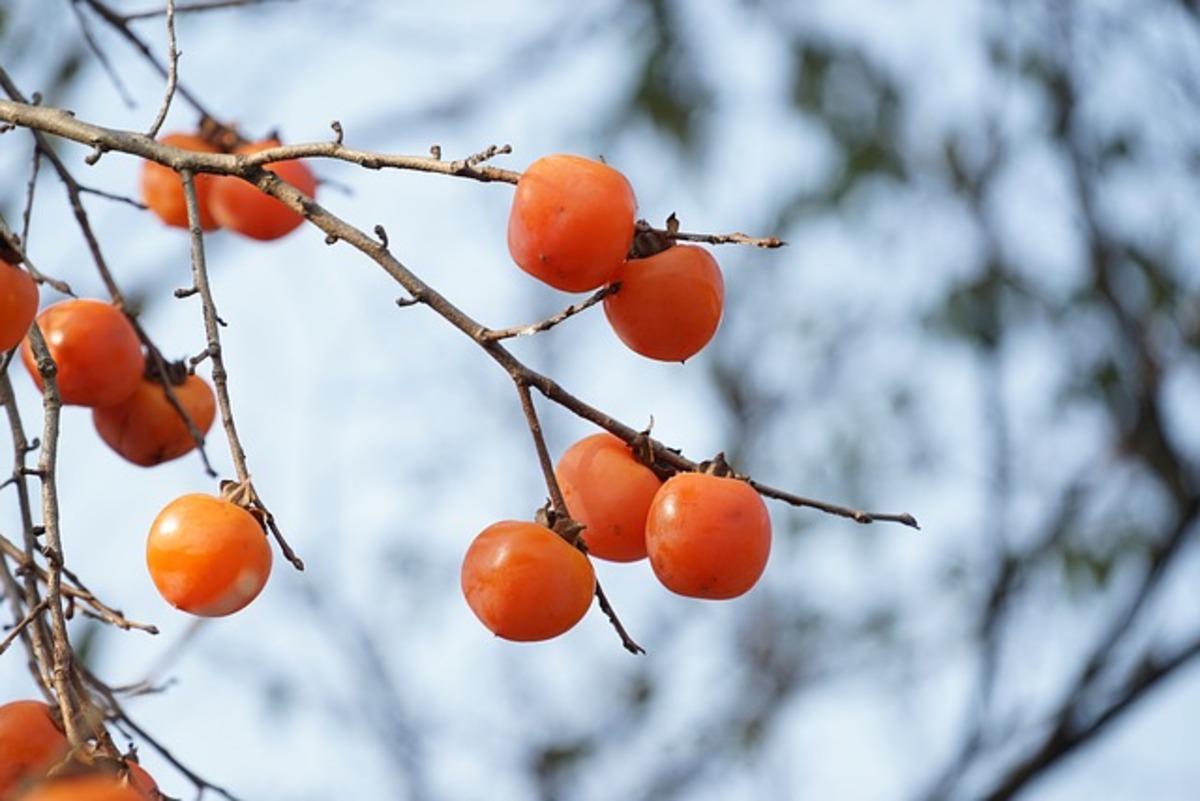
We don’t have wild persimmons here, but I love cultivated ones in persimmon jam, and there are more ideas in my list of persimmon recipes.
Here’s a good guide to foraging wild persimmons. If you’d like to grow your own, Stark Bro’s sells Prok American persimmon trees.
Pin Cherries (Prunus pensylvanica)
The name pin cherry is a great description of these small wild cherries. They’re about the size of a pea, and they hang individually from long stems. That makes them easy for birds to pick off with their beaks.
They’re a bit trickier for humans. It takes a while to collect a good harvest of pin cherries, but with a little dedication, you can fill a bucket.
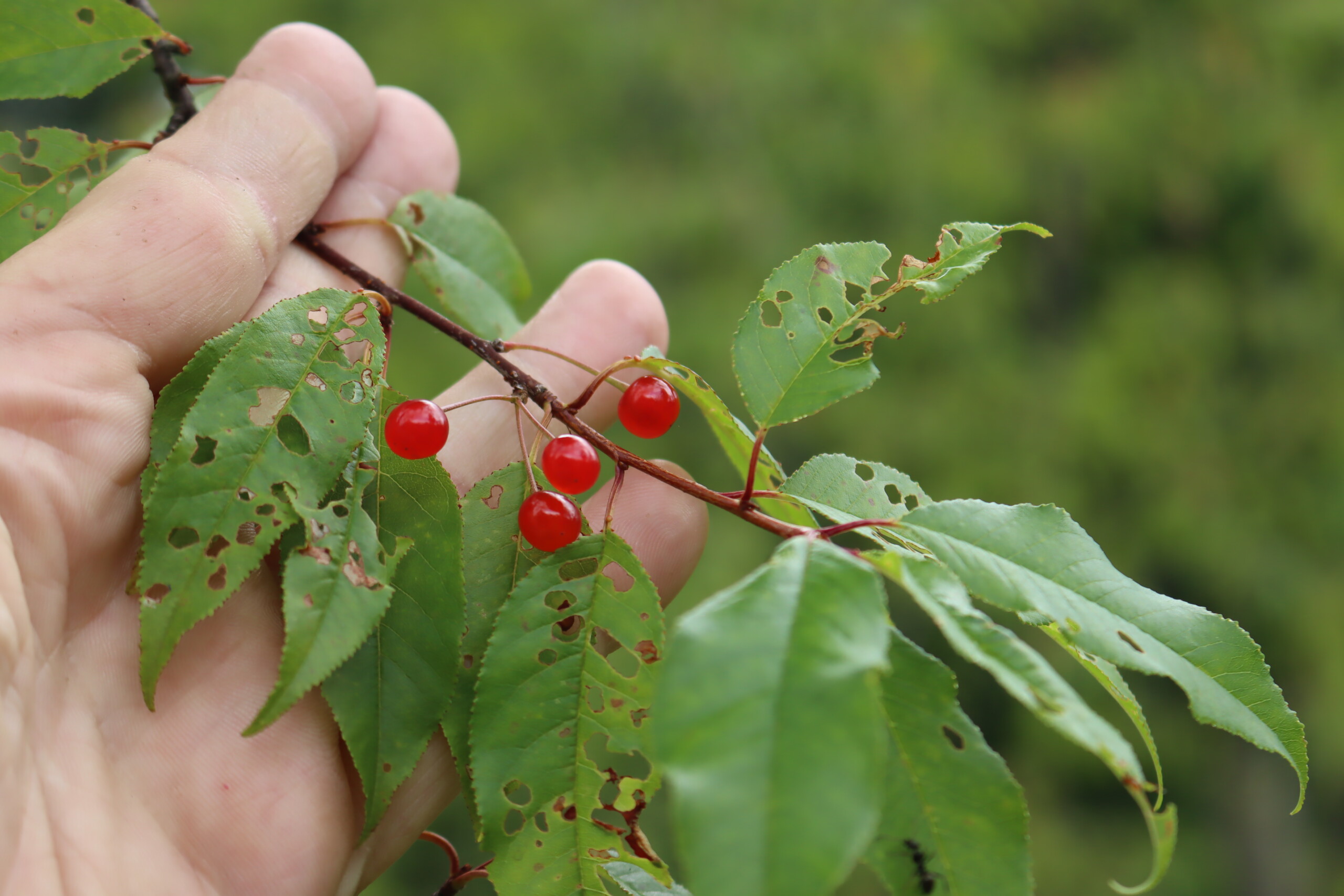
Pin cherries are a pioneer species. They grow on poor, gravelly soil and pop up quickly after a disturbance, near construction sites and gravel pits.
When we cleared a patch of our land, the bare ground filled in with young pin cherry trees within a few years. They began fruiting not long after.
As with many wild fruits, the taste varies. Some pin cherries are quite bitter, but the ones around here taste like cultivated tart cherries, only much smaller. My family likes sour fruit, so we’re happy eating them just as they are.
As with all wild cherries, spit out the pits and don’t crush them. My guide to foraging pin cherries has photos of the bark, flowers and fruit, and how to tell them from other wild cherries.
Plums (Prunus americana)
Years ago I learned that plums grow wild in parts of the U.S., just like apples. I’d never run across any until one September, when I started spotting them everywhere. I came across about a dozen trees on that first outing, all completely covered in fruit.
I had no idea plums just grew in thickets, bearing buckets of small fruit without any care. Like wild apples, they don’t come true to seed, so each tree has a different flavor. Some are downright delicious, and some are bitter and astringent.
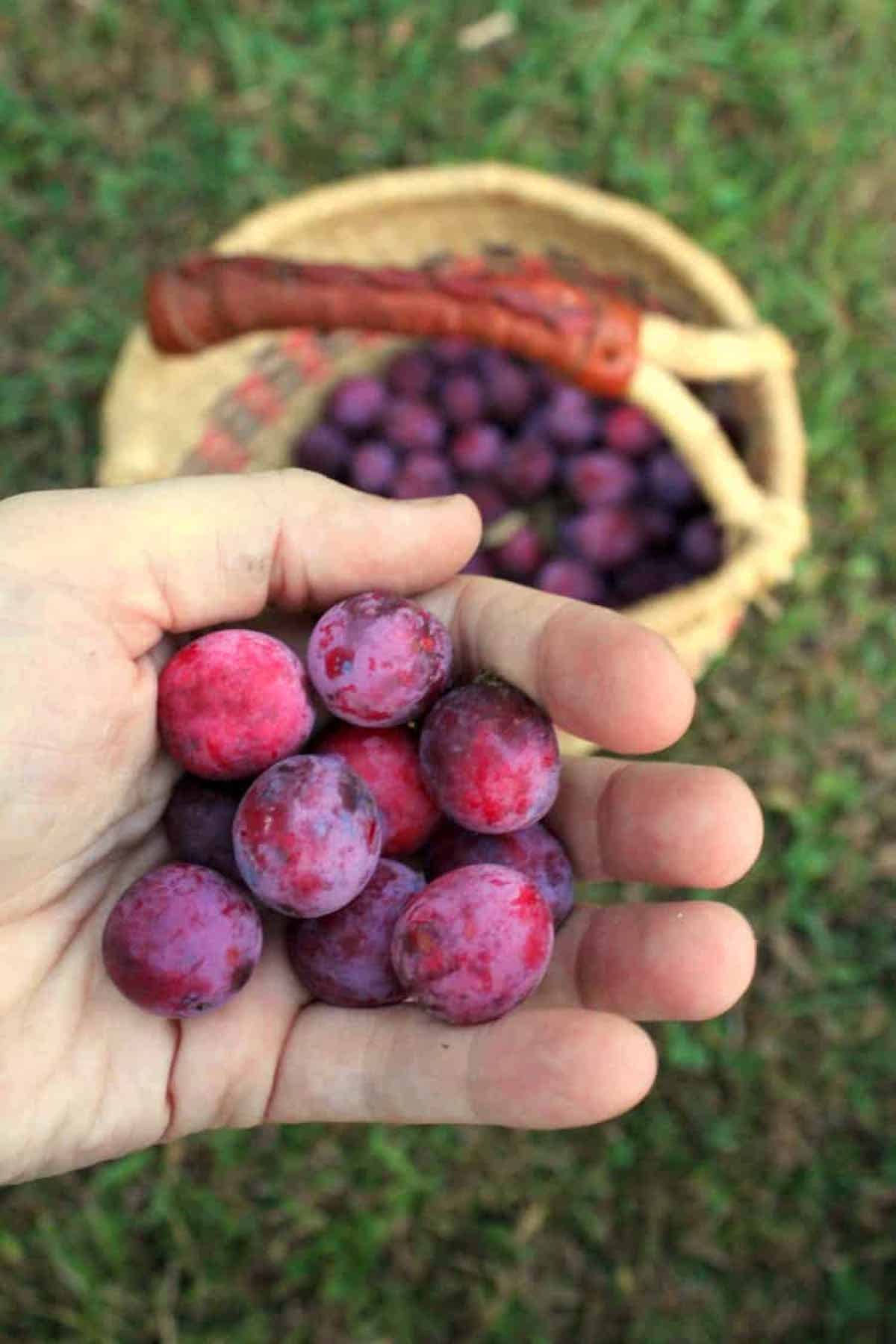
Wild plums are generally much smaller than cultivated plums, closer to the size of very large cherries. They’re small enough to pit with a cherry pitter, and you shouldn’t crack or eat the pits. They make a beautiful plum jam.
My guide to foraging wild plums has photos of the trees, leaves and fruit to help you identify them.
Prickly Pear Cactus (Opuntia sp.)
I grew up harvesting prickly pears out of my grandfather’s backyard in the high desert of Kern County, California. I’d always assumed they were a desert plant that wouldn’t grow far outside the Mojave. As it turns out, there’s an eastern species, eastern prickly pear (Opuntia humifusa), that’s hardy to zone 4.
It grows wild in sandy, rocky spots as far north as Massachusetts. One reader also pointed out that native prickly pears grow in a few spots in southern Ontario and southern British Columbia.
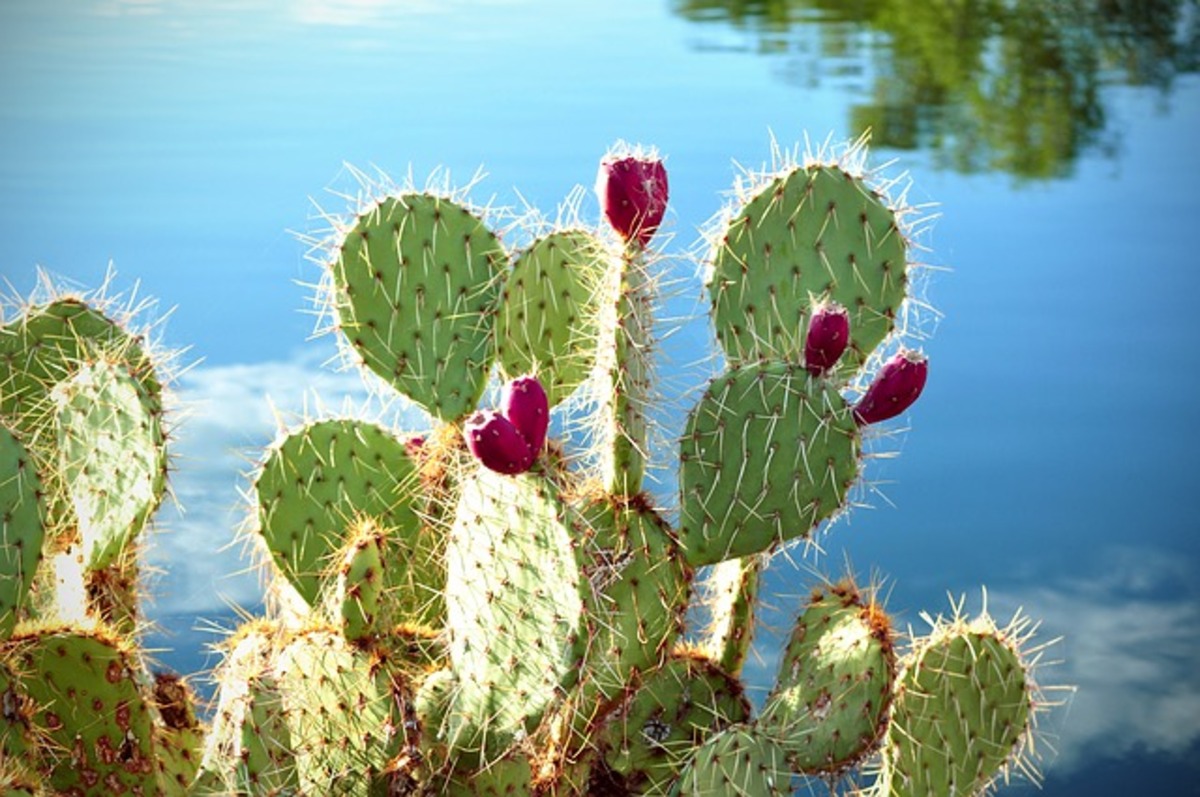
Both the fruits and the cactus pads are edible, and we now grow eastern prickly pear here on our Vermont homestead as a perennial vegetable. Handle the fruit with tongs or thick gloves, since it’s covered in tiny, hair-like spines called glochids.
The seedy fruits are especially good strained and cooked into prickly pear jelly. For more on harvesting the fruit safely, here’s a helpful guide to harvesting prickly pears.
Raspberry (Rubus sp.)
Few people need an introduction to wild raspberries. They look like cultivated raspberries, just generally smaller, and I find they often have a lot more flavor, but less sweetness, than their domestic cousins.
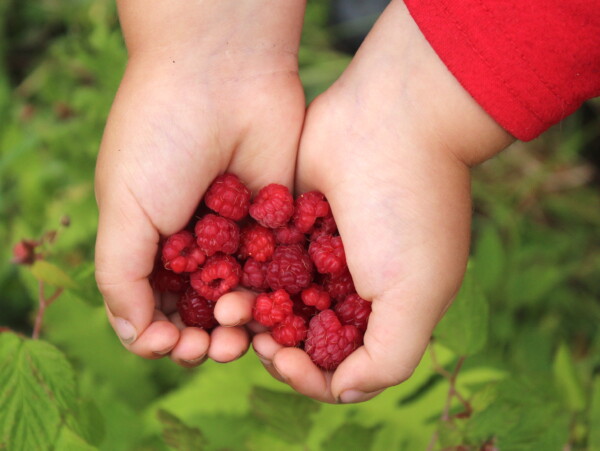
Wild raspberries were the first fruit my kids could forage all by themselves. Once a child sees how a ripe berry slips off its core and leaves a hollow cap, they can pick as well as any grown-up.
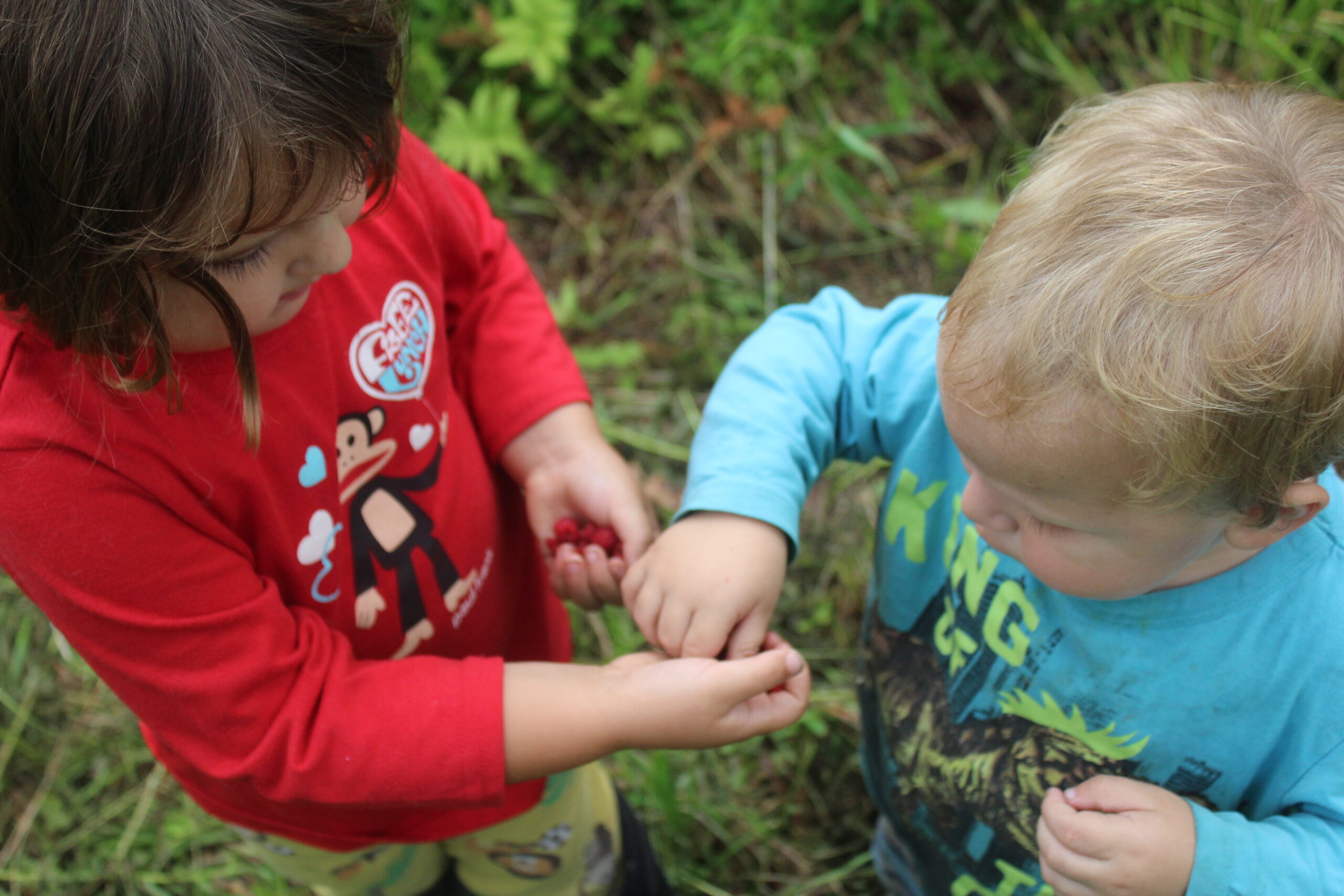
A good thicket can fill several quart jars in a single morning. Eat them by the handful, freeze them for winter, or cook them into raspberry jam or raspberry wine.
My guide to foraging wild raspberries has photos of the canes, leaves and flowers, plus the related Rubus species you might find growing nearby.
Red Blackberries (Rubus pubescens)
There are hundreds of edible Rubus species besides the well-known blackberries and raspberries. Red blackberries happen to be both common and tasty, so they get a section of their own.
I first read about them in one of my favorite foraging books, Incredible Wild Edibles by Sam Thayer, where he calls them plumboy berries. The next time I spotted them in mid-July, my kids and I went to work harvesting.
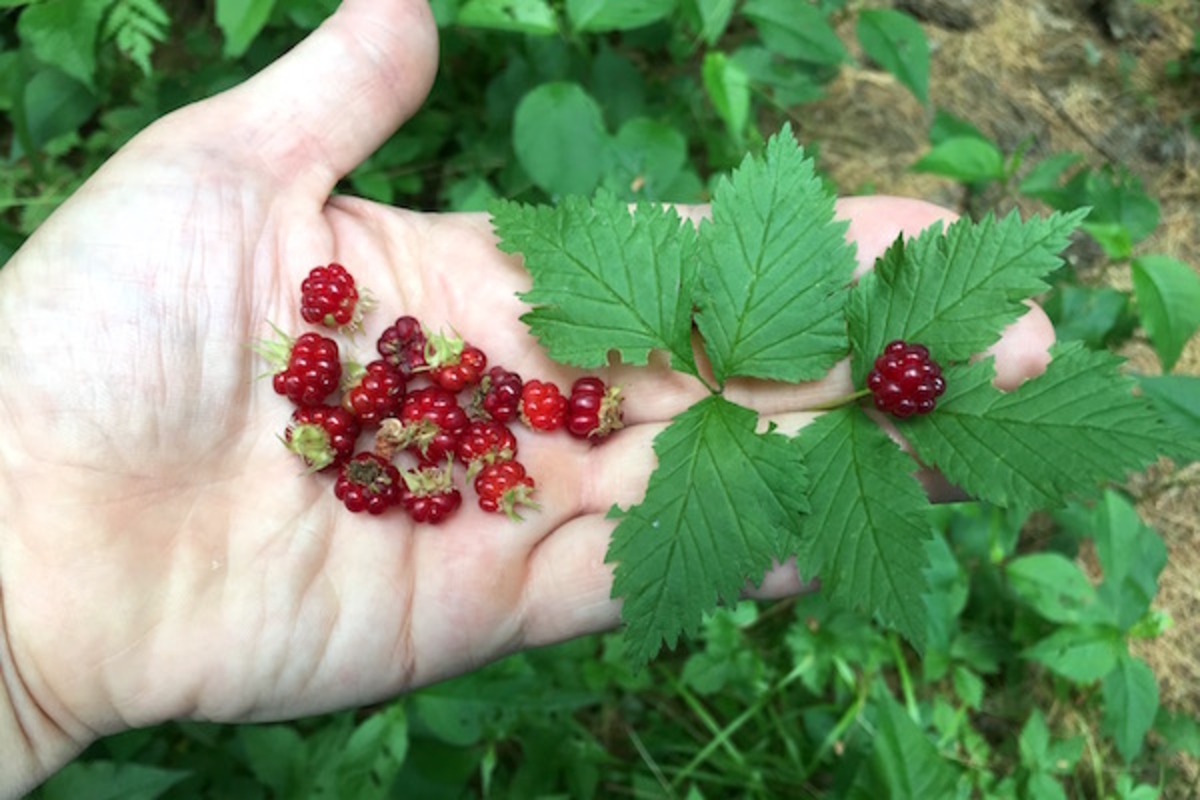
This low-growing species carpets woodlands across the northern half of the U.S. and much of Canada. Each stem bears only one to three flowers, so just a few berries, but they grow in big colonies. That makes it possible to collect a good amount of the sweet, flavorful fruit.
They go by a lot of names: plumboy, red blackberry, dwarf red blackberry, dwarf red raspberry and, most confusing of all, dewberry. A close northern cousin, the nagoonberry or arctic raspberry (Rubus arcticus), grows across Canada and Alaska, with a slightly different flavor.
Identifying red blackberries is pretty easy, and they’re really only confused with other edible Rubus species.
Rose Hips (Rosa sp.)
Roses make more than beautiful flowers, they also make edible fruit. Wild roses are the ones to forage, since growers often spray ornamental roses.
Wild roses are incredibly vigorous, and some are even considered invasive. Wild rose hips tend to be large and bright, to catch the eye of passing animals that will spread their seeds.
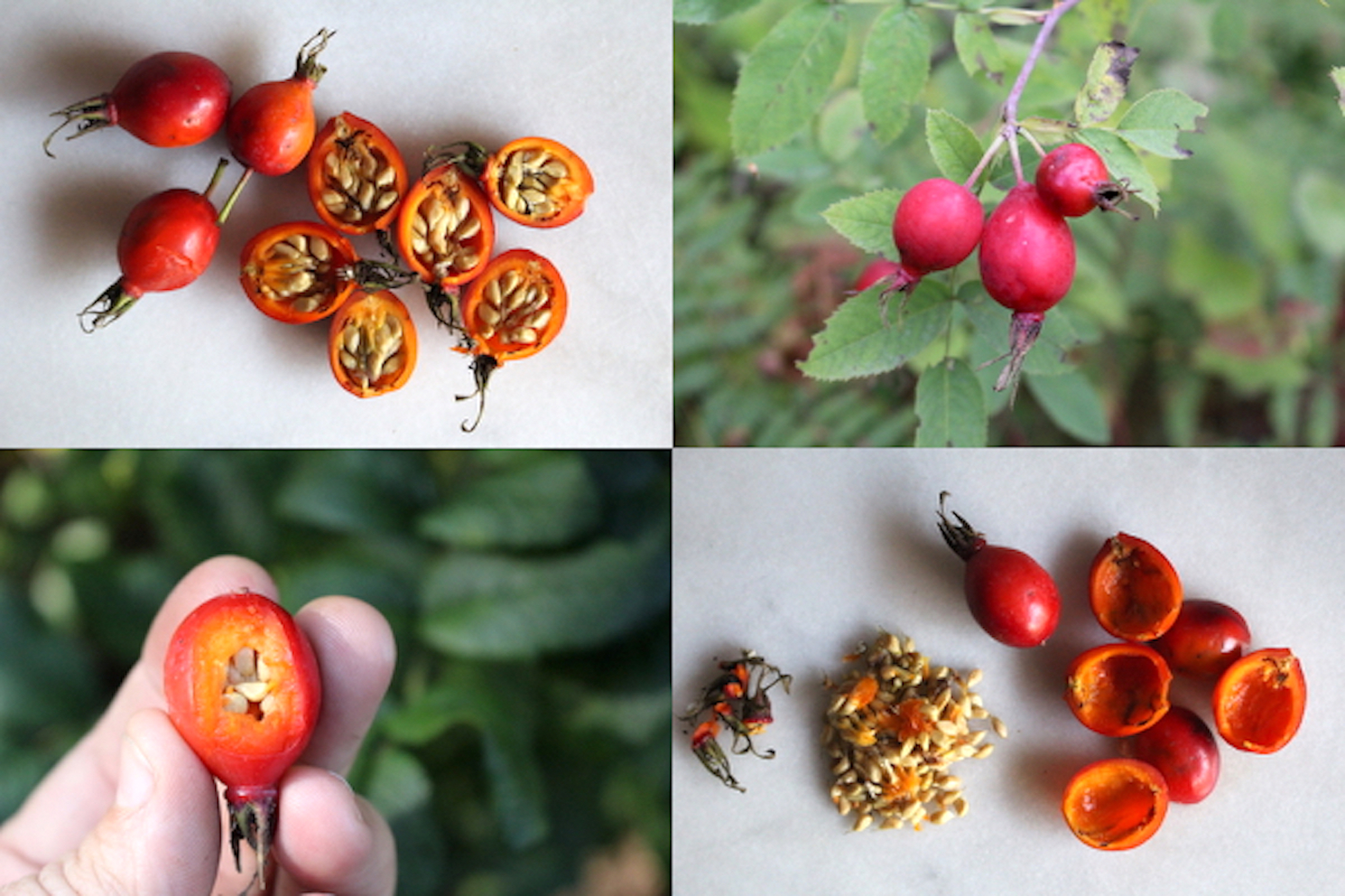
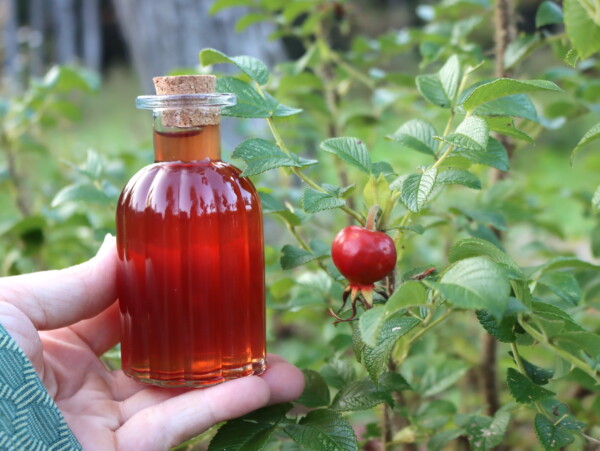
The flavor varies a lot from plant to plant, and some have sweet flesh that’s almost apple-like. Inside the pulpy flesh are small seeds covered in irritating hairs. That’s the rose’s way of encouraging you to eat the brightly colored fruit and toss the seeds aside for the next generation.
My kids love eating rose hips right off the bush, scraping the tender pulp off the seeds with their teeth. My daughter calls them rose fruits, and whenever we pass a wild rose in bloom, she reminds me we have to come back in the fall.
There are ways to eat the seeds, but you’ll harvest bigger crops in the long run if you just eat the flesh. Scatter the seeds along your way instead. I make rose hip syrup so we can enjoy them all winter, and my guide to identifying rose hips has more on harvesting them.
Salal (Gaultheria shallon)
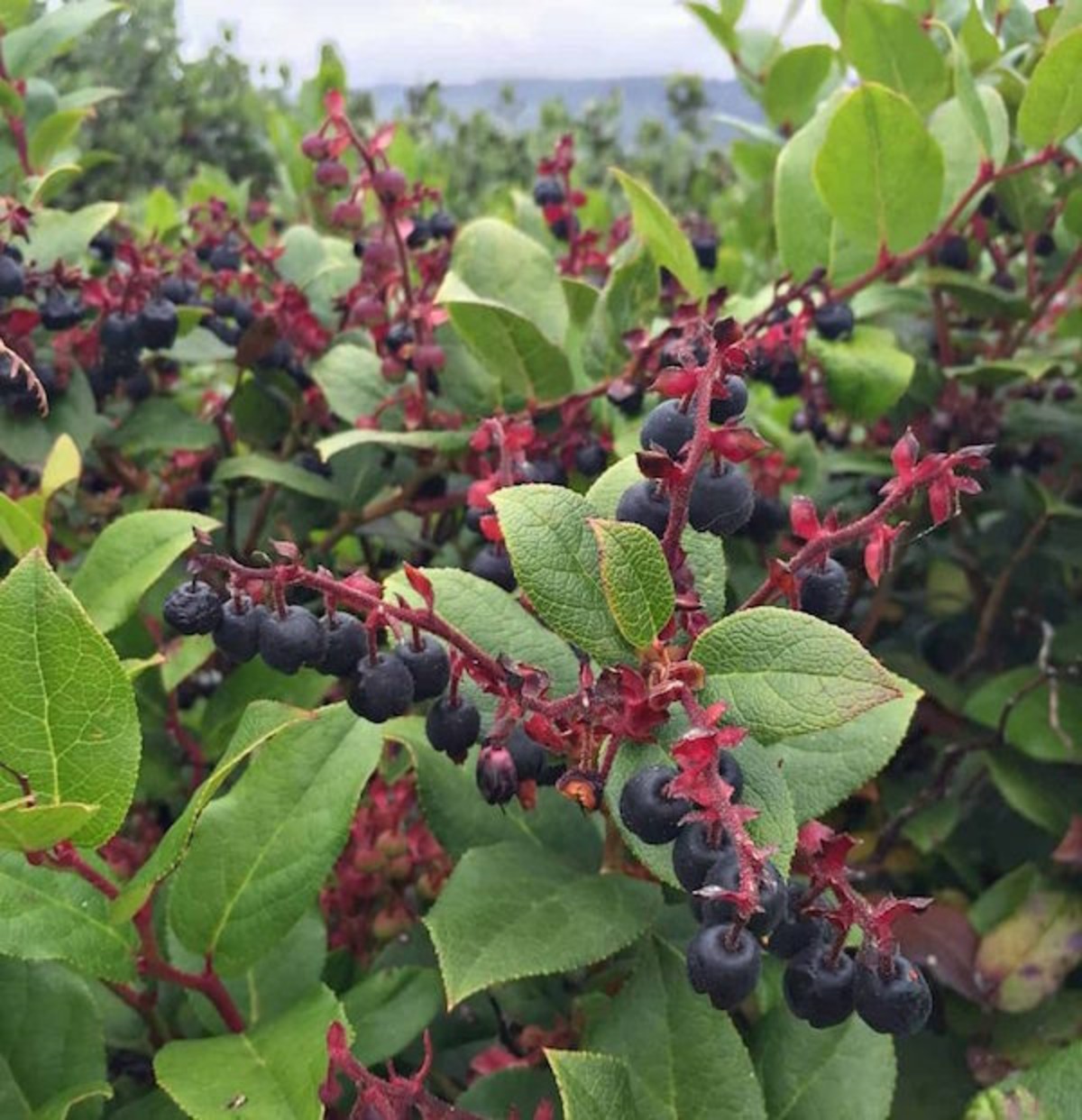
Native to the Pacific Northwest, salal berries are a regional treat. The fruits are quite sweet, but a bit mealy, and they grow on a tough, glossy-leaved shrub that often forms dense thickets in coastal forests.
Indigenous peoples mashed and dried them into cakes, often mixed with other fruits like Oregon grape. Oregon grapes are tart but have a better texture, so the two make a good combination.
People also used the astringent leaves medicinally, including in a poultice, so check with your doctor before trying them as a remedy.
My friend Colleen has a lovely guide to foraging salal berries and leaves if you live where they grow.
Salmonberry (Rubus spectabilis)
Yet another Rubus species similar to raspberries, salmonberries have a striking color and a glossy, beaded look, a lot like a bunch of salmon eggs. They range from yellow-orange to bright red.
Salmonberries are native to the Pacific coast, from Alaska to northern California, and they’re among the first wild berries to ripen in spring.
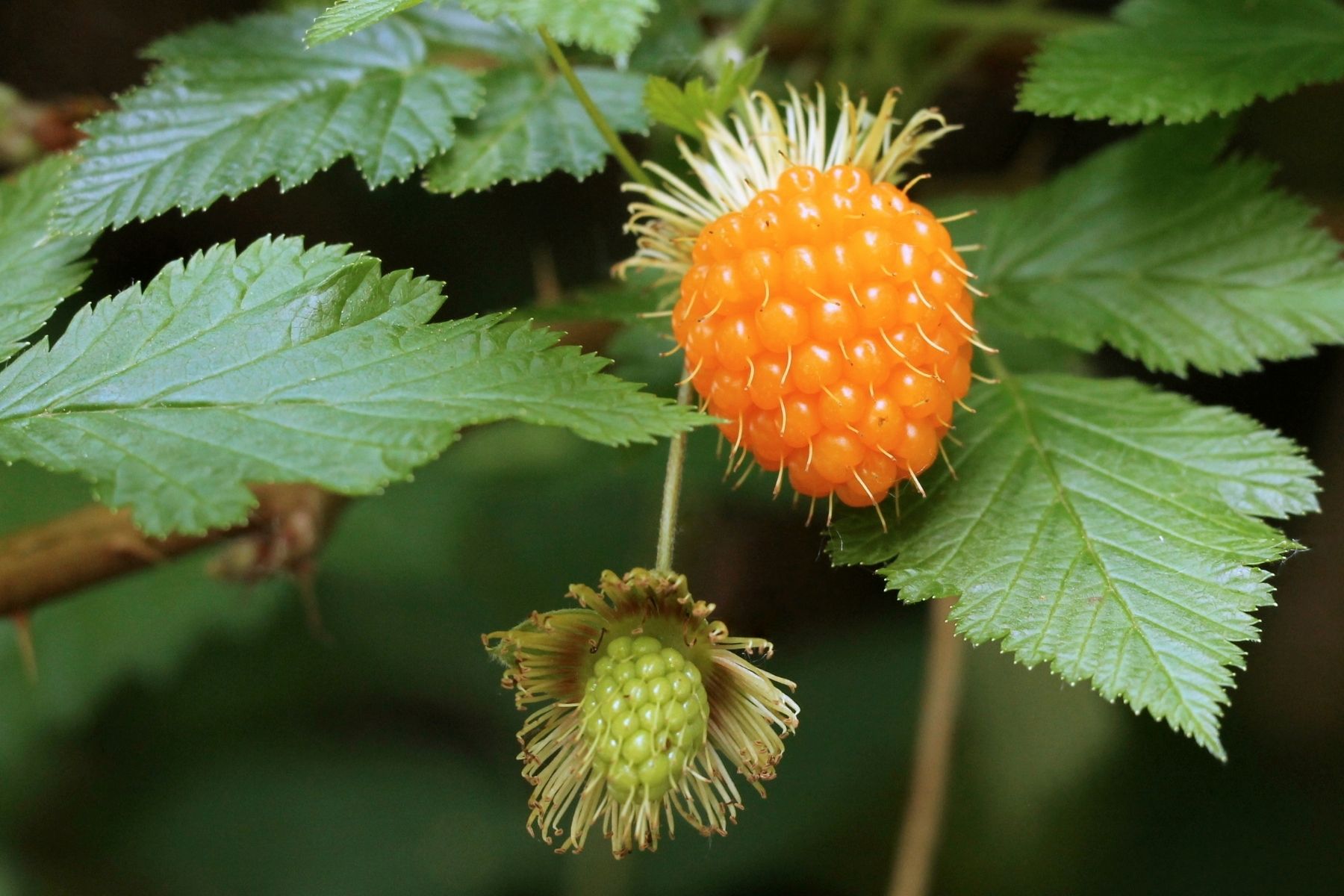
They’re often tart, with bigger seeds than related species, so they’re commonly strained and made into jelly with plenty of added sugar. We don’t have them here in Vermont, but I’ve written about growing salmonberries for anyone who’d like to try them at home.
For more on identifying them in the wild, here’s a salmonberry profile from the U.S. Forest Service.
Saskatoon Berries (Amelanchier sp.)
Known as serviceberries, shadbush, Juneberries or Saskatoons, they’re like blueberries that grow on trees. Here in Vermont, the trees blossom right around our last frost date, when the soil can be reliably worked and the garden planted.
The name serviceberry supposedly comes from their spring bloom. Once they flower, the ground has thawed enough to hold funeral services for those who died over the winter, or so I’m told by a few old Vermonters. One reader pointed out that the name shadbush comes from their blooming just as the shad swim upriver to spawn.
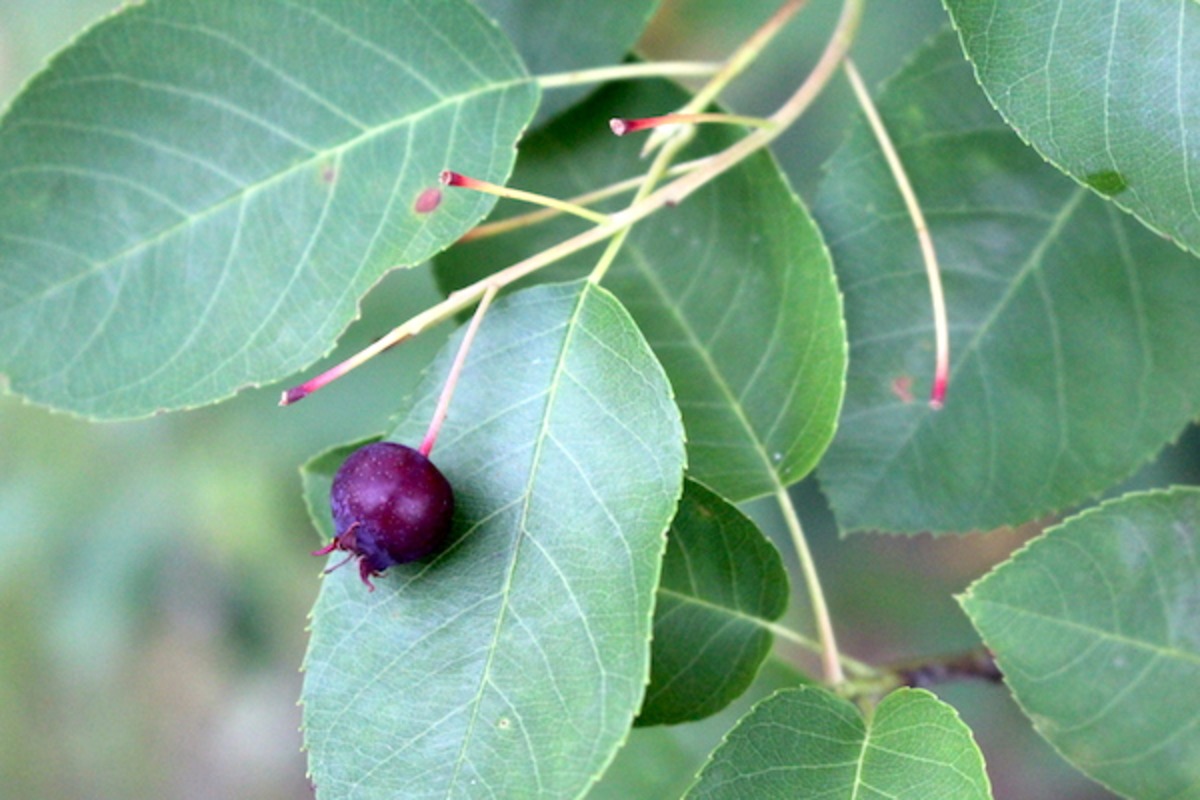
The flavor is out of this world, like a blueberry on steroids, and they’re by far my favorite of any wild foraged fruit. In my mind, they’re the perfect fruit, with a flavor that puts all domestic fruit to shame.
The problem is, it’s hard for humans to pick small blueberry-like fruit growing on 30-foot trees, but it’s very easy for birds. As soon as Saskatoons begin to turn pink, the birds spot them and often strip the trees long before the fruit ripens to a deep blue-purple.
In some areas, especially in the far north, they come in so heavy that the birds can’t keep up. You can get a decent harvest from the shorter trees there. There are many different species, mostly differing by region, and some kind of serviceberry grows in most parts of the U.S. and Canada.
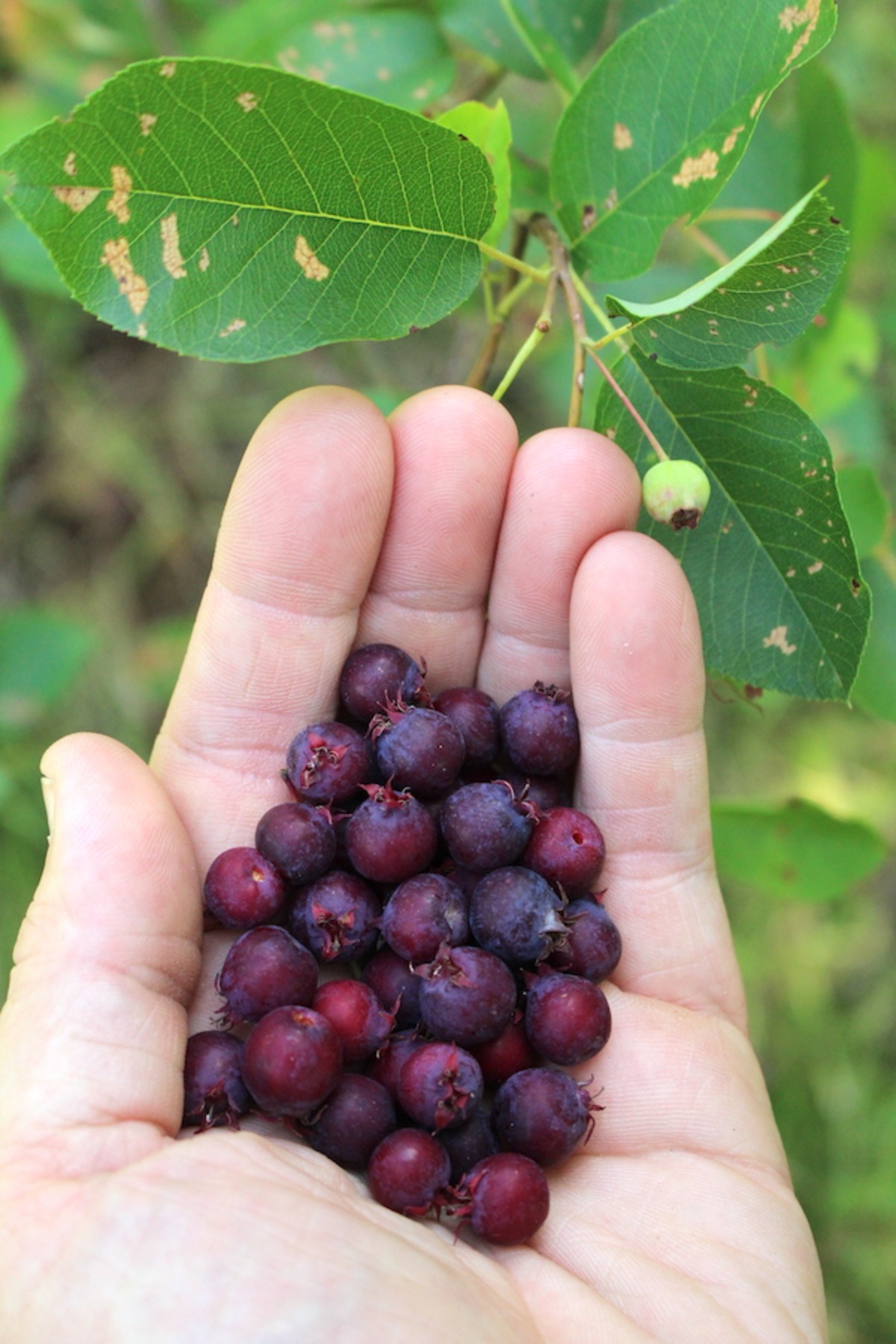
Serviceberries are also popular in landscaping, especially in the Northeast, for their beautiful spring flowers, and the birds harvest most of the fruit. They’re a common sight in parking lot plantings around public buildings and grocery stores in our area.
It’s hard to find them completely ripe in the wild, so I often harvest them a bit pink, and they’re still exceptional. If you’d like to grow your own, Stark Bro’s sells the Regent Saskatoon serviceberry.
Sea Buckthorn (Hippophae rhamnoides)
Also known as sea berries, this bright orange wild berry is native across Europe and Asia. It’s commonly grown for its highly nutritious juice, and it’s gained fame as a superfood rediscovered from our long-lost food traditions.
Permaculturists love it because sea buckthorn is a nitrogen-fixing shrub, so it grows on marginal soils and improves them in the process. It’s incredibly vigorous and high-yielding, and it’s even listed as an invasive species in a few places.
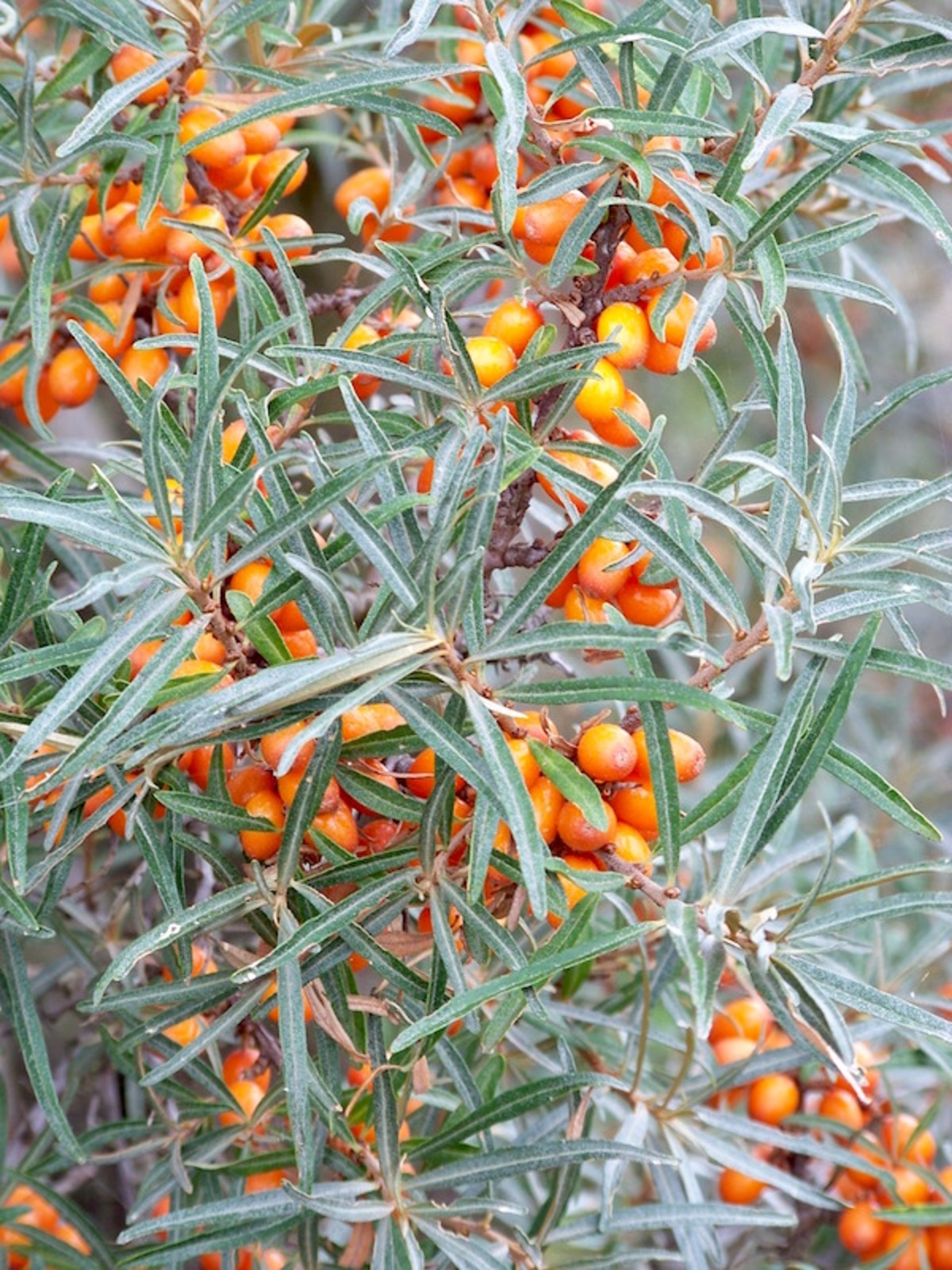
The bright orange oval berries are a dead giveaway, along with the silvery foliage it shares with its relatives, autumn olive and buffalo berry. The berries are extremely tart, as my daughter found out with her first taste.
We grow sea buckthorn on our homestead, and the berries are lovely in seaberry oxymel, sea buckthorn juice and all kinds of sea buckthorn recipes. For identifying wild plants, here’s a good guide to sea buckthorn.
Solomon’s Plume or False Solomon’s Seal (Maianthemum racemosum)
There’s something about the word false in a common name that makes you think poisonous. In many cases, though, it’s just the plant someone discovered second.
False Solomon’s seal has a lot of false names, including Solomon’s plume, treacleberry and feathery false lily of the valley. All the same, it’s a tasty edible wild berry. Eat them in small amounts, since a lot of them can have a laxative effect.
The plant produces a plume of white flowers in spring, which turn into red and white speckled fruit as they ripen. Finally, they all turn a brilliant red when they’re fully ripe.
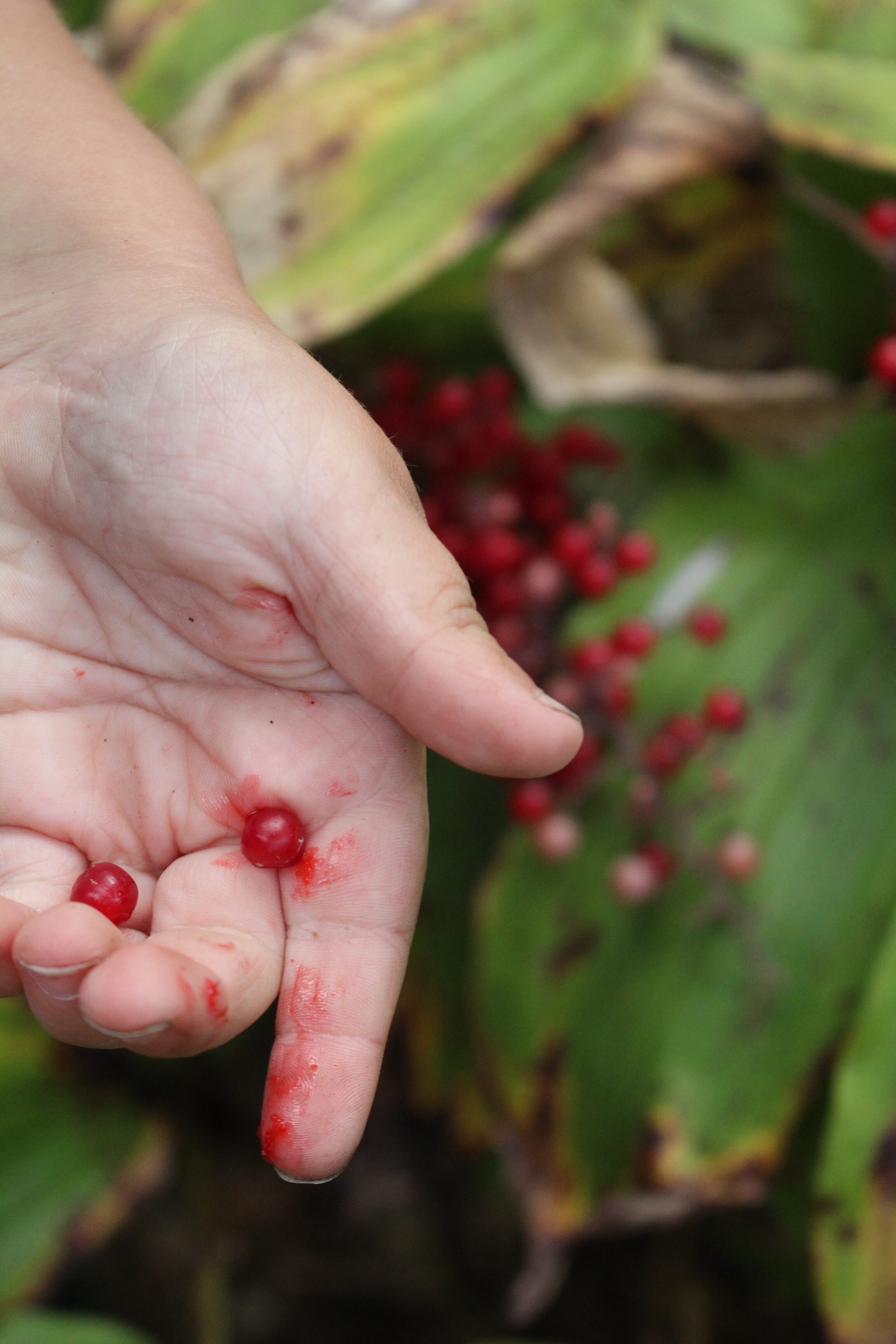
Each fruit is quite sweet, with a warm, molasses-like flavor, and it’s quickly become one of my favorite wild fruits. I get a very slight acrid aftertaste, but it’s subtle, and my kids don’t taste any bitterness at all. The fruits are just a little sweet flesh around a large seed, so yields are low, but definitely worth it in my book.
The berries of true Solomon’s seal are poisonous, but while the plants look similar, the fruits are nothing alike. True Solomon’s seal berries hang under the leaves instead of at the tip of the stem, and they’re dark blue.
Red baneberry is the one to really watch for. It has glossy red berries, grows in the same shady woods, and it’s poisonous. Solomon’s plume is easy to identify once you know what to look for.
Strawberry (Fragaria sp.)
Modern cultivated strawberries had to come from somewhere, and domestication usually means improvements in yield, size and taste. With strawberries, breeding made the fruits bigger and the plants more productive, but at the expense of taste.
Wild strawberries pack all the flavor of a giant grocery store strawberry into a tiny, intense package. Fruit size varies a lot from plant to plant, which is what allowed for breeding in the first place. I’ve found a few nearly as big as cultivated berries that still kept that wild flavor.
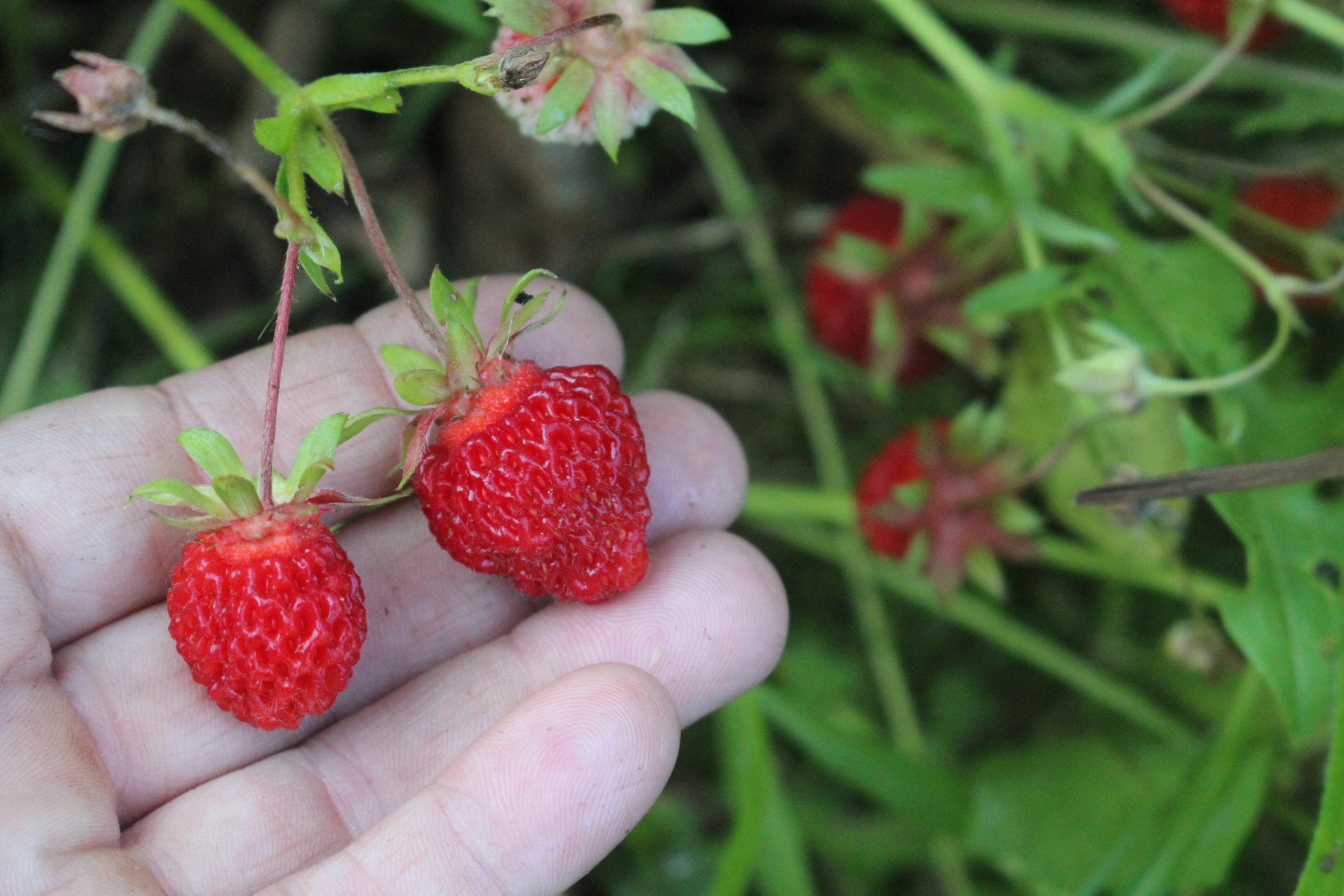
The fruits are delicate and don’t keep well, so they’re best eaten out of hand or made into a batch of wild strawberry jam. Honestly, the kids and the chipmunks usually beat me to them.
The little European woodland strawberries are a bit different, and I’ve written about alpine strawberries too, which you can forage or grow at home.
Teaberry (Gaultheria procumbens)
Also known as checkerberry, boxberry or American wintergreen, this spreading groundcover produces bright red fruits late in the fall. They have a distinctive wintergreen flavor that’s incredibly refreshing in the woods.
The leaves carry the same flavor, and you can use them to make teaberry ice cream too. Teaberry is easy to identify, and at a casual glance, it really only looks like edible partridgeberry.
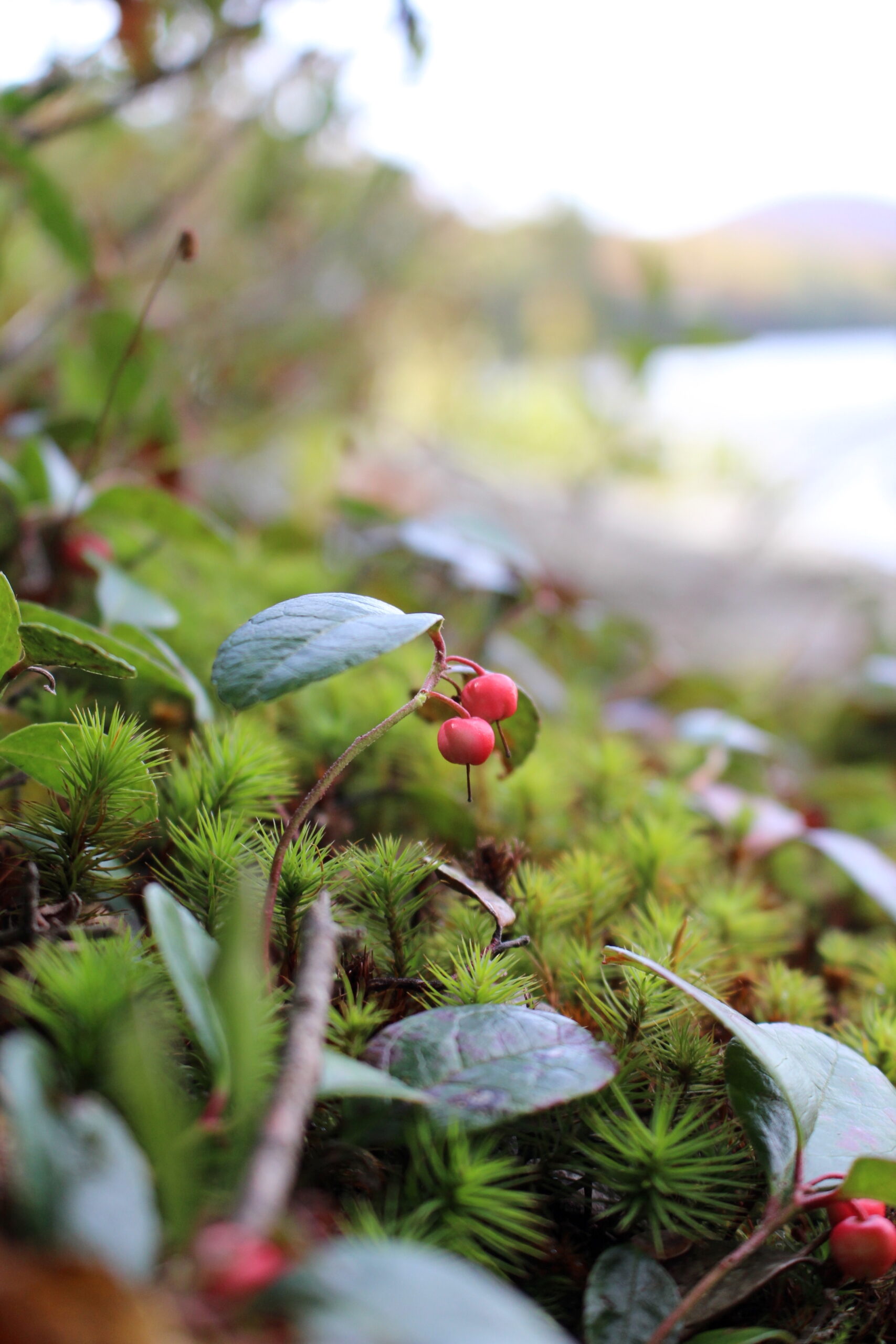
The wintergreen flavor comes from methyl salicylate, a compound related to aspirin, so skip teaberries if you’re allergic to aspirin.
The berries often hang on through the winter, so you can find them on snowy hikes. My guide to foraging teaberries has photos of the leaves and fruit.
Thimbleberry (Rubus parviflorus and R. odoratus)
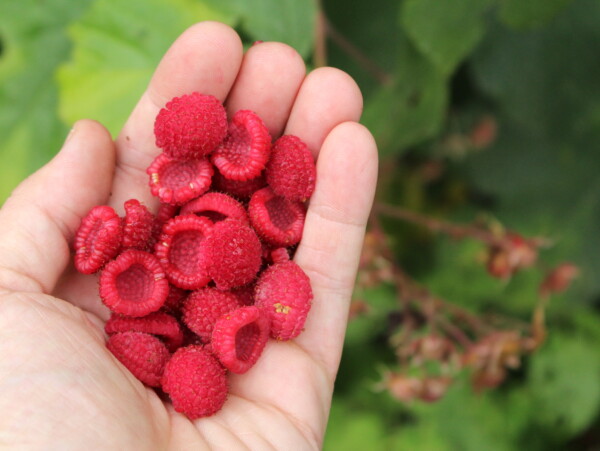
The thimble-shaped fruits of thimbleberry, also called flowering raspberry, are similar to raspberries, but they have an intense flavor that’s more raspberry than a raspberry. To me, they taste like they’ve been injected with raspberry candy flavoring, almost too intense to be found in nature.
The western species (R. parviflorus) has white flowers, and the eastern species (R. odoratus) we have here in Vermont has big pink-purple flowers.
Otherwise they’re quite similar, with large, maple-like leaves on arching, thornless canes.
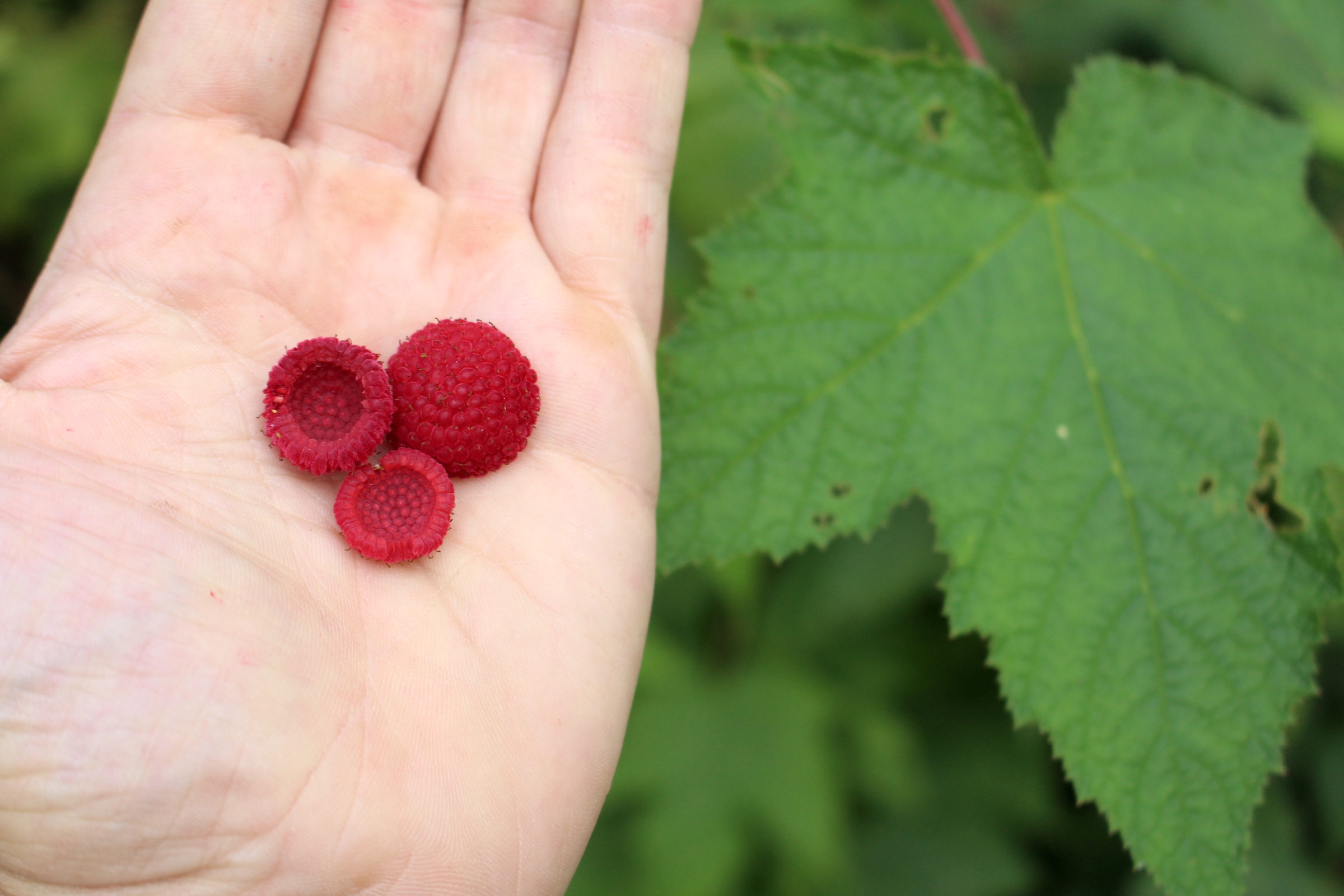
Thimbleberries were my son’s favorite fruit when he was little. The hollow berries slide right onto a small finger. Whenever we find them, there’s a ritual of putting one on each fingertip and eating them off one by one.
They’re soft and fall apart easily, so most of ours get eaten on the trail, but you can make thimbleberry jam if you gather enough. My thimbleberry guide has photos of the leaves, flowers and fruit, and I’ve also written about growing thimbleberries at home.
Watermelon Berry (Streptopus amplexifolius)
Also called twisted stalk, watermelon berry is a woodland plant in the lily family with zigzagging stems. Its oval red berries dangle from thin, kinked stalks under the leaves. The berries are juicy, with a mild, cucumber-like flavor, which is where the watermelon name comes from.
It grows in moist, shady woods across Canada, Alaska and the northern and western U.S., including the mountains of New England. A reader suggested this one, and it’s high on my list to find.
Eat them in moderation, since a big handful can have a laxative effect. Here’s a helpful twisted stalk profile from the U.S. Forest Service.
Witherod or Northern Wild Raisin (Viburnum cassinoides or V. nudum)
The name wild raisin describes these small edible berries well. The fruit is pulpy and tastes almost exactly like a raisin, and the berries tend to wrinkle as they ripen, adding to the resemblance.
Wild raisins are a viburnum, and like nannyberry and hobblebush, they have a large, flat seed. The plants like shade and wet, almost swampy soils, so look for them near drainage ditches, river floodplains and pond edges.
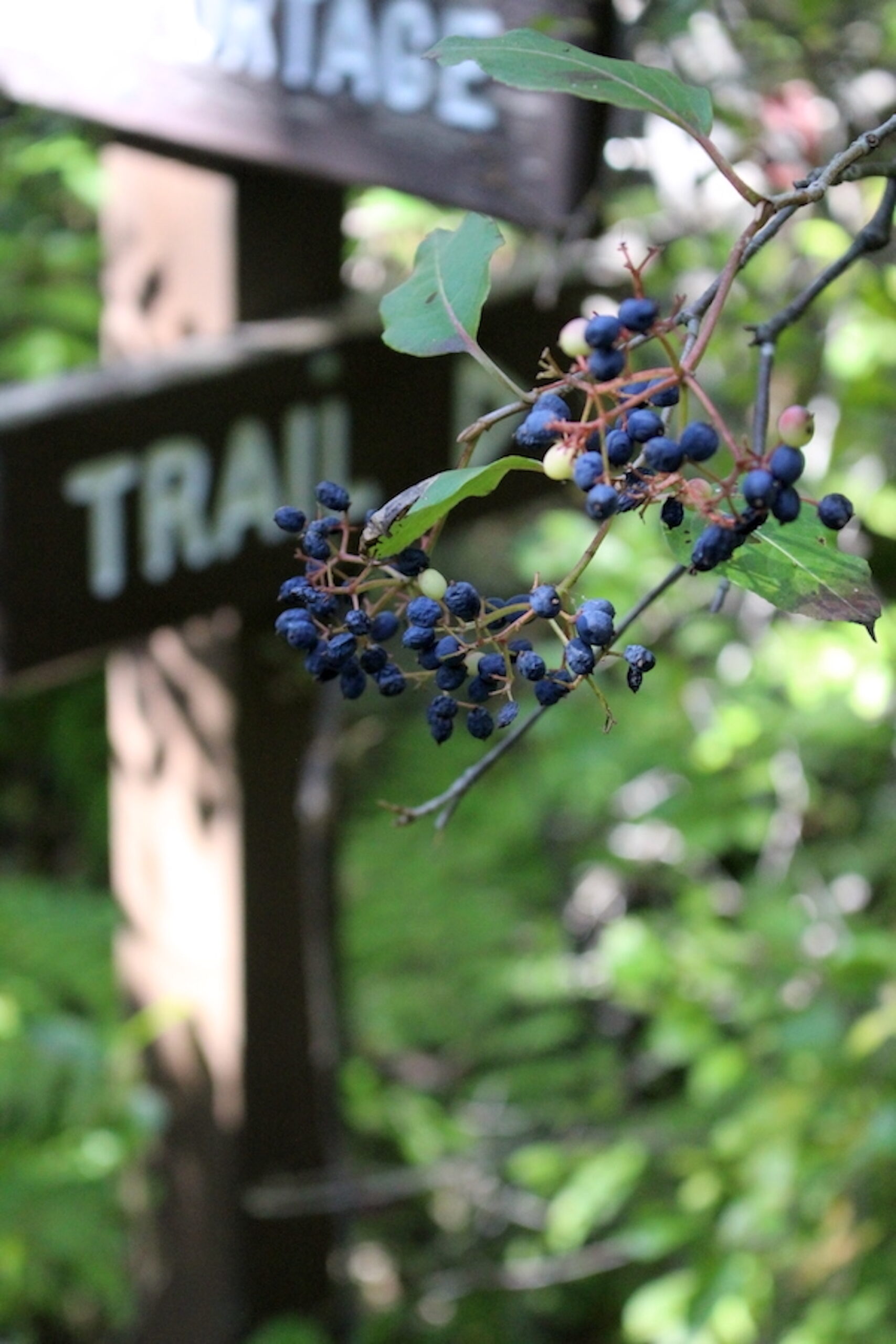
Sometimes they just grow along a trail edge in a wet climate like ours here in the Northeast. I usually find them right next to highbush cranberry. My guide to northern wild raisin has photos for identifying them, and I’ve written about growing northern wild raisin too.
Other Wild Edible Plants
Besides all the wild fruits out there, there are also wild nuts, seeds, greens and roots to forage. Fruits may be the most inviting to our palates, but there are wild foods to harvest year-round.
If you’re ready to branch out, start with my lists of edible trees, edible weeds, wild seeds and grains and wild edible roots. Mushroom lovers can begin with edible wild mushrooms for beginners.
Nut lovers can start with foraging beech nuts, and you can even eat a pine tree or bake pine bark bread.
For more wild foods beyond fruit, Sam Thayer’s book The Forager’s Harvest covers plenty of wild greens, roots and nuts, too.
Foraging Safety Notes
I’ve been foraging wild foods on our Vermont homestead for more than twenty years, and I’ve rounded that out with coursework through the Herbal Academy of New England. Just about every wild food I write about is something I’ve found, identified, eaten and fed to my own family. But I can’t see the plant in your hand, so the final identification always has to be yours.
Plant identification is serious business. A wrong identification can make you very sick, and a few wild plants can kill. Plants look different from region to region and season to season, and even edible plants disagree with some people, so what’s safe and good in my kitchen might not be the right choice for yours.
Before you eat any wild plant, there are three things I’d point you to:
- Confirm every identification with at least two good sources. A regional field guide and an experienced local forager make a good pair, and Sam Thayer’s Field Guide to Edible Wild Plants is the best general resource I know of. Be 100% sure, and if there’s any doubt, leave it in the ground.
- Harvest with care. Gather only from clean ground away from roads, sprayed areas and polluted water, and get permission before you forage on land that isn’t yours. Take only what you’ll use, and try a small amount of any new wild food the first time.
- Educate yourself, the way I have. The Herbal Academy’s Foraging Course teaches wild plant identification and safe harvesting, and I’ve taken and recommend their Botany and Wildcrafting Course. Both are online and easy to follow at home.
A note on medicinal plants. I’m also a family herbalist, and people use some of the plants in this post as medicine. Herbs interact with medications, pregnancy, nursing and existing health conditions in ways no general blog post can anticipate, so talk to your doctor or a local clinical herbalist before using any of them. If you’d like to learn more, the Herbal Academy’s Introduction to Herbal Medicine course is where I’d start.
Edible Wild Berries FAQs
These are the wild berry questions readers ask me most often.
There’s no shortcut or rule of thumb that works for every berry. The only safe way is to positively identify the plant itself, using its leaves, flowers, growth habit and fruit. Check it against at least two good sources. Learn the poisonous berries in your area too, since a few of them grow right alongside the edible ones.
Staghorn sumac’s fuzzy red berry clusters are edible, but they’re not true berries. Each one is a small, fuzzy, dry fruit around a single seed, and people usually steep them into a tart, lemony drink rather than eating them. Poison sumac is a different plant with white berries that hang down, so stick to the upright red clusters. My staghorn sumac guide has more on telling them apart.
Most of the berries here grow across much of North America, but every species has its own range. A range map is the quickest way to check. A regional field guide or your state’s native plant society can also tell you which species are common where you live.
Blackberries, raspberries, wild strawberries and mulberries are good places to start. They’re common and easy to recognize, and their main look-alikes are other edible fruits.
Wild berries ripen from late spring into winter. Salmonberries, wild strawberries and serviceberries come first, followed by raspberries, blackberries and blueberries in mid to late summer. Fall brings elderberries, grapes, apples, rose hips and highbush cranberries, and partridgeberries and teaberries hang on under the snow all winter. Wild cranberries that spent the winter under the snow can even be picked in early spring.
More Wild Fruit Guides
More wild fruits to find, identify and enjoy.
Did you find this list of edible wild berries helpful? Tell me in the 📝 comments below which wild fruits grow near you, and if there’s one you’re looking for that you don’t see, leave me a note and I’ll see what I can find for you. I’m here to help!
And make sure you stay in touch with me by following on social media!
More Foraging Guides
More guides for foraging safely, all year round.
Find the perfect foraging guide
Searching for something else? Enter keywords to find the perfect foraging guide!










Wondering about Sumac berries?
That’s a good question. I don’t include them because they’re not quite…berries. Or fruit really. More like fuzzy seeds. But you can find information on them here: https://practicalselfreliance.com/staghorn-sumac/
Thank you so much for this great resource! Will be investigating rhe recipes for sure!
On the flip side fo the coin, growing up we had neighbors acress the street who had decorative ground cover bushes on the entire front bank of their yard, that the bushes had bright red berries. We were always told not to eat them because the berries were poisonous and definitely wouldn’t taste good and we’d end up in the hospital getting our stomachs pumped.
Seems like we at least got adventerous a few times and squashed the red berries or cut them open to see what they looked like inside. But everybody knew not to eat them.
Before reading this I thought I could never go foraging for berries for fear of eating something poisonous. But reading through, it brought back memories of dozens of times when I have done this with family and friends. In first grade in the 70’s when I was 6 we had to walk 5 blocks to the high school every day for lunch, when all the elementary school kids converged on somebody’s yard halfway there and kids said they got permission. They had two Mulberry trees with as much fruit and berries as we could eat. Hundreds of kids all over these trees, and I remember the berries tasted incredibly good. To this day when I drive past that house I still hope to see berries on their Mulberry trees so I can have some.
In Arizona my parents decided to pick Prickly pear from the cactus by the side of the highway, and my mom made prickly pear jam and syrup. The house has a very distinctive smell when you cook the prickly pear fruit.
I remember in Arizona in a forest area by a river picking wild blackberries and making a blackberry pie out of it. Also when I lived in Washington state in the suburbs around Seattle picking blackberries and eating them just walking around. Had to get back away from the road though becase car exhaust and road dirt got all over the berries too close to the road.
My grandmother talked about when she was younger in her teens and twenties, picking wild blueberries and wild strawberries and she told us how good those were, and much better than in the stores. She said they were smaller but much sweeter and tasted better. Not sure where that was, but she used to go to Yellowstone national park back then for trips, and she was from Idaho, so it could have been around the rivers or mountains in that area.
What great memories. Thank you so much for sharing.
This is quite a comprehensive list. Thank you Ashley. To which areas does it apply? I am in Southern Ontario.
Most of the edible berries and fruits on this list are pretty standard in most areas. You can look at a distribution map to get specific information on specific plants.
I have what appears to be a wild cherry tree next to my house and the cherries rt now are still green begining ti turn reddish.. I have cut one open even though not ripe and ther are several small seed inside the fruit..one of our workers here on the farm said that it is a wild cherry . I can not find a wild cherry listed w tiny small pits ..several in the fruit..it will ripen to red and yellow ..the birds love them and even in the winter they will go for any left on the tree that have frozen ..what the hech is this the leaves say wild cherry..i do not want kids eating something poison
I’m not familiar with that particular plant but I agree with you that a cherry should have a single pit.
Hi Gail,
If you’re not 100% sure about the species of the plant, it’s definitely better to avoid consuming its fruits. The characteristics you’ve described might indicate a wild cherry, but the presence of numerous small seeds is unusual and might suggest a different species. Many wild plants can be misleadingly similar to edible ones, yet may contain toxic substances. The safest approach is to consult with an experienced botanist or a local plant expert who can accurately identify the plant.
Wonderful article! Everything on point!
Wanted to ask if perhaps you could publish something pointing out the dangerous look-alike (or just highly dangerous berries around in the wilderness, like baneberry) with comparisons to the species of edible fruits shown here? It feels like a lot of amateurs get mixed up by color alone and need to be told that NO, red berry not always good, check if a clump of useful Vitamin C heavy rosehip or DEADLY YEWBERRY first…. XD
We actually have an entire post about poisonous berries here. https://practicalselfreliance.com/poisonous-berries/
Hi Ashley,
You’re not speaking of rose hips jam, we make plenty of them yesterday, here in Langeais (French Loire Valley).
Quite interesting but seems we don’t have the same fruits, and I haven’t seen (maybe I don’t noticed them) : prunus fruit, that can be eaten only after the firsts frosts.
Best wishes from the French Loire Valley
Henry
I’ve actually had several people from Ukraine and that surrounding area email me about other prunus fruits they have there that are completely different than anything I have on my list. I’ve put some work in to translating them, but even though they are distinct fruits there’s not an English word for them because they’re little known here.
I would totally believe there are similar fruits in France that are completely distinct species that I’ve never seen or heard of. If you come across the latin name for them, please do let me know and I’ll see what I can find out about them.
There is mayapples or american mandrake that have a edible fruit but are only edible when ripen
Ashley, I harvest the elderberry that grow wild on my 10 acres. There is a vine that can creep up into the elderberry tree that looks very similar to the elderberry, in that the berries are extremly similar with red bracks. The onlly difference is that they are on a vine. Would you possible know what these are?
I’ve got no idea, but best of luck finding the answer.
Hi Ashley,
Many thanks for the ‘berry’post. Must look out on our next foraging outing.
Take care, stay healthy.
I wish you would have a book on forging for berries.
I’m hoping to write this into a book in the next few years.
Ashley – Thanks so much for all of this information. Please do write a book! I am using several, but still often have concerns about identifying berries in particular.
Much appreciated!!
This was pretty neat to read. I have a few to add to your list (and I believe they are all berries found in the north): lingonberry, watermelon berry, nagoonberry. 😊
Oh, and haskap or honeyberry.
Another good one! We actually grow honeyberries, lots of them. How’d I miss that one?
At least on this range map (https://plants.usda.gov/core/profile?symbol=LOCA6) they only seem to grow wild in the pacific northwest, but that’ll likely change soon as they’re becoming much more popular to grow here in the northeast. The robins took half our crop this year, so they’ll be wild soon enough…
Lovely, thank you! That’s really helpful =)
I’m adding notes here so I can update this post later:
Watermelon Berry
Streptopus amplexifolius
Range Here: https://plants.usda.gov/core/profile?symbol=STAM2
lingonberry (We actually grow these…why how’d I miss them!?!?)
Vaccinium vitis-idaea
Range: https://plants.usda.gov/core/profile?symbol=VAVI
Nangoonberry (This one is very similar to red blackberries, which we do harvest, but it’s a more northern species with supposedly a slightly different taste)
Rubus arcticus
Range: https://plants.usda.gov/core/profile?symbol=RUAR
Great roundup of edible berries and fruits. I can’t recall seeing such a complete list anyplace else. This motivates me to get out and start rambling around my local area.
Thanks Ashley
Paul
Thanks much, it was fun to put together =)
When i was a kid we had a bush with most fragrant pale yellow flowers. The berries were dark purple/blue with the remainder of the flower on it. They were delicious. Can you help me identify it?
My first guess is maybe checkout oregon grape? They have yellow flowers and purple-ish fruit. We don’t have them around here, so I can’t say if they’re fragrant. The only thing matching your description that I know of in Vermont is maybe Honeyberry? Where was the bush (state/country/etc)?
Enjoyed your list! Just adding that there are native prickly pear cactus growing in a few locations in southern Ontario and also in southern British Columbia.
Also another Amelanchier name story. Shadbush is because it blooms at the same time the shad are migrating up river from the sea to spawn so it’s when people would be fishing them.
Wonderful, thank you! Both are really good to know =)