
Affiliate disclosure: This post may contain affiliate links. Please see our Privacy Policy.
Plantain salve puts one of the most ordinary weeds in the yard to work on bug bites, scrapes, and stings. It’s olive oil infused with fresh plantain leaves and thickened with beeswax, and it’s the tin that lives in our first aid kit from May through October.
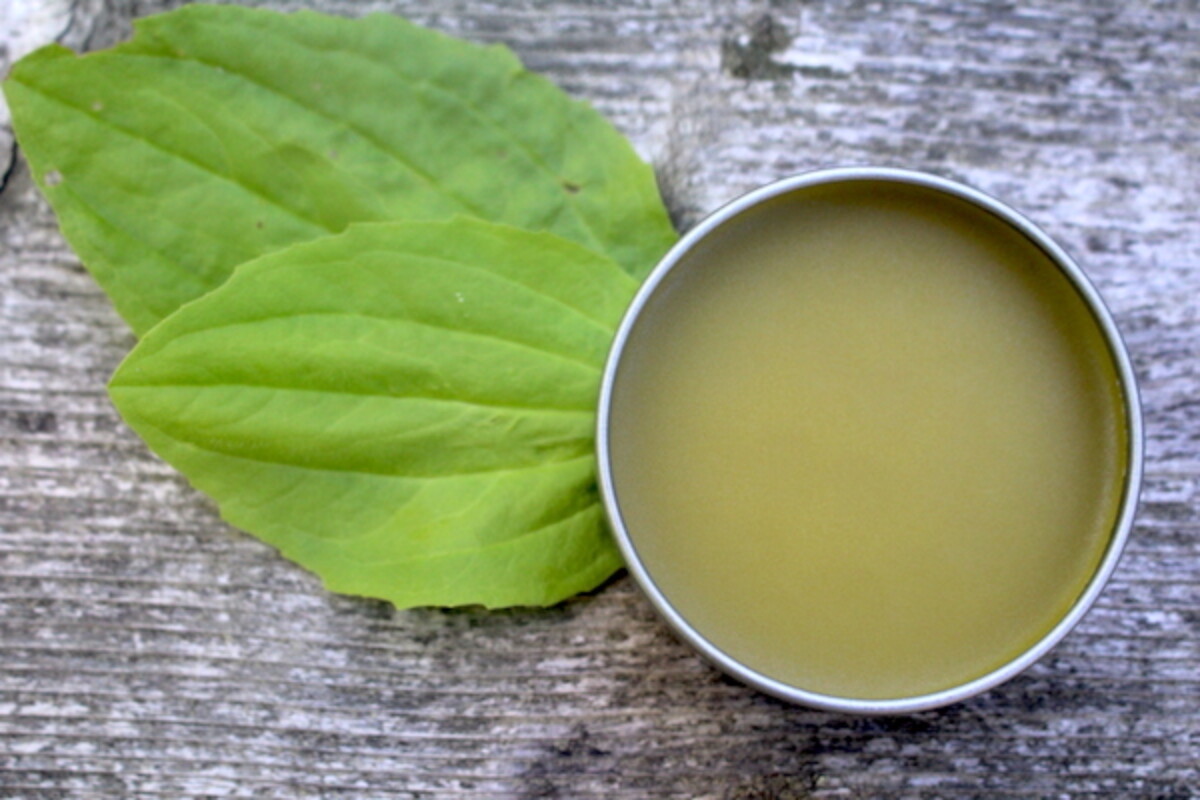
Table of Contents
- Notes from My Homestead
- What Plantain Salve is Used For
- Ingredients for Plantain Salve
- Equipment for Plantain Salve
- How to Make Plantain Salve
- Salve Consistency Notes
- Storage and Shelf Life
- Recipe Tips & Variations
- Ways to Use Plantain
- Plantain Salve FAQs
- Plantain Recipes & Remedies
- Plantain Salve Recipe
- Herbal Salve Recipes
Sometimes everybody needs a bit of boo-boo medicine, whether you’re five or fifty. That’s what this salve is for, and it handles most of what a summer outdoors throws at you: mosquito welts, blackfly bites, thorn scratches, split knuckles, and the general wear and tear of a season spent in the garden.
Herbalists call plantain nature’s band-aid, and the wide oval leaves really do sit neatly on a scraped knee. It’s widely known as a sting treatment, and a quick plantain poultice works fast when nothing else is handy. Both of those assume you’ve got fresh plantain within arm’s reach, which is fine in July and no help at all in January.
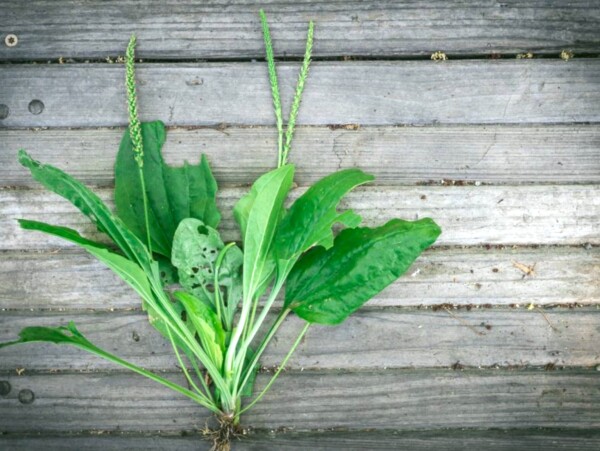
That’s the whole point of making a salve. It captures the plant at its peak and holds it in a form that sits in the medicine cabinet all year. Plantain grows almost everywhere people do, but here in Vermont it’s only harvestable for four or five months, so short seasons mean we preserve our medicine while we can. If you haven’t met the plant yet, my guide to foraging plantain covers identification and the handful of look-alikes worth knowing.
Notes from My Homestead

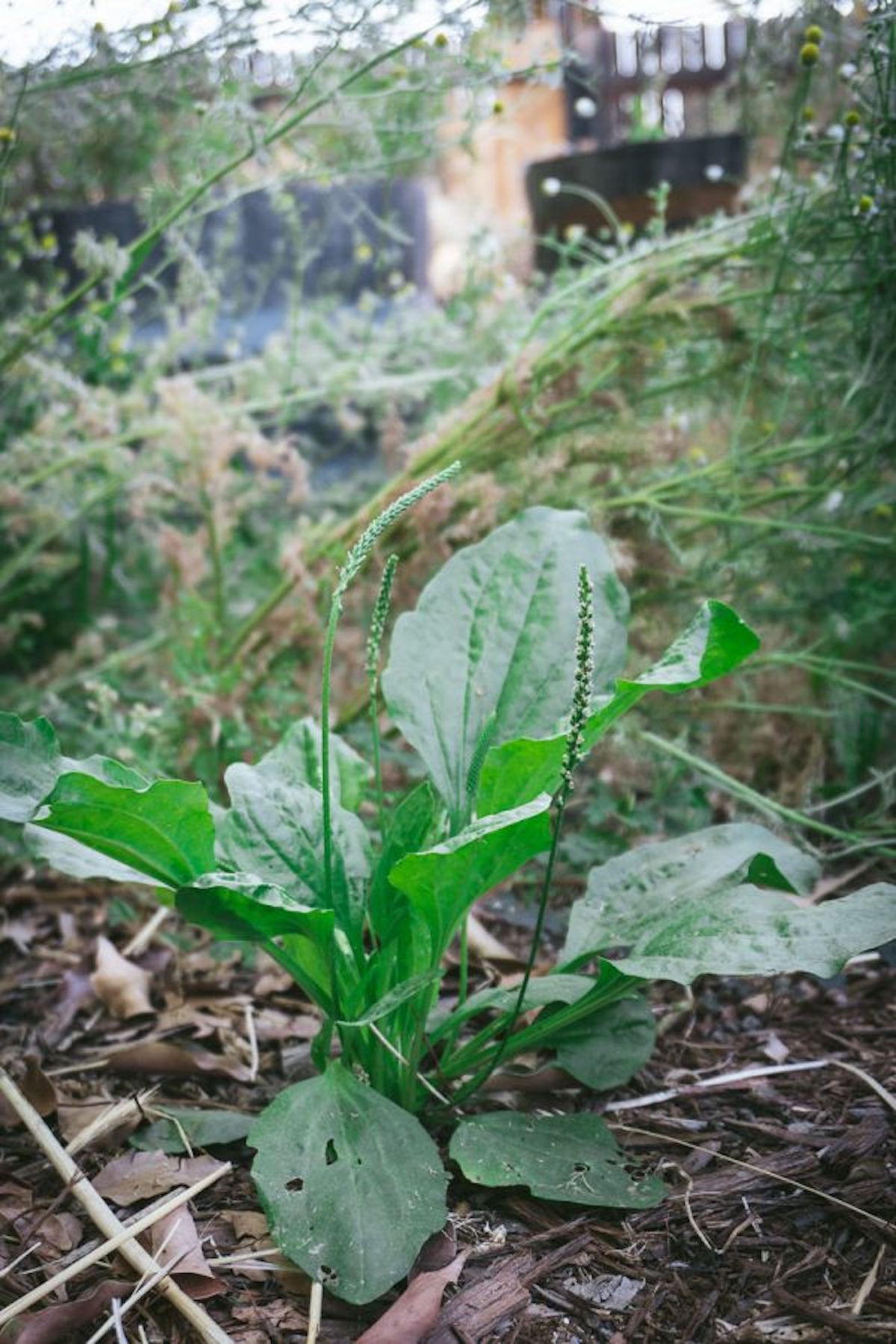
Our side yard is where I harvest, and it’s honestly the reason I started making this salve in the first place. The plantain out there is thick, nobody sprays anything, no dogs get walked through it, and I can fill a pint jar in about four minutes flat without leaving the property. When a plant is that abundant and that close to the back door, you start finding uses for it.
These days I make plantain oil in the same batch as everything else. Bug bite season lands right in the middle of plantain season, so once the double boiler is going I’ll put up four jars at a time: plantain for the first aid kit, arnica oil for sore muscles, comfrey oil for comfrey salve, and yarrow oil for scrapes. Even with two kids who live outdoors from thaw to first frost, we only get through two or three tins of the plantain in a year. The rest goes to friends, which is how most of our neighbors ended up with a tin of weed salve on the shelf.
What Plantain Salve is Used For
Plantain has one of the longest track records in Western folk medicine, and herbalists have reached for it for coughs, wounds, inflamed or irritated skin, and insect bites for centuries. Bruised leaves get slapped directly onto stings, eczema patches, and small cuts, and the practice is well enough established that plantain is approved by the German Commission E for topical use on skin inflammations, with the fresh leaves applied three or four times a day to minor injuries. The plant’s main components are mucilage, tannins, and an iridoid glycoside called aucubin, which together are thought to give it mild anti-inflammatory and antimicrobial action.
Modern research has taken an interest too. Laboratory and animal studies have looked at plantain’s anti-inflammatory, antioxidant, and tissue-regenerating effects, and there’s real curiosity about whether the traditional wound-care use holds up. I want to be straight with you about where that stands, though. A 2021 systematic review of the animal studies concluded that the research so far is too small and too inconsistent to prove plantain speeds wound healing, and that better studies are needed. So the tradition is old and the early science is interesting, but nobody has nailed it down yet.
What I can tell you is how it behaves on my family’s skin. Applying the salve works a lot like applying the fresh leaf, minus the part where you’re hunting for plantain in the dark with a headlamp because someone got stung at the campfire. I reach for it most for:
- Mosquito, blackfly, and other insect bites that won’t stop itching
- Bee and wasp stings, once the stinger is out
- Shallow scrapes, scratches, and garden nicks
- Chapped, split, or wind-roughened skin
- Small patches of dry, irritated skin
For poison ivy specifically, plantain is a common follow-up once the urushiol has been washed off, but I’d pair it with jewelweed salve, which is the classic remedy for that particular misery.
A note on what salve isn’t for: Plantain salve is meant for superficial, minor stuff. Skip it on deep cuts, puncture wounds, anything showing signs of infection, and serious burns, and see a doctor instead. For minor kitchen burns there’s a dedicated herbal burn salve that’s a better fit. Patch test a small spot before you use any new herbal preparation, since allergic reactions are always possible.
Ingredients for Plantain Salve
Three ingredients, and one of them is growing in your lawn right now.
- Fresh plantain leaves: Broadleaf plantain is what I use, but narrowleaf plantain works just as well, and so does a mix of the two. Harvest from ground that hasn’t been sprayed with herbicide or pesticide, and steer clear of roadsides and anywhere dogs get walked. You’ll want enough chopped leaf to fill a pint jar. Dried plantain also works, and the method shifts a little.
- Olive oil (or another neutral carrier): Olive is what’s already in my pantry, and it’s gentle and shelf-stable. Grapeseed, sweet almond, and jojoba all work too, and jojoba in particular soaks into skin quickly. My guide to making herbal infused oils goes deeper on picking a carrier.
- Beeswax (pellets or grated from a block): This is what turns infused oil into a salve you can carry in a pocket, and it forms a breathable barrier over the skin. Pellets are easier to measure and melt faster, though a block or bar of beeswax grated on a box grater does the same job. If you’re avoiding bee products, the vegan herbal salve recipe uses candelilla wax instead.
Equipment for Plantain Salve
Nothing specialized here. Most of it is already in your kitchen.
- Pint mason jar to hold the leaves and oil during the infusion
- A way to hold the jar at around 110 to 120°F for 24 to 48 hours (see the infusion section below for options, including a multicooker on yogurt mode or a dehydrator with a temperature setting)
- Fine mesh strainer plus a square of cheesecloth for straining the infused oil
- Small saucepan or double boiler for melting in the beeswax at the end. A metal or heatproof glass bowl set over a pot of simmering water works just as well.
- Small kitchen scale for weighing the beeswax, unless you can find it in pre-measured 1 oz bars
- 2 oz salve tins, or quarter-pint mason jars, or any small container with a tight lid
How to Make Plantain Salve
Making plantain salve takes about half an hour of hands-on work spread across a day or two of mostly unattended infusing. It breaks into three parts: harvest and chop the leaves, infuse them into oil, then strain and melt in the beeswax.
The method is the same one behind every other salve on this site, and my guide to making a herbal healing salve walks through the fundamentals in more depth.
Harvesting and Preparing the Plantain
Pick from a clean spot. That’s the part that actually matters. Plantain thrives in compacted soil along paths, driveways, and roadsides, which happen to be exactly the places that collect road salt, exhaust, and herbicide drift. Walk a little farther into the yard or field and gather from ground you’d be comfortable letting a toddler sit on.
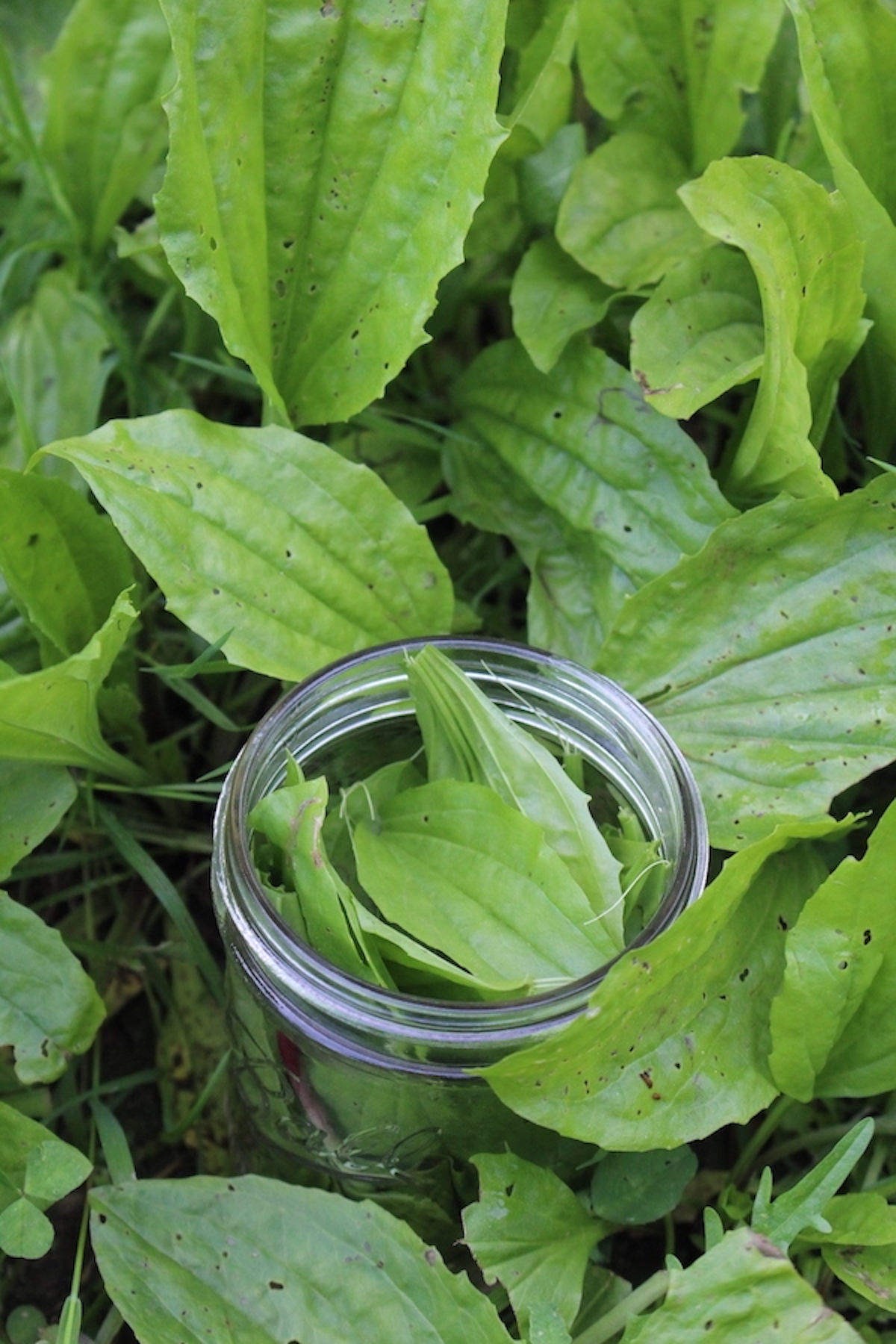
Cut or pinch the leaves off at the base, and pack a pint mason jar full. If the leaves are dusty, give them a rinse and then dry them thoroughly, because water left in the jar is what turns an infused oil rancid. I usually skip washing entirely and just brush off anything obvious.
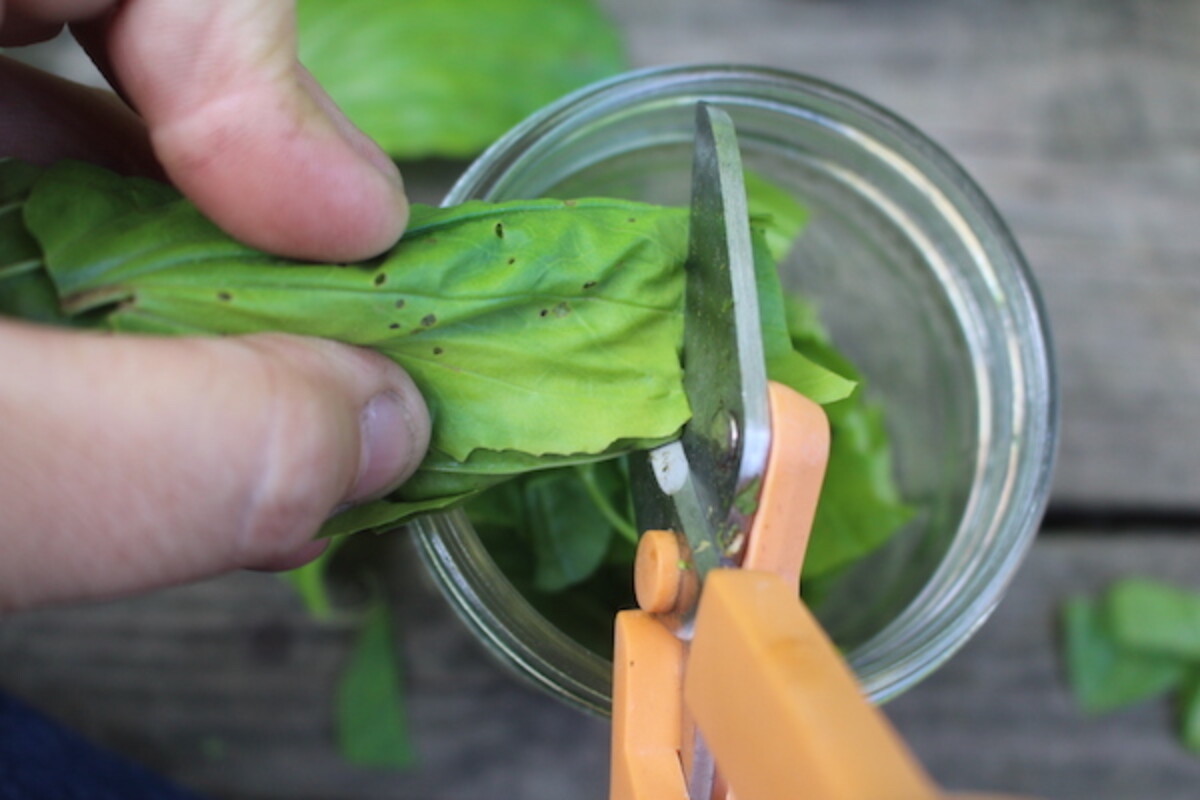
Next, chop. A sharp knife or a pair of kitchen scissors makes fast work of a pile of plantain leaves, and you’re aiming for pieces roughly the size of a postage stamp.
More cut surface means more of the plant’s medicinal compounds can move into the oil, and whole leaves just don’t give the oil much to grab onto.
At this point you have a decision to make. You can dry the chopped plantain and do a slow room-temperature infusion later, or you can go straight to a warm infusion with the fresh leaves.
The rest of this walks through the fresh-leaf method, because that’s what most people are doing when the plant is in front of them.
Infusing the Oil
Fresh plant material carries a lot of water, and water in oil over several weeks means spoilage and rancidity. So fresh plantain gets the warm rapid infusion, which uses gentle heat to pull the medicine out in a day or two instead of a month. Dried plantain doesn’t have that problem, and it can go the traditional route: cover the dried leaf with oil, cap the jar, and let it sit somewhere out of direct sun for four to six weeks before straining. The amount of plant material and oil stays the same either way.
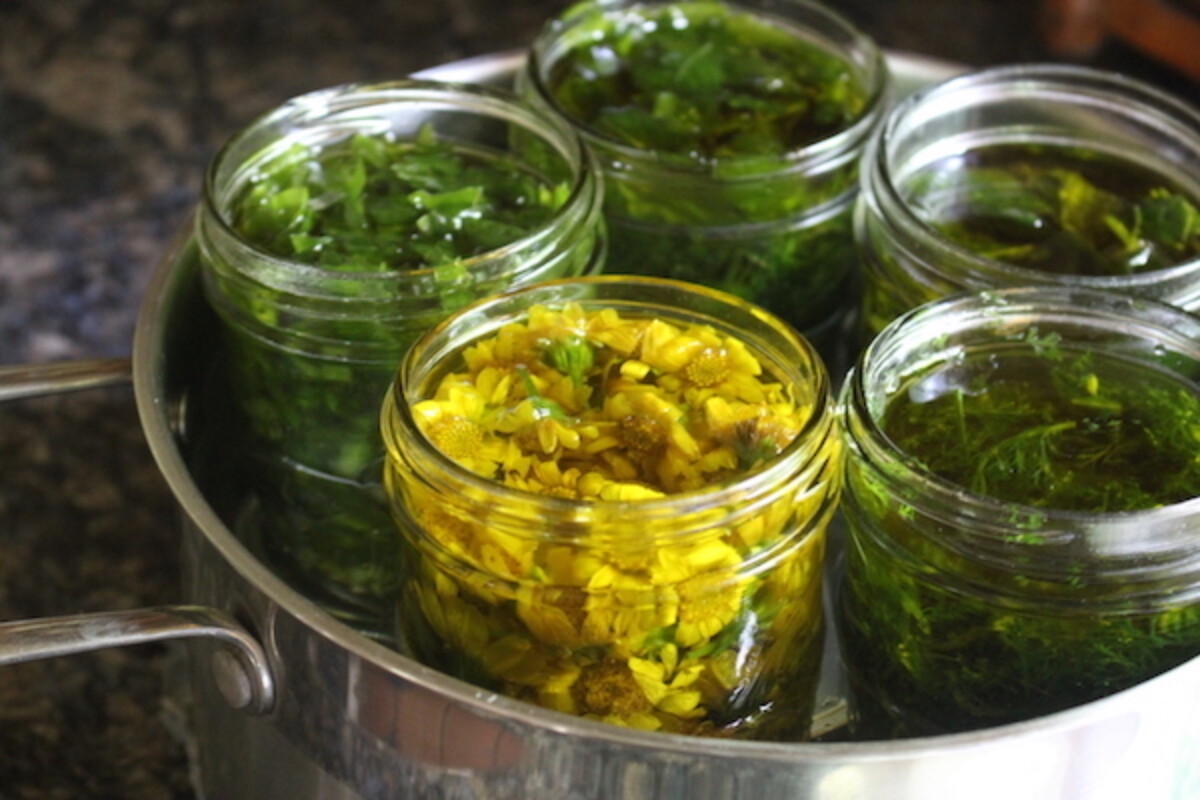
For the warm method, cover the chopped leaves with oil, leaving the jar uncapped. Set it on a spacer inside a pot or slow cooker so the glass never touches direct heat. I use a stack of canning jar lids or a folded cotton dish towel for this. Then add water to the pot around the jar.
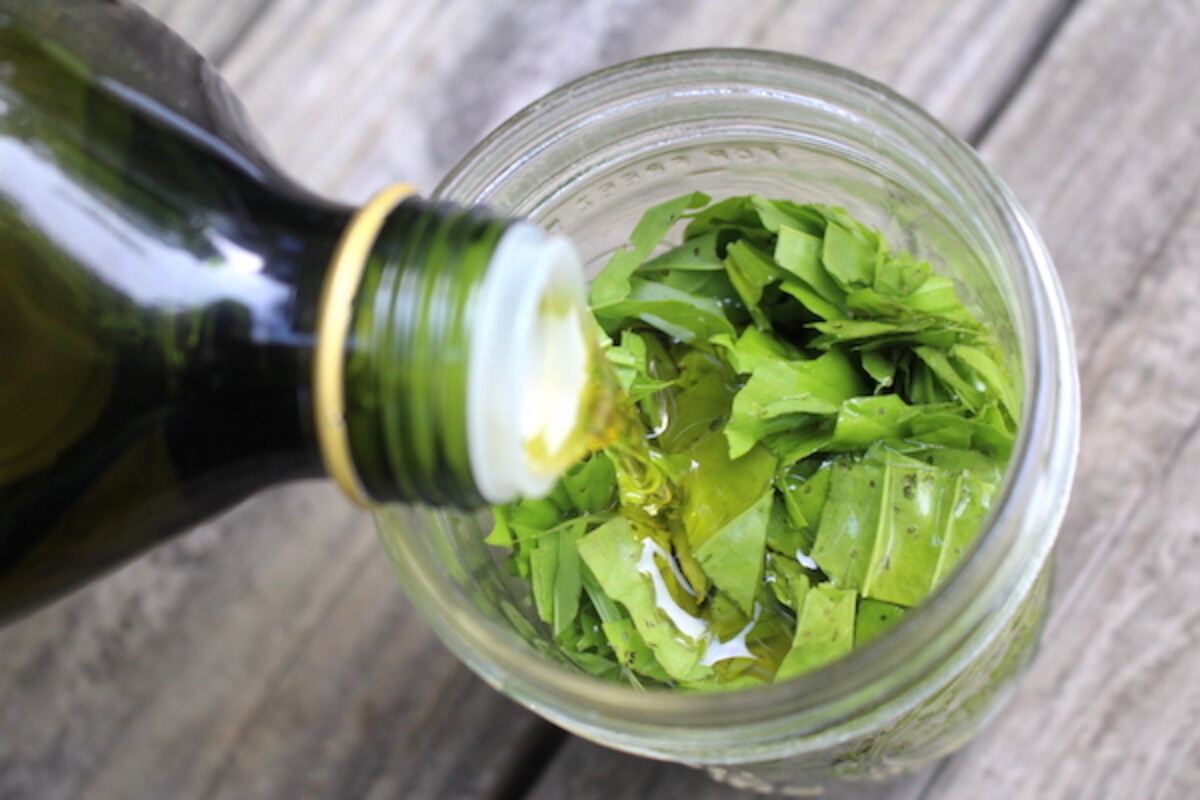
Bring the water to 110 to 120°F and hold it there for 24 to 48 hours. That’s degrees Fahrenheit, and the distinction matters quite a bit. You’re warming the plant material, not cooking it, and anything much above 140°F starts destroying the compounds you’re trying to capture. On the stovetop I do this by turning the burner on low for a while, shutting it off, and covering the pot with a towel to hold the heat, repeating as it cools. Never leave a burner running unattended or overnight.
There are steadier options if you have them. A multicooker on yogurt mode holds the right window almost exactly. A dehydrator set to 115°F is the most hands-off method I’ve tried, since it just sits there and does the job. Readers have also had good luck with an immersion circulator, which is built for holding a precise low temperature. A slow cooker works as a water bath with the jar on a spacer, but never as direct heat, since even the keep-warm setting runs around 170°F.
Since the setup is already going, I fill the pot. There’s no reason to heat water for one jar when you could be putting up four different oils at once.
Straining and Combining with Beeswax
When the infusion is done, line a fine mesh strainer with cheesecloth, set it over a measuring cup, and pour the warm oil through. Gather up the corners of the cloth and squeeze, because a surprising amount of oil hides in that spent leaf. Compost what’s left. The finished oil will be green and smell faintly like cooked greens, which is exactly right and not a sign that anything went wrong.
Now measure. You started with a bit more oil than you’ll end up with, because the leaves absorb some and the cloth keeps some, so measure what you actually recovered rather than assuming. One cup of strained infused oil is what this recipe is built around.
Return that oil to a small saucepan or the top of a double boiler, add the beeswax, and warm it gently over low heat, stirring until the wax has completely melted and the mixture looks uniform. If you’re working with pellets and don’t have a scale handy, an ounce of beeswax is roughly a heaping tablespoon. Pour into tins or small jars and leave them undisturbed for at least 30 minutes to set before capping.
Salve Consistency Notes
The ratio to remember is about 1 ounce of beeswax per cup of infused oil. That yields a medium-firm salve that softens the moment it touches warm skin. Almost every salve that comes out runny is a measuring problem, not a technique problem, so measure the strained oil rather than the oil you started with.
- To test before pouring: drop a spoonful onto a plate from the freezer. Give it 30 seconds, then check the texture with a fingertip.
- Too soft? Rewarm gently and stir in more beeswax, a teaspoon at a time, testing as you go.
- Too hard? Rewarm gently and stir in a tablespoon of oil at a time until it’s where you want it.
- For a softer balm: drop to about 3/4 oz of beeswax per cup of oil.
- For a firm stick or lotion bar: increase to about 1 1/4 oz per cup of oil.
Storage and Shelf Life
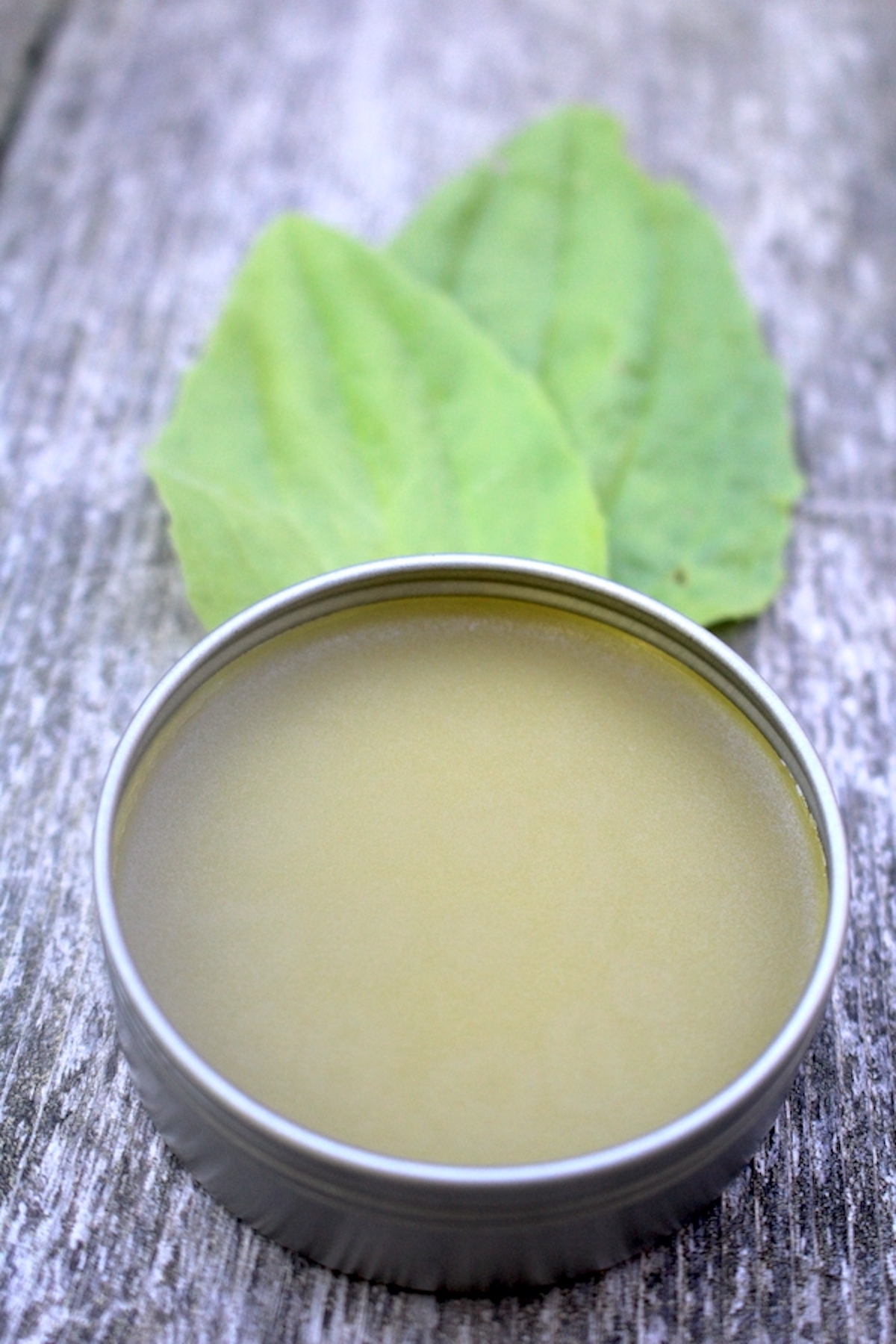
Keep finished salve somewhere cool, dark, and dry. A medicine cabinet, a pantry shelf, or a drawer all work. Homemade herbal salves are generally considered good for about a year, and while yours will stay safe past that, it gradually loses strength. Olive oil actually holds up better in a salve than it does in the bottle, so don’t let worries about rancidity push you into making tiny batches.
If you want to hold a batch longer, the freezer works and will noticeably extend its life. A few drops of vitamin E oil stirred in with the beeswax also helps, since it acts as a natural antioxidant. Toss any salve that smells rancid, like old cooking oil, or shows the slightest fuzz of mold.
I aim to make only what we’ll use in a year. Around here that’s a batch of four to six tins each summer, which covers our own scrapes and leaves plenty to hand out.
Recipe Tips & Variations
- Alternative oils. Coconut, sweet almond, jojoba, and grapeseed all work in place of olive. Coconut sets up firmer at room temperature, so you can pull back slightly on the beeswax. Jojoba absorbs the fastest of the bunch.
- Adding essential oils. Ten to fifteen drops per cup of finished salve, stirred in right before you pour, won’t affect how it sets. Lavender is a forgiving place to start.
- Combination salves. Plantain pairs well with other first aid herbs. Half plantain and half yarrow makes a good scrapes-and-scratches blend, and plantain with calendula leans more toward general skin care.
- Vegan version. Swap candelilla wax for the beeswax at roughly the same ratio. Cocoa butter is another option, though you’ll need a bit more of it than you would beeswax.
- Works for other fresh herbs. This same warm infusion handles just about any fresh plant material you’d want in an oil, including yarrow leaf, red clover blossoms, and calendula. The herbal salve recipes roundup has 20+ variations built on this method.
Ways to Use Plantain
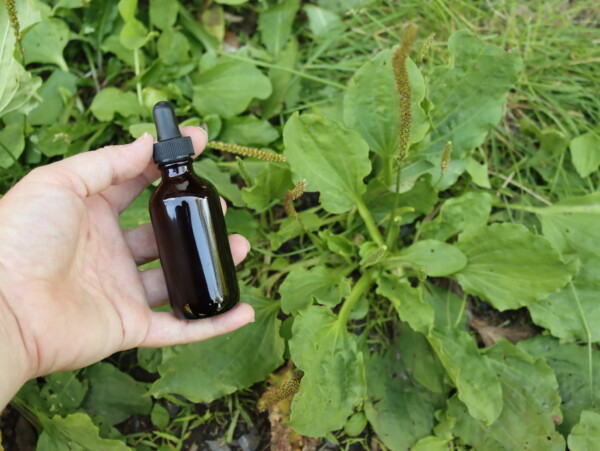
Salve is where most people start with plantain, but it’s far from the only option. A plantain tincture extracts a different set of compounds than oil does and stores for years in a dropper bottle, and the young spring leaves are good eating, cooked down like any other tough green. My roundup of ways to use plantain covers the food side alongside the medicine.
If you’re building out a home first aid shelf, this salve pairs naturally with foraged jewelweed for poison ivy season. And if you’re curious about which preparation suits which plant, my overview of herbal medicine making lays out the options side by side. Plantain, for what it’s worth, will follow you home whether you plant it or not, so you’ll have plenty of chances to experiment.
Plantain Salve FAQs
Fahrenheit. 110 to 120°F is warm to the touch, roughly the temperature of a hot bath. At 110°C you’d be deep-frying the plantain and destroying the compounds you’re trying to extract. Anything much above 140°F starts degrading the medicinal value, so if you’re working in Celsius, aim for about 43 to 49°C.
Yes, but only as a water bath, never as direct heat. Set the jar on a spacer such as a folded dish towel or a stack of canning jar lids, add water around it, and monitor the temperature. Even the keep-warm setting on most slow cookers runs around 170°F, which will cook the leaves. For genuinely hands-off options, a multicooker on yogurt mode or a dehydrator set to 115°F both hold the right window automatically. Some readers use an immersion circulator with good results.
This is almost always a ratio problem. The recipe calls for 1 ounce of beeswax per cup of strained infused oil, and it’s easy to end up with more oil than you think, since you start with extra to cover the leaves. Measure the oil after straining, not before. To fix a batch that’s already poured, scrape it back into the pan, rewarm it gently, and stir in more beeswax a teaspoon at a time. Test on a plate from the freezer before you pour again.
Yes. Candelilla wax is the standard vegan substitute and works at a similar ratio. Cocoa butter also sets a salve, though you’ll need somewhat more of it than beeswax to get the same firmness. Another approach is to skip the wax entirely and infuse into coconut oil, which is solid at room temperature on its own. Soy wax will technically work, but most soy is sourced from GMO crops, so it isn’t what I reach for.
Stored somewhere cool, dark, and dry, plantain salve keeps its potency for about a year. It stays safe to use beyond that but gradually weakens. Freezing extends the shelf life noticeably, and a few drops of vitamin E oil stirred in with the beeswax works as a natural antioxidant. Discard any salve that smells rancid or shows mold.
Plantain Recipes & Remedies

If you tried this Plantain Salve recipe, or any other recipe on Practical Self Reliance, leave a ⭐ star rating and let me know what you think in the 📝 comments below!
And make sure you stay in touch with me by following on social media!
Plantain Salve
Equipment
Ingredients
- 1 1/2 to 2 cups fresh plantain herb, chopped, firmly packed. Broadleaf or narrowleaf
- 1 1/4 cups Olive oil, enough to cover the leaves. Or coconut, sweet almond, jojoba, or grapeseed. Some will be lost to straining, see notes.
- 1 ounce Bees Wax, pellets or grated from a block. Per cup of strained oil
Instructions
- Harvest fresh plantain from clean ground that hasn't been sprayed and isn't along a roadside or dog-walking path. Be certain of your identification before harvesting any wild plant.
- Chop the leaves into small pieces and pack them into a pint mason jar.
- Pour olive oil over the chopped leaves until they’re fully covered, leaving the jar uncapped.
- Set the jar on a spacer inside a pot or slow cooker so the glass doesn’t touch direct heat, then add water around it.
- Keep the water at 110 to 120°F for 24 to 48 hours. A dehydrator set to 115°F or a multicooker on yogurt mode is the most hands-off. A warm water bath works if you refresh it every few hours. Never use a slow cooker as direct heat, since even “keep warm” runs around 170°F and will cook the leaves.
- Strain the warm oil through a cheesecloth-lined fine mesh strainer. Squeeze the cheesecloth to release the last of the oil, then compost the spent leaves.
- Measure the strained oil. Return it to a small saucepan or the top of a double boiler and add beeswax at 1 oz per cup of oil. When starting with 1 1/4 cup oil, you'll end up with about 1 cup strained (as some is always absorbed by the herb and on your tools/cheesecloth in the process).
- Warm gently over low heat, stirring constantly, until the beeswax has melted completely and the mixture looks smooth.
- Pour the finished salve into 2 oz tins or small glass jars.
- Let the salve cool undisturbed for at least 30 minutes before putting lids on or using.
Notes
A Note from Your Family Herbalist
I’m a family herbalist, trained by more than 20 years of hands-on work with medicinal plants and rounded out with coursework through the Herbal Academy of New England. That means I know my way around the plants in this post, and I’ve personally made and used the remedies I write about, often many times over. But there’s a real difference between knowing what works on my homestead and knowing what’s right for you.
Medicine is a personal affair. Every body is different, every medical history is different, and herbs interact with medications, pregnancy, nursing, and existing health conditions in ways no general blog post can anticipate. Even mild medicinal plants like chamomile cause allergic reactions in some people, so what sits comfortably on my own medicine shelf might not be the right choice for yours.
For guidance tailored to your situation, there are three directions I’d point you:
- See a local clinical herbalist. A practicing clinical herbalist can take your full health picture into account, recommend the right herb and dose for you, and adjust the protocol as you go. Ask around at your nearest food co-op, herb farm, or natural-foods store; most communities have at least one.
- Talk to your doctor before adding any new herb to your routine, especially if you take prescription medications, are pregnant or nursing, or are managing a chronic condition. A good doctor will welcome the conversation.
- Educate yourself, the way I have. The Herbal Academy of New England runs the courses I credit with sharpening my own practice. Their Introduction to Herbal Medicine course is where I’d start. I’ve also taken and recommend their Mushroom Course and their Botany and Wildcrafting Course. All three are well-paced and easy to follow at home.
Herbal Salve Recipes
Find the perfect recipe
Searching for something else? Enter keywords to find the perfect recipe!









Could the sous vide method be used?
Yes! A sous vide is just a very precise warm water bath, so it works great. Set it to 115°F, keep the water level well below the rim of the jar so none splashes into the oil, and let it go 24 to 48 hours. Enjoy!
Thanks for the great recipe. Do I turn the crockpot off at night?
Yes, definitely turn it off at night. You’re not trying to keep it hot around the clock, just warm (around 110 to 120 degrees) for a total of 24 to 48 hours. So warm the water up, turn the heat off, and let it coast, then turn it back on here and there to keep it in that warm range. It’s fine to shut it down completely overnight and pick back up in the morning. The oil will just keep gently infusing as it cools. Don’t leave the heat running overnight or for long stretches, both to avoid overheating and cooking the plantain, and for basic safety with an appliance left on unattended. Happy salve making!
Have you tried this method using refined coconut oil? I wasn’t sure how the texture would be compared to the olive oil which remains in liquid form.
I haven’t, but you definitely could. It would come out firmer with coconut oil, but only slightly. You could also add just a fraction less bees wax. Either way, it should work just fine.
Will olive oil go rancid?
It actually has a much better shelf life when made into a salve.
I can’t wait to try this, I think I’ll use my instant pot on the yogurt setting to keep it at the right temperature! Thanks for all the information 🙂
You’re very welcome.
What other fresh herbs can you use the rapid infusion method on? Yarrow leaves? Red clover blossoms?
You can use this method for pretty much any fresh herb that you want to infuse.
I think I have a ton of this growing in my grass. I should harvest it.
Yes, you should.
Can I use soy wax instead of beeswax?
Soy wax should work but most soy comes from GMO sources so I try to avoid it. You may also need to adjust the ratio a little bit because the consistency may be a little different from beeswax.
I should definitely make this and have one hand.
Where can I buy a plantain plant or seeds. To be able to have some in my own yard or area
It looks like Strictly Medicinal Seeds has several different varieties to choose from. https://strictlymedicinalseeds.com/?s=plantain&post_type=product&title=1&excerpt=1&content=1&categories=1&attributes=1&tags=1&sku=1&ixwps=1
How do you know if the plantain comes in the oil? What is the effect if it does? It definitely smelled a bit like cooked greens when I drained the oil.
As long as you followed the directions for infusing the oil you can be sure that the plantain infused into the oil.
Thanks so much for this recipe! I use plantain while camping but would love to have it all year long. I have a bee allergy, any suggestion on what I could use to substitute the beeswax?
You could easily substitute both the olive oil and beeswax for coconut oil that is solid at room temperature. Heat your coconut oil until it melts, add your herbs and infuse as directed. After you’re finished infusing and straining the oil, the coconut oil will return to a solid once it cools back down to room temperature. You could also substitute the beeswax for a hard butter like cocoa butter but you may need to use a little bit more cocoa butter than beeswax to get the correct consistency.
Thank you for your recipe I had a block of beeswax so I shaved off the wax and put it in 1 ounce container and then melted it in I found that my salve didn’t really set it’s quite runny still. What do you think I did wrong? Or how can I fix it? I thought it would be kind of the consistency of a lip balm
You didn’t necessarily do anything wrong. I would just recommend remelting the salve and adding in more beeswax until you get the consistency that you desire.
There is a lot of wax on the internet that you can substitute for beeswax and you can probably find plantain right in your yard I discovered I had plenty in my yard and I don’t spray
If you’re looking for a vegan version or beeswax substitution, I have guidance on that here: https://practicalselfreliance.com/vegan-salve-recipe/
What measurement do I use if using solar infusion?
The measurements are the same regardless of the infusion method.
Can I add a couple drops of essential oil (like lavender) in for the pleasant smell. or will that mess up the setting of the oil/wax?
Nope. That’s totally fine!
Thank you!
Can this be frozen to use at a later date?
Yes, freezing will extend the life of your salve.
Are you heating it to 110 Celsius or Fahrenheit?
Fahrenheit definitely! The idea is to get it warm but not cook the plant material.
I’ve used solvents to remove the oils from the plant material. They work really well at removing all the oil. Acetone is ok, but 100 med grade isopropyl alcohol works really well. Chop plant material fine, then let set in solvent. Strain infusion, then render the mixture till all that’s left is the pure oil from the plant. I do the rendering outside as the fumes can dissipate without fouling my indoor air. What’s left is pure plant oil.
You say render the strained plantain leaves and then render until all that’s left is the pure oil…How do you render it…The only thing I ever knew about rendering is rendering fat into lard…
Thank you in advance
I’ve been meaning to learn to how to make plantain salve for ages! Just picked my plantain and can’t wait to give it a whirl. Thanks!
I have used a gifted sous vide machine to maintain perfect temps for cooking and keeping things from being over heated
Nice! I had no idea they could be set that low.
my sister saw me reading this article and bought one on the sly.https://www.seriouseats.com/2016/01/first-thing-to-cook-with-sous-vide-immersion-circulator-essential-recipes.html
After using it I returned the favor. they do go on sale and have different models. We both got anovas fwithout wifi for under $80. Perfect meat prep as well as other things and the serious eats website has loads of info on it…..no connection!
Erik
ps like your diverse site
Awesome, thank you! I’ll look into them, I’ve never used one.
Urishiol in poison ivy and poison sumac is very difficult to break down. Only acetone will break it down but Jewel Weed sap will also break down urishiol. To get rid of the rash plantain is amazing for this. After you have gotten all the urishiol off your skin using jewel weed take plantain and crush it so you can get the juices freed and apply it to the rash and it will get rid of the itching pretty quickly and it will dramatically speed up the healing of the skin. Learned this through trial and error.
I have (thankfully) never had poison ivy. Kind of amazing given all the crazy places I crawl into foraging, but good to know for when it eventually happens!