
Affiliate disclosure: This post may contain affiliate links. Please see our Privacy Policy.
Planting apple seeds at home is easier than most people think, and yes, those seedlings really do grow into fruit-bearing apple trees. The seeds inside any apple you eat will sprout readily once they’ve had a few weeks of cold to break dormancy, and from there they grow into healthy young trees that you can plant out into a real backyard orchard.
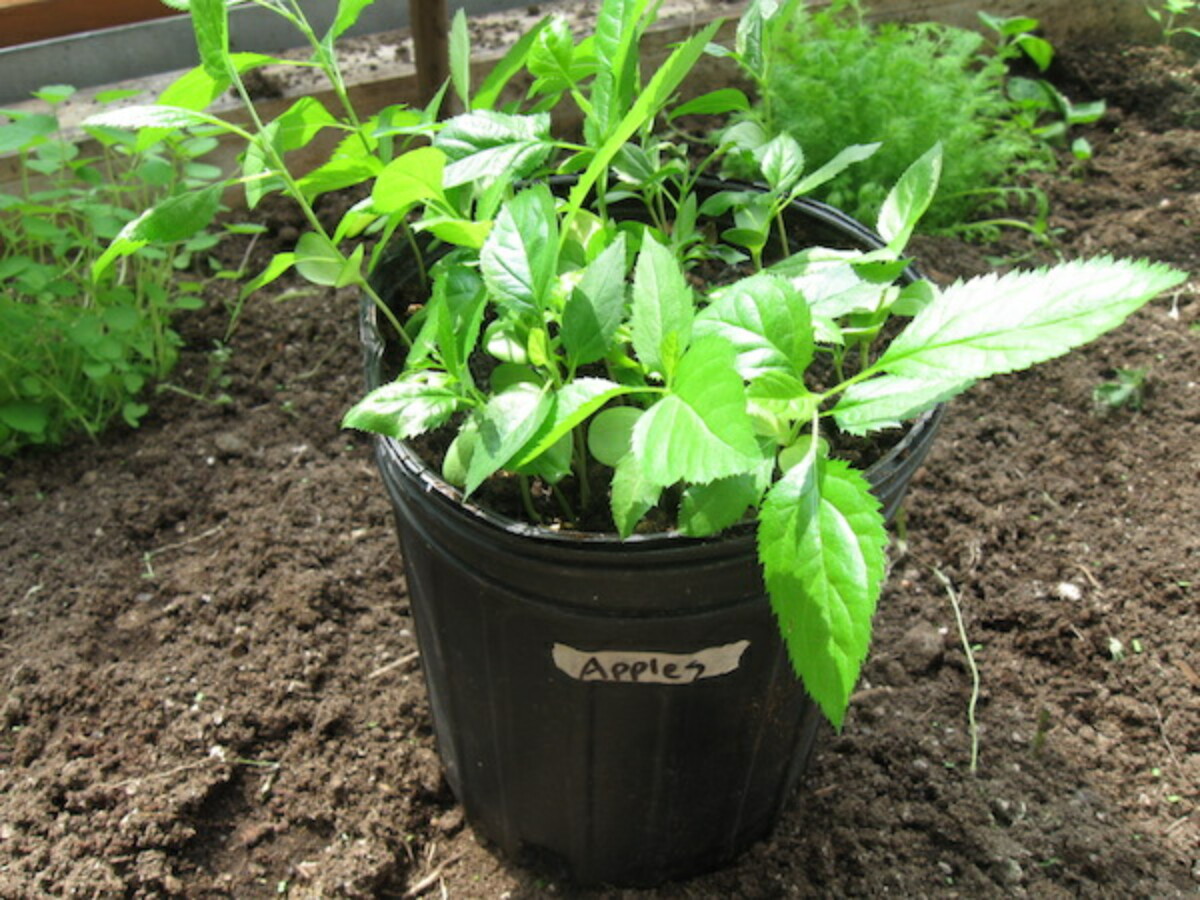
Table of Contents
- Notes from My Homestead
- Can You Grow Apples from Seed?
- Choosing Apple Seeds to Plant
- How to Cold Stratify Apple Seeds
- How to Plant Apple Seeds (Step by Step)
- How Long Do Apple Seeds Take to Germinate?
- Caring for Apple Seedlings
- Overwintering Apple Seedlings
- Transplanting Apple Seedlings
- How Long Until Apple Seedlings Bear Fruit?
- Update from Our Orchard (Several Years Later)
- Other Fruits to Grow from Seed
- Apple Seed FAQs
- More Seedling Growing Guides
- How to Plant Apple Seeds Recipe
Apple trees are surprisingly easy to grow from seed, the catch most gardeners have heard is that apple seeds don’t come true to type. The seedling won’t be genetically identical to the parent variety, so a Honeycrisp seed won’t grow into a Honeycrisp tree, which is why most modern orchards rely on grafted trees instead of seedlings.
What that warning leaves out is that every named heirloom apple in existence (Newton Pippin, Roxbury Russet, McIntosh, and every other heirloom apple variety we treasure) was once a seedling that someone got curious about and decided to keep. Planting an apple from seed is a bit of a lottery ticket, and you’re playing for the chance of something genuinely good.
The actual work is simple. Apple seeds need about six weeks of cold stratification in the refrigerator to break dormancy, and once they’ve chilled, the seedlings emerge in just a week or two and grow into healthy young trees within a few months. The bigger commitment is patience, since seedling apples typically take six to ten years to bear their first fruit. We planted our first batch about a decade ago, and the trees are now starting to fruit.
Notes from My Homestead

Our homestead seedling orchard started with one big apple taste test. We bought every variety we could find at a local heirloom apple orchard, sat down with a knife and a notebook, and ate our way through more than thirty different apples over a long fall afternoon. The seeds from our favorites went into the fridge in damp paper towels for cold stratification, and by spring we had a tray of seedlings ready to plant out. Most of those trees are now nearly a decade old, and several of them have started to fruit.
The honest report from our orchard is exactly what the textbooks promise. Some of our seedlings produce very good apples, some are middling, and we have one tree whose fruit is so tannic it’ll pucker your whole face. That tannic tree turns out to be perfect for hard cider, which actually needs a portion of high-tannin or high-acid apples to balance the sweet ones. We didn’t plant it for cider, but we got cider material anyway, and that’s the whole point of seedling apples. You don’t always get what you bet on, but you almost always get something useful.
I followed your advice. Pulled my seeds out of the fridge today. I had 100% germination on gala apple seeds. They are vigorous and already have roots about an inch long! Thanks for sharing this knowledge!
Can You Grow Apples from Seed?
Yes, you can absolutely grow apple trees from seed, and the seeds inside any apple you eat are perfectly viable for planting. The catch (and it’s worth knowing up front) is that apple seeds don’t come true to type, meaning the seedling won’t be genetically identical to the parent variety. A Honeycrisp seed won’t grow into a Honeycrisp tree. It’ll grow into a unique apple that has some traits of the Honeycrisp mother, some traits of whatever pollinated her flower (probably another tree in the same orchard or yard), and some traits all its own.
For some people, that uncertainty is a deal-breaker. If you want a tree that produces a specific named variety, you need a grafted tree from a nursery, or you can graft scion wood from a known variety onto a seedling rootstock. For others (myself included) the uncertainty is exactly the appeal. You’re planting the next heirloom apple, or at the very least a tree that’s perfectly suited to your specific climate and soil because it sprouted there.
Choosing Apple Seeds to Plant
Not all apple seeds are equally good candidates for planting. Two factors matter most: the parent variety and the second parent (the unknown pollinator). The parent is whatever apple you’re saving seeds from. The second parent is whichever tree’s pollen actually pollinated those flowers, and that depends entirely on what trees were nearby when the apple was forming.
Seeds from a backyard tree where the only nearby pollinators are wild crab apples will mostly produce small, tart, crab-leaning fruit. Seeds from an apple bought at a heirloom orchard, where the trees are surrounded by other tasty heirloom varieties, are much more likely to produce something worth eating. We chose seeds from our absolute favorite varieties for this reason, hoping the unknown second parent was likely also something delicious.
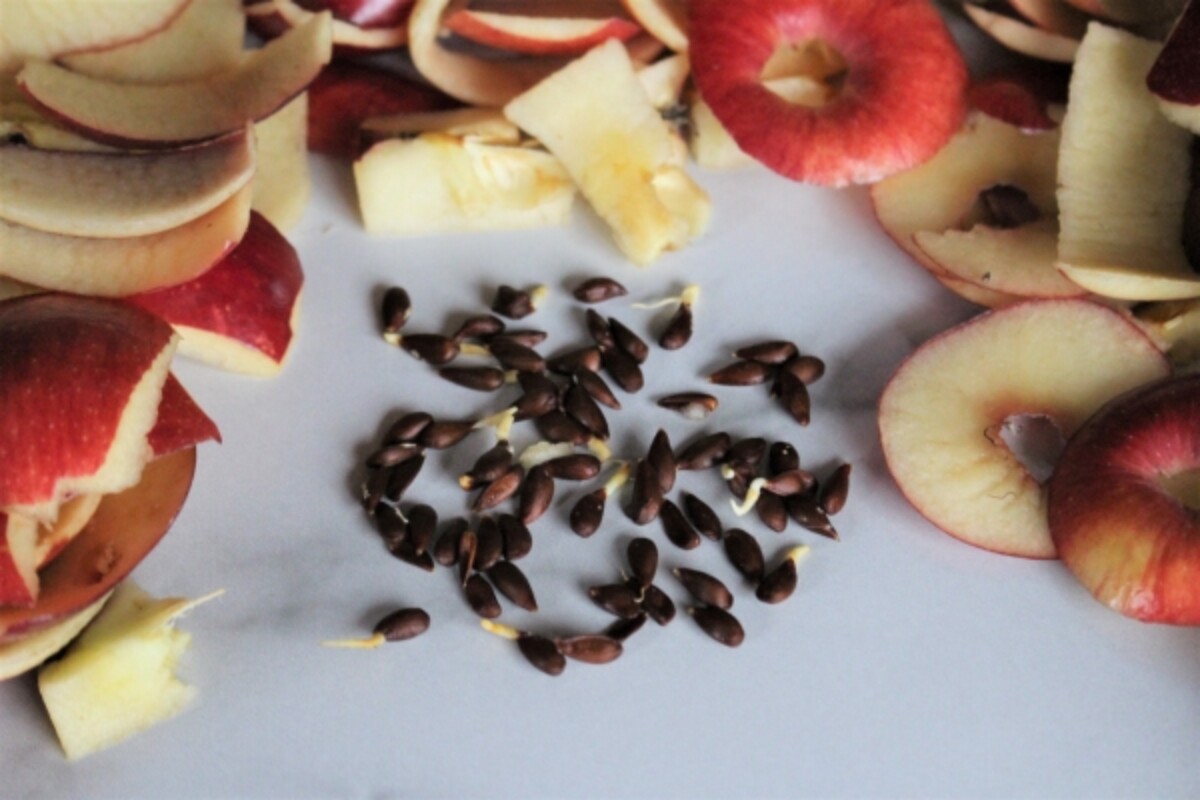
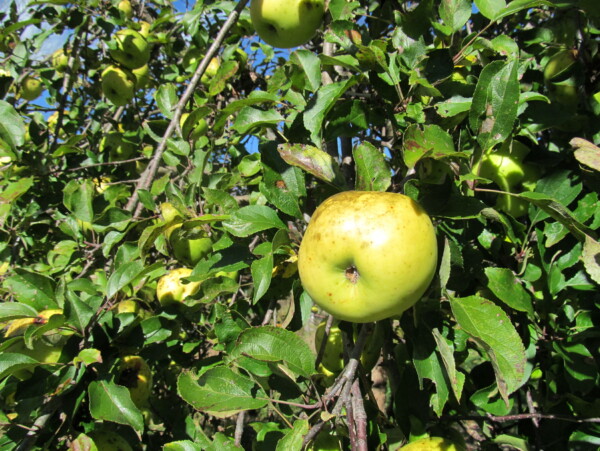
The other thing to consider is whether the apple actually has fully mature seeds inside it. Cut an apple open and look at the seeds before bothering to save them. Mature seeds are dark brown, plump, and uniform. Pale, white, or shriveled seeds aren’t fully developed and won’t germinate. Most fully ripe apples have at least a few good seeds inside, but very small or unevenly developed apples may not. Newton Pippins, our favorite long-keeping heirloom, almost always have a full complement of plump dark seeds inside, which makes them an excellent candidate for seed saving.
How to Cold Stratify Apple Seeds
Apple seeds need cold stratification before they’ll germinate, which is the single most important thing to know about growing apples from seed. Stratification is just a fancy word for the chilling period that signals to the seed that winter has happened and it’s safe to sprout. Without it, the seeds simply won’t grow, no matter how warm and moist you keep the soil. This is the same dormancy mechanism that protects apple trees from sprouting their seeds in the fall when the parent fruit drops, only to die in the first hard frost.
To cold stratify apple seeds at home, you only need a few simple supplies:
- Mature, viable apple seeds (dark brown and plump)
- A folded paper towel
- A small zip-top plastic bag
- A few tablespoons of water
- Six weeks of refrigerator space
Rinse the seeds gently to remove any clinging fruit pulp, since residual sugar can encourage mold during the long fridge stay. Dampen the paper towel so it’s thoroughly moist but not dripping wet, lay the seeds in a single layer in the middle of the towel, and fold the towel over to cover them. Slide the wrapped seeds into the plastic bag, leave the bag open by about an inch for air exchange, and stash it in the back of the fridge where temperatures stay consistently around 35 to 40°F.
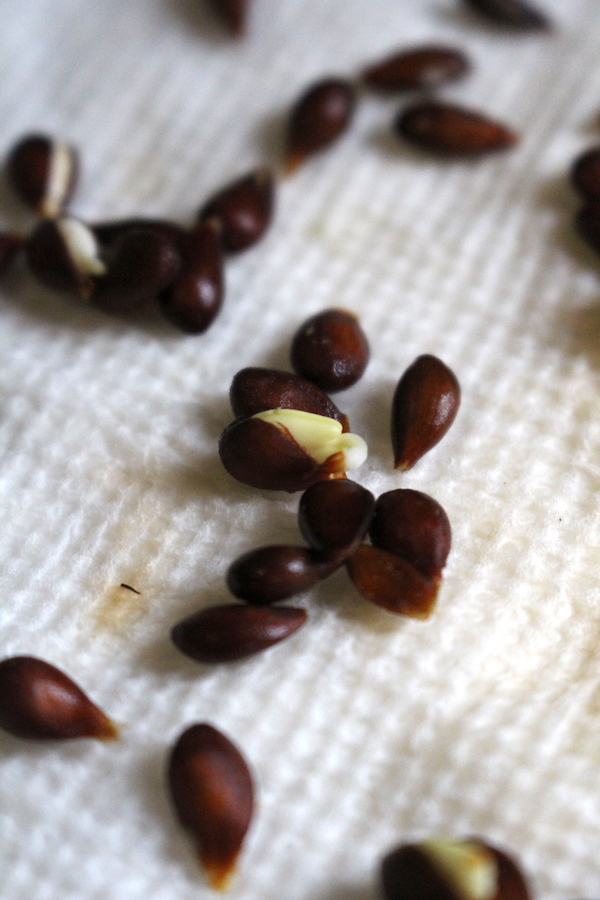
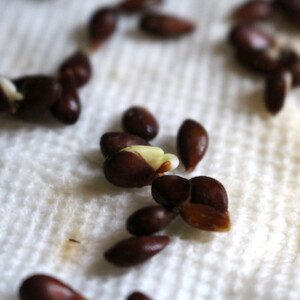
Check on the seeds every week or so to make sure the towel is still moist and to look for any signs of mold or sprouting. After about six weeks, you’ll typically see the first roots emerging from a few of the seeds, which is exactly what you want. Some seeds may take longer (8 to 10 weeks isn’t unusual) and a few stragglers may take even longer than that. Apple seeds have notoriously variable germination rates, with some sources citing rates as low as 30%. In our experience, more like 60 to 80% of well-stratified seeds will eventually germinate, but the exact rate depends on the variety, the age of the seeds, and how consistent the cold period was. Our complete guide to stratifying seeds covers the same general technique for cherry pits, peach pits, plum stones, and other temperate-climate fruit and tree seeds that share the cold-dormancy trait.
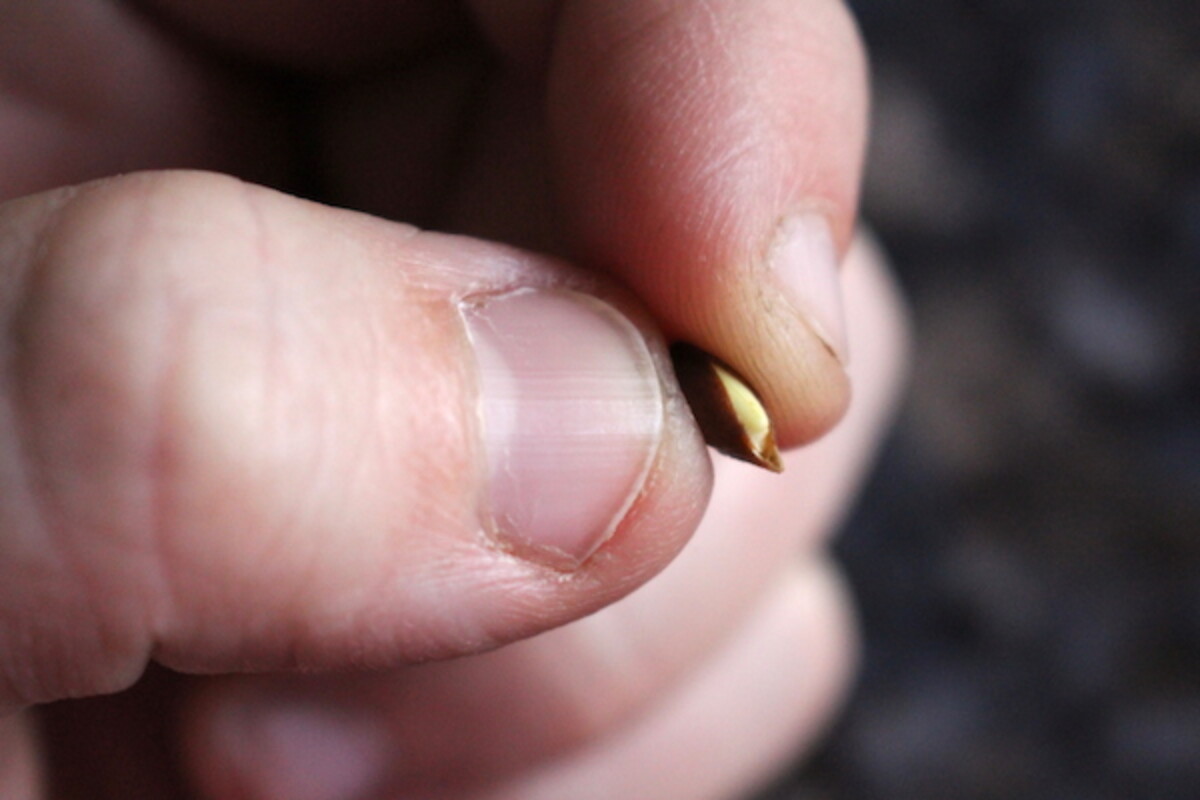
One quirk worth knowing: apples bought from a local orchard in winter or spring have often been kept under refrigeration for months, which means the seeds inside have already received a partial or complete cold stratification. Sometimes you’ll cut open a long-stored local apple and find a seed already sprouting inside the fruit, which is a little bit magical and means you can plant it directly without the paper towel step. Even with already-stratified seeds, an extra few weeks of paper-towel chilling won’t hurt them, so when in doubt, stratify.
How to Plant Apple Seeds (Step by Step)
Once the seeds have stratified for at least six weeks, planting them is straightforward. The two main options are direct sowing outdoors after your last spring frost, or starting them in pots indoors and transplanting later. I prefer pots, mainly because squirrels, mice, and voles are aggressive predators of apple seeds and small seedlings, and pots keep everyone honest.
For the pot method, use a one-gallon nursery pot with drainage holes (recycled black plastic ones from old nursery stock work perfectly) and fill it with a sterile seed-starting mix. Plant about a dozen seeds per pot, spaced evenly, pushed about half an inch deep into the soil. Cover gently, water in well, and place the pot somewhere warm and bright. Apple seeds emerge fastest at soil temperatures around 70 to 75°F, which is comfortable indoors but easy to achieve outdoors with a sunny location too.
Keep the soil consistently moist but not waterlogged, and watch for the first seedlings emerging in 1 to 2 weeks. If you’re new to starting plants from seed in general, my beginner’s guide to seed starting walks through the basics that apply to apple seeds just as much as to tomatoes and peppers, and the post on common seed starting mistakes covers the damping-off and overwatering issues that can take down young apple seedlings just as easily as any other plant.
For indoor planting where natural light is limited, supplemental DIY grow lights make a real difference. Apple seedlings can get leggy fast under weak light, with thin pale stems that struggle to hold up the leaves, so don’t skimp on light if you’re starting them on a windowsill in late winter.
How Long Do Apple Seeds Take to Germinate?
Properly cold-stratified apple seeds typically germinate in 1 to 2 weeks once they’re planted in warm, moist soil. Many seeds will already have visible roots starting to emerge from the paper towel before they’re even planted, and those will be the fastest to break the surface. Slow seeds may take 3 to 4 weeks, and the occasional straggler will take even longer, so don’t give up on a pot just because germination is uneven.
If a seed hasn’t germinated after a month at the right temperature, it probably needed more cold stratification time, was an immature or dud seed to begin with, or rotted in storage. Cold stratification followed by warm soil and consistent moisture is the formula. If germination is poor across an entire batch, the most common culprit is insufficient cold time before planting.
Caring for Apple Seedlings
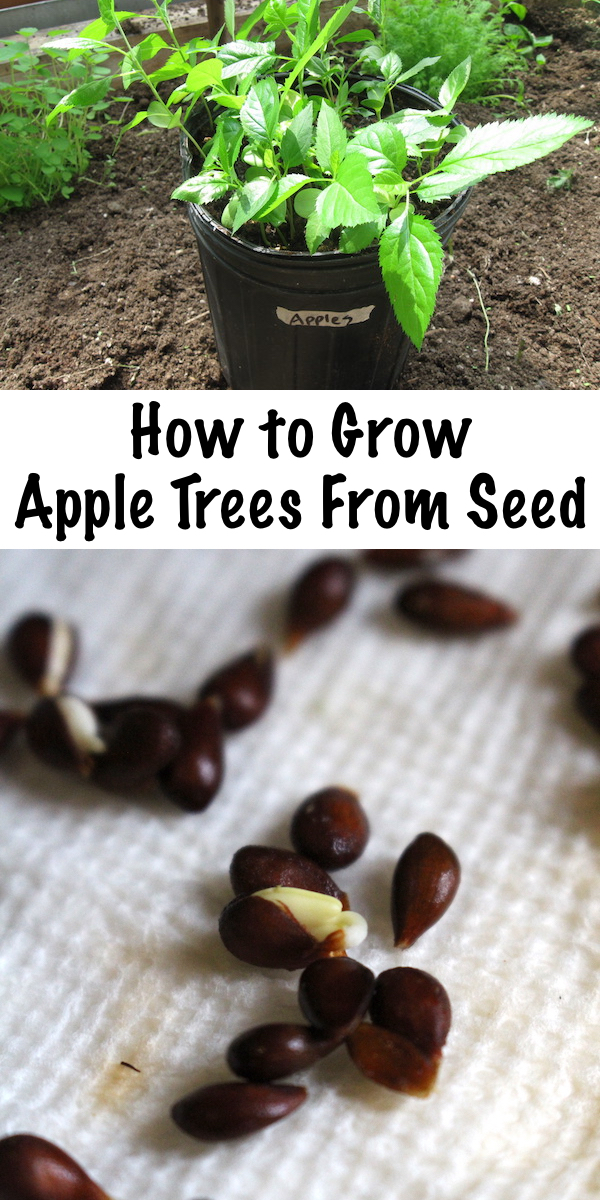
Once your apple seedlings have emerged, the goal for the first year is steady, healthy growth and a strong root system. The seedlings should grow rapidly during their first season, putting on six inches to a foot of height by fall under good conditions. Keep them in their gallon pot for the first growing season, in a sunny location with at least six hours of direct sun per day, and water consistently to keep the soil moist but not waterlogged.
Common first-year problems include leggy growth (almost always low light, fix with more sun or grow lights), drooping or flopping stems (sometimes weak stems from low light, sometimes the top getting too heavy for the developing root system, support with a small stake), and yellowing leaves (typically overwatering or nutrient deficiency in long-used potting mix, ease back on water and consider a light dose of liquid fertilizer).
If you started a dozen seeds in a single pot and several have sprouted, you can either let them all grow together for the first season and divide them at transplant time, or thin to the strongest two or three early on. I tend to let them all grow in the shared pot through the first year and then carefully separate them in spring of the second year, which lets you pick the most vigorous candidates for permanent planting and gives weaker ones a chance to catch up.
Overwintering Apple Seedlings
This is the most common question I get from readers in the comments, especially from people in colder zones. The short answer is that potted apple seedlings in their first year are vulnerable to winter cold because their root systems aren’t established enough to handle the kind of deep ground freeze that mature apple roots can survive without trouble. The pot itself amplifies cold, since potted soil freezes solid much faster than ground soil does.
For first-winter potted seedlings in zone 5 or colder, the safest approach is to bring them into an unheated garage, basement, or cool indoor space for the coldest months. They want to stay cold (so they go through their natural dormancy) but not so cold that the roots freeze solid. Anywhere between 28 and 50°F works well, and the plants need very little water during this period since they’re dormant. A weekly check is enough to make sure the soil hasn’t dried out completely.
By the second year, the seedlings can usually be planted directly in the ground, where their roots will establish a real network in the surrounding soil and survive normal winter cold without protection. If you’re not ready to plant them out, a larger pot (3 to 5 gallons) buried up to the rim in a protected spot in the garden gives the same protection as in-ground planting through the second winter.
Transplanting Apple Seedlings
Apple seedlings are ready to plant out in their permanent location once they’re at least 4 to 6 inches tall, well-rooted, and the danger of hard frost has passed in your area. In Vermont, that usually means late May or early June for first-year seedlings. Wait until nighttime temperatures are consistently above 50°F, harden off the seedlings gradually over a week or two by exposing them to outdoor conditions for increasing periods, and then transplant on a cloudy day or in the late afternoon to reduce transplant shock.
Choose a permanent location with at least six hours of direct sun, well-drained soil, and enough space for a full-sized tree. Seedling apple trees grow on their own roots without the dwarfing effect of grafted rootstocks, which means they grow large. Plan on at least 20 feet between trees, and keep them well away from septic systems, foundations, and anywhere a 30-foot mature tree would be a problem in 20 years. Our guide to planting fruit trees covers the planting hole, soil amendments, and staking procedure that gives a young tree the best start.
Stake young seedlings with a soft loop of cloth or rubber tubing for the first year or two, since one casual step or a curious deer can take down a foot-tall sapling in seconds. Mulch the planting area with two to three inches of wood chips or shredded leaves, leaving a small gap right at the trunk to prevent rot. Water deeply once a week through the first growing season unless rainfall takes care of it for you.
How Long Until Apple Seedlings Bear Fruit?
Apple trees grown from seed typically take 6 to 10 years to bear their first fruit, though some bear earlier and others take longer. The exact timing depends on the genetics of the seedling, the growing conditions, the climate, and how vigorously the tree grows in its early years. Trees in good soil with plenty of sun will fruit faster than trees in poor or shaded conditions, and warm climates will see first fruit somewhat sooner than cold ones.
Surprisingly, that timeline isn’t really any longer than what you’d expect from a grafted nursery tree. Grafted trees often hit their first fruiting at year 5 to 8 after planting, but they spent some unknown number of years in nursery pots before that, getting root-bound and stressed in the process. A seedling planted directly in the ground after one year in a pot will often catch up to and surpass a nursery transplant by the third or fourth year, since it’s never had its growth interrupted by transplanting.
If you want fruit faster, the best approach is to graft scion wood from a known variety onto your seedling once it’s two or three years old. The seedling becomes the rootstock, the scion becomes the fruiting top, and you get fruit in just a few years instead of waiting for the natural seedling fruiting timeline. Our guide to grafting fruit trees walks through the technique, which is a satisfying skill to learn and lets you turn any seedling into a tree of a known variety.
Update from Our Orchard (Several Years Later)
It’s been a long time since I planted those original seedlings from our heirloom apple taste test, and I get asked enough about how they turned out that it’s worth a real update. The short version: most of our seedlings are now thriving young trees, several have started to fruit, and the early results have been about what the textbooks promise.
Of the seedlings that have fruited so far, we have a small number of really good apples (genuinely worth eating fresh), a larger number of middling ones (fine for sauce, drying, or cooking but nothing special), and one tree whose fruit is so tannic and astringent that the only thing it’s good for is hard cider. Cider makers actually need a portion of high-tannin apples in any blend, so even the spitter has earned its place in the orchard. None of our seedlings have produced fruit identical to either parent variety, which was expected, but several have produced fruit that’s distinctively their own and pleasant in its own way.
The genuinely surprising thing about the seedling experiment isn’t how the seedlings turned out. It’s how our grafted nursery trees did by comparison. Of the two dozen labeled grafted varieties we bought from a nursery the same year, more than half are not what they were labeled as. A tree sold to us as “Golden Russet” is producing insipid red apples. A summer-ripening variety is producing apples that taste like a potato in mid-October. We’ve since top-grafted several to known varieties using scion wood from a separate online nursery, and even some of those scion grafts came in mislabeled too, with the wrong variety appearing on the branches a few years later.
So the moral of the story, after a decade of running this experiment, is that there’s some uncertainty in any apple tree you plant unless you propagate from your own known parent. Seedlings are uncertain by design, and you know that going in, which I now think is more honest than the false predictability of a nursery label. The seedling apples are, in some ways, the most satisfying trees in the orchard, because every harvest is a discovery.
Other Fruits to Grow from Seed
Apples aren’t the only perennial fruit you can grow from seed, though they’re one of the most rewarding. Growing lemon trees from seed is another long-game project that produces a beautiful tree even before it fruits, and citrus actually comes mostly true to type from seed unlike apples. Strawberries from seed, rhubarb from seed, and asparagus from seed are all faster to harvest and pair well with seedling apples on the homestead.
Once your seedling apples are in the ground, they’ll eventually produce a real harvest, and you’ll want a plan for what to do with all those apples. Our guide to preserving apples covers more than thirty methods, and our most-loved apple recipes include canning apple pie filling, apple jam, apple butter, homemade apple cider vinegar, and of course hard cider for those tannic seedling apples that nobody’s going to eat fresh.
Apple Seed FAQs
Yes, a seedling apple tree will produce real apples once it matures, typically after 6 to 10 years. The fruit won’t be identical to the parent variety because apple seeds don’t come true to type, but the apples will be edible. Some seedlings produce excellent fruit, some produce middling fruit, and some produce fruit that’s better suited to cooking, sauce, or hard cider than fresh eating.
Apple seeds need a minimum of 6 weeks of cold stratification to break dormancy, with 8 to 10 weeks producing the best germination rates. Refrigerator temperatures around 35 to 40°F are ideal. Some seeds may sprout while still in the refrigerator, which is normal and a good sign that the chilling period was sufficient.
After cold stratification, apple seeds typically germinate in 1 to 2 weeks once planted in warm, moist soil at temperatures around 70 to 75°F. Many seeds will already have visible roots from the stratification period and will emerge fastest. Slower seeds may take 3 to 4 weeks, and germination across an entire batch is usually uneven.
Apple seeds are small, teardrop-shaped, and dark brown to nearly black when mature. They’re roughly a quarter inch long and a little less than that wide, with a smooth, slightly glossy seed coat. Pale brown, white, or shriveled seeds are immature and won’t germinate, so look for plump, dark, uniform seeds when selecting for planting.
Mature seedling apple trees are typically as cold-hardy as their parent varieties, often hardier since they’ve adapted to local conditions from the start. First-year potted seedlings are more vulnerable because their root systems aren’t established, so they should be overwintered in an unheated garage, basement, or other cool protected space until they can be planted in the ground. By the second year, most seedlings can survive normal zone 4 winters once planted out.
Yes, apple trees need cross-pollination from a different apple variety to produce fruit reliably. A single isolated apple tree usually produces little or no fruit. If you don’t have other apple trees nearby, plant at least two different seedlings together, or include a crab apple in your planting since crab apples bloom over a long period and pollinate most other apples effectively.
Most apple varieties need a period of winter chill (sustained temperatures below 45°F for hundreds of hours) to set fruit properly. In warm climates without a real winter, standard apple varieties usually produce poor harvests or no fruit at all. Low-chill apple varieties like Anna, Dorsett Golden, and Tropic Sweet can succeed in subtropical and Mediterranean climates, and seeds from those varieties will produce seedlings adapted to warm climates.
If you tried planting apple seeds, leave a ⭐ star rating on the how-to card and let me know how it went in the 📝 comments below!
And make sure you stay in touch with me by following on social media!
How to Plant Apple Seeds
Equipment
- Paper towel
- zip-top plastic bag
- refrigerator
- 1-gallon nursery pot with drainage holes
Ingredients
- Mature apple seeds, dark brown and plump
- water
- seed-starting mix
Instructions
- Cut open ripe apples and pick out the seeds. Choose plump, dark brown seeds and discard any that are pale, shriveled, or white, since those are immature and won't germinate. Rinse the seeds gently under cool water to remove all clinging fruit pulp, since residual sugar can encourage mold during the long fridge stay.
- Dampen a paper towel until it’s thoroughly moist but not dripping wet. Lay the seeds in a single layer on one half of the towel and fold the other half over to cover them completely.
- Slide the wrapped seeds into a zip-top plastic bag, leaving the bag open about an inch for air exchange. Place the bag in the back of the refrigerator where temperatures stay consistently between 35 and 40°F.
- Check the seeds every week or so to make sure the paper towel stays moist and to look for any signs of mold or sprouting. After about six weeks of cold stratification, many seeds will have visible roots beginning to emerge, which is the signal that they’re ready to plant.
- Fill a one-gallon nursery pot with sterile seed-starting mix. Plant about a dozen stratified seeds roughly half an inch deep, spaced evenly around the pot. Water gently until the soil is evenly moist but not waterlogged.
- Place the pot in a warm, bright location with soil temperatures around 70 to 75°F. Seedlings should emerge from the soil within one to two weeks, with seeds that already had visible roots emerging fastest.
- Once the seedlings are 4 to 6 inches tall and nighttime temperatures are consistently above 50°F, transplant them outside to a permanent sunny location with at least 20 feet of space between trees. Stake young seedlings for the first year or two, mulch around the base with wood chips or shredded leaves leaving a small gap at the trunk, and water deeply once a week through the first growing season.
Once your apple seedlings are settling into the orchard, the homestead calendar keeps turning. Our guide to heirloom apple varieties is a good companion read if you’re starting to think about which named varieties to graft onto your seedling rootstocks down the road, and the year-round fruit orchard guide covers how to plan an orchard that produces from June through deep winter.
Find the perfect guide
Searching for something else? Enter keywords to find the perfect guide!









So I have a few sprouted and they’re probably between 3-6 inches now. Do you think I should plant them this fall or try and keep them alive inside all winter? I live in Tennessee so it’ll be warm until at least the end of October, most likely. Thanks!
I would be afraid that they might not be well established before the first frost comes. You could always plant some of the larger ones out and leave the smaller ones in and test it out.
Thanks! I’ll give it a go. Thanks for your posts on this. Very helpful!
You’re welcome.
My tree just started growing from a seed naturally! Didn’t even plant it?
Neat!
i did the expirement but it did not grow, i need help please
It’s hard to say exactly what went wrong. Could you walk me through exactly what you did.
These instruction is really helping me with my plant guide. Thank You so MUCH!!!!!!!!!
You’re welcome. I’m glad you found it helpful!
Thank you so much. Very educative.
You’re very welcome. So glad you enjoyed it.
I have an apple tree started from seed, looking good until this morning when I discovered a deer had been up on my front porch and ate !/2 of it. Took the top out and some of the side branches. Can i prune it, and hope it will be a good shaped tree? Should I just start over? My Sister started the parent tree from an apple i picked up on Isle Royale in Lake Superior.
I would think as long as the deer didn’t kill it that you should be able to prune it and it will be just fine.
I stumbled across this website and decided to start with some apple seeds, they look so good so far! Amazed with the success!! Thank you, I’ll be trying other ones soon!
You’re welcome, Barbarella!
Great blog, very useful information. I have two Apple trees grown from seed. I planted them together and they have joined. They are now about 4 yrs old and very healthy in the garden. I did not realize it will take another 4 yrs to produce fruit. I’ll be patient.
We were successful in getting some apple seeds to sprout and now have potted them and they are coming up! Since it’s early August and we live in northern Minnesota – what would be the best way to winter these new babies?
Sorry we didn’t get to your comment sooner. What did you end up doing with those?
At this time they are still in pots outside; have not lost their leaves even though our temps are now only 30’s during the day but it seems apple trees we already have have not lost their leaves yet either (planted established trees). I was told to keep them in our unheated garage in a syrofoam cooler for some winter protection and then once we get warmer days in spring – bring outside?
I think that sounds like a good plan.
So do ALL apples need stratification? I just accidentally grew an apple seedling and I live in the tropics. I have no idea where the little champ has been but when I plopped it on the ground it just… grows!
I don’t believe the apple it’s from is refrigerated cool enough for any stratification to happen, since we don’t really do that here and just eat it straight away :v.
But now this little plant got me hooked on gardening and I was wondering if I just got lucky or something else is going on.
I’m planning to grow more in the future!
If you’re in the tropics I’d guess it made it there on a refrigerated ship/plane/etc and spent some time in cold storage before it got there. That said, there are “low chill” varieties of apples that thrive in hot areas. Perhaps their seed doesn’t require the same stratification? Every apple tree is different genetically, so it’s possible that a mutation would allow them to just grow without stratification, so maybe you got lucky. Either way, good luck with your seedling!
I have successfully managed to grow two apple trees from seeds to the point of planting them outside. That was 3-4 years ago . However at the time I was more interested in teaching my 6 year old granddaughter how the germination of seed to tree process worked and never planned on them growing more than a couple feet tall before we moved away. Well here we are still at the same location and they are both about 7 ft tall now but I fear they are way too close together (approx. 4 feet apart) so now what? Can I transplant the weaker looking one even at this height? If so when should this be done? I plan on giving them their first pruning in late winter/early spring would it be advisable to transplanting the one at that time? Or do it now? We live in Michigan planting zone 6,
Here is an article that I found on transplanting older trees that might help you out a bit. Let us know if you have any other questions.
https://www.orangepippintrees.com/articles/gardening/transplanting-semi-mature-fruit-trees
I just started some in June so am assuming they’ll be too small to go out this Fall. How would I over winter them? I assume the house will be too warm. Is an unheated shed ok or the basement? Both are not terribly light – would they need a grow light?
Thanks!
In the winter they go dormant completely (assuming you’re in a temperate climate not the desert), so a shed would be fine. They should lose their leaves and not need light. They will need light when things warm up in spring though and they begin budding.
Can we plant apple in Africa?
Possibly, but most varieties require a certain number of frost hours to bare fruit. I’d look up apple varieties recommended for California or Florida, as there are a few specially bred to fruit in hot climates. This article might be helpful for you: https://edis.ifas.ufl.edu/pdffiles/MG/MG36800.pdf
I purchased some 20th Century Asian pears because my tree is not fruiting yet. It has born fruit for the past few years. My question is weather or not germinating the seed will work for grafting to the main fruiting tree. Someone said that this might encourage the new “tree” to fruit faster. My original tree was a gift from my father-in-law, and its fruit is wonderful. Is there a risk to either the new and/or existing tree to be contemplating this?
I don’t think it’ll encourage the tree to fruit faster, but I’m not an expert in pushing trees to fruit.
Hi, thank you for the apple seed planting instructions.
After I plant a dozen or so seeds in a pot after refrigeration, as the young trees sprouts and grows up do you keep all the young trees and eventually plant them all in their permanent locations or do you weed out the lesser young trees? Planting just the best grower or are the all transplantable from pot to ground?
Thank you very much!
I plant them all out in the yard. If several trees look weaker, I plant them together in a group and then at least one survives.
I have successfully germinated 3 apple seeds in the fridge, and was wondering what size should they be before I pot them? Also how often I should water them?
Thank you.
As soon as they germinate they should go into soil. Water to keep the soil just barely moist, but not saturated.
Thank you so much for sharing this apple germinating process. I would love to try.
Well I started some in February just by putting them in potting soil. I didnt do any refrigeration. Store bought apples. I have 10 trees growing in my house. Lol. I am going to plant them outside next year.
I just started this planting thing and had no idea I was supposed to refrigerate to break dormancy some had already started germination though others hadn’t and I’m in Nigeria. the don’t know much about climates and pH level but I want to start this planting apple journey
I would say that if they have already started germinating then you should be good to go.
Hi folks,
Just seen my 8 Apple seeds which have spent 6 weeks in the fridge, of which 5 have got some roots, all of 2mm, lol, bless!
Now all I got to do is plant in pots today and see what happens. Funny, I recall in my teens planting three in roughly the same way, great fun I thought till my niece visited us one weekend at my parents house, pulled all the flipping leaves of….Grrrrrrrrr I could have pulled her hair out, ooops!!
Anyway, here I am 65 & doing the same thing again…lol, see what happens…lol