
Affiliate disclosure: This post may contain affiliate links. Please see our Privacy Policy.
Self Heal (Prunella vulgaris) is a low-growing wild mint with dense purple flower spikes that’s been used as a folk medicine for cuts, sore throats, and just about everything else for centuries. Learn how to identify self-heal, when and how to harvest it, and how to use the leaves and flowers in teas, tinctures, salves, and other simple herbal preparations.
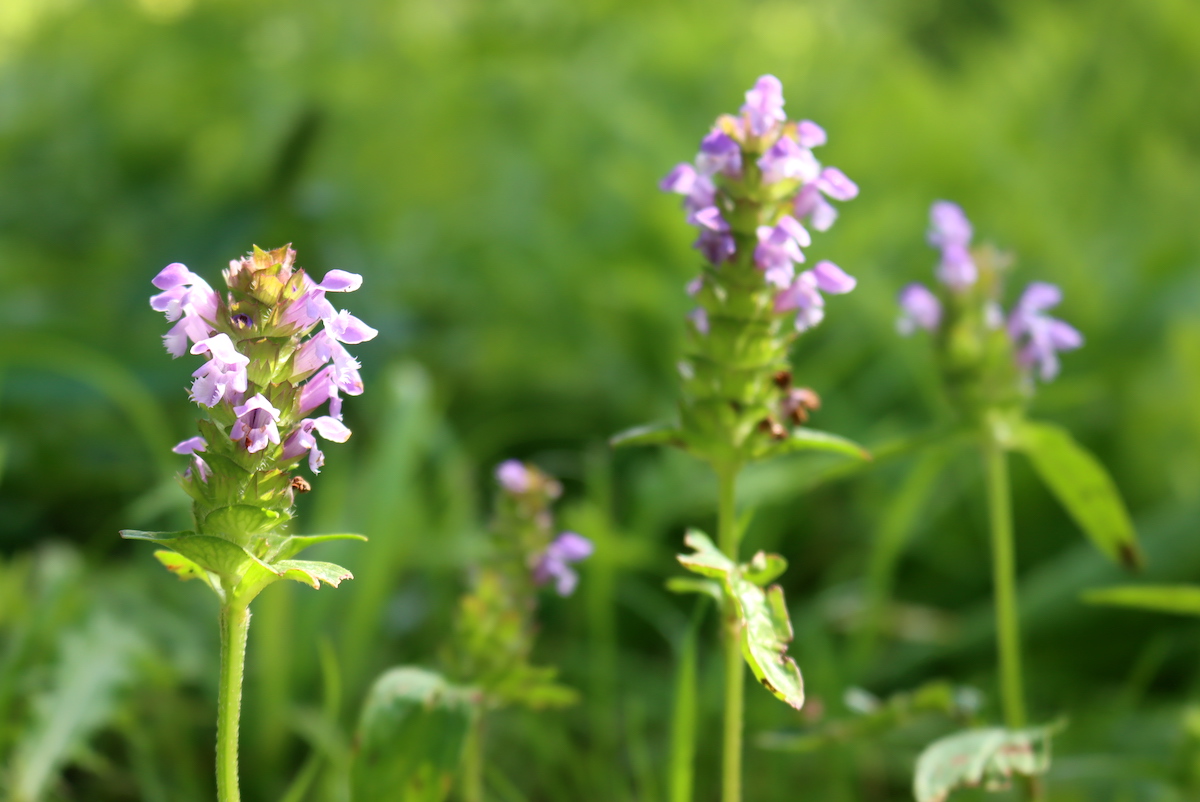
Self Heal forms a dense, low-growing carpet of purple flowers on lawns and field edges, and it’s likely you’ve already walked past it dozens of times without recognizing it. Traditional names like Woundwort, Heal-All, and Carpenter’s Herb hint at its many medicinal uses, and a quick look at the genus name Prunella traces back to the German die Bräune for a kind of throat inflammation, which tells you something about how generations of herbalists have used it.
The bees absolutely love it, and honey made from its flowers has been studied for some specific medicinal properties of its own. Historically, self-heal was reputed to treat almost everything, and it shows up in the traditional medicines of Europe, North America, and China. Modern studies are starting to verify many of those traditional uses, and they’re showing that this little wild plant lives up to its name.
Once you can identify it, you’ll find self-heal pairs naturally with the other classic herbal weeds: chickweed, plantain, yarrow, and the rest of the lawn-and-field crowd that homesteaders and herbalists have been working with for generations.
(While self-heal is one of the most common wild plants on the continent, you can also grow it from Heal All Seed Packets as a ground cover. It forms a thick carpet in no time and it’s a lot more interesting than plain lawn grass.)
Notes from My Homestead

Self-heal was one of the first wild plants I learned to identify, decades ago when I was just getting into herbalism and foraging. I’d spotted pictures in a book, and with a name like “Heal All” I just knew I had to find it in the wild. Lucky for me, it didn’t take long. Just a few steps outside my door, and there it was, brightening up a corner of the lawn, with bumblebees working the purple flower spikes.
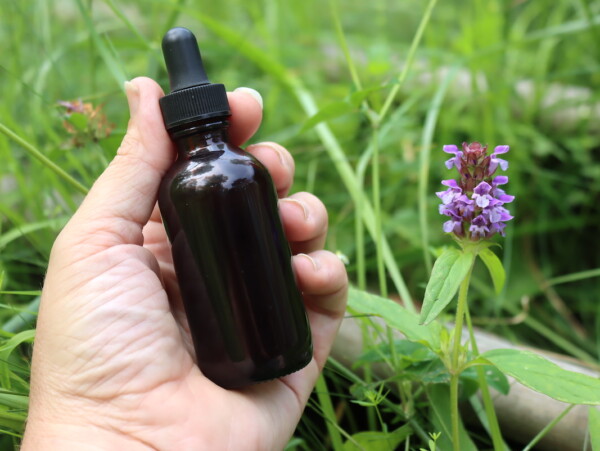
These days, self-heal is one of the plants I make a herbal tincture from every spring, alongside dandelion tincture, chickweed tincture, and burdock tincture. I use the self-heal tincture as a general spring tonic and as a mouth and throat rinse when something is going around. The plant is so abundant on our Vermont homestead that I never have to walk farther than the yard to harvest a year’s supply, and I let a generous patch flower in the lawn every summer for the bees.
What Is Self Heal?
Self Heal (Prunella vulgaris) is a perennial, herbaceous wildflower that makes a low-growing, spreading ground cover. It’s in the mint or Lamiaceae family and is native to Europe, Eurasia, and North America.
Self Heal has many common names, including Common Self Heal, Woundwort, Heal-All, Heart-of-the-Earth, Carpenter’s Herb, Brownwort, and Blue Curls.
Is Self Heal Edible?
Self Heal is edible, and the leaves, stem, and flowers can be eaten, though the stem may be tough.
Herbalists have also used Self Heal both internally and externally for centuries. For medicinal purposes, herbalists usually harvest the plants while they are in flower. It can be dried for later use.
Avoid harvesting Self Heal along roadsides, treated lawns, or other areas that may be contaminated with pesticides or other chemicals.
There are no known precautions for consuming Self Heal, but it’s generally recommended that you consult with a physician or herbalist before trying a new herb, especially if you’re pregnant or nursing.
Self Heal Medicinal Benefits
Self Heal has a long history in herbal medicine throughout its range. Its value as a medicinal herb has given it the common names Self Heal, Heal-All, Woundwort, and Carpenter’s Herb. Additionally, part of Self Heal’s scientific name, Prunella, comes from “Brunella,” which is derived from “die Bräune,” the German word for a type of throat inflammation called quinsy.
Self Heal is a common ingredient in Chinese medicine and is used to treat cancer, dizziness, dry coughs, red eyes, dermatitis, and boils. It’s also a common herb in Chinese teas.
In North America, Self Heal was used by many Native American groups as part of their traditional herbal medicine.
- The Algonquin, Delaware, Iroquois, and Mohican all used Self Heal as a fever reducer.
- The Cherokee employed Self Heal for washing burns, bruises, diabetic sores, cuts, and acne.
- The Cree chewed Self Heal for sore throats.
- The Blackfeet Nation used Self Heal as an eyewash and wound cleanser on both humans and horses.
- The Iroquois turned to Self Heal to treat various conditions, including coughs, gastrointestinal problems, gynecological issues, colds, tuberculosis, hemorrhoids, diarrhea, and respiratory problems.
Modern studies have provided some evidence that Self Heal does have many benefits. One study found some evidence that it has anti-tumor properties. Another study indicated that Self Heal helped to lower glucose levels in diabetic mice. Honey made from Self Heal blooms also appears to have some benefits, with one study finding that it helped improve the gut microbiota composition in rats with colitis.
Herbalists continue to use Self Heal for various applications today, using the herb dried or fresh to create infusions, tinctures, teas, mouthwashes, ointments, massage oils, and eyewashes. It’s used to treat cold sores, headaches, insect bites, hemorrhoids, stress, emotional trauma, and more.
As an early green, it’s also employed as a general spring tonic.
Where to Find Self Heal
Self Heal is widespread and can be found across much of North America, Europe, and Eurasia. It’s highly adaptable and will tolerate a wide range of pH, light, and soil conditions. It prefers relatively moist areas, especially when growing in full sun.
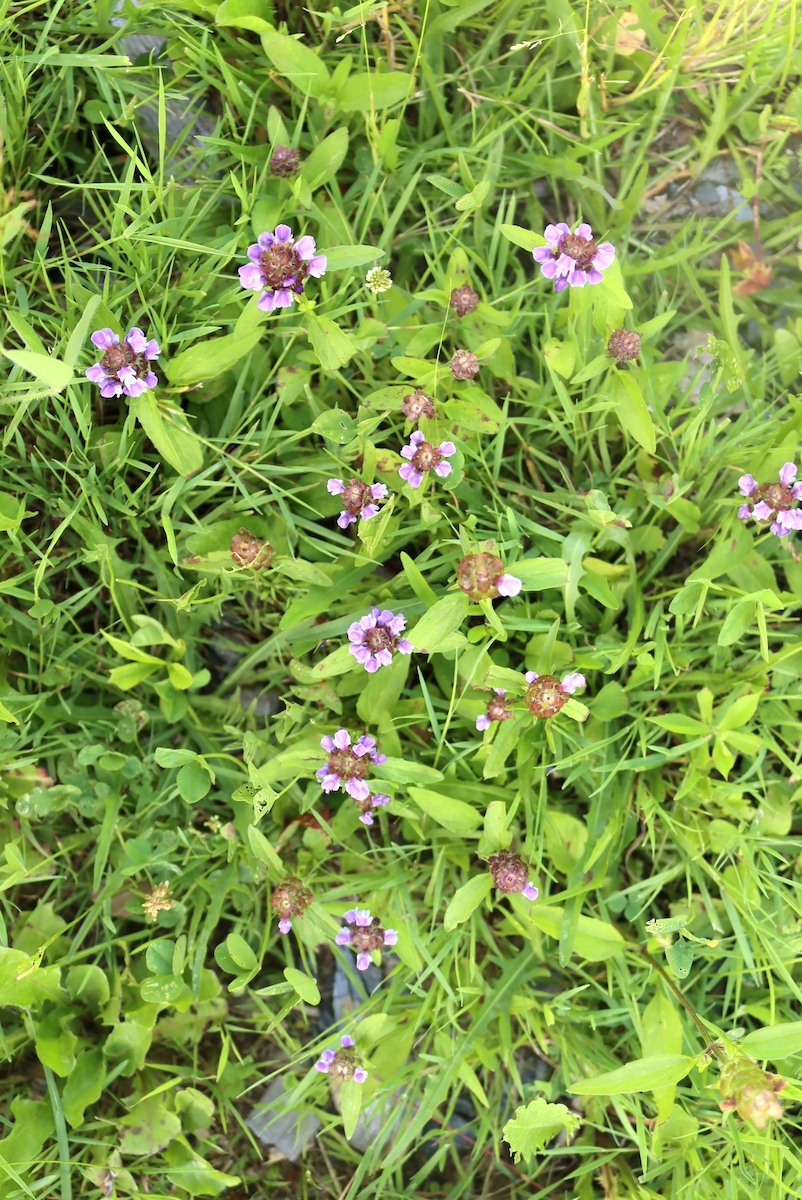
You’ll likely find Self Heal growing in gardens, fields, grasslands, pastures, lawns, waste places, and along forest edges and roadsides. Some of the easiest patches to find are in regularly-mown lawns, where the plant adapts by flowering at just an inch or two off the ground rather than its usual six to twelve inches.
When to Find Self Heal
Self Heal may appear as early as March in warm climates but may come up in May or even later in the north. It’s easiest to identify when in bloom, typically between May and October. The seeds ripen in August or September.
How to Harvest Self Heal
The best time to harvest self-heal for medicinal use is when the plants are in full flower, typically between June and August in most of its range. Herbalists prize the flowering tops because that’s when the aerial parts of the plant carry the highest concentration of the medicinal compounds the plant is known for.
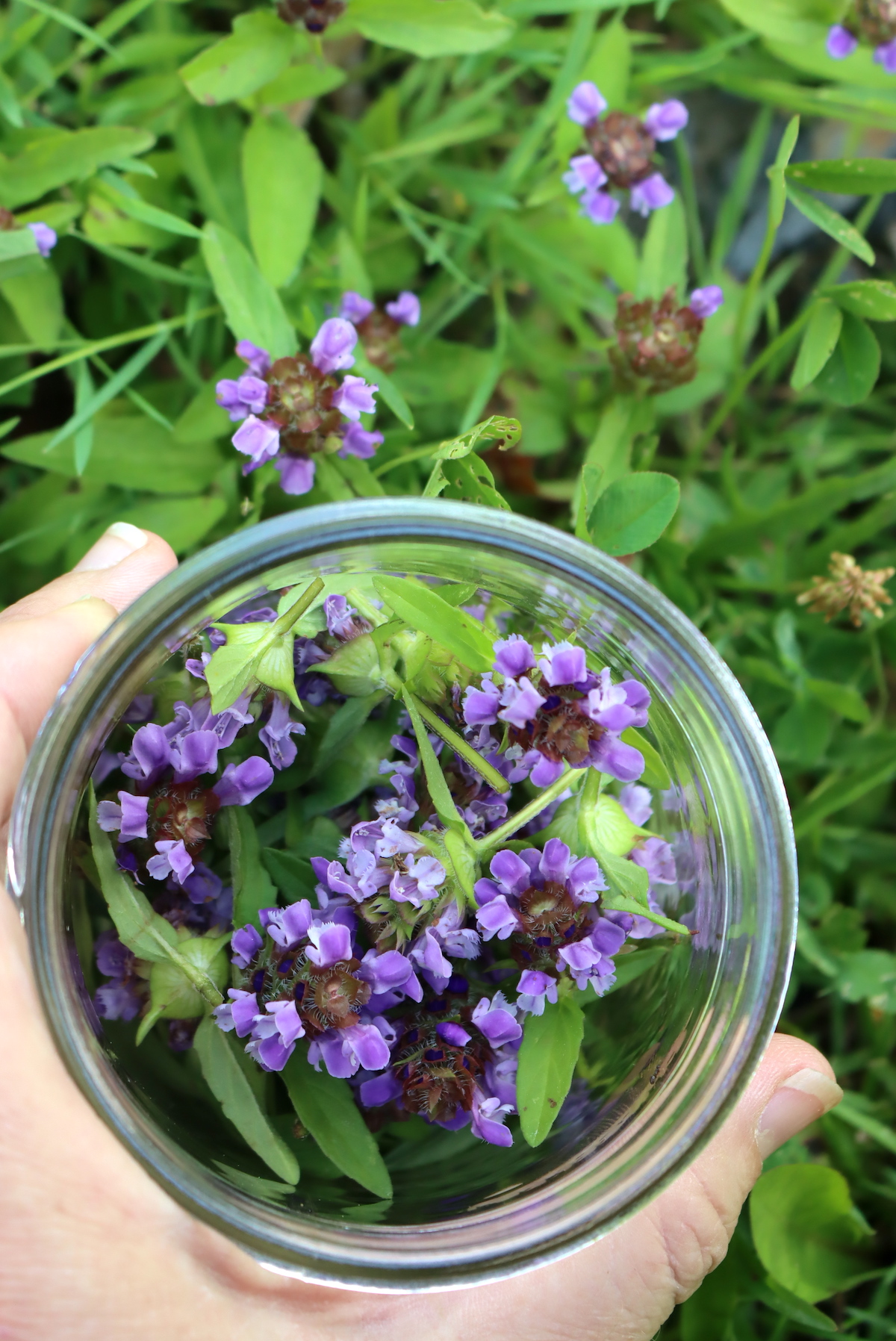
To harvest, snip the top several inches of each plant with scissors or pinch off the flowering stems by hand, leaving the lower portion of the plant intact. The flowering tops include the purple flower spike, the small leaves just below the flower, and a couple inches of the upper stem. Self-heal regrows readily, and a healthy patch can usually be harvested two or three times in a season as long as you don’t take more than about a third of any one plant in a single pass.
For culinary use of the leaves alone, you can harvest at any point during the growing season, though young leaves before flowering tend to be the most tender. Self-heal can be used fresh right after harvest, or dried for storage. To dry, hang small bundles of flowering tops upside down in a cool, dry, dark place for one to two weeks, or use a dehydrator on a low setting (around 95 to 110°F) to preserve the medicinal compounds. Once fully dry, store in an airtight jar away from light, where it’ll keep its potency for about a year.
Always avoid harvesting from lawns that have been treated with herbicides or pesticides, from busy roadsides, or from areas near industrial sites, since self-heal does take up some compounds from the soil. The cleanest harvests come from your own untreated lawn, the edges of organic gardens, or pastures and woodland edges that you know haven’t been sprayed.
Identifying Self Heal
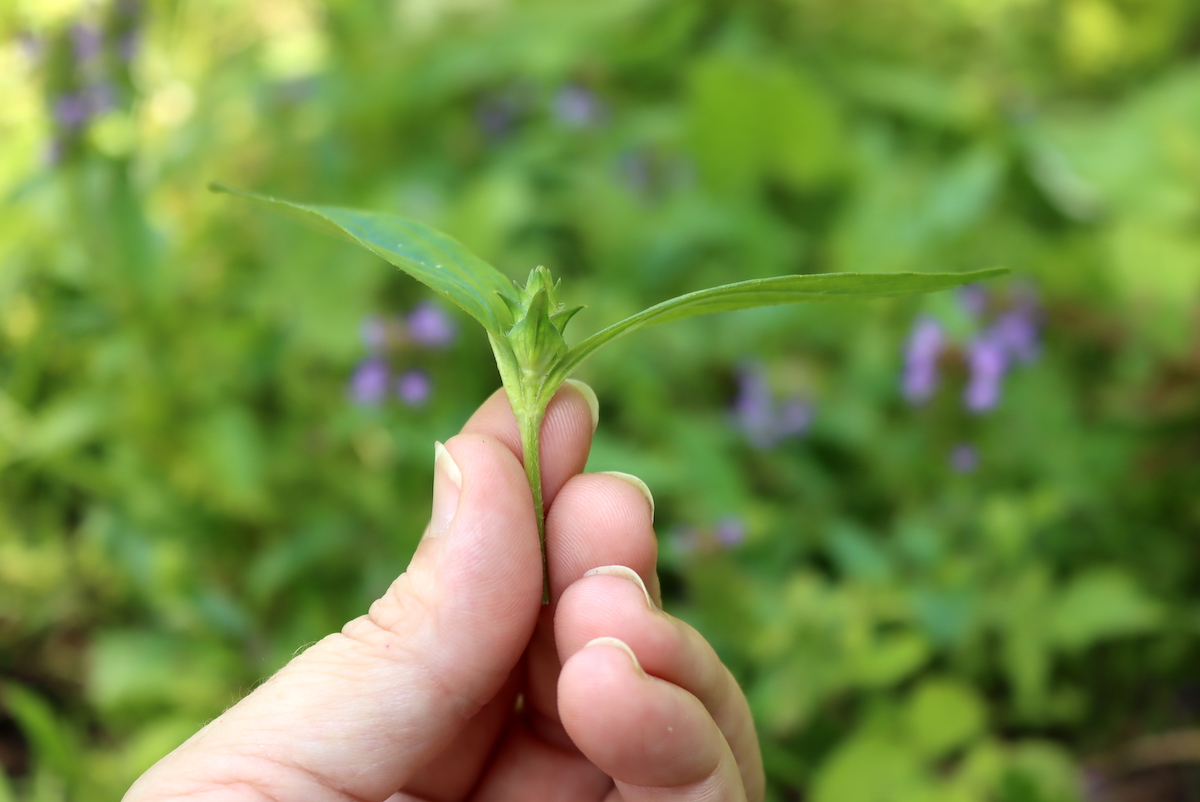
Self Heal is a spreading herbaceous plant that grows roughly one foot tall. The plants have a small tap root and fibrous, rhizomatous roots, which allow them to propagate and form clumps.
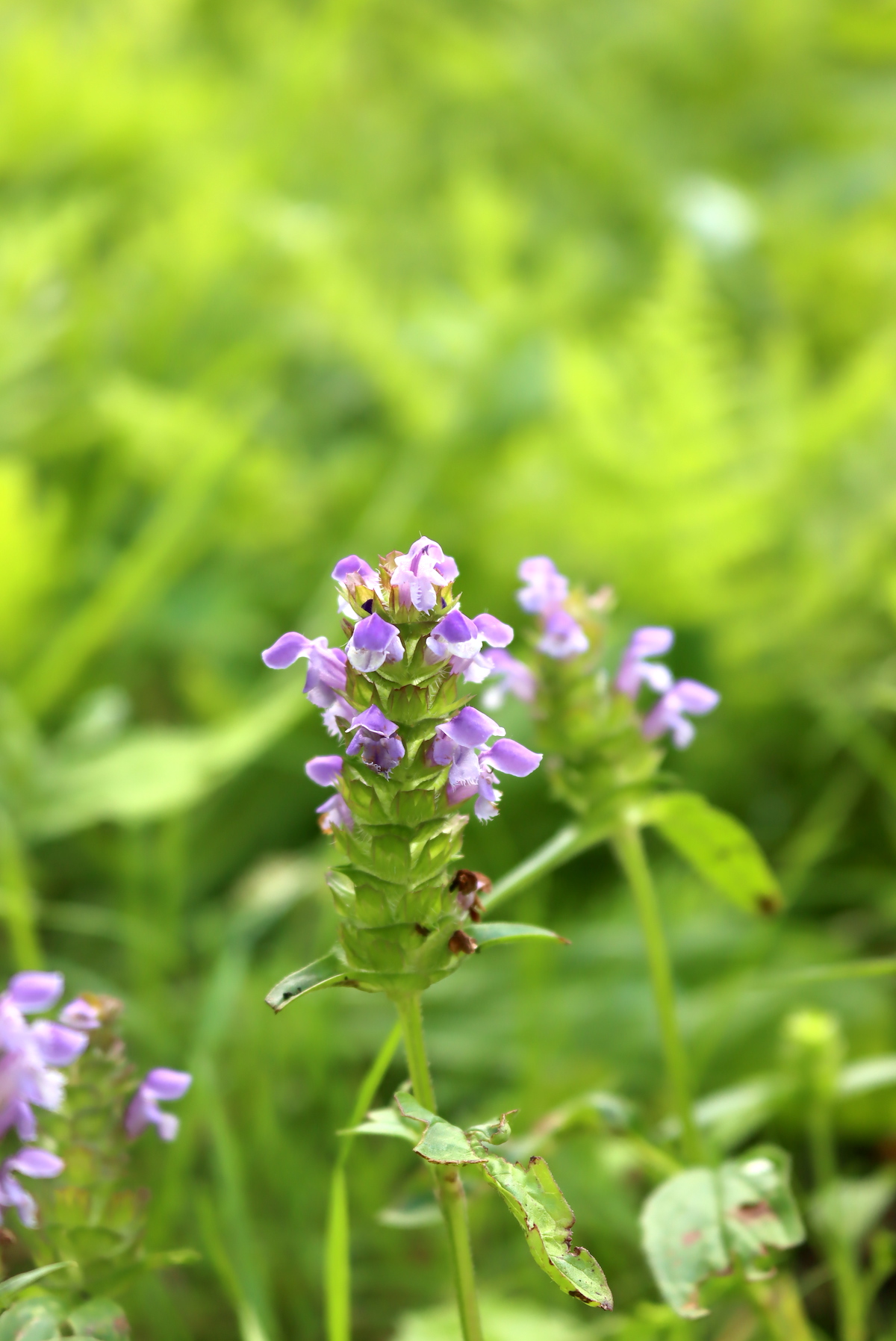
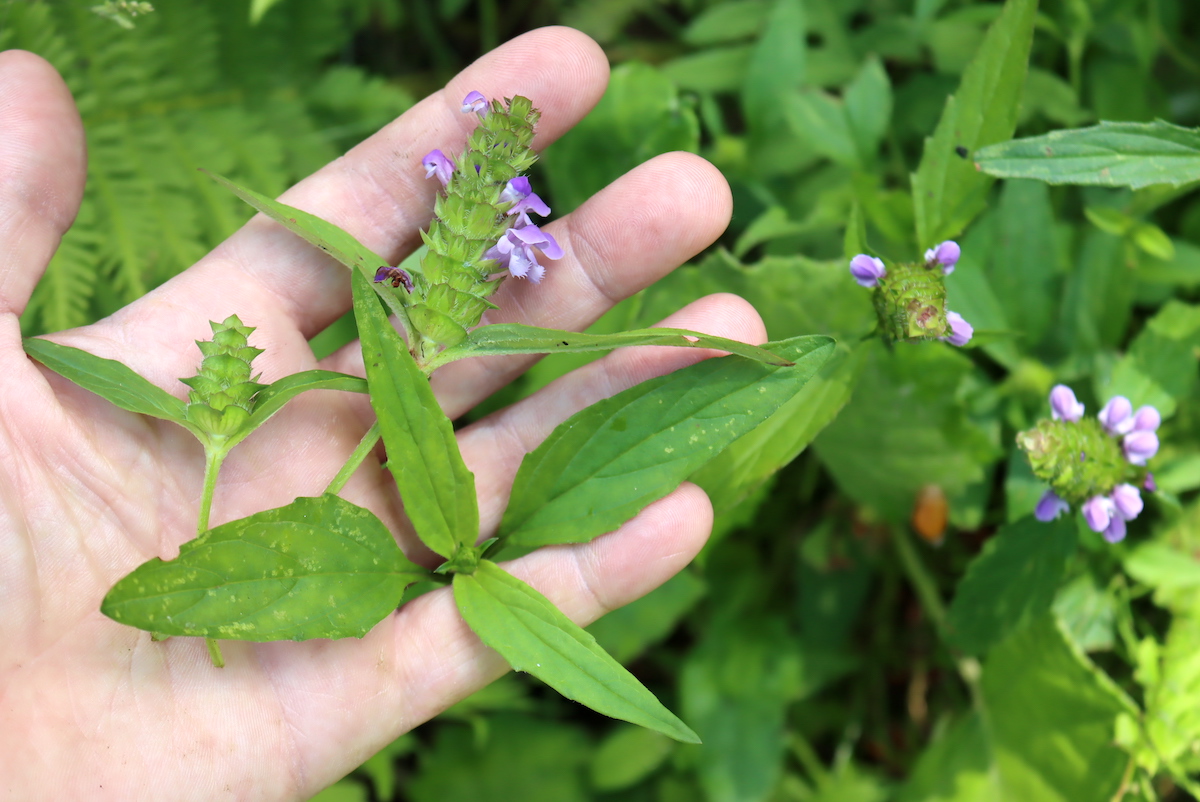
Self Heal is most noticeable when it’s in bloom between May and October. The tiny purple flowers form in whorls on club-like flower spikes. Though the flowers themselves are small, a patch of Self Heal in bloom is eye-catching.
Self Heal Flowers
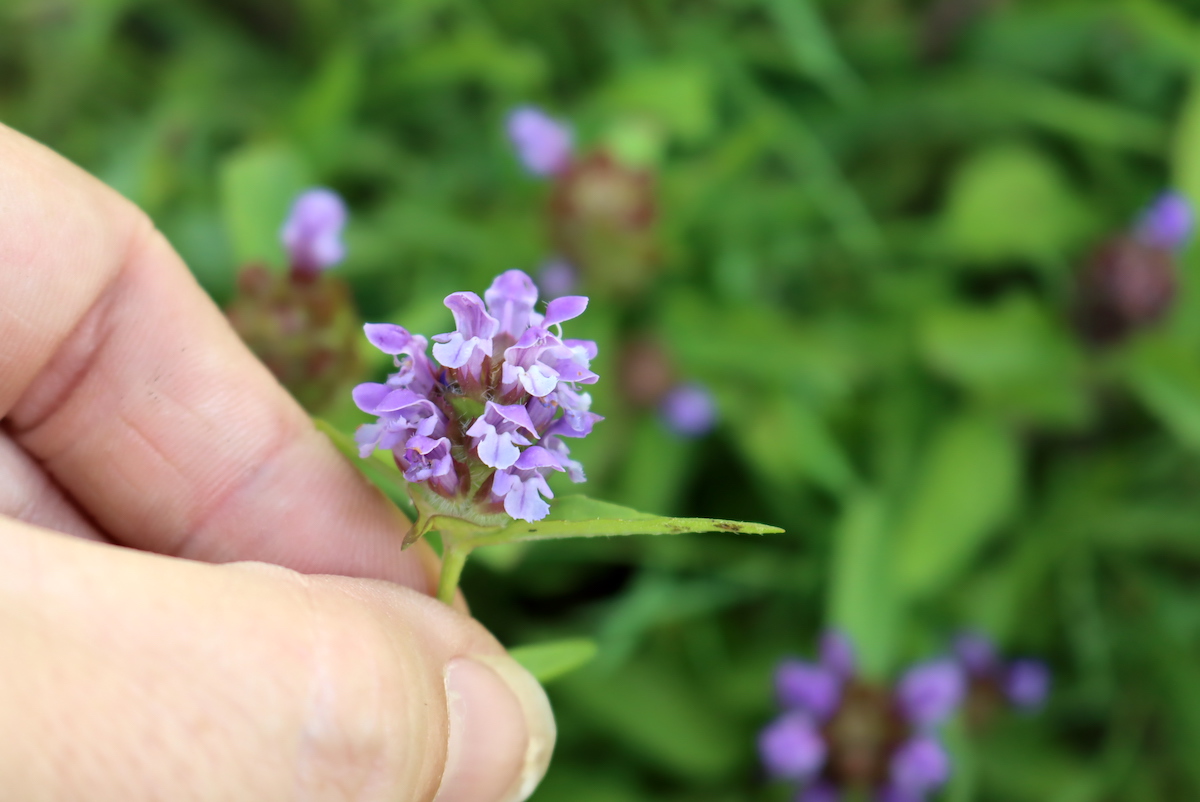
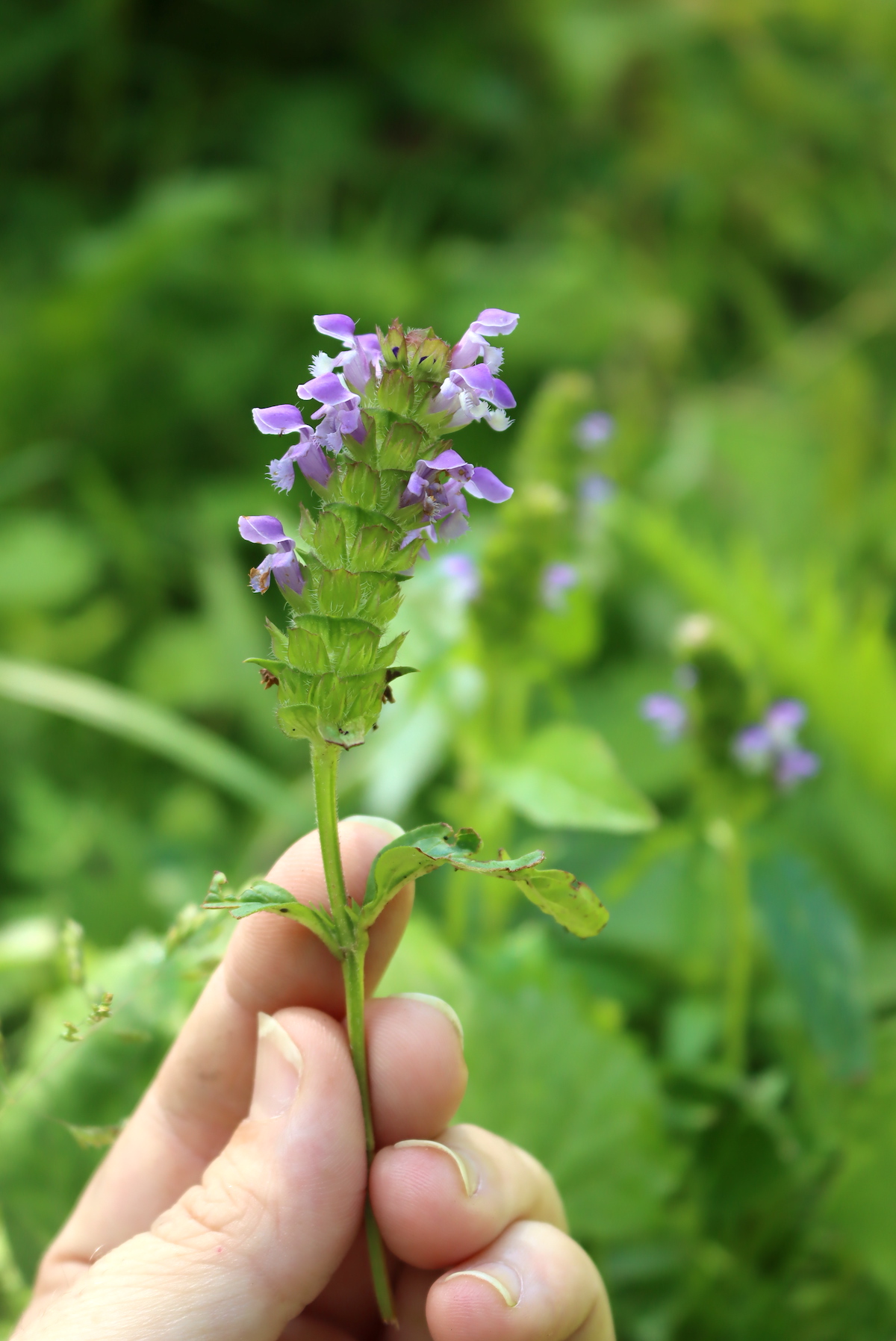
The flowers are tubular and have two lips. The top lip is usually purple, and the bottom lip is often white or purple, but the flowers may also be bluish or pinkish. The bottom lip is deeply two-lobed and fringed.
The flowers have four stamens, and there are hairy bracts (specialized leaves) beneath the flowers.
Self Heal Leaves
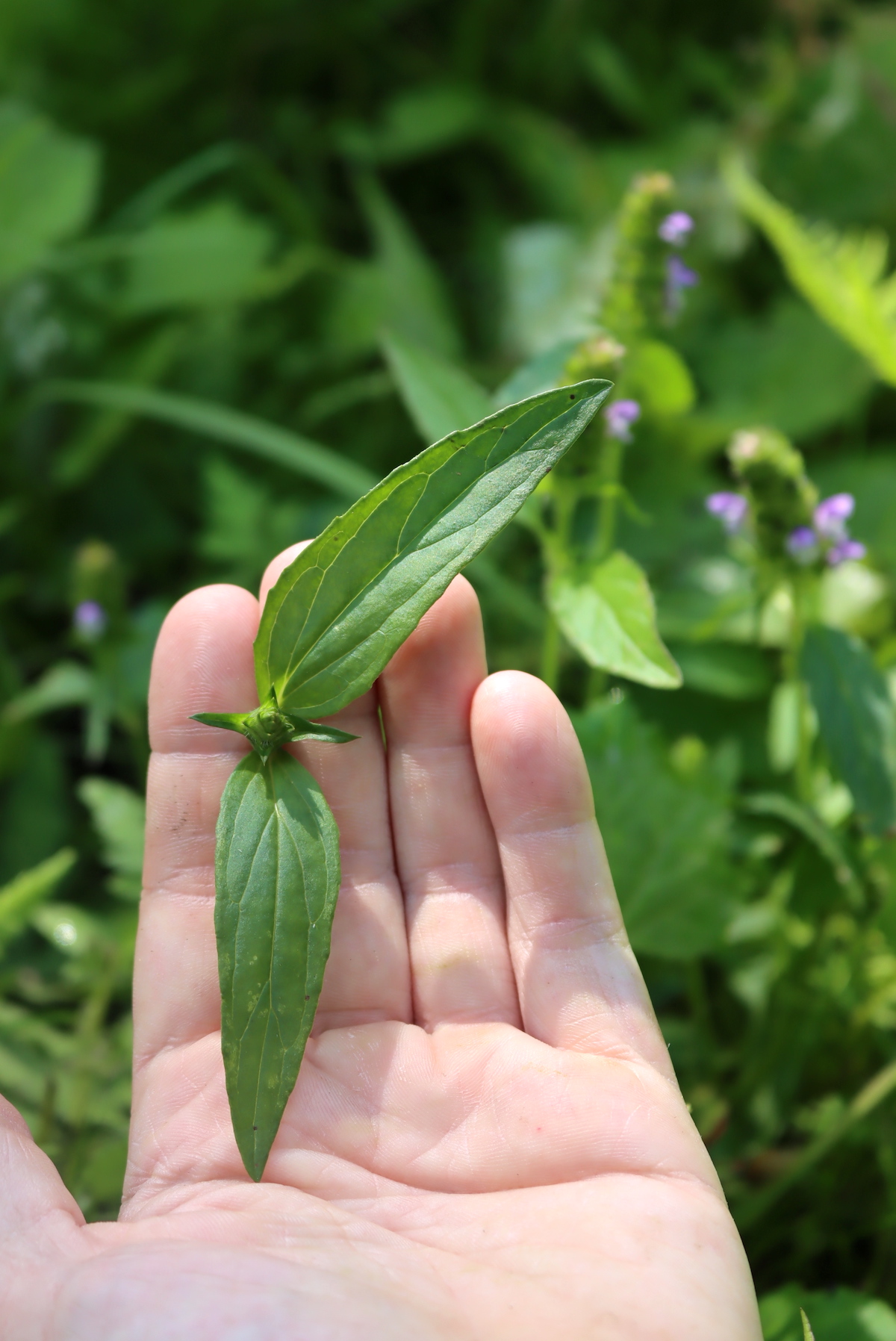
Self Heal has ovate to lance-shaped leaves that are typically about one inch long and a little more than half an inch wide. The leaves are arranged oppositely on the stem and may have smooth or obscurely toothed edges.
The leaves are typically green but may be gray-green or reddish at the tip.
Self Heal Stems
Like other members of the mint or Lamiaceae family, Self Heal has square stems.
The stems are typically between 2 and 12 inches tall. The stems are generally tough and reddish in color.
Self Heal Seeds
Though not as noticeable as the blooms, Self Heal produces smooth, shiny brown nutlets. These seeds typically ripen between August and September.
Self Heal Look-Alikes
A few other plants look similar to self-heal and sometimes get confused with it, particularly in the early spring before the distinctive flower spikes appear. Thankfully, all three of the most common look-alikes (henbit, purple dead nettle, and ground ivy) are themselves edible and non-toxic, so a misidentification here doesn’t carry the safety stakes that come with some other foraging plants.
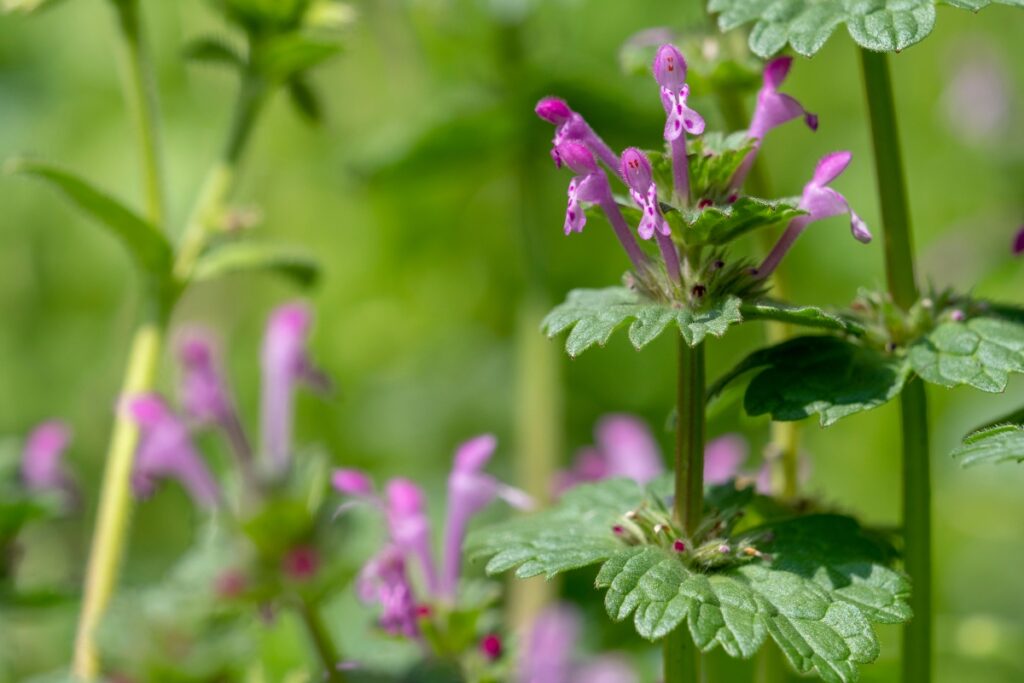
Henbit
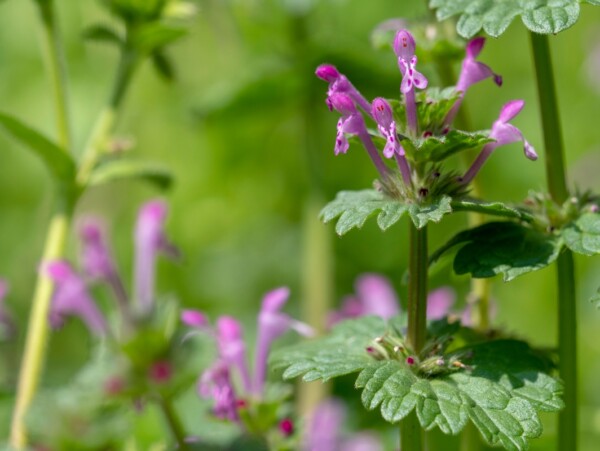
Henbit (Lamium amplexicaule) can be distinguished from Self Heal in a few ways:
- Henbit’s leaves are more roundish, and the margins are deeply scalloped.
- Henbit’s lower leaves have petioles or stalks, while Self Heal’s are attached directly to the stem.
- Henbit flowers are narrower and don’t have fringed lower lips.
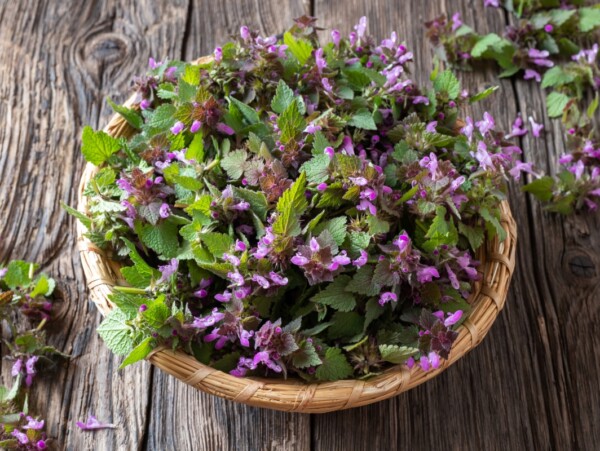
Purple Dead Nettle
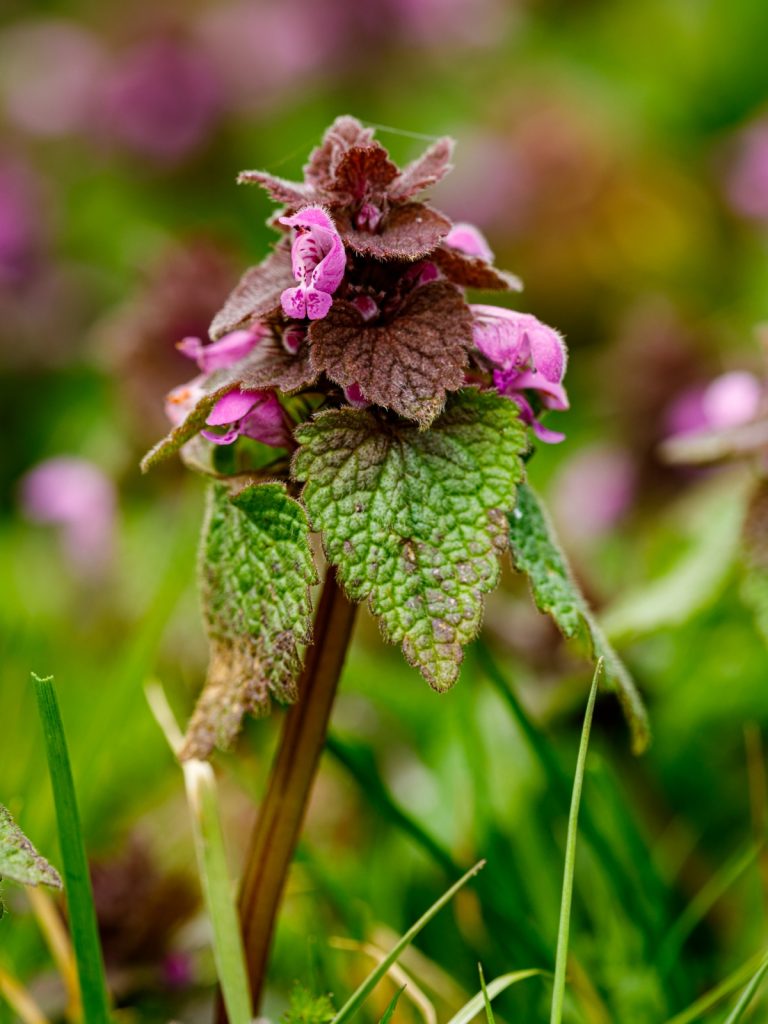
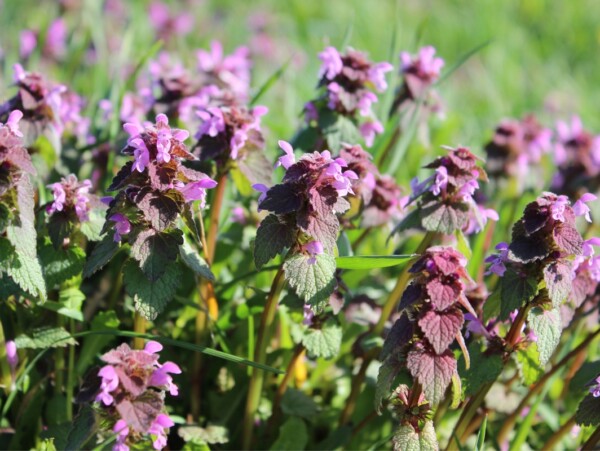
Purple Dead Nettle (Lamium purpureum) differs from Self Heal in a few key ways:
- Purple Dead Nettle leaves transition from green to purple-red or pinkish near the top of the stem.
- Purple Dead Nettle has fuzzy leaves, while Self Heal’s are smooth or sparsely haired.
- Purple Dead Nettle has heart or arrow-shaped leaves rather than ovate or lance-shaped leaves.
Ground Ivy
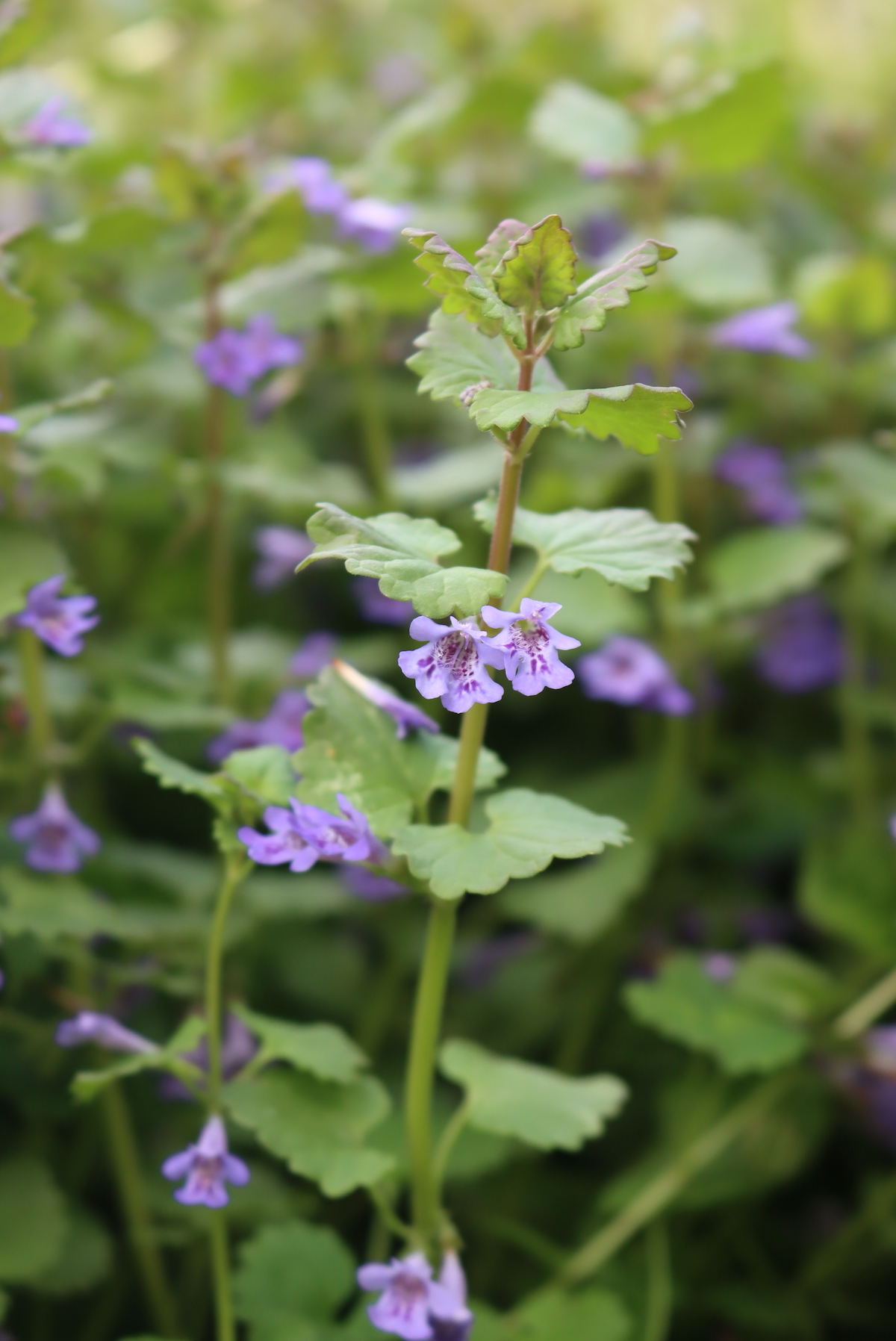
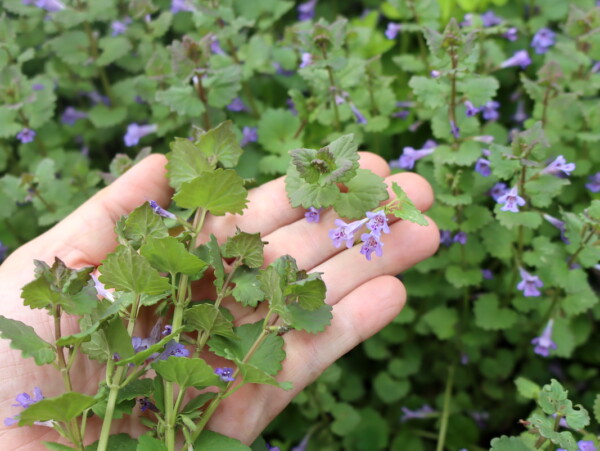
Lastly, Ground Ivy (Glechoma hederacea) may be mistaken for Self Heal. Ground Ivy can be distinguished from Self Heal in the following ways:
- Ground Ivy leaves are attached to the stem by petioles from their center, while Self Heal’s are attached directly.
- Ground Ivy’s leaves are kidney or fan-shaped with round toothed edges rather than lance-shaped or ovate.
- Ground Ivy reproduces with stolons, stems that run along the ground and root at nodes.
Ways to Use Self Heal
You may have overlooked this plant in the past, but there are many ways to put it to use in your kitchen and medicine cabinet.
Self Heal can be eaten raw or cooked and is a delicious addition to many recipes. It has a slightly bitter taste when raw, so it’s best to use it sparingly. Add Self Heal to salads, smoothies, soups, stews, casseroles, or wherever else you can think of. It’s also excellent fresh or dried in teas and infusions.
You can use Self Heal in various herbal preparations for internal use. Try using Self Heal to create herbal oxymel, herbal-infused vinegar, herbal-infused honey, and simple herbal teas.
You can also use Self Heal in salves, ointments, massage oils, and poultices for external use. The plant’s traditional reputation as a wound herb makes it a natural addition to any first-aid salve, where it pairs well with plantain and yarrow.
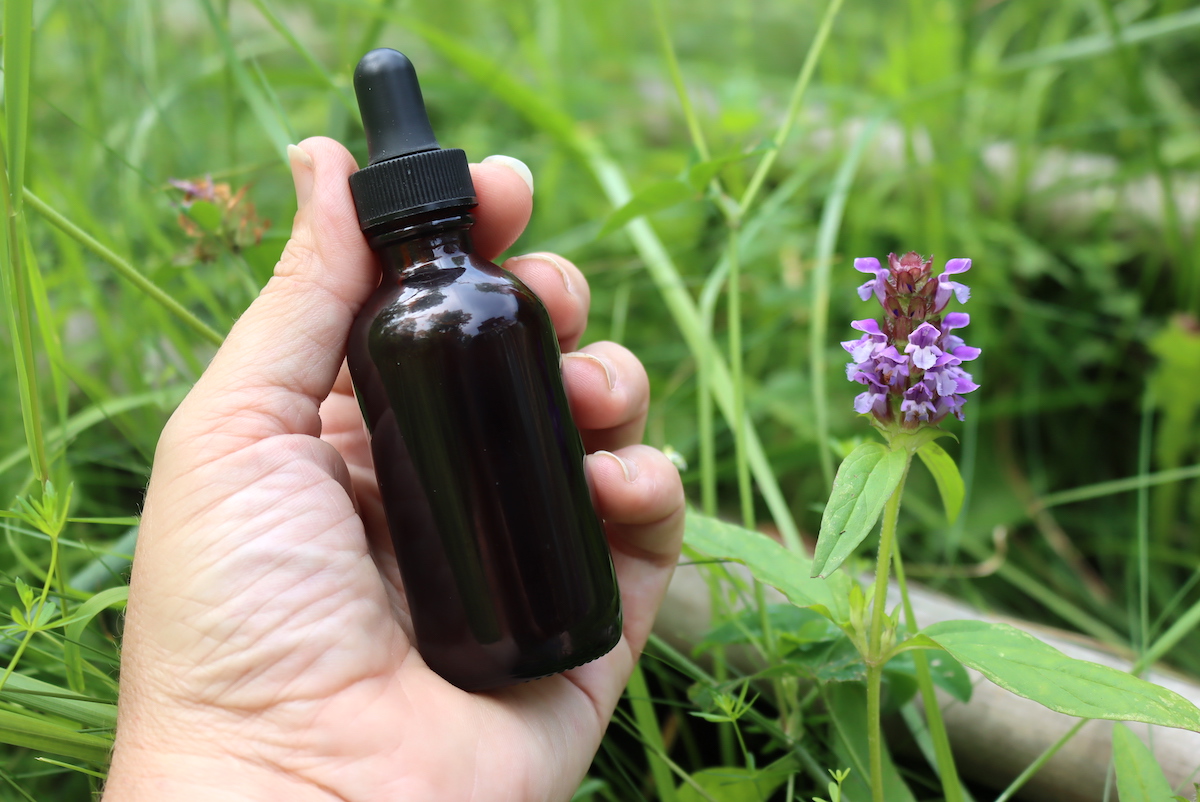
Personally, I make a self-heal tincture every summer and use it as a general spring tonic, alongside dandelion tincture, chickweed tincture, and burdock tincture.
Self Heal Recipes
- Make a Self Heal Tincture for use as a spring tonic and immune support remedy.
- Make a Self Heal Oxymel for Immune Support with this recipe from Grow Forage Cook Ferment.
- Create a Self Heal Serum with Learning Herbs to help protect your skin.
- The Herbal Academy has instructions for making a Self Heal poultice for treating minor wounds.
More Foraging Guides
Self Heal FAQs
Yes, self heal is edible. The leaves, flowers, and stems can all be eaten, though the stems may be tough and the leaves are slightly bitter when raw. Self heal is most often used in teas, tinctures, and other herbal preparations rather than as a primary food, but the leaves and flowers can be added to salads, soups, and smoothies in moderation.
The best time to harvest self heal for medicinal use is when the plants are in full flower, typically between June and August. The flowering tops carry the highest concentration of the plant’s active compounds. Snip the top several inches of each plant including the flower spike, the small upper leaves, and a couple inches of stem. A healthy patch can usually be harvested two or three times in a season as long as you don’t take more than about a third of any one plant in a single pass.
Self heal and purple dead nettle are both square-stemmed members of the mint family that show up in lawns, but they differ in several ways. Purple dead nettle has fuzzy heart-shaped leaves that turn purplish near the top of the stem and bloom early in spring. Self heal has smooth ovate to lance-shaped leaves and blooms in dense purple flower spikes from late spring through fall. The flower shape is the easiest tell: purple dead nettle has small tubular flowers in the leaf axils, while self heal has a distinctive club-shaped spike of fringed purple flowers at the top of the stem.
Self heal has a mild, slightly bitter, faintly minty flavor. The leaves are tender and palatable raw in small quantities, especially before flowering, and they mellow when cooked. Most people find self heal more useful as a tea or tincture base than as a primary salad green. Dried self heal makes a pleasant, mild herbal tea that pairs well with other lawn-foraged herbs like chickweed and plantain.
Yes. Self heal makes an excellent low-growing ground cover for lawns, garden borders, and bee-friendly plantings. It tolerates mowing, spreads steadily by both seed and creeping stems, and produces purple flower spikes that bumblebees and pollinators love. It does best in moist soil with full sun to partial shade, and it can become weedy in formal garden beds, so most people grow it in a wildflower lawn, a meadow planting, or as a ground cover under fruit trees and berry bushes.
Did you find this Self Heal foraging guide helpful? Tell me in the 📝 comments below how you use self-heal on your homestead!
And make sure you stay in touch with me by following on social media!
Herbal Remedies
Find the perfect foraging guide
Searching for something else? Enter keywords to find the perfect foraging guide!









Thank you
You’re so welcome, Julie! Thanks for stopping by.
Self heal is a herb but it is not necessarily a “weed”. I would like to raise a friendly objection to your over-use of the term. The Concise Oxford Dictionary entry for “weed” is “1. a wild plant growing where it is not wanted.” Please, can you show a bit more respect towards out wildlife in future.
Hello, Can you make it possible to print the uses for different herbs or weeds. I want to make a reference book. Don’t have time to read articles when a need arises.
Thank you
Most herbalists compile what is called a materia medica. This is a book that you put together that has the exact information that you are talking about. With herbs you always want to be sure to use multiple sources of information to be sure that the information lines up and is confirmed by other resources. There are also courses and books out there that have this information compiled for you if you want to invest in something like that but we don’t have anything available like that at this time.
I have seen several articles regarding henbit dead nettle having similar fever reducing abilities but none on which form to use for that? Would you suggest a tincture for that? I have to self heal but tons of henbit in my area.
If you’re wanting to use henbit specifically as a fever reducer, I would personally go with a tea. The tea will help with hydration which of course is super important during a fever or any kind of illness.