Affiliate disclosure: This post may contain affiliate links. Please see our Privacy Policy.
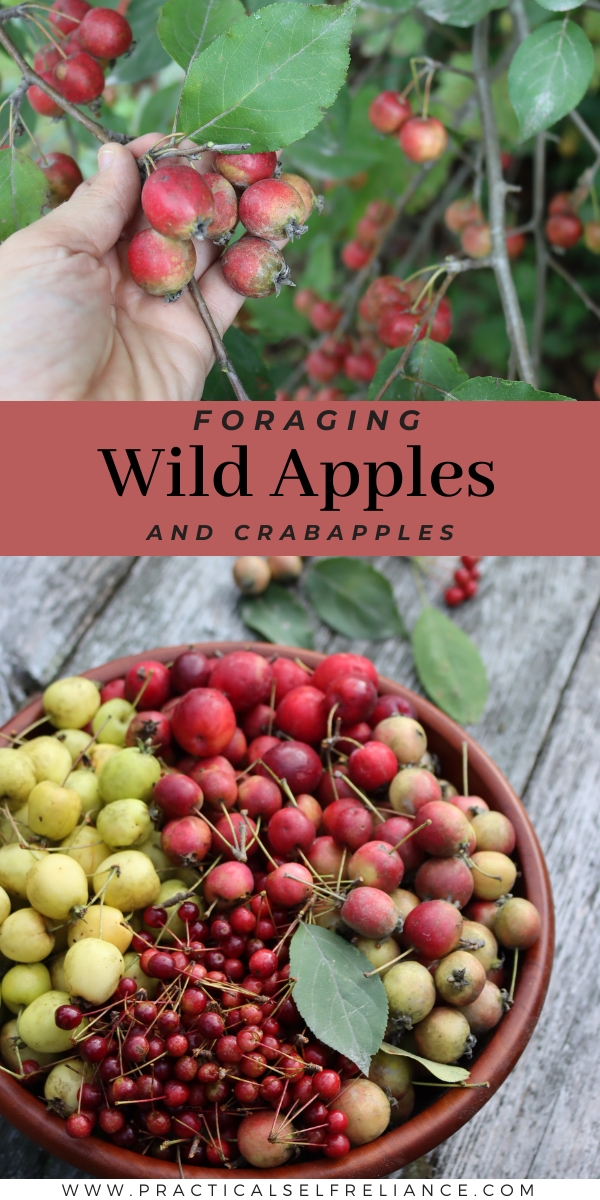
Wild Apples and Crabapples (Malus sp.) are among the most common and easiest-to-identify wild edible fruits in North America. The trees grow along roadsides, in old hedgerows, around abandoned homesteads, and at the edges of fields and forests, producing small tart-sweet fruit that ranges from the size of a pea to a small apple. The fruit is edible, abundant, and well worth foraging for jelly, sauce, hard cider, and dozens of other preparations. Learn how to identify wild apples, distinguish them from look-alikes (including the highly toxic manchineel in southern regions), and put up a wild apple harvest before the deer and turkeys beat you to it.
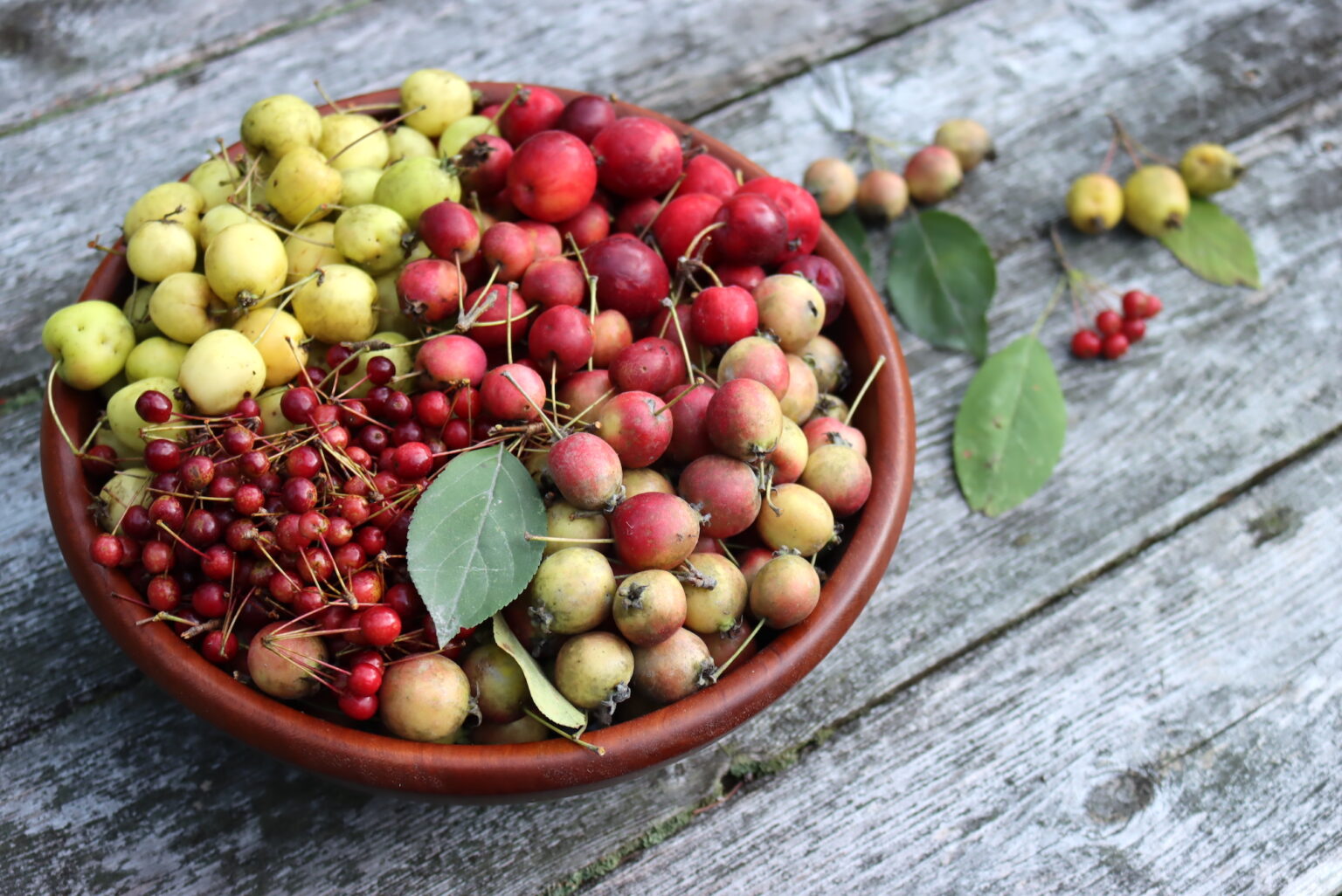
Table of Contents
Here in Vermont, it’s hard to walk more than a short distance down any back country road without encountering at least a few wild apples. They grow everywhere, spread by birds, squirrels, raccoons, deer, and people alike. Just about everyone loves a good apple, and while some might be a bit tannic, wildlife tend to select for the sweet juicy ones just like people do.
The best ones get spread the farthest, and more often than not, wild apples and crabapples are well worth the effort. (And even the tannic ones are still great for making hard cider!)
Notes from My Homestead

Vermont has more wild apples per square mile than just about anywhere I’ve lived. Our state has a deep apple history that stretches back to colonial times, and the legacy is still here in the form of feral apple trees lining old fence rows, marking abandoned homestead sites, and scattered through the woods wherever a deer or a horse once dropped a seed. I’ve found wild apple trees deep in the woods miles from any road, planted by birds or squirrels generations ago, still producing fruit decades after the orchards they descended from went back to forest. Each one is genetically unique (apples don’t come true from seed), so each tree has its own flavor: some tannic, some sweet, some weird and worth experimenting with for cider.
Most of our wild apple harvest goes into hard cider and crabapple jelly here on our homestead. Wild apples are some of the best cider apples you can find precisely because they’re a chaotic mix of sweet, tart, and tannic flavors that domestic apples have been bred away from. The tannic ones add structure to the cider that makes a real difference in the final product. We also turn a few buckets of crabapples into apple butter and applesauce each fall, mixing them with sweeter domestic apples for balance. The leftover scraps from cider-making become apple scrap vinegar, which carries through the year for kitchen use and herbal preparations.
What Are Wild Apples?
Wild apples, crabapples, and even domestic apples are all in the Malus genus, a group of about 32 species of deciduous, perennial trees and shrubs in the Rosaceae or Rose family. Generally, when we think about apples, we think about the domesticated apple (Malus domestica), whose wild ancestor Malus sieversii is native to central Asia.
Most “wild apples” you’ll find in North America aren’t actually a separate native species; they’re feral descendants of cultivated apples that have escaped from old orchards or sprouted from cores tossed by hikers, birds, and wildlife. Because apples don’t come true from seed (every apple seed produces a tree genetically unique from its parent), every wild apple tree is essentially a one-of-a-kind variety. Most are small, tart, and tannic, which is exactly why they make such interesting cider apples.
However, several Malus species ARE native to North America, including:
- Sweet Crabapple (Malus coronaria) is native to the eastern United States, with pink-rose flowers and sour green fruit.
- Pacific Crabapple (Malus fusca) is native to the Pacific Northwest from Alaska to northern California, with smaller orange-to-purple-red fruit.
- Southern Crabapple (Malus angustifolia) is native to the southeastern United States, with elongated leaves and pink flowers.
- Prairie Crabapple (Malus ioensis) is native to the central United States, particularly the Midwest, with hairy young leaves and stems.
So yes, crabapples are native to North America. They’ve grown alongside Indigenous peoples for thousands of years and were used as food, medicine, and dyes long before European settlers arrived with their domesticated apple varieties.
Are Wild Apples Edible?
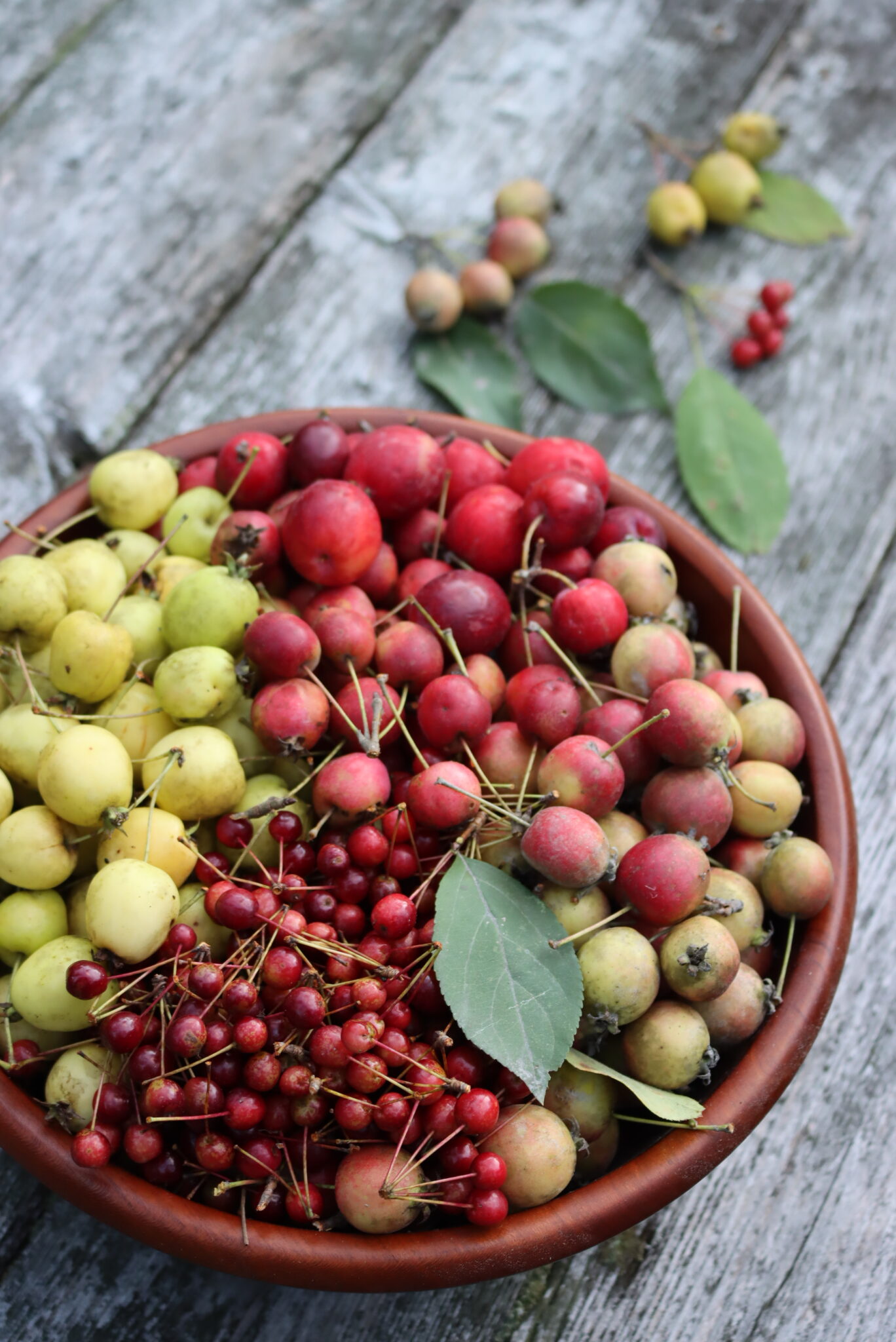
Yes, wild apples and crabapples are edible. All true Malus species produce edible fruit, though the flavor and palatability vary widely. Many wild apples have a more tart, tannic, or astringent flavor than domesticated apples, so they’re often best for cooking, cider-making, and preserving rather than fresh eating. A few wild apple trees produce fruit that’s genuinely sweet and pleasant raw; most are better cooked.
The thing about wild apples is that taste varies dramatically tree-to-tree. Some are intensely sour, some are puckeringly tannic, some are remarkably sweet for a wild fruit, and a lucky few combine all three flavors in proportions that make them excellent cider apples. The only way to know what you’ve got is to taste a small piece of fruit from each tree before harvesting.
Like all members of the rose family (apples, peaches, cherries, plums, almonds), wild apple seeds contain trace amounts of cyanogenic compounds (specifically amygdalin, which converts to hydrogen cyanide when chewed). The amounts are very small, and a few accidentally swallowed seeds will pass through whole without any harm. The traditional advice — don’t deliberately eat large quantities of apple seeds — applies equally to wild apples and crabapples, but you’d need to eat dozens of crushed seeds to get a meaningful dose. Modern processing methods (juicing, cooking, jelly-making, cider-making) all neutralize the trace amygdalin, which is why nobody worries about cider safety even when the apples include their cores.
Herbalists also use wild apples and their bark, leaves, and blossoms in internal and external preparations. However, the leaves and bark of apples are very astringent and may cause an upset stomach in large quantities; these are not casual herbal teas to be sipped freely.
Livestock such as rabbits, cattle, goats, and chickens also enjoy wild apples and will feed on the fruit. Deer love wild apples and will travel surprising distances to find a productive tree, which is part of why hunters often plant crabapples specifically to attract deer to a property. White-tailed deer can strip a tree clean of low-hanging fruit in a single overnight visit, so if you find a productive tree, plan your harvest sooner rather than later.
Wild Apples Medicinal Benefits
The saying “An apple a day keeps the doctor away” has a long history and probably originated as “To eat an apple going to bed will make the doctor beg his bread,” which was first recorded in Wales in 1866. Herbalists of the period believed that eating an apple in the evening, particularly sour wild apples, helped to prevent and relieve constipation, stimulate appetite, and reduce bloating.
These tart wild apples may also help improve digestion, which is why people of the past often used wild apples in sauces or raw to pair with rich foods like goose, pork, or slices of cheese. Additionally, crisp, tart apples were believed to help clean the teeth after mealtime.
Historically, herbalists made bark infusions to treat fevers and aid the kidneys, liver, and spleen. They also used apples externally in ointments and washes to treat skin infections and eye issues. One of the wild apple’s more famous historical mentions is in the Nigon Wyrta Galdor, or “The Nine Herbs Charm,” an old English healing spell intended to treat a wound.
Modern research has supported the use of wild apples in skin treatments. A 2022 study in the Journal of Cosmetic Dermatology found that wild apple fruit extract was a good source of bioactive substances for skin care and had good hydration effects on human skin.
Other research has examined the internal benefits of wild apples. A study from Food Bioscience in 2020 found that wild apples are a good natural source of vitamin C and antioxidants for use in medicine and food additives.
A study from the Journal of Medicinal Herbs and Ethnomedicine completed in 2017 also found that wild apple juice is highly nutritional. The study found that the juice has broad-spectrum antibacterial activity, including activity against drug-resistant pathogens such as Methicillin-Resistant Staphylococcus aureus (MRSA), Vancomycin-Resistant Enterococci (VRE), and Extended-Spectrum Beta-Lactamases-producing Gram-negative bacteria.
Further, the regular consumption of whole apples of any kind has been linked with a reduced risk for type II diabetes. This may be because apples are rich in fiber, antioxidants, and phytochemicals, which have beneficial health effects.
Where to Find Wild Apples
Wild apples grow throughout the world’s northern temperate regions in Europe, North America, and Asia. Wild apples include a diverse range of species that have adapted to varying habitats. The two apples native to the eastern United States, Sweet Crabapple (Malus coronaria) and the Southern Crabapple (Malus angustifolia), often grow in open woodlands, along forest edges, and near river and stream banks. They thrive in rich, moist soil and do well in partial shade or full sun.
The Pacific Crabapple (Malus fusca), native to the western United States, often grows in coniferous forests but can also be found in maritime areas. It can grow in regions with high rainfall and tolerates heavy clay and wet soil, including around saltwater estuaries. The Prairie Crabapple (Malus ioensis) was once common throughout the midwestern prairies and savannahs of the United States. It thrives in full sun to partial shade and prefers moist, well-drained soil but will tolerate dry sites.
Beyond the native species, feral apples have naturalized just about everywhere apples have been planted in temperate North America. The most productive places to look:
- Old fence rows and the edges of long-abandoned pastures, where birds spread seeds along their flight lines
- The ruins of old homesteads, cellar holes, and abandoned farmsteads, where the original orchard trees may have been planted decades or centuries ago
- Roadsides and highway medians, where apple cores get tossed and germinate
- Old logging roads and the edges of working forests, often around old camp sites
- Ornamental plantings in cities, parks, and around public buildings (these are often crabapple cultivars rather than feral apples)
- Rural cemeteries, where ornamental crabapples have often been planted as memorial trees

When to Find Wild Apples
Once you’re familiar with the trees, you can spot wild apples year-round and revisit them as the fruit is ripening. Wild apples ripen in the autumn, but the exact time varies with your location and the species:
- Pacific Crabapples (Malus fusca) and Southern Crabapples (Malus angustifolia) often begin ripening in late August or September.
- Sweet Crabapples (Malus coronaria) and Prairie Crabapples (Malus ioensis) usually ripen in September or October.
- Feral domestic apples follow the same timing as their parent varieties, mostly ripening from August through October.
Some foragers like to wait until the first fall frost has softened and sweetened their wild apples. However, you risk losing them to the birds (and the deer) if you wait too long. Wild apples can persist into winter in a good year, especially crabapples, which dry on the tree rather than rotting. These winter-persisting apples are sometimes called ghost apples, and they’re a wonderful winter foraging find. They’re often dry and shrunken but still sweet, and the cold concentrates the sugars. Wild turkeys regularly descend on our crabapple trees in March to clean up whatever’s hung on through winter.
Especially in dry areas, good rainy summers often lead to more and sweeter tasting fruit. Apple trees follow a strong “mast year” cycle: heavy fruiting years are typically followed by lighter years as the tree recovers, so a tree that gave you a bumper crop one fall may give you only a handful the next. Plan your harvest around the trees that are loaded that year, and rotate your scouting list as the cycles shift.
How to Identify Wild Apples
Though there are many wild apple species, they all tend to exhibit a few similar characteristics that can help you identify them. Wild apples are smaller trees or shrubs with dense, twiggy crowns. Their conspicuous, fragrant blooms in spring and small pomes (fruits) in the fall often help set them apart.
Wild Apple Leaves
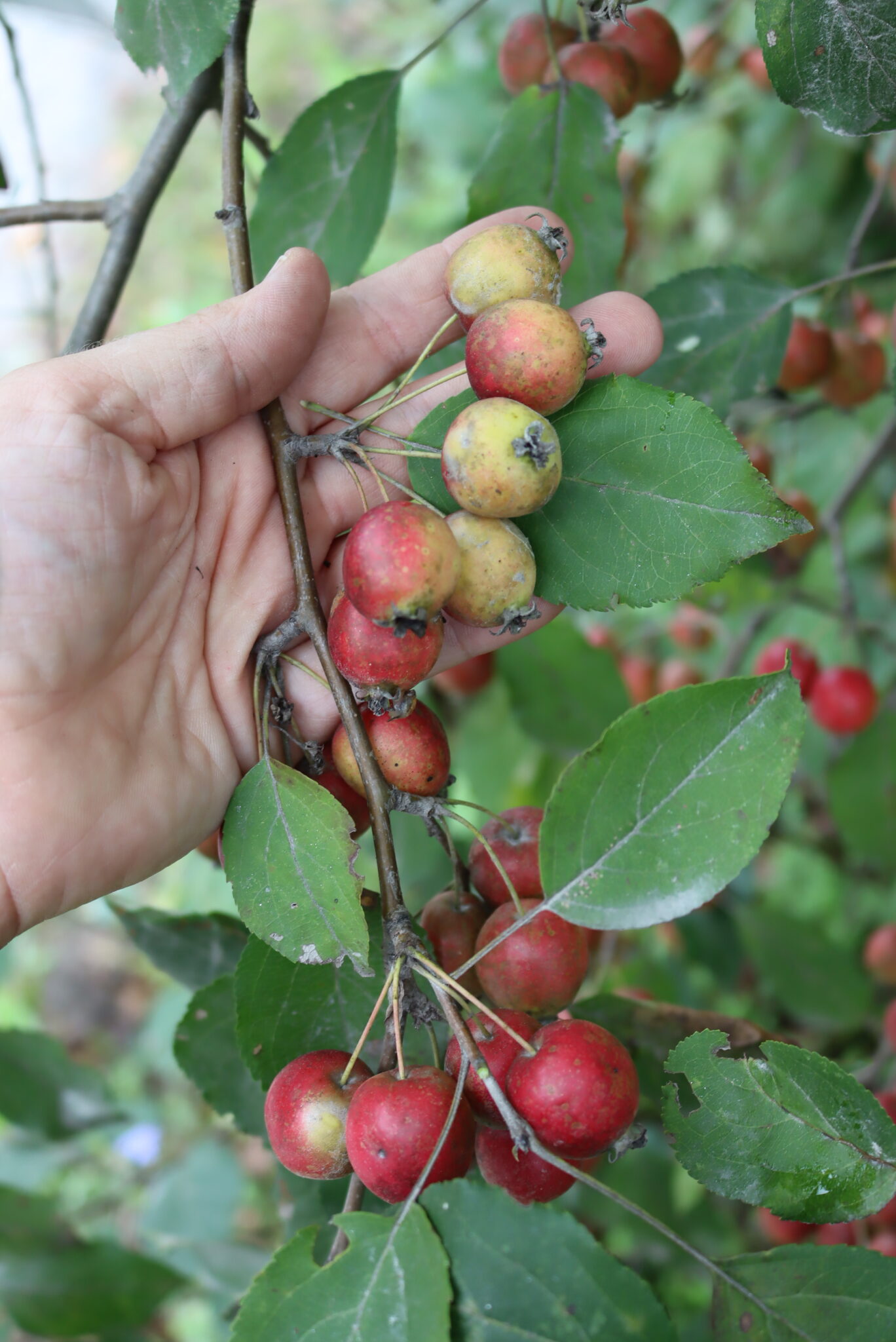
Though they vary some with species, wild apple leaves are usually simple, alternate, and 1¼ to 4 inches long with serrated margins. They are typically dark green above and pale beneath. The leaves of the Pacific Crabapple (Malus fusca) are irregularly lobed with pointed ends. In contrast, Prairie Crabapple (Malus ioensis) leaves are egg-shaped with rounded tips, and some of its larger leaves usually feature shallow lobes.
Sweet Crabapple (Malus coronaria) leaves tend to be more oval with pointed tips. In contrast, Southern Crabapple (Malus angustifolia) leaves are elliptic to oblong with wavy-toothed margins and blunt tips. Wild apple leaves tend to be showy in autumn, ranging from shades of yellow to orange or red, depending on the species.

Wild Apple Stems and Bark
Wild Apples tend to grow between 13 and 45 feet tall. The bark on the trunk is usually reddish-brown, brown, or gray, with longitudinal fissures that separate it into narrow, scaly ridges. This outer bark may peel away on some species, like the Prairie Crabapple (Malus ioensis), to reveal reddish inner bark.
Wild apples tend to have twiggy crowns, similar to domestic apples. Typically, the young stems of wild apples are coated in thick, white woolly hairs. However, they lose the hair as they develop and become smooth reddish-brown. Many wild apples, like the Sweet Crabapple (Malus coronaria), have small points or thorns on at least a few branches. These aren’t true thorns; they’re modified spur shoots that have stopped growing and become woody and pointed. They’re a good identification feature for distinguishing wild apples from many other fruit trees.
Wild Apple Flowers
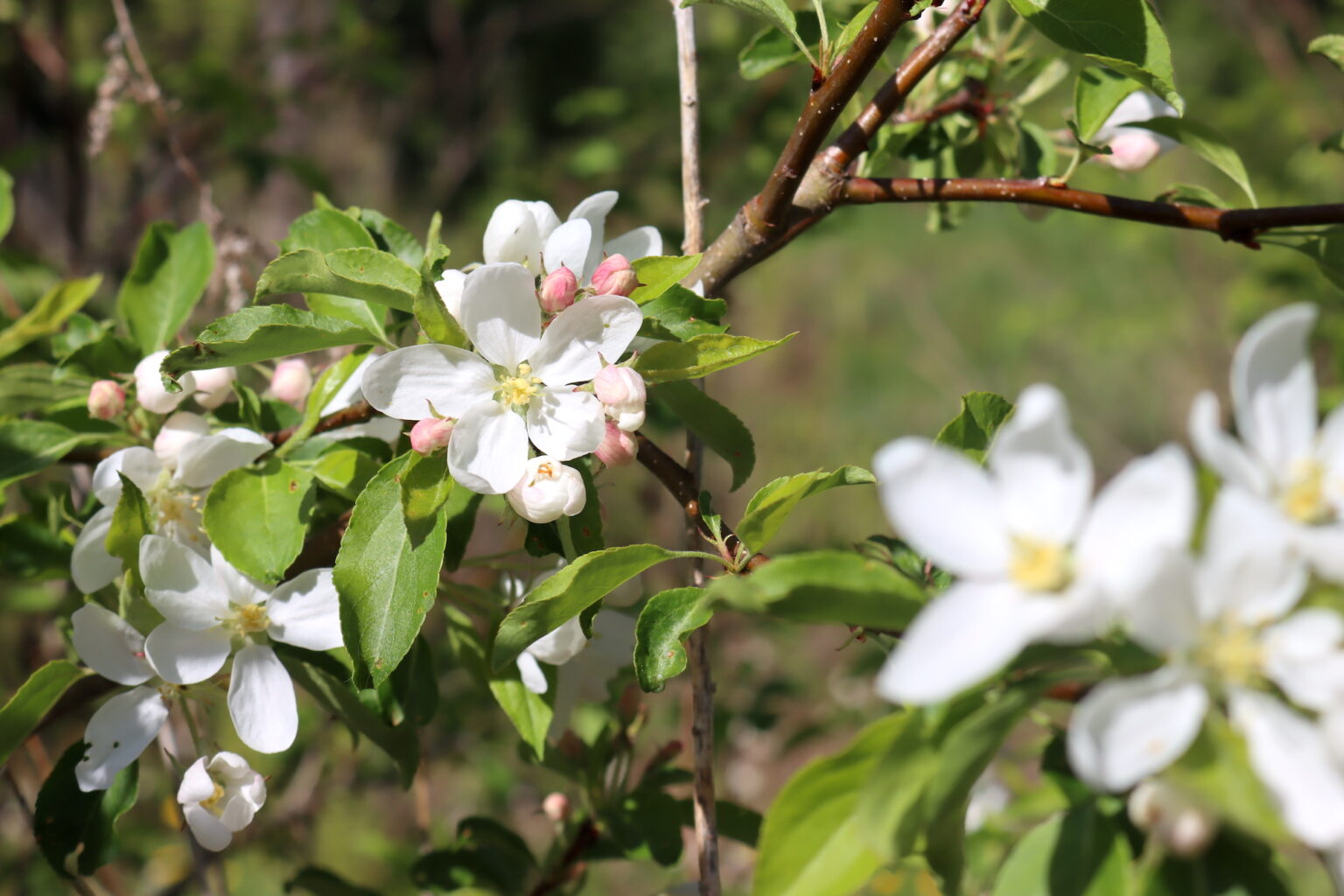
Wild apples flower in early spring, producing conspicuous, fragrant blooms in corymbs (clusters) on young shoots. They flower after leafing out. The flowers have five petals and may be white, pink, or red with yellow, pink, or red stamens. On most species, the flowers are about 1 to 2 inches across.
Pacific Crabapple (Malus fusca) flowers range from white to pink, while Prairie Crabapple (Malus ioensis) flowers start as deep pink buds and open to white flowers. Sweet Crabapples (Malus coronaria) usually have pink or rose-colored flowers, and Southern Crabapples (Malus angustifolia) have similar pink blooms. The fragrance is one of the most distinctive features of wild apple species; a stand in full bloom perfumes the surrounding air for a remarkable distance, and it’s often the easiest way to locate wild apple trees in May.
Wild Apple Fruit
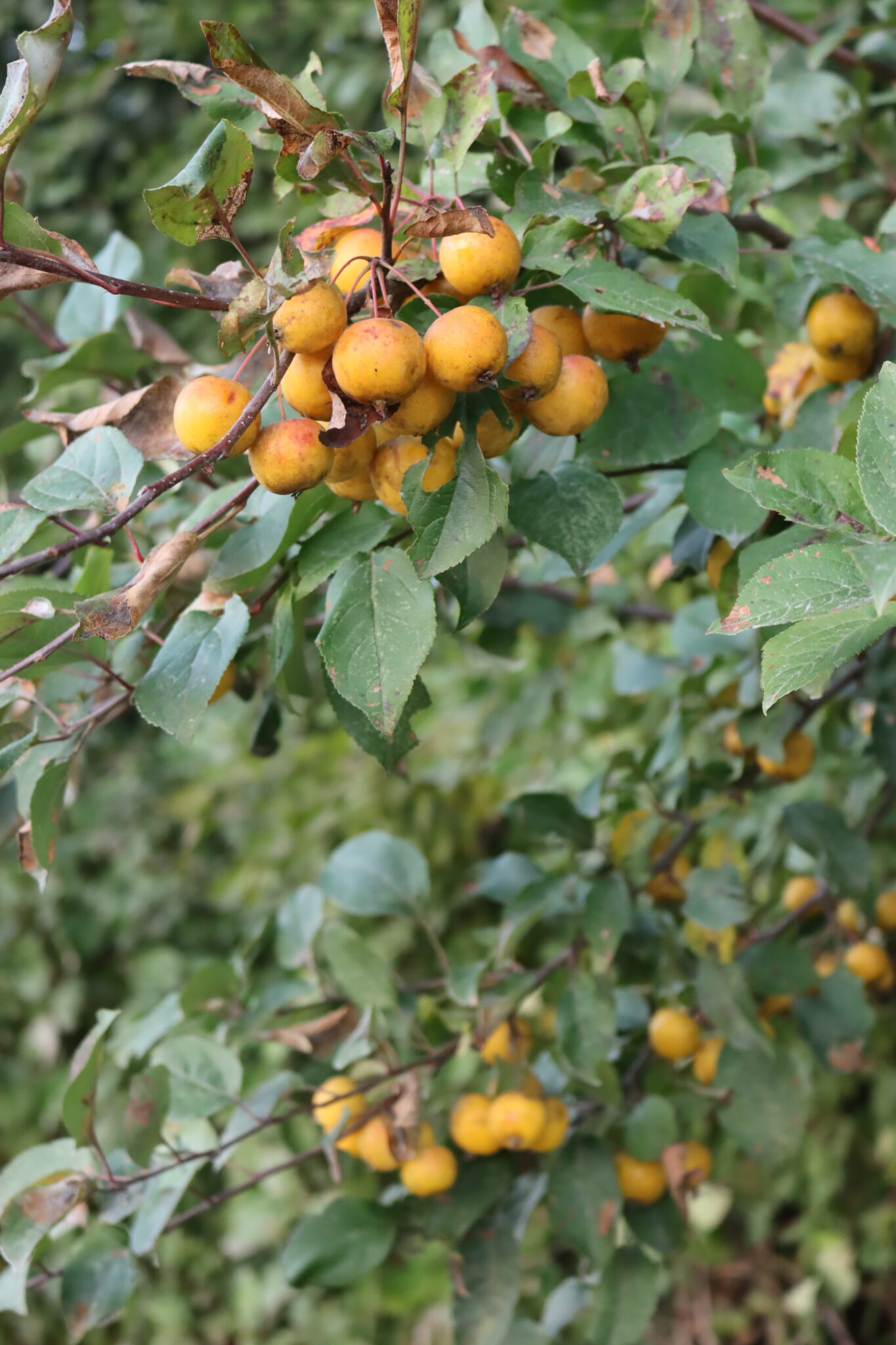
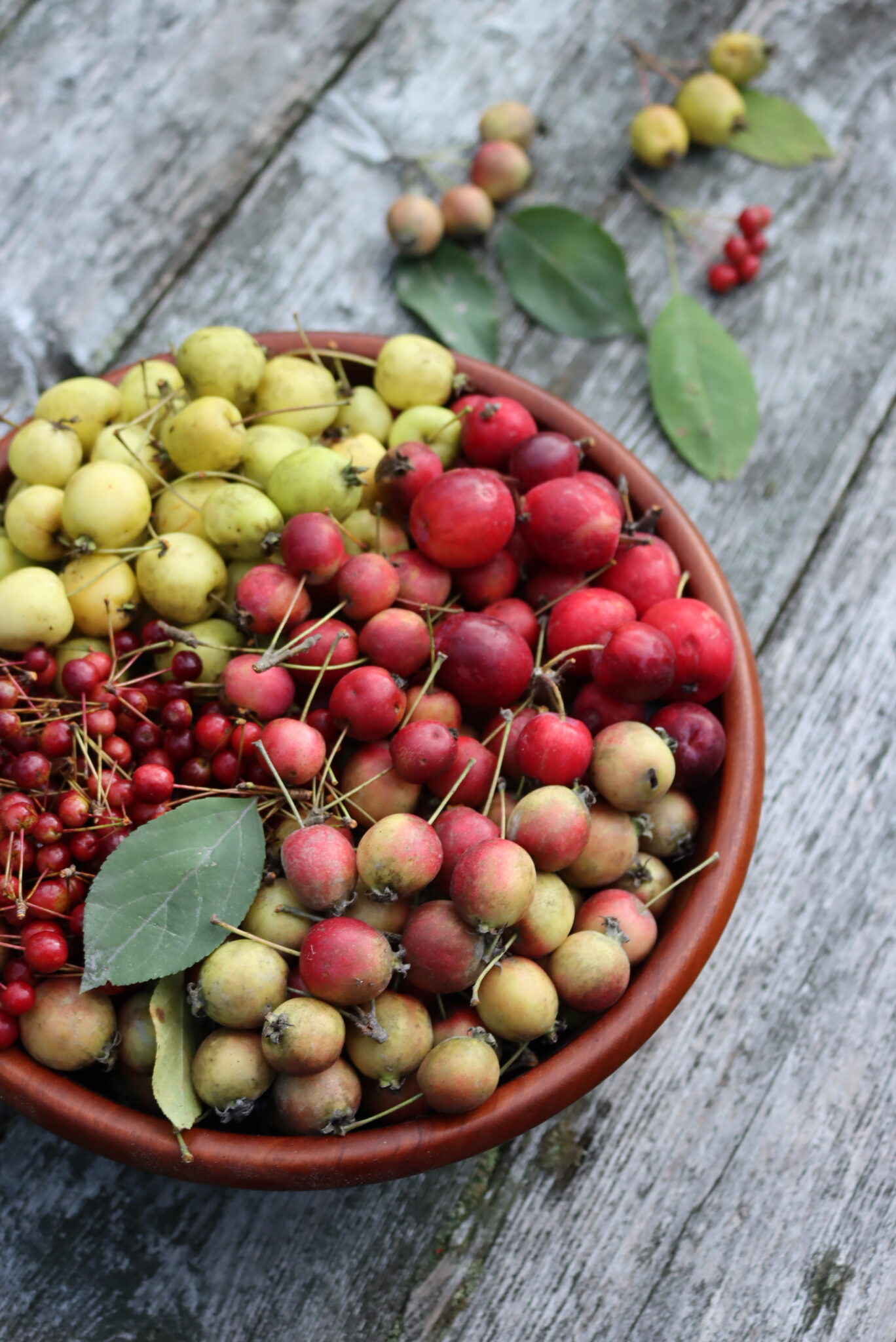
Wild apples fruit in late summer and ripen in early fall. They have smaller fruit than most domesticated varieties, tending to be about 1 to 1½ inches in diameter. Most wild apples are green to yellowish-green or yellow. However, some species, like the Pacific Crabapple (Malus fusca), may have more colorful fruit, ranging from yellow to orange to purplish red. Even within the same species, their shape varies somewhat. Wild apples may be oval, round, or even closer to pear-shaped.
Wild apples are pomes like domesticated apples, meaning they contain a central core in which a tough membrane surrounds several small seeds. Surrounding this core is edible flesh. The fruit usually has a five-pointed star pattern visible in cross-section (the same pattern visible when you cut a domestic apple horizontally), which is a useful identification feature.
Crabapple cultivars (the ones planted as ornamentals) can produce fruit ranging from the size of a pea up to about 2 inches in diameter, with colors from yellow through orange to deep red. The most common ornamental crabapples were bred for showy spring flowers and persistent fall fruit, sometimes at the expense of palatability. The fruit on these ornamental cultivars is still edible, but some varieties are too sour or astringent to eat raw and are best in cooked preparations.
Wild Apple Look-Alikes
Wild apples are reasonably easy to identify once you know the leaves, bark, flowers, and fruit. Most look-alikes are themselves edible (and often related), but one important exception (the manchineel tree) is highly toxic and worth knowing well if you forage in the deep south.
Wild Apple vs. Domestic Apple
The most common confusion isn’t between wild apples and another plant; it’s between wild apples and domestic apples (Malus domestica). Both are fully edible, but they have noticeably different characteristics:
- Wild apples and crabapples are typically smaller (¼ inch to 2 inches across); domestic apples are usually 2½ to 4 inches across.
- Wild apples are typically more tart, tannic, or astringent than domestic apples (which have been bred for sweetness).
- Wild apple trees have a more irregular, twiggy growth habit; domestic apples are usually pruned and shaped.
- Wild apple trees may have small thorny points on some branches; domestic apples don’t.
- Both are edible and use the same way; if you find an apple tree that looks “wild but big-fruited,” it’s likely a feral domestic apple that escaped from cultivation.
Manchineel Tree (Highly Toxic)
The most dangerous wild apple look-alike is the Manchineel Tree (Hippomane mancinella), also called the manzanilla de la muerte or “little apple of death.” Manchineel is one of the most toxic trees in the world; the sap, leaves, bark, and fruit are all dangerously poisonous, and the fruit can cause severe burning of the mouth and throat with even small amounts. Standing under the tree during rain is enough to cause skin irritation, and burning the wood produces toxic smoke.
Thankfully, manchineel is geographically limited and not commonly encountered. You only need to worry about it in:
- Florida (specifically the southern coast and the Everglades)
- The Bahamas, the Caribbean islands, and coastal Mexico
- Coastal Central and South America
Manchineel grows on beaches, brackish swamps, and among mangroves; it’s not found in the woodland and roadside habitats where wild apples grow. The differences:
- The manchineel has lustrous, leathery, elliptic yellow-green leaves on long stalks; wild apple leaves are dark green and matte.
- Manchineel fruits are sweet-scented, yellow or reddish, and born singly or in pairs. They contain a center stone that encloses 6 to 9 seeds.
- Manchineel grows in tropical coastal habitats; wild apples grow in temperate woodlands and roadsides.
- If you’re foraging anywhere north of central Florida, you simply won’t encounter manchineel.
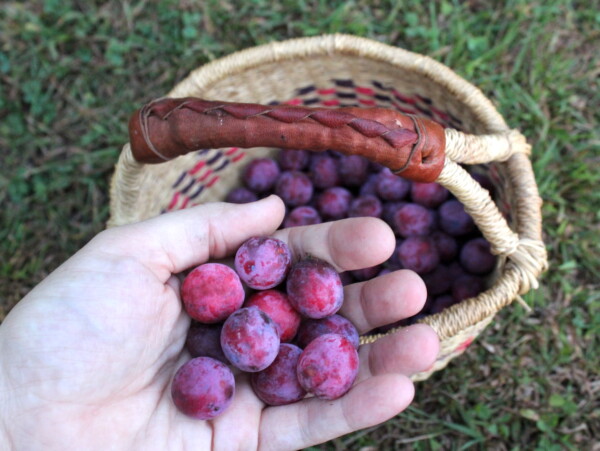
Wild American Plum
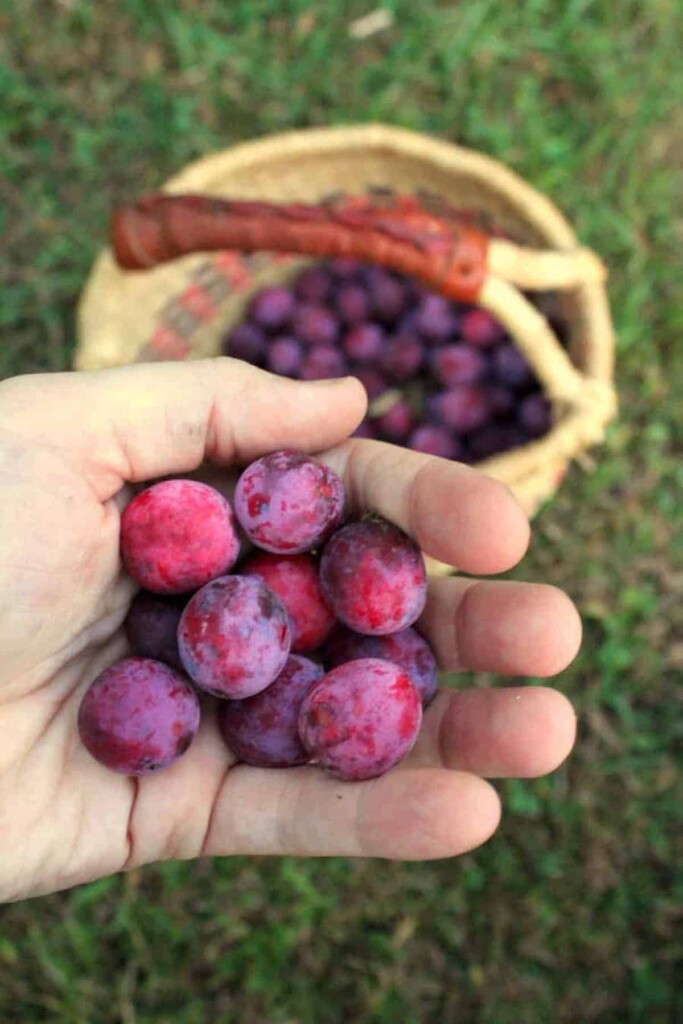
Wild apples are also sometimes confused with the edible Wild American Plum (Prunus americana). Both are fully edible, so confusion is not a safety issue. The differences:
- American plums usually have short, crooked trunks with open, graceful crowns.
- American plum trunks have scaly black bark; wild apple bark is gray or reddish-brown.
- American plums have white five-petaled flowers that grow in clusters of 2 to 5; wild apples have larger pink-to-white flowers.
- American plum fruits ripen to a shiny, bright red or purple, not yellow or green.
- American plums regularly sucker and form colonies; wild apples generally don’t.
- Plum fruit has a single large seed (similar to cultivated plums, peaches, or cherries); apple fruit has a five-chambered core with multiple small seeds.
Wild Hawthorns
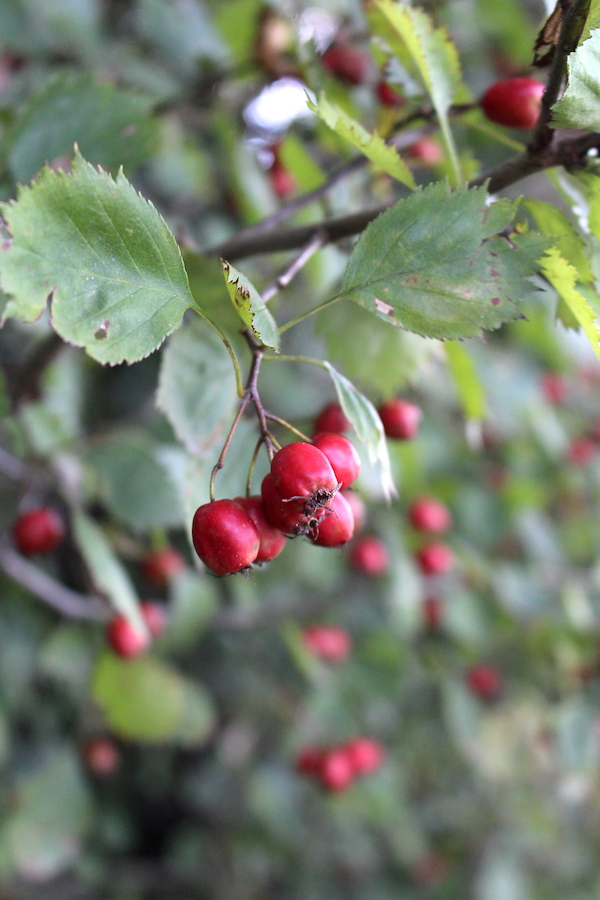
Wild Apples may also be confused with edible wild hawthorns (Crataegus spp.), which are also in the rose family and produce small apple-like fruit. Both are edible and can sometimes be used in similar preparations. The differences:
- Most Hawthorns have pronounced thorns that grow 1 to 3 inches long; wild apples may have small thorny spurs but never the long sharp thorns of hawthorn.
- Hawthorns typically flower before leafing out; wild apples flower after the leaves emerge.
- Hawthorn fruits tend to be smaller than wild apples, and most are less than 1 inch in diameter.
- Hawthorn fruits have up to five woody seeds at the center that stick together in a tight clump, forming a stone-like structure; apple fruits have a soft five-chambered core.
- Hawthorns have a much more pronounced blossom end remaining on the fruit (a calyx-like crown).
- Hawthorn leaves are typically lobed or strongly toothed; wild apple leaves have simple serrated margins.
How to Harvest Wild Apples
Wild apples are one of the most generous wild foods available — once you find a productive tree, you can usually fill a 5-gallon bucket in 20 minutes if the tree is loaded. The harvest process is straightforward, but a few tips will save you time and improve the quality of what you bring home:
The simplest harvest method is to spread an old bedsheet or tarp on the ground beneath the tree, then shake the tree gently. Ripe fruit falls and collects on the tarp, while underripe and stuck fruit stays on the tree for later harvest. This is the fastest method for crabapples and small wild apples, where individual hand-picking would take all day.
For larger wild apples, hand-picking gives a better-quality harvest with less bruising. Wild apples bruise easily, especially the fully-ripe ones, so handle them gently and pack them in shallow layers rather than deep piles. Bring more bags than you think you’ll need; wild apple harvests have a way of expanding faster than expected.
Always taste-test a tree before committing to a harvest, especially for ornamental crabapples or feral apples in unfamiliar locations. Some wild apples are genuinely too sour, tannic, or astringent to be useful for anything but cider; others are surprisingly good. The taste varies tree to tree even within the same stand.
Avoid harvesting from trees along busy roadways (vehicle exhaust contamination) or trees that may have been treated with herbicides or fungicides (common in commercial orchards and some ornamental plantings). The cleanest harvests come from rural roadsides, abandoned homestead sites, working farms with organic practices, and well away from sprayed crop fields.
Wild apples store well at room temperature for a few weeks if they’re undamaged, and they can keep for months in a root cellar or refrigerator. For long-term storage, consider dehydrating apple slices, canning whole or sliced, or processing into applesauce or apple butter before they soften.
Ways to Use Wild Apples
You can use wild apples and crabapples in all the same ways you’d use domesticated apples, but they’re usually much tarter than domesticated apple cultivars. Harvesting them after a frost has hit them when they’re fully ripe and soft can make them more mellow and sweet.
However, there are also plenty of ways to embrace their tangy side. Wild apple’s flavors add depth to sweet dishes. You can use them alone or mix them with domesticated apples for a milder effect in pies, crisps, sauces, and other baked goods.
They’re also relatively easy to preserve. You can pickle, dry, can, or ferment wild apples. If you enjoy fermenting your beverages, try using some of your wild apples in cider or mead.
One of the easiest ways to incorporate wild apples into your herbal practice is to eat or drink their juice. Wild apples are full of vitamin C, fiber, and antioxidants, making them a great fruit to add to your diet. Alternatively, you can use wild apples externally to improve skin health and soothe dryness and irritation. Try making a wild apple extract or adding it to your own homemade skin care products.
If you’d like to dive further into wild apple remedies, you can try working with the blossoms, leaves, or bark, which have all been used in remedies in small quantities. Historically, these were typically used in infusions. Remember that the leaves and bark are very astringent, and large amounts can cause stomach pain and other issues.
The wood from apple trees is also a good choice for carpenters. People often use apple wood for furniture making, fine woodworking, and as a premium smoking wood for barbecue.
Wild Apple & Crabapple Recipes
I have a comprehensive collection of apple preservation methods and apple canning recipes, but here are some of my favorite wild apple and crabapple preparations:
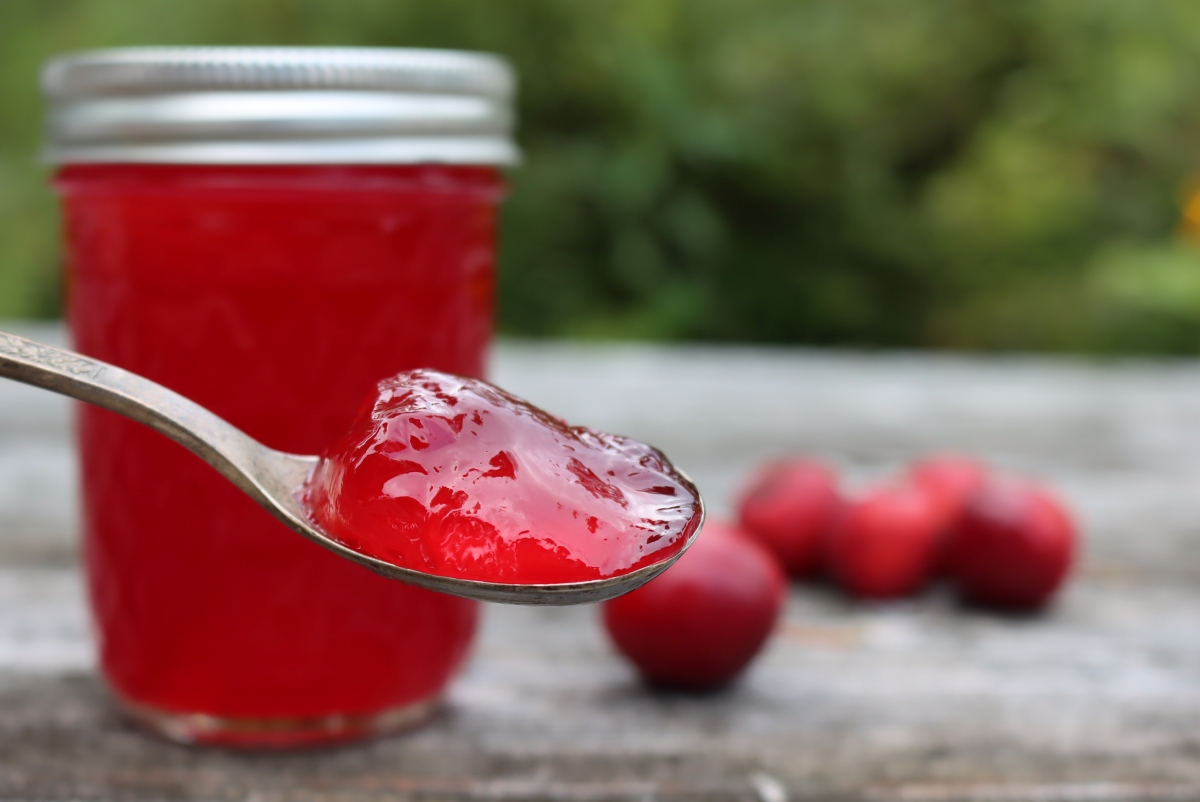
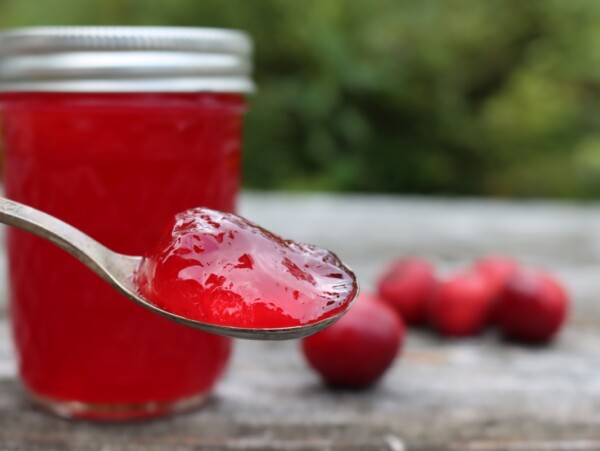
- One of the simplest crabapple recipes is Crabapple Jelly, which comes together with just crabapples and sugar. The high natural pectin in crabapples means no added pectin is needed.
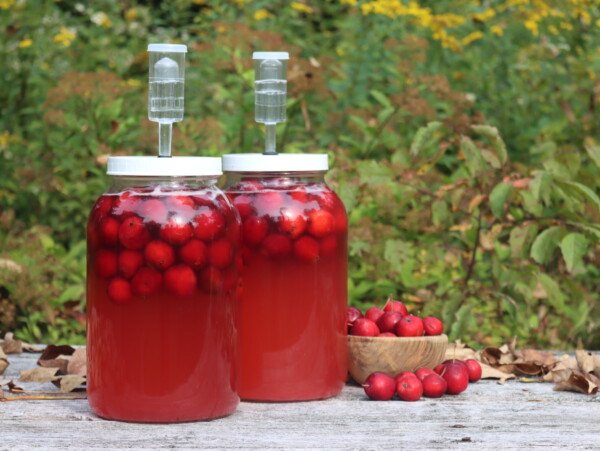
- Try Crabapple Wine and Mead for a wonderful country wine that captures the tart-sweet character of wild fruit.
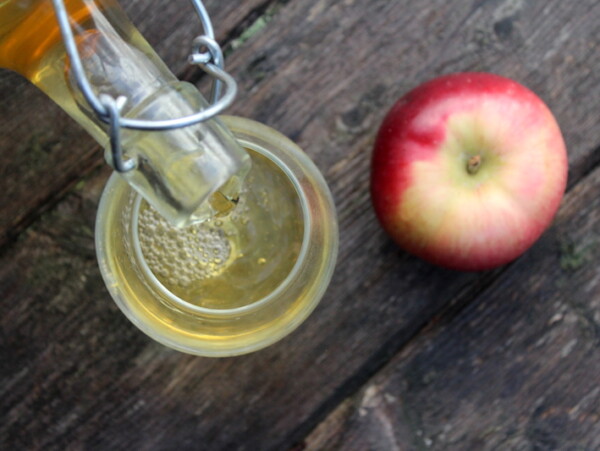
- Make Hard Cider from a mix of wild and domestic apples. Wild apples add tannin and acidity that domestic apples have been bred away from.
- Process the harvest into applesauce or apple butter for winter pantry stocks.
- Make Apple Jam using wild apples for a richer flavor than domestic-apple-only versions.
- Use the leftover scraps from cider-making to make Apple Scrap Vinegar or Apple Cider Vinegar.
- For seasonal celebrations, try Crabapple & Rosemary Hand Pies from Gather Victoria.
- Crabapples’ tangy flavor pairs excellently with maple syrup in this Maple Crabapple Butter recipe from The Forager Chef.
- Make an exciting autumn side dish with this Spiced Crab Apple Pickle recipe from The Spruce.
- Try this foraged take on British lemon curd with this Wild Apple Curd recipe from forager Rachel Lambert.
Wild Apple & Crabapple Recipes
Wild Apple & Crabapple FAQs
Yes, all true wild apples and crabapples (Malus species) are edible. They tend to be more tart, tannic, or astringent than domesticated apples, but they’re safe to eat raw and excellent in cooked preparations like jelly, sauce, butter, and hard cider. The fruit varies dramatically tree-to-tree (every wild apple seedling is genetically unique), so taste-test individual trees before committing to a harvest. The seeds contain trace amounts of cyanogenic compounds (the same as in apple seeds, peach pits, and almonds), but the level is well below any toxic threshold for normal consumption.
No, crab apples are not poisonous. The flesh of all true crabapples (Malus species) is edible and has been eaten as food for thousands of years. The seeds contain trace amygdalin, which converts to small amounts of hydrogen cyanide when chewed, but this is the same compound found in regular apple seeds, peach pits, and almonds. The amount in a few accidentally swallowed seeds is harmless. Crabapple flesh is sometimes too tart, tannic, or astringent to enjoy raw, which can lead to a perception that they’re ‘bad,’ but they’re entirely safe and excellent in cooked preparations.
Yes, several Malus species are native to North America: Sweet Crabapple (Malus coronaria) in the eastern US, Pacific Crabapple (Malus fusca) in the Pacific Northwest, Southern Crabapple (Malus angustifolia) in the southeastern US, and Prairie Crabapple (Malus ioensis) in the central US. Indigenous peoples used these native crabapples for food, medicine, and dyes for thousands of years before European settlers introduced domesticated apples (Malus domestica), which have since naturalized widely as feral apples across the continent.
Wild apples and crabapples are typically smaller (¼ inch to 2 inches across) than domestic apples (2½ to 4 inches across), more tart or tannic in flavor, and grow on more irregular twiggy trees compared to the pruned shape of orchard apples. Both are fully edible and in the same genus (Malus). The flavor difference comes from generations of selective breeding: domestic apples have been bred for sweetness, large size, and shelf stability, while wild apples retain the more complex tart-sweet-tannic flavor profile of their ancestors. This is exactly why wild apples make superior cider apples.
Yes, deer love crabapples and wild apples. White-tailed deer will travel substantial distances to find a productive crabapple tree, and they can strip a tree of low-hanging fruit in a single overnight visit. This is part of why hunters often plant crabapple trees specifically to attract deer to a property. Wild turkeys, raccoons, opossums, foxes, bears, and many bird species also eat crabapples and wild apples. If you find a productive tree on public land, plan to harvest sooner rather than later; the wildlife will get there if you don’t.
Did you find this Wild Apples and Crabapples foraging guide helpful? Tell me in the 📝 comments below how you use wild apples on your homestead!
And make sure you stay in touch with me by following on social media!
Wild Fruit Foraging Guides
Find the perfect foraging guide
Searching for something else? Enter keywords to find the perfect foraging guide!