
Affiliate disclosure: This post may contain affiliate links. Please see our Privacy Policy.
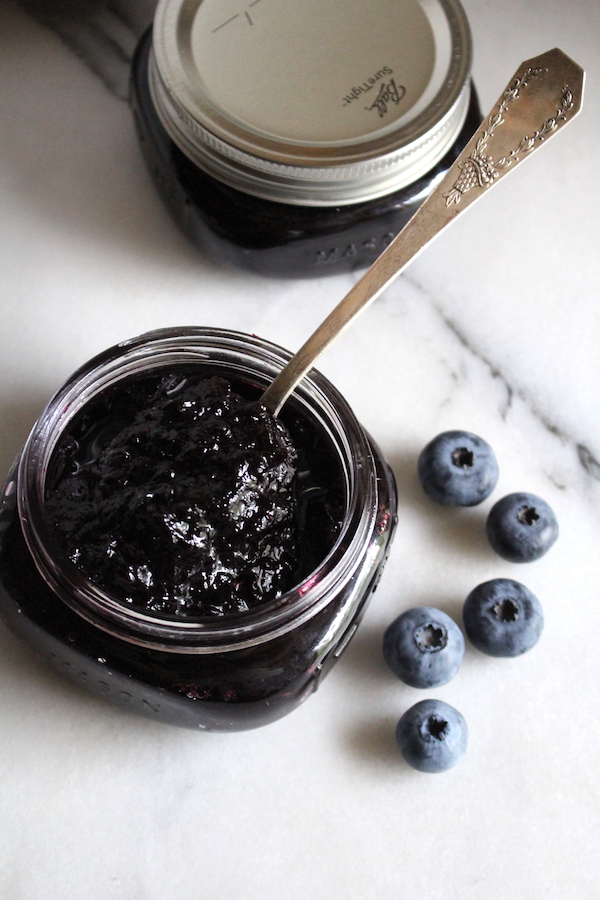
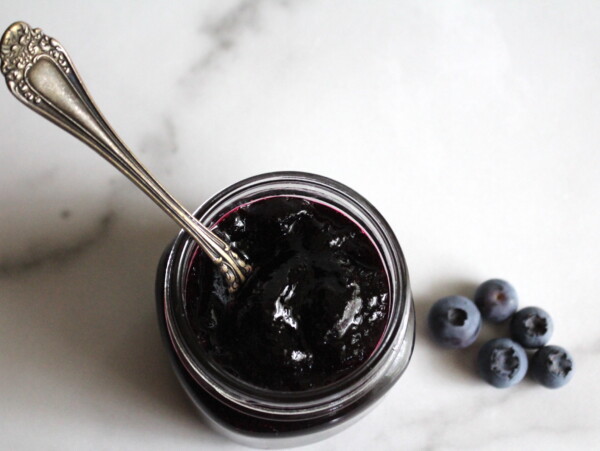
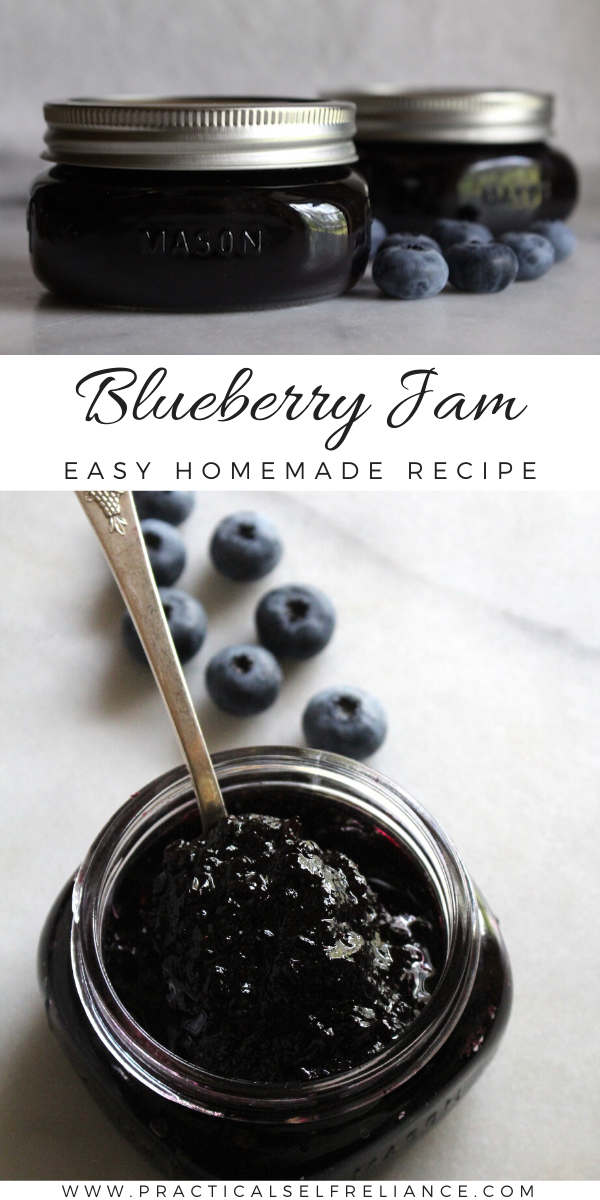
Blueberry jam thickens into a deep purple spread with just lemon juice and the fruit’s own natural pectin, with no boxed pectin required. It comes together in about 30 minutes with three simple ingredients, and it tastes like a jar of midsummer in the middle of February.
This old-fashioned jam recipe relies on the pectin already in the berries, boosted with a splash of high-acid lemon juice, so you skip the mountain of sugar that boxed pectin recipes call for.
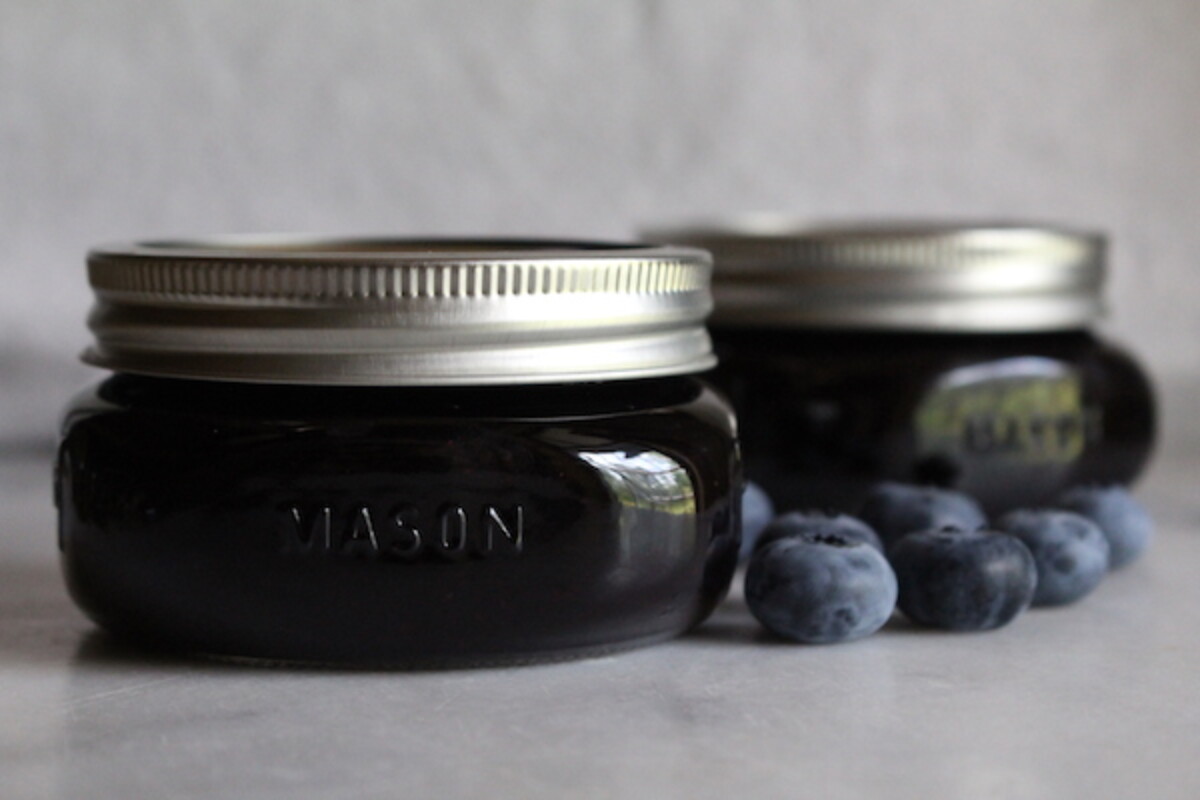
Table of Contents
Every summer I pack the freezer with homegrown blueberries, and once it’s bursting at the seams, we start putting up flats of blueberry jam for the pantry instead. This recipe is built for canning, but it works just as well as a small batch refrigerator or freezer jam if you’d rather not break out the canner.
Blueberries get labeled a “low pectin fruit,” and most recipes lean on boxed or liquid pectin to make up the difference. I’ve made it that way plenty of times, but traditional pectin demands an astonishing amount of sugar, and low-sugar pectin tends to set up more like jello in a jar than a soft, spoonable jam. A splash of lemon juice turns out to be all the help these berries need, since lemon is high in pectin and gives the natural set a real boost.
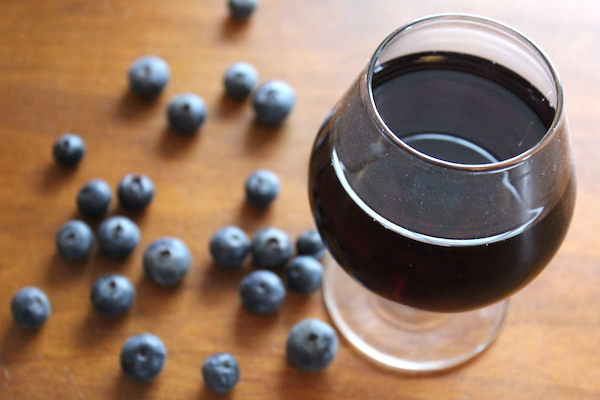
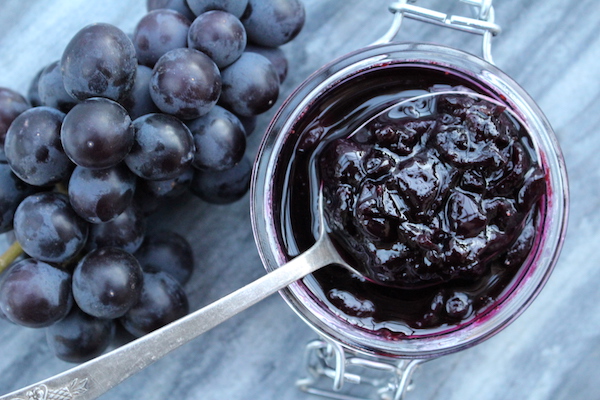
If you’d rather chase a silky smooth texture, the same fruit makes a gorgeous blueberry jelly, and it’s perfect over desserts as home-canned blueberry pie filling. A big haul is a perfect excuse to start a batch of homemade blueberry wine. When the freezer finally wins, I fall back on canning whole blueberries to save space.
Notes from My Kitchen

We run our Vermont home on solar power, so freezer space is always at a premium here. That’s a big part of why I switched to canning blueberry jam in the first place. A water bath canner runs on a burner, not on my limited battery bank, and a shelf of canned jam frees up room in the freezer for things that genuinely have to stay frozen. Blueberry jam cans up in just a few minutes, and then it’s sitting in the pantry ready whenever I want it.
The thing that finally sold me on the no-pectin version was the sugar. The first time I followed a standard boxed-pectin recipe, the amount of sugar it wanted was eye-watering, and the jam came out cloyingly sweet. Cooking the berries down with just lemon juice lets the real blueberry flavor come through, and I’ve never gone back.
Ingredients for Blueberry Jam
Three ingredients, and that’s it. Exact amounts are in the recipe card below, but here’s what each one brings to the pot.
- Blueberries (fresh or frozen): Use ripe, fully colored berries and pick out any green or moldy ones. Good jam starts with good fruit. Frozen blueberries work beautifully, so this is a recipe you can make in the dead of winter from your summer harvest.
- Granulated Sugar: Sugar sweetens, helps the jam set, and preserves the color. This recipe uses a 2 to 1 ratio of berries to sugar, which is far less than a boxed-pectin recipe would call for. Cane sugar sets the most reliably.
- Lemon juice (fresh or bottled): The lemon does double duty, brightening the flavor and adding pectin to help the jam gel. Blueberries are acidic enough to can safely on their own, so the lemon is here for set and flavor, not for canning safety. If you want to lean even harder on a natural set, a little homemade citrus pectin works too.
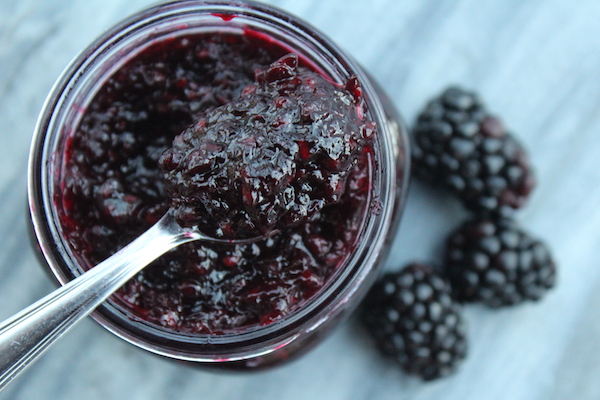
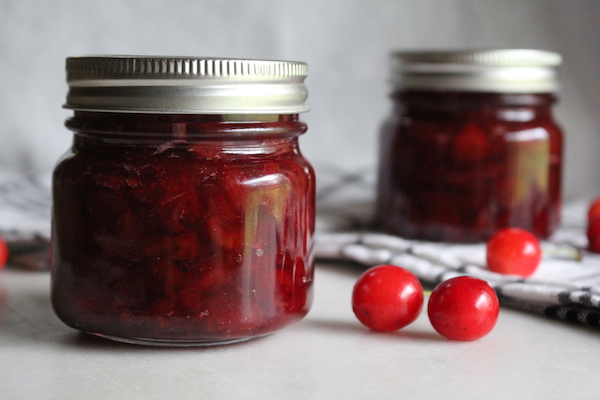
This same no-pectin method works across a whole family of berry jams. Once you’ve made a batch, blackberry jam, black raspberry jam, and sour cherry jam all come together the same way.
I doubled this recipe, and it was a first for me to make any type of jam. The jam turned out perfect!! Thank you for this recipe!
How to Make Blueberry Jam
If you’ve made jam before, this will feel familiar. The whole thing takes about 30 minutes from a pot of berries to filled jars, with no maceration or overnight rest needed.
Preparing the Blueberries
Pick over the blueberries and remove any stems, leaves, or debris, along with any green or moldy berries. A few underripe berries won’t ruin the batch, but a moldy one can throw off the flavor, so take a minute to sort. Give them a quick rinse if they need it.
Cooking the Jam
Add the blueberries and lemon juice to a heavy-bottomed pot and cook over low heat until the berries start to pop and release their juices. Starting slow matters here, because there’s very little liquid in the pot at first and you don’t want the fruit to scorch.
Once the berries are giving up their juice, turn the heat up to medium-high and mash them gently to help them break down. After about 5 to 8 minutes, you’ll have something that looks like blueberry soup, and that’s your cue to add the sugar.
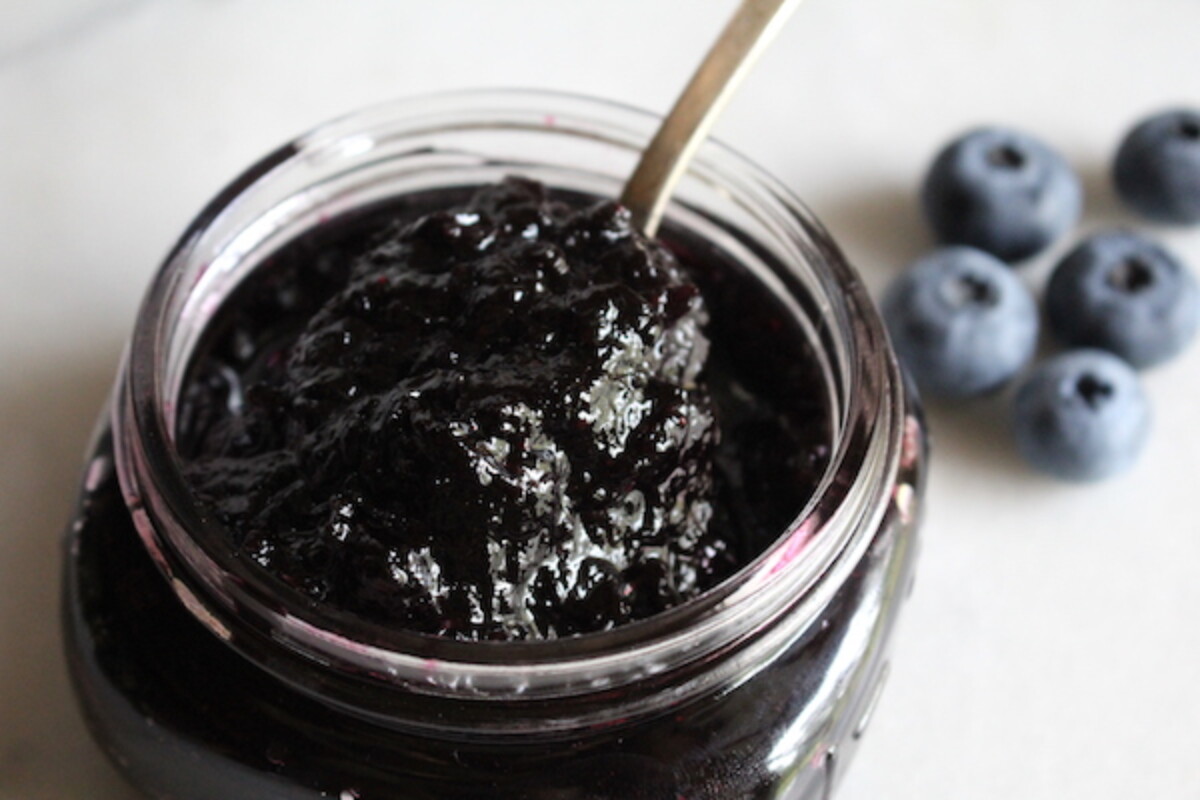
Stir in the sugar and keep cooking until the jam reaches gel stage. For my berries, this takes about 20 minutes total, start to finish, at medium-high heat. Toward the end you may need to drop the heat to keep it from scorching, but keep cooking until it thickens into a smooth, spreadable jam.
Testing for Gel Stage
Since there’s no boxed pectin, you cook this jam to gel stage. Two reliable ways to test it:
- Freezer plate test: Put a small plate in the freezer before you start cooking. When you think the jam is ready, drop a spoonful onto the cold plate and wait a few seconds. Push your finger through it. If it wrinkles and holds, it’s done. If it runs back together, keep cooking.
- Temperature test: Use an instant-read thermometer. Blueberry jam reaches gel stage at 220°F (104°C) at sea level. Subtract about 2°F for every 1,000 feet above sea level.
- Don’t overcook. The jam keeps thickening as it cools, so pull it off the heat the moment it passes the test. Push it too far, and you’ll end up with a stiff, overly thick jam.
Canning Blueberry Jam
Canning is optional. You can keep this jam in the fridge for a few weeks or freeze it for up to 6 months instead. But blueberry jam cans up in minutes and rewards you with a shelf-stable jar that’s ready all year. If you’re new to it, read through my beginner’s guide to water bath canning first, and have a water bath canner ready before you start cooking.
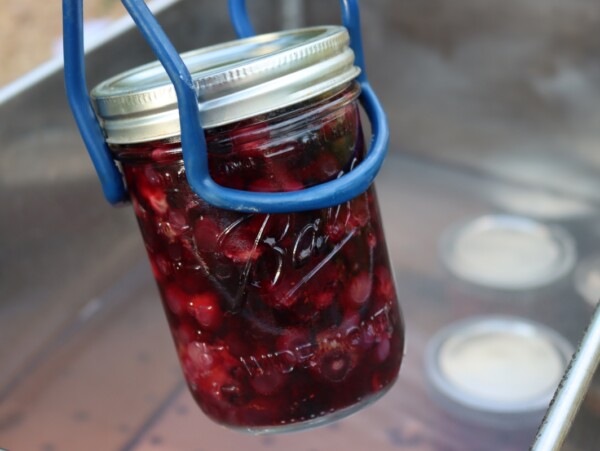
Ladle the hot jam into clean jars, leaving 1/4 inch headspace. Wipe the rims, apply two-part lids, and process in a boiling water bath for 10 minutes. Turn off the heat and let the jars sit in the canner for an extra 5 minutes before lifting them out to a towel on the counter.
That short rest prevents siphoning from the sudden temperature change, which I learned the hard way canning apple pie filling. Let the jars cool undisturbed, then check the seals after 24 hours.
Altitude Adjustments
Adjust your processing time based on your elevation:
- 0-6,000 ft: 10 minutes
- Above 6,000 ft: 15 minutes
Yield Notes
This is a small batch by design, which keeps the cooking quick and the set reliable:
- 4 cups blueberries + 2 cups sugar = about 3 half-pint (8 oz) jars
- Maximum batch size: about 8 cups of berries. You can double this small batch up to that point, and it still cooks evenly.
- Need more than that? Make separate batches back to back rather than one giant pot. Oversized batches don’t cook down evenly and often fail to set.
Storage Options
Not ready to break out the canner? You have a few choices:
- Refrigerator jam: Let the jars cool to room temperature, then store in the fridge. Keeps for 3 to 4 weeks.
- Freezer jam: Use freezer-safe containers and leave headspace for expansion. Lasts up to 6 months frozen.
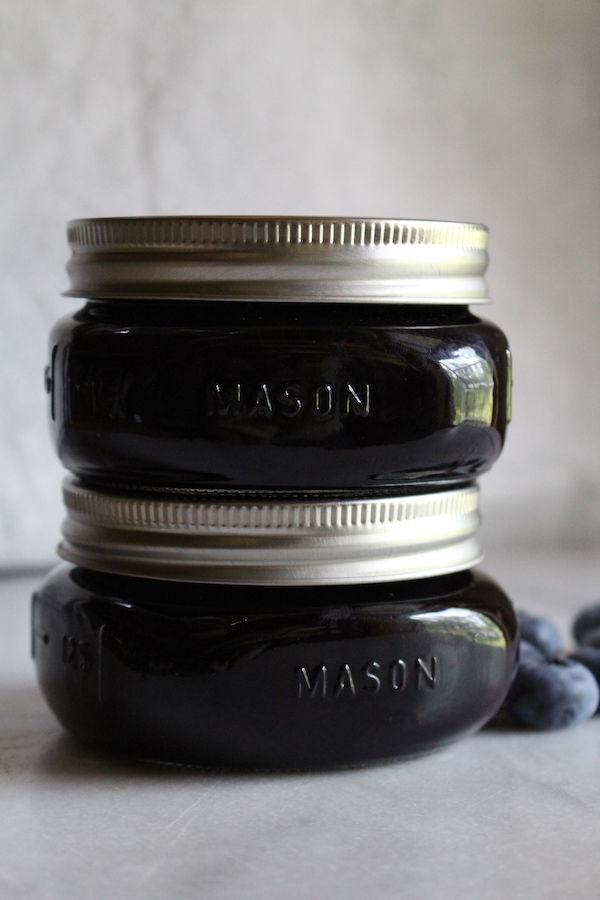
- Canned jam: Water bath processed jars keep for 12 to 18 months in a cool, dark pantry, and stay safe to eat beyond that. Refrigerate after opening.
Recipe Tips
- Low sugar version: You can cut the sugar to 1 cup if you’d like a less sweet jam. Expect a longer cook time and a slightly lower yield, since sugar helps the jam set and concentrate.
- Frozen berries are fine: No need to thaw first. Frozen blueberries actually break down quickly and release their juice fast, so they’re great for jam.
- If the jam tastes bitter: Some blueberry skins turn bitter depending on the variety. Choose very ripe fruit, avoid any green berries, and watch for scorching, since burned jam tastes bitter too. A smooth, strained jelly made from the same berries sidesteps the skins entirely.
- If the jam tastes sour: Make sure every berry is fully ripe, with no green fruit in the mix. If you’re using a reduced-sugar version, add a little more sugar to balance it.
- Adding spices: A little cinnamon, a strip of lemon zest, or a splash of vanilla all pair well with blueberry. Small amounts of dried spices don’t affect canning safety.
- Don’t overcook: Blueberry jam thickens more as it cools, so pull it off the heat as soon as it passes the gel test.
Pectin Options
This recipe is written for a natural, no-pectin set, but you can absolutely use boxed pectin if you want a firmer, faster gel. Here’s how the options compare:
- Standard powdered pectin: A box of regular pectin like Sure-Jell or Ball Classic gives a quick, firm set. Follow the box directions exactly, and know that it will call for considerably more sugar than this recipe.
- Low-sugar pectin: For a firm set with much less sugar, use a low-sugar pectin. It lets you cut the sugar way back, though the texture can come out a little firm.
- Pomona’s Universal Pectin: Pomona’s sets with little or no sugar and is a good choice for a soft-set, low-sugar jam. It uses a calcium water step, so follow the insert that comes in the box.
- Liquid pectin: I don’t recommend liquid pectin (Certo) here. The timing and order of additions are different from powdered, and it requires astronomical amounts of sugar to set.
Ways to Use Blueberry Jam
Beyond a piece of buttered toast, blueberry jam earns its keep all over the kitchen. Swirl it into yogurt or oatmeal, spoon it over pancakes or cheesecake, use it as a filling for thumbprint cookies and layer cakes, or warm it slightly into a sauce for ice cream. It’s also lovely stirred into a vinaigrette or spread on a cheese board.
If your shelves fill up faster than you can eat through them, my guide to 100+ ways to use up a jar of jam has plenty more ideas.
Blueberry Jam FAQs
This small batch recipe of 4 cups blueberries and 2 cups sugar makes about 3 half-pint (8 oz) jars. The exact yield depends on how far you cook it down, since a longer cook for a firmer set will reduce the volume slightly. If you need more, you can scale the recipe up to about 8 cups of berries and still get an even cook.
Yes, frozen blueberries work just as well as fresh, and there’s no need to thaw them first. Frozen berries actually break down and release their juice quickly, which can speed up the early cooking. This makes blueberry jam a great winter project using berries you froze at the peak of summer.
The most common reason is that it wasn’t cooked long enough to reach gel stage, which is 220°F (104°C) at sea level. Be sure you added the lemon juice, since it boosts the natural pectin in the berries. Give the jam a full 24 to 48 hours to finish setting as it cools before deciding it failed. If it’s still too loose, you can return it to the pot and cook it a little longer.
The lemon juice is there for flavor and to help the jam set, not for canning safety. Blueberries are naturally acidic enough to water bath can on their own, so the jam is safe to can without it. That said, lemon juice is high in pectin and gives the set a real boost, so if you leave it out you may need to cook longer or add a bit of pectin to get a good gel. If you’re avoiding citrus, a small amount of homemade citrus pectin or boxed pectin can take its place.
Yes. If you’d rather have a firmer, faster set, use a box of standard powdered pectin like Sure-Jell or Ball Classic and follow the box directions, which will call for more sugar than this recipe. For a low-sugar set, use a low-sugar pectin or Pomona’s Universal Pectin. Stick with powdered pectin rather than liquid, since liquid pectin uses a different method and is easy to get wrong.
Ways to Preserve Blueberries
If you tried this Blueberry Jam Recipe, or any other recipe on Practical Self Reliance, leave a ⭐ star rating and let me know what you think in the 📝 comments below!
And make sure you stay in touch with me by following on social media!
Blueberry Jam
Equipment
- Canning Jars, Lids, and Rings
Ingredients
- 4 cups blueberries, fresh or frozen
- 2 cups sugar
- 1/4 cup lemon juice, fresh or bottled
Instructions
- Place blueberries and lemon juice in a heavy-bottomed jam pot and gently bring to a simmer over low heat. Mash the blueberries to help them release their juices.
- Once the blueberries have released their juices, increase heat to medium-high, and add sugar.
- Cook the jam until it reaches gel stage, about 20 minutes. Test for gelling on a plate that’s been in the freezer, or use an instant-read thermometer (220 degrees F at sea level).
- Pour finished jam into prepared jars, seal with 2 part lids. Store in the refrigerator or water bath can for a shelf-stable blueberry jam.
Canning Instructions (Optional)
- To can the blueberry jam, fill clean canning jars leaving 1/4 inch headspace. Seal with 2 part lids and process in a water bath canner for 10 minutes. Turn off heat and allow the jars to set in the canner for an additional 5 minutes (prevents siphoning) before removing them to cool on a towel on the counter.
- Check seals after 24 hours and store any unsealed jars in the refrigerator for immediate use. Sealed jars should maintain quality in the pantry for 12-18 months.
Notes
Nutrition
Nutrition information is automatically calculated, so should only be used as an approximation.
Jam Recipes
Find the perfect recipe
Searching for something else? Enter keywords to find the perfect recipe!










Question about this recipe. Might you know how many ounces of blueberry jam the 1x, or 2x, or 3x the recipe will make? (How many jars do you fill from it?)
This recipe makes 3 to 4 half pint jars, depending on how juicy your blueberries are (some have more liquid to cook down than others).
I love how straightforward and easy your recipes are. We totally love the bread and butter Pickle recipe. Thank you for caring enough to share them.
Wonderful, I’m glad to hear it!
Quick question.. instead of water bath can this recipe have the canning process done in the oven??? Thank you so much, I look forward to trying this recipe out 🤗
Canning in the oven is not a tested method so we don’t typically recommend it.
For 12 cups of blueberries, what is the minimum amount of sugar to achieve a Spread rather traditional preserves?
I have made pear “spread” using a lesser amount of sugar rather than traditional preserves to reduce sugar. Want to do the same with blueberries.
This jam recipe uses 4 cups fruit to 2 cups sugar. For a low sugar spread that’s loser in set than a preserve, you could use a 1:4 ratio. So for your 12 cups of fruit, you’d use 3 cups sugar. Try that and see how it goes.
Thank you for sharing this recipe. I made a batch last year and it turned out fabulous! I am about to make another two batches of it over this weekend.
You’re very welcome. We’re so glad you enjoyed the recipe.