
Affiliate disclosure: This post may contain affiliate links. Please see our Privacy Policy.
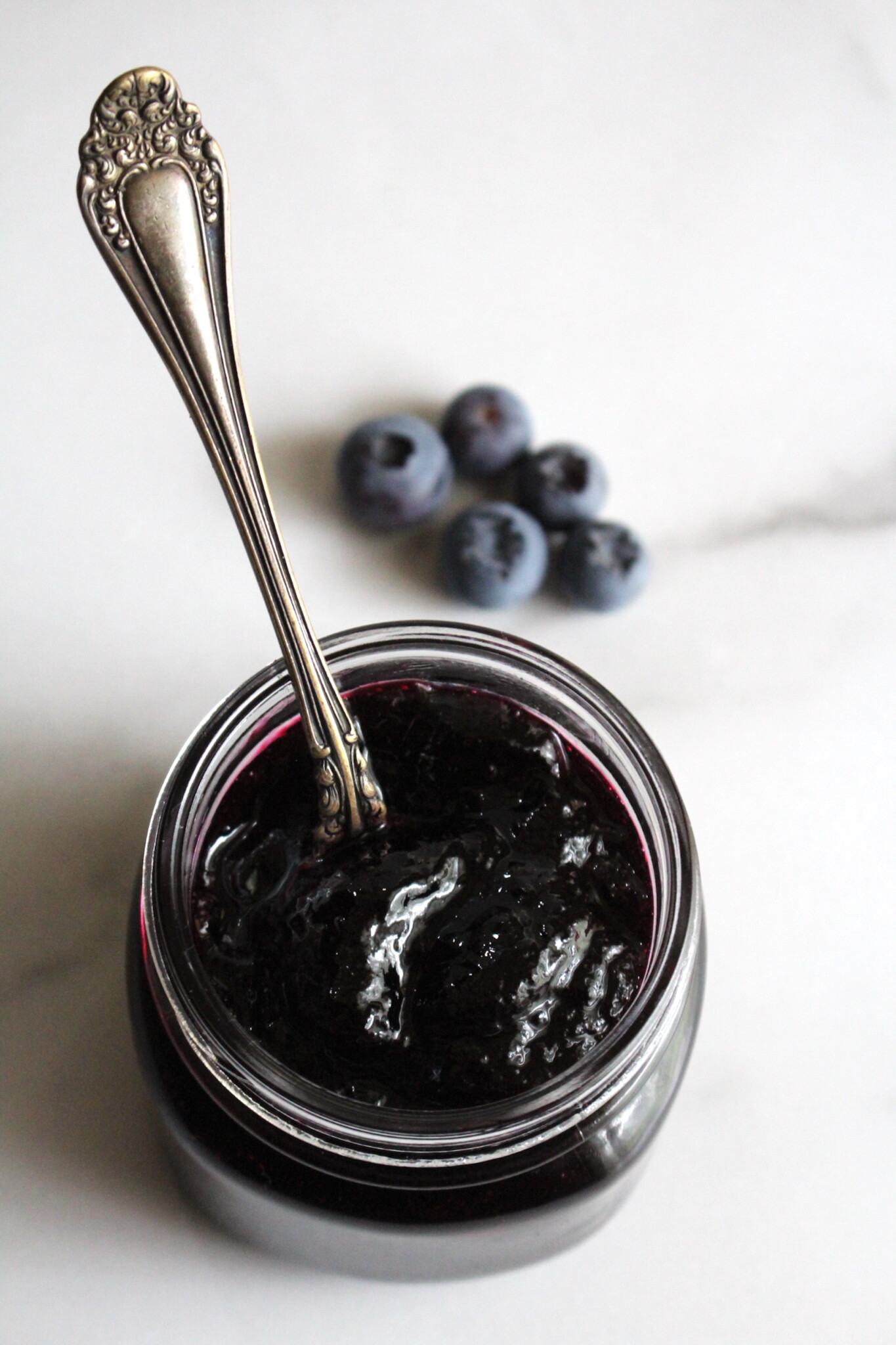
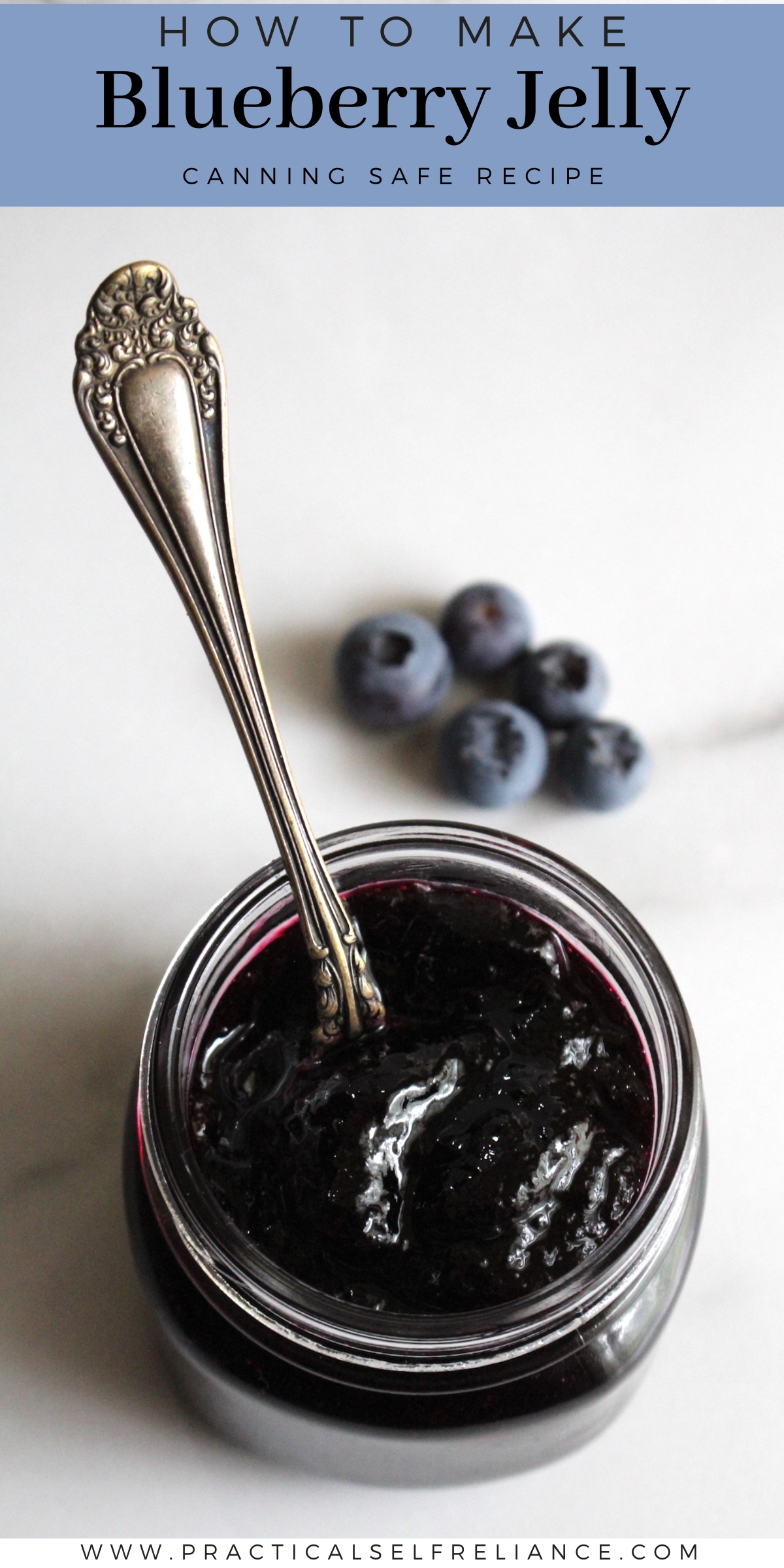
Homemade blueberry jelly transforms fresh summer berries into a silky, seedless spread with pure, concentrated blueberry flavor. Unlike blueberry jam, which keeps the skins and pulp, jelly strains all of that out and leaves you with nothing but smooth, jewel-toned sweetness that glides onto toast and disappears into yogurt.
This small batch recipe uses powdered fruit pectin for a quick reliable set with no gel-stage testing, and yields about 4 to 5 half-pint jars from either fresh-pressed blueberry juice or store-bought 100% blueberry juice.
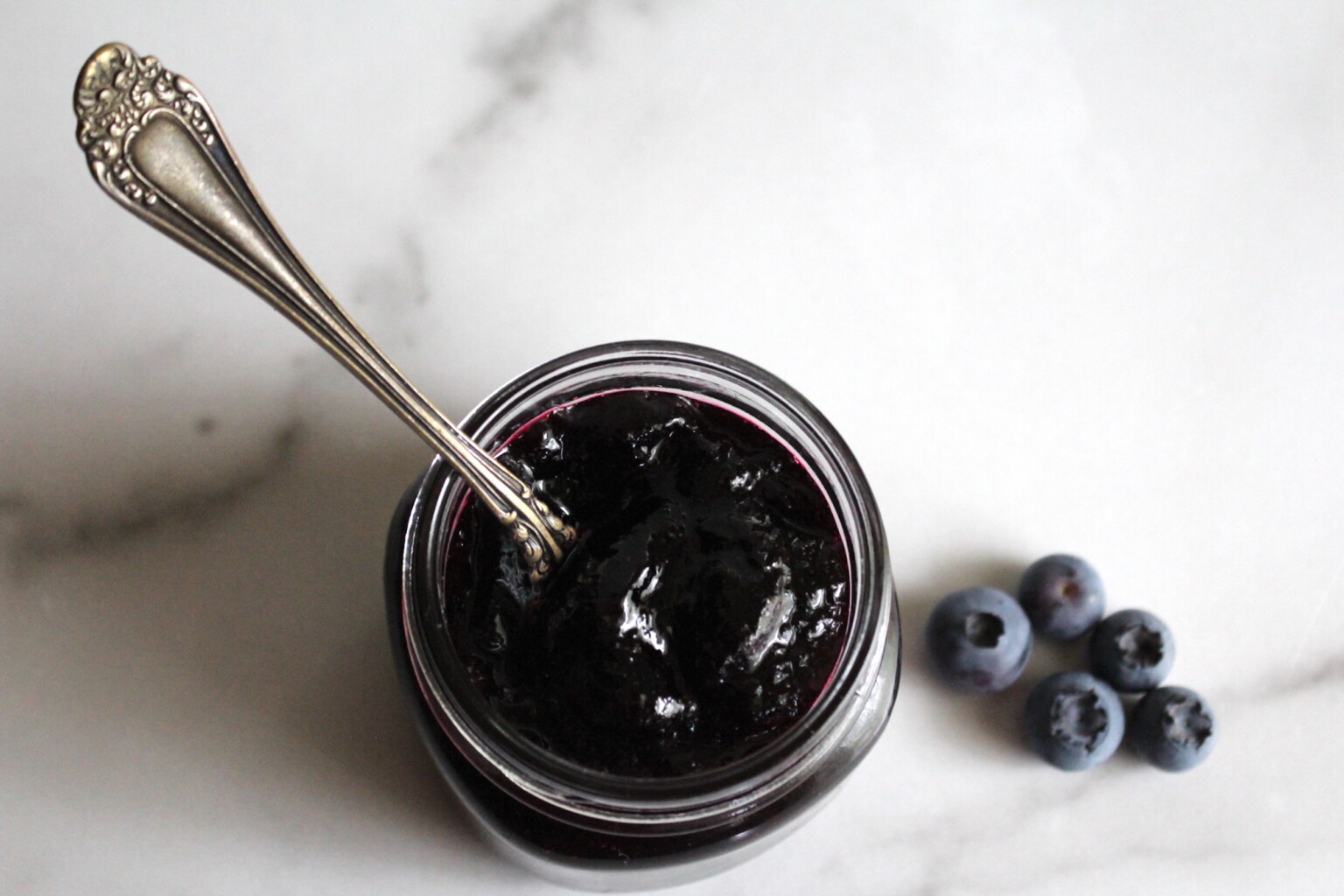
Table of Contents
- Notes from My Kitchen
- Choosing Blueberries for Jelly
- Ingredients for Blueberry Jelly
- How to Make Blueberry Jelly
- Don’t Overcook Pectin Jelly
- Canning Blueberry Jelly
- Altitude Adjustments
- Yield Notes
- Storage Options
- Recipe Tips
- Pectin Options
- Blueberry Jelly Variations
- Ways to Use Blueberry Jelly
- Blueberry Jelly FAQs
- Ways to Preserve Blueberries
- Blueberry Jelly Recipe
- Jelly Recipes
I’ll admit that I’m usually more of a chunky jam person. I like whole fruit preserves with texture, and blueberry jam is one of my go-to canning recipes. But my kids are jelly lovers through and through, and they talked me into giving this a try.
They started with strawberry jelly, and I have to say, it won me over. The flavor was more intense than any jam I’d made because there was no pulpy fiber diluting it. So when they asked for blueberry jelly, I gave in, and once again, they were right. Without the skins, the blueberry flavor really comes through, and there’s none of that slight bitterness that sometimes sneaks into blueberry jam. Now it’s a pantry staple around here.
And now, of course, they’ve got me making blackberry jelly and raspberry jelly for my pantry too. No seeds, all flavor.
Notes from My Kitchen

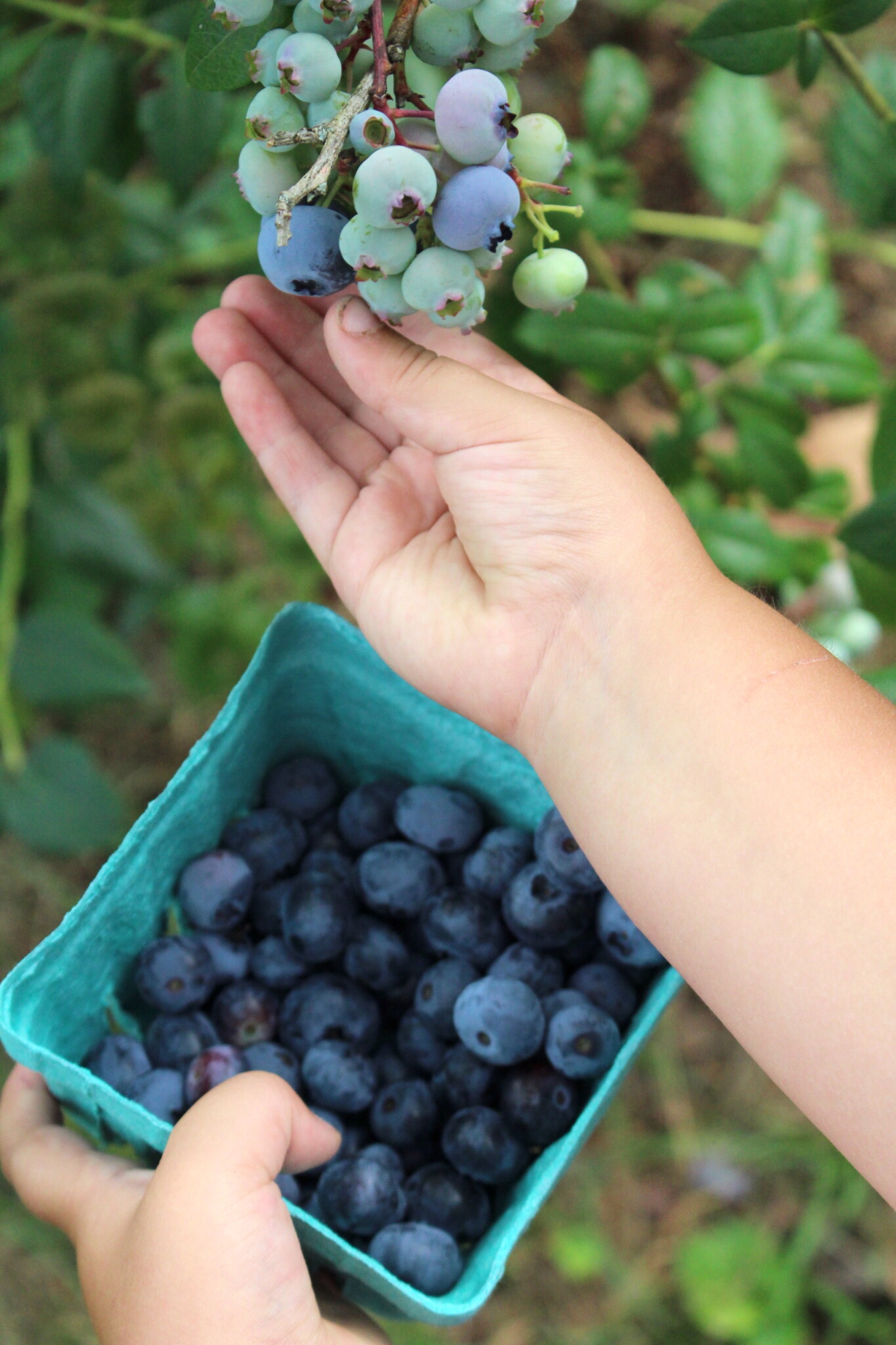
Since blueberry jelly is a particular favorite of my little ones, I never have a problem getting them to volunteer for picking duty in our blueberry patch. Their tiny fingers are perfect for selecting ripe fruit from clusters of berries, and they take the job seriously knowing their beloved jelly is on the line.
If you want to skip the juice extraction step, you can use bottled blueberry juice for this recipe. It works beautifully and cuts your hands-on time significantly. That said, there’s something special about making it from scratch with fresh-picked berries, and the flavor is noticeably brighter when you start from whole fruit. If you have access to fresh blueberries, I’d encourage you to try it at least once.
Choosing Blueberries for Jelly
The secret to good blueberry jelly is starting with fully ripe fruit. You might see some jelly recipes recommending a mix of underripe fruit for added pectin, but that doesn’t apply here. Blueberries are naturally low in pectin, so no matter how underripe they are, they won’t have enough to gel on their own. This recipe uses added pectin, which means you can focus entirely on flavor and choose the ripest, juiciest berries you can find.
Store-bought or homegrown, fresh or frozen, it all works. Around here, I usually use highbush blueberries from our patch, but wild blueberries work beautifully too. Frozen blueberries are also fine, though they may yield slightly less juice than fresh.
If you’re short on berries or want to skip the extraction step entirely, bottled 100% blueberry juice works in this recipe too. Just look for juice with no added sugar, sweeteners, or preservatives, and skip straight to cooking the jelly.
Ingredients for Blueberry Jelly
This blueberry jelly recipe yields about 4 to 5 half-pint jars and uses just four ingredients:
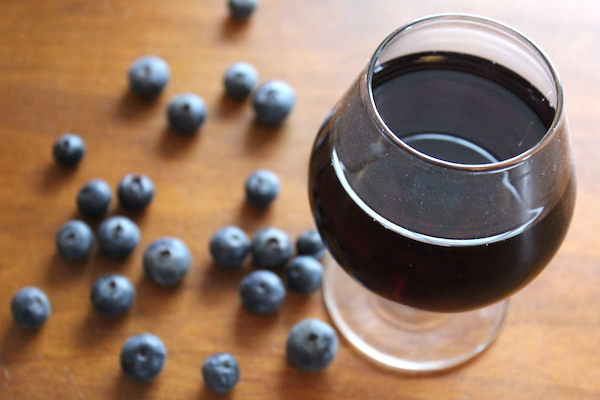
- Blueberry juice: Use juice extracted from fresh or frozen blueberries (instructions below) or store-bought 100% blueberry juice. Fresh juice gives the brightest flavor, but bottled works in a pinch. See “Choosing Blueberries” above for variety guidance.
- Bottled lemon juice (optional, but recommended): Brightens the flavor and helps balance the sweetness. Blueberries are acidic enough for safe canning without it, but the lemon makes a noticeable difference in the finished flavor. Use bottled for consistent acid level.
- 1 box (1.75 oz) powdered fruit pectin: Use Sure-Jell or Ball Classic regular powdered pectin. Don’t substitute liquid pectin, which requires different ratios. For a low-sugar version, see Pectin Options below.
- Granulated sugar: Don’t reduce the sugar with regular powdered pectin; it won’t gel. To use less sugar (or honey or maple syrup), see Pectin Options below. The recipe card has the specific amount.
I have tried multiple recipes to try and get the right consistency in my jelly but, until now, it has come out as a syrup or has been turned into a paste. Not this recipe. This recipe is spot on! I have since added this recipe to my Jellies and preserves recipe book knowing that this recipe will now become my go-to every year when I pick 30+ gallons of these delectable berries.
How to Make Blueberry Jelly
Making blueberry jelly is a two-step process. First you extract the juice from the berries (or pour bottled juice from the bottle), then you cook it with pectin and sugar to make the jelly. The juice extraction takes about an hour from start to finish, and the actual jelly making takes about 15 minutes.
Extracting Blueberry Juice
Combine the blueberries with water in a large pot (about 1 cup of water per quart of berries). Bring it to a simmer over medium heat, mashing the berries as they cook. Let it simmer for about 10 minutes until the berries are completely broken down and the liquid is deeply colored.
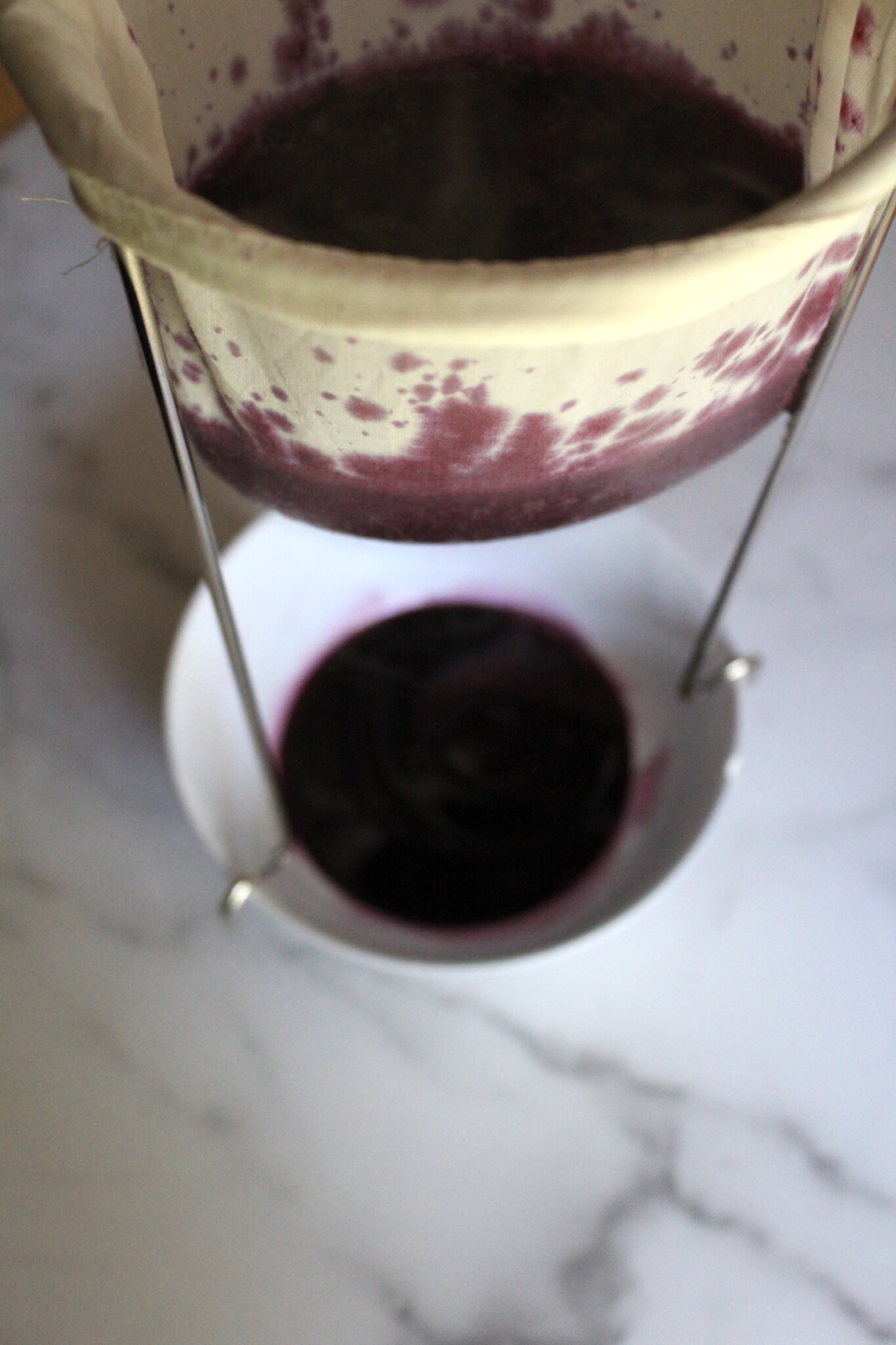
Strain the cooked fruit through a jelly bag or a colander lined with several layers of damp cheesecloth. Now, I know you’re supposed to let it drain slowly without squeezing if you want crystal-clear jelly, but blueberries are fairly dry fruit and they just don’t give up their juice easily. I squeeze the bag.
Yes, your hands will turn blue, but it’s worth it. Even with squeezing, blueberries don’t give up much juice (the recipe card has the exact yield to expect).
If you have a steam juicer, that’s an even more efficient way to extract the juice. Several readers have reported getting nearly double the juice from the same volume of berries when using a steam juicer.
Cooking the Jelly
Once you’ve got your juice, pour it into a large, deep heavy-bottomed pot. Stir in the powdered pectin (and the lemon juice, if using) until the pectin is fully dissolved. Bring to a hard rolling boil over high heat, stirring frequently.
Add the sugar all at once and stir constantly until fully dissolved. Return to a hard rolling boil that can’t be stirred down, and boil hard for exactly 1 minute. Remove from heat and quickly skim off any foam. Ladle the hot jelly into prepared half-pint jars, leaving 1/4 inch headspace, wipe rims clean, and apply two-piece canning lids fingertip tight.
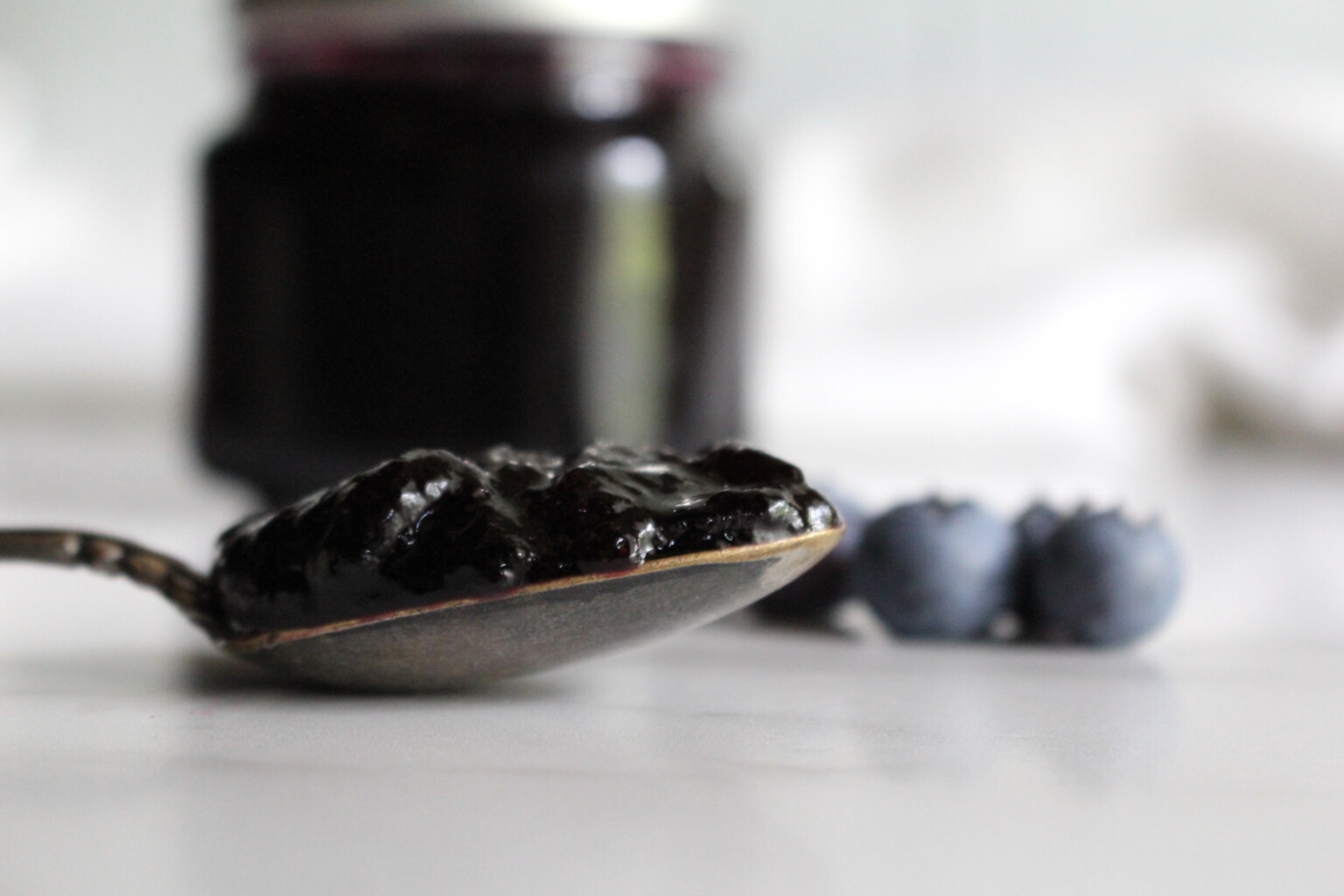
Don’t Overcook Pectin Jelly
Pectin jelly works on chemistry, not on cooking time. A few things to know:
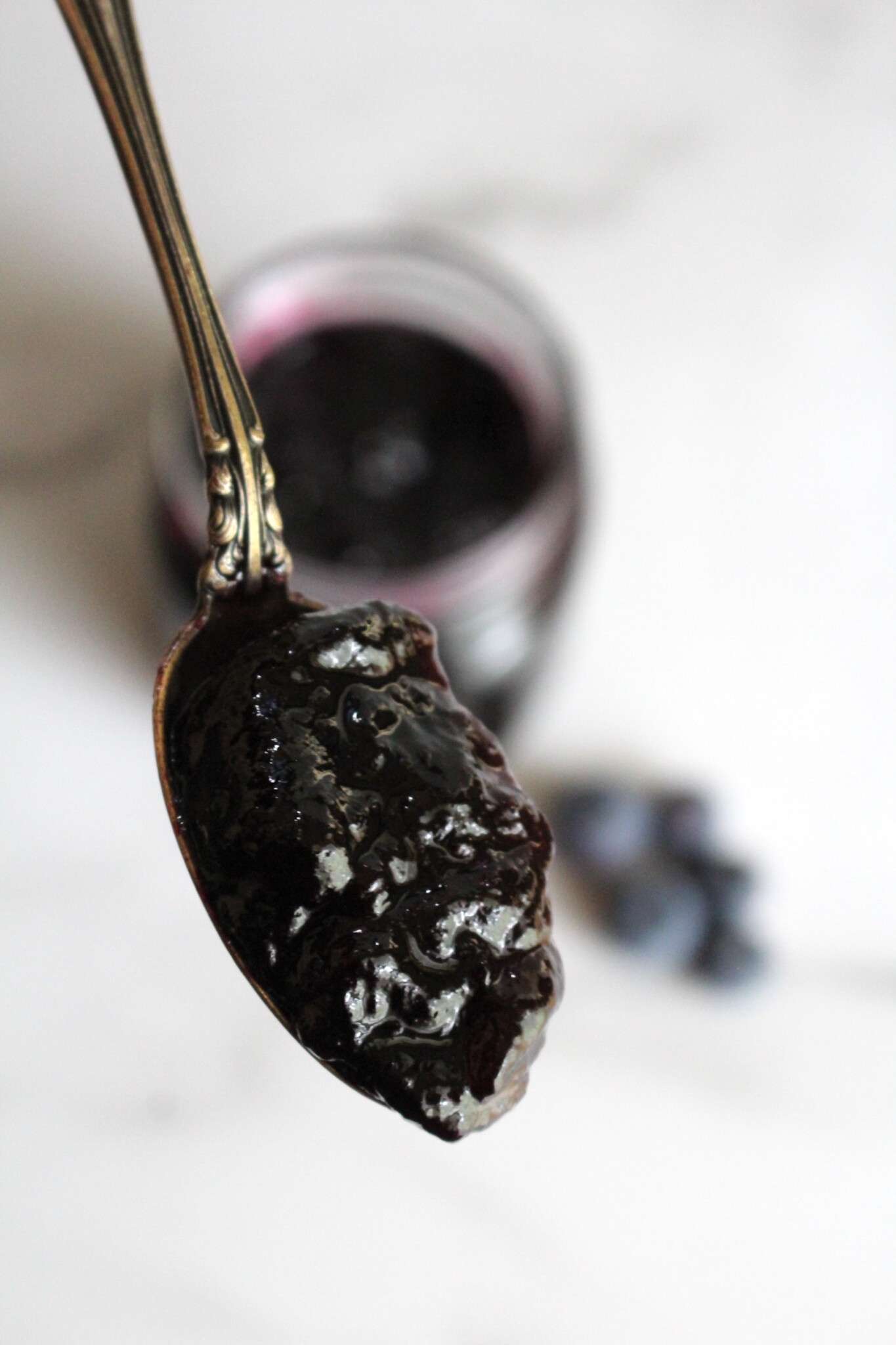
- The jelly looks thin in the pot when you take it off the heat, and that’s normal. Pectin sets as the jelly cools, not while it’s boiling.
- Trust the timing. A hard rolling boil for exactly 1 minute after the sugar fully dissolves is all you need.
- Skip the thermometer and freezer plate test. Those are for old-fashioned no-pectin jellies. Pectin recipes set on chemistry, not on temperature.
- Give the jars 24 to 48 hours to fully set before declaring failure.
Canning Blueberry Jelly
I always can my blueberry jelly so I have shelf-stable jars year-round, but canning is optional. You can also store the finished jelly in the fridge for several weeks or in the freezer for up to a year (use freezer-safe straight-sided jars if you’re freezing). If you’re new to canning, start with my beginner’s guide to water bath canning before you fire up the canner.
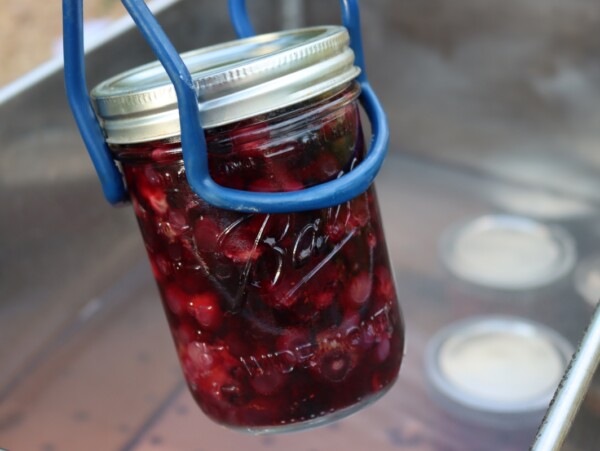
Process the filled jars in a boiling water bath canner for 10 minutes (adjusting for altitude). When the timer goes off, turn off the heat and let the jars sit in the canner for another 5 minutes before lifting them out (this helps prevent siphoning). Cool on a towel for 12 to 24 hours, check seals, and refrigerate any unsealed jars. Sealed jars keep on the pantry shelf for 12 to 18 months.
Altitude Adjustments
Processing time depends on your elevation:
- 0 to 6,000 feet: 10 minutes
- Above 6,000 feet: 15 minutes
Yield Notes
Here’s what you can expect from this recipe:
- 1 quart whole blueberries = about 2 1/2 cups mashed
- 4 quarts blueberries + 4 cups water = about 4 cups strained juice (traditional method); closer to 6 to 8 cups with a steam juicer
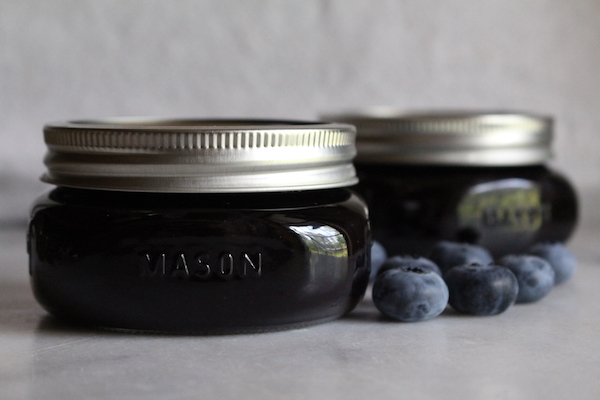
- 4 cups blueberry juice + 1 box pectin + 4 cups sugar = about 4 to 5 half-pint (8 oz) jars
- Don’t double the recipe. Larger batches don’t heat evenly and may not set properly. Make two single batches back-to-back instead.
Storage Options
Not committed to water bath canning? You have several options:
- Refrigerator jelly: Let jars cool to room temperature, then store in the fridge. Keeps for 2 to 3 weeks.
- Freezer jelly: Use freezer-safe straight-sided jars and leave 1/2 inch headspace for expansion. Lasts up to 12 months frozen.
- Canned jelly: Water bath processed jars keep for 12 to 18 months in a cool, dark pantry. This is my preferred method because it means blueberry jelly in February when the snow is piling up.
Recipe Tips
- Don’t skip the lemon juice. While not required for safety, fresh lemon juice brightens the flavor and helps balance the sweetness.
- Use a deep pot. Jelly foams quite a bit when it reaches a rolling boil. A deep pot prevents overflows.
- Measure your juice carefully. If you’re short of the recipe amount, top off with a splash of apple or white grape juice. If you have extra, save it for another batch or use it in smoothies.
- Save the pulp. The leftover cooked blueberry pulp is delicious in muffins, pancakes, or swirled into oatmeal. You can also use it to make blueberry butter, which uses nothing but the cooked pulp left over from jelly making, or blueberry syrup.
- Be patient with setting. Jelly made with powdered pectin can take 24 to 48 hours to fully set. Some batches may take up to a week. Don’t call it a failure until you’ve given it time. If it’s still not set after that, read through my guide to troubleshooting an unset jelly.
Pectin Options
Standard powdered pectin (this recipe): Requires the full sugar amount in the recipe card. Use Sure-Jell (yellow box) or Ball Classic regular powdered pectin.
Low sugar pectin: Sure-Jell Low Sugar (pink box) or Ball Flex Batch Low Sugar let you reduce sugar significantly, or substitute honey or maple syrup. Follow the directions on the box, since amounts differ from regular pectin.
Pomona’s Universal Pectin: Pomona’s works with any amount of sugar (or none). The set is softer, more like Jello. Read how to use Pomona’s Pectin first, since the process is different.
Liquid pectin: Not recommended. Requires more sugar for the same volume of juice and the texture is inconsistent.
Blueberry Jelly Variations
Once you’ve made the basic recipe, try adding a flavor twist:
- Vanilla Blueberry Jelly: Split a vanilla bean and scrape the seeds into the juice before cooking, or stir in pure vanilla extract after removing the jelly from heat.
- Blueberry Lavender Jelly: Add dried culinary lavender to the berries while cooking, then strain it out with the pulp.
- Blueberry Lemon Jelly: Increase the lemon juice and add finely grated lemon zest to the cooking jelly for a bright citrus version.
- Spiced Blueberry Jelly: Add a cinnamon stick and a few whole cloves while cooking the berries, then strain them out.
- Wild Blueberry Jelly: Substitute foraged wild blueberries (or low-bush) for cultivated highbush. The flavor is more intense and the color is deeper, with no other recipe changes needed.
Ways to Use Blueberry Jelly
Blueberry jelly is endlessly useful in the kitchen. I spread it on biscuits and toast at breakfast, swirl it into yogurt or oatmeal, layer it into peanut butter sandwiches for the kids, and use it as a glaze for pork tenderloin or roasted chicken. It also pairs surprisingly well with sharp aged cheddar or brie on a cheese board, and a spoonful stirred into a glass of seltzer makes a quick blueberry soda.
For more inspiration, I have a guide to 100+ ways to use up a jar of jam or jelly. And if you find yourself with extra blueberries on hand, my pantry favorites for putting up a blueberry harvest are old-fashioned blueberry jam and blueberry syrup.
Blueberry Jelly FAQs
Blueberry jelly made with powdered pectin typically takes 24 to 48 hours to fully set at room temperature. Some batches may take up to a week, depending on the fruit’s natural pectin content and how long the jelly was cooked. Don’t call it a failure until you’ve given it at least 48 hours to firm up.
Yes, frozen blueberries work well for making jelly. They often yield slightly more juice than fresh berries since freezing breaks down some of the cell structure, and the flavor is excellent. No need to thaw them before cooking.
Blueberry jelly is made from strained blueberry juice, so it’s smooth, seedless, and translucent with no fruit pieces. Blueberry jam is made from chopped or mashed whole blueberries, so it has fruit texture, includes the skins, and is more opaque. Jelly spreads more smoothly on toast and shows off the deep jewel color, while jam has more body and a slightly more complex flavor from the skins.
The cooked blueberry pulp left over from juice extraction is delicious in baked goods. Fold it into muffin or pancake batter, swirl it into oatmeal, blend it into smoothies, or mix it with yogurt. Creative Canning has a recipe for blueberry butter that uses the blueberry pulp left over after jelly making, so that’s what I do with it.
Yes. To make blueberry syrup, simply follow the recipe but omit the pectin. Cook the juice with sugar until it reaches your desired consistency. You can also add vanilla extract for a blueberry vanilla syrup that’s wonderful on pancakes.
Ways to Preserve Blueberries
If you tried this Blueberry Jelly recipe, or any other recipe on Practical Self Reliance, leave a ⭐ star rating and let me know what you think in the 📝 comments below!
And make sure you stay in touch with me by following on social media!
Blueberry Jelly
Equipment
Ingredients
- 4 cups blueberry juice, purchased, or extracted from 4 quarts of fruit
- 4 cups sugar, see notes for low sugar variation
- 1 box Powdered Pectin, 1.75 oz, such as Sure Jel or 6 Tbsp. Bulk Pectin
- 2 tbsp Lemon Juice, optional, see notes
Instructions
Extracting Blueberry Juice
- If using fresh berries, place 4 quarts of blueberries in a large saucepan with 4 cups water (1 cup per quart of fruit). Slowly bring to a simmer over medium heat, mashing the berries as they cook. Simmer for about 10 minutes, until the berries have completely broken down.
- Strain the mixture through a jelly bag or a colander lined with several layers of damp cheesecloth. Let it drain for at least 2 hours. You may gently squeeze the bag to release more juice. You should end up with about 4 cups of juice. If you’re short, top off with a splash of another fruit juice (like apple or cranberry). If you have extra, reserve it for another use.
Making Blueberry Jelly
- Prepare canning jars, lids, and a water bath canner if preserving for shelf-stable storage. Keep everything hot until ready to fill.
- Pour the 4 cups of strained blueberry juice into a jam pot and bring to a full boil over medium-high heat. Whisk in the powdered pectin and boil hard for 1 minute to activate the pectin.
- Stir in the sugar and bring the mixture back to a full rolling boil. Boil hard for 1 more minute while stirring constantly.
- Ladle the hot jelly into prepared jars, leaving 1/4 inch headspace. Wipe rims, apply two-piece lids, and process in a boiling water bath canner for 10 minutes at elevations below 6,000 feet, or 15 minutes above 6,000 feet.
- If not canning, allow the jelly to cool and set completely at room temperature before storing in the refrigerator or freezer.
Notes
Nutrition
Nutrition information is automatically calculated, so should only be used as an approximation.
Jelly Recipes
Find the perfect recipe
Searching for something else? Enter keywords to find the perfect recipe!










Can I use my vitamix blender to blend the blueberries, then strain in a cheese cloth?
Probably? I think that’d give you plenty of juice, but I’m not sure if making the juice raw will change anything as I haven’t tried it myself.
Its a good easy recipe. thank you. Could I use blueberry juice with the blueberries instead of the water in this recipe?
Yes, when you’re extracting the juice at the beginning you could start with juice if you have it. The main thing there is you’re just adding liquid so the berries don’t scorch as they begin to cook.