
Affiliate disclosure: This post may contain affiliate links. Please see our Privacy Policy.
Comfrey salve turns the broad green leaves of an old-fashioned permaculture herb into a topical balm for back pain, sore muscles, bruises, and stiff joints. Peer-reviewed studies have shown that topical comfrey works fast, with measurable pain relief setting in within about an hour of application.
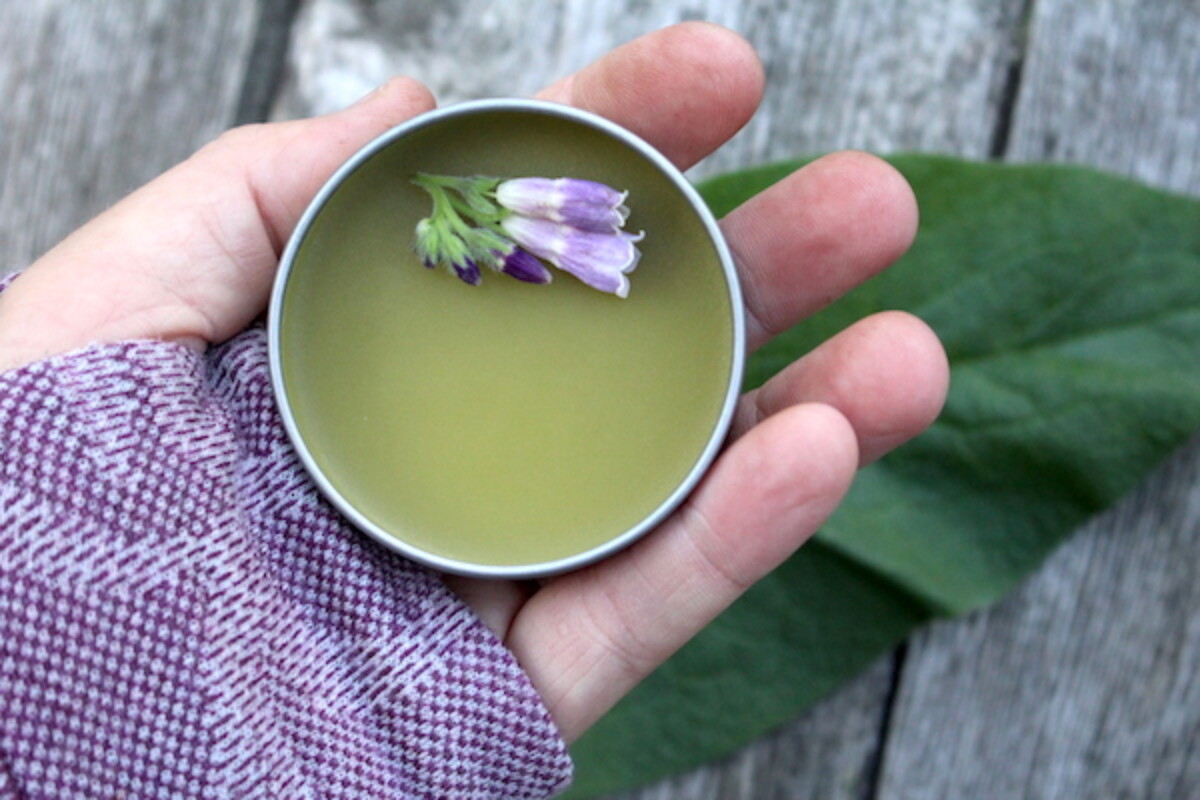
Table of Contents
- Notes from My Homestead
- Benefits of Comfrey Salve
- Important: Don’t Ingest Comfrey
- Ingredients for Comfrey Salve
- Equipment for Comfrey Salve
- How to Make Comfrey Salve
- Salve Consistency Notes
- Storage and Shelf Life
- Recipe Tips & Variations
- Ways to Use Comfrey
- Comfrey Salve FAQs
- Natural Pain Relief & Herbal Remedies
- Comfrey Salve Recipe
- Herbal Salve Recipes
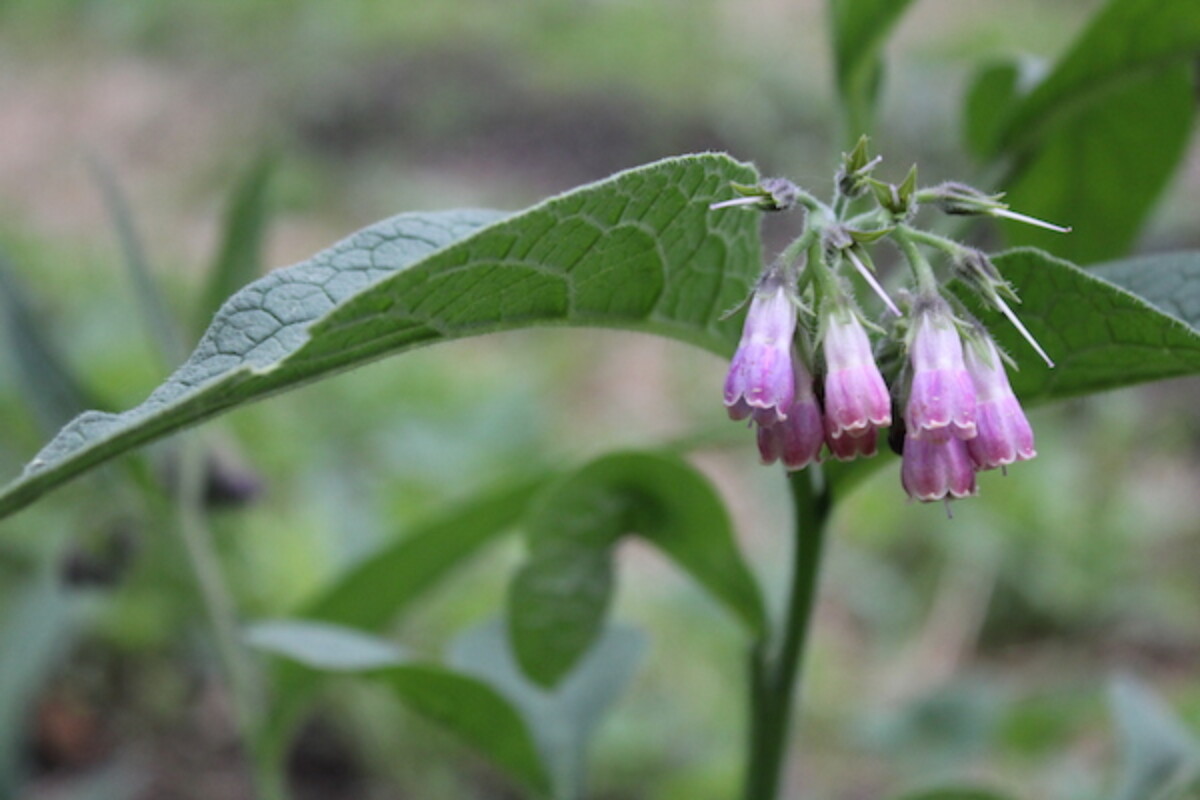
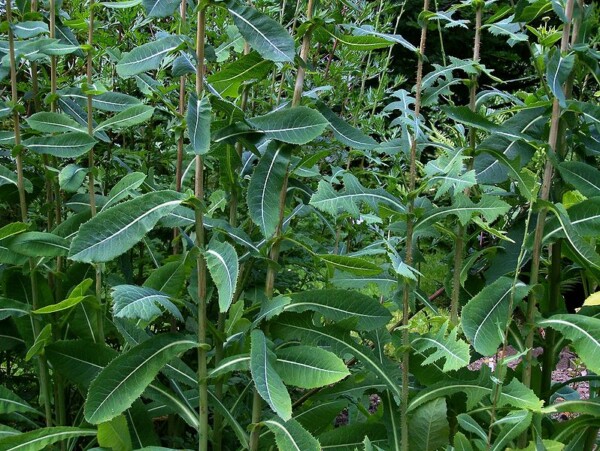
Common comfrey (Symphytum officinale) and Russian comfrey (S. uplandicum) are fast-growing leafy plants that spread aggressively in any garden bed they take a liking to. New plants can sprout from even tiny sections of root left in the soil, which is why some homesteaders call comfrey consider comfrey invasive. It’s also one of the most useful plants you can grow, both as a deep-rooted soil amendment for the garden and as a topical herbal medicine for the medicine cabinet.
I keep comfrey growing right alongside the vegetable garden because the bees love the flowers and I can cut it back several times a season for mulch or for salve. If you don’t have comfrey growing nearby, dried comfrey leaf or comfrey root are both easy to buy online, and both work in this recipe. Comfrey isn’t picky.
If you are using homegrown comfrey, make sure you can properly identify comfrey and avoid lookalikes.
Notes from My Homestead

I use comfrey salve for my chronic low back pain, which I’ve been collecting in small installments for years now. Long summer days bent over the vegetable beds, winters hauling a chainsaw around our woodland homestead to cut firewood, hours splitting logs by hand. None of it is glamorous, but it’s all just part of the deal when you’re trying to live close to the land. The back pays the price.
What surprised me about comfrey salve the first time I made it was how quickly it works. I’d assumed homemade herbal remedies were the kind of thing you used because they were nice to have, not because they actually competed with anything off the pharmacy shelf. Comfrey was the first salve that made me change my mind. By the time we’d cleaned up the kitchen after a batch, my husband had rubbed some into his shoulder and was already moving more easily. We keep a tin in the bathroom, a tin in the truck, and one out in the workshop. It’s the most-used herbal salve recipe in my rotation.
Making more, almost out. Family loves it, and yeah, I think it works better than my other salves for my low back pain. It’s awesome!
Benefits of Comfrey Salve
Comfrey has been shown to reduce inflammation, reduce pain, and speed skin healing. It contains allantoin, a substance believed to promote healing by stimulating the growth of new cells. Herbalists commonly recommend comfrey salves for sprains, strains, muscle pain, arthritis, bruises, and recovering from fractures.
Topical use is the standard modern application. Older herbals recommended consuming comfrey internally for everything from broken bones to digestive complaints, but contemporary research has identified pyrrolizidine alkaloids in the plant that can damage the liver when consumed. Topically though, comfrey remains in active use for pain relief and minor wounds, and the clinical evidence is more compelling than for most folk remedies.
Comfrey for Back Pain
The British Journal of Sports Medicine studied topical comfrey creams for acute back pain and found that pain intensity decreased by 95% in the comfrey-treated group, compared to 38% in the placebo group. Most notably, the study found that comfrey is fast-acting, with relief experienced in about an hour. The study concluded that comfrey root extract showed a remarkably potent and clinically relevant effect in reducing acute back pain.
Comfrey for Osteoarthritis
Multiple studies have shown that comfrey salves reduce pain and increase mobility in patients with osteoarthritis. A study on osteoarthritis of the knee found that pain was reduced by more than 50% with comfrey creams, as opposed to 10 to 15% with placebo during a 3-week study period. Another similar study confirms these results, though it also noted a few cases of topical skin reaction to comfrey.
While pain is reduced and mobility increased, yet another study went further and found that though the symptoms are reversed, the actual measurable inflammation and cartilage breakdown within the knee are not improved. Comfrey may reduce osteoarthritis pain and symptoms, but it isn’t healing the underlying condition.
Comfrey for Sprains
Comfrey’s pain-relieving effects extend to joint sprains. One study found that topical applications of comfrey are as effective as synthetic prescription pain-relieving gels for sprain pain. The study only addressed pain symptoms, however, and didn’t investigate whether comfrey creams helped heal the underlying injury.
Important: Don’t Ingest Comfrey
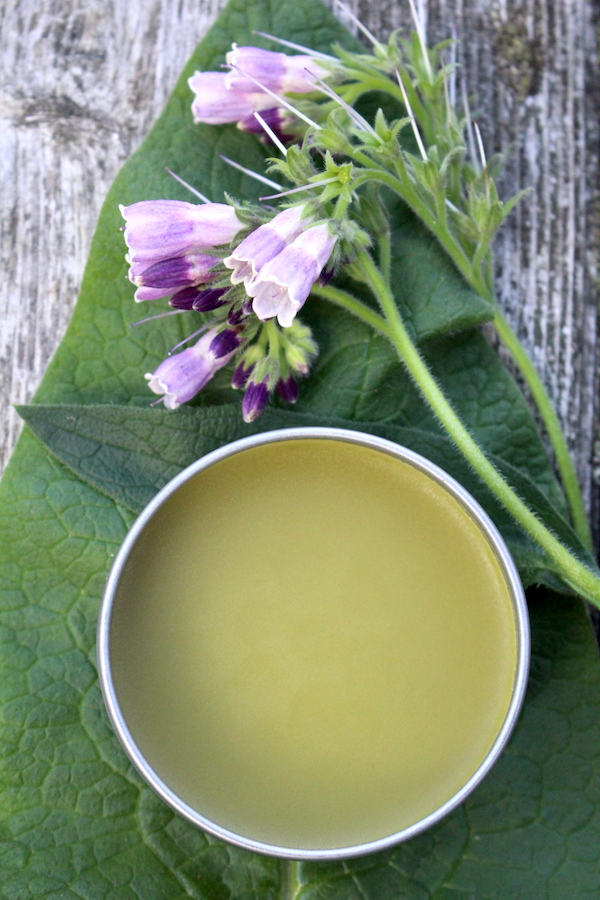
Comfrey is for external use only. Never take it internally in any form, even as tea or tincture.
- The pyrrolizidine alkaloids in comfrey can cause liver damage when consumed, and the doses can build up cumulatively.
- Old herbal manuals that recommend internal comfrey use are out of date. Don’t follow those recipes.
- Topical comfrey salve is the safe and effective way to use this plant. Pyrrolizidine absorption through intact skin is minimal.
- Do a patch test on a small area before using comfrey salve broadly. A small percentage of people develop skin reactions, particularly during longer-term use.
Ingredients for Comfrey Salve
This is a three-ingredient salve. The trickiest part is just deciding which form of comfrey to start with.
- Dried comfrey leaf or root (or fresh, see below): Dried is the default for salve making because dried herbs don’t introduce water into the oil during infusion. Dried comfrey leaf and dried comfrey root are both widely available online, and you can use one or the other or both together. The roots are traditionally considered more potent for pain relief; the leaves are easier to harvest if you’re growing your own. Fresh comfrey works too, with a warm infusion method covered below.
- Olive oil (or another neutral carrier): Olive oil is my default for salves because I always have it on hand. Coconut, sweet almond, grape seed, and jojoba all work too. See the herbal infused oil guide for more on choosing a carrier.
- Beeswax (pellets or grated from a block): Thickens the oil and gives the salve its set. Pellets are easier to measure and melt, but a block of beeswax grated on a cheese grater also works. For a vegan version, substitute candelilla wax and see the vegan herbal salve recipe for ratios.
Equipment for Comfrey Salve
You don’t need much, and most of it is probably already in your kitchen.
- Pint mason jar to hold the herb and oil during infusion
- Fine mesh strainer plus a square of cheesecloth for straining the infused oil
- Small saucepan or double boiler for melting in the beeswax at the end
- Small kitchen scale for weighing beeswax (or use pre-measured 1 oz beeswax bars)
- 2 oz salve tins (or small upcycled glass jars or quarter-pint mason jars) for the finished salve
- For fresh-herb warm infusion only: a dehydrator, Instant Pot, or warm water bath setup (see below)
How to Make Comfrey Salve
Making comfrey salve follows the same basic process as making any herbal salve. The herb infuses into oil, and the oil gets thickened with beeswax.
Choosing Your Comfrey
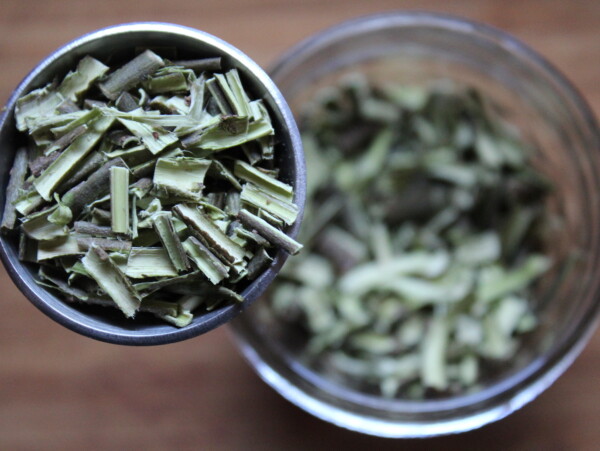
Dried comfrey is the easier starting point for most people. The herb is shelf-stable, widely available online, and doesn’t introduce water into the oil during infusion. Use it whole or roughly chopped to expose more surface area. If you have access to both dried leaf and dried root, a 50/50 mix gives a well-rounded salve.
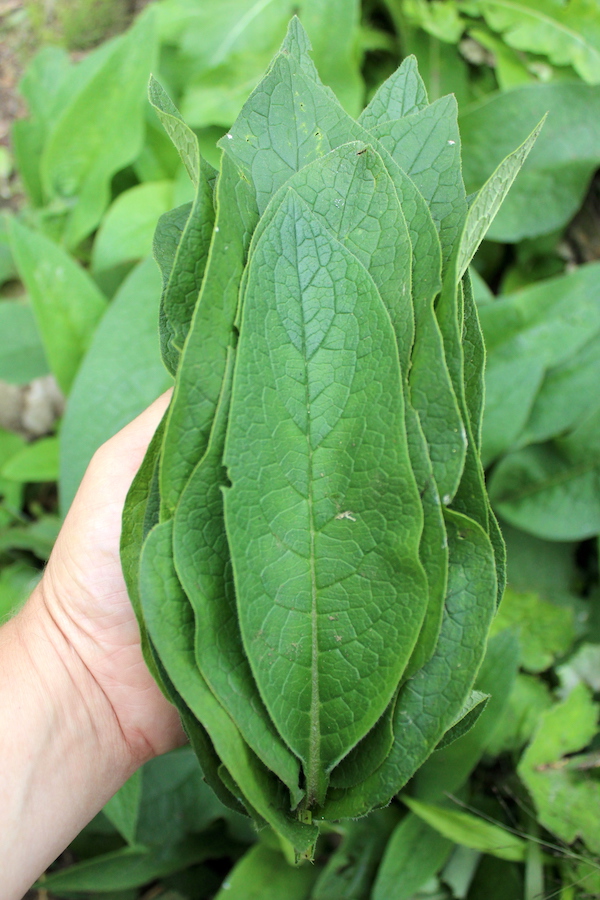
Fresh comfrey from your own garden works too, with the caveat that you need to use a warm infusion method to drive off the water content before it can spoil the oil. Harvest the leaves on a dry day, ideally when the plant isn’t in flower, and chop them coarsely to release the medicinal compounds. Roots can be dug, scrubbed, and chopped fresh as well, though they’re easier to work with after at least a quick drying in a dehydrator.
Infusing the Oil
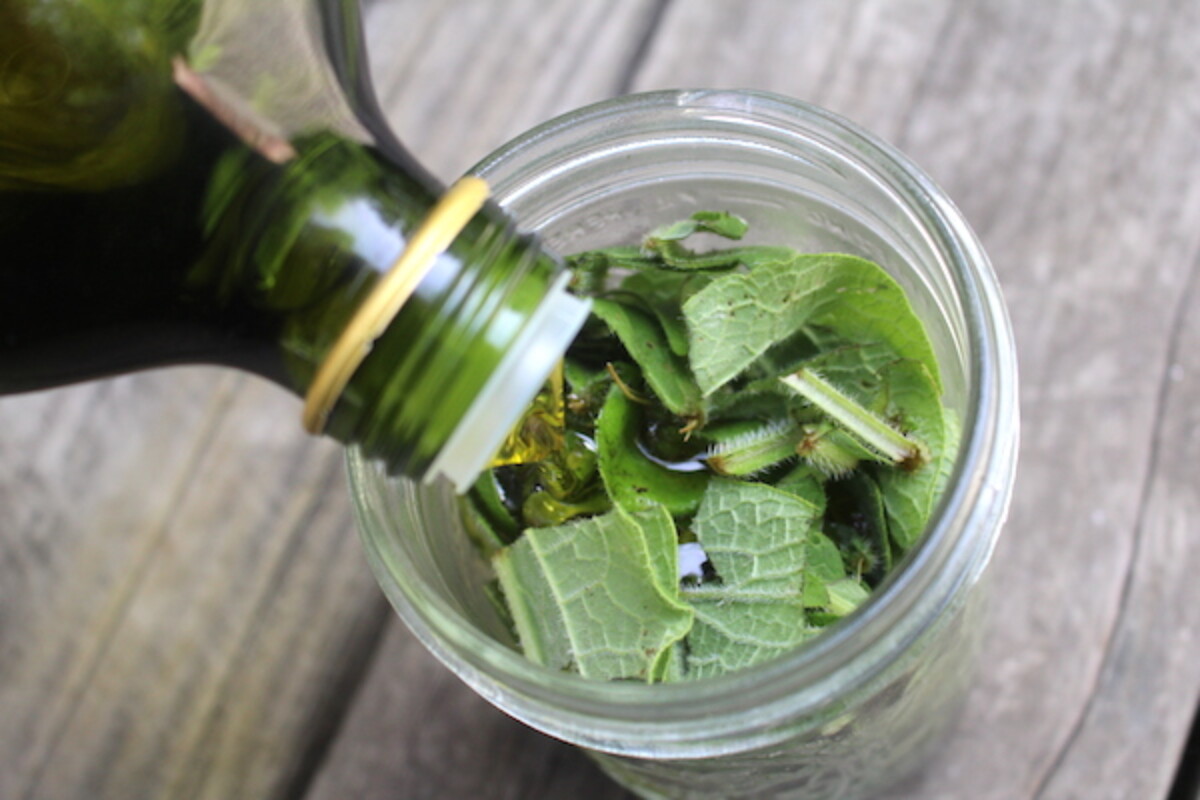
Fill a pint mason jar about two-thirds full with dried comfrey, then cover with oil to within about an inch of the top. For dried herb, the traditional cold infusion method is the simplest approach: cap the jar, set it on a shelf out of direct sunlight, and let it infuse for 4 to 6 weeks before straining.
Shake the jar every few days to keep the herb moving through the oil. Longer infusion gives a more potent salve, so don’t worry if life gets in the way and you leave the jar sitting for two months.
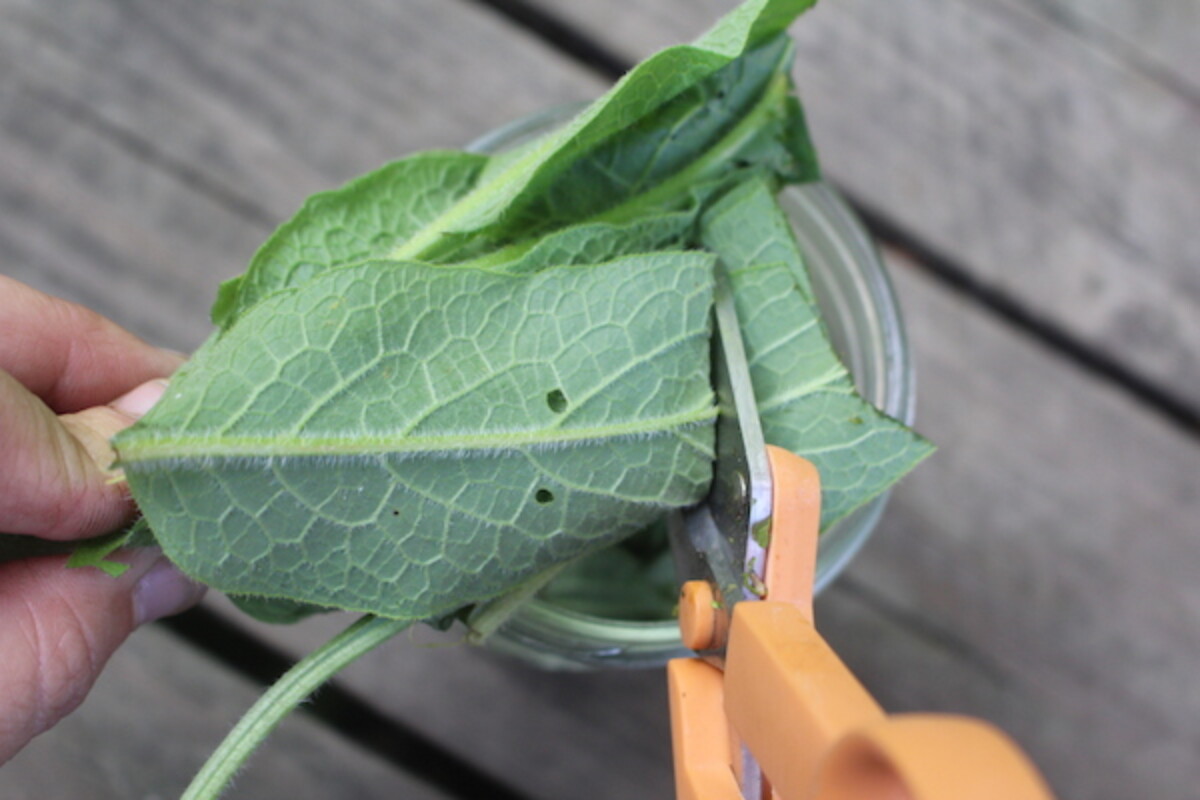
For fresh comfrey, or when you don’t want to wait 4 to 6 weeks, use the warm rapid infusion method instead. The oil needs to be kept warm at around 110 to 120°F for 24 to 48 hours, kind of like homemade yogurt. There are a few different ways to pull this off, depending on what you have in the kitchen.
The simplest method is to set the jar in a bowl of warm (but not hot) water and check the water every few hours, refreshing it as it cools to keep things warm. An Instant Pot on “yogurt mode” works well and is mostly hands-off. A dehydrator set to 115°F is even easier, since it holds temperature automatically and gives you the steadiest warmth of any method I’ve tried.
A slow cooker on its own is too hot. Even the “keep warm” setting runs at least 170°F, which will cook the comfrey and weaken the finished salve. You can use a slow cooker as an insulator by filling it with warm water around the jar, but you’ll need to refresh that water periodically. It works, but it isn’t set-and-forget. Whatever method you use, leave the jar lid loose or off during a fresh-herb warm infusion so excess moisture can evaporate.
Straining and Combining with Beeswax
When the infusion is finished, set a fine mesh strainer over a clean jar or measuring cup, line it with a square of cheesecloth, and pour the oil through. Squeeze the cheesecloth gently to release the last of the oil. Compost the spent comfrey.
The standard ratio for salve is 1 part beeswax to 8 parts oil by weight, which gives you about 4 finished 2-oz tins from a single pint-jar infusion. Return the strained oil to a small saucepan or the top of a double boiler. Add the beeswax and warm gently over low heat, stirring constantly, until the beeswax has melted completely and the mixture looks smooth and uniform. If you don’t have a scale and you’re using pellets, one ounce of beeswax is roughly one heaping tablespoon.
Pour the finished salve into your tins or small jars. Let them sit undisturbed for at least 30 minutes to set up before putting lids on or using.
Salve Consistency Notes
The 1 oz beeswax to 8 oz oil ratio gives you a medium-firm salve that softens on contact with warm skin. Adjust to taste:
- To test before pouring: drop a spoonful onto a cold plate from the freezer. Let it set for 30 seconds, then check the texture.
- Too hard? Gently rewarm the salve and stir in a tablespoon of oil at a time until it’s the consistency you want.
- Too soft? Gently rewarm and stir in a teaspoon of beeswax at a time.
- For a stick or lotion bar: increase the beeswax to about 1 1/4 oz per cup of oil.
- Coconut oil substitution: coconut oil is solid at room temperature, so use slightly less beeswax to compensate (around 3/4 oz per cup of oil).
Storage and Shelf Life
Store finished comfrey salve in a cool, dark, dry place. A pantry shelf, medicine cabinet, or bedside drawer all work. It keeps its potency for 1 to 2 years thanks to the beeswax barrier and the absence of water in the recipe. The main risk to shelf life is the oil eventually going rancid, so use fresh oil when you make a batch and you’ll get the longest life out of it.
If the salve ever smells rancid or shows any sign of mold, toss it. For longer shelf life, you can add a few drops of vitamin E oil when you stir in the beeswax. It acts as a natural antioxidant. If you make more salve than you can use in a year, the small tins make excellent gifts for friends and family who garden or do physical work.
Recipe Tips & Variations
- Leaf vs. root: Root is traditionally considered more potent for deep pain (joints, back). Leaf is easier to harvest and dry. A 50/50 blend gives a well-rounded salve and uses what you have on hand.
- Combination salves: Comfrey pairs beautifully with calendula for skin-soothing or with dandelion for an all-around gardener’s balm. Several readers have written in with a 50/50 comfrey-calendula mix they swear by. The 20+ herbal salve recipes roundup has more pairings worth trying.
- Powdered comfrey: If you’ve ground your dried comfrey to a powder, use 1 to 2 tablespoons per half cup of oil. Powder is harder to strain out cleanly, so double up the cheesecloth and squeeze gently.
- Adding essential oils: Stir in 10 to 15 drops of lavender, peppermint, or another skin-friendly essential oil per cup of finished salve, just before pouring into tins. Peppermint adds a pleasant cooling effect that pairs well with the warming feel of comfrey.
- Vegan version: Substitute candelilla wax for beeswax. See the vegan herbal salve recipe for the right ratio (candelilla is harder than beeswax, so you use less).
Ways to Use Comfrey
The salve is the workhorse, but comfrey has other uses worth knowing about. Fresh leaves can be wilted and applied directly to a bruise or strain as a poultice, wrapped with a clean cloth and left on for an hour or two. The leaves are also one of the most useful soil amendments in the permaculture toolkit, because comfrey is a deep taproot that pulls minerals up from the subsoil where most garden plants can’t reach.
If you’re building out a home apothecary, comfrey salve sits comfortably alongside willow bark for internal pain relief, wild lettuce as another topical pain option, plantain salve for bites and scrapes, and yarrow salve for cuts that need help closing. For a broader look at what to grow or stock, the 100+ medicinal plants guide covers the full apothecary.
Comfrey Salve FAQs
No. Comfrey is one of the herbs that isn’t considered safe during pregnancy or nursing, even applied topically. The pyrrolizidine alkaloids in comfrey can be absorbed through the skin in small amounts, and there’s no clear safety threshold established for pregnancy. Skip comfrey salve in favor of safer options like plantain salve or calendula salve until after you’re done nursing. Check with your doctor or a clinical herbalist if you’re not sure.
Both work, and you can use them together. The roots are traditionally considered more potent for deeper pain like back and joints. The leaves are easier to harvest if you’re growing your own and are more widely available dried online. A 50/50 mix of leaf and root gives a well-rounded salve. Fill a pint jar about two-thirds full with whichever you have, then cover with oil.
Herbalist recommendations vary, but a commonly cited guideline is to limit use to no more than 10 consecutive days, and no more than 4 to 6 weeks of total use in a calendar year. Some sources are more permissive, allowing up to 3 weeks of continuous use. For chronic pain, alternate comfrey with another pain-relieving salve like arnica or wild lettuce to give your system regular breaks while still getting relief.
Salve separation usually means the beeswax and oil weren’t fully combined, or moisture got into the mixture. Melt the beeswax completely into the warm oil over gentle heat while stirring constantly, then pour the mixture into containers while it’s still warm and fluid. If you used fresh comfrey that released water during infusion, that moisture can cause separation, which is why dried herb is the safer default. A separated salve isn’t ruined. You can gently rewarm it, stir until uniform, and re-pour.
A slow cooker on its own runs too hot for fresh-herb infusion. Even the “keep warm” setting is at least 170°F, which will cook the comfrey and weaken the salve. You can use a slow cooker as an insulator by filling it with warm water around the jar, but you’ll need to refresh that water periodically. For a truly hands-off method, a dehydrator set to 115°F or an Instant Pot on yogurt mode both hold the right temperature automatically. The cold infusion method with dried comfrey skips all of this and just needs 4 to 6 weeks on a shelf.
Natural Pain Relief & Herbal Remedies
If you tried this Comfrey Salve recipe, or any other recipe on Practical Self Reliance, leave a ⭐ star rating and let me know what you think in the 📝 comments below!
And make sure you stay in touch with me by following on social media!
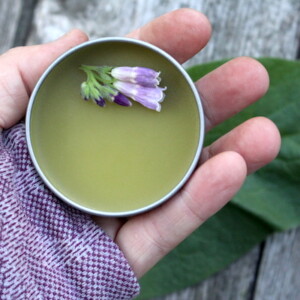
Comfrey Salve
Ingredients
- 1 1/2 cup dried comfrey leaf, root, or a mix, enough to fill a pint jar about 2/3 full; fresh herb works with the warm infusion method, see notes for fresh herbs
- 1 to 1 1/2 cups Olive Oil, to fill the pint jar, or coconut, sweet almond, jojoba, or grapeseed
- 1 ounce beeswax
Instructions
- Fill a pint mason jar about two-thirds full with dried comfrey leaf, root, or a mix of both.
- Cover the herb with olive oil, leaving about an inch of headspace at the top of the jar.
- Cold infusion (dried herb): cap the jar and set it on a shelf out of direct sunlight for 4 to 6 weeks. Shake every few days to keep the herb moving through the oil.
- Warm infusion (fresh herb): leave the jar lid loose and keep the jar at 110 to 120°F for 24 to 48 hours. A dehydrator set to 115°F or an Instant Pot on yogurt mode work best. A warm water bath in a bowl works if you refresh the water every few hours. Avoid a slow cooker as a direct heat source.
- Strain the infused oil through a cheesecloth-lined fine mesh strainer into a clean heat-proof container. Squeeze the cheesecloth gently to release the last of the oil, then compost the spent comfrey.
- Return the strained oil to a small saucepan or double boiler. Add the beeswax (1 oz per cup of oil).
- Warm gently over low heat, stirring constantly, until the beeswax has melted completely and the mixture is smooth.
- Pour the finished salve into 2 oz tins or small glass jars.
- Let cool undisturbed for at least 30 minutes before putting lids on or using.
Notes
A Note from Your Family Herbalist
I’m a family herbalist, trained by more than 20 years of hands-on work with medicinal plants and rounded out with coursework through the Herbal Academy of New England. That means I know my way around the plants in this post, and I’ve personally made and used the remedies I write about, often many times over. But there’s a real difference between knowing what works on my homestead and knowing what’s right for you.
Medicine is a personal affair. Every body is different, every medical history is different, and herbs interact with medications, pregnancy, nursing, and existing health conditions in ways no general blog post can anticipate. Even mild medicinal plants like chamomile cause allergic reactions in some people, so what sits comfortably on my own medicine shelf might not be the right choice for yours.
For guidance tailored to your situation, there are three directions I’d point you:
- See a local clinical herbalist. A practicing clinical herbalist can take your full health picture into account, recommend the right herb and dose for you, and adjust the protocol as you go. Ask around at your nearest food co-op, herb farm, or natural-foods store; most communities have at least one.
- Talk to your doctor before adding any new herb to your routine, especially if you take prescription medications, are pregnant or nursing, or are managing a chronic condition. A good doctor will welcome the conversation.
- Educate yourself, the way I have. The Herbal Academy of New England runs the courses I credit with sharpening my own practice. Their Introduction to Herbal Medicine course is where I’d start. I’ve also taken and recommend their Mushroom Course and their Botany and Wildcrafting Course. All three are well-paced and easy to follow at home.
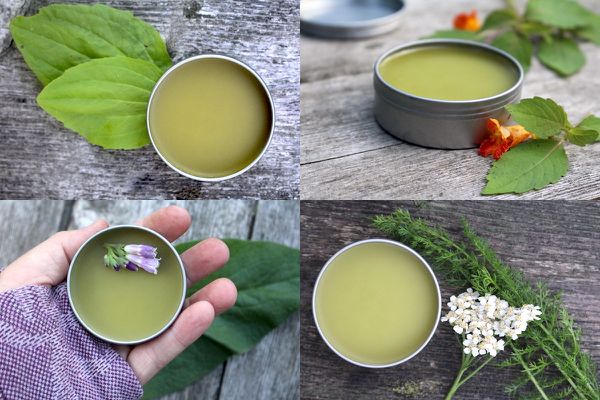
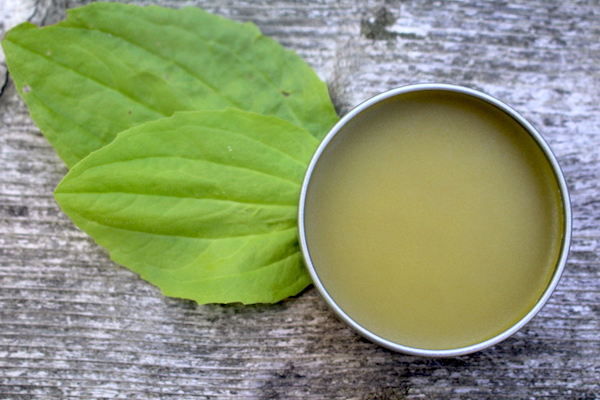
Herbal Salve Recipes
Find the perfect recipe
Searching for something else? Enter keywords to find the perfect recipe!










I just made this with crockpot infusion of wet leaves for 24 hours, I put some of that on my husband because he is healing broken bones and then I heated and put in the beeswax and it was like magic! It made a smooth nice salve that is not drippy, he can apply at will. Thank you very much!
You’re very welcome. So glad you liked the recipe.
Thank you so much for this informative page! Is this salve safe to use for pregnant women?
No, comfrey is one of the herbs that is not considered safe for use during pregnancy. Anytime you are using an herb, you always want to make sure that you research the contraindications for that herb to see if it is contraindicated for certain conditions or medications that you might be taking or check with your physician.
Thank you, I had indeed researched that after my question 😊
You’re very welcome. It’s always a good idea to do your own research and get confirmation.
You mentioned don’t let the oil get over 140 degrees but is this 140 degrees Fahrenheit or Celsius?
Thank you!
Sorry about that. That would be 140 degrees Fahrenheit. You definitely don’t want to infuse oils at 140 degrees Celsius. That would be equal to 284 degrees Fahrenheit and remember you’re wanting to gently infuse the herbs in warm oil, not fry them.
when I made comfrey sauve the olive oil and the and bees wax separated into layers. Is that typical???
I have never had that happen before with olive oil and beeswax.
I have made comfrey salve twice with your recipe using the dried leaves 6 week infusion method to make the infused oil. each time I made it , after pouring out the combined beeswax/infused oil into the jar and letting it cool II have noticed that there are 2 distinct layers ,I m assuming that they are the beeswax and the infused oil Ia there a way to avoid this? It seems that you are either getting a layer of beeswax with an infused oil layer underneath or vice versa. Help me understand what is going on here and should I be concerned about it?
I have never experienced anything like that before when making a salve. What kind of oil are you using for your infusion? And are you heating the oil and beeswax together to melt the beeswax?
Following your formula as close as possible. Mixed dried comfrey leaves with olive oil and let infuse slowly over 4-6 weeks. heated infused oil in double burner and melted beeswax completely. Poured in clean jars and let them set. Its not terribly noticeable but if you are looking for it is , it is easy to see. The first batch might have been stronger because there was a distinct greenish layer and a more buff colored one. Seems to work for pain etc but just to be sure i have been digging deep when taking salve out so as to get both layers
That is certainly strange. It sounds like you did everything right. I am not sure why it would have done that. You didn’t happen to get water in there by accident?
You stated to infuse the dried comfrey and oil for 2-6 weeks. How do you know when it’s ready?
It’s actually 4 to 6 weeks. I would only stop the infusion at 4 weeks if you need to use it right away and don’t have time to wait the full 6 weeks. The longer you can infuse it, the better.
I’ve had my comfrey in a jar with olive oil for seven months. I forgot about it. Is it too late for me to use it?
I would just check it. If it smells ok and you don’t see any mold growing, it should be fine. I have done this many times.
My comfrey leaves are so prickly. I just crushed them up to infuse into oil and I can still feel the prickles. Will they end up in the salve and make it itchy? I plan to strain through a cheesecloth.
Thanks
Mine wasn’t prickly at all, and the leaves I used were quite prickly. I didn’t have an issue with it.
I have semi dried (in the hot water cupboard) and also did a fresh leaf batch in the hot water cupboard of comfrey infused oil.. what are the chances the fresh leaf infused oil goes rancid? Is this a common thing to happen??
Also, if I want to add calendula oil to it too, would you recommend just doing half and half of each infused oil??
Yes, fresh plant material may leach water content into the oil causing it to spoil quicker than if you had used dried herbs. It’s not the end of the world, you can still use it, just be aware that it won’t stay potent as long. Yes, you can use half calendula in with your comfrey or whatever ratio you desire.
I make a comfrey calendula cream that my whole family uses. I will use shea butter instead of my neighbour’s beeswax for the vegan friends that I supply. That’s a great article you wrote, and I like the citations you give in your answers!
Hi i love this but i do have a question since its hard for me to actually find or grow actual comfrey here where i am from in florida. Can this still be potent if I would have Comfrey tncture and use that instead of infused oil, is it do-able and would it have same potent? If so how much of tncture should I use, first time making something with comfrey.
Please and thank you for response.
I personally would use dried comfrey:https://www.amazon.com/Starwest-Botanicals-Organic-Comfrey-Sifted/dp/B003AYEHGG/ref=as_li_ss_tl?keywords=dried+comfrey&qid=1572562269&sr=8-5&linkCode=sl1&tag=selfrelianc0e-20&linkId=474b7611a8f3d3c03f32dc066dc9ffb1&language=en_US
With tinctures, you need to make sure all the water is cooked out of your salve, otherwise, it’ll mold. I’ve never made this recipe with a tincture, so I’m not really sure how much you should add.
Hey Ashley,
Trying the comfrey salve thing. I dug fresh roots, and so followed the non dried method. My question is the liquid in my pint jar got a bit over 140 in the crock pot so I shut it down for a bit.
Should I just cycle the pot on and off as needed, and is a static temperature crucially important ?
Thanks, kevin
It’s not crucial that you keep it at a static temperature so much as you want it to be below 140. Do you have a setting on your crock pot to keep it warm?
Hello! Thanks for the recipe here. Just wanted to ask how much a cup of dried root is in grams? Apparently conversion isn’t standardised so it depends on what is put in the cup. Thanks very much.
While it is true that you would normally want to weigh out the root in order to get a more accurate measurement, it is not necessary when making an infused oil. The amounts of herb in an infused oil recipe do not need to be exact. You can even get a container and fill it 2/3 of the way full of your root and then fill the jar with oil.
Just wondering how long you infuse in crock pot on low?I
I’ve been doing the double boiler. Picked up crock at garage sale.thought I’d use that instead.
Kind Regards
Kathy jo
You want to infuse the oil for 24 hours if using a crock pot.
Making more, almost out. Family loves it, and yeah, I think it works better than hemp CBD salves for my low back pain. It’s awesome!
We have plenty of comfrey in our garden. How could l make a comfrey police to apply to my strained thigh and buttock muscles.
Here is a great article from The Herbal Academy on how to make an herbal poultice.
https://theherbalacademy.com/how-to-make-a-poultice-with-herbs/
Comfrey is truly magical in my opinion . I have been making balm tubes of it for years . Meadow foam seed oil is excellent to use as well, for it has a long shelf life . Coconut oil is my second choice .
Spring is almost here so I can hardly wait to see our comfrey plants come alive . They are very hardy plants that can survive -30 plus winters.
Thank you for the excellent article on comfrey !
Can mineral oil be used in place of olive oil?
You can use just about any oil you’d like in this recipe (olive, almond, etc). I actually had to look up what mineral oil is, because I’ve never used it, but apparently it is an oil that is used on skin, so yes, it should be fine in this recipe. I’m not sure about the consistency, so you may have to play around with the amount of bees wax. (For example, if you use coconut oil instead then you use ever so slightly less beeswax for the same consistency since coconut oil is solid at room temperature)
+Hello, thank you for a beautiful article. I’m interested in learning practical self reliance and find you. I have a few questions if you can assist:
a) can you give a guide on usage on all parts of the comfrey plant. You’ve touched on the leaves and the roots. What about the stalk and flowers?
b) when is the best time to harvest comfrey? Is there a past time to harvest?
c) can an infusion be too potent?
-for ex..double infusion (not sure if this is a term): first infusion then filtered and using new leaves but using the first round of filtered infused oil again for another 4-6 weeks. Or is this a waste?
d) is there a max oil infusion limit? I know you recommend 4-6 weeks. Is there a time frame that the infusion has reached peek infusion?
e) is infusing wet leaves more potent than dry leaves? Will both methods result in the same color? I’m thinking the wet leaves may be more effective cause you want the green liquids of the leaves, right?
Thank you for your time and patience with my newbie questions. I read mostly all the comments before asking.
Dee
I am only familiar with using the roots and the leaves. The best time to harvest roots and leaves is when the plant is not in flower. Some people do double infuse oils but I would recommend getting with a knowledgeable herbalist that can give you more specifics on some of this. The plant will give out the medicine that it has to give and then once that has happened it can’t give any more. You can go beyond the 6 weeks but I don’t know that you will get any more benefit. Using fresh plant material is often a way to get a more potent oil but you want to do a warm infusion for that, otherwise the excess moisture can spoil the oil.
Well written, engaging and down to earth. I appreciate the information as I’m going on a quest to go off the grid on the grid.
Ashley: how is the best way to DRY Comfrey Roots & Leaves. could you let me know on my E-Mail. Thanks.
I would use a dehydrator. They wilt and mold very quickly for some reason, and I’ve tried sun drying them and hanging them to dry. The leaves in particular always seem to mold before they dry. Maybe it’s out humid climate, but I’ve had success sun-drying other herbs without issue. It’s something about comfrey leaves that gives me trouble when I try to dehydrate them outside a dehydrator. (Sent this to you via email too, good luck!)
I love this idea.
I only use topicals. No oral meds ever. This is a awesome thing!! I have a sous vide, which would hold that perfect temp!!
I’m excited to try this.
I just have to find organic or as natural comfrey leaves!🌼☘️🍀🖖🌱🐛
This looks great. I used to have a garden with a lovely comfrey patch, I wish I’d had this recipe then! Just a hint for those that have blocks of beeswax: an old cheese grater is a wonderful thing to use on this when working with such small amounts. Just gratexwhat you need. 😊