
Affiliate disclosure: This post may contain affiliate links. Please see our Privacy Policy.
Vegan salve delivers the same skin-soothing herbal oils as a traditional beeswax salve, using plant waxes and butters in place of anything that comes out of a hive. It spreads smoothly, sets up firm, and keeps for a good long while on the shelf.
If you’ve been working your way through my herbal salve recipes and hitting the beeswax wall every time, this is the formula that gets you around it. The method is close to the one in my guide to making herbal healing salves, with one meaningful difference in how the base is built.
Table of Contents
- Notes from My Homestead
- What Vegan Salve Is Used For
- Ingredients for Vegan Salve
- Equipment for Vegan Salve
- How to Make Vegan Salve
- Vegan Salve Consistency Notes
- Storage and Shelf Life
- Recipe Tips & Variations
- Ways to Use Herbal Salve
- Vegan Salve FAQs
- Herbal Salve Basics
- Vegan Herbal Salve Recipe
- Herbal Salve Recipes
At this point, I have dozens of salve recipes posted here, and the question I get more than any other is how to adapt them for someone who doesn’t want animal products on their skin. It seems like it should be a simple answer, and for years I gave people a simple answer, which was to swap in a plant wax and call it done. That advice was wrong, and the emails I got back told me so.
There just isn’t a one-to-one substitution for beeswax in a salve. Plant waxes behave differently in skincare, and the hardest of them, carnauba wax, turns a decent batch of calendula oil into something closer to a crayon if you use it at beeswax proportions. I tried it more than once, always with the same crumbly result, and I’d more or less given up on the whole idea.
Then I came across a vegan salve recipe in The Mountain Rose Herbs Book of Natural Body Care that solved the problem in a way I hadn’t thought to try. Rather than fighting the hardness of the carnauba, the formula accepts it’s strengths, and softens the whole thing back down with plant butters. The result is a salve that scoops out of the tin with your fingertip and melts on contact with warm skin. I asked Timber Press for permission to share the recipe here, and they graciously agreed.
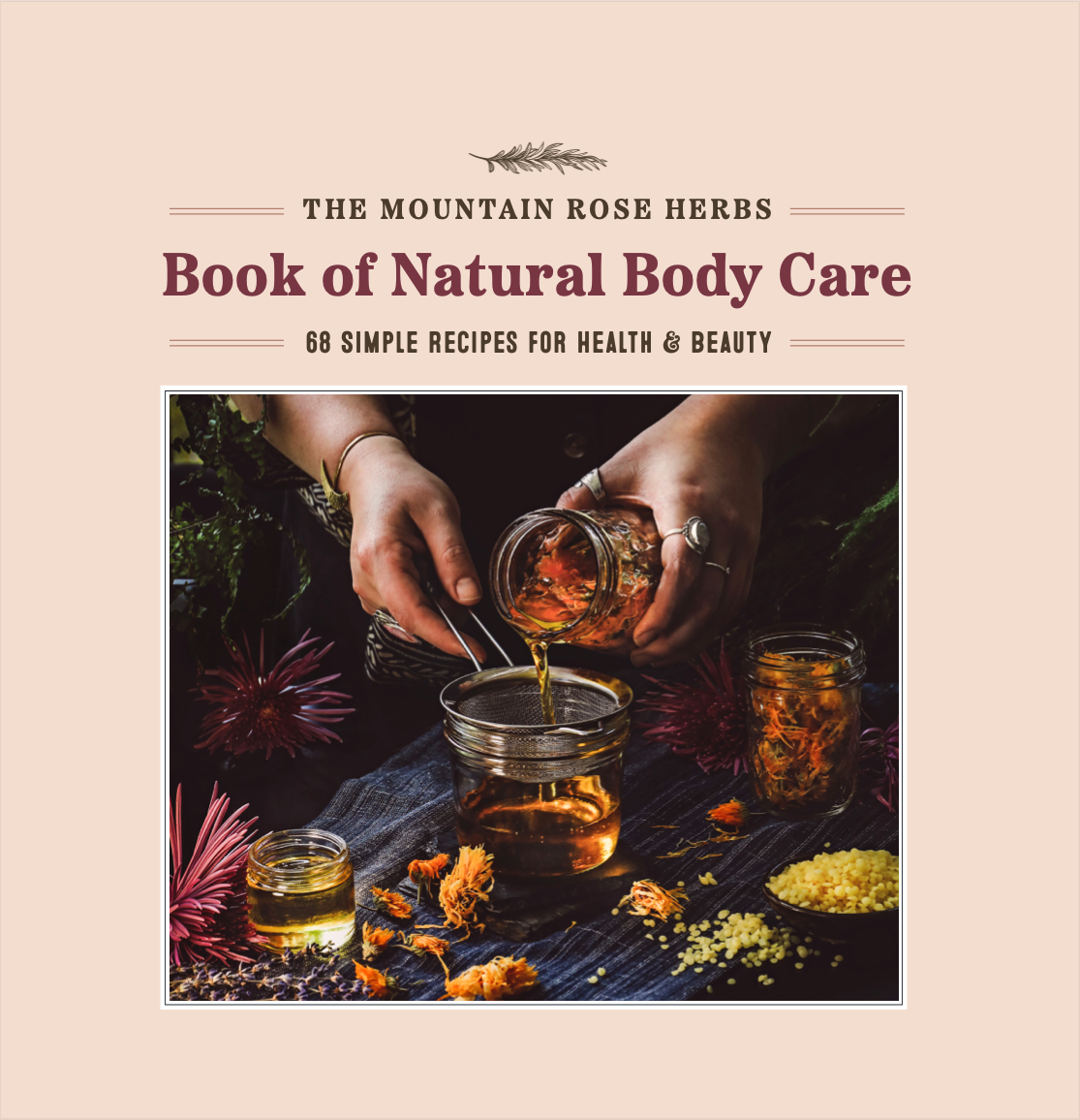
Taken from The Mountain Rose Herbs Book of Natural Body Care © Copyright 2023 by Mountain Rose Herbs and Shawn Donille. Published by Timber Press, Portland, OR. Used by permission of the publisher. All rights reserved.
Notes from My Homestead

My first few attempts at a beeswax-free salve came out of a stubborn streak more than anything else. A reader had written in asking whether she could make my comfrey salve without beeswax, I told her to try carnauba, and then it occurred to me that I ought to actually test what I’d just recommended. The batch set up hard as a hockey puck and cracked into pieces when I tried to scrape any out. I made it again with less wax and got something greasy that never fully set. Neither one was a salve.
What I was missing is that carnauba doesn’t want to be the whole structure. In this formula the butters carry most of the body and the wax just holds everything together, which is a completely different job than beeswax does. Once I made a batch this way it went straight into the basket by the kitchen sink where I keep salve for cracked winter hands, and honestly I reach for it as often as I reach for the beeswax version. It sets up a little glossier, and it holds up better in a hot truck in August.
What Vegan Salve Is Used For
A salve is really just a delivery system. The herbs do the work, the oil carries them, and the wax holds the whole thing in a form you can keep in a pocket. So what your vegan salve is good for depends almost entirely on which herbal infused oil you build it on.
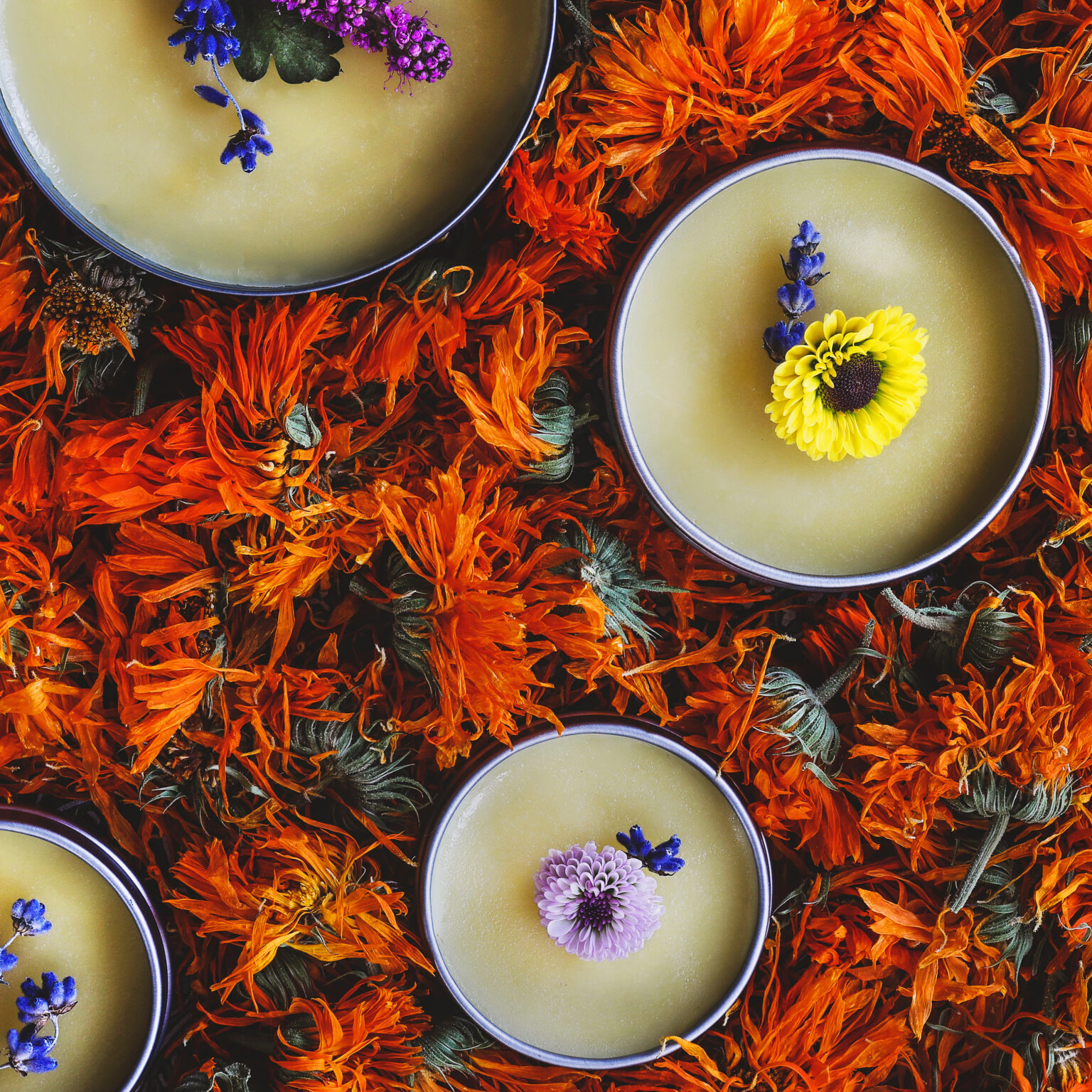
This version uses calendula, which is the one I’d suggest if you’re only going to keep a single salve on hand. Calendula salve has a long history in skin preparations, and Memorial Sloan Kettering’s herb database notes that it’s used topically for wound healing and has shown anti-inflammatory and antimicrobial activity in laboratory work. A systematic review of calendula extract for wound healing found reasonable evidence in animal studies for faster resolution of the early inflammatory stage, with mixed but generally encouraging results in the human trials. That lines up with what herbalists have said about it for centuries, and with what I see on my own scraped knuckles.
I keep a tin of this in the truck, one by the sink, and one in the barn. It’s what I reach for most of the year for:
- Dry, cracked hands from a Vermont winter
- Chapped lips, windburn, and raw noses in cold weather
- Minor scrapes, splinters, and garden nicks once they’ve been cleaned
- Sunburn and general summer skin irritation
- Dry patches on elbows, heels, and cuticles
A note on what salve isn’t for: Skip it on deep cuts, punctures, serious burns, or anything that looks infected. A salve seals the surface, which is the last thing a wound like that needs. Calendula and chamomile are both in the daisy family, so patch test on a small area first if you react to ragweed or other plants in that family.
Ingredients for Vegan Salve
The proportions are what make this work, so it’s worth understanding what each piece is doing before you start swapping things. Roughly speaking, you’re using equal parts infused oil and plant butters, with about half that volume again in carnauba wax.
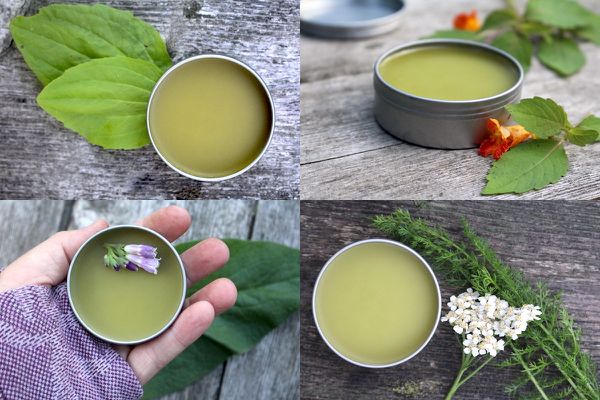
- Calendula infused oil (or any herbal infused oil you like): This is where the medicine lives. I use calendula because it suits general skin care, but plantain, comfrey, or yarrow oil all drop straight into this base.
- Mango butter: A soft, nearly scentless butter from mango seeds. It gives the salve body without making it greasy, and it’s what keeps the carnauba from turning brittle.
- Kokum butter: Harder and drier than mango butter, and it helps the finished salve hold its shape at room temperature. If you can’t find it, shea or cocoa butter will get you close.
- Organic carnauba wax: Harvested from the leaves of a Brazilian palm, and one of the hardest natural waxes there is. It sets the salve and gives it a glossy finish, but it needs the butters alongside it to stay spreadable.
- Vitamin E oil: An antioxidant that slows the oils going rancid, which stretches the shelf life considerably.
- Lavender and chamomile essential oils (optional): Purely for scent and a bit of extra skin-soothing character. Leave them out entirely if you’re sensitive to fragrance.
Equipment for Vegan Salve
You don’t need much beyond what’s already in the kitchen, though carnauba’s high melting point does mean you want gentle, controllable heat.
- A double boiler, or a heat-proof bowl set over a pot of simmering water
- Measuring spoons, or a small digital scale if you’d rather weigh
- A silicone spatula or small whisk for stirring
- 2 oz salve tins, 1 oz lip balm tins, or small glass jars
- 4 oz window tins if you’re making these as gifts
How to Make Vegan Salve
Once your infused oil is ready, the salve itself takes about fifteen minutes of hands-on work. The only part that takes patience is the melt, and the only part that takes real patience is the setting.
Choosing and Infusing the Oil
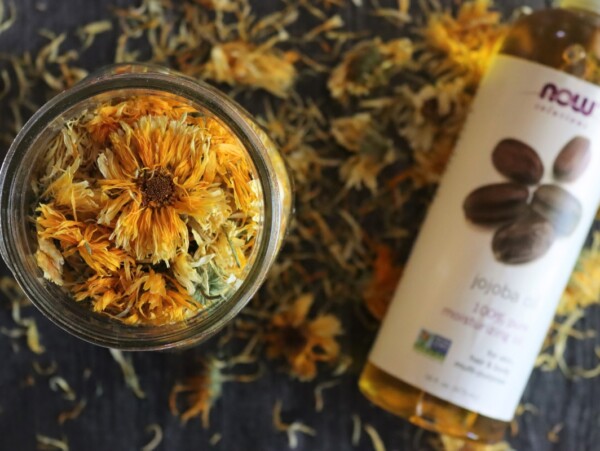
Start with a finished herbal infused oil. If you’re making calendula oil from scratch, dried flowers are the standard choice, and my calendula oil tutorial walks through both the slow cold infusion and the faster warm method. The general approach works for any plant you want to use, and the herbal infused oil guide covers how to pick a carrier oil and how long different plant material needs to steep.
Strain the oil well before you use it here. Any stray plant material or water left in the oil will shorten the shelf life of the finished salve, and once it’s set into wax you can’t do much about it.
Melting the Butters and Wax
Put the infused oil, both butters, and the carnauba wax into the top of a double boiler over medium heat. Carnauba melts at around 180°F, which is quite a bit hotter than beeswax, so this takes longer than you’d expect and there’s a real temptation to turn up the burner. Don’t. Direct or rushed heat will scald the oils and cook the good out of your infusion, and the whole point of a salve is what the oil is carrying.
Stir now and then and let it come along at its own pace. You’ll see the butters go first, then the wax, and the mixture will look slightly cloudy until the last of the carnauba disappears. Wait for it to run completely clear.
Pouring and Setting
Pull the pan off the heat and stir in the vitamin E oil and any essential oils quickly, then pour immediately. Carnauba begins to set the moment it comes off the burner, and if you dawdle you’ll be spooning slush into your tins instead of pouring a clean, level surface.
Leave the tins open at room temperature to set. Carnauba is a slow-setting wax, and the salve will keep firming up for several days after it looks solid, so give it three days before you put the lids on or start using it. If you cap it early you’ll trap condensation against the surface, which is how salve goes bad early.
Vegan Salve Consistency Notes
Plant waxes are less forgiving than beeswax, so check your consistency before you commit the whole batch. Drop a spoonful onto a cold plate and give it a minute. It should firm up enough to hold a fingerprint but still smear when you press it.
- Too hard or crumbly: Too much carnauba for the amount of butter. Rewarm the batch gently and stir in another spoonful of mango butter.
- Too soft or greasy: Rewarm and add a small amount of additional carnauba, a quarter teaspoon at a time. It goes further than beeswax does.
- Grainy texture: Usually the butters cooling unevenly rather than a ratio problem. Rewarm until fully liquid, then cool the tins somewhere consistent rather than moving them around.
Storage and Shelf Life
Kept somewhere cool, dark, and dry, this salve holds up for about two years, which is noticeably longer than most beeswax salves manage. The vitamin E is doing part of that work, and the butters are more stable than a straight oil-and-wax base.
Dig it out with clean, dry fingers, and give it a sniff now and then. Oils turn eventually, and rancid oil smells sharp and a bit like old crayons. Any mold, any off smell, and it goes in the compost.
Recipe Tips & Variations
- Candelilla wax instead of carnauba: Candelilla is the other common vegan wax and it’s a bit softer than carnauba, though still harder than beeswax. If you’re converting one of my regular salve recipes rather than making this one, use roughly half to three quarters as much candelilla as the beeswax called for, so about 1/2 oz to 3/4 ounce per cup of oil in place of 1 oz of beeswax.
- Swapping the butters: Shea butter substitutes for mango butter without much change, though it has a stronger scent of its own. Cocoa butter can stand in for kokum, but it’s harder, so cut back slightly.
- Different infused oils: Any of my salve recipes can be rebuilt on this base. Jewelweed for poison ivy, arnica for bruises, cayenne for aching joints, or St. John’s wort for nerve pain all work here.
- Skip the essential oils: They’re optional. If you’re making this for a baby, for someone pregnant, or for anyone with fragrance sensitivity, leave them out and you’ll lose nothing but the scent.
- Scaling up: The recipe multiplies cleanly. If you’re making a big batch for gifts, melt it in stages so you’re not holding a large volume of oil at temperature for a long stretch.
Ways to Use Herbal Salve
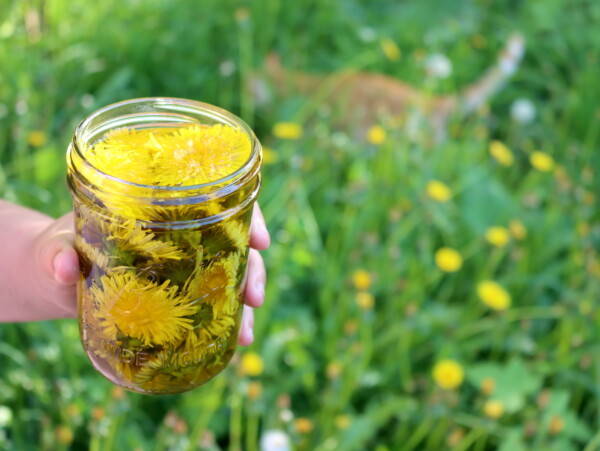
Once you’ve got the base down, the fun is in choosing what goes into the oil. I keep a rotation going through the season, starting with dandelion in April when there’s nothing else blooming, moving to chickweed and calendula through the summer, and finishing with whatever’s left in the drying racks come fall. If you grow your own, calendula is about as easy as garden herbs get and it’ll keep blooming until a hard frost knocks it back.
Salve is only one of the things you can do with a good herb harvest, of course. The same calendula that goes into this salve makes a fine tincture, and if you’re new to putting up your own remedies my overview of herbal preparations lays out the whole range, from tinctures and oxymels to specialty salves for particular jobs.
Vegan Salve FAQs
No. Carnauba is much harder than beeswax and a one-to-one swap produces a brittle salve that cracks instead of spreading. It needs to be balanced with plant butters, which is why this recipe uses mango and kokum butter alongside the wax rather than oil alone.
Both are plant waxes used in place of beeswax. Carnauba comes from the leaves of a Brazilian palm and is the harder of the two, with a glossy finish and a melting point around 180 degrees Fahrenheit. Candelilla comes from a desert shrub and is somewhat softer, though still harder than beeswax. Candelilla is the easier one to substitute into an existing salve recipe, at about half to three quarters the amount of beeswax called for.
Yes. The base is neutral, so any strained herbal infused oil drops straight in. Calendula is a good general choice for skin care, but plantain, comfrey, yarrow, jewelweed, arnica, and St. John’s wort all work the same way in this formula.
Grainy texture usually means the butters cooled unevenly, and it can be fixed by rewarming the salve until fully liquid and letting it cool undisturbed in one place. Crumbly texture means there is too much wax for the amount of butter, so rewarm the batch and stir in another spoonful of mango butter.
Stored in a cool, dark, dry place, this salve keeps for about two years. The vitamin E oil slows the carrier oils from going rancid, and plant butters are more stable than a plain oil and wax base. Discard any salve that smells sharp or rancid, or that shows mold.
Herbal Salve Basics
If you tried this Vegan Salve recipe, or any other recipe on Practical Self Reliance, leave a ⭐ star rating and let me know what you think in the 📝 comments below!
And make sure you stay in touch with me by following on social media!
Vegan Herbal Salve Recipe
Equipment
Ingredients
- 3 Tbsp calendula-infused oil, or other herbal infused oil
- 2 Tbsp mango butter
- 1 Tbsp kokum butter
- 4 tsp organic carnauba wax
- 1/4 tsp vitamin E oil
- 9 drops lavender essential oil, optional
- 9 drops chamomile essential oil, optional
Instructions
- Place the calendula oil, butters, and wax in a double boiler over medium heat, and slowly and gently melt the butters and wax.
- Once the ingredients are fully melted, remove from the heat and quickly stir in the vitamin E oil and essential oils.
- Immediately pour the mixture into jars or tins, as it will start to set as soon as you remove it from the heat.
- Allow the salve to fully set at room temperature before putting on the lids or using it. Because carnauba is a slow-setting wax, we like to give this salve 3 days to set.
- When stored in a cool, dark place, this salve will last up to 2 years.
Notes
A Note from Your Family Herbalist
I’m a family herbalist, trained by more than 20 years of hands-on work with medicinal plants and rounded out with coursework through the Herbal Academy of New England. That means I know my way around the plants in this post, and I’ve personally made and used the remedies I write about, often many times over. But there’s a real difference between knowing what works on my homestead and knowing what’s right for you.
Medicine is a personal affair. Every body is different, every medical history is different, and herbs interact with medications, pregnancy, nursing, and existing health conditions in ways no general blog post can anticipate. Even mild medicinal plants like chamomile cause allergic reactions in some people, so what sits comfortably on my own medicine shelf might not be the right choice for yours.
For guidance tailored to your situation, there are three directions I’d point you:
- See a local clinical herbalist. A practicing clinical herbalist can take your full health picture into account, recommend the right herb and dose for you, and adjust the protocol as you go. Ask around at your nearest food co-op, herb farm, or natural-foods store; most communities have at least one.
- Talk to your doctor before adding any new herb to your routine, especially if you take prescription medications, are pregnant or nursing, or are managing a chronic condition. A good doctor will welcome the conversation.
- Educate yourself, the way I have. The Herbal Academy of New England runs the courses I credit with sharpening my own practice. Their Introduction to Herbal Medicine course is where I’d start. I’ve also taken and recommend their Mushroom Course and their Botany and Wildcrafting Course. All three are well-paced and easy to follow at home.
Herbal Salve Recipes
Find the perfect recipe
Searching for something else? Enter keywords to find the perfect recipe!








Such a simple recipe for when you don’t want animal products in your herbal salves. A great alternative to beeswax for sure.