
Affiliate disclosure: This post may contain affiliate links. Please see our Privacy Policy.
Dandelion wine captures the very essence of summer in a bottle, and it’s one of those old-fashioned recipes that deserves a spot in your cellar. This recipe is adapted from the Foxfire Books, and I’ve been making it more than 15 years.
Making dandelion wine goes back centuries in European folk tradition, and early settlers brought the practice to America where it became a staple of rural homesteads.
This sweet, floral wine has subtle notes of honey and citrus, and if you’ve ever wondered what sunshine would taste like if you could sip it on a cold January evening, this is pretty close. My recipe is adapted from the Foxfire Books, those wonderful collections of Appalachian folk knowledge that have been inspiring homesteaders for generations.
If you’d prefer to use honey instead of sugar, you can make dandelion mead instead, which has even more body and complexity.
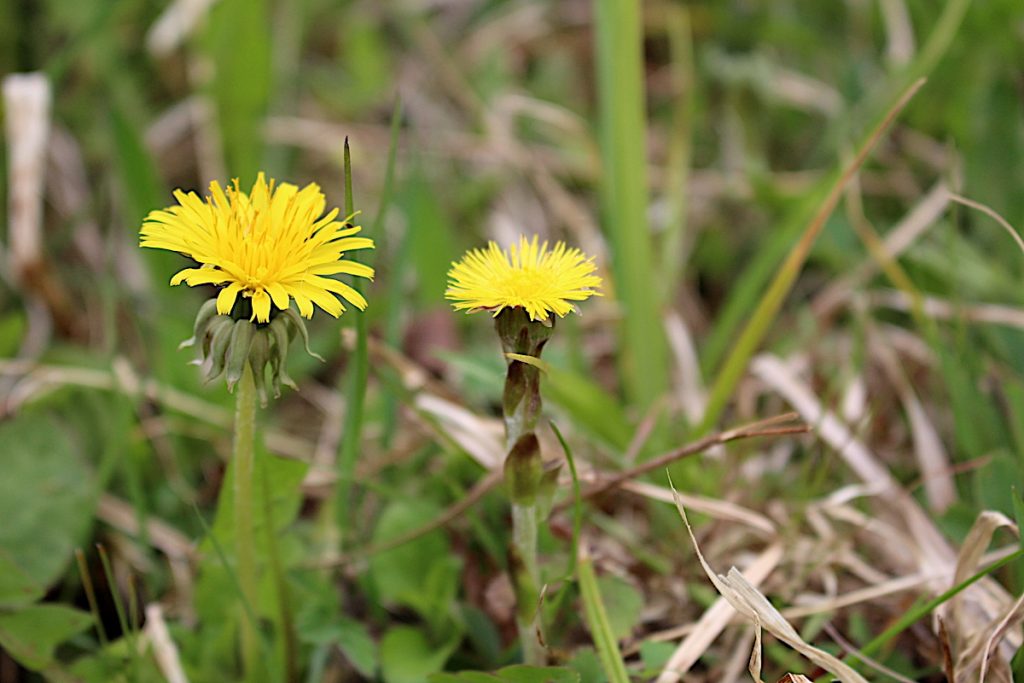
Just be sure you have actual dandelions before you harvest. I’ve seen plenty of people mis-identify coltsfoot or hawkeye blossoms as dandelions, and those are not tasty at all. This guide to identifying dandelions and avoiding lookalikes will keep you on track.
Notes from my Kitchen

My husband and I made our very first batch of dandelion wine together on our first date, a full 5-gallon batch that we fermented and bottled that spring. I’ll tell you what, there’s plenty of courting you can do while sitting across from each other cleaning dandelion petals for hours on end. By the time we’d finished separating all those tiny yellow petals from the bitter green bits, both of us knew we had something.
We’re still drinking a bottle of that wine every year on our anniversary, 15 years later, with just 5 more bottles left to go. Every sip takes me right back to that warm spring afternoon, sitting on the porch with a bowl of dandelions between us, falling in love over the most old-fashioned project imaginable.
I’ve been using your dandelion wine recipe since 2020, doing 2 gallons a year. It always turns out wonderful!
Ingredients for Dandelion Wine
Like all homemade country wines, dandelion wine is really just about creating a balanced fermented beverage with enough sweetness to be tasty, enough acidity to add bright flavor, and enough body to make it feel like a proper wine. The dandelion petals bring the flavor and color, and the other winemaking ingredients fill out the recipe with a balance of acidity, sweetness and body.
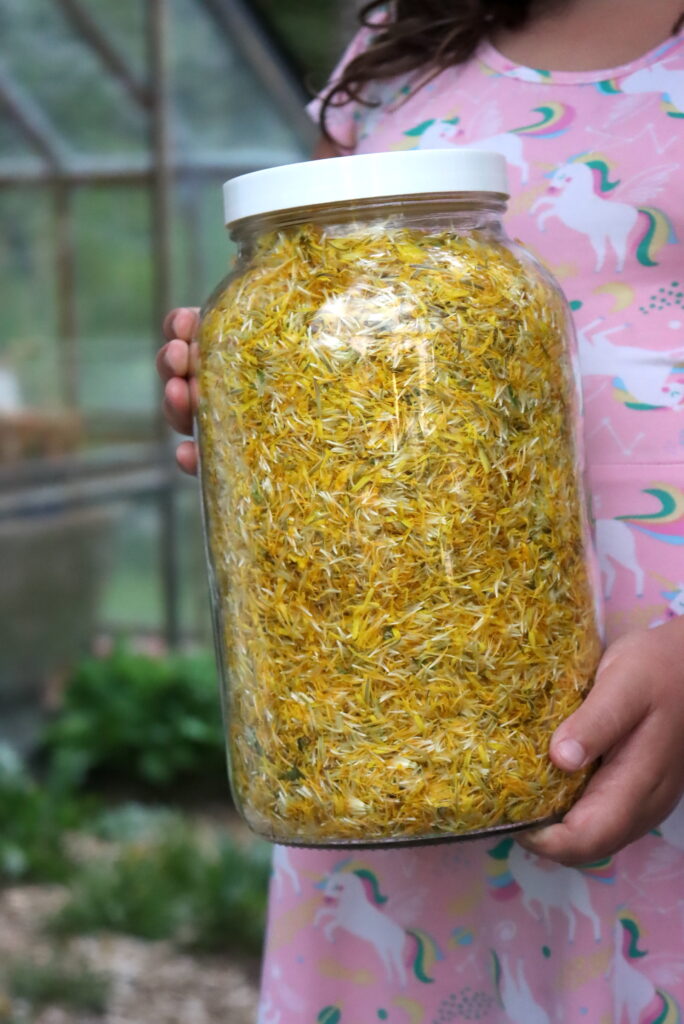
- Dandelion petals – You’ll need about a quart of cleaned petals for a one-gallon batch, which comes from roughly 3 to 4 quarts of whole flower heads. Only use the yellow petals because the green sepals underneath have a bitter, milky sap that will ruin the delicate flavor of your wine. Fresh or frozen petals both work well, just clean the petals before you freeze them. Dried petals tend to lose flavor, so freeze them until you have enough.
- Sugar – The dandelion petals themselves don’t have nearly enough natural sugar to ferment into wine, so you need to add sugar for the yeast to convert into alcohol. About 3 pounds (5 to 6 cups) per gallon gives you a nicely balanced wine with some residual sweetness. The yeast eat most of this sugar during fermentation, so the finished wine won’t taste as sweet as you might expect. To convert the recipe to a homemade honey mead, substitute honey which adds its own lovely character.
- Water – This creates your wine base. If your tap water tastes strongly of chlorine, use filtered or spring water instead since chlorine can inhibit your yeast.
- Oranges and lemon – The juice and zest from citrus serves double duty here. First, it provides the acidity your yeast need to ferment properly (flower petals are neutral pH on their own). Second, the bright citrus notes complement the sunny flavor of dandelions beautifully. Three oranges and one lemon per gallon is the sweet spot. Don’t skip it, since the wine needs acidity for safe fermentation.
- Wine yeast – Different yeast strains produce different flavors and alcohol levels, so the strain you choose actually matters quite a bit. See the yeast section below for my recommendations.
- Yeast nutrient – Here’s something a lot of people don’t realize: yeast can’t survive on sugar alone. They need nitrogen and other micronutrients that grapes provide naturally but flower petals don’t. Without yeast nutrient, your fermentation might stall or produce off-flavors. You can substitute a handful of raisins (the yeast will get nutrients from them), but powdered yeast nutrient gives more consistent results.
You won’t need tannin powder for dandelion wine since we’re going for a light, delicate floral character rather than a full-bodied wine. The citrus provides all the structure you need.
Yeast for Dandelion Wine
The yeast strain you choose really does make a difference in your finished wine. Different yeasts contribute different flavor esters as they ferment, and their alcohol tolerance determines both your final alcohol percentage and how much residual sweetness you’ll have. Good options for dandelion wine:
- Red Star Cote des Blancs – A slow fermenter that really preserves the delicate floral notes in flower wines. It has a lower alcohol tolerance (12 to 14%) which means more residual sweetness in your finished wine. This is my top pick for dandelion wine.
- Lalvin D47 – Adds fruity and floral character with hints of spice. A moderate fermenter with 15% alcohol tolerance.
- Lalvin EC-1118 – Champagne yeast with a neutral profile. Go with this one if you prefer a drier wine, as it has an 18% alcohol tolerance and will ferment out more of the sugar.
One packet treats 5 gallons, so you only need about a teaspoon per gallon batch. And whatever you do, don’t use bread yeast. It’ll make your wine taste like bread and only tolerates around 5% alcohol anyway.
Equipment for Dandelion Wine
Beyond your ingredients, you’ll need some basic winemaking equipment:
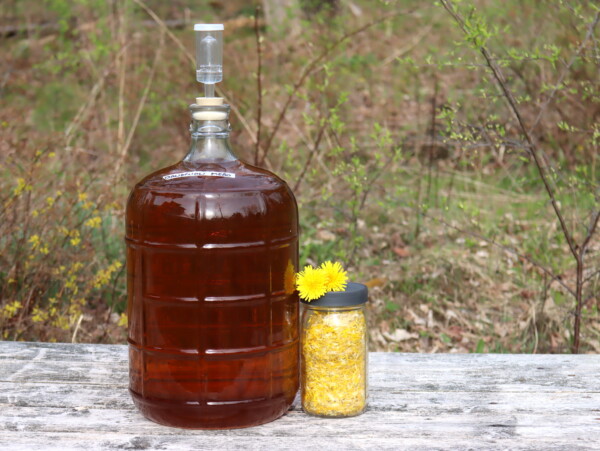
- Wide-mouth glass carboy or fermentation crock (the wide mouth is essential for flower wines since you’ll be fermenting with petals in there, and they’re much easier to clean out afterward)
- Narrow-neck glass carboy for secondary fermentation
- Airlock and rubber stopper to seal the container so CO2 can escape during fermentation, but contaminants can’t get in to turn it into vinegar
- Auto-siphon for moving the wine to a clean container to leave sediment behind, and for bottling.
- Wine bottles, corks, and corker (or flip-top Grolsch bottles for small batches)
- Brewing sanitizer to keep everything clean
If you’ve ever tried to clean flower petals out of a narrow-neck carboy, you’ll understand why I’m so insistent on the wide-mouth option. Those petals will glue themselves to the inside of the neck and you’ll be scrubbing with a bottle brush for ages.
Start with a wide mouth carboy until the petals come out of the container, then transfer to a narrow neck if possible to minimize the surface area in contact with air during the next stage of fermentation. (A wide mouth carboy will work for both in a pinch.)

How to Make Dandelion Wine
The process here follows the same basic method as any small-batch fruit wine or flower wine. If you’re brand new to winemaking, I’d recommend reading through my beginner’s guide to making homemade wine first, which walks you through everything in more detail. For mead variations with honey, check out my guide on how to make mead.
Harvesting and Cleaning the Petals
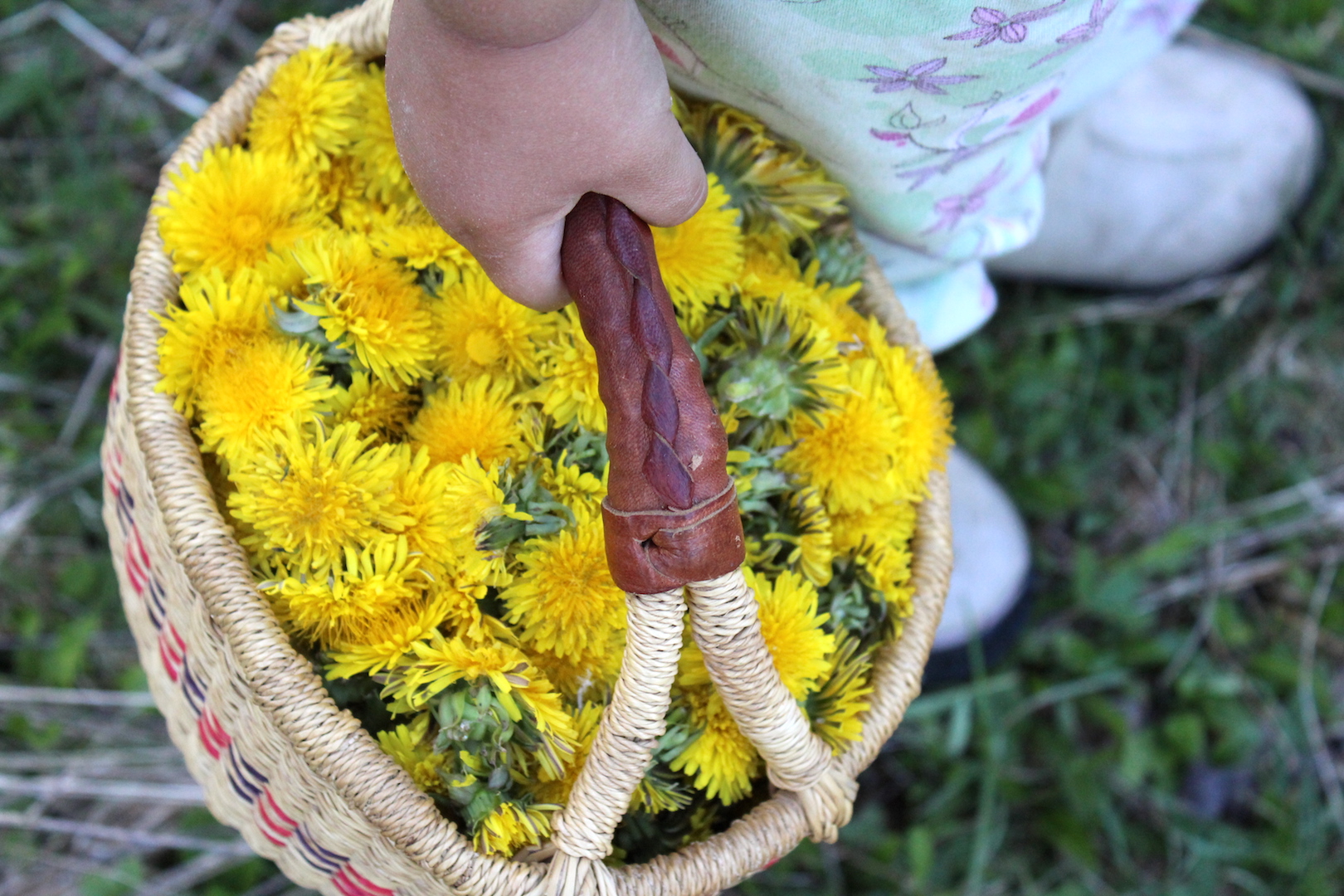
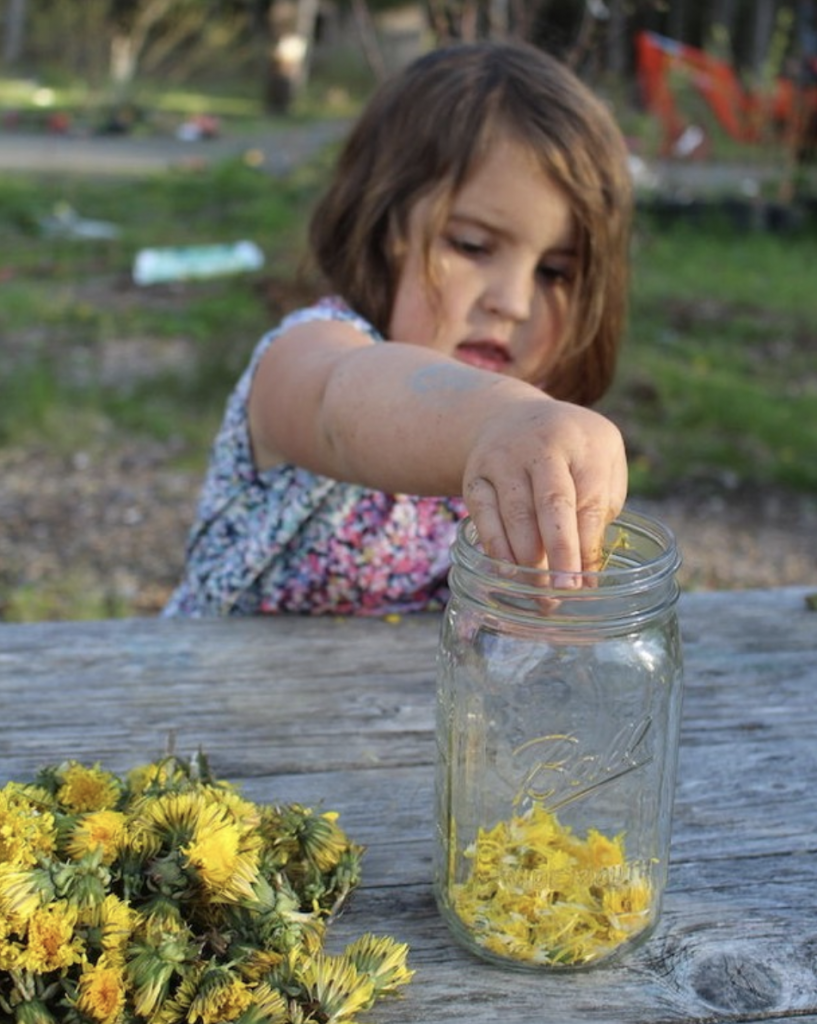
The real work in making dandelion wine isn’t the picking. It’s the cleaning. You need to separate just the yellow petals from the bitter green sepals underneath each flower head, and there’s really no way around the fact that this takes a while. A quart of cleaned petals takes about an hour of patient work, so plan accordingly and maybe enlist some help.
Kids are excellent dandelion pickers, and I’ve successfully bribed mine with promises of dandelion ice cream, dandelion cookies, and dandelion gummy bears over the years. There’s a reason I have so many dandelion recipes and specifically, dandelion flower recipes in my back pocket, and that reason is wine.
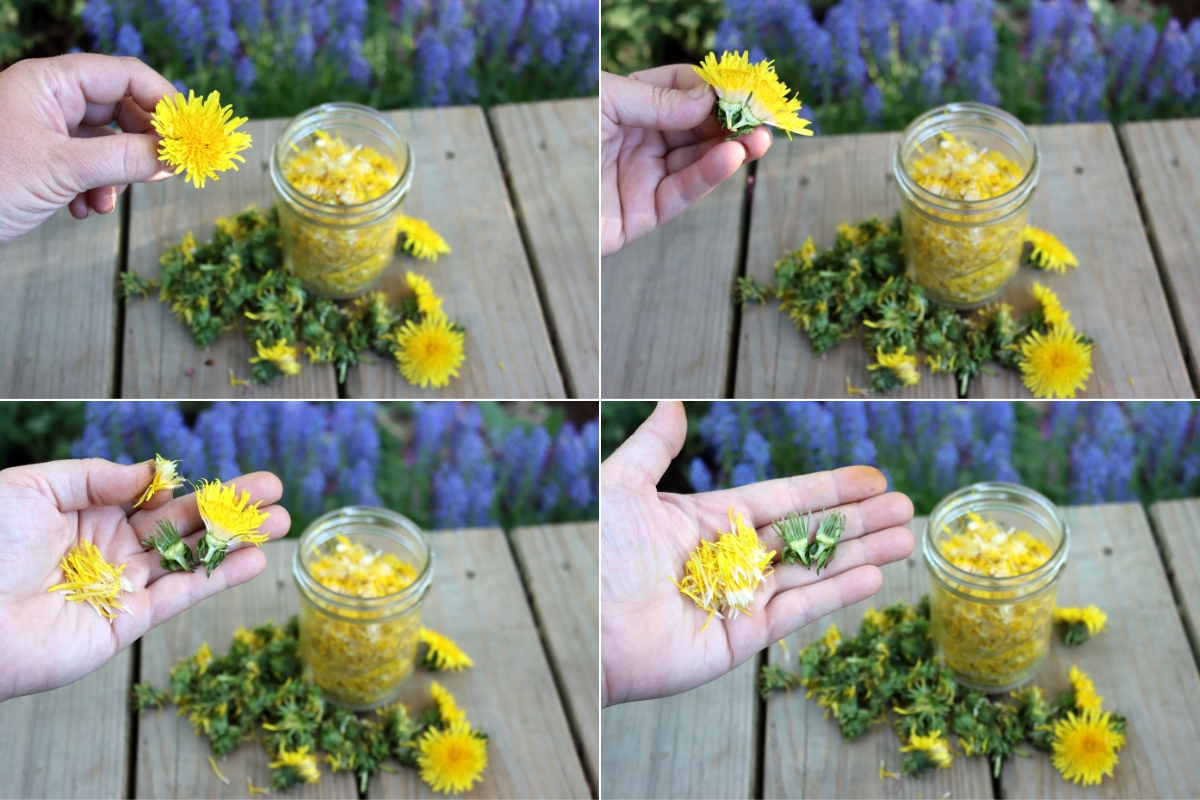
The simplest method starts by breaking the dandelion flower in half (vertically, through the stem). Once it’s open like that, it’s easy enough to pull out the petals and discard the green sepals.
Mixing the Must
This recipe uses a cold infusion method, which preserves more of the delicate floral flavor than making a dandelion tea first. Bring your water and sugar to a boil on the stove, stirring until the sugar dissolves completely, then let it cool to lukewarm.
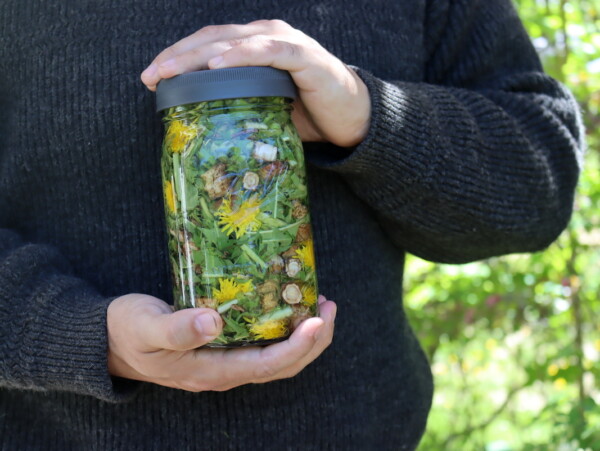
Place your cleaned dandelion petals in your sanitized wide-mouth fermentation vessel along with the citrus juice and zest, then pour the lukewarm sugar water over everything.
Add the yeast nutrient and stir to combine.
Pitching the Yeast
Once your must has cooled to room temperature (anything below 90°F is fine), rehydrate your yeast by sprinkling it into a small amount of warm water and letting it bloom for 5 to 10 minutes.
Pour the activated yeast into your fermentation vessel, then top off with enough water to fill the carboy while leaving about an inch of headspace for bubbling.
Seal with an airlock.
Primary Fermentation
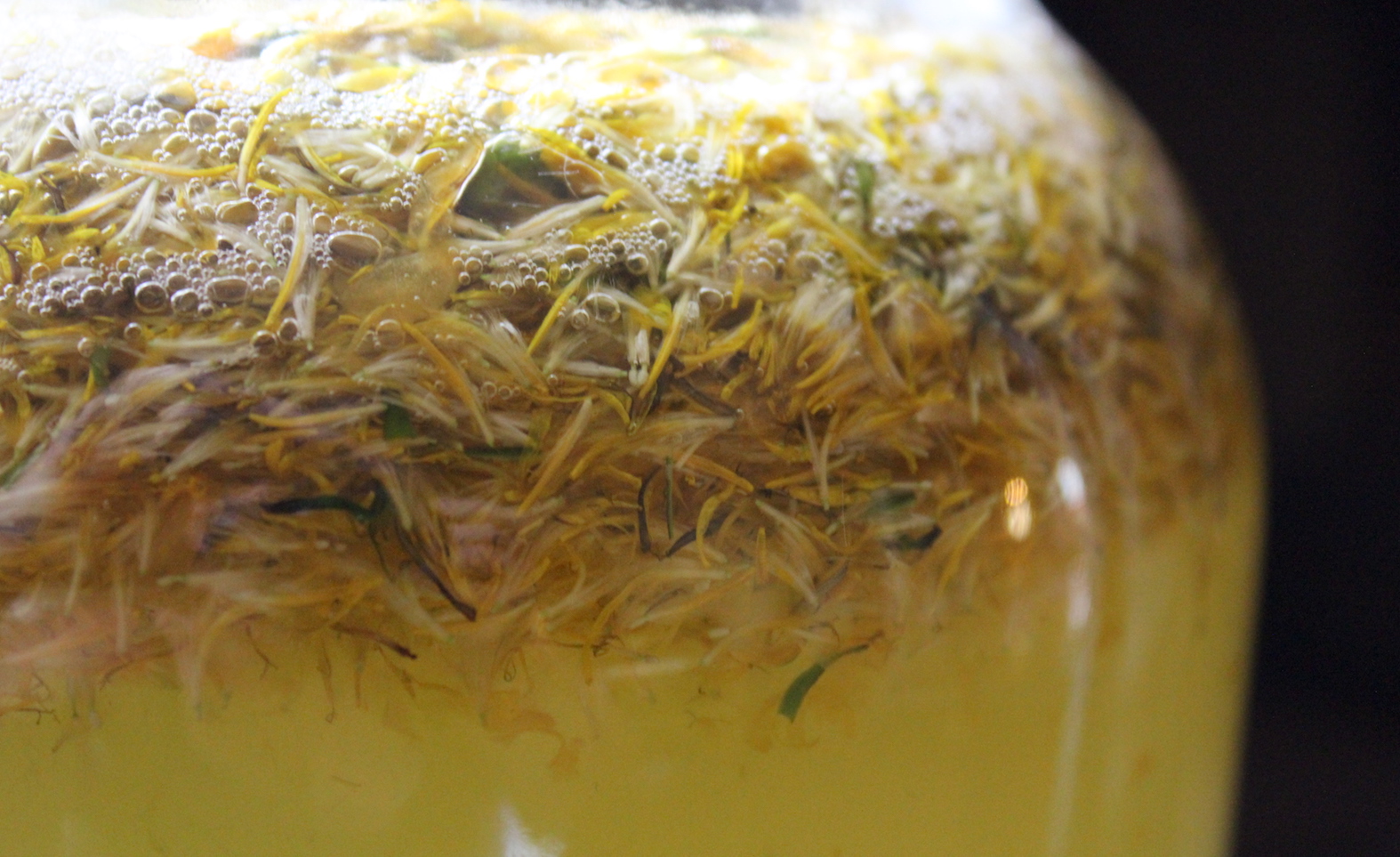
Within a day or two, you should see active bubbling as fermentation kicks in. Let the wine ferment with the dandelion petals in there for about 10 to 14 days.
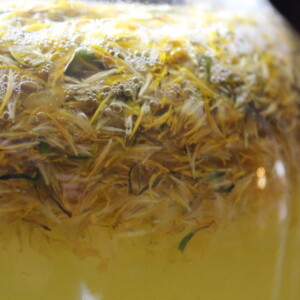
The petals will float to the top, and that’s perfectly normal. If they bubble up into your airlock and clog things up, just remove the airlock, clean it out, and put it back on.
Racking to Secondary
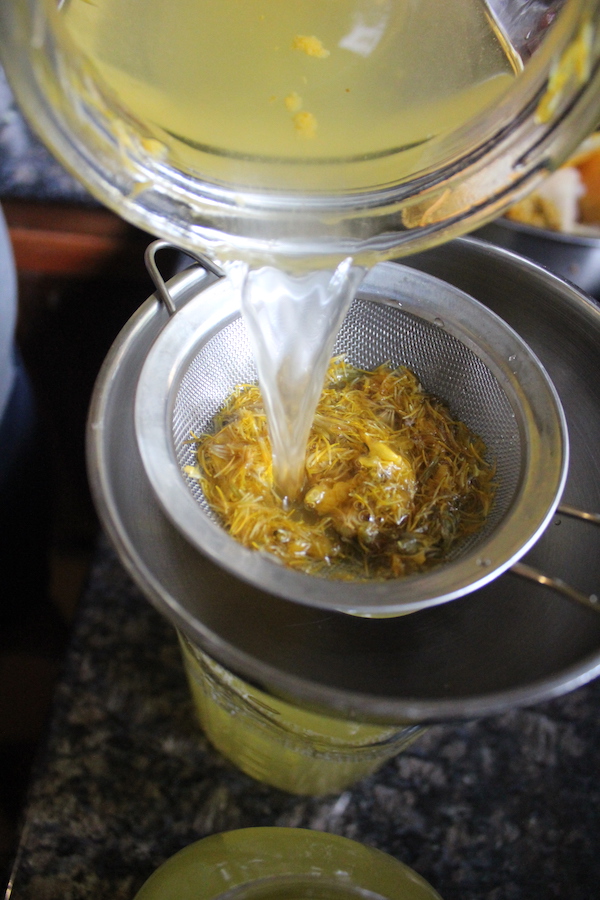
When the bubbling slows down (usually after 10 to 14 days), it’s time to rack the wine into a clean narrow-neck carboy for secondary fermentation. Scoop the floating dandelion petals off the surface first, then use your siphon to transfer the liquid while leaving the sediment at the bottom behind. Pop an airlock on top and stash it somewhere cool and dark.
Let it ferment in secondary for at least 6 to 8 weeks. Check the water lock periodically to make sure the water hasn’t evaporated.
Bottling and Aging
Once secondary fermentation is done and your wine has cleared, give it a taste. If it’s too dry for your liking, you can backsweeten by stabilizing the wine first with a Campden tablet and potassium sorbate, then adding simple syrup to taste.
Siphon the wine into clean bottles, leaving the sediment behind one more time, and seal with corks or flip-top lids. Try to let your dandelion wine age for at least 2 months before drinking, though honestly, 6 months is even better. The flavors really smooth out and integrate with time, and by January you’ll have liquid sunshine in a glass just when you need it most.
Tips for the Best Dandelion Wine
- Pick on a sunny day. Dandelion flowers open wide in full sun and close up on cloudy days or in the evening. You’ll get more petals per flower if you pick when they’re fully open.
- Use only the yellow petals. I can’t stress this enough. The green parts will make your wine bitter. Take the time to separate them properly.
- Try a tiny batch first. If you’re not sure you want to commit to a full gallon, divide the recipe by 4 for a one-quart micro batch wine. All you need is a quart mason jar and a mason jar fermentation kit.
- Be patient with aging. Dandelion wine tastes rough when it’s young. Give it at least 6 months in the bottle and you’ll be rewarded with something truly special.
- Consider making mead. If you swap out the sugar for honey, you get dandelion mead which has even more body and complexity. It takes longer to ferment (honey is harder for yeast to digest), but the results are spectacular.
- Try other flower wines. Once you’ve mastered dandelion wine, check out lilac wine, violet wine, or elderflower wine for more floral adventures.
Frequently Asked Questions
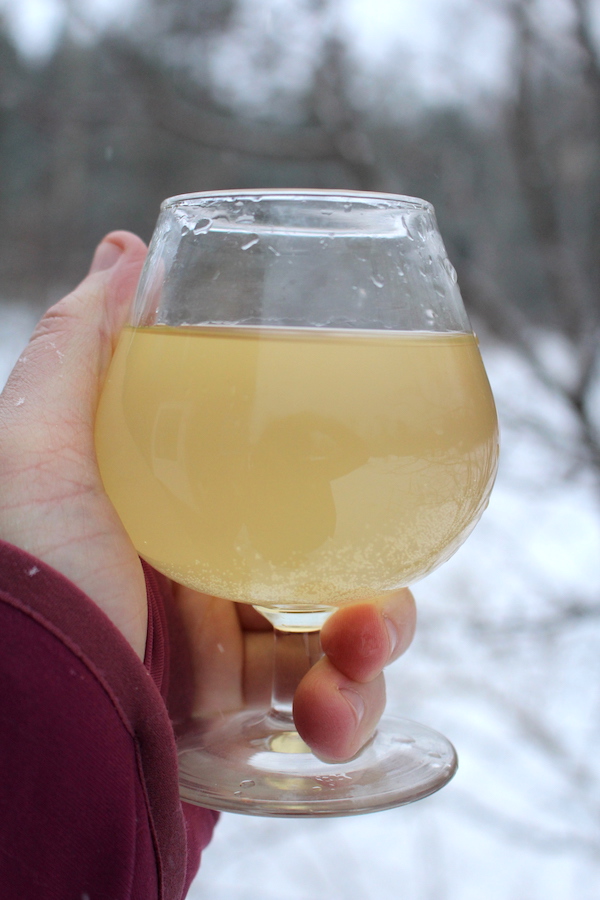
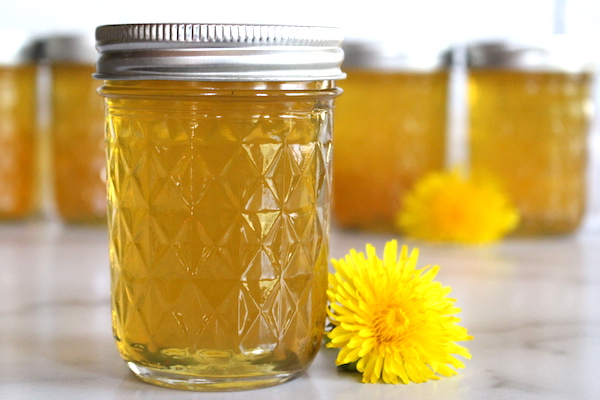
If you’ve done it right, dandelion wine tastes sweet, mild, and floral with subtle notes of honey and citrus. You can almost feel the sunshine splash against your tongue. It should go down smooth with no hints of bitterness. If yours is bitter, the green sepals probably got into the batch.
The green sepals have a milky, bitter sap that will ruin the delicate floral flavor of your wine. You’ll end up with something that tastes more like dandelion greens than sunshine in a bottle. It’s tedious work to separate the petals, but it’s absolutely worth taking the time to do it properly.
You can technically drink it after just a couple weeks of bottle aging, but it’ll taste rough and won’t do justice to all your hard work. I’d recommend at least 2 months, and 6 months is even better. The flavors really smooth out and integrate over time, and by midwinter you’ll have something truly special to sip.
The final sweetness depends on your yeast choice and how much sugar you use. Yeasts with lower alcohol tolerance (like Cote des Blancs at 12-14%) will leave more residual sugar and produce a sweeter wine. If you want it sweeter, you can add a bit more sugar (start with 1/4 cup extra per gallon), or backsweeten after fermentation by stabilizing the wine first with Campden tablets and potassium sorbate, then adding simple syrup to taste.
Dandelion wine uses sugar as the fermentable, while dandelion mead uses honey instead. Mead takes longer to ferment since honey is more complex for yeast to digest, but you get lovely honey notes alongside the floral dandelion flavor, plus more body and better mouthfeel. You can also split the difference and use part sugar, part honey.
Absolutely! Freezing actually works well for dandelion petals and helps preserve them if you’re collecting over multiple days. Just thaw them before adding to your must. The flavor won’t be quite as bright as fresh petals, but it’s still very good. Don’t dry the petals, they lose flavor that way, freezing is much better.
Dandelion Recipes
If you tried this Dandelion Wine recipe, or any other recipe on Practical Self Reliance, leave a ⭐ star rating and let me know what you think in the 📝 comments below!
And make sure you stay in touch with me by following on social media!
Dandelion Wine
Equipment
Ingredients
- 3 quarts water, approximate, more to fill
- 3 pounds sugar , roughly 5 to 6 cups
- 1 quart cleaned dandelion petals, packed, from roughly 3-4 quarts blossoms
- 3 medium oranges, juice and zest
- 1 medium lemons, juice and zest
- 1 tsp yeast nutrient
- 1 packet wine yeast, see notes
Instructions
- Bring the water and sugar to a boil in a saucepan. Stir to dissolve the sugar and cool to lukewarm.
- Place the dandelion petals, citrus juice and zest into a one-gallon fermentation vessel. Add the yeast nutrient and pour the lukewarm sugar water over the top.
- Dissolve a packet of champagne yeast or other wine yeast in lukewarm water. Allow it to stand for 5 minutes to rehydrate and then pour it into the wine. Top off with a bit of extra water to fill the carboy, but be sure to leave at least an inch of headspace.
- Cap with an airlock and ferment for 10 to 14 days, or until fermentation slows significantly.
- Scoop off the floating dandelion petals, then siphon the wine into a clean container, leaving the sediment behind. Allow the wine to ferment in secondary for at least 6 to 8 weeks, checking the water lock periodically to ensure the water hasn’t evaporated.
- Bottle the dandelion wine in corked wine bottles for longer storage, or flip-top Grolsch bottles for small batches you’re not planning on storing long.
- Allow the wine to age in the bottle at least 2 months before drinking, ideally 6 months or more. During aging, keep bottles somewhere cool like a basement or closet on the north side of the house (65 to 68 degrees F is ideal, but room temp is fine).
Notes
Nutrition
Nutrition information is automatically calculated, so should only be used as an approximation.
Winemaking Recipes
Find the perfect recipe
Searching for something else? Enter keywords to find the perfect recipe!









Hi Ashley, Our family has been making Dandelion wine for about 14 years. I’m going to make a batch following your recipe. A few summers ago we made 36 gallons. It took a lot of Dandelion petals. When I harvest the flowers I grab them with one hand & snip the petals off into a bowl using a dedicated pair of scissors. (They get gummed up from the “sap”& need to be cleaned every day). It’s a fast way to harvest Dandelion petals.
Wow, that’s a lot of dandelion wine! We make 5 to 8 gallons a year and I thought that was a lot. I’m impressed! And I’m so glad the recipe is working out for you =)
I’m sorry if I missed this somewhere, but how many bottles does the regular recipe (1 gallon carboy) make? Just making sure I have enough supplies.
One gallon is 128 fluid ounces so you just want enough bottles to contain that amount of liquid.
I’ve been wanting to make dandelion wine as w date idea with my partner but we don’t get enough dandelions that aren’t in areas that get sprayed or exposed to traffic. I was wondering if dried dandelion petals would work for this recipe.
Fresh petals will really give you the best results. Is it possible that you would have enough to do a small batch? Here is the post for that. https://practicalselfreliance.com/small-batch-wine/
Out of curiosity…
I use my Vitamix blender to pretty much liquify fruit batches for everything at home. Just curious if blending dandelion petals this way would possibly pull more flavor from the flowers or possibly just at a faster rate than usual.
I’ve not used that technique before so I can’t really say.
Q: I started making my own batch of dandelion wine, but then I got really busy, and now the initial ferment has lasted nearly 7 weeks instead of three. Is this going to negatively affect it, whether in taste or in safety?
In any case, thanks for the recipe! I heard stories that my grammy’s side of the family made dandelion wine, so your instructions helped me to feel closer to her and have fun doing it.
Did you open it up and smell it? It’s possible that it could have possibly turned into vinegar by now.
Sadly my wine Turner into a slimy mess. I dont know want went wrong. Do you have an ideas why?
I’m so sorry that happened. Is there anything that you did differently from the recipe?
Excited to try this recipe, but it will be my first time making wine. Do I need to sanitize all of the brewing tools (carboy, airlock) and if so, do you have any recommendations for how to do that?
Thanks!
It’s not absolutely necessary but it does result in a more predictable result. You can find a link to the sanitizer we recommend in this post on winemaking tips. https://practicalselfreliance.com/homemade-wine/
Hello! I made this wine and after the fact realized I was supposed to let the water cool before adding it. I added it while it was still hot and then added cool water .Will my wine still turn out?
As long as you didn’t add the yeast directly to the hot water, you should be ok.
Hi there,
Was just wondering if the quarts are Us quarts or imperial quarts? Sorry if that’s a silly question!
Thanks!
Not silly at all. We’re in the U.S. so that would be U.S. quarts.
Hi there! I was wondering if I could make this recipe with dried dandelion flowers?
I wouldn’t recommend it. Typically dandelion flowers turn to fluff whenever you attempt to dry them.
Hello. Thank you so much for this recipe. I made my second batch and I think it came out ok? It’s very very sweet even after reducing the sugar. It’s the same color in your picture but it so sweet I doubt it’s even wine! Is this normal for flavor? Thank you again
Dandelion wine definitely has a sweet taste. How long did you allow it to ferment?
Hi Ashley!
Thank you so much for posting such detailed instructions and great tips – I am enjoying reading through the comments as well. My partner and I are in the process of harvesting enough dandelion flowers to make a full 5 gallon batch! We’re still new to winemaking, and (no pressure for us or anything, haha) this will be our first non-kit wine we make. The timing is right for it, though, and you only get one shot each year during dandelion season!
I have a couple questions for you or anyone else reading:
– Are the oranges and lemon necessary? Does the final product taste like citrus over the dandelions? My partner wants to make a “pure dandelion wine” to really make the most of the dandelion flavour and is concerned that the other flavours will overpower the dandelion blossoms and make it taste just like a “regular old citrus wine” if you know what I mean. He wants to “really be able to call it a dandelion wine.” What would happen if we only used the dandelion blossoms and omitted the oranges and lemons? Would it still taste nice?
– What are your thoughts on using some of the winemaking ingredients such as potassium metabisulfite for stopping fermentation and preserving as well as stabilizing/clarifying agents like kieselsol, chitosan and bentonite? I’m thinking to just follow the regular winemaking procedure and use these ingredients to help with preserving/aging, stabilizing and clearing.
Thanks again! 🙂
You could certainly try it but nearly every recipe I have seen include lemons and oranges. It really shouldn’t be overpowering at all and the cold infusion method really helps the floral notes from the dandelion to shine. One of the reasons why we make our own wine is so that we can avoid the additives that are used in regular winemaking procedures but you’re certainly welcome to use them if you wish.
Dandelion petals freeze nicely. I’ve made batches of wine and mead from dandelions frozen for months as my wide-mouth gallon fermenters are limited. Works fine.
Hi. First: THANK you for all of your experience, wisdom and time and effort you put into post so that people like me can do things we wouldn’t normally do!!! I so appreciate what you do.
I have never made wine. My parents were not wine drinkers. I have wanted to make dandelion wine for a very long time. The funny thing is, I have lived on my 5 acres for over 20 years and have never put weedkiller anywhere. I also have never had dandelions!!! Perhaps a small handful, if that. So, I just ordered dried dandelion flowers. I just now read all the comments, which were very helpful, but noted one reply was that dried flowers may not work as the flavor is gone…(darn!) Do you think that trying it with the dried flowers would be wasting my time effort and ingredients?
Also I noted that at least one of the packets of the “flowers” seems to have quite a lot of the white fluffy stuff….if I did use the dried, would I need to pick this out first?
I guess I COULD wait until I have my own patch of fresh dandelions…
I also have ordered several packets of dandelion seed to plant a large patch this summer…..
Again, thank you for this article and for staying true to your readers by continuing to monitor posts and replying to their questions.
If I were you I would definitely wait until you had some growing rather than using dried. Dandelion is very impossible to dry without it going to seed which is the white fluff that you see. That won’t be good for much of anything other than growing more dandelions.
Hi. I have a couple questions. I am going to be making dandelion wine for the 2nd time this year. Seriously, my yard looks like a dandelion farm. Last yrs batch that I totally ignored, I strained and tried after sitting for a year (no mold). It is SO good, not bitter at all. Actually pretty sweet. This time going to be better about the process. Interesting reading all the comments. I put my quart jar in the back of my pantry, never looked at it but could smell the fermenting each time I opened the pantry. So assume it bubbled.
Wondering if you know about how much alcohol is in this wine. Curious. Corking, is it as simple as getting bottles (sanitized) and corks and pushing the corks in? There are a lot of fancy kits for corking, is that necessary? Want to make more than just the quart this time. That’s all (for now, ha). Thanks for all your great info that you share! It is SO helpful. Peace
This post for watermelon wine goes into detail about the process of bottling with corks and also has links to some suggested equipment. Let us know if you have any other questions. https://practicalselfreliance.com/watermelon-wine/
Thanks for sharing! I started my gallon yesterday and I’m so excited!
You’re very welcome. Please come back and tell us how it turns out.
would it work if we use MonkFruit istead of sugar?
Nope. Monkfruit is indigestible, which is why it’s a keto sweetener. The yeast do need to be able to digest the sugar to do their work.
I just made this over the summer. And while I was supposed to bottle it at the end of August – we ended up bottling it last night. I was so worried that it wouldn’t turn out. We had a bit that wouldn’t fit into bottles, so we drank it and I was so surprised at how good it was. Almost like a dessert wine. So, question. Would leaving it in the secondary ferment for so long make it sweeter?
Thanks for the recipe. I honestly thought I had probably ruined it, but I’m already thinking about what I’ll do differently when I make it next year!
I am so glad you enjoyed the recipe. It shouldn’t make the wine any sweeter by keeping it in the secondary for a longer period of time but it really shouldn’t hurt it either as you have discovered.
Hello,
I’m a rookie at making wine so I have absorbed as much information as I could about a few sweet wines. How sweet is this wine compared to say Moscato de’asti? Will adding potassium sorbate before bottling make it sweeter, or is that even necessary? I have a gallon of dandelion wine fermenting as we speak with a different yeast that was suggested since the store had run out of the right yeast, and I plan on doing a 5 gallon batch when my order comes in from Amazon. I have the dandelion petals in the freezer. 😉 My family thinks I’m crazy to have picked so much without knowing how it tastes. I also plan on doing a one gallon batch of your lilac wine recipe as well as a gallon of rhubarb wine. I know I will be super busy in a few months bottling, but with all the recipes you have, I wanna try them all. LOL
My wife and I don’t really like dry wine. Are there any other recipes you would suggest?
Thank you for these recipes and for offering your experience to us. It is invaluable.
The wine is described as sweet and floral with subtle notes of honey so I really don’t think you will find it to be too dry. The potassium sorbate is not necessary and we actually don’t recommend using it. You would want to use it if you plan to back sweeten the wine but again, I don’t think that will be necessary. I would just start experimenting with the different recipes. You can always do a micro batch to test out a recipe first to see if you like it. You can find the instructions for that here. https://practicalselfreliance.com/small-batch-wine/