
Affiliate disclosure: This post may contain affiliate links. Please see our Privacy Policy.
Dandelion wine captures the very essence of summer in a bottle, and it’s one of those old-fashioned recipes that deserves a spot in your cellar. This recipe is adapted from the Foxfire Books, and I’ve been making it more than 15 years.
Making dandelion wine goes back centuries in European folk tradition, and early settlers brought the practice to America where it became a staple of rural homesteads.
This sweet, floral wine has subtle notes of honey and citrus, and if you’ve ever wondered what sunshine would taste like if you could sip it on a cold January evening, this is pretty close. My recipe is adapted from the Foxfire Books, those wonderful collections of Appalachian folk knowledge that have been inspiring homesteaders for generations.
If you’d prefer to use honey instead of sugar, you can make dandelion mead instead, which has even more body and complexity.
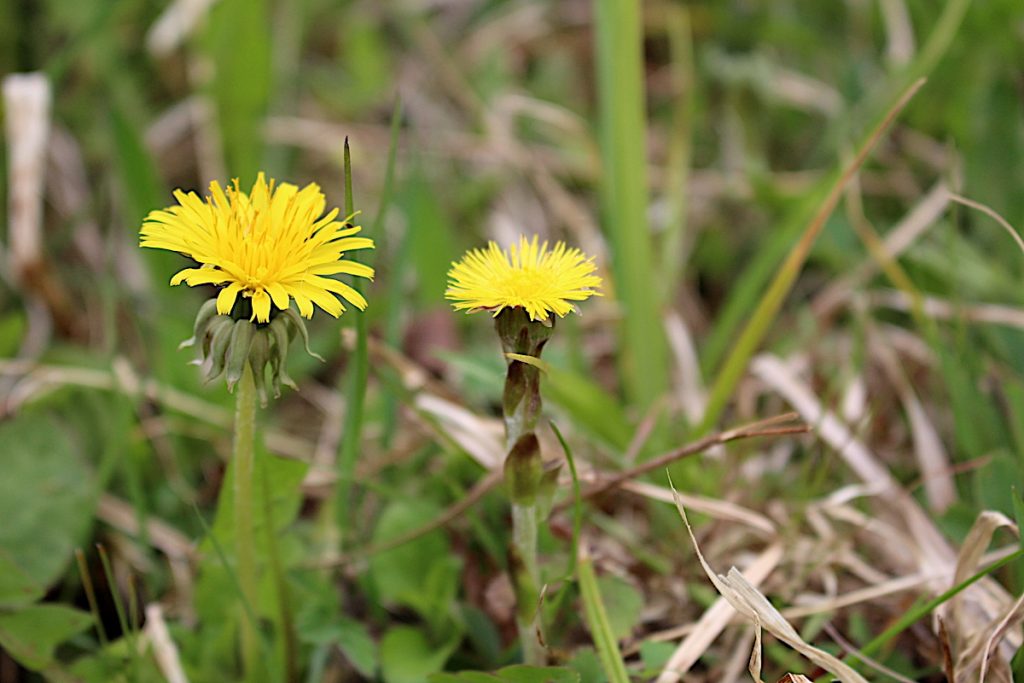
Just be sure you have actual dandelions before you harvest. I’ve seen plenty of people mis-identify coltsfoot or hawkeye blossoms as dandelions, and those are not tasty at all. This guide to identifying dandelions and avoiding lookalikes will keep you on track.
Notes from my Kitchen

My husband and I made our very first batch of dandelion wine together on our first date, a full 5-gallon batch that we fermented and bottled that spring. I’ll tell you what, there’s plenty of courting you can do while sitting across from each other cleaning dandelion petals for hours on end. By the time we’d finished separating all those tiny yellow petals from the bitter green bits, both of us knew we had something.
We’re still drinking a bottle of that wine every year on our anniversary, 15 years later, with just 5 more bottles left to go. Every sip takes me right back to that warm spring afternoon, sitting on the porch with a bowl of dandelions between us, falling in love over the most old-fashioned project imaginable.
I’ve been using your dandelion wine recipe since 2020, doing 2 gallons a year. It always turns out wonderful!
Ingredients for Dandelion Wine
Like all homemade country wines, dandelion wine is really just about creating a balanced fermented beverage with enough sweetness to be tasty, enough acidity to add bright flavor, and enough body to make it feel like a proper wine. The dandelion petals bring the flavor and color, and the other winemaking ingredients fill out the recipe with a balance of acidity, sweetness and body.
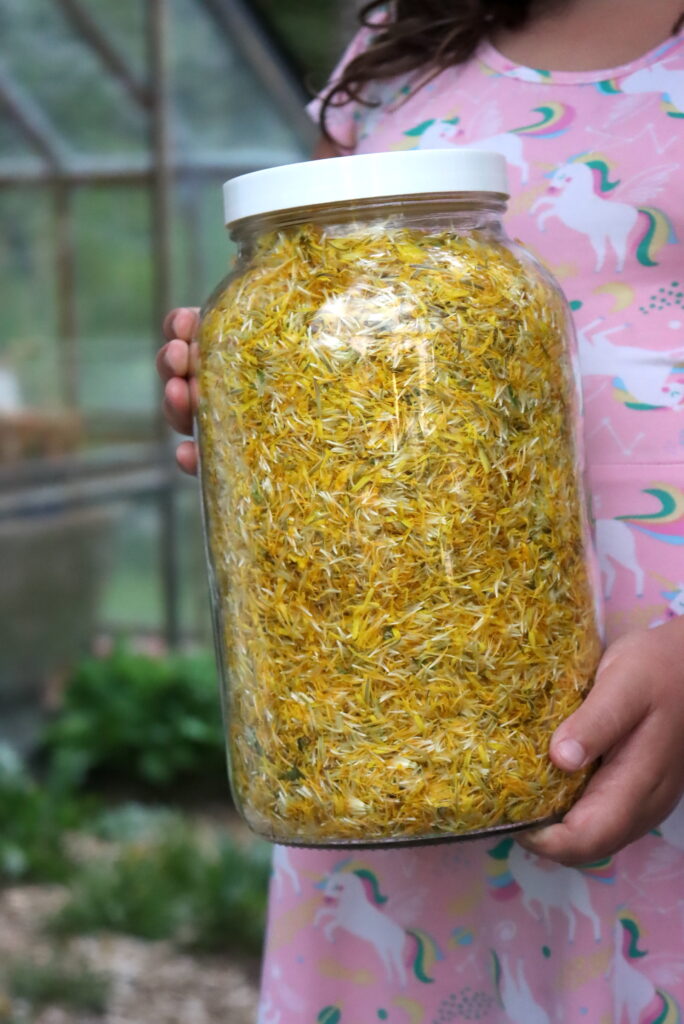
- Dandelion petals – You’ll need about a quart of cleaned petals for a one-gallon batch, which comes from roughly 3 to 4 quarts of whole flower heads. Only use the yellow petals because the green sepals underneath have a bitter, milky sap that will ruin the delicate flavor of your wine. Fresh or frozen petals both work well, just clean the petals before you freeze them. Dried petals tend to lose flavor, so freeze them until you have enough.
- Sugar – The dandelion petals themselves don’t have nearly enough natural sugar to ferment into wine, so you need to add sugar for the yeast to convert into alcohol. About 3 pounds (5 to 6 cups) per gallon gives you a nicely balanced wine with some residual sweetness. The yeast eat most of this sugar during fermentation, so the finished wine won’t taste as sweet as you might expect. To convert the recipe to a homemade honey mead, substitute honey which adds its own lovely character.
- Water – This creates your wine base. If your tap water tastes strongly of chlorine, use filtered or spring water instead since chlorine can inhibit your yeast.
- Oranges and lemon – The juice and zest from citrus serves double duty here. First, it provides the acidity your yeast need to ferment properly (flower petals are neutral pH on their own). Second, the bright citrus notes complement the sunny flavor of dandelions beautifully. Three oranges and one lemon per gallon is the sweet spot. Don’t skip it, since the wine needs acidity for safe fermentation.
- Wine yeast – Different yeast strains produce different flavors and alcohol levels, so the strain you choose actually matters quite a bit. See the yeast section below for my recommendations.
- Yeast nutrient – Here’s something a lot of people don’t realize: yeast can’t survive on sugar alone. They need nitrogen and other micronutrients that grapes provide naturally but flower petals don’t. Without yeast nutrient, your fermentation might stall or produce off-flavors. You can substitute a handful of raisins (the yeast will get nutrients from them), but powdered yeast nutrient gives more consistent results.
You won’t need tannin powder for dandelion wine since we’re going for a light, delicate floral character rather than a full-bodied wine. The citrus provides all the structure you need.
Yeast for Dandelion Wine
The yeast strain you choose really does make a difference in your finished wine. Different yeasts contribute different flavor esters as they ferment, and their alcohol tolerance determines both your final alcohol percentage and how much residual sweetness you’ll have. Good options for dandelion wine:
- Red Star Cote des Blancs – A slow fermenter that really preserves the delicate floral notes in flower wines. It has a lower alcohol tolerance (12 to 14%) which means more residual sweetness in your finished wine. This is my top pick for dandelion wine.
- Lalvin D47 – Adds fruity and floral character with hints of spice. A moderate fermenter with 15% alcohol tolerance.
- Lalvin EC-1118 – Champagne yeast with a neutral profile. Go with this one if you prefer a drier wine, as it has an 18% alcohol tolerance and will ferment out more of the sugar.
One packet treats 5 gallons, so you only need about a teaspoon per gallon batch. And whatever you do, don’t use bread yeast. It’ll make your wine taste like bread and only tolerates around 5% alcohol anyway.
Equipment for Dandelion Wine
Beyond your ingredients, you’ll need some basic winemaking equipment:
- Wide-mouth glass carboy or fermentation crock (the wide mouth is essential for flower wines since you’ll be fermenting with petals in there, and they’re much easier to clean out afterward)
- Narrow-neck glass carboy for secondary fermentation
- Airlock and rubber stopper to seal the container so CO2 can escape during fermentation, but contaminants can’t get in to turn it into vinegar
- Auto-siphon for moving the wine to a clean container to leave sediment behind, and for bottling.
- Wine bottles, corks, and corker (or flip-top Grolsch bottles for small batches)
- Brewing sanitizer to keep everything clean
If you’ve ever tried to clean flower petals out of a narrow-neck carboy, you’ll understand why I’m so insistent on the wide-mouth option. Those petals will glue themselves to the inside of the neck and you’ll be scrubbing with a bottle brush for ages.
Start with a wide mouth carboy until the petals come out of the container, then transfer to a narrow neck if possible to minimize the surface area in contact with air during the next stage of fermentation. (A wide mouth carboy will work for both in a pinch.)

How to Make Dandelion Wine
The process here follows the same basic method as any small-batch fruit wine or flower wine. If you’re brand new to winemaking, I’d recommend reading through my beginner’s guide to making homemade wine first, which walks you through everything in more detail. For mead variations with honey, check out my guide on how to make mead.
Harvesting and Cleaning the Petals
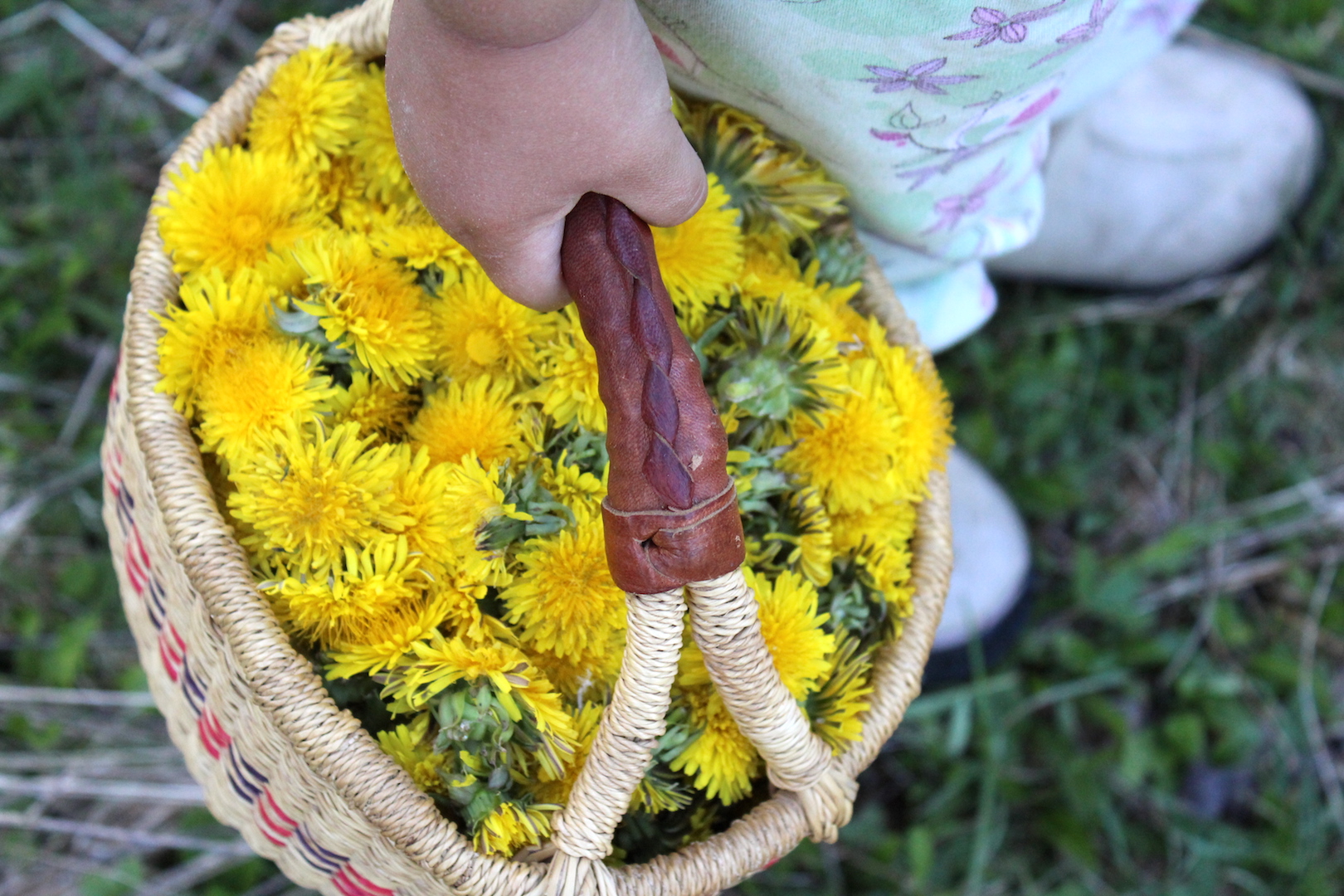
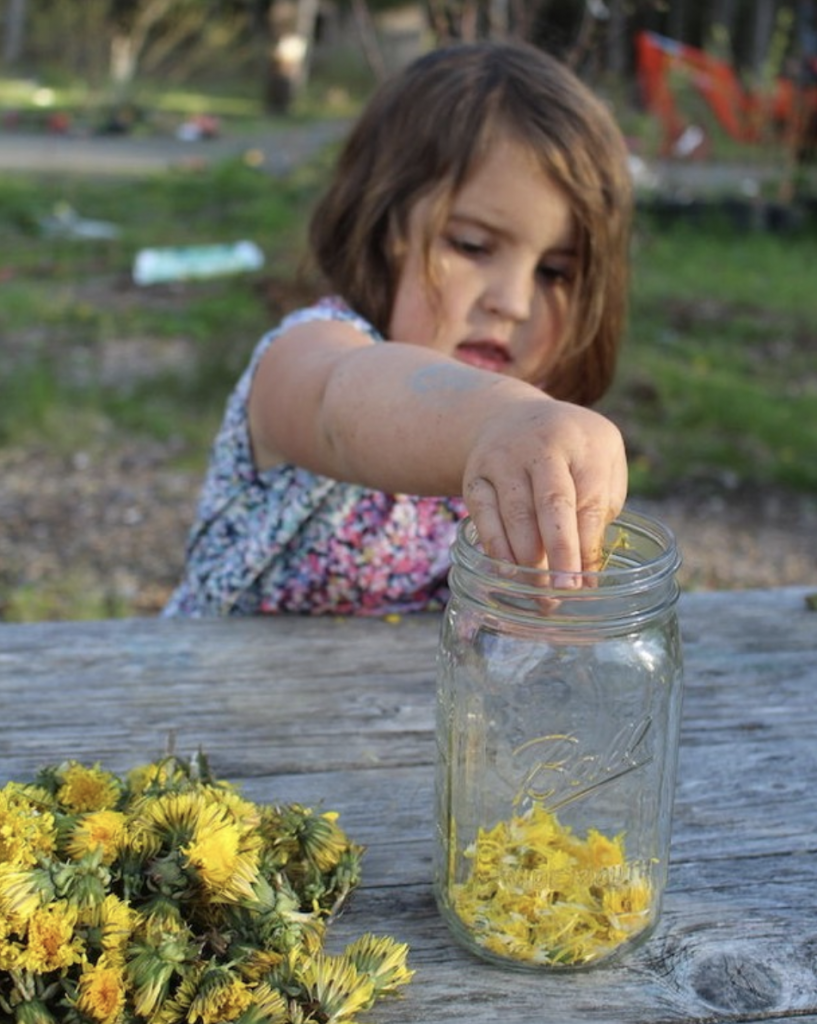
The real work in making dandelion wine isn’t the picking. It’s the cleaning. You need to separate just the yellow petals from the bitter green sepals underneath each flower head, and there’s really no way around the fact that this takes a while. A quart of cleaned petals takes about an hour of patient work, so plan accordingly and maybe enlist some help.
Kids are excellent dandelion pickers, and I’ve successfully bribed mine with promises of dandelion ice cream, dandelion cookies, and dandelion gummy bears over the years. There’s a reason I have so many dandelion recipes and specifically, dandelion flower recipes in my back pocket, and that reason is wine.
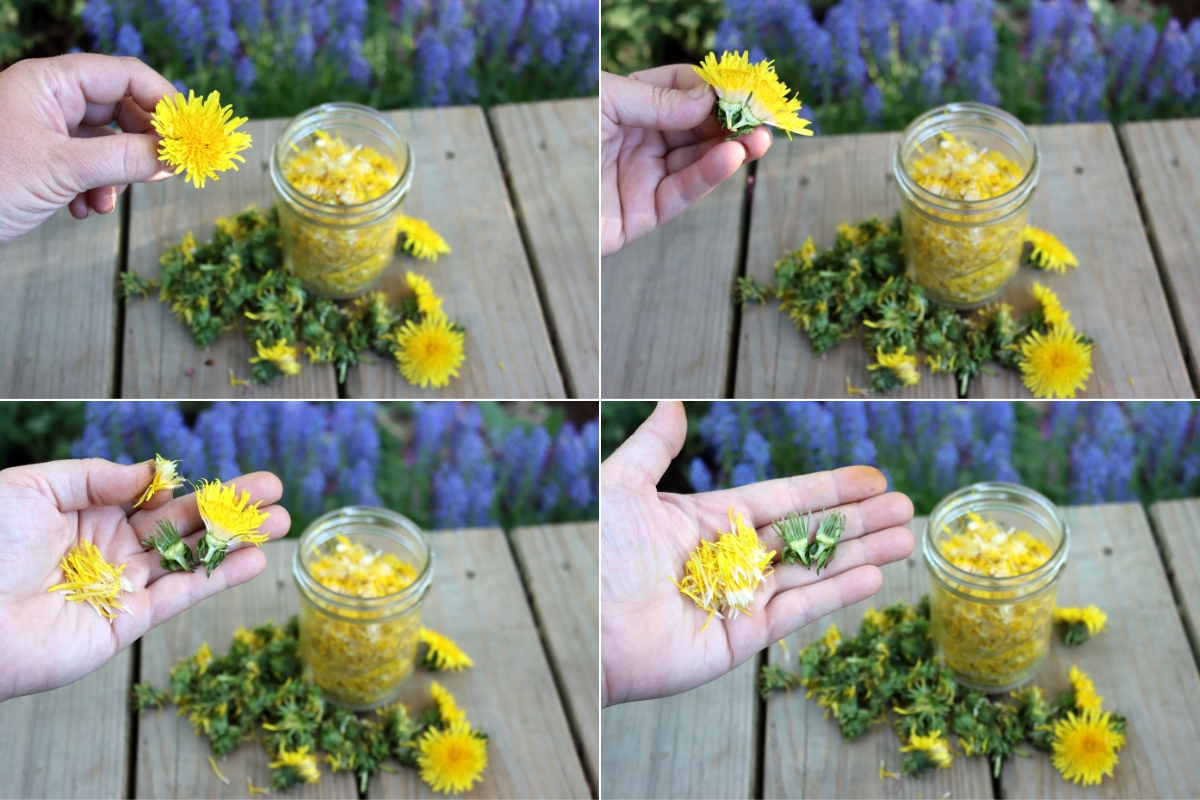
The simplest method starts by breaking the dandelion flower in half (vertically, through the stem). Once it’s open like that, it’s easy enough to pull out the petals and discard the green sepals.
Mixing the Must
This recipe uses a cold infusion method, which preserves more of the delicate floral flavor than making a dandelion tea first. Bring your water and sugar to a boil on the stove, stirring until the sugar dissolves completely, then let it cool to lukewarm.
Place your cleaned dandelion petals in your sanitized wide-mouth fermentation vessel along with the citrus juice and zest, then pour the lukewarm sugar water over everything.
Add the yeast nutrient and stir to combine.
Pitching the Yeast
Once your must has cooled to room temperature (anything below 90°F is fine), rehydrate your yeast by sprinkling it into a small amount of warm water and letting it bloom for 5 to 10 minutes.
Pour the activated yeast into your fermentation vessel, then top off with enough water to fill the carboy while leaving about an inch of headspace for bubbling.
Seal with an airlock.
Primary Fermentation
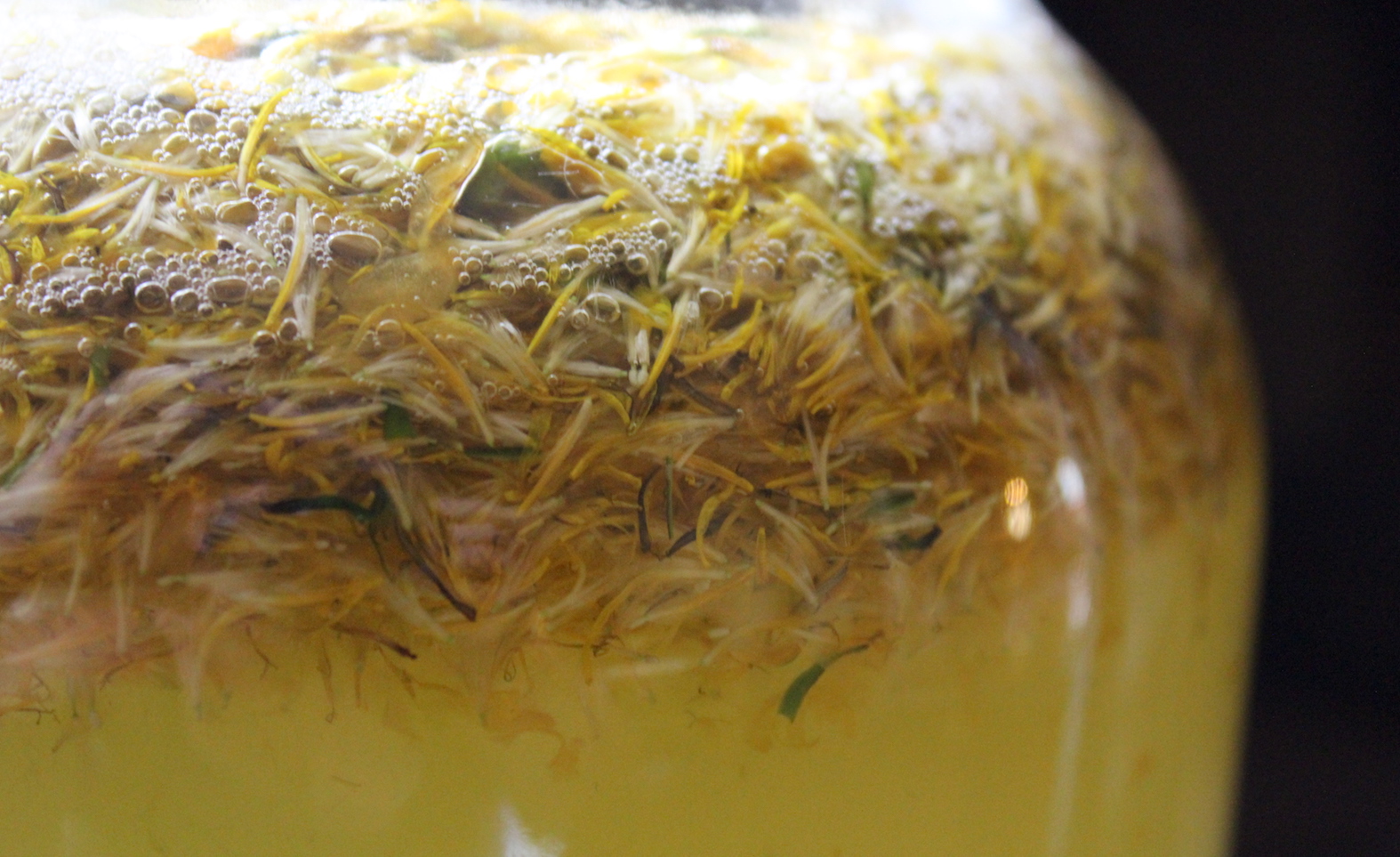
Within a day or two, you should see active bubbling as fermentation kicks in. Let the wine ferment with the dandelion petals in there for about 10 to 14 days.
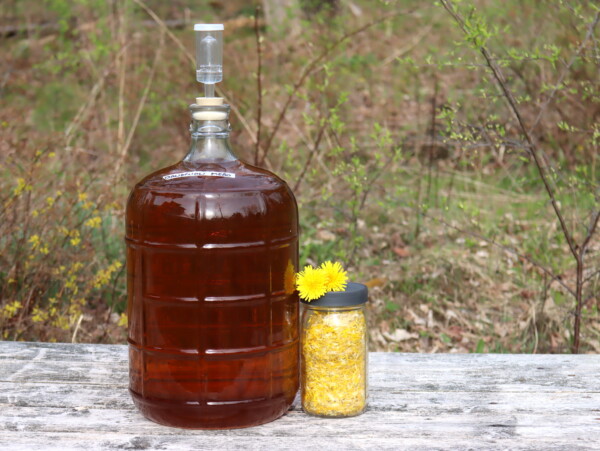
The petals will float to the top, and that’s perfectly normal. If they bubble up into your airlock and clog things up, just remove the airlock, clean it out, and put it back on.
Racking to Secondary
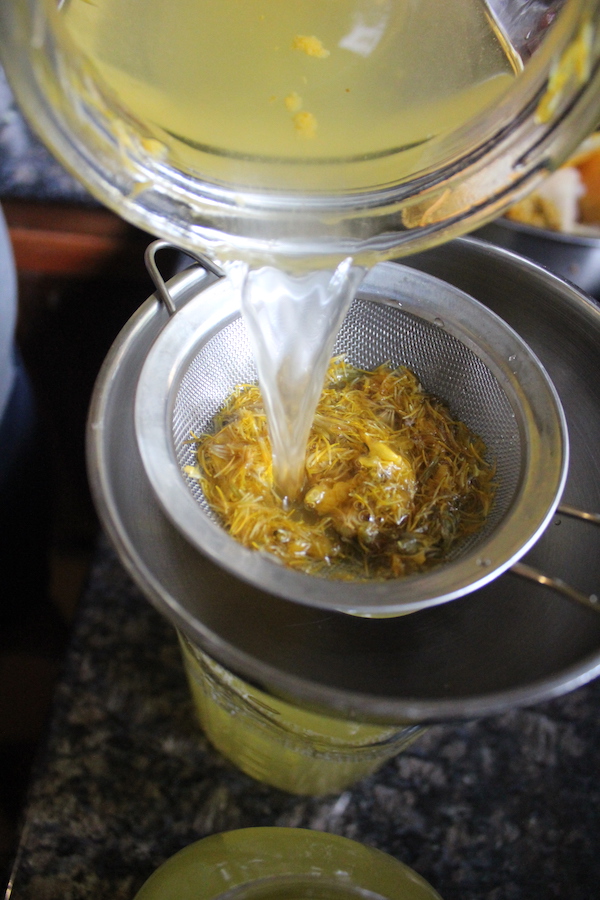
When the bubbling slows down (usually after 10 to 14 days), it’s time to rack the wine into a clean narrow-neck carboy for secondary fermentation. Scoop the floating dandelion petals off the surface first, then use your siphon to transfer the liquid while leaving the sediment at the bottom behind. Pop an airlock on top and stash it somewhere cool and dark.
Let it ferment in secondary for at least 6 to 8 weeks. Check the water lock periodically to make sure the water hasn’t evaporated.
Bottling and Aging
Once secondary fermentation is done and your wine has cleared, give it a taste. If it’s too dry for your liking, you can backsweeten by stabilizing the wine first with a Campden tablet and potassium sorbate, then adding simple syrup to taste.
Siphon the wine into clean bottles, leaving the sediment behind one more time, and seal with corks or flip-top lids. Try to let your dandelion wine age for at least 2 months before drinking, though honestly, 6 months is even better. The flavors really smooth out and integrate with time, and by January you’ll have liquid sunshine in a glass just when you need it most.
Tips for the Best Dandelion Wine
- Pick on a sunny day. Dandelion flowers open wide in full sun and close up on cloudy days or in the evening. You’ll get more petals per flower if you pick when they’re fully open.
- Use only the yellow petals. I can’t stress this enough. The green parts will make your wine bitter. Take the time to separate them properly.
- Try a tiny batch first. If you’re not sure you want to commit to a full gallon, divide the recipe by 4 for a one-quart micro batch wine. All you need is a quart mason jar and a mason jar fermentation kit.
- Be patient with aging. Dandelion wine tastes rough when it’s young. Give it at least 6 months in the bottle and you’ll be rewarded with something truly special.
- Consider making mead. If you swap out the sugar for honey, you get dandelion mead which has even more body and complexity. It takes longer to ferment (honey is harder for yeast to digest), but the results are spectacular.
- Try other flower wines. Once you’ve mastered dandelion wine, check out lilac wine, violet wine, or elderflower wine for more floral adventures.
Frequently Asked Questions
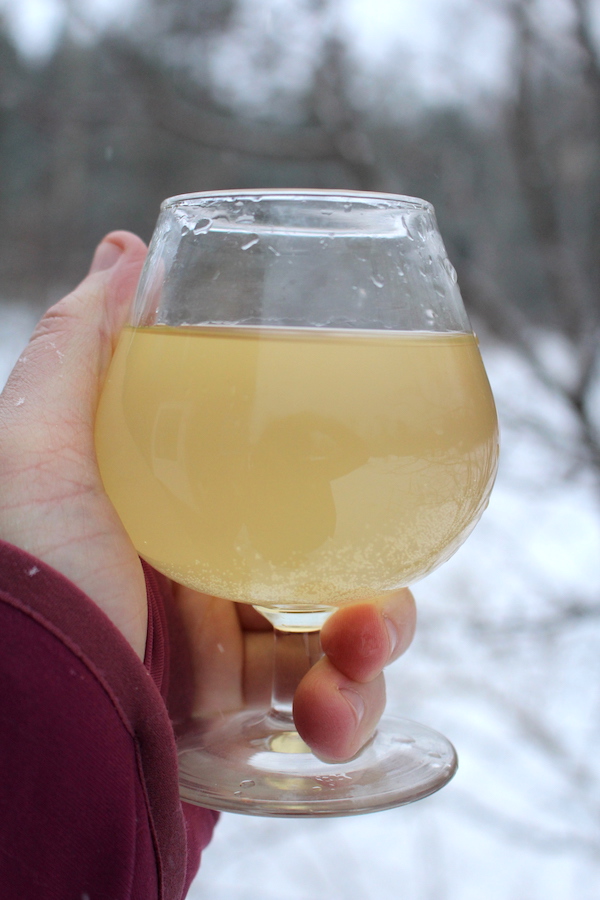
If you’ve done it right, dandelion wine tastes sweet, mild, and floral with subtle notes of honey and citrus. You can almost feel the sunshine splash against your tongue. It should go down smooth with no hints of bitterness. If yours is bitter, the green sepals probably got into the batch.
The green sepals have a milky, bitter sap that will ruin the delicate floral flavor of your wine. You’ll end up with something that tastes more like dandelion greens than sunshine in a bottle. It’s tedious work to separate the petals, but it’s absolutely worth taking the time to do it properly.
You can technically drink it after just a couple weeks of bottle aging, but it’ll taste rough and won’t do justice to all your hard work. I’d recommend at least 2 months, and 6 months is even better. The flavors really smooth out and integrate over time, and by midwinter you’ll have something truly special to sip.
The final sweetness depends on your yeast choice and how much sugar you use. Yeasts with lower alcohol tolerance (like Cote des Blancs at 12-14%) will leave more residual sugar and produce a sweeter wine. If you want it sweeter, you can add a bit more sugar (start with 1/4 cup extra per gallon), or backsweeten after fermentation by stabilizing the wine first with Campden tablets and potassium sorbate, then adding simple syrup to taste.
Dandelion wine uses sugar as the fermentable, while dandelion mead uses honey instead. Mead takes longer to ferment since honey is more complex for yeast to digest, but you get lovely honey notes alongside the floral dandelion flavor, plus more body and better mouthfeel. You can also split the difference and use part sugar, part honey.
Absolutely! Freezing actually works well for dandelion petals and helps preserve them if you’re collecting over multiple days. Just thaw them before adding to your must. The flavor won’t be quite as bright as fresh petals, but it’s still very good. Don’t dry the petals, they lose flavor that way, freezing is much better.
Dandelion Recipes
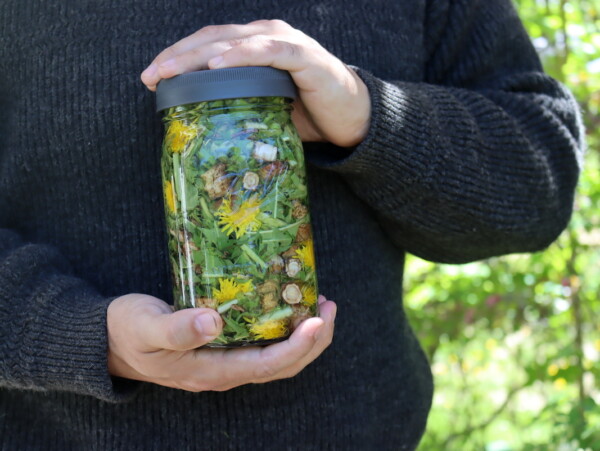
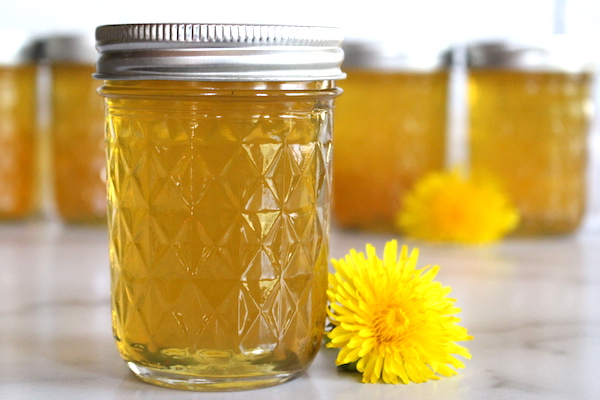
If you tried this Dandelion Wine recipe, or any other recipe on Practical Self Reliance, leave a ⭐ star rating and let me know what you think in the 📝 comments below!
And make sure you stay in touch with me by following on social media!
Dandelion Wine
Equipment
Ingredients
- 3 quarts water, approximate, more to fill
- 3 pounds sugar , roughly 5 to 6 cups
- 1 quart cleaned dandelion petals, packed, from roughly 3-4 quarts blossoms
- 3 medium oranges, juice and zest
- 1 medium lemons, juice and zest
- 1 tsp yeast nutrient
- 1 packet wine yeast, see notes
Instructions
- Bring the water and sugar to a boil in a saucepan. Stir to dissolve the sugar and cool to lukewarm.
- Place the dandelion petals, citrus juice and zest into a one-gallon fermentation vessel. Add the yeast nutrient and pour the lukewarm sugar water over the top.
- Dissolve a packet of champagne yeast or other wine yeast in lukewarm water. Allow it to stand for 5 minutes to rehydrate and then pour it into the wine. Top off with a bit of extra water to fill the carboy, but be sure to leave at least an inch of headspace.
- Cap with an airlock and ferment for 10 to 14 days, or until fermentation slows significantly.
- Scoop off the floating dandelion petals, then siphon the wine into a clean container, leaving the sediment behind. Allow the wine to ferment in secondary for at least 6 to 8 weeks, checking the water lock periodically to ensure the water hasn’t evaporated.
- Bottle the dandelion wine in corked wine bottles for longer storage, or flip-top Grolsch bottles for small batches you’re not planning on storing long.
- Allow the wine to age in the bottle at least 2 months before drinking, ideally 6 months or more. During aging, keep bottles somewhere cool like a basement or closet on the north side of the house (65 to 68 degrees F is ideal, but room temp is fine).
Notes
Nutrition
Nutrition information is automatically calculated, so should only be used as an approximation.
Winemaking Recipes
Find the perfect recipe
Searching for something else? Enter keywords to find the perfect recipe!









Hi! This is my first attempt at home brewing. Can you please tell me the ideal temperature the first ferment should hover around? I’ve currently got it in a dark closet on the north side of our house, but it’s not super bubbly in the airlock and context from other comments implies that perhaps it should be…?
Any advice you can offer would be great. My Google-fu is failing me on this one.
It depends on the type of wine. It is recommended that red wines ferment between 68 and 86 degrees F and 59 or below for white whines. For Dandelion wine, most people ferment at standard room temperature, or somewhere between 65 and 75 degrees.
I made wine with marmalade(pectin) or you can use molasses. adding processed sugar makes the wine unhealthy. especially 5 pounds wtf.
The recipe actually calls for 3 pounds of sugar rather than 5. Anywhere from 1 to 3 pounds of sugar per gallon is very standard. Of course it’s totally up to you which kind of sugar your choose to use, but many people prefer table sugar since it has a more neutral taste and doesn’t interfere with the taste of the wine.
Hi, thanks so much for this great recipe! When I transferred the batch to the secondary container, I left the sediment out as specified and now it’s not bubbling in the airlock at all. Should I worry? Do I need to add anything? Thank you!
How long did you leave it before racking into the secondary container. Had the fermentation stopped before you transferred it?
Hi I just came across this post. I have a question, is it necessary to use yeast. What if I have on hand my own homemade fermentation starters made from fruit can I use that in replacement of the yeast?
You must have yeast to make wine. The difference is where that yeast comes from. You can innoculate your wine with cultured yeast like described in this post or you can use wild yeast that is in the air and allow it to spontaneously ferment. It really depends on your personal preference. Spontaneous fermentation can be very unpredictable which doesn’t necessarily mean it’s bad. You just need to do your own research and determine which method is best for you. Here is an article that I found that explores the pros and cons of each method. https://winemakermag.com/article/758-wild-yeast-the-pros-and-cons-of-spontaneous-fermentation#:~:text=Whether%20you%20are%20a%20first,produces%20alcohol%20and%20carbon%20dioxide.
I just made this recipe this year and its delish!
My friend and I are trying to brainstorm new flavors and we were thinking of trying rose. Could you just substitute rose petals for the dandelion? Maybe not use as much citrus? Any suggestions ?
Rose sounds amazing, and I’ve actually considered that option too, but haven’t quite caught enough of our wild roses at peak bloom to make it happen. Less citrus sounds about right, or at least skip the orange and go with all lemon. For a more neutral taste, you can also use acid blend, which is formulated for brewing and will get the pH right without adding citrus. You might try basing the recipe off this lilac wine recipe for roses (https://practicalselfreliance.com/lilac-wine-recipe/). This recipe uses blueberries or blackberries for color, though I think a splash of pomegranate juice or raspberry juice might really compliment roses. Best of luck and let me know how it goes!
Finding enough Roses was also a hurdle we thought we’d face, I never thought of lilac! Much more accessible
Hi, Ashley. I am ready to rack my wine after it’s second fermentation process but I was wondering if it’s okay that the leftover yeast in the bottom is dark and dead looking? My wine is also a bit dark in color. Also, my siphon turns out to be plastic and I can’t find a recommendation for a sanitizer for it. Do you recommend a particular sanitizer or a way to sanitize it?
Use something called one-step sanitizer for your siphon, it’s the same thing I use for everything. Dark colored lees at the bottom is totally fine and normal.
Essentially an update of how it is going…
In the height of the lock down I figured I would give it a go. SInce I have a 5 gallon kit, of course I wanted to make 5 gallons and used your recipe. It took a long time to gather all those petals! Recipes online seem to vary from 1-3 qts of petals per gallon of water. I only found one example where it was done by mass which was 75 g of petals per liter of water (essentially a qt). The way I packed the petals it worked out to about 2 qts/gallon.
Using the yeast nutrient and champagne yeast, after just over two weeks in primary ferment I transferred into a carboy with air lock. It still bubbles a couple times a minute so maybe I did it a bit early but maybe not. Hydrometer readings from the start and end of the two weeks showed an alcohol content reaching ~18% which is just about the limit of my yeast.
Right now it is a cloudy When I siphoned into the second vessel. As you can see it is quite cloudy and orange/yellow. I took the opportunity with the wine thief to give it a taste. Fairly strong alcohol taste but quite a sweet taste, almost like a liqueur. Not at all unpleasant. Right now it seems to have a yeasty (to be expected) citrus/orange flavor. I have never had dandelion wine for comparison but I am hoping after secondary fermentation and bottle aging I will get the dandelion flavor. If not, it will still be good.
If it does stay too citrusy it is probably because I didn’t take into account the volume of the juice and petals in the vessels and went with 18 oranges, 6 x lemons for 5 gallons of water.
It looks and sounds like it’s coming along great. The flavor will only improve with age!
If I don’t have exactly enough petals right now, do you think I could dry them out and keep gathering, until I gave enough? Thanks so much, I can’t wait to make it.
Kandace Lee
I’ve kept them in the fridge, plucked from their stems, for up to a week without issue. Other’s I’ve read have frozen them until they had enough. I don’t know about drying, but that may work well too (or it may rob them of flavor). Good luck!
Hi Ashley, I’m impatiently making my first batch of dandelion wine. After almost 5 weeks it is still on its first fermentation with the airlock “burping” every 1-2 seconds. I have kept it in a cool basement of about 65 degrees. Should I go ahead and rack it to get the petals out of it? Do you ever clean the airlock? Thanks in advance for any advice. I’m so afraid that the petals will go bad and ruin the wine.
Yup, I’d take everything out and clean the air lock at this point. A cool basement is a great spot for it, it’ll ferment much slower, but with a slower more gentle ferment you’ll get better flower flavor (rather than things volatilizing off). But yes, it’s time to filter them out and clean the water lock.
Thank you for responding to all these comments! I I’m trying this for the first time. I just moved into the second fermentation and I have 2 gallon carboys, but one of them is quite clear and (I tasted it) VERY sweet while the other is cloudy and VERY alcoholic tasting. Should I bail on one of these? Or let them both sit in second fermentation for 6-8 weeks?
They both were very active very quickly and I’m afraid they sat for many more weeks in their first fermentation than was necessary, too. They were in my kitchen for 3 weeks but I think fermentation may have finished after just a couple days…
I often forget things in primary for way too long, no worries, it happens. The sweet one will likely need more time, assuming it’s active. If it’s not bubbling, then the yeast may be dead and that one may need fresh yeast added. The really alcoholic tasting one will mellow in the bottle, assuming it’s still has enough sugar left to balance it (if it tastes sour now along with alcoholic then you may need to add more sugar for taste). Did you use the same recipe for both? That’s a pretty dramatic difference between the two…
Do you ever use camden tablets in your recipes
I don’t actually, but many people always do. You can make fine wine without adding camden tablets if that’s your choice.
How do I know when it is time to rack the wine? Do I just wait for 3 weeks to go by? Do I watch to see if there are no bubbles in the air lock for a certain amount of time? My carboy is in a cool basement. Thank you so much for sharing your recipe and experience! I’m very excited about this.
Usually a few weeks is good, maybe 3-4 weeks at most in colder spots. You want to get the petals out of there sooner rather than later because they can mold. A good rule of thumb is to wait 3-4 minutes between airlock bubbles, but you may just never get there. Don’t leave the petals in for more than 3-4 weeks in any case.
Hi there! In the comments to another question you mentioned making pineapple wine. I searched your website for a recipe and couldn’t find one. Do you have a recipe for pineapple wine? I’d love to try it!
I do have a recipe, but it’s not posted yet. Hopefully soon. It comes from the book Artisanal Small Batch Brewing. She uses bottled pineapple juice, but I substituted fresh pineapple juice that I extracted myself.
Hi there,
We followed your recipe but have still not seen any bubbling in the airlock. It’s been 10 days. We didn’t wait until the boiling mixture reached room temp before adding the yeast mixture, I’m thinking it’s possible it could have died if the mixture was too hot? Can we add more yeast at this point? Thanks!
If it’s been more than 48-72 hours with no bubbles, I’d assume something happened to your yeast. You may still be able to save it if you pitch yeast now, but 10 days in, something else may have colonized in there and if may have already spoiled. Give it a smell, and if it still smells fine, maybe try to re-pitch the yeast and save it. Use your best judgment though.
Your recipe doesn’t say anything about removing the dandelion petals, etc. Do they stay in the fermenter for 3 weeks?
Yes, the petals stay in the wine through primary fermentation, but they’re filtered out before secondary fermentation.
I’m excited to try my first batch of dandelion wine (first home brew experience ever!).I read through your overview on making small batch wine, which mentioned the need for tannins, but this recipe doesn’t mention that. Is it not necessary for dandelion wine? Thanks! I just discovered your blog and it is so chock full of great things!
Tannin is optional in any winemaking recipe, and it affects the final flavor and mouthfeel, but not how it ferments. For some reason it’s never included in dandelion wine recipes, maybe the petals have some naturally? Anyhow, while I often add it to other fruit wine recipes, I didn’t add it here because way back in the day when I made my first batch the recipe didn’t have it. It turned out great, so I’ve never added it since.
Hi Ashley,
I just want to say THANK YOU for EVERYTHING! I was SO happy to have found your site so I could try my hand at Dandelion winemaking. I remember picking the blossoms for my older sister as a youngster & having a tiny taste of her delicious wine, but I had no CLUE what she did or how she did it & since she has passed years before I could even ask her, I thought the process was just forever lost. Imagine my delight at finding your wonderful information! I’m starting my process today…. 😊 We’ll see what happens!
Hi Ashley, just wondering about something… I tried to do the primary ferment in a carboy (narrow neck), but it began overflowing, so I moved everything into a wide-mouthed glass container and put a towel over it for 2-3 days to give it some time to calm down. Then I transferred the liquid back into the carboy, filtering out the pedals & orange and lemon peels… It didn’t occur to me at the time, but now I’m wondering if I removed the pedals & zest too soon. Is 2-3 days enough time to extract enough flavor into the wine? Or should I have put all the contents back into the carboy for the remainder of the first ferment? How long do you typically leave the pedals & zest in?
That should be totally fine. The vast majority of the flavor comes out in the first day or two. Good luck with your wine!
For a five gallon batch do I use more than one packet of champagne yeast?
Yup! One packet is good for up to 5 gallons.
My house, at night, gets down to 60 degrees. We are abut to hit day temps that will consistently be in the mid-60s to 70 range. Do you think it’s OK to start a batch? This is my first try!
Sounds perfect.