
Affiliate disclosure: This post may contain affiliate links. Please see our Privacy Policy.
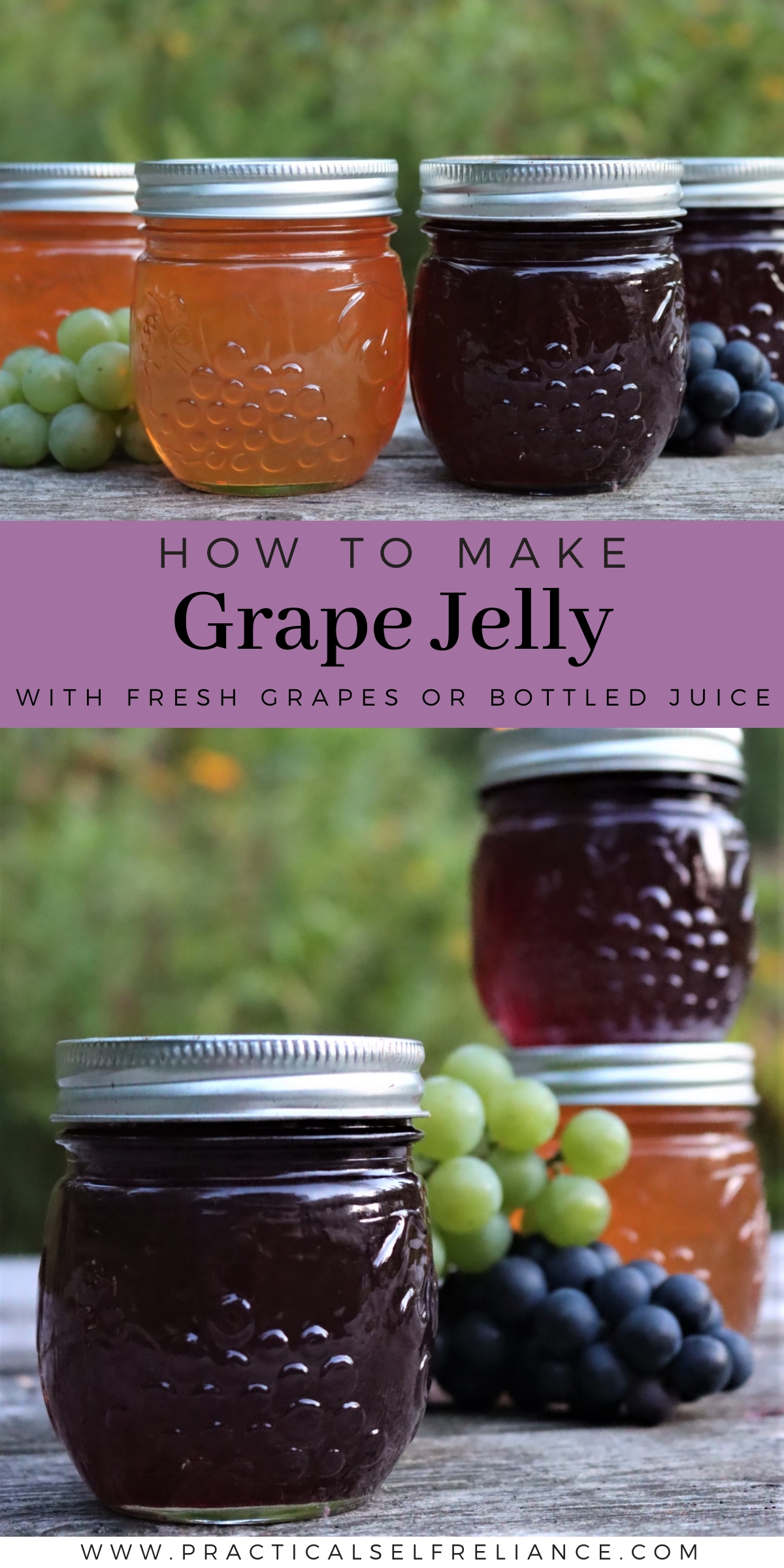
Homemade grape jelly is a smooth, spreadable preserve with the deep purple color and rich grape flavor of fresh fruit. This recipe uses Sure-Jell or Ball Classic powdered pectin for a quick reliable set with no gel-stage testing. It works equally well with fresh Concord grapes, foraged wild grapes, or 100% bottled grape juice from the grocery store.
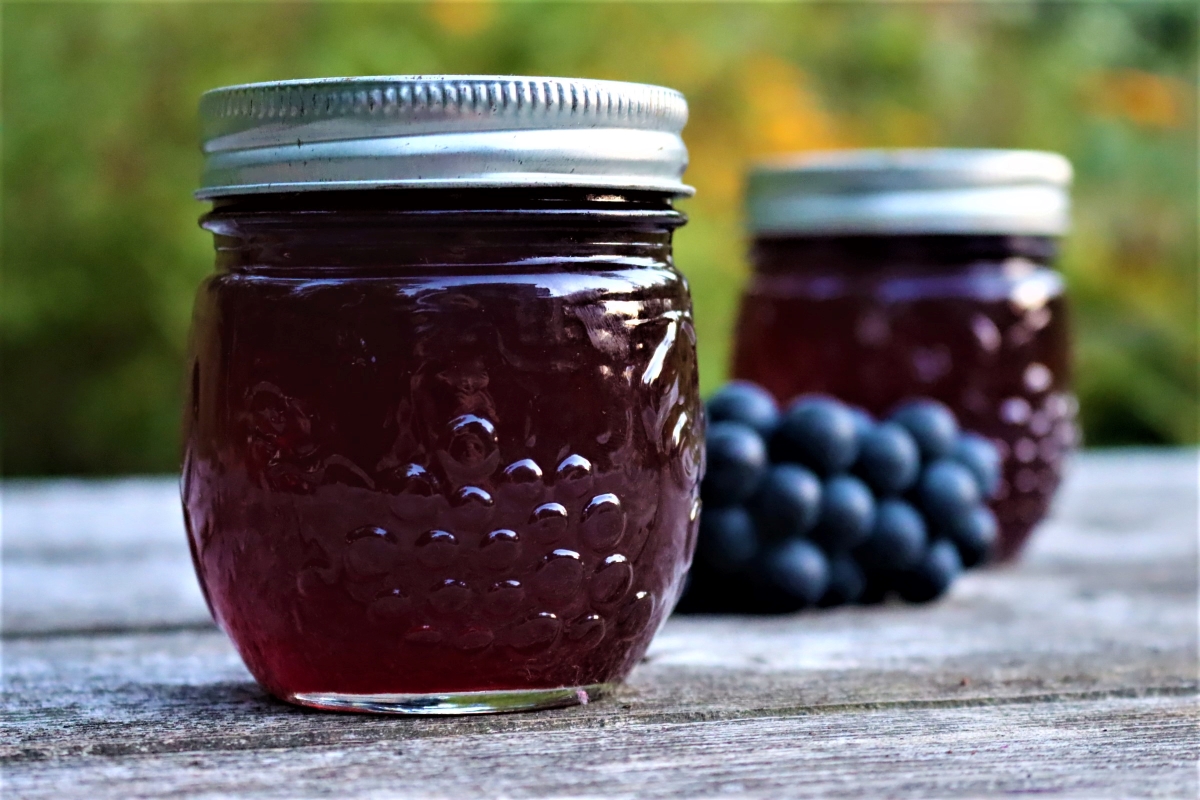
Table of Contents
- Notes from My Kitchen
- Ingredients for Grape Jelly
- How to Make Grape Jelly
- Don’t Overcook Pectin Jelly
- Canning Grape Jelly
- Altitude Adjustments
- Yield Notes
- Storage Options
- Recipe Tips
- Pectin Options
- Grape Jelly Variations
- Ways to Use Grape Jelly
- Grape Jelly FAQs
- Ways to Preserve Grapes
- Grape Jelly Recipe
- Jelly Recipes
I’ve been making grape jelly for over a decade now, and once you taste homemade, the commercial stuff (which is mostly corn syrup) loses its appeal. My husband always says our jelly tastes like “real grapes,” which sounds obvious until you compare it side by side. Fresh grapes don’t last long off the vine, so a few afternoons of jelly-making each September gets me enough jars to last until next year’s harvest, plus plenty to give as holiday gifts.
Adapted from the Ball Complete Book of Home Preserving, this recipe relies on Sure-Jell or Ball Classic powdered pectin for a reliable gel. The post covers how to prevent gritty tartrate crystals, troubleshoot jelly that won’t set, and includes a low-sugar option in the Pectin Options block below.
Notes from My Kitchen

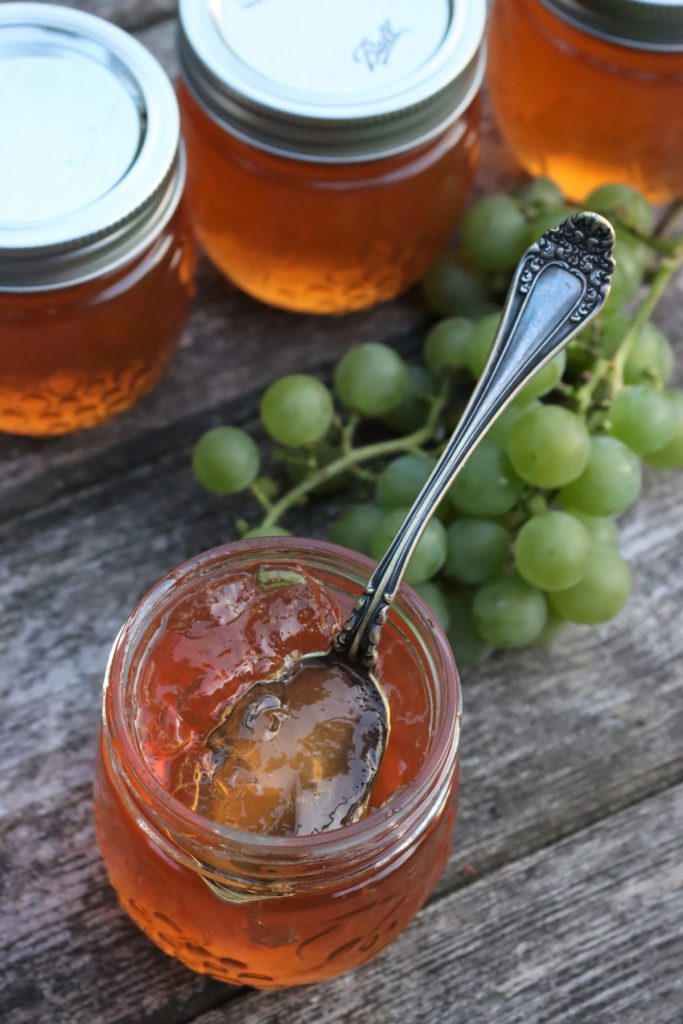
Grape jelly is more forgiving than most preserves, but timing matters. The biggest mistake I see in reader comments is adding sugar at the wrong stage. With powdered pectin, sugar goes in after the juice and pectin have come to a boil, not before. Add it too early and your jelly won’t set.
If you’re using fresh grapes, don’t skip the overnight refrigeration step. Those gritty tartrate crystals are the number one complaint I hear about homemade grape jelly, and they’re completely preventable. Chill the juice, strain carefully through cheesecloth, and you’ll have crystal-clear jelly every time.
Ingredients for Grape Jelly
This grape jelly recipe uses just three ingredients:
- Grape juice: Use freshly extracted juice from any grape variety (Concord, wine grapes, wild grapes, table grapes) or bottled 100% grape juice with no added sweeteners. Concord is the classic and most flavorful for jelly. Welch’s bottled juice is a perfectly fine shortcut.
- 1 box (1.75 oz) powdered fruit pectin: Use Sure-Jell (yellow box) or Ball Classic regular powdered pectin. Don’t substitute liquid pectin, which requires different ratios. For a low-sugar version, see Pectin Options below.
- Granulated sugar: This recipe uses 5 cups of sugar to 4 cups of grape juice, which sets reliably with regular powdered pectin like Sure-Jell. The recipe card has the specific amount.
If you want a more rustic preserve with bolder flavor, try old-fashioned grape jam made with the skins included. For smooth, clear, classic grape jelly, you’ll strain out everything and work with just the juice.
Best Grapes for Grape Jelly
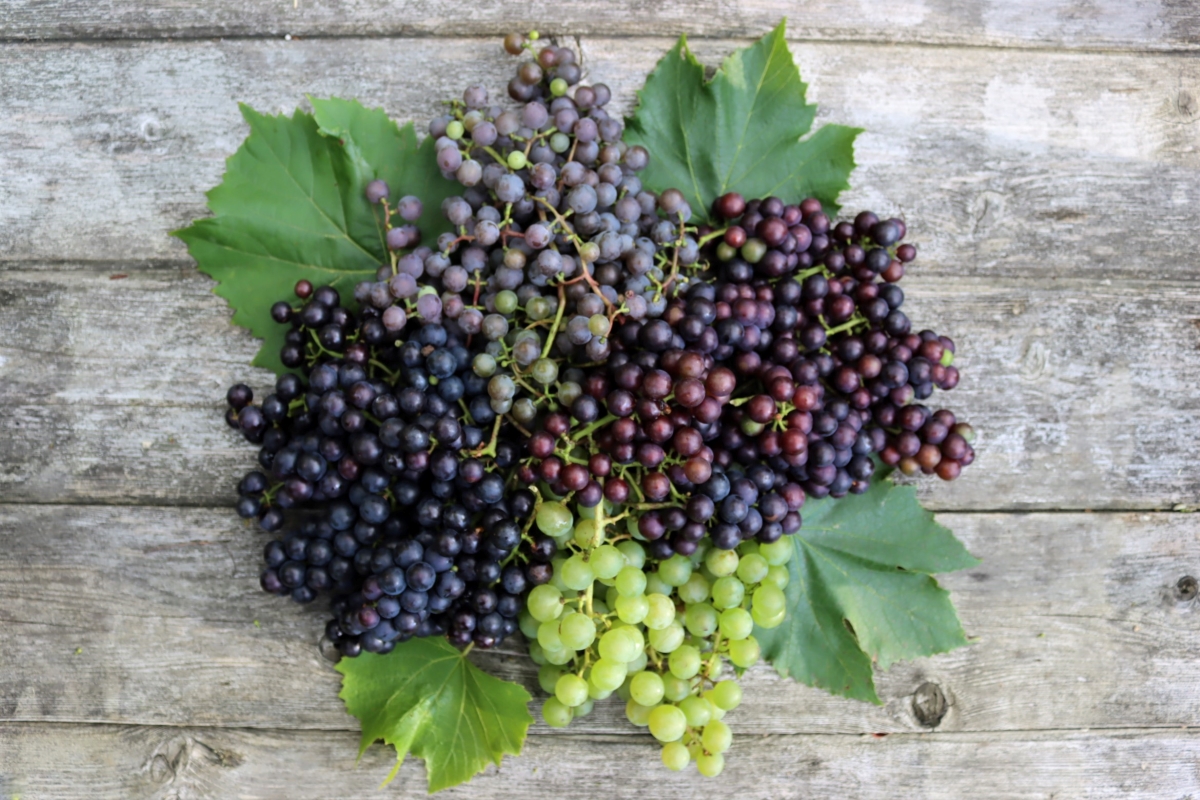
Concord grapes are the classic choice, but almost any variety works. We grow several cold-hardy grape varieties here in Vermont (Marquette, Frontenac, La Crescent) and I’ve used them all for jelly with good results. Wine grapes, table grapes, and wild grapes all make excellent jelly, each with its own color and flavor.
Don’t worry if your grapes taste sour fresh because you’re adding sugar during the process. For picky kids, sweet table grapes or bottled juice are always a safe bet. If you want to try making wine or wild grape mead instead, those are great options for an abundant harvest of tart or tannic grapes.
My son worked at a vineyard and brought home extra vines. Last year I steam juiced 3 gallons and made several batches using your directions. It is so delicious, so much tastier than the usual concord jelly. The jelly made wonderful Christmas gifts!
How to Make Grape Jelly
Once you have your grape juice (either extracted from fresh fruit or poured from a bottle), making jelly is quick and simple. The key is following the timing and ratios exactly.
Extracting Grape Juice
If you’re starting with fresh grapes, stem them into a heavy-bottomed pot with a bit of water (about 1/2 cup per 3 1/2 pounds of grapes) to prevent scorching. Bring to a boil while mashing with a potato masher, then simmer for about 10 minutes until the grapes completely fall apart.
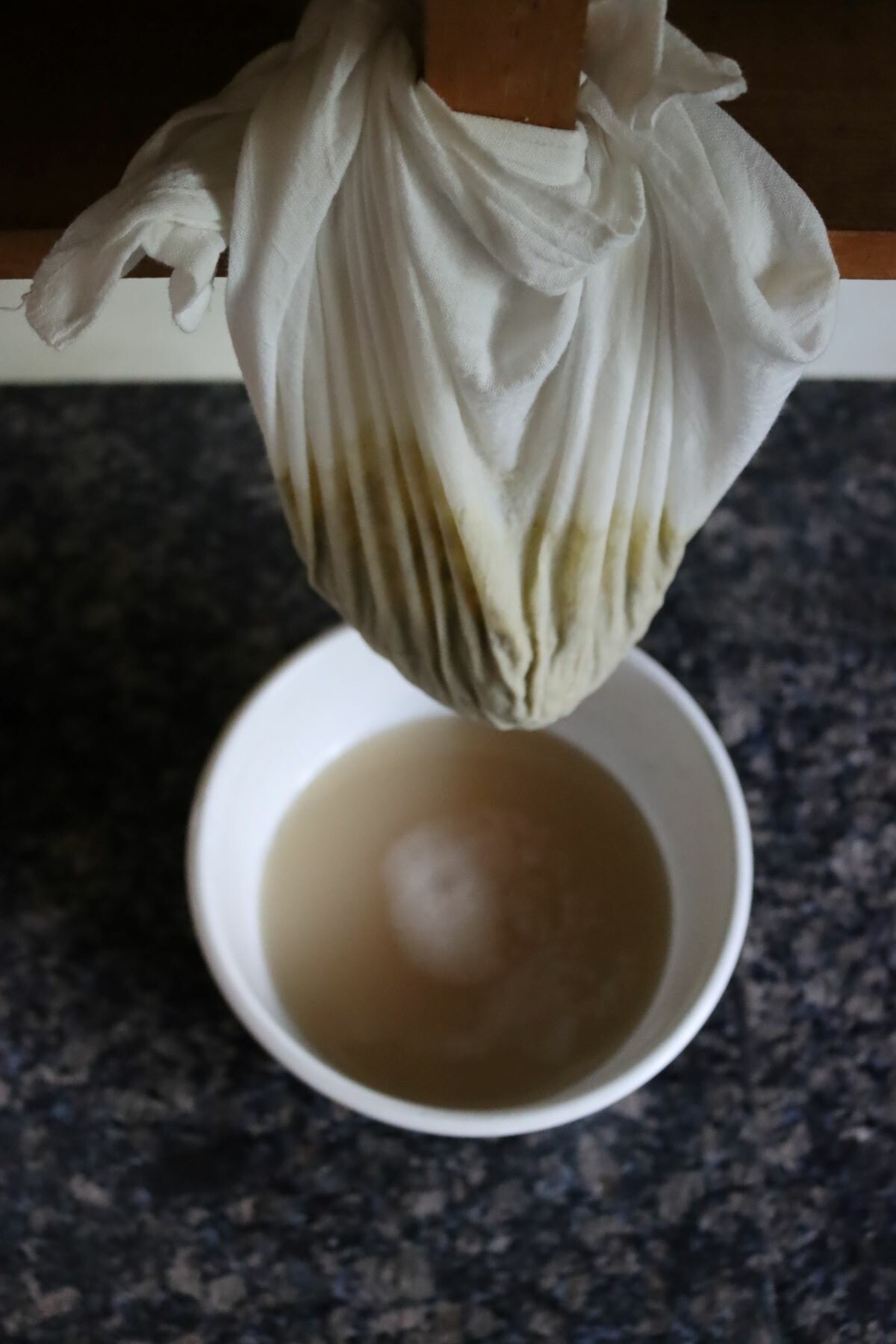
Strain the cooked fruit through a jelly bag or a strainer lined with several layers of dampened cheesecloth set over a deep bowl. Let it drip undisturbed for at least 2 hours, or overnight for more juice. Don’t squeeze the bag; squeezing releases solids that cloud the finished jelly.
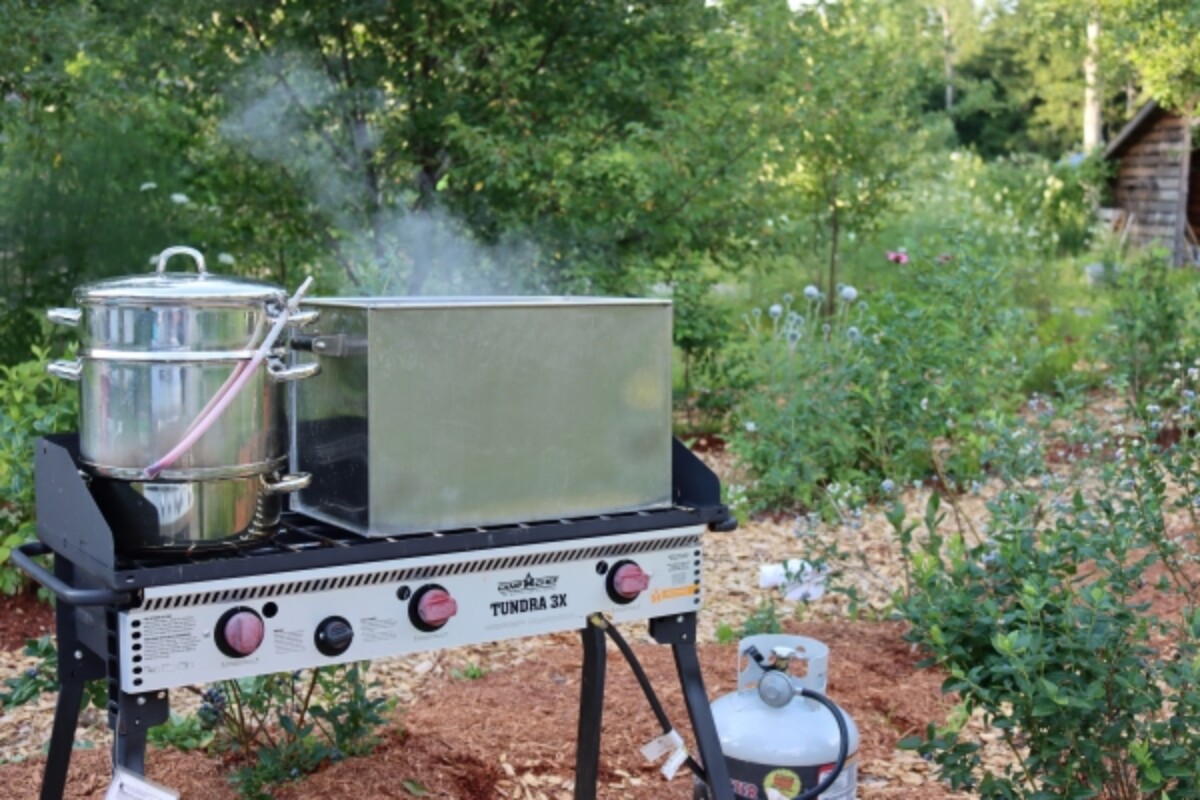
For large batches, I use a steam juicer in our outdoor canning kitchen. It holds about 10 pounds of fruit and extracts clear juice without any mashing or straining. The steam juicer is also handy for processing other fruits like apples for crabapple jelly or plums for plum jelly.
Preventing Tartrate Crystals
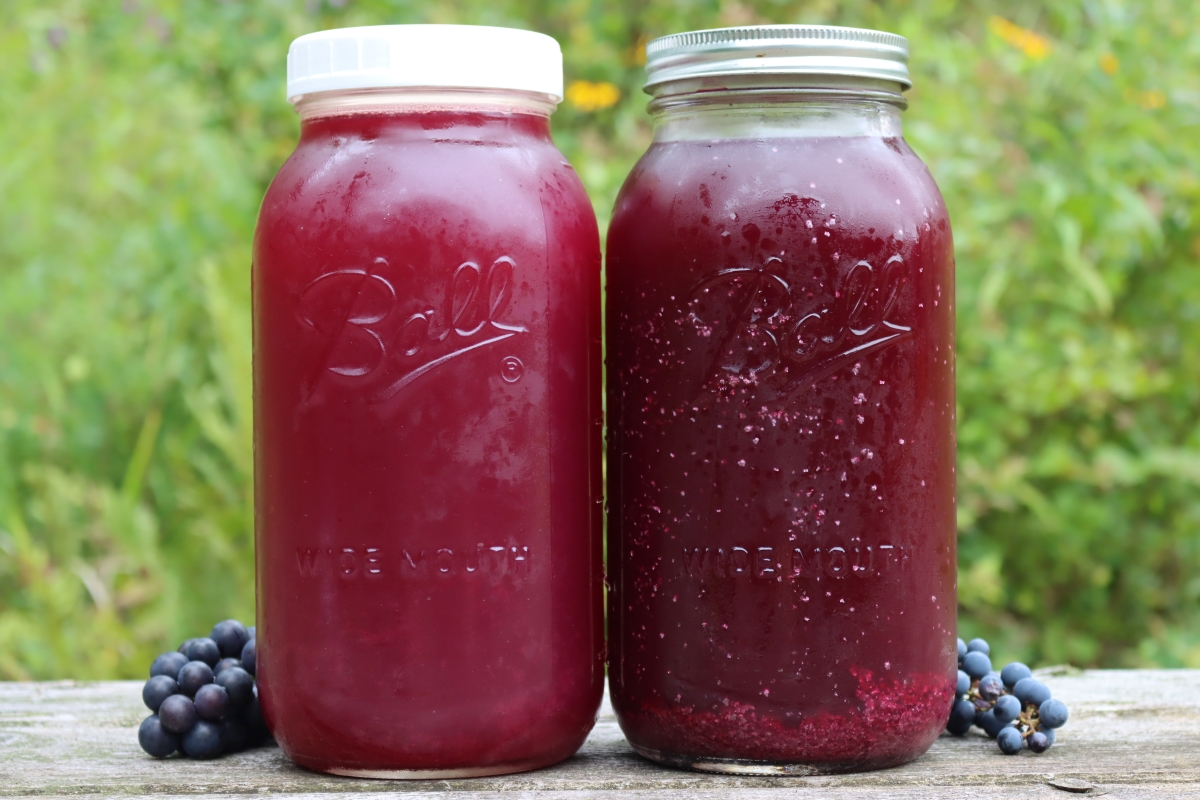
Grapes naturally contain tartaric acid, which can form gritty crystals in your finished jelly. To prevent this, refrigerate your extracted juice overnight and the crystals will settle to the bottom. Then carefully pour the cold juice through cheesecloth, leaving the sediment behind. This step is especially important with wild grapes, which have higher tartaric acid levels than cultivated varieties.
Cooking the Jelly
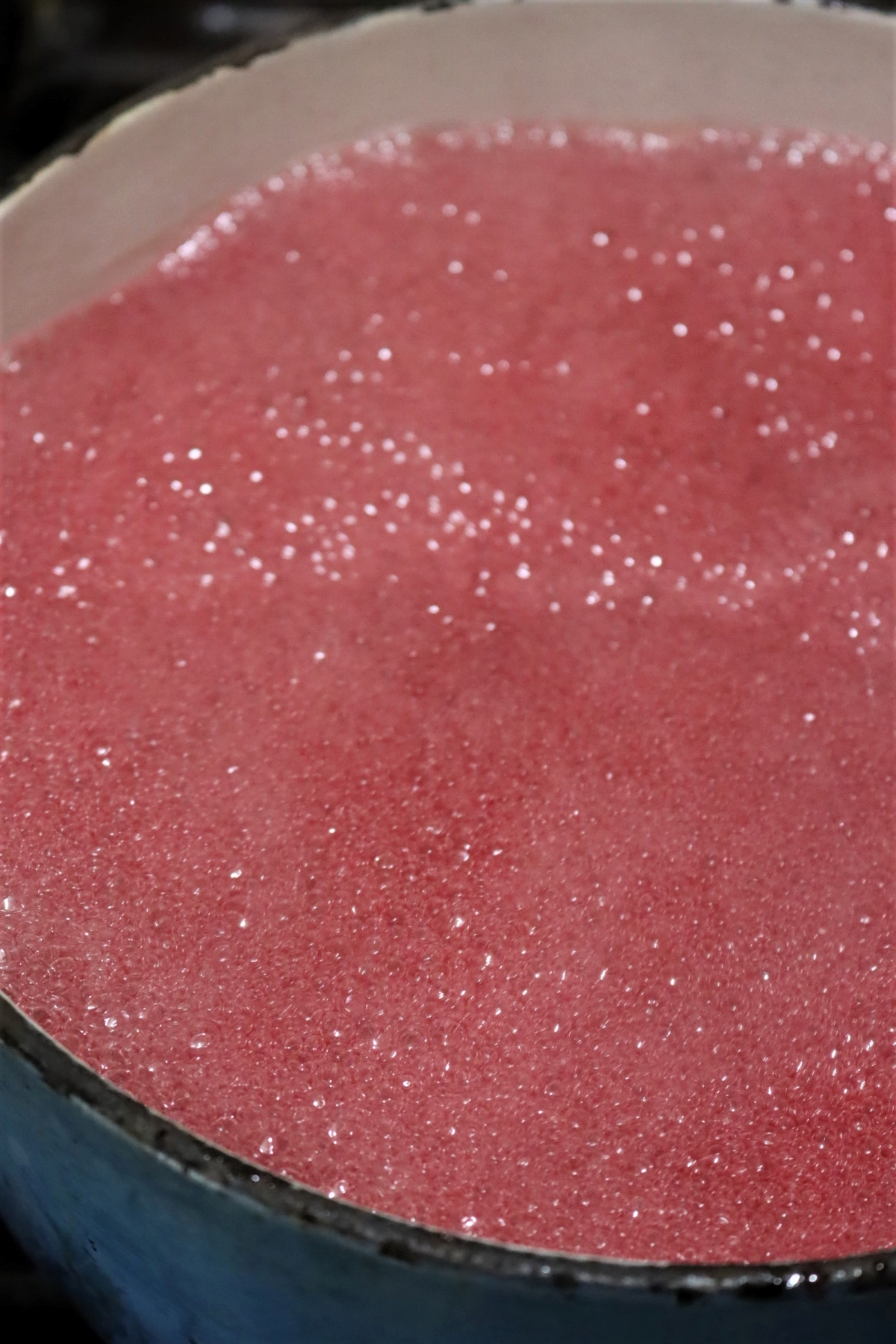
Add the grape juice and powdered pectin to a large heavy-bottomed pot (at least 8 quarts, since the mixture foams dramatically). Stir to dissolve the pectin completely. Do not add sugar yet. Bring to a full rolling boil over high heat and boil hard for exactly 1 minute.
Now add the sugar all at once, stir constantly to dissolve, and return to a hard rolling boil. Boil hard for another minute, then remove from heat and quickly skim off any foam. Ladle the hot jelly into prepared half-pint jars, leaving 1/4 inch headspace, wipe rims clean, and apply two-piece canning lids fingertip tight.
Don’t Overcook Pectin Jelly
Pectin jelly works on chemistry, not on cooking time. A few things to know:
- The jelly looks thin in the pot when you take it off the heat, and that’s normal. Pectin sets as the jelly cools, not while it’s boiling.
- Trust the timing. Boil for 1 minute before adding sugar, then 1 minute after. That’s all you need.
- Skip the thermometer and freezer plate test. Those are for old-fashioned no-pectin jellies. Pectin recipes set on chemistry, not on temperature.
- Give the jars 24 to 48 hours to fully set before declaring failure.
Canning Grape Jelly
Grapes are naturally acidic, which makes grape jelly safe for water bath canning with no pressure canner required. If you’re new to canning, start with my beginner’s guide to water bath canning before you fire up the canner.
Process the filled jars in a boiling water bath canner for 10 minutes (adjusting for altitude). When the timer goes off, turn off the heat and let jars sit in the canner for another 5 minutes before lifting them out (this helps prevent siphoning). Cool on a towel for 12 to 24 hours, check seals, and refrigerate any unsealed jars. Sealed jars keep on the pantry shelf for 12 to 18 months.
Altitude Adjustments
Processing time depends on your elevation:
- 0 to 6,000 feet: 10 minutes
- Above 6,000 feet: 15 minutes
Yield Notes
Here’s what you can expect from this recipe:
- 3 1/2 pounds whole fresh grapes = about 4 cups of strained juice (one batch)
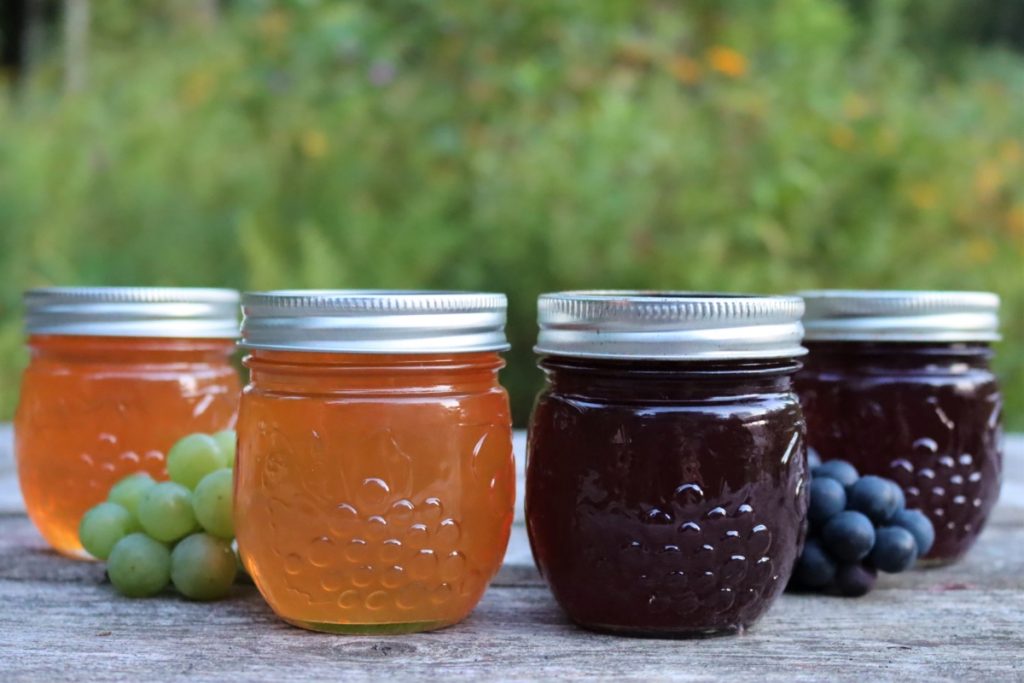
- 4 cups grape juice + 1 box pectin + 5 cups sugar = about 6 to 7 half-pint (8 oz) jars
- Don’t double the recipe. Larger batches don’t heat evenly and may not set properly. Make two single batches back-to-back instead.
Storage Options
Not interested in water bath canning? You have alternatives:
- Refrigerator jelly: Let jars cool and store in the fridge. Keeps 3 to 4 weeks.
- Freezer jelly: Use freezer-safe straight-sided containers and leave 1/2 inch headspace for expansion. Lasts up to 12 months.
- Canned jelly: Water bath processed jars give you 12 to 18 months of shelf-stable storage. This is what I prefer because it means grape jelly any day of the year, even in the depths of a Vermont winter.
Recipe Tips
- Using bottled juice is fine. 100% grape juice with no added sweeteners works perfectly. Welch’s is the classic choice. Skip the extraction and crystal-removal steps and go straight to cooking the jelly.
- Use a deep pot. Grape jelly foams dramatically when it reaches a rolling boil. An 8-quart or larger pot prevents overflows.
- Save the grape pulp. The leftover cooked pulp is delicious folded into muffin batter, swirled into yogurt, or used as a base for grape butter. Don’t compost it without trying it first.
- Don’t double the recipe. Two single batches back-to-back will always set better than one big batch.
- Be patient with setting. Pectin can take 24 to 48 hours to fully set, and some batches take up to 2 weeks. If still runny after that, read through my guide to troubleshooting an unset jelly.
Pectin Options
Standard powdered pectin (this recipe): Requires the full sugar amount in the recipe card. Use Sure-Jell (yellow box) or Ball Classic regular powdered pectin.
Low sugar pectin: Sure-Jell Low Sugar (pink box) or Ball Flex Batch Low Sugar let you reduce sugar significantly, or substitute honey or maple syrup. Follow the directions on the box, since amounts differ from regular pectin.
Pomona’s Universal Pectin: Pomona’s works with any amount of sugar (or none). The set is softer, more like Jello. Read how to use Pomona’s Pectin first, since the process is different.
Liquid pectin: Not recommended. Requires more sugar for the same volume of juice and the texture is inconsistent.
Grape Jelly Variations
Grape juice takes well to a few flavor twists. Once you’ve made the basic recipe, try one of these:
- Concord Grape Jelly: The recipe is already optimized for Concord, the classic American jelly grape. If you have access to fresh Concord grapes, you’ll get the deepest purple color and most recognizable grape jelly flavor.
- Wild Grape Jelly: Substitute foraged wild grapes for cultivated. Wild grapes (fox grapes, frost grapes, riverbank grapes) are tarter and more intensely flavored, with much higher tartaric acid, so the overnight refrigeration step to remove crystals is essential. See my guide to wild grapes for sourcing.
- Welch’s Grape Jelly (Bottled Juice): Use 4 cups of 100% grape juice with no added sweeteners. Skip the extraction and tartrate removal steps entirely and proceed straight to cooking the jelly.
- Spiced Grape Jelly: Add a cinnamon stick and 4 to 6 whole cloves to the grapes while extracting the juice. Strain them out with the pulp. The spice is subtle and pairs nicely with cheese boards.
- Mint Grape Jelly: Steep a small bunch of fresh mint in the hot grape juice for 10 minutes before adding pectin, then strain it out. It’s lovely with lamb, or spread on a sandwich.
- Vanilla Grape Jelly: Stir in pure vanilla extract right after removing the jelly from heat. The vanilla rounds out the grape flavor and adds a subtle sweetness.
Ways to Use Grape Jelly
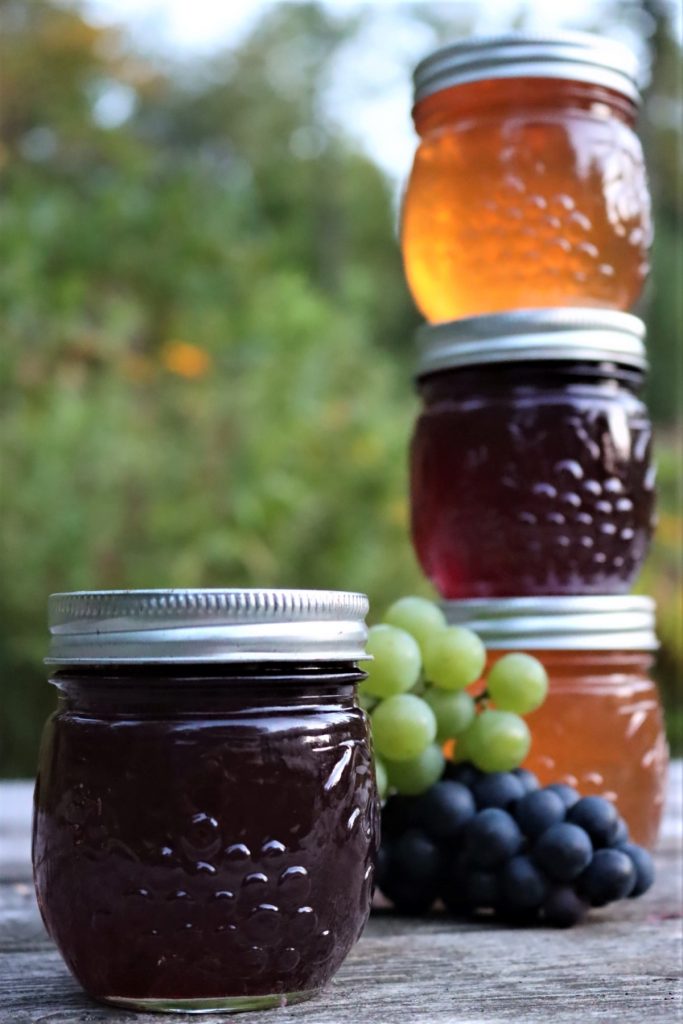
Beyond the classic PB&J, grape jelly has plenty of uses. Use it as a glaze for ham or meatballs, swirl it into yogurt or oatmeal, spread it on warm biscuits with butter, or melt it into a pan sauce for pork tenderloin. A jar of homemade grape jelly tied with a ribbon is always appreciated as a gift.
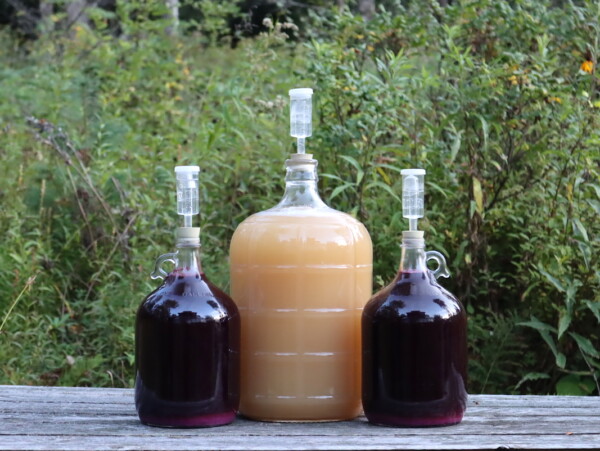
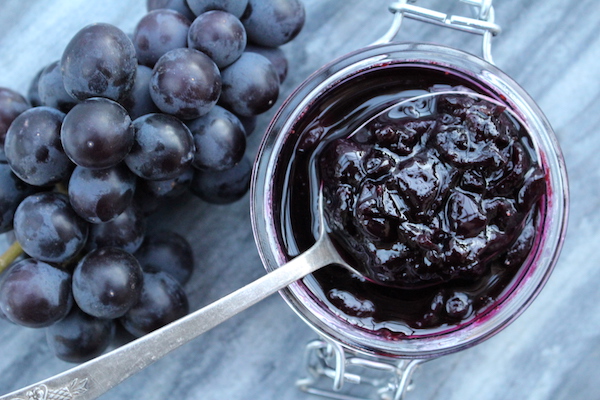
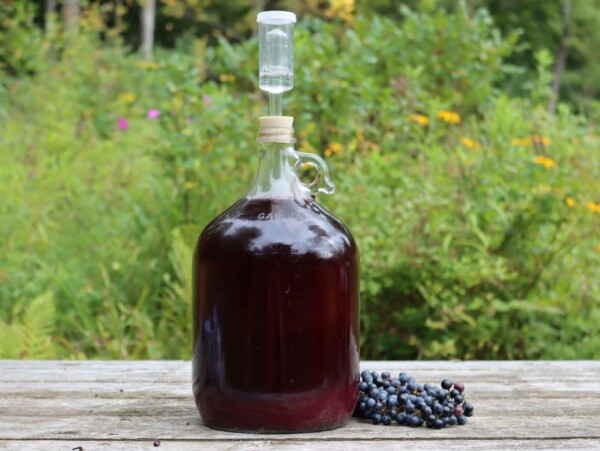
If you find yourself with more jelly than you know what to do with, check out my guide to 100+ ways to use up a jar of jam or jelly. And while you’re already in grape-preserving mode, you might enjoy old-fashioned grape jam, homemade grape wine, or wild grape mead.
Grape Jelly FAQs
The most common causes are not boiling long enough after adding sugar (it needs a full rolling boil for exactly 1 minute), adding sugar at the wrong time, or using expired pectin. Pectin also takes 24 to 48 hours to fully set, and some batches take up to 2 weeks. If still runny after several days, you can reprocess it using these instructions to remake a jelly that hasn’t set.
Those gritty bits are tartrate crystals caused by tartaric acid in the grapes. To prevent them, refrigerate your extracted grape juice overnight before making jelly. The crystals will settle to the bottom. Then carefully pour the cold juice through cheesecloth, leaving all the sediment behind. This step is especially important when using wild grapes, which have higher tartaric acid levels.
Yes, with Concord grapes. They have enough natural pectin to gel without added pectin, especially with some slightly underripe grapes in the mix, and the National Center for Home Food Preservation has a method for it. I’ve tried it, and it didn’t work for me, so now I make my grape jelly with pectin. If you’d like a pectin-free grape preserve with the skins left in, try grape jam instead.
Yes. Use 100% grape juice with no added sweeteners or preservatives. Welch’s and similar bottled brands work well. Measure 4 cups per batch and follow the same cooking directions. The advantage is you skip the extraction and crystal-removal steps entirely.
Concord grapes are the classic American jelly grape, with deep purple color and the most recognizable grape jelly flavor. Wine and table grape varieties (Marquette, Frontenac, La Crescent, table grapes) all work well too. Wild grapes (fox grapes, frost grapes, riverbank grapes) make outstanding jelly but require the overnight refrigeration step to remove tartrate crystals.
Ways to Preserve Grapes
If you tried this Homemade Grape Jelly recipe, or any other recipe on Practical Self Reliance, leave a ⭐ star rating and let me know what you think in the 📝 comments below!
And make sure you stay in touch with me by following on social media!
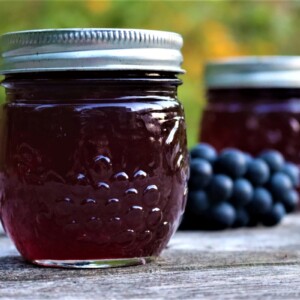
Grape Jelly
Equipment
Ingredients
For Extracting Juice (if using fresh grapes):
- 3 1/2 lbs grapes, any variety: Concord, wine grapes, wild grapes, or table grapes
- 1/2 cup water
For Making Jelly:
- 4 cups grape juice
- 5 cups sugar
- 1 box powdered pectin, 1.75 oz, such as Sure-Jell, or 6 Tbsp if using bulk pectin
Instructions
Extracting Grape Juice (skip if using bottled juice):
- Stem the grapes into a large, heavy-bottomed stockpot and add 1/2 cup of water to keep them from scorching.
- Bring to a boil over medium-high heat, mashing the grapes with a potato masher as they heat. Keep cooking until the grapes completely fall apart, about 10 minutes.
- Pour through a jelly bag or a double layer of cheesecloth set over a large bowl. Let the juice drain for at least 2 hours, or overnight for the clearest jelly. Don’t squeeze the bag.
- Refrigerate the strained juice overnight so the tartrate crystals settle to the bottom.
- Carefully pour the cold juice through cheesecloth again into a clean container, leaving the sediment behind. Measure out 4 cups for the jelly.
Making Grape Jelly:
- Pour the 4 cups of grape juice into a large, heavy-bottomed pot that holds at least 8 quarts. It should be no more than a third full, since the jelly foams a lot.
- Sprinkle the powdered pectin over the juice and whisk until it’s completely dissolved. Don’t add the sugar yet.
- Bring to a full rolling boil over high heat, stirring often, and boil hard for exactly 1 minute.
- Add all 5 cups of sugar at once and stir to dissolve. Return to a full rolling boil and boil hard for exactly 1 minute.
- Remove from the heat and skim off any foam.
- Ladle the hot jelly into hot jars, leaving 1/4 inch headspace, and wipe the rims clean.
Canning:
- Apply the lids and bands fingertip tight.
- Process half pints or pints in a boiling water bath canner for 10 minutes, adjusting for altitude (see notes). Turn off the heat, take off the canner lid, and let the jars rest 5 minutes before lifting them out.
- Let the jars cool undisturbed for 12 to 24 hours, then check the seals.
- Store sealed jars in a cool, dark place for 12 to 18 months. Refrigerate any jar that didn’t seal and use it within 3 to 4 weeks.
Notes
- 0 to 6,000 feet: 10 minutes
- Above 6,000 feet: 15 minutes
Nutrition
Nutrition information is automatically calculated, so should only be used as an approximation.
Jelly Recipes
Find the perfect recipe
Searching for something else? Enter keywords to find the perfect recipe!










Wonderful. Tradition at this point. Classic and perfect for the grapes in my yard. Thanks for being here and teaching me as I go along.
You’re quite welcome =)
Hi this is my first time making grape jelly! Well technically second time I tried it last year but the pectin I think was outdated so it didn’t set up! Well another mistake I made was not reading thoroughly your instruction, so used to powdered directions for thee liquid pectin, although I’m not sure how bad it will turn out as it seemed to be setting while ladling it into the jars. I will let them sit over night and see how it worked!
Check back in with us and let us know how it worked.
I love this recipe. Thank you so much! The first attempt I made using a different recipe created sugary juice. I am saving it – maybe to use as concentrated grape juice, as I don’t know what else to do with it. Any suggestions?
What was the original recipe that you used? You can definitely use it as a juice/syrup but there may be another way to salvage it.
My jelly ended up being not very spreadable. Do you think it’s possible I added too much pectin or maybe the kind of grapes? I used Munson table grapes 🤷♀️ not very experienced in making jelly
It’s possible that you could have just cooked it a little too long. It sometimes can take some practice to know how long to cook it.
What if I don’t end up with 4 cups of strained juice to make the jelly?
How much did you have?
Wonderful! Really lovely!
If I use the no /or low sugar sure-jel, can I use same process of steps or do I need to follow directions on sure-jel box… I have talble grapes from my garden that are ultra sweet and wont need much if any sugar
You can follow the directions on the box.
My son worked at a vineyard for a few years and when they had extra vines for planting he brought them home. We have 3 panels of grapes in our side yard with no idea what exact varieties, other than types of wine grapes. Last year I steam juiced 3 gallons of juice and made several batches of grape jelly using your directions. It is so delicious, so much tastier than the usual concord jelly. Getting ready to juice our grapes again this week. The jelly made wonderful Christmas gifts last year. Thanks!
You’re very welcome.
I have a question. I completely misread the juice extraction portion. I got distracted while I was doing. I added a lot of water to the grapes when I cooked them done. Did I ruin my chances of making jelly. Could I boil the juice more to cook out some of the water? The juice I did extract has great color and smells like a grape. Just don’t want to end up with runny jelly. Could I add some store bought unsweetened juice and add to it after I boil it down? I processed probably 20lbs of grapes. Don’t want it to be for nothing. HELP!! Thank you!
Sorry I am just now seeing this but yes you should be able to cook for a longer period of time to reduce the excess liquid. Did your jelly turn out for you?
I have failed at making jelly 95% of the time I try (the remaining 5% were just a failure at failing). I have failed every way known to man, and probably invented a few new ways in the process.
I wish I had found your blog years ago. I just put the grape jelly into jars, and it is PERFECTION! I had never heard about letting the acid crystals settle out before….. why do the fancy blog-mammas in their pristine white kitchens and full make-up never tell us that??
Today I picked the fallen fruit from around the nectarine tree, and was ECSTATIC to find your jam recipe. THat will be my next project.
I also love that your recipes take two days to prepare – ie: pick, clean and juice the grapes one day, make jelly the next. A busy home-school doesn’t have the luxury of spending four hours harvesting and preserving the fruit all in one day!
This makes us so happy. I’m so glad that it was so helpful for you.
I have concord grapes and we picked them and froze them whole until Winter. I thawed and juiced them with a strainer,cheese cloth and wooden pin. Then canned the juice. When I pulled out the jars there was this cooked mush floating on the top. Waited until my mom came home to process juice to jelly. Strained it three times through cheese cloth. Got it all out, so we thought. Processed the jelly but in some of the jelly there is the same sentiment at the bottom. I am not sure what it is.
This is most likely tartrate crystal sediment. It is usually recommended to refrigerate the juice overnight and allow the crystals to separate out. Then before making the jelly you want to strain the juice leaving any sediment behind.
I’ve just started canning and this is my first attempt at grape jelly – full disclosure! I ended up straining the pulp/juice a total of three times and did ultimately have to use half store bought juice. When I got to the point of adding the jelly to the jars I noticed a white/lavender film rose to the top. I scraped it off but I am curious what caused this. It otherwise looks good and is setting up nicely. Thank you!
It’s most likely jelled foam. If your fruit foams in the pan and you don’t skim it, that foam will rise to the top of the jelly. If this is the case, the jelly is still safe to eat. You can just scrape it off the top if you want.
You said you steam your grapes to extract the juice. I actually have a combi oven with steam and sous vide function. What % of steam do you use at what temp, and for how long?
I am not familiar with using that type of appliance. You would have to consult the instruction manual for their suggestions on juicing. The steam juicer is just heated on the stovetop until the water boils.
Hello!
Just finding your recipe (darn the luck!) I started with another recipe that stated to cover grapes with water and simmer for 10 minutes. I only had 1.5 lbs of grapes but ended up with 4 cups of liquid after running through a food mill. It seems a bit watered down. I’m not sure if adding the sugar and continuing will result in a good jelly, or if I should attempt to reduce the mixture first. Any thoughts?
Thank you!
Rachael
If you think it seems watered down I don’t think it would be a bad idea to reduce it down.
The steps and suggestions on how to make grape jelly without pectin were helpful, along with the warning that it would be tricky.
I added lemon and apple peels and cooked it to 221 degrees. It gelled beautifully and tastes amazing!
Hi Ashley, Thanks for the recipes and instructions. My hubby put in a request for grape jelly, but there is no pectin available in the stores of my small town, this time of year. So I really appreciated your instuctions for making grape jelly without pectin. I especially was grateful for the step to strain out the crystals…I didn’t know about that. For measurements, I used the recipe in the old Ball canning book. I then added the peel of one very big lemon…with lots of the white part, and the peel and core of a granny smith apple…for good luck! And then I cooked it! The Ball book suggested a full roaring boil, and never mentioned to turn it down, so it boiled hard the whole time! I used the candy thermometre, and used another suggestion to let the temperature rise to 221 or 222 to ‘make sure it was really ready to gel’ lol! All in all it took over 15 minutes of hard boiling, but it finally reached that point. I only got 4 small jars, but it set beautifully, and the tastes is amazing…so ‘grapey’…haha…..my hubby says it’s better than store bought…high praise from him! So…thanks again for the detailed instructions!
That’s wonderful. You’re very welcome. Thanks for sharing.
Hi Ashley!
I’ve read through this recipe and your recipe for grape jam. I have seeded Concord grapes of two unknown species (planted by the people who lived in my house before me – lucky me!!) that I plan to use for jelly (this recipe). I don’t have a canning device, so I am planning to use a large heavy sided pot to do the final 10 minute water bathing (I’d like to keep these jars on the shelf – it’s just me here). Two questions: how do I “test the lids” without opening them and getting the “pop” that confirms they sealed?..and, with water bathing, and since I do not have the proper device, why do I need to put something into the bottom of the pot (suggestions are a round cooling rack or dish cloth) – does this prevent the jars from breaking?
Thank you so much for your well-written recipes/tips!!
Vici
After you let your jars cool, you can push down on the lid. If it is solid then it is sealed. If it gives then it is not. You can also remove the bands and lift up on the lids to make sure they’re sealed.
I made this jelly from wild grapes that were growing in my neighborhood. The grapes were very tiny and seedy, and the juice I got from them was very thick and less than I expected–about 1 1/2 cups instead of 4 cups. I think this is because so much of the fruit was solids., and there were a lot of crystals that I removed. BUT, although I only got a little over a pint of jelly, it is the “grapiest” grape jelly ever! Astonishing. Thanks for the recipe!
You’re very welcome. So glad you enjoyed the recipe.
I made the low sugar grape jelly from home grown grapes. I used 1/2 c sugar and the pectin you recommended. It turned out really good. I had enough grape juice, but not enough low sugar pectin, so I decided to make regular jelly. I had regular sure gel pectin and used 4 cups of sugar. However, I think I used about 4 3/4 cups of juice and the jelly didn’t set. Do you have any recommendations for me? It could be used as is for topping on pancakes, but can I fix it once it’s been canned? Suggestions? Thank you!
Can you tell me how long it has been since you canned it?
8 days. I put a few leftover ounces in the refrigerator. It’s very tasty but still runny. I have 5, 8 oz. jars like that.
Here is a post that I found that shares how to remake jelly that didn’t set properly. https://www.homestead-acres.com/how-to-fix-jam-or-jelly-that-didnt-set/ Let us know how it works out for you.
I am away from home for a week but I will try it after I get back and let you know. Thank you!
Ok sounds great!
Returning home, I found the jelly had thickened. So it was 14 days total to thicken. Your advice about being patient was spot on!
That’s wonderful news. So glad to hear it.
Made a batch of Concord Grape Jelly and a batch of Champagne Grape Jelly using these instructions. Turned out great. Thanks for your instructions. You are my go to canning person!
Cindy
Wonderful! So glad it worked out for you =)