
Affiliate disclosure: This post may contain affiliate links. Please see our Privacy Policy.
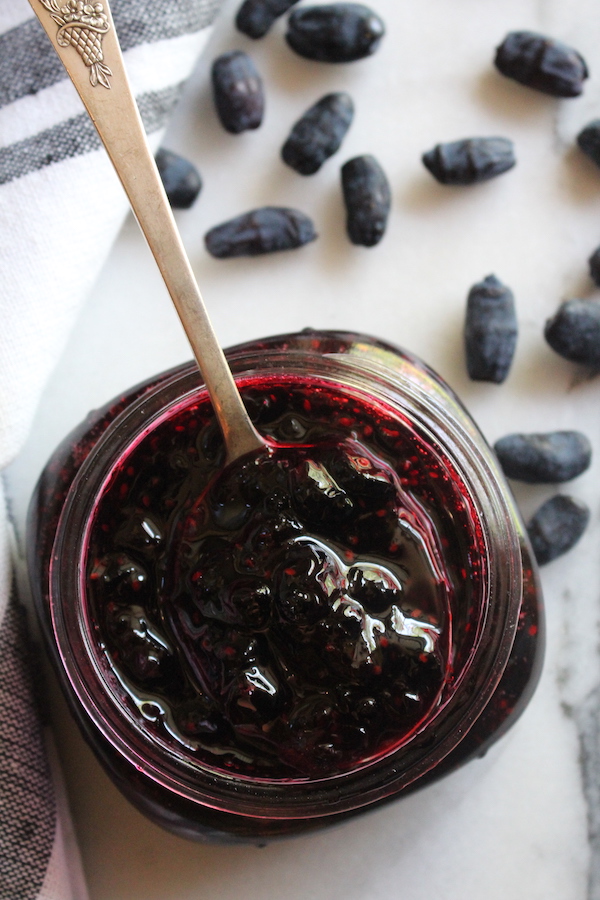
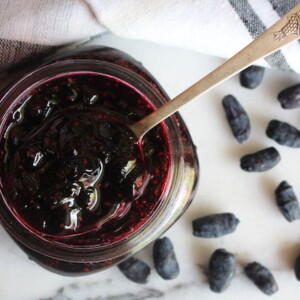
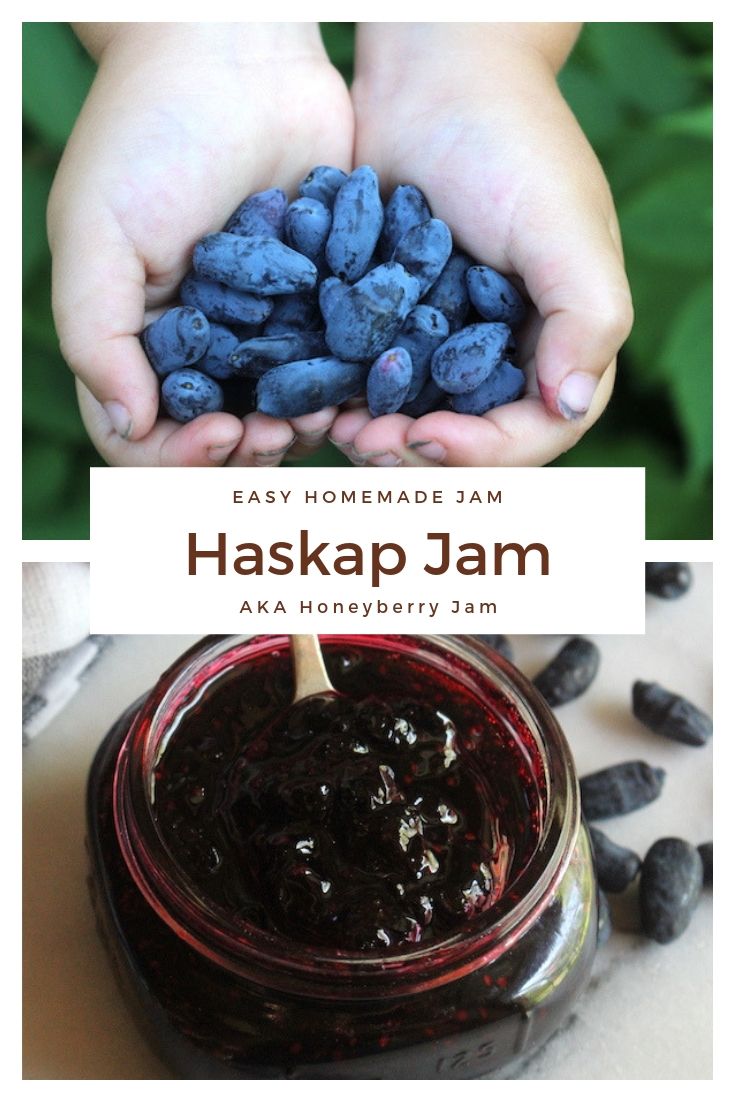
Haskap jam is the very first fruit jam I make each year, a tart, deep-purple preserve that comes together with just two ingredients and no pectin. Haskaps, better known as honeyberries, ripen weeks before anything else in my Vermont garden, so a batch of this jam is my first real taste of the preserving season.
These berries are naturally high in pectin and plenty tart on their own, so they set into a rich jam with nothing but fruit and sugar, no added pectin, and no lemon juice required. It’s the same no-pectin approach I use for most of my small-batch jams, and haskaps make it about as easy as jam gets.
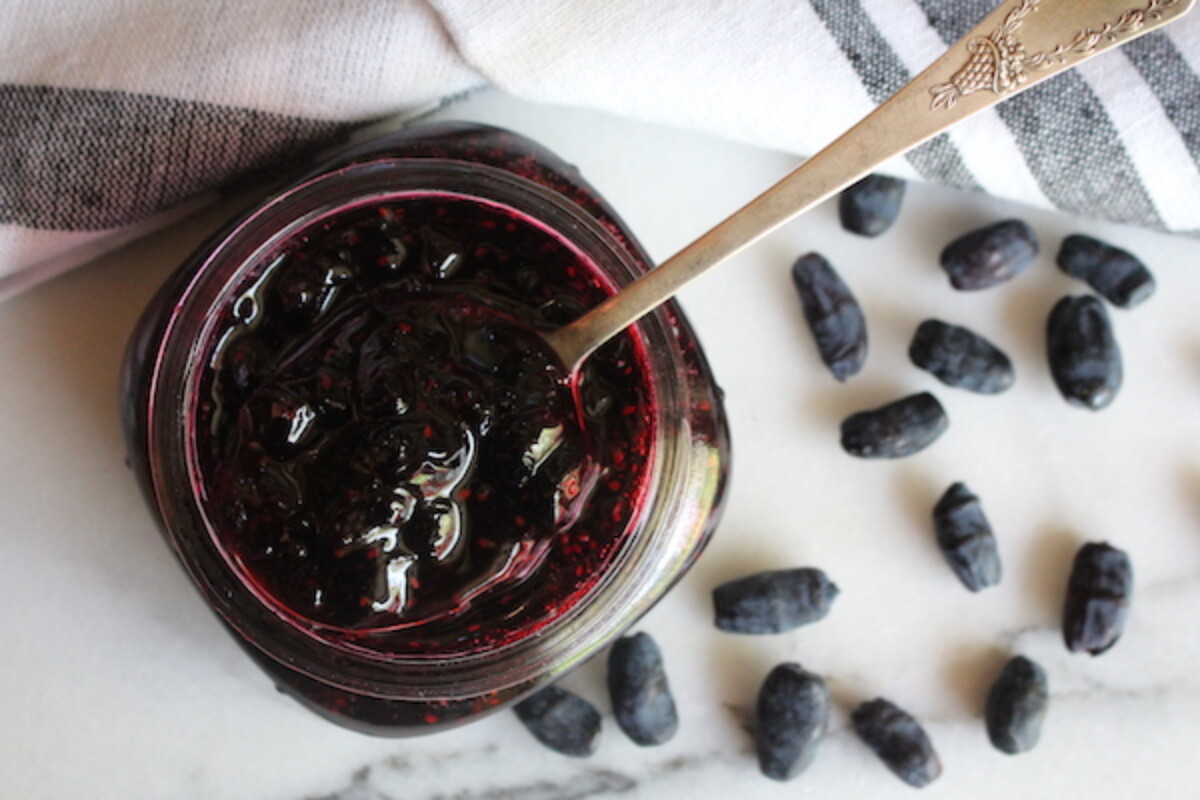
Table of Contents
- Notes from my Kitchen
- Ingredients for Haskap Jam
- How to Make Haskap Jam
- Testing for Gel Stage
- Canning Haskap Jam
- Altitude Adjustments
- Yield and Batch Size
- Storage Options
- Recipe Tips and Variations
- Ways to Use Haskap Jam
- Haskap Jam FAQs
- More No-Pectin Berry Jams
- Haskap Berry Jam (Honeyberry Jam) Recipe
- Jam Recipes
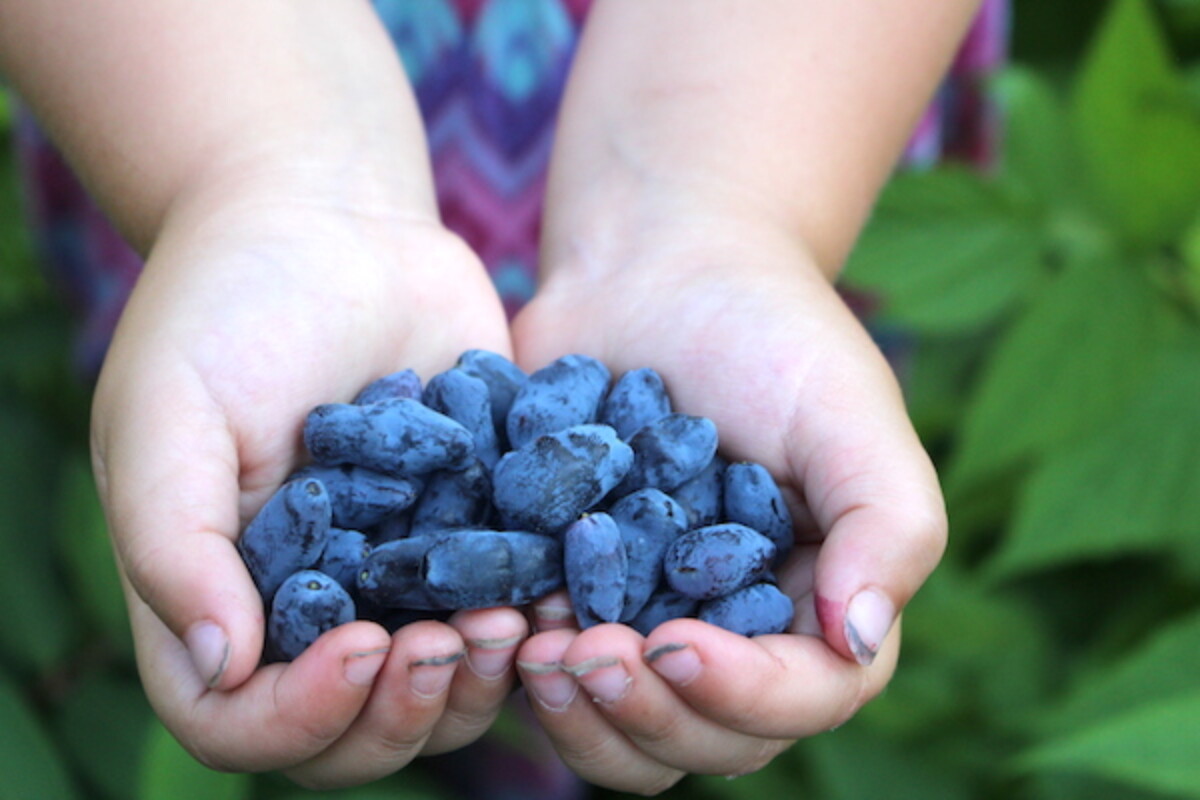
If you haven’t met a haskap yet, you’re not alone. They go by several names, including honeyberry, blue honeysuckle, and sweetberry honeysuckle, and they grow on a hardy perennial shrub in the honeysuckle family. The oblong, blue-purple berries taste like a cross between a blueberry and a grape, with a tart, almost wine-like edge.
Because the fruit is so soft and delicate, you’ll rarely find it in stores, so growing your own honeyberries or finding a pick-your-own farm is usually the only way to get them.
What I love most is the timing. Up here in the north country, haskaps are the very first crop to ripen, right around our last frost at the end of May and a good two to three weeks before the first strawberries. After a long winter, the first jam of the year feels like a small celebration.
Notes from my Kitchen

Here in central Vermont, we’re solidly in zone 4, and our last frost usually lands around Memorial Day. That’s exactly when the haskaps ripen, which makes them the first fruit of our whole growing year. I grow mostly tart varieties on purpose, since all that tartness makes for a better jam, but that doesn’t stop the little ones from stripping the bushes bare the moment the berries turn blue.
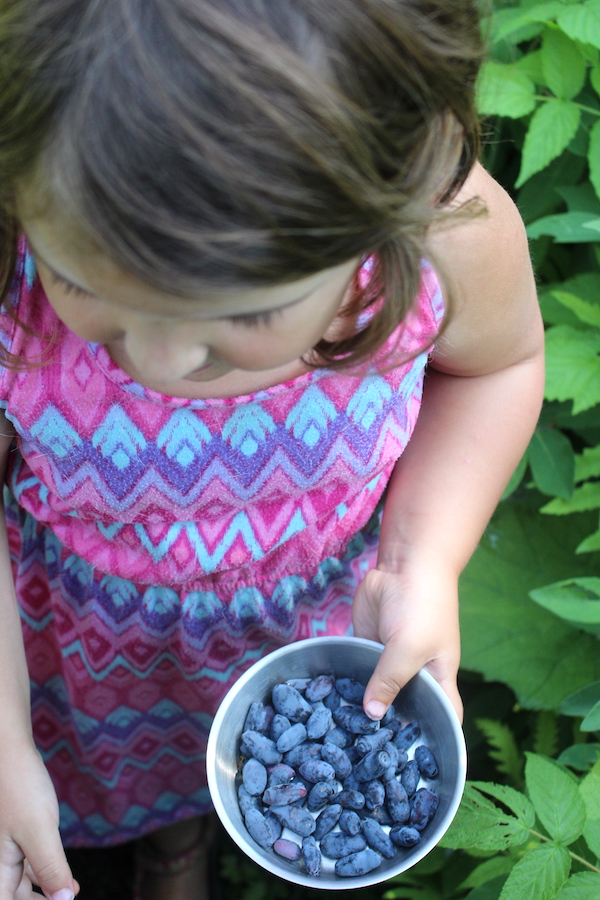
It takes a bit of convincing, but I can usually bribe my youngest to save me a small bowl for jam. The siren song of homemade jam is sweet music to her ears, so bowl in hand she gets to work. And even if she picked every berry she could reach, our bushes are tall enough now that the top fruit stays safely out of little hands, waiting for me and my jam pot.
Ingredients for Haskap Jam
This is a two-ingredient jam, with the measurements in the recipe card below. There’s not much to it.
- Haskap berries (honeyberries): Washed and de-stemmed. Tart varieties make the best jam, so don’t shy away from the sharp ones. Fresh and frozen berries both work beautifully. The small seeds are soft and cook right into the jam, so there’s no straining required.
- Granulated sugar: I use equal parts sugar and berries by volume, which suits their tartness, but you can cut it back for a sharper, more fruit-forward jam. The sugar helps the jam set, so using less means a slightly longer cook and a lower yield.
You won’t need pectin or lemon juice here. Haskaps carry plenty of natural pectin to set on their own, and they’re tart and acidic enough that a batch cans safely without any added lemon.
That acidity is also what makes them taste so bright once they’re cooked down with sugar.
Thank you for this recipe! I made 1/2 a batch and put it in the fridge in a pie pan to cool quickly so we could have it on fresh biscuits. My 13yo said it was his new favorite jam.
How to Make Haskap Jam
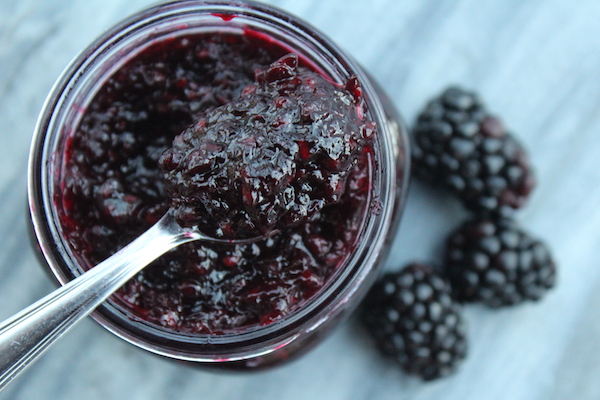
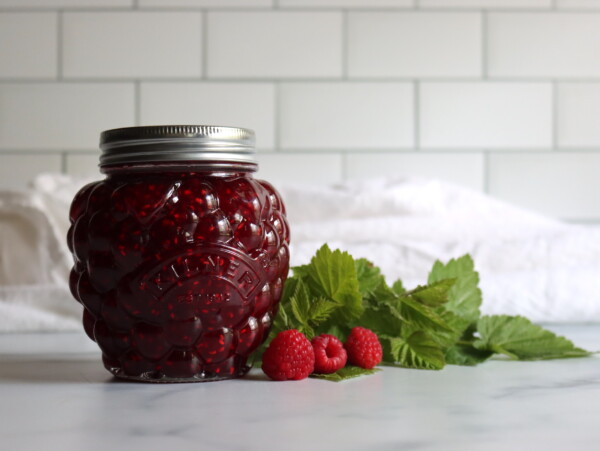
With only two ingredients and no pectin to fuss over, this jam is especially quick, coming together much like a no-pectin blackberry jam, raspberry jam, or strawberry jam. The whole thing cooks in under fifteen minutes once the berries get going.
Cooking the Jam
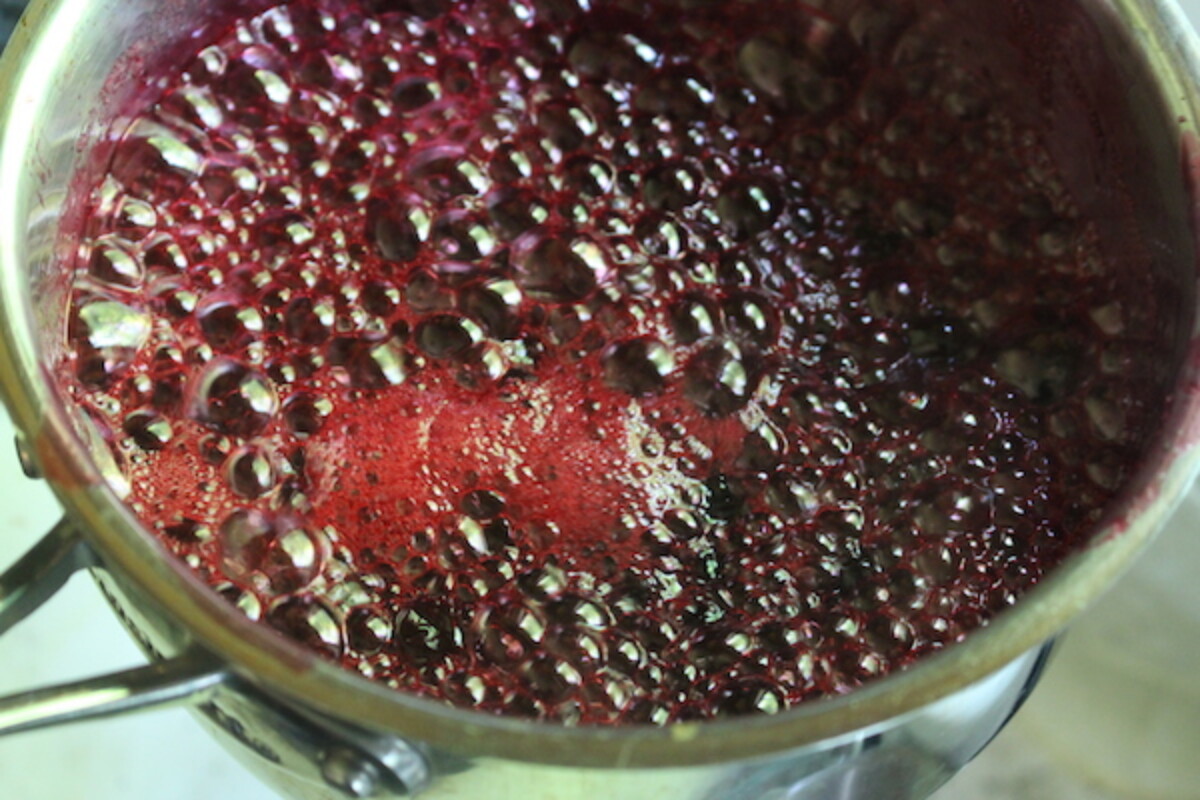
Add the haskaps and sugar to a deep, heavy-bottomed saucepan and bring them to a boil over medium heat, stirring frequently. The mixture looks dry and stubborn at first, but within a few minutes the berries release their juice, and it all loosens up. Once it does, keep a close watch, because haskap jam foams up fast and will climb the pot if you turn your back. Stir it down as needed to avoid an overflow.
Let it boil until it reaches gel stage, which happens surprisingly quickly for such a soft berry, usually in about 8 to 10 minutes. Toward the end you’ll see the bubbles turn glossy and the whole surface thicken up almost all at once. That’s your signal to pull it off the heat and get it into jars.
Testing for Gel Stage
Since there’s no added pectin, you’ll want to confirm the set before jarring. Any of these works:
- Frozen plate test: Chill a small plate in the freezer before you start. Spoon a little jam onto the cold plate, wait a few seconds, and push it with a finger. If it wrinkles and holds, it’s ready.
- Sheet test: Dip a cold spoon in and let the jam run off. When it slides off in a sheet rather than separate drips, you’re there.
- Thermometer test: Gel stage is about 220°F at sea level, dropping 1 degree for every 500 feet of elevation. If your jam hits 220°F but still seems loose, your variety may be lower in pectin, so simply keep cooking and lean on the plate test.
Canning Haskap Jam
You don’t have to can this jam. A small batch keeps for a few weeks in the refrigerator and freezes well, so canning is entirely optional. If you’d like it shelf-stable for the pantry, it’s a quick water bath process, and my beginner’s guide to water bath canning covers the whole setup if you’re just starting out.
To can it, ladle the hot jam into prepared half-pint jars, leaving 1/4 inch of headspace. Wipe the rims, apply two-part lids finger tight, and process in a boiling water bath for 10 minutes. Turn off the heat and let the jars rest in the canner for 5 minutes before lifting them out to cool. Once cool, check that every lid has sealed, and refrigerate any that didn’t.
Altitude Adjustments
Adjust your water bath processing time for elevation:
- Below 6,000 feet: Process for 10 minutes
- Above 6,000 feet: Process for 15 minutes
Yield and Batch Size
This is a small-batch recipe, easy to scale as your bushes get established.
- Two cups of haskap berries with an equal measure of sugar makes about 3 half-pint jars.
- Cutting the sugar gives a more tart, fruit-forward jam with a slightly lower yield and a longer cook.
- The recipe scales up nicely for a bigger harvest. Keep to a moderate batch in a wide pot so it heats evenly and reaches gel without a marathon boil.
Storage Options
However you finish it, here’s how long haskap jam will keep:
- Refrigerator: 3 to 4 weeks in a covered jar.
- Freezer: Up to 6 months. Use a straight-sided, freezer-safe jar and leave extra headspace for expansion, rather than the 1/4 inch used for canning.
- Canned: 12 to 18 months in a cool, dark pantry once sealed.
Recipe Tips and Variations
A few things I’ve learned making this jam every June, plus some ways to change it up:
- Lean into the tart. If you like a sharper jam, use a bit less sugar and let the berries shine. Just expect a longer cook and a little less yield. My low sugar strawberry jam uses the same idea with a different fruit.
- Use frozen berries. Since haskaps ripen all at once and freeze so well, a bag from the freezer works great. Cook them straight from frozen without thawing, since the slower they thaw the less juice they lose.
- Want it seedless? Haskap seeds are small and soft, so most people leave them in. If you truly want a smooth spread, make a jelly instead. Jelly needs added pectin, since the pectin lives in the skins you’d be straining out, so follow a blueberry jelly method with pectin.
- Make wine with the extras. If your bushes really produce, a batch of haskap wine is a lovely way to use a big harvest.
Ways to Use Haskap Jam
Haskap jam is at home just about anywhere you’d reach for a good blueberry jam. It’s lovely on toast and warm biscuits, swirled through yogurt and oatmeal, or spooned over pancakes and ice cream. Its tart, grape-like flavor also bakes beautifully into thumbprint cookies, muffins, and tarts, and a little warmed jam makes a quick glaze for a cheesecake or a wheel of soft cheese.
Once you’ve got a few jars put away, there’s no shortage of ways to enjoy them. My roundup of ways to use up a jar of jam has plenty more ideas, and you’ll find dozens more easy canning recipes to keep your pantry filling up all summer.
Haskap Jam FAQs
Yes. Frozen haskaps work just as well as fresh, and freezing your harvest until you’re ready to cook is a great way to gather enough for a batch. Cook them straight from frozen without thawing first, since the slower they thaw the less juice they lose. They may take a minute or two longer to come up to a boil.
No. Haskap berries are naturally high in pectin, so they set into a firm jam with just fruit and sugar. They’re also tart and acidic enough to can safely without any added lemon juice, so this really is a two-ingredient jam.
A single batch uses about 2 cups of haskap berries with an equal measure of sugar, and makes roughly 3 half-pint jars. The recipe scales up easily if you have a bigger harvest, so just keep the fruit and sugar in a 1 to 1 ratio by volume.
Yes. A 1 to 1 ratio of fruit to sugar suits their tartness, but you can use less for a sharper, more fruit-forward jam. Expect a slightly longer cook time and a lower yield, since the sugar helps the jam set and thicken. Sugar-free sweeteners don’t gel the same way, so lean on a tested low-sugar pectin if you want to cut the sugar dramatically.
You can, but jelly is a different process. The natural pectin in haskaps lives largely in the skins, which you strain out to make a smooth, seedless jelly, so a jelly needs added pectin to set. Follow a blueberry jelly method with pectin, straining the cooked haskaps for juice first. If the seeds are your only concern, remember they’re small and soft in the finished jam.
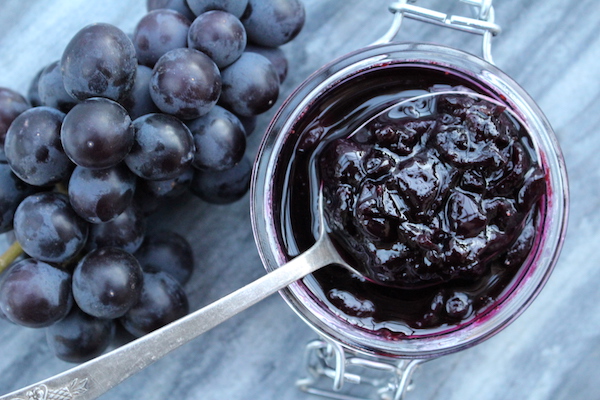
More No-Pectin Berry Jams
Did you make this haskap jam? Leave a ⭐⭐⭐⭐⭐ star rating on the recipe card below and tell me in the 📝 comments how your batch turned out!
And make sure you stay in touch with me by following on social media!
Haskap Berry Jam (Honeyberry Jam)
Equipment
- Canning Jars, Lids, and Rings
Ingredients
- 2 cups haskap berries, honeyberries, washed and de-stemmed
- 2 cups sugar
Instructions
- Add the haskap berries and sugar to a deep saucepan and bring to a boil over medium heat, stirring frequently.
- Once the berries release their juice, keep it at a boil, stirring down the foam, until the jam reaches gel stage. Test on a plate chilled in the freezer or with a thermometer (220°F at sea level).
- Pack into prepared jars, leaving 1/4 inch headspace, and seal with two-part lids.
- Refrigerate for immediate use, or process in a water bath canner for 10 minutes for shelf-stable jars.
Notes
Nutrition
Nutrition information is automatically calculated, so should only be used as an approximation.
Jam Recipes
Find the perfect recipe
Searching for something else? Enter keywords to find the perfect recipe!










Can you use frozen Haskap Berries to make the jam? If so, do they need to be thawed first?
Yes, you should be able to make it with frozen berries. You do not want to thaw them first. The faster they thaw the less juice they will lose.
Great recipe! I had 5 cups of haskaps and used 4 cups of sugar. After it had mostly cooked, I pulled about 12 ounces aside and added some finely chopped jalapeño. (Maybe 1/2 tablespoon? Including seeds and membranes). Wowza!). Cooked that pan a bit more and water bathed all for 20 minutes. Set up nicely with less sugar-next time I might even use less sugar so more tartness can shine through.
Thank you. We’re so glad you enjoyed the recipe.
My jam is runny. Boiled until it reached 220. What did I do wrong.
Thank you for this recipe!
I made 1/2 a batch, and put it in the fridge in a pie pan to cool quickly so we could have it on fresh biscuits.
My 13yo said it was his new favorite jam. 😉
Wonderful, so glad you enjoyed it!
I froze my honey berries because I didn’t have time to make my jam when the berries were ripe. Do I still use one to one ratio to make my jam? Should I include the juice that comes from the thawed berries? I am ready to do my jam now – thawed and ready to go.
How did your jam turn out?
What is the yield for this recipe (so that I can make sure I have the required jars prepped and ready to go)?
The yield for this recipe is 3 half-pint jars.
Have you adapted to make jelly instead of jam? Trying to figure out how much sugar to juice.
I haven’t made jelly with them yet actually, I should try that this year!
Have you tried to make Haskap Jelly this year? My kids don’t like the skins in the jam but would love a haskap jelly! If you have, could you email me the recipe or let me know when you post it? Thanks!
Do you know if this recipe would work with some sugar substitute, say 1 cup sugar and 1 cup splenda? Thanks so much:)
You could definitely try it and see how it works. It may affect the cook time required to get a gel since there is no pectin in this recipe.
I make freezer jam using packets for that I buy at Metro although other stores must have them. YOu freeze the jam instead of storing it like preserves but it has much less sugar. I would taste it for hascaps to be sure they are sweet enough. I freeze it in small jars so it gets used up quickly once it is thawed and kept in the fridge.
Can I use less sugar
Yes you can. Yield will be lower and it’ll require a longer cook time, but you should be fine using less sugar.
You don’t need to use pectin (sure jell) for this jam?
Nope. This is recipe is made without pectin.
I don’t need to add any water ?
Nope. They release their juices on their own quickly. You can put a tablespoon or two in at the beginning to help them get started if you’d like, but that’s optional.
Can you use honey berries for a freezer jam?
I haven’t tried it, but I don’t see why not.
YES!! You can make freezer jam from haskaps,..I do all the time!! It’s delish!!
do you have a recipe for honeyberry/blueberry jelly….
I don’t yet…but I may put one out this year.
Do you have a recipe to can honeyberry pie filling?
I don’t, but I’d suggest using a recipe for blueberry pie filling and increasing the sugar by 20-30%.
Thanks for the suggestion!
Enjoy your summer.
Cyndi