Affiliate disclosure: This post may contain affiliate links. Please see our Privacy Policy.
Joe Pye weed is a tall native wildflower that tops wet meadows and ditches with dusty pink flowers in late summer. It’s an old medicinal plant, historically known as gravel root, and these days it’s best known as a magnet for bees and butterflies.
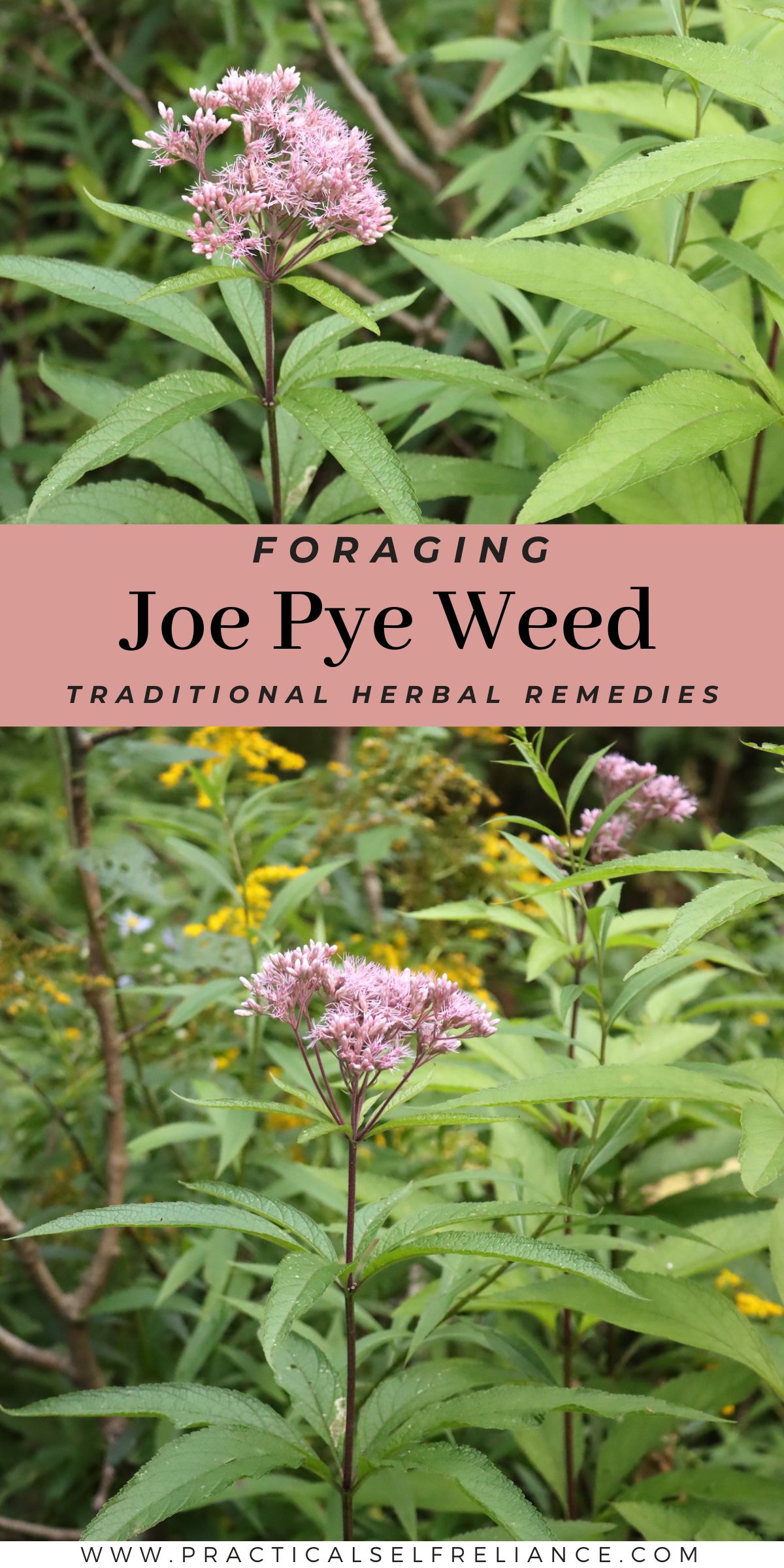
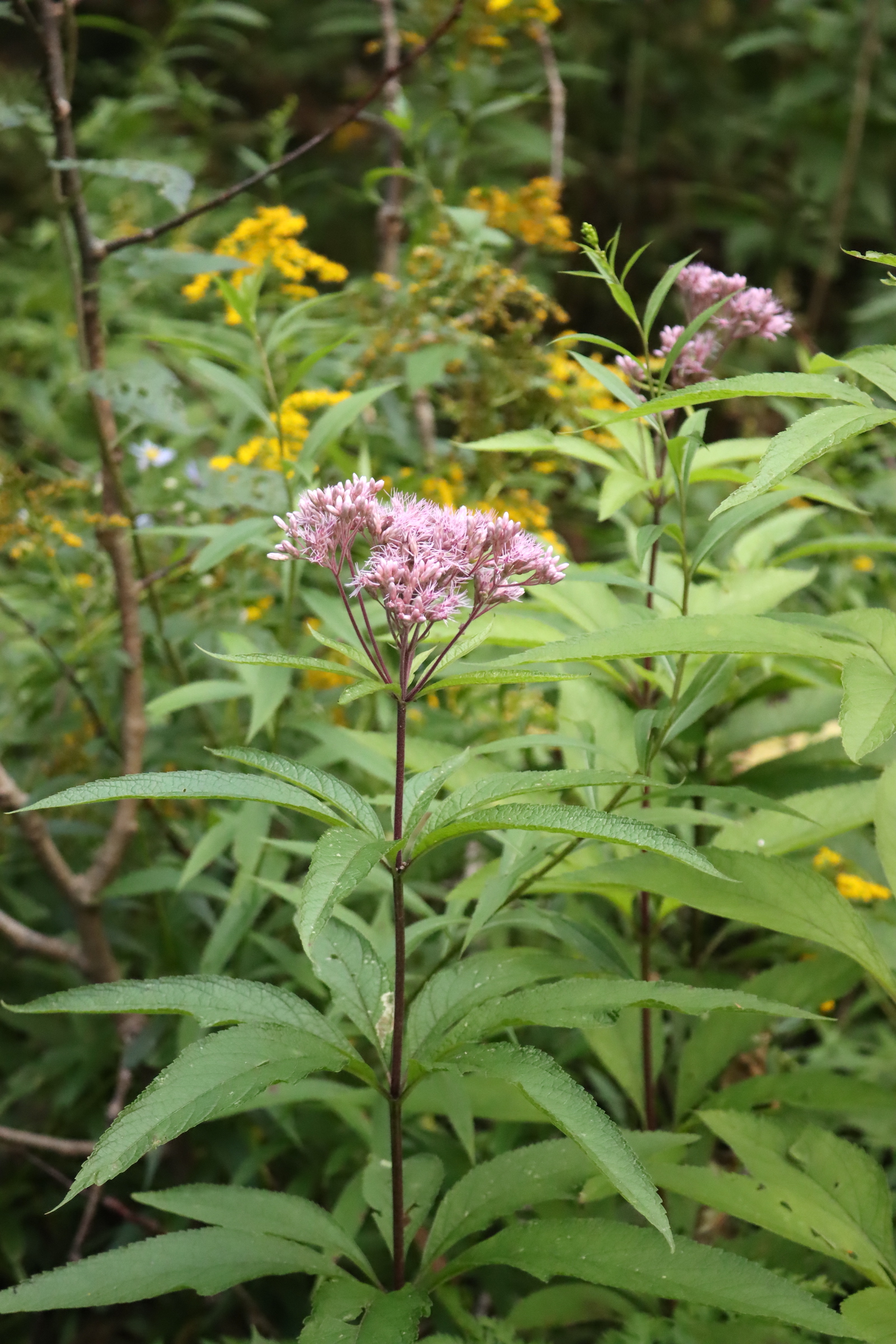
It’s easy to identify based on two cues: leaves in whorls and a fuzzy pink flower cluster on top.
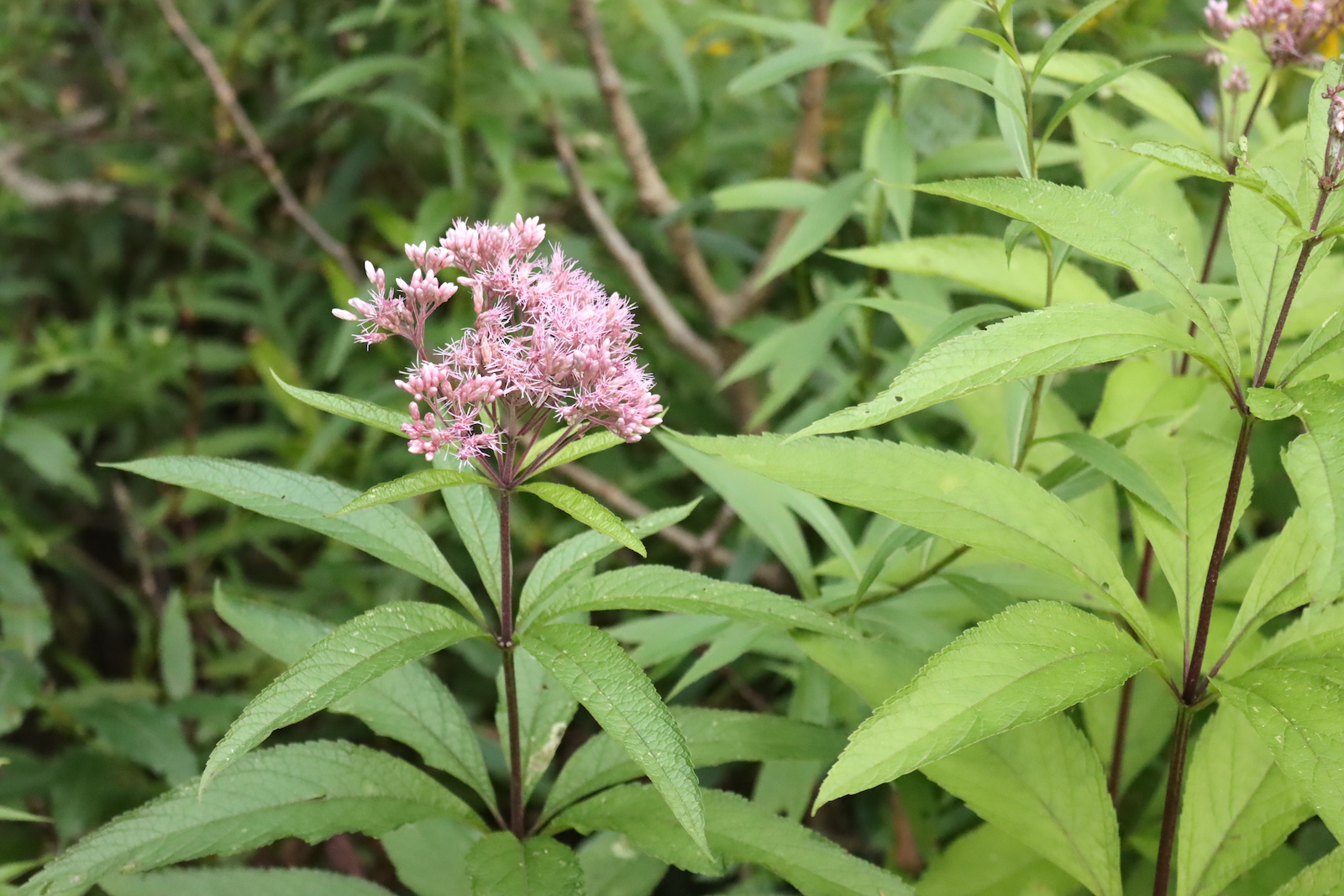
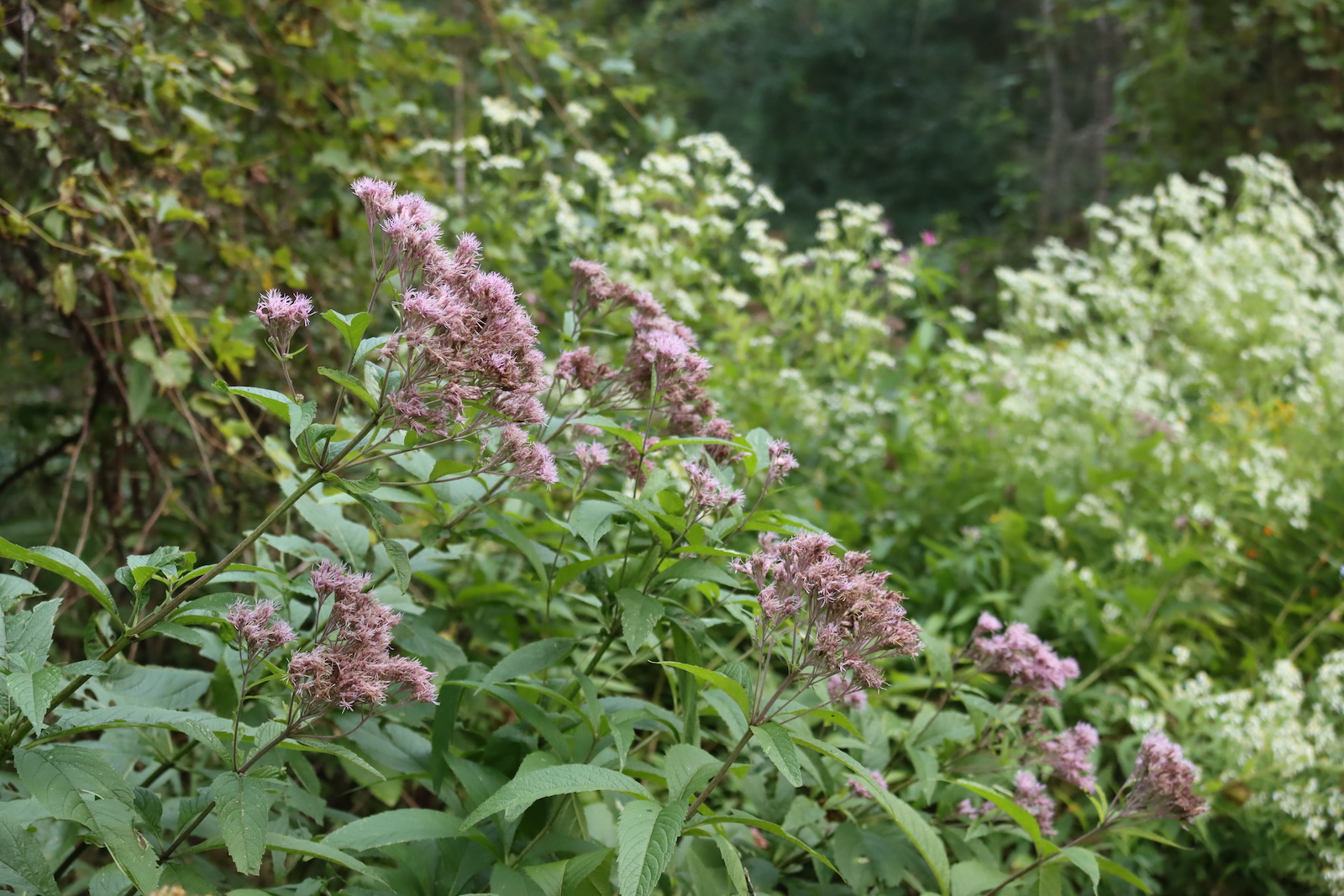
Joe Pye weed grows here in Vermont wherever the ground stays wet, and by August it’s hard to miss. Spotted Joe Pye weed, the common one here, usually stands 3 to 6 feet tall. Each stem ends in a big cluster of tiny pink to purple flowers.
It has a long history as a medicine, too. Doctors in the 1800s used the root for kidney stones and urinary tract issues. That’s where the name gravel root comes from, and it’s why I have it on my list of medicinal plants and their uses.
It’s also a pollinator plant. Bumblebees and swallowtail butterflies work the flowers in late summer. It’s a natural fit for a bed of pollinator-friendly medicinal herbs.
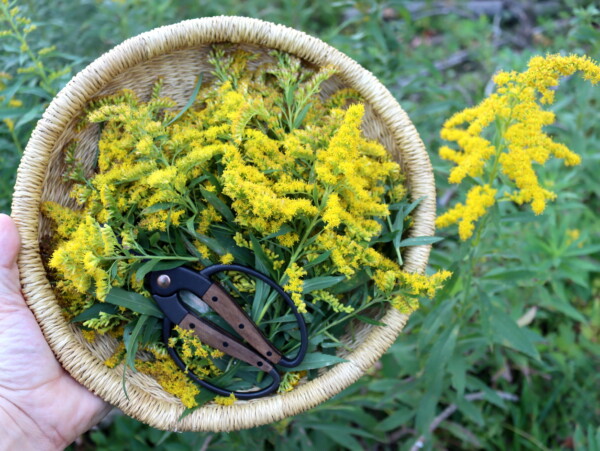
The one trick is telling it apart from boneset, a close relative that grows in the same wet ground. For more plants to look for this time of year, my summer foraging list has over a hundred. Goldenrod blooms at the same time, too.
Notes from My Homestead

A few years back, we broadcast Joe Pye weed seed in all the low, moist spots on our land to help support our honeybee hives. It took beautifully, and the plants come back on their own every year.
Gardeners usually plant it for the butterflies, but it’s an absolute magnet for every kind of pollinator. Not bad for a plant that thrives without any care at all.
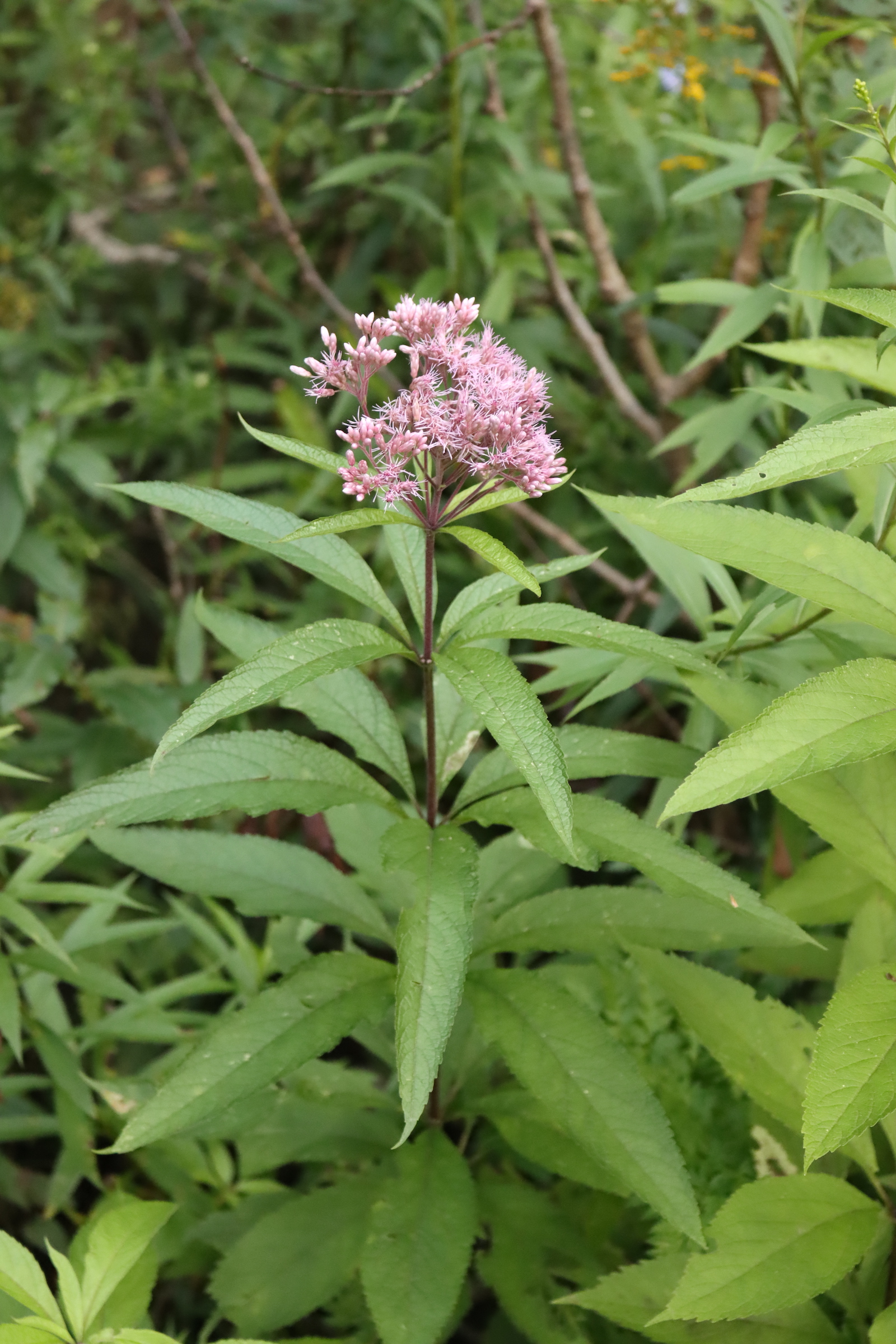
What Is Joe Pye Weed?
Joe Pye weed is a native perennial in the aster family (Asteraceae), along with goldenrod, dandelions, and sunflowers. The name covers five closely related species in the genus Eutrochium, and all five are native to North America.
Older books and many herbal references still list it as Eupatorium, the boneset genus. Botanists moved the Joe Pye weeds into Eutrochium in 2004. The name means “well-wheeled,” for the way the leaves circle the stem.
Four species grow in New England:
- Spotted Joe Pye weed (Eutrochium maculatum): Purple-spotted stems and flat-topped flower clusters. It’s the common Joe Pye weed in Vermont.
- Sweet-scented Joe Pye weed (E. purpureum): Green stems with purple bands at the leaf nodes, domed flower clusters, and leaves that may smell like vanilla. It’s rare to uncommon in Vermont.
- Hollow Joe Pye weed (E. fistulosum): Purple, waxy stems that are hollow toward the base, on plants that can grow over 10 feet tall. Go Botany doesn’t list it in Vermont.
- Coastal plain Joe Pye weed (E. dubium): A shorter species of sandy, acidic soils near the coast, and the species behind the garden variety ‘Little Joe.’
Old herbals give it plenty of other names, including gravel root, queen of the meadow, trumpet weed, and purple boneset.
Is Joe Pye Weed Edible?
No. Joe Pye weed isn’t a food plant, and no reputable source I’ve found describes any part of it as food. The closest thing is a record of the Cherokee using the ash of sweet-scented Joe Pye weed roots as a salt substitute.
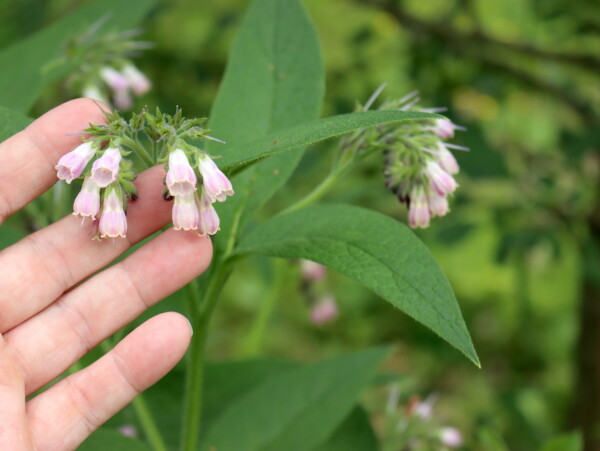
The bigger concern is pyrrolizidine alkaloids, a group of compounds that can damage the liver. They’re the same liver-toxic compounds that make comfrey safe for external use only.
A 2009 study isolated the alkaloid lycopsamine from spotted Joe Pye weed. A World Health Organization report on these alkaloids also repeats a recommendation to treat every Eupatorium species, the genus Joe Pye weed used to belong to, as potentially toxic to the liver.
Some pyrrolizidine alkaloids can cause serious liver damage when ingested, and exposure is a particular concern during pregnancy. There’s not enough research to establish a safe amount of Joe Pye weed to consume, so I wouldn’t recommend eating it or making it into an herbal tea. It’s a plant best appreciated in the meadow rather than the kitchen.
In people, these alkaloids can cause liver damage, and they’re also a known risk during pregnancy. So Joe Pye weed isn’t one to nibble on, and it doesn’t belong in a wild salad. If you’re foraging for something to eat, my list of wild edible plants is a better place to start.
Joe Pye Weed Medicinal Uses
Joe Pye weed’s old herbal name, gravel root, tells you what people used it for. In 19th-century medicine, gravel meant small stones and grit in the urinary tract.
The gravel root in the old medical books was the root of sweet-scented Joe Pye weed (E. purpureum), the species that’s rare to uncommon here in Vermont.
King’s American Dispensatory, an Eclectic medical text from 1898, says many doctors valued it for stones and gravel. Plenty of them doubted it could dissolve the stones, though. The Eclectic Materia Medica of 1922 gives its main use as easing chronic irritation of the urinary passages.
Native American uses are on record too. The Ojibwa made a strong tea from sweet-scented Joe Pye weed root as a strengthening wash for infants. People also used the plant to bring on a sweat and break a fever.
Modern research is thin. A lab study found that cistifolin, a compound from sweet-scented Joe Pye weed root, reduced swelling in rats. I haven’t found any human trials on Joe Pye weed for stones, fevers, or anything else.
Between the pyrrolizidine alkaloids and the lack of human research, I wouldn’t recommend taking Joe Pye weed internally. Its historical medicinal uses are interesting, but they haven’t been established as safe or effective treatments for kidney stones, urinary problems, or other conditions.
Where to Find Joe Pye Weed
Joe Pye weed likes wet ground and plenty of sun. Look in wet meadows, marshes, stream banks, lake shores, and the edges of swamps. Don’t skip roadside ditches, where it often grows in big stands.
It shares that ground with plants like blue vervain and jewelweed. Sweet-scented Joe Pye weed is the exception to the wet-meadow rule. It handles more shade and turns up along woodland edges, in open woods, and in partly shaded seeps.
Here in Vermont, spotted Joe Pye weed is the common one. Vermont ranks sweet-scented Joe Pye weed rare to uncommon. If you find a stand with green stems and purple-banded nodes, enjoy it and leave it be.
When to Find Joe Pye Weed
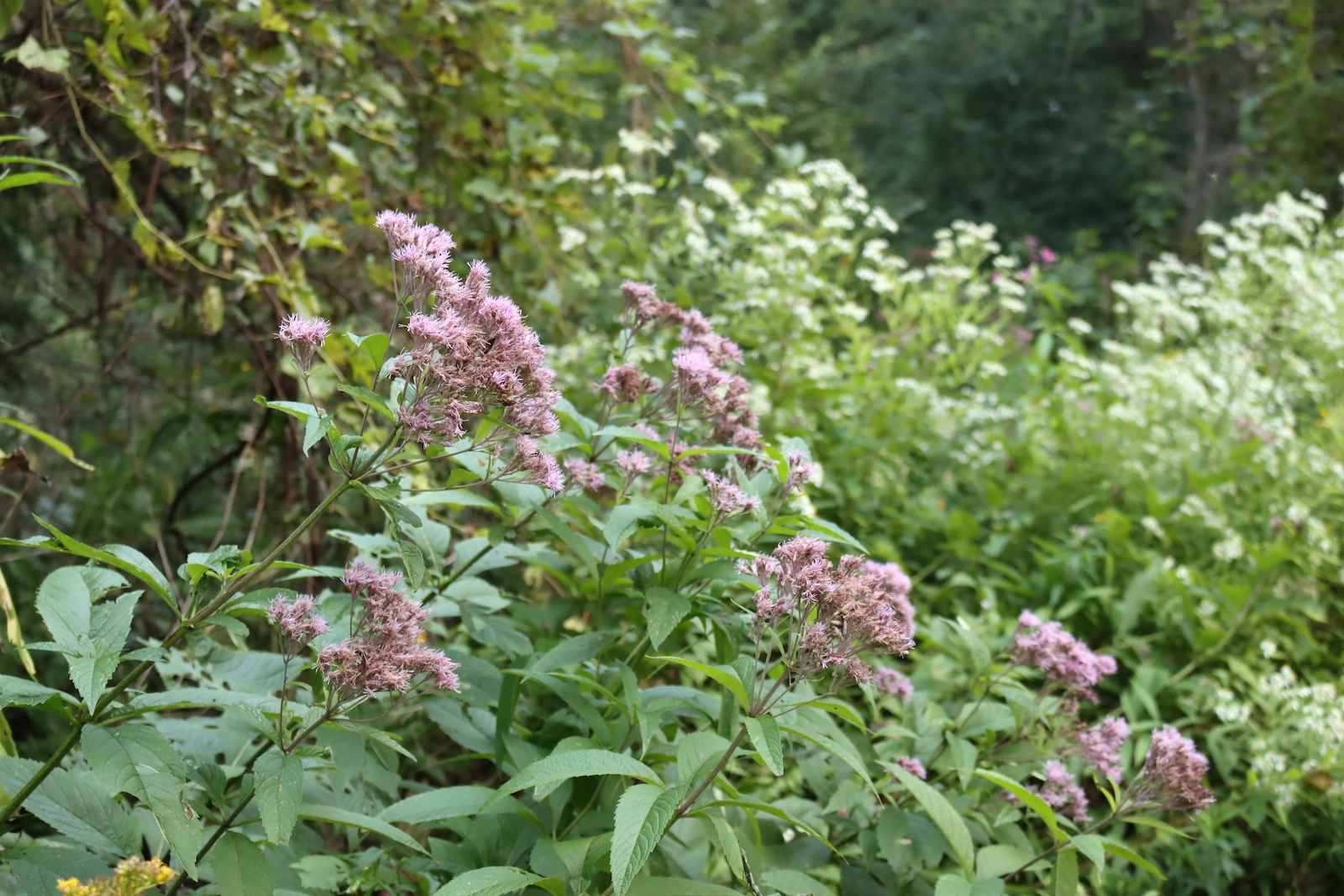
Joe Pye weed blooms from midsummer into early fall, usually July through September in the North. The bloom lasts about a month before the heads turn to seed.
The leaves come up in spring, but the plant is much easier to spot once it’s tall and blooming. Late summer is the time to learn it. By the time the flowers fade, it’s time to move on to fall foraging.
Identifying Joe Pye Weed
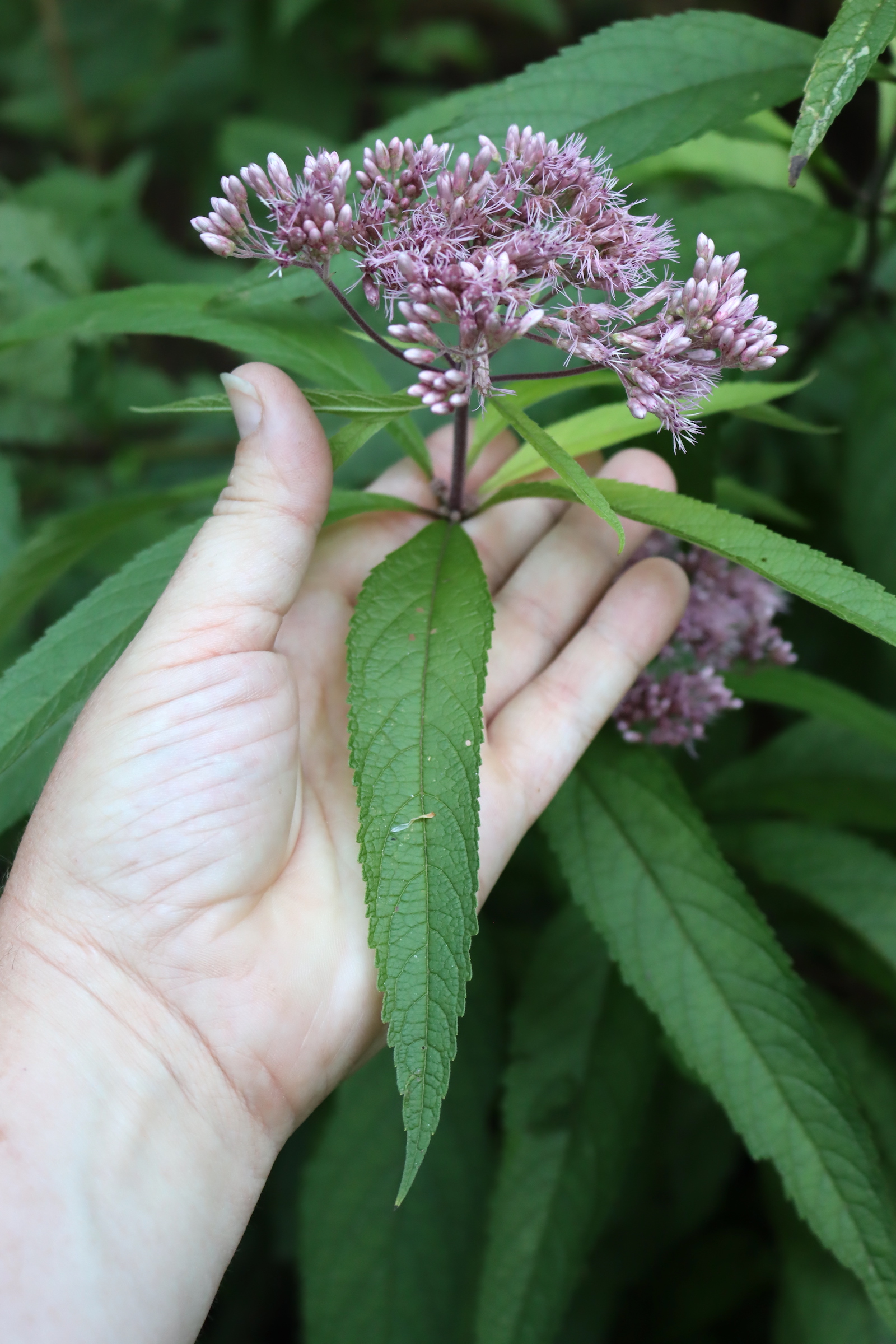
Start with the leaves, and count how many come off the stem at the same point. Joe Pye weeds carry them in whorls of three to seven. Bonesets and most of their relatives have leaves in pairs.
From there, the stem and the flower cluster tell you which Joe Pye weed you’ve found. Check more than one feature against a good regional field guide before you trust a match.
Herbal Academy’s Botany and Wildcrafting Course sharpened my own plant identification skills, and it’s a good place to start if this is new to you.
Leaves
The leaves are long and pointed, with toothed edges, and they grow in whorls around the stem. Spotted Joe Pye weed usually has four or five leaves in each whorl. Sweet-scented Joe Pye weed usually has three or four.
Crush a leaf of sweet-scented Joe Pye weed, and it may smell faintly of vanilla. That scent varies from one population to the next, so a plant without it can still be the real thing.
Stems
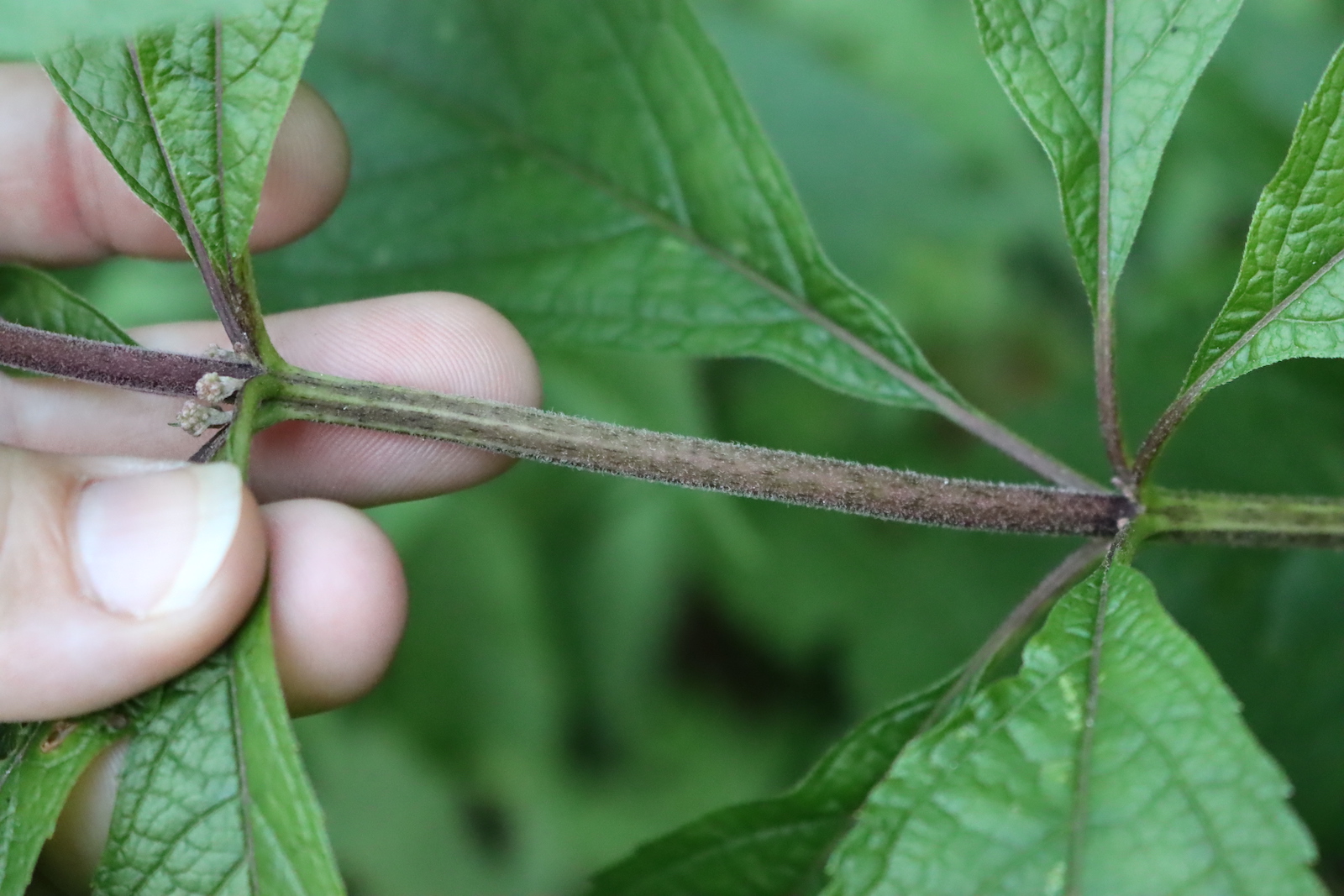
The stems are tall, upright, and usually unbranched below the flowers. Spotted Joe Pye weed has purple spots, or sometimes purple all over. Sweet-scented Joe Pye weed is green, with dark purple bands where the leaves attach.
Hollow Joe Pye weed has a purple stem with a waxy coating you can rub off, and it’s hollow toward the base. Most of the others are solid, but a hollow stem alone isn’t proof, so check the leaves and flowers too.
Flowers
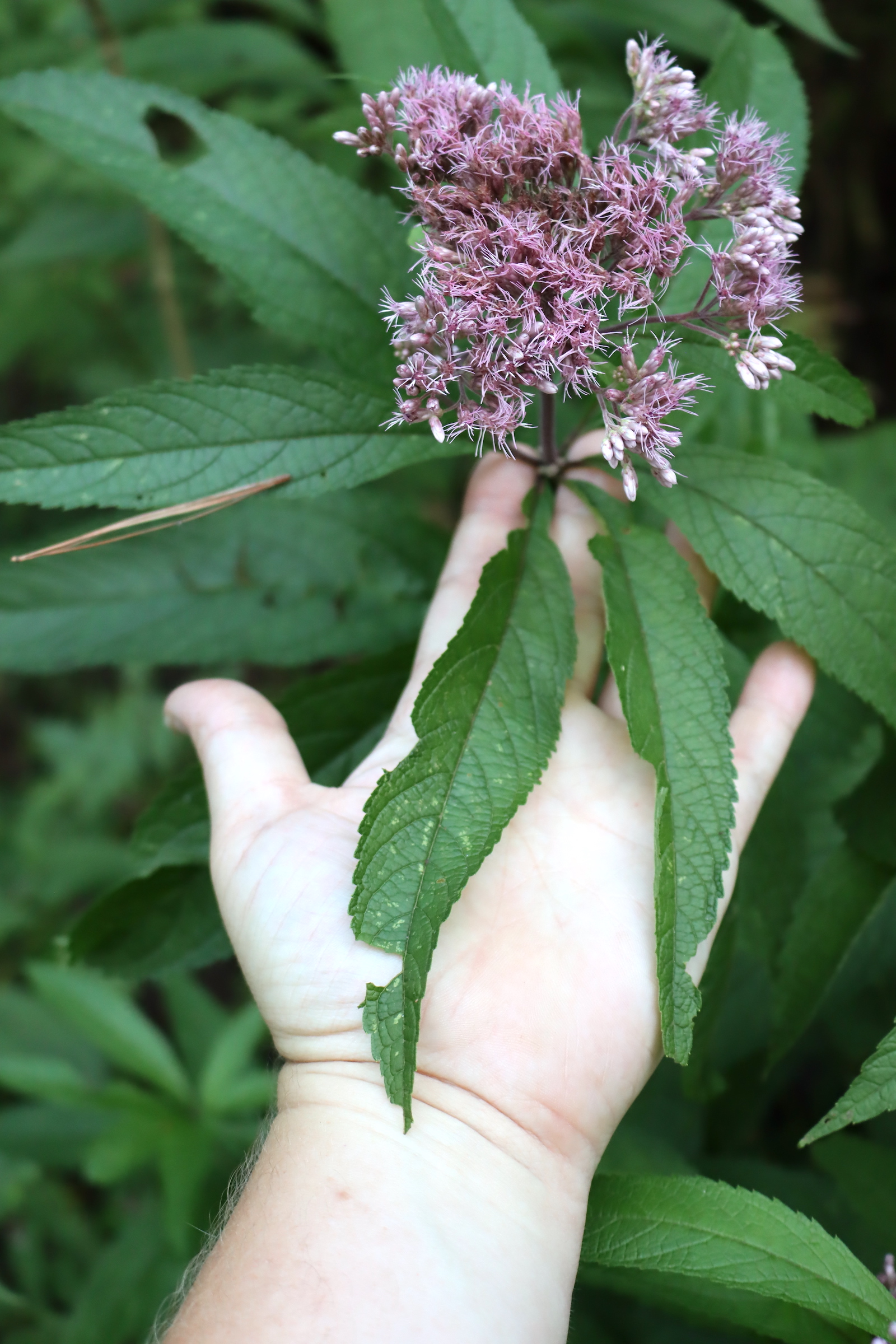
Joe Pye weed flowers are tiny pink to purple tubes packed into small heads, with no petals around the edge. The heads gather into one big cluster at the top of the plant.
The shape of the cluster helps sort out the species. Spotted Joe Pye weed has a flat-topped cluster, with 9 to 20 florets in each head. Sweet-scented and hollow Joe Pye weed have domed clusters, with usually 5 to 7 florets per head.
If you’re sorting through pink flowers, my guide to weeds with pink flowers has more pink-flowered plants to compare.
Seeds
After the flowers fade, each head turns into a cluster of small, dry seeds that the wind carries off in fall.
Spotted Joe Pye weed seeds are slender and five-sided, about 3 to 5 millimeters long, with distinct ridges on the angles.
Joe Pye Weed Look-Alikes
People mix up Joe Pye weed with its boneset relatives, with purple loosestrife, and now and then with ironweed. Water hemlock makes the list because it’s deadly and grows in the same places, not because it’s a close match. The leaves sort out most of them, and the flowers handle the rest.
Joe Pye weed has whorled leaves and pink to purple flowers. Boneset and white snakeroot have paired leaves and white flowers, and ironweed has single leaves that alternate up the stem. Swamp milkweed, a cousin of common milkweed, has pink flowers in the same wet ground, but it has paired leaves and milky sap.
Boneset
Boneset (Eupatorium perfoliatum) is a close relative, and it grows in the same kind of wet ground, from marshes to roadsides. Its leaves come in pairs that join around the stem, so the stem looks like it’s growing right through one long leaf.
The flowers are dull white instead of pink. Boneset also carries pyrrolizidine alkaloids, and a 2018 analysis found them in boneset teas and tinctures, so the same caution applies.
White Snakeroot
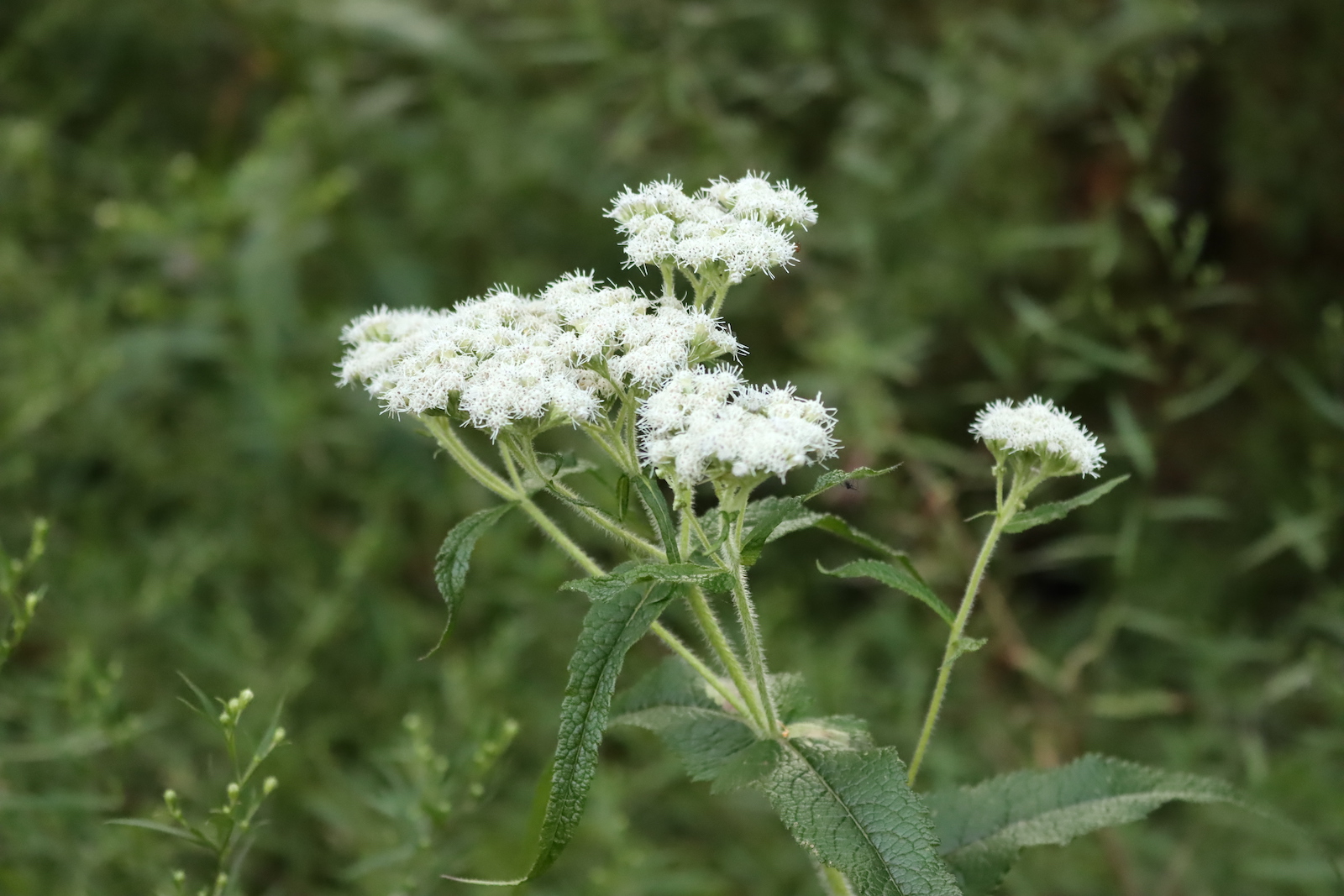
White snakeroot (Ageratina altissima) is the one to take seriously. It’s highly toxic, and it’s the plant behind milk sickness. People got sick from drinking milk from cows that had grazed on it.
Its leaves grow in pairs on long stalks, the flowers are white, and it grows in shaded woods rather than open, wet meadows. Older books call it Eupatorium rugosum, one more reason to check the Latin name before you trust a reference.
Water Hemlock
Spotted water hemlock (Cicuta maculata) doesn’t look much like Joe Pye weed. I include it because it grows in the same wet meadows and roadside ditches, and people really do misidentify plants when they’re hoping to find something. This would be a costly mistake.
Water hemlock is highly toxic and can be fatal if eaten, and the roots are the most poisonous part, which matters to anyone tempted to dig up gravel root. Its hollow stems carry purple streaks or mottling, a little like spotted Joe Pye weed.
The rest of the plant looks nothing alike. Water hemlock leaves alternate up the stem and split into many leaflets, and its tiny white flowers grow in umbrella-shaped clusters. My guide to Queen Anne’s lace covers it in more detail.
Purple Loosestrife
Purple loosestrife (Lythrum salicaria) is an invasive plant that grows in the same marshes, meadows, and wetland edges, with pink to purple flowers. Its leaves can grow in pairs or in whorls, so the leaf check alone won’t rule it out.
Look at the flowers instead. Loosestrife has flowers with real petals, on clusters 6 to 14 inches long, while Joe Pye weed has fuzzy, rounded clusters of tiny heads with no petals. Vermont lists it as invasive and prohibited.
New York Ironweed
New York ironweed (Vernonia noveboracensis) has purple flowers too, but they’re a deeper blue-purple than Joe Pye weed’s. Its leaves alternate up the stem, one at each node, instead of growing in whorls.
Go Botany doesn’t list it in Vermont, so it’s mostly a look-alike for foragers outside the state.
Ways to Use Joe Pye Weed
Most of what Joe Pye weed offers happens outside the kitchen and the medicine cabinet. It’s a garden plant for wet spots, food for pollinators, and an old source of natural dye.
In the garden, it’s a good choice for rain gardens and low spots that stay damp. Nurseries also sell named varieties. ‘Little Joe’ is a selection of coastal plain Joe Pye weed, and ‘Gateway’ is a selection of spotted Joe Pye weed.
Honeybees, bumblebees, long-horned bees, and leaf-cutting bees all visit the flowers, and so do butterflies like the tiger swallowtail. Deer, on the other hand, browse it only sparingly.

A Note from Your Family Herbalist
I’m a family herbalist, trained by more than 20 years of hands-on work with medicinal plants and rounded out with coursework through the Herbal Academy of New England. That means I know my way around the plants in this post, and I’ve personally made and used the remedies I write about, often many times over. But there’s a real difference between knowing what works on my homestead and knowing what’s right for you.
Medicine is a personal affair. Every body is different, every medical history is different, and herbs interact with medications, pregnancy, nursing, and existing health conditions in ways no general blog post can anticipate. Even mild medicinal plants like chamomile cause allergic reactions in some people, so what sits comfortably on my own medicine shelf might not be the right choice for yours.
For guidance tailored to your situation, there are three directions I’d point you:
- See a local clinical herbalist. A practicing clinical herbalist can take your full health picture into account, recommend the right herb and dose for you, and adjust the protocol as you go. Ask around at your nearest food co-op, herb farm, or natural-foods store; most communities have at least one.
- Talk to your doctor before adding any new herb to your routine, especially if you take prescription medications, are pregnant or nursing, or are managing a chronic condition. A good doctor will welcome the conversation.
- Educate yourself, the way I have. The Herbal Academy of New England runs the courses I credit with sharpening my own practice. Their Introduction to Herbal Medicine course is where I’d start. I’ve also taken and recommend their Mushroom Course and their Botany and Wildcrafting Course. All three are well-paced and easy to follow at home.
Joe Pye Weed FAQs
A few more questions about Joe Pye weed, from the name to the deer.
A popular story says Joe Pye was a Native American healer who saved a colony from typhus fever with the plant. The authors of a 2017 paper in The Great Lakes Botanist couldn’t find any written account of it. They tied the name to a real man, the Mohican leader Joseph Shauquethqueat, and found no evidence of any plant cure behind it.
It isn’t one I’d recommend. The Ojibwa record is of a strong root tea used to wash infants, not one to drink. Joe Pye weed belongs to a group of plants with liver-toxic pyrrolizidine alkaloids, and researchers have found one in spotted Joe Pye weed. Those alkaloids are a particular concern during pregnancy, and there isn’t enough research to establish a safe amount to drink.
Mostly. Deer browse it only sparingly, and garden references describe it as unappealing to deer and other grazing animals.
Yes. All five Joe Pye weed species are native to North America. Most are eastern plants, but spotted Joe Pye weed ranges west across Canada to British Columbia and into the western United States.
More Foraging Guides
More late-summer wildflowers to find and use.

Did you find this Joe Pye weed foraging guide helpful? Tell me in the 📝 comments below how you use Joe Pye weed on your homestead!
And make sure you stay in touch with me by following on social media!
Medicinal Plants to Forage
Three more medicinal plants worth getting to know.


Find the perfect foraging guide
Searching for something else? Enter keywords to find the perfect foraging guide!