Affiliate disclosure: This post may contain affiliate links. Please see our Privacy Policy.
Blue cohosh is a native woodland wildflower that holds clusters of deep blue, berry-like seeds above its leaves in late summer. It’s an old medicinal plant with a long history in childbirth, though modern research has turned up serious safety concerns. Knowing it on sight keeps those poisonous berries out of your basket.
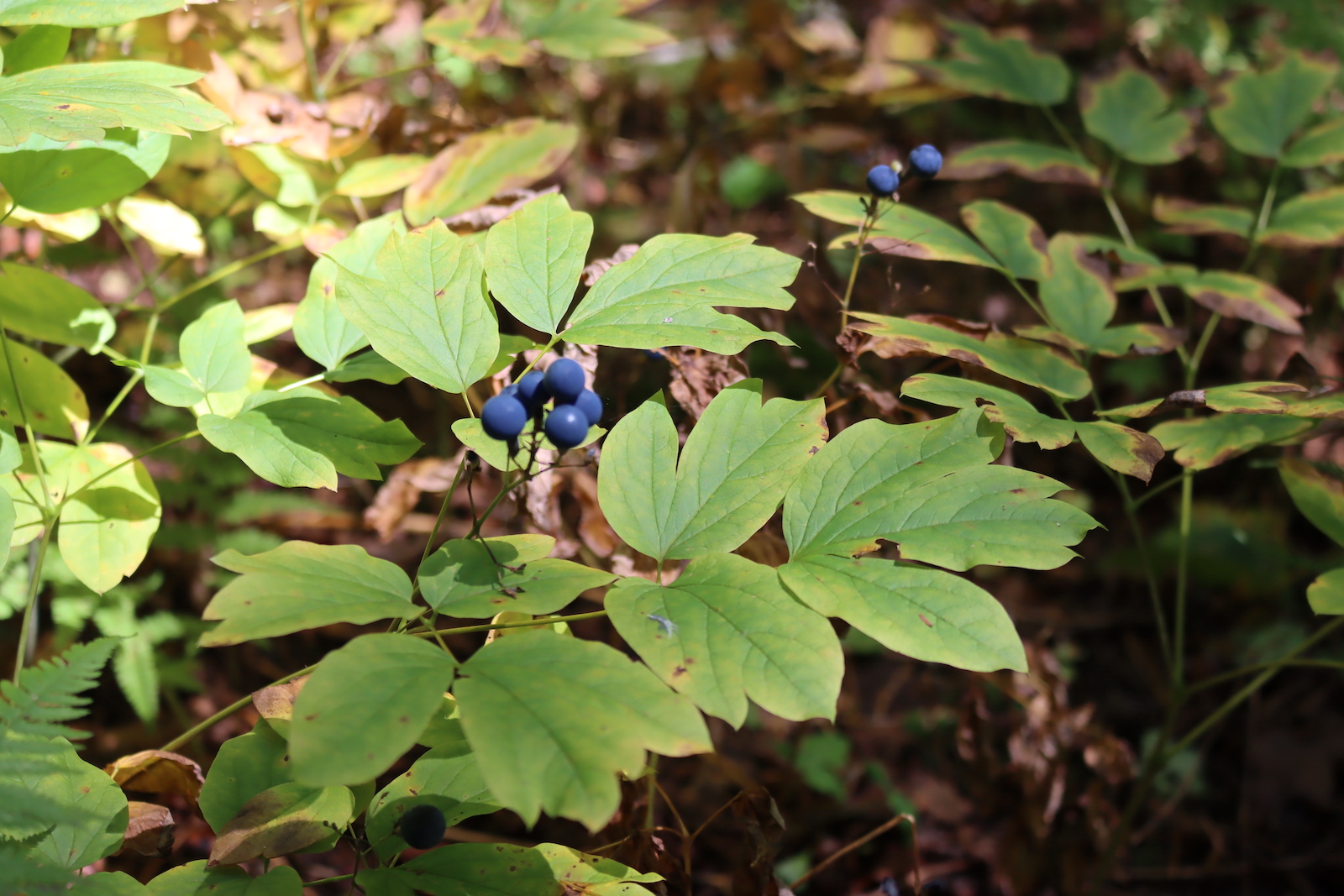
Table of Contents
Blue cohosh grows in rich, shady hardwood forests across eastern North America, including here in Vermont. It’s one of the early plants up in spring, with small yellow-green flowers that open before the trees leaf out.
It shares that ground with spring wildflowers like spring beauty, trout lily, and wild ginger. By late summer, the flowers are long gone, and the plant carries round, blue seeds that look a lot like berries.
It also has a long medical history. Native American women used the root for childbirth and menstrual cramps, and doctors took it up in the 1800s. It belongs in any history of North American medicinal plants, with a big safety asterisk.
Those blue seeds are poisonous, and the root has caused serious harm when women took it to bring on labor. It’s also on the United Plant Savers At-Risk list, so wild plants are better left where they grow.
If you’re after berries you can eat, start with my guide to edible wild berries. The ones to avoid are in my guide to poisonous berries.
Forager’s Notes

We find blue cohosh everywhere when we’re out hiking in Vermont. When my son was a toddler, he thought the seeds were blueberries and asked me about them.
He already loved foraging bunchberries, red blackberries, and Solomon’s plume. He was excited to find “blue berries,” since all I seemed to hand him on our hikes were red ones. We see the blue seeds every late summer, and I thought blue cohosh deserved a guide, even if you only forage it with your eyes.
What Is Blue Cohosh?
Blue cohosh (Caulophyllum thalictroides) is a native perennial in the barberry family (Berberidaceae), which also includes barberry and mayapple. It grows from a knotty underground rhizome and dies back to the ground each winter.
The genus name comes from the Greek words for stem and leaf. The species name, thalictroides, points to its closest look-alike, because the leaves look a lot like meadow rue (Thalictrum).
Two species grow in North America, and both grow in Vermont:
- Blue cohosh (Caulophyllum thalictroides): The common one, with yellow-green flowers that open as the leaves unfold.
- Early blue cohosh (C. giganteum): Also called giant blue cohosh. Its purple to purple-brown flowers open before the leaves expand, 10 to 15 days ahead of blue cohosh. Vermont ranks it uncommon.
Its other names include blue ginseng and yellow ginseng, though it has nothing to do with true ginseng.
Is Blue Cohosh Edible?
No. Blue cohosh isn’t a food plant, and the blue “berries” are poisonous. Both the seeds and the roots contain toxic alkaloids and saponins, according to North Carolina State Extension.
The bright blue seeds have poisoned children, and the main symptom is severe stomach pain, according to the Weed Science Society of America. Some people also get a rash just from handling the plant.
Old books mention roasting the ripe seeds to make a drink like coffee. King’s American Dispensatory passed that along in 1898, but the seeds are toxic, and I wouldn’t try it.
If you came here hoping for a wild berry to eat, my list of wild edible plants has plenty of safer choices.
Blue Cohosh Medicinal Uses
Blue cohosh has a long history in women’s medicine. Native American women brewed the root as a tea for menstrual cramps and to ease childbirth, according to a 2008 review of its safety in pregnancy.
Doctors picked it up in the 1800s. King’s American Dispensatory, an Eclectic medical text, lists it for false labor pains, menstrual cramps, and rheumatism in the small joints.
It was in the U.S. Pharmacopoeia from 1882 to 1905 and the National Formulary from 1916 to 1950, both times for bringing on labor. It also went into “mother’s cordial,” a blend women took in the last weeks of pregnancy.
Midwives were still using it decades later. Ninety midwives answered a survey for a 2009 Yale medical thesis, and blue cohosh was the labor remedy they used most. About a third of those who answered had seen problems in newborns, though some weren’t sure blue cohosh was the cause.
Blue Cohosh Safety Concerns
Modern medicine takes a much dimmer view. The National Center for Complementary and Integrative Health warns that blue cohosh has a record of life-threatening complications when women take it to start labor. It also lists high blood pressure, high blood sugar, and chest pain as possible side effects.
The worst case reports involve newborns. In 1996, a baby was born not breathing and had lasting brain damage. In 1998, a baby had a heart attack and heart failure.
In 2004, a baby had a stroke. In each case, the mother had taken blue cohosh in the days or weeks before delivery to bring on or speed up labor. In the 1996 case, she took black cohosh as well.
Case reports can’t prove the herb caused the harm, and the Yale thesis that reviewed these and other case reports says so. It still concluded that no one should use blue cohosh in the first trimester or in the last weeks of pregnancy to prepare for labor. It belongs in labor only under a trained provider’s guidance, if at all.
The plant’s chemistry adds to the worry. It contains N-methylcytisine, which caused birth defects in rat embryos grown in the lab, and anagyrine, an alkaloid linked to crooked calf disease in cattle. It also contains caulosaponin, which may constrict the blood vessels that feed the heart.
Between the case reports and the chemistry, I wouldn’t use blue cohosh at home, and I wouldn’t use it at all during pregnancy or while nursing. The 2008 review comes to a similar conclusion: use it with extreme caution, and only under medical supervision.
Where to Find Blue Cohosh
Blue cohosh grows in rich, moist hardwood forests, often on rocky ground and on the high terraces above river floodplains. It needs shade and deep, fertile soil, and logging that opens up the canopy is one of the threats to wild populations.
It often grows under sugar maples, American linden, and white ash. In one patch I found, it shared the ground with spring beauty, bloodroot, wild ginger, trout lily, and trillium.
It grows from Manitoba to Arkansas and from Quebec to South Carolina. Go Botany lists it in every New England state, including Vermont, and Rhode Island lists it as threatened.
Here in Vermont, we find it all along our town hiking trails. Most of them follow shady, moist woods, woodland banks, and wetland edges rather than climbing mountains, and that’s the kind of ground it likes.
When to Find Blue Cohosh
Blue cohosh is up early. It blooms from late April into May in the North, under bare trees, and the leaves unfold along with the flowers.
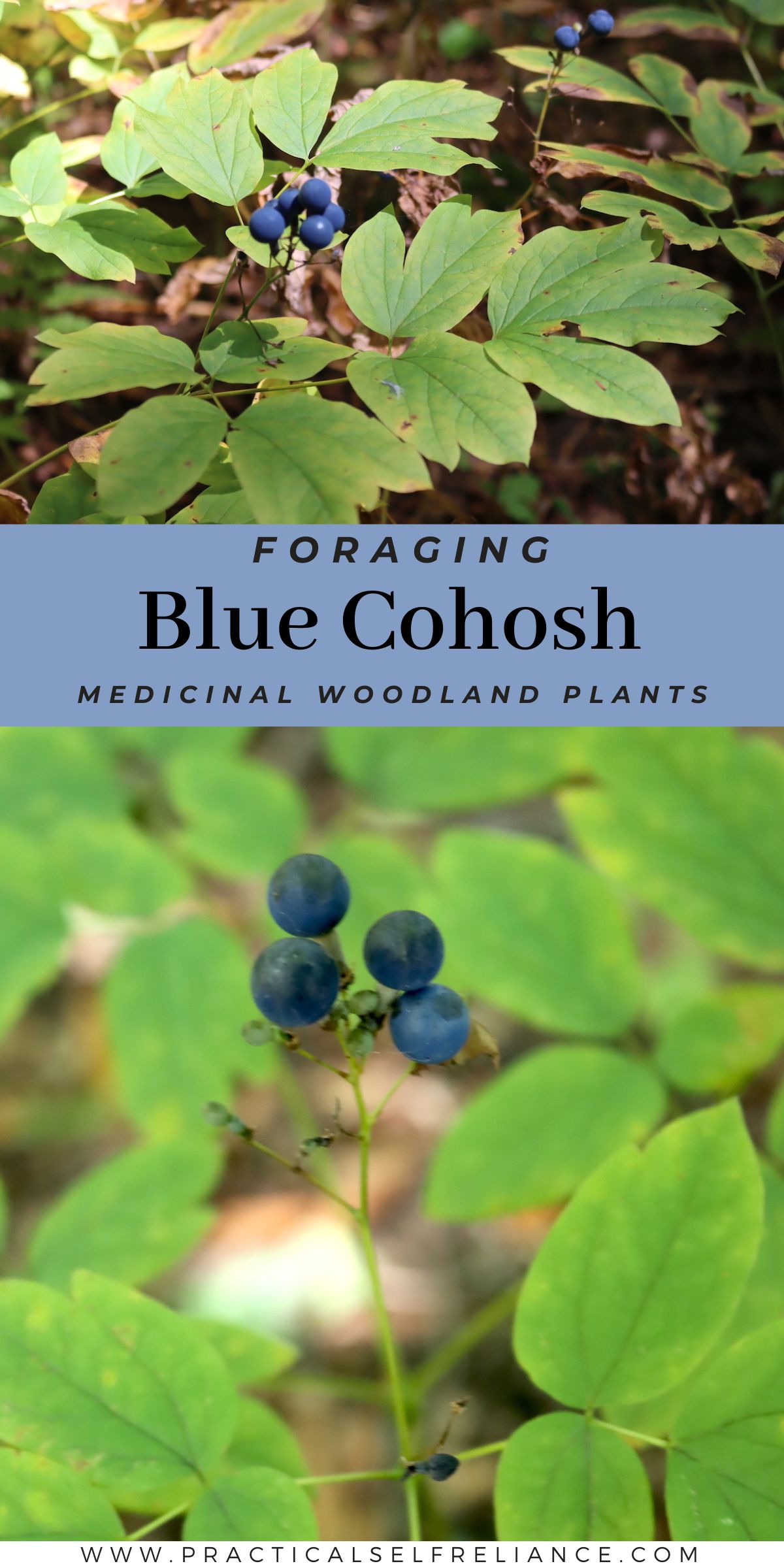
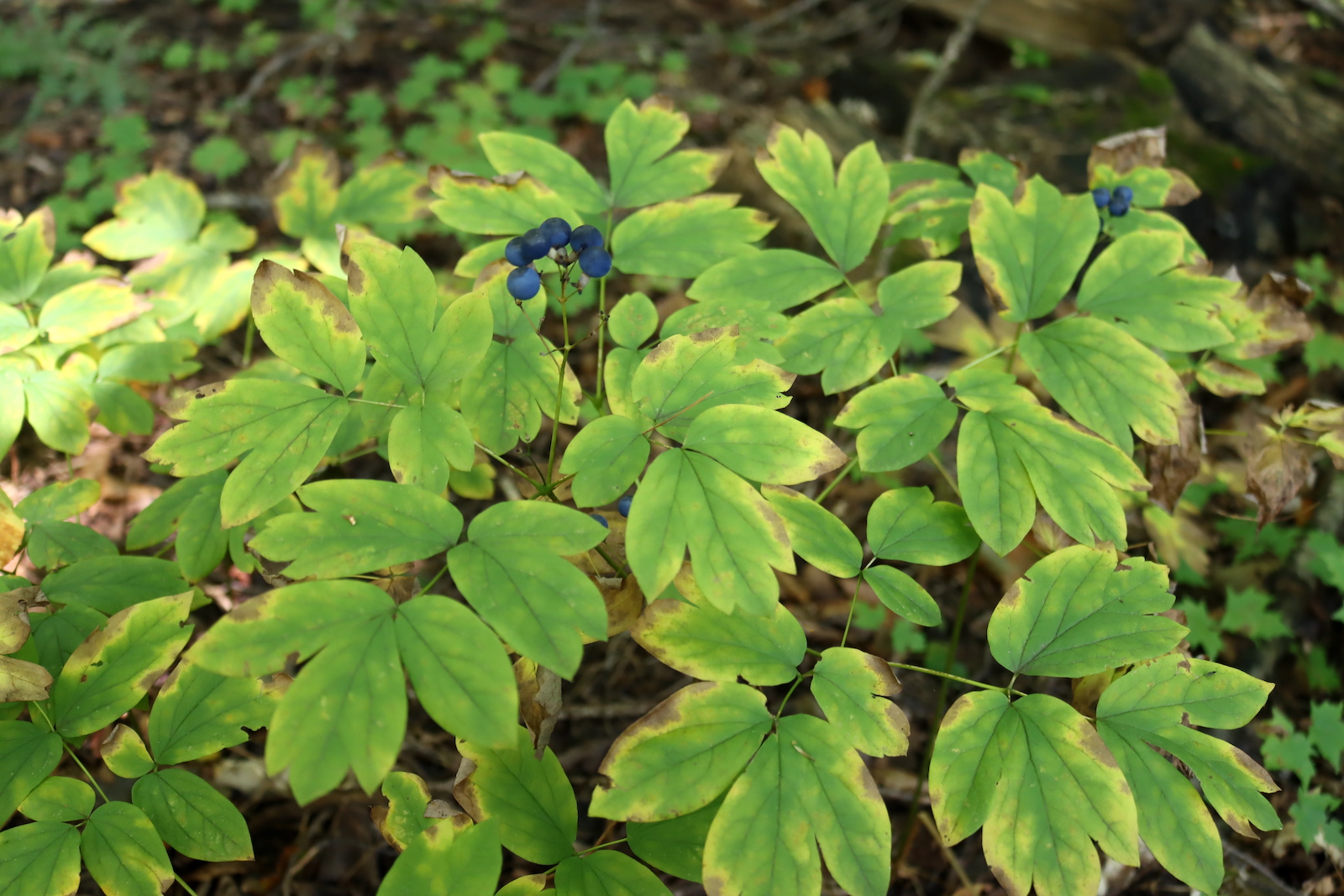
The seeds form in early summer and ripen from green to deep blue by late summer. They hang on into fall. My photos are from the very end of August, when the seeds had already turned deep blue.
Spring is the time to see it bloom, and my list of things to forage in spring covers what else is up then. By the time the seeds turn blue, it’s nearly time for fall foraging.
Identifying Blue Cohosh
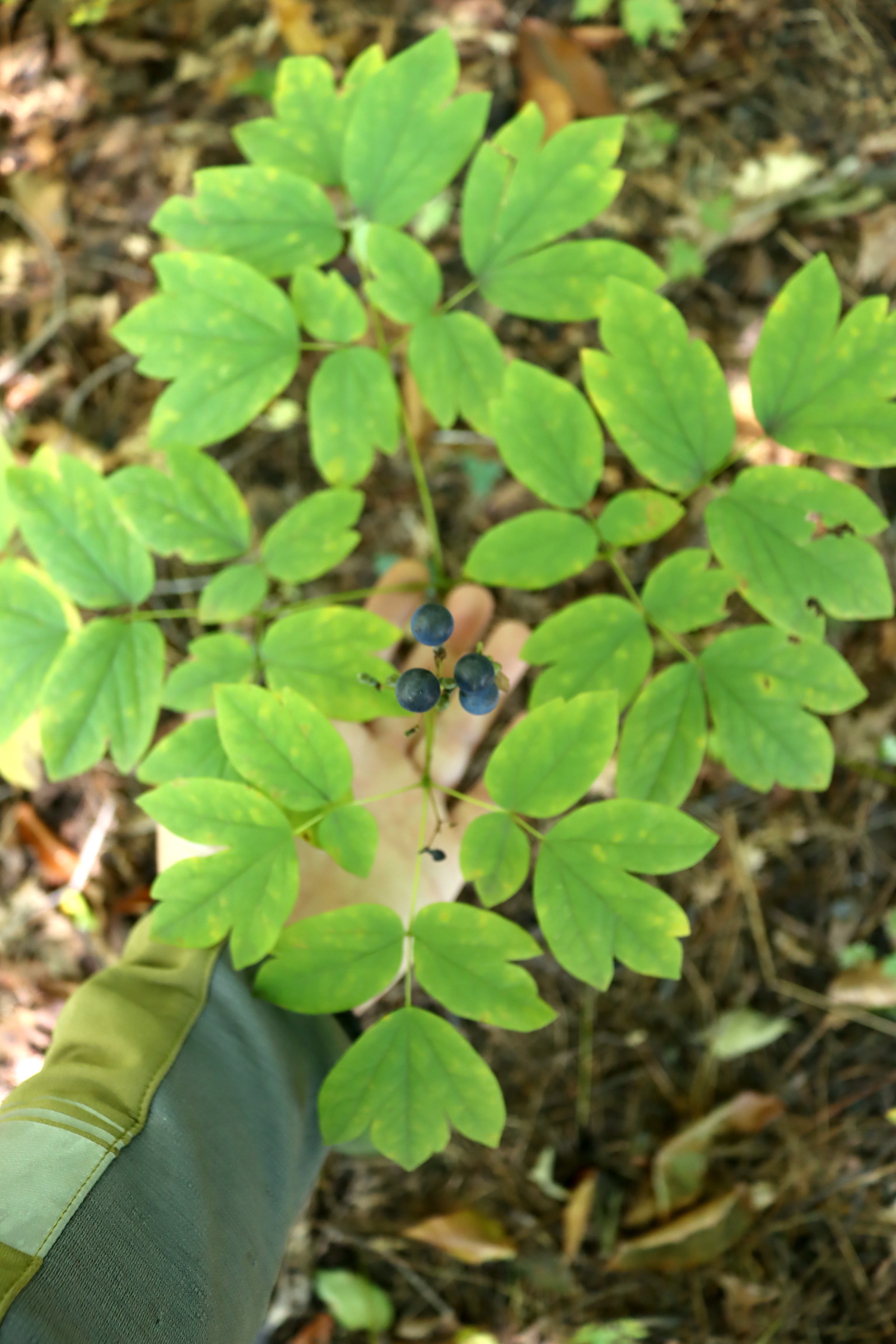
Start with the leaf. Blue cohosh has one big compound leaf partway up the stem, with no stalk of its own. It splits into three right where it meets the stem, so the stem itself seems to branch into three.
Then check the flowers in spring or the blue seeds in summer. Confirm more than one feature with a good regional field guide before you trust a match.
I took the Herbal Academy’s Botany and Wildcrafting Course to sharpen my own plant identification. It’s a good place to start if this is new to you.
Leaves
The leaf divides in threes, three or four times over. Each leaflet is about 1 to 3 inches long, with smooth edges and two to five pointed lobes at the tip. The side leaflets are often lopsided at the base.
Young leaves come up a smoky green and turn a light bluish green as they mature. A plant that’s going to flower carries a second, smaller leaf just below the flower cluster.
Stems
The stem is smooth and light green, often tinged purple or blue, and usually 1 to 3 feet tall.
A fresh stem carries a waxy bloom that rubs off on your fingers, like the dusty coating on a plum. Plants come up alone or in small groups from the rhizome.
Flowers
The flowers grow in a loose cluster at the top of the stem, each about 1/3 to 1/2 inch across. They have six pointed, petal-like sepals in yellow-green to purplish brown, with six yellow stamens around a green center.
The true petals are tiny, shorter than the sepals and tucked in close to the stamens. Early blue cohosh has darker purple-brown flowers that open before its leaves do.
Seeds
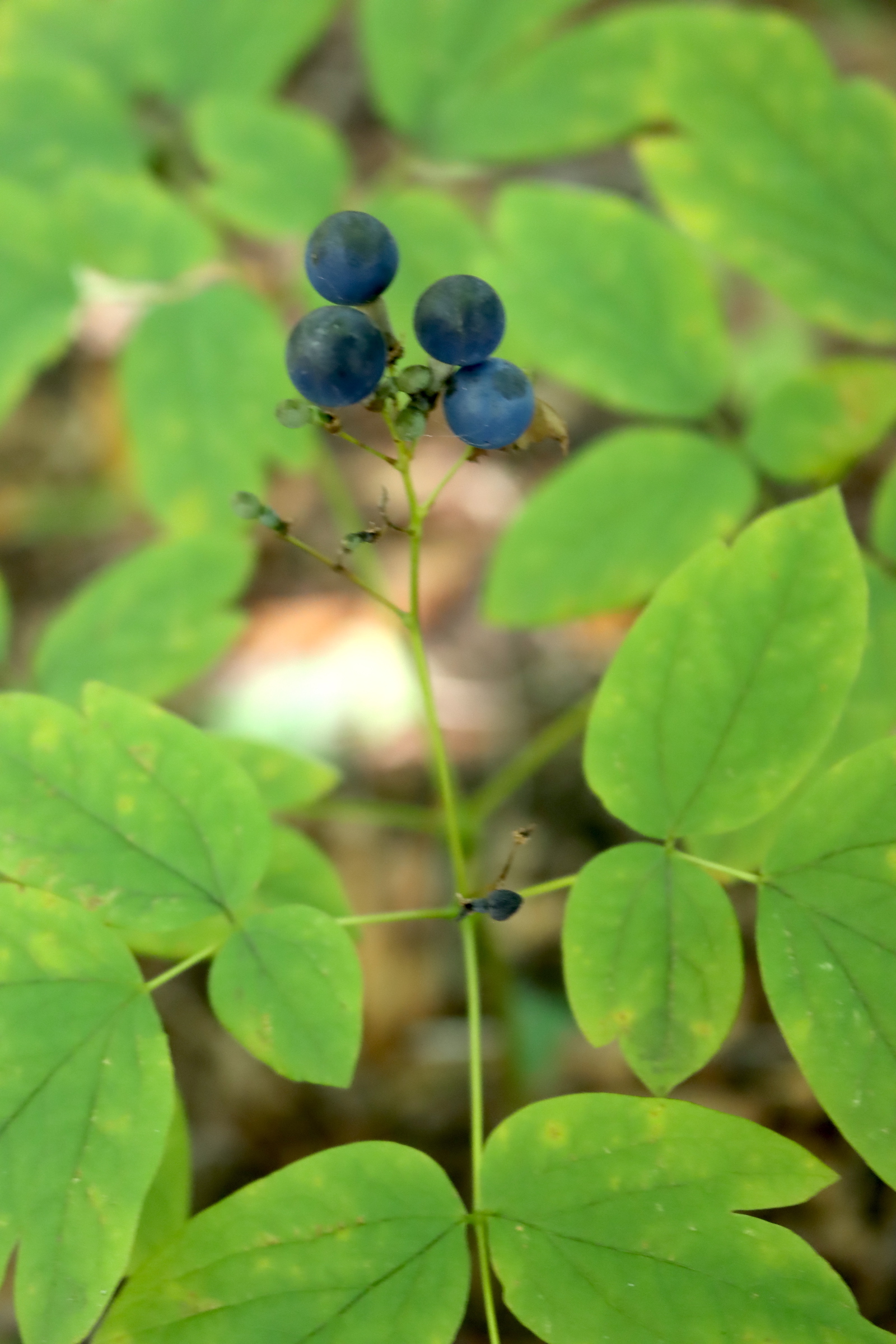
What look like berries are actually seeds. The developing seeds burst through the ovary wall early on, then swell into round, berry-like seeds about 1/3 inch across.
They start out green and ripen to deep blue, and the blue part is the seed coat. Each flower usually makes two, and they sit on thick stalks held up above the leaves.
Roots
Blue cohosh grows from a knotty, lumpy rhizome. That rhizome is the part herbalists used, and it holds the alkaloids and saponins.
Harvesting the rhizome means digging up the plant, and the seeds can take up to three seasons to sprout. United Plant Savers asks buyers to choose sustainably farmed roots over wild-dug ones, and I’d leave wild plants in the ground.
Blue Cohosh Look-Alikes
Meadow rue is the closest match, and the two are hard to tell apart before either one flowers. Baneberry, black cohosh, and wild sarsaparilla share the same shady woods, with compound leaves or dark berries of their own. For brand-new foragers, blueberries are worth a mention too.
Blue cohosh leaflets have smooth edges with a few pointed lobes. Baneberry, black cohosh, and wild sarsaparilla all have toothed leaflets, which rules them out quickly.
Meadow Rue
Early meadow rue (Thalictrum dioicum) grows in the same rich, moist woods, and its leaves divide into threes with rounded, lobed leaflets. That resemblance is where blue cohosh gets its species name.
Blue cohosh has much larger leaflets and a whorl of leaf and flower stalks at the top of the stem, which meadow rue doesn’t have. Meadow rue flowers hang down in tassels, with male and female flowers on separate plants, and they turn into small, dry seeds rather than blue berries.
Baneberry
Red baneberry (Actaea rubra) and white baneberry (A. pachypoda), also called doll’s eyes, grow in the same woods with large compound leaves. Their leaflets have toothed edges, and their white flowers grow in a tight cluster in late spring.
The berries are red or white, not blue, and they’re toxic too. My guide to poisonous berries covers baneberry in more detail.

Black Cohosh
Black cohosh (Actaea racemosa) shares the name, but it’s a baneberry relative in the buttercup family. It’s a much bigger plant, up to about 8 feet tall, with toothed leaflets and long wands of tiny white flowers in early to midsummer.
Go Botany doesn’t list black cohosh in the wild in Vermont, but it’s a common shade garden plant, and we grow it in our moist shade garden. Supplements are where the mix-up matters, since black cohosh and blue cohosh are different herbs with different safety concerns.

Wild Sarsaparilla
Wild sarsaparilla (Aralia nudicaulis) is the one to watch in summer, because it has dark berries in the same woods. It has compound leaves with toothed leaflets, and round clusters of tiny white flowers sit underneath them.
Its berries are blue-black and ripen in midsummer, in round clusters under the leaves rather than up on top. Blue cohosh holds its seeds above the leaves on thick stalks, and its leaflets have smooth edges.
Blueberries
Blueberries (Vaccinium spp.) aren’t a real look-alike, or at least I hope that’s obvious to anyone who isn’t a toddler. Still, if you’ve never seen a blueberry bush and you’re brand new to foraging, a cluster of round, blue berries in the woods can be tempting.
Wild blueberries grow on woody shrubs with small, pointed leaves, and each berry has a five-pointed crown on its underside. Blue cohosh is a soft-stemmed wildflower that dies back every winter, with smooth, round seeds held up above its leaves. My guide to edible wild berries covers wild blueberries in more detail.

Ways to Use Blue Cohosh
For most of us, blue cohosh is a plant for the shade garden rather than the medicine cabinet. It’s long-lived once it settles in, and deer leave it alone.
It’s slow to sprout and slow to spread, so start with nursery plants or seed rather than digging from the wild. You can divide an established clump just after it flowers.
In spring, insects visit the flowers for pollen and nectar. Later in the year, mice eat the seeds, and woodland birds carry them off.
For medicine, United Plant Savers asks people to look for sustainably farmed roots and to talk to a doctor first. That’s good advice for any herb with a safety record like this one.
A Note from Your Family Herbalist
I’m a family herbalist, trained by more than 20 years of hands-on work with medicinal plants and rounded out with coursework through the Herbal Academy of New England. That means I know my way around the plants in this post, and I’ve personally made and used the remedies I write about, often many times over. But there’s a real difference between knowing what works on my homestead and knowing what’s right for you.
Medicine is a personal affair. Every body is different, every medical history is different, and herbs interact with medications, pregnancy, nursing, and existing health conditions in ways no general blog post can anticipate. Even mild medicinal plants like chamomile cause allergic reactions in some people, so what sits comfortably on my own medicine shelf might not be the right choice for yours.
For guidance tailored to your situation, there are three directions I’d point you:
- See a local clinical herbalist. A practicing clinical herbalist can take your full health picture into account, recommend the right herb and dose for you, and adjust the protocol as you go. Ask around at your nearest food co-op, herb farm, or natural-foods store; most communities have at least one.
- Talk to your doctor before adding any new herb to your routine, especially if you take prescription medications, are pregnant or nursing, or are managing a chronic condition. A good doctor will welcome the conversation.
- Educate yourself, the way I have. The Herbal Academy of New England runs the courses I credit with sharpening my own practice. Their Introduction to Herbal Medicine course is where I’d start. I’ve also taken and recommend their Mushroom Course and their Botany and Wildcrafting Course. All three are well-paced and easy to follow at home.
Blue Cohosh FAQs
Here are a few more blue cohosh questions, from supplements to the garden.
No. Black cohosh (Actaea racemosa) is a taller buttercup-family plant with long wands of white flowers, and blue cohosh is in the barberry family. They’re different herbs with different safety concerns, so check the Latin name on any supplement label.
Not across most of its range, but it’s on the United Plant Savers At-Risk list because of overharvesting and logging. Rhode Island lists it as threatened, and its seeds can take up to three seasons to sprout, so wild patches recover slowly.
There’s no research showing it’s safe for nursing mothers or their babies. The National Library of Medicine’s LactMed database says most sources strongly recommend against using it while breastfeeding.
It can. North Carolina State Extension lists contact dermatitis for blue cohosh, and United Plant Savers notes that touching the plant can irritate the skin. Wear gloves if you’re moving plants around the garden.
Not much. Garden references list it as deer resistant, and the bitter foliage keeps deer and other browsers away.
More Spring Woodland Plants
More plants that share blue cohosh’s rich, shady woods.


Did you find this blue cohosh foraging guide helpful? Tell me in the 📝 comments below where you find blue cohosh in your woods!
And make sure you stay in touch with me by following on social media!
Medicinal Plants to Forage
More medicinal plants to learn, from root to flower.


Find the perfect foraging guide
Searching for something else? Enter keywords to find the perfect foraging guide!