
Affiliate disclosure: This post may contain affiliate links. Please see our Privacy Policy.
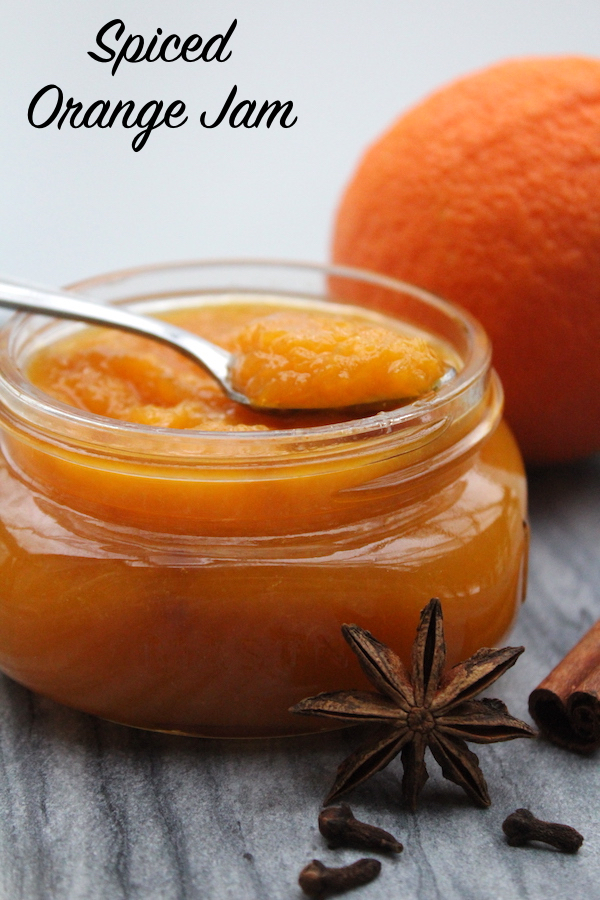
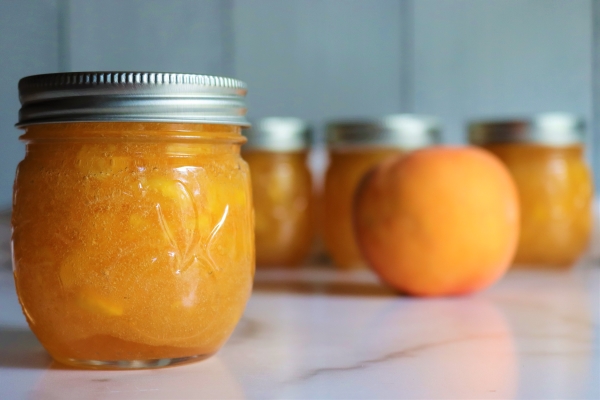
Orange jam gives you all the bright, sunny flavor of fresh citrus without a trace of the bitterness that puts so many people off marmalade. A little cinnamon, clove, and star anise simmered into the pot makes it taste like the coziest part of winter, and it sets into a soft, spoonable jam with no boxed pectin at all.
This is a small batch jam that leans on the natural pectin in the fruit to set, the same way my raspberry jam does. If you’re newer to preserves, it’s worth reading through how to make jam from scratch first, since the method here carries over to just about any fruit.
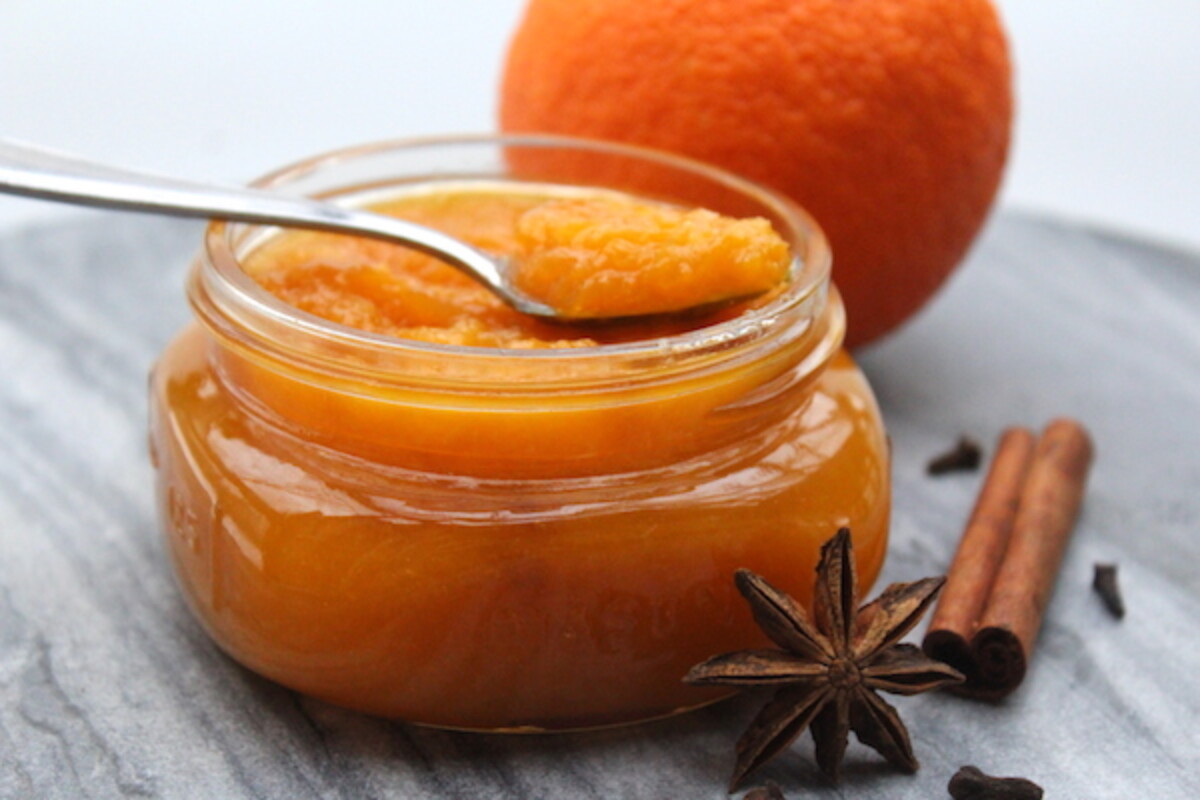
Traditional orange marmalade gets all the attention, but orange jam delivers that same warm citrus flavor without the peel. The sliced rind in a marmalade brings a bitterness that some people love, and others really don’t, and it adds a chewy texture that isn’t for everyone.
Leaving the peel out gives you a spread that’s purely sweet and bright, and in place of that rind, a bundle of warm winter spices adds just enough gentle contrast to keep all that sweetness from falling flat. It’s the jam I reach for all winter long.
Because you’re pureeing the peeled fruit rather than fussing with segments, this comes together quickly, and it stays smooth in the jar. A good splash of lemon juice does double duty here, balancing the sweetness so the jam never turns cloying and helping it set up without added pectin.
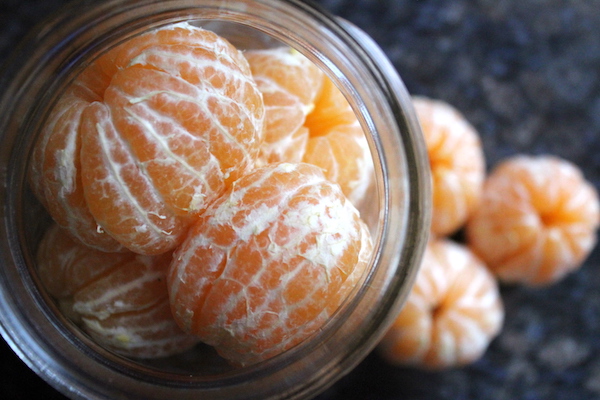
And since oranges are naturally high-acid, they’re perfectly safe for water bath canning, whether you’re making this jam or canning orange sections in light syrup.
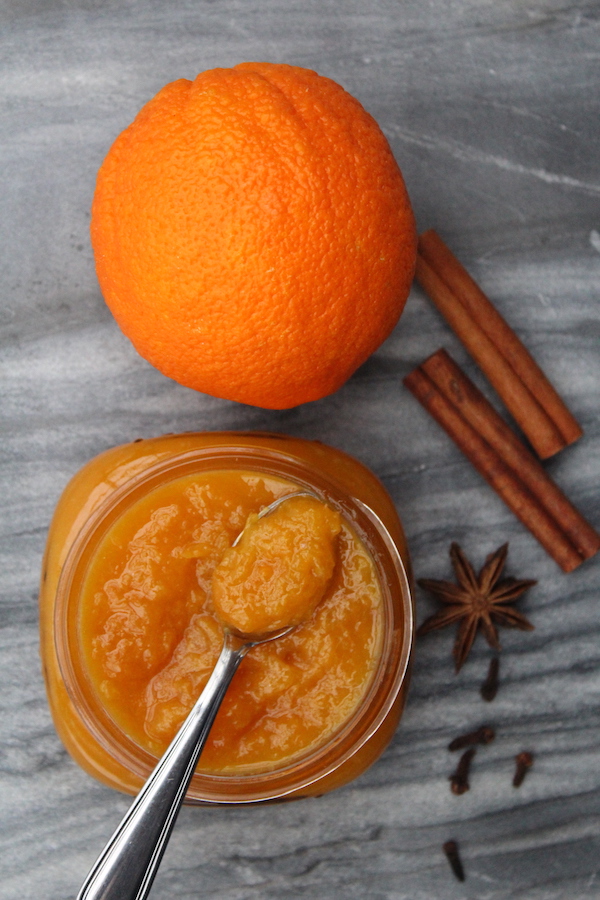
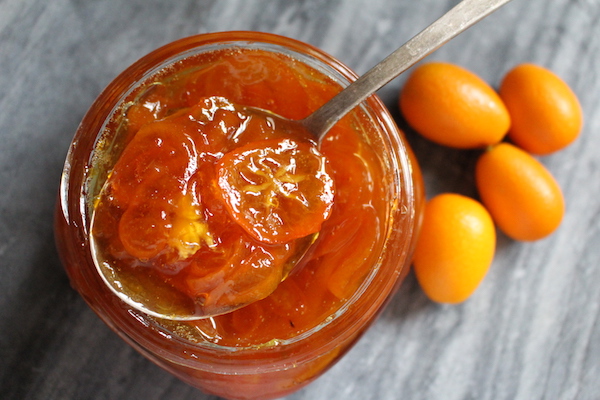
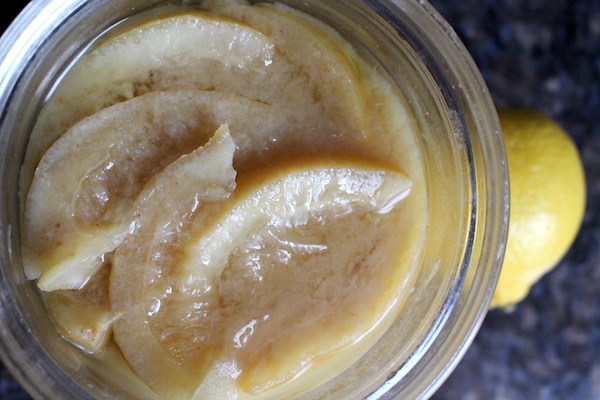
Winter is prime time for this jam, when the store fills with boxes of citrus, and it’s the one thing on the shelf that still tastes like summer. If you’ve got a haul going, orange jam keeps good company with kumquat jam, a jar of canned lemon curd, a batch of salt preserved lemons, or any of the other ways to can lemons while the fruit is cheap. If you’d rather a chunkier jam with visible pieces of fruit, I’ve also got a version made with orange supremes that skips the blender entirely.
Notes from My Kitchen

My kids have never taken to marmalade. All that bitter peel is a hard sell for a young palate, and honestly, I don’t blame them one bit. But they love citrus, and they’ll happily eat anything orange-flavored, so a few winters back I set out to make an orange preserve with all of that bright, sweet flavor and none of the bitter rind. I stir in a little cinnamon, clove, and star anise to give it a cozy, wintry warmth, and this smooth, peel-free jam has had a permanent spot on our breakfast table every winter since.
It disappears fastest on toast, but the most memorable jar went into a layer cake my daughter made. She spread it between rounds of vanilla cake under a cream cheese frosting, and the whole thing tasted almost exactly like an orange creamsicle. I keep a couple of jars tucked back each winter now, just in case she gets the baking urge again.
Ingredients for Orange Jam
Just three ingredients go into this jam, and the ratio between them is what makes it set, so it’s worth measuring with a little care.
- Oranges (weighed whole, seedless if you can): Any sweet orange works. Navels are the standard, easy to peel and reliably sweet, while Cara Caras are a touch milder and blood oranges give a deeper color and more complex flavor. Since you’re pureeing, reach for a seedless variety, or pick the seeds out first so you don’t end up with hard little flecks in the jam.
- Lemon juice: This is not optional. The lemon juice balances the sweetness so the jam doesn’t turn cloying, and it helps create the right conditions for a good set. Fresh gives the brightest flavor, but bottled works fine. Plan on about 1 tablespoon for every cup of prepared fruit.
- Granulated sugar: The recipe uses 3 parts sugar to 4 parts prepared fruit by volume, and that ratio is what lets the jam gel without any added pectin. Don’t reduce it, since the sugar is doing structural work here, not just sweetening. If you want a lower-sugar jam, that’s a job for a low-sugar pectin like Pomona’s instead.
- Warm spices: A bundle of cinnamon, cloves, and star anise simmered in the pot gives the jam its cozy winter warmth. Tie them into a spice bag so you can lift them out cleanly before jarring, and go easy on the cloves, since they’re strong.
There’s no need for a box of pectin at all, because citrus brings plenty of its own. In fact, citrus is so naturally high in pectin that some commercial pectins are made from it, which is the same idea behind homemade citrus seed pectin.
Between the fruit’s own pectin, the right sugar ratio, and that hit of lemon juice, this jam sets reliably on its own. If you’ve made my old-fashioned strawberry jam, you already know the rhythm of a no-pectin batch like this one.
Amazing orange jam! My husband loved the taste and sweetness! Thank you for sharing!
How to Make Orange Jam
This jam comes together in two simple stages. First you peel and puree the oranges, then you cook that puree down with lemon juice and sugar until it reaches gel stage.
Preparing the Oranges
Start by peeling the oranges, taking off both the colored zest and as much of the white pith underneath as you can. The pith is where the bitterness lives, so a second pass with a paring knife to clean off any lingering white bits pays off in the finished flavor. If the oranges are stubborn to peel by hand, just cut the peel away with a sharp knife. Save those peels if you like, since they make lovely candied orange peel.
Once they’re peeled and cleaned up, puree the oranges until smooth. I use an immersion blender right in the pot, though a countertop blender works fine if you run it in batches. The blender breaks down the dividing membranes so the finished jam is smooth rather than stringy, which means there’s no need to remove the membranes by hand the way you would for a chunky supreme jam.
Cooking the Jam
Measure your puree so you know how much sugar to add. You’re aiming for 4 cups of puree, and if you land above or below that, adjust the sugar to hold the 3 parts sugar to 4 parts fruit ratio. Combine the puree, lemon juice, and sugar in a wide, heavy-bottomed pot, and drop in your bundle of spices. A wide pot gives you more surface area for evaporation and a faster set.
Bring it to a boil over medium-high heat, stirring often so the thick puree doesn’t scorch on the bottom. Cook until the jam reaches 220 degrees F on an instant-read thermometer, which is gel stage. Because a puree holds more water than trimmed segments, this can run a little longer than it would with supremes, so lean on your thermometer rather than the clock. Once it hits temperature, fish out the spice bag and ladle the hot jam into prepared jars.
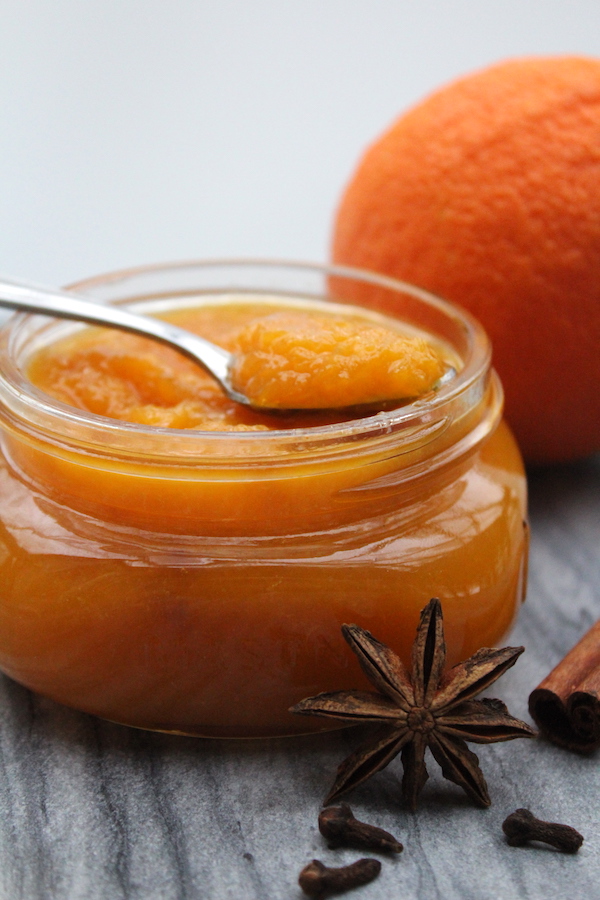
Testing for Gel Stage
This jam sets by cooking to temperature, so a thermometer is your most reliable tool. A few things to keep in mind:
- Thermometer test: Gel stage is 220 degrees F at sea level. That drops about 1 degree for every 500 feet of elevation, so at 1,000 feet the jam sets at 218 degrees F.
- Frozen plate backup: Chill a plate in the freezer before you start. Drop a little jam on it, wait a few seconds, and push it with a finger. If it wrinkles, it’s ready.
- Hold the ratio: The set depends on 3 parts sugar to 4 parts puree. If your puree measured more than 4 cups and you didn’t bump the sugar to match, the jam will struggle to set.
- It firms up as it cools: This is a soft-set jam, and it keeps thickening in the jar overnight, so don’t overcook it chasing a firm set on the stove.
Canning Orange Jam
Canning is optional. You can keep this as a refrigerator jam for a few weeks, or freeze it for up to 6 months. I usually can mine so I’ve got shelf-stable jars through the winter, and since oranges are high-acid, they’re safe for water bath canning with no added acid beyond the lemon juice already in the pot. If you’re new to the process, my water bath canning for beginners guide walks through it step by step.
To can it, have your water bath canner ready before the jam finishes. Ladle the hot jam into clean, hot half-pint jars, leaving 1/4 inch headspace. Wipe the rims, apply two-part lids fingertip tight, and process for 10 minutes. When the time is up, turn off the heat and let the jars rest in the canner for 5 minutes before lifting them out to cool undisturbed for 12 to 24 hours. Check the seals before storing, and refrigerate any that didn’t seal.
Altitude Adjustments
Adjust your processing time for elevation:
- 0 to 6,000 feet: 10 minutes
- Above 6,000 feet: 15 minutes
Yield Notes
This is a small batch, measured by the volume of prepared fruit.
- Fruit: About 2 1/2 pounds of whole oranges, weighed before peeling, purees down to roughly 4 cups.
- Ratio: 3 cups sugar to 4 cups puree, plus 1/2 cup lemon juice, or about 1 tablespoon lemon per cup of fruit. If your puree comes out over or under 4 cups, adjust the sugar to keep the 3 to 4 balance.
- Yield: About 3 to 4 half-pint (8 oz) jars, depending on how juicy your oranges are and how long you cook it.
Storage Options
However you make it, here’s how long orange jam keeps:
- Refrigerator: 3 to 4 weeks in a covered jar.
- Freezer: Up to 6 months.
- Canned: 12 to 18 months at room temperature in a sealed jar. Once opened, refrigerate and use within 3 to 4 weeks.
Recipe Tips and Variations
- Plain orange jam: Leave the spice bag out for a pure, unspiced orange jam that lets the citrus stand entirely on its own. It’s lovely year round, not just through the holidays.
- Try different oranges: Navel, Cara Cara, tangerine, and clementine all make a lovely jam. Blood oranges hold more juice, so they take longer to cook down and give a deeper color. Skip thin-skinned juice oranges, which are seedier and less flavorful.
- Don’t skip the lemon or cut the sugar: Both are doing real work on the set, not just the flavor. Leaving out the lemon or dropping the sugar is the fastest way to a runny jam.
- Lower sugar option: To make a genuinely low-sugar jam, use a low-sugar pectin like Pomona’s, the same way I do in my low sugar jam with Pomona’s Pectin.
- Save the peels: Don’t toss those orange peels. They make wonderful candied orange peel or a batch of orange peel vinegar.
Ways to Use Orange Jam
The obvious home for orange jam is a piece of toast, and it’s especially good on crusty sourdough with plenty of salted butter. It’s just as welcome on biscuits or English muffins, swirled into yogurt or oatmeal, or spooned over a warm wheel of brie on a winter cheese board.
The soft set makes it a natural cake filling too, spreading easily between layers without turning stiff or gummy, as my daughter’s creamsicle cake can attest. For something savory, thin a spoonful with a splash of white wine or water and brush it over roasting chicken or pork in the last few minutes, where the sugar caramelizes and the citrus cuts the richness. If you want a whole pile more ideas, I put together 100+ ways to use up a jar of jam.
Orange Jam FAQs
No. Oranges are citrus, and citrus is naturally high in pectin, so with the right sugar ratio and a good hit of lemon juice, the jam sets on its own once it reaches 220 degrees F. There’s no need for a box of pectin, and in fact some commercial pectins are made from citrus in the first place.
The most common cause is an off ratio. If your puree measured more than 4 cups and you didn’t raise the sugar to match, there wasn’t enough sugar for a proper set. The other common issue is not reaching 220 degrees F, since timing alone isn’t reliable, so use a thermometer. If it has already cooled and is still runny, pour it back into the pot, bring it to 220 degrees F, and re-jar it.
They’re close cousins. Marmalade includes the sliced peel, which adds bitterness and a chewy texture, while this orange jam is made from peeled, pureed fruit, with warm spices standing in for the gentle bitterness the peel would bring. The result is smoother and sweeter, with a cozy spiced note. If marmalade tastes too sharp or too chewy for you, this is a lovely alternative.
Navel oranges are the simplest to peel and give a classic sweet flavor, and Cara Caras are milder and sweeter. Blood oranges make a deeper-colored jam with a more complex taste, though they hold more juice and take longer to cook down. Since you’re pureeing, choose a seedless variety or pick out the seeds first.
Bitterness almost always comes from leftover white pith, so take the time to remove every bit of it when you peel and clean the oranges. Overcooking can add a scorched bitterness too, as can juicier varieties like blood oranges that need a longer boil to set.
Ways to Preserve Citrus
If you tried this Orange Jam recipe, or any other recipe on Practical Self Reliance, leave a ⭐ star rating and let me know what you think in the 📝 comments below!
And make sure you stay in touch with me by following on social media!
Orange Jam
Equipment
- Canning Jars, Lids, and Rings
Ingredients
- 5 cups orange puree, see notes
- 1/2 cup lemon juice
- 3 cups granulated sugar
- 1 whole cinnamon stick, optional, tied into a spice bag
- 3 to 4 whole cloves, optional, tied into a spice bag
- 1 to 2 whole star anise pods, optional, tied into a spice bag
Instructions
- Peel the oranges, removing the zest and as much of the white pith as possible. Go back over each one with a paring knife to remove every last bit of pith, since leftover pith makes the jam bitter. Save the peels for candied orange peel if you like.
- Puree the peeled oranges until smooth, using an immersion blender right in the pot or a countertop blender in batches.
- Measure the puree. You are aiming for 4 cups. If you have more or less, adjust the sugar to keep a ratio of 3 parts sugar to 4 parts puree by volume.
- Tie the cinnamon stick, cloves, and star anise into a spice bag. Combine the puree, lemon juice, and sugar in a wide, heavy-bottomed pot and add the spice bag. Bring to a boil over medium-high heat, stirring frequently so the puree does not scorch.
- Cook until the jam reaches gel stage at 220 degrees F on an instant-read thermometer. Because puree holds more water than trimmed segments, this can take a little longer, so trust the thermometer over the clock. Remove and discard the spice bag.
- Ladle the hot jam into clean, hot half-pint jars, leaving 1/4 inch headspace. Wipe the rims, apply lids and bands, and tighten to fingertip tight.
- For immediate use, store in the refrigerator for a few weeks or the freezer for up to 6 months. To can, process in a boiling water bath for 10 minutes, adjusting for altitude. Let the jars rest 5 minutes in the canner, then cool undisturbed for 12 to 24 hours and check the seals before storing.
Notes
Nutrition
Nutrition information is automatically calculated, so should only be used as an approximation.
Jam Recipes
Find the perfect recipe
Searching for something else? Enter keywords to find the perfect recipe!










This sounds amazing, I absolutely love oranges and spice….can this be stored in the fridge after cooking without doing a water bath step? Thanks.
Yes, it can be stored in the fridge but it won’t last nearly as long in the fridge.
Can’t believe how it is
Hi! I’ve made this a few times with great success. This last time, however, it took a lot longer to gel stage and I ended up doubling the sugar because it was so bitter. In the past I’ve made with just navel oranges, last week I made with Meyer lemons and navel and blood oranges (primarily navel). I’m wondering how it turned so incredibly bitter, and also why the gel took so long (1.5 cook time at least)? I can try to repurpose the jam in baked goods, but it’s way more bitter than in the past when I was able to eat with yogurt or on toast. Thank you!
Blood oranges tend to have a higher juice content than navel oranges which would explain the longer gel time. More liquid means a longer cook time. The main reason for bitterness in a jam is not removing the white pith and sometimes it’s just a bad batch of oranges. Did you happen to taste the oranges before you put them in the jam?
Thanks for responding! The total volume was 5cups purée/juice and the juice was super tasty 😀 i cut the rinds off instead of peeling but can always do better! And maybe stick to just my oranges and not add Meyer or blood orange, which I suspect is what added to the bitter, considering the recipe has been a success before!
I would suspect that you are correct since that is the only thing that you changed.
Thank You for the recipe! This is a great way to use up “fruit basket” gifts & I love canning & watching the snow fly at the same time. Nothing like capturing a bit of Summer during the Winter months!!
You’re very welcome. So glad you enjoyed the post.
I’m really struggling to get it to gel… I’m not sure why. Any tips?
I have the heat on medium and it’s been almost an hour already .
Did you finally get your jam to set?
Do I need to remove the membrane between slices
No need to remove the membrane, just peel and puree.
I’m disappointed with this recipe. I cooked longer than required and still couldn’t get it to gel. It’s more like a syrup with a bitter after taste. It was so sweet when I first blended the oranges but now I feel like I wasted a lot of produce trying to create this when it’s not going to be eaten.
I am so sorry that happened. It’s possible that the bitterness was caused by it being cooked too long. How long did you cook it for and how high was the heat?
Thanks for this. Have just made it using oranges fresh from the tree (we’re in Portugal). Added some honey but otherwise followed the recipe as written. It tastes delicious!
Thanks for sharing. So glad that you enjoyed the recipe.
Thanks for the inspiration to make this delicious jam. I used 2 🍊 🍊 and local 🍯 honey cooked in the microwave.
Hi! I see that we peel the oranges without the pith, but do you add these to the puree? I feel like you’d get extra flavor, but I’m not sure if that’s the intention
You want to peel the orange and make sure that you are removing all the pith from the orange itself. It is not recommended to use the peel in this particular recipe. It could definitely enhance the flavor but could also negatively impact the texture. Oranges are also a highly sprayed crop so you wouldn’t want to use the peels unless they were organic.
I love this recipe!! I used last year with the insides of the oranges I used for candied orange peel. I’m doing it again this year. Now folks get two orange gifts instead of just one, My mother would be proud,
Can you freeze this jam for storage?
Yes, you can.
Thank you!!!!! So excited to try this and freeze it!
You’re very welcome.
I made this about a year ago and loved it. I’m thinking about trying it with Meyer lemons instead of oranges this year. Fingers crossed.
That sounds very interesting. I hope you will share how it turns out if you decide to try it.
So it has been simmering for 30 min and is not setting up! I used 12 pounds of oranges and 4 cups of sugar. Help what do I need to do now
So sorry we didn’t get to your comment sooner. Did it finally set up for you?
Hi,
This looks like a wonderful recipe, am going to try it.
May you kindly convert the pounds into kilograms/grams.
Thanks for this recipe! I added the juice of 2 lemons and infused it with fresh basil and it tastes wonderful!
What happens if i cook it too long? Does it never jel up?
What happens if i cook it too long? Does it never jel up?
With this one, I’d guess it’d burn or candy if you cooked it too long.
hi, thankgs for the recipe it look wonderful, I want to make this but have a daubt about the seeds. Mines have lots of seeds, shoulI just puree them?
thank you
Mayra
If you puree the seeds they’ll be hard little flecks in there. My oranges had only one or two seeds each and I just pulled them out. I’m not sure how you’d make this with a very seedy orange, other than diligent work pulling the seeds out ahead of time.
wrap squashed seed in muslin tie and remove when cookedlĺ