
Affiliate disclosure: This post may contain affiliate links. Please see our Privacy Policy.
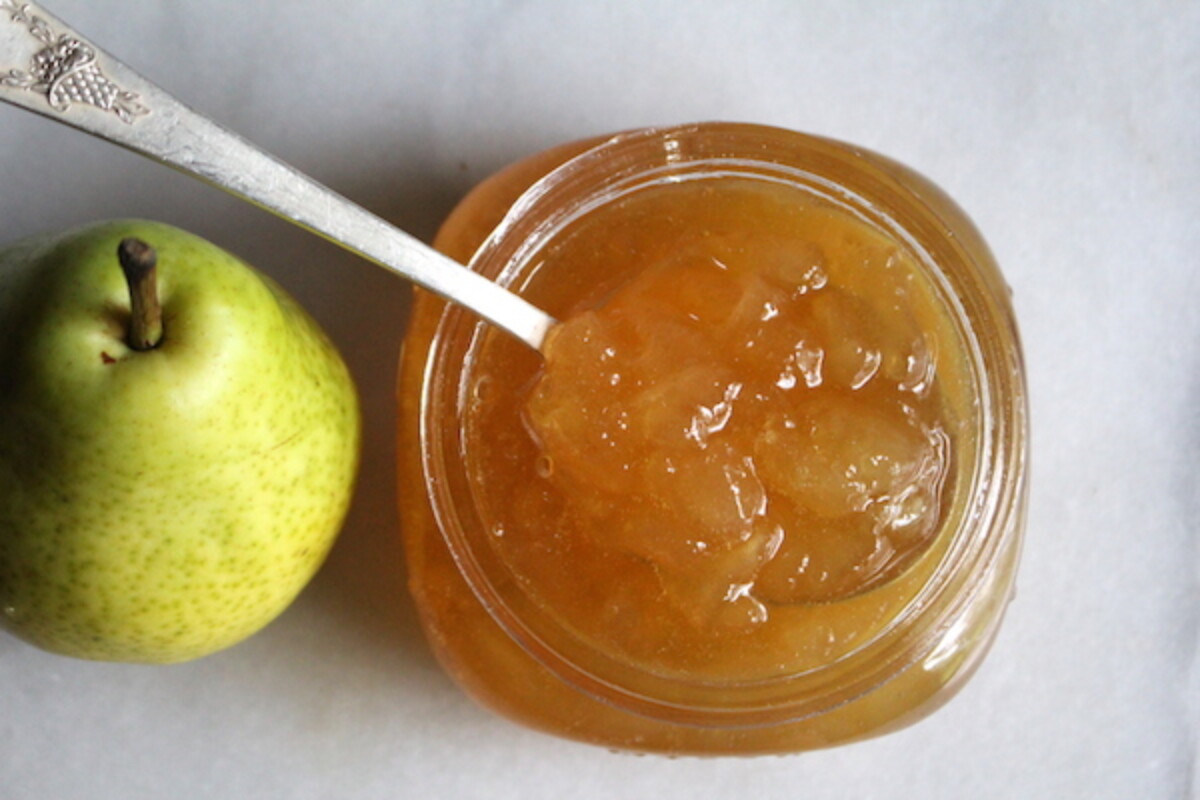
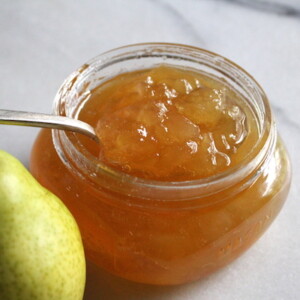
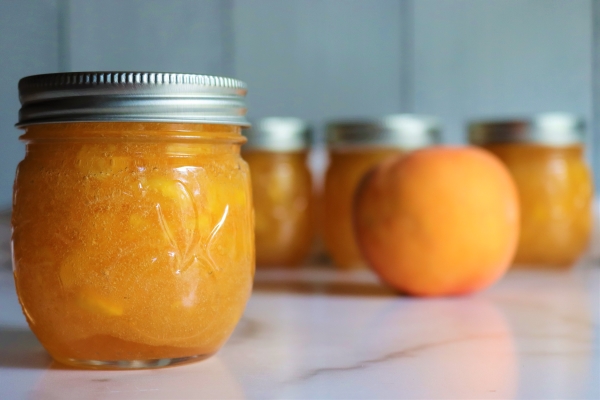
Pear jam captures the delicate, honey-like sweetness of fresh pears in a spreadable preserve that lasts all year long. Unlike store-bought versions that often taste flat and overly sweet, homemade pear jam made without commercial pectin has a rich, nuanced flavor with tender chunks of fruit suspended in a glossy gel.
The secret to getting this old-fashioned preserve just right lies in one simple technique that transforms ordinary pears into something truly special.
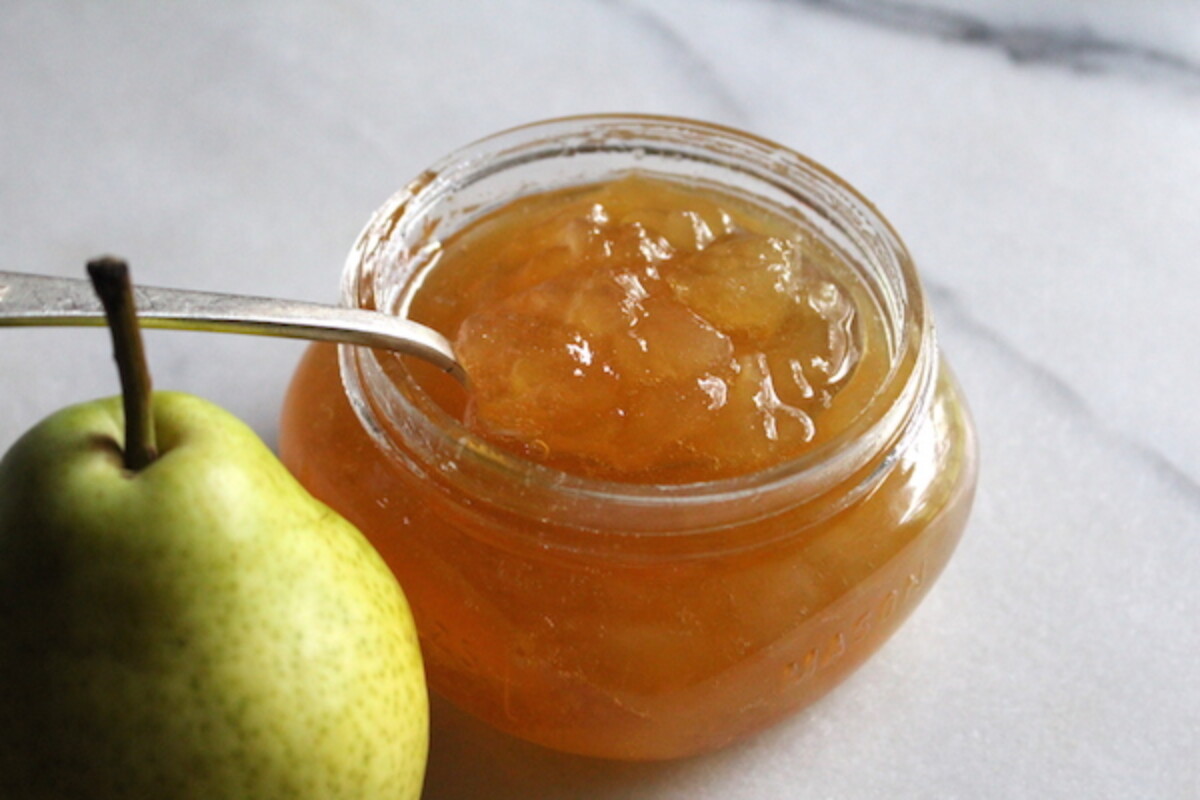
Before commercial pectins became widely available, home cooks relied on the natural pectin in fruits to thicken their preserves. Pears happen to be relatively high in pectin, especially when slightly underripe, which makes them perfect candidates for old-fashioned jam making. The catch is that pears also turn to mush quickly when heated, so without the right preparation, you end up with pear sauce or pear butter rather than pear jam.
Macerating the pear chunks in sugar overnight is the key to making a chunky pear jam that sets beautifully on a spoon. This single step changes everything, drawing out the natural juices while firming up the flesh so the pieces hold their shape during cooking.
Notes from My Kitchen

The overnight maceration step is truly non-negotiable here. I know it requires planning ahead, but trust me when I say that skipping this step will leave you with sweetened pear sauce instead of proper jam. The sugar draws moisture out of the fruit cells while simultaneously firming the pectin structure, creating pear pieces that stay intact through the cooking process. Give yourself at least 12 hours, though 24 is even better.
I also want to address a common issue: burning. A few readers have mentioned their jam scorched on the bottom of the pot. The key is to reduce the heat after the jam comes to a boil and stir more frequently as it thickens. Use a heavy-bottomed pot that distributes heat evenly, and keep a close eye on things during the last few minutes of cooking when the jam is most likely to stick.
Choosing Pears for Pear Jam
According to the PennState Agricultural Extension, recommended varieties for preservation include Bartlett, Bosc, Anjou, and Comice, while Kieffer pears are acceptable and Seckel pears work well for pickled and spiced products.
I use Bartlett pears for most of my pear jam batches because they have firm flesh and excellent flavor that holds up well to cooking. The most important factor, regardless of variety, is ripeness. Select pears that are slightly underripe or just barely ripe for jam making. Underripe pears contain more pectin and will hold their shape better during cooking. If your pears are already soft and fully ripe, they will work but may produce a softer set.
Unlike apples that store for months in a root cellar, pears are generally short-lived fruits. If left to ripen on the tree, they actually begin to rot from the inside out, which is why most pears are picked slightly underripe and allowed to mature on the counter. This makes pear harvest time the perfect opportunity for preserving, whether you are making jam, canning pear halves, or brewing homemade pear cider.
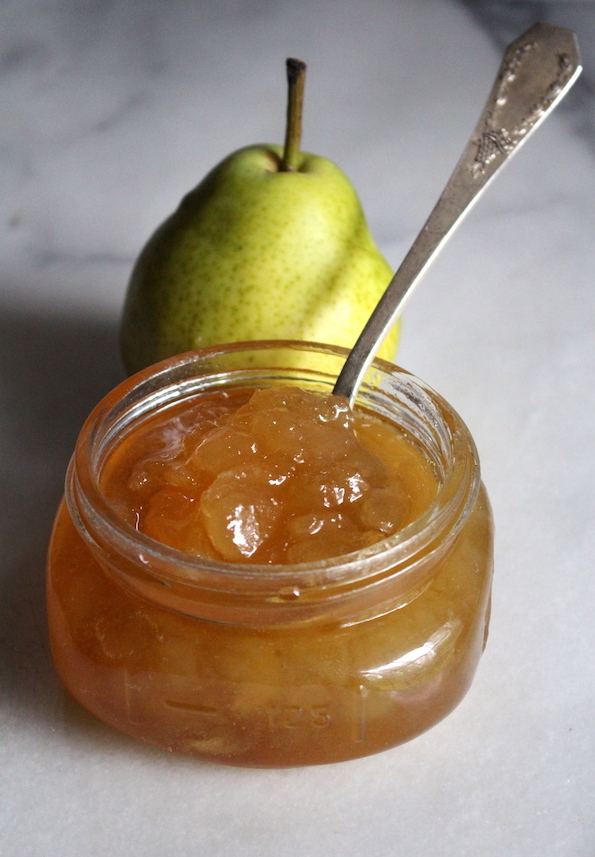
Ingredients for Pear Jam
This recipe keeps things simple with just three ingredients, each playing an important role in the final preserve.
- Pears: The star of the show, pears provide natural sugars, pectin, and that distinctive honey-like flavor. Choose firm, slightly underripe fruit for chunks that hold their shape. You will need about 4 pounds before peeling and coring.
- Sugar: Granulated white sugar draws moisture from the pears during maceration, helps activate the natural pectin, and acts as a preservative. This recipe uses 3 cups, though you can adjust between 2 and 4 cups depending on your sweetness preference.
- Lemon Juice: Bottled or fresh lemon juice adds pectin to help the jam gel, provides acidity that balances sweetness and prevents browning. Use 1/4 cup for this batch size. It’s for flavor, not preservation, so feel free to use fresh lemon juice for better flavor.
Traditional pear jam recipes often call for as much as 4 cups of sugar for 4 pounds of fruit, which I find overly sweet. I prefer a ratio that lets the pear flavor shine through rather than tasting like candy.
You can experiment with sugar amounts within the range of 2 to 4 cups and still achieve a nice set, though less sugar may result in a slightly softer jam. For a moderately sweet preserve that is not cloying, 2.5 to 3 cups works well. If you want to reduce sugar even further, consider using Pomona’s Universal Pectin, which allows jam to gel with minimal sweetener.
I’ve made Ashley’s pear jam recipe multiple times now and it always turns out perfectly. The overnight maceration step really does make all the difference. Beautiful chunks of pear in a glossy jam that sets up just right!
How to Make Pear Jam
The key to pear jam success lies in the preparation. If you rush through the maceration step or skip it entirely, your pears will quickly turn into sauce in the jam pot. Follow these steps for pear chunks suspended in a beautiful gel.
Preparing the Pears
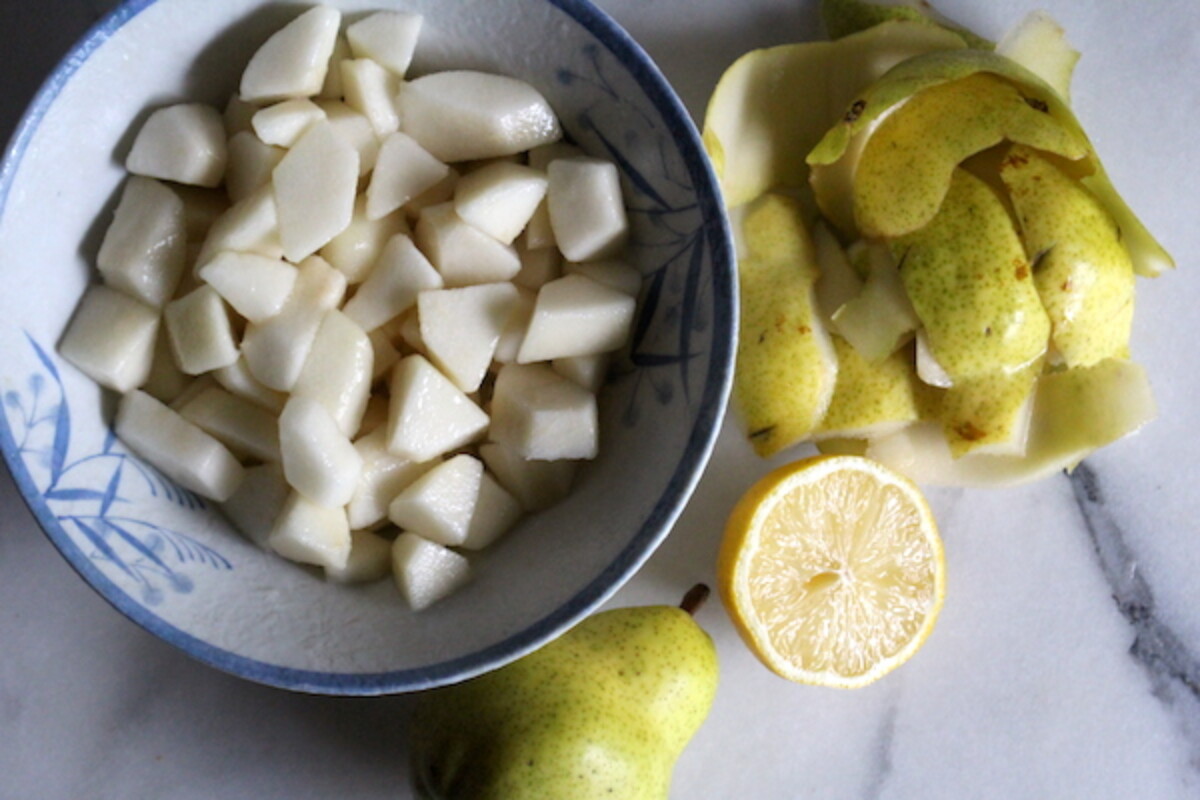
Start by peeling and coring your pears, then chop the fruit into uniform pieces about 1/2 inch in size. The size you cut now will largely remain the same after cooking, so think about how you want your finished jam to look. Larger chunks create a more rustic preserve, while smaller pieces give a smoother texture.
As you work, toss the pear chunks with the lemon juice to prevent oxidation and browning. The lemon juice also contributes extra pectin since citrus fruits are naturally rich in this gelling agent. Most commercial pectins are actually derived from citrus, so you are essentially making your own mild pectin boost.
Macerating Overnight
This step is crucial, so pay close attention. The pear chunks must macerate in sugar for 12 to 24 hours before cooking. If you are truly crunched for time, the absolute minimum is 4 hours, but longer is strongly recommended for the best results.
Add the sugar to your lemon-coated pear pieces and stir to combine. At first, it will look like an absurd amount of sugar on relatively little fruit, but this is exactly what creates the magic. The sugar draws liquid out of the pear cells through osmosis, creating a rich syrup while simultaneously firming up the fruit flesh. This dual action is what allows the pear chunks to hold their shape during cooking.
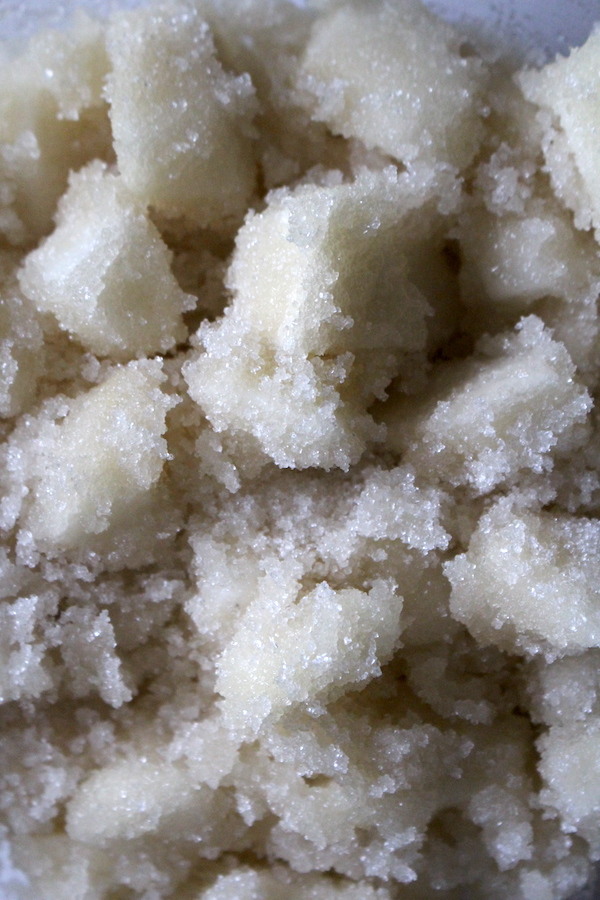
Cover the bowl and place it in the refrigerator overnight. By morning, you should have firm pear cubes floating in a pool of their own sugary syrup, with most or all of the sugar dissolved.
I use this same maceration technique for strawberry rhubarb jam since both strawberries and rhubarb are low-pectin fruits that benefit from this treatment. It also works well for old-fashioned strawberry jam when you want a chunkier texture.
Cooking the Jam
Transfer everything from the bowl, including all the syrup, into a deep, heavy-bottomed jam pot. Leave extra space at the top because the jam will foam up during cooking. Bring the mixture to a hard boil over high heat, then reduce the heat slightly and cook for about 10 to 15 minutes, stirring frequently to prevent sticking.
If the pear pieces seem too large for your liking, you can gently crush some of them with a potato masher or the back of a wooden spoon. I find that the chunks hold their shape remarkably well through cooking, so you may need to break them up a bit if you prefer a smoother consistency.
Keep cooking until the mixture reaches gel stage. To test for set, place a small plate in the freezer beforehand and drip some jam onto it. After a few seconds, run your finger through the jam. If it wrinkles and holds its shape, it is ready. Alternatively, you can use an instant-read thermometer. Pear jam sets at 220°F at sea level, and you should reduce this by 1°F for every 500 feet of elevation. Here in Vermont at about 1,000 feet, my jams finish at 218°F.
Once your jam reaches gel stage, immediately remove it from the heat. The jam will continue to thicken slightly as it cools. For more details on testing techniques, see my complete guide on how to make jam.
Canning Pear Jam
I usually can my jam so I can enjoy it all year long, but it is completely optional. You can also store it in the fridge for 2 to 3 weeks or freeze it for up to 6 months. For a complete walkthrough of the process, see my beginner’s guide to water bath canning.
To can your pear jam, start by preparing your water bath canner and washing your jars. When the jam reaches gel stage, ladle it into hot half-pint jars, leaving about 1/4 inch headspace. Run a plastic spatula along the inside to remove air bubbles, wipe the rims, and secure with 2-part canning lids. Process in a water bath canner for 10 minutes. If you are above 6,000 feet in elevation, increase the processing time to 15 minutes.
Once the jars are done, use a jar lifter to remove them from the canner and let them cool on a towel on the counter. After 12 to 24 hours, check the seals by pressing the center of each lid. Sealed lids will not flex. Store any unsealed jars in the refrigerator and use them soon. Properly sealed jars will maintain peak flavor for 12 to 18 months on your pantry shelf. Refrigerate after opening.
Yield Notes
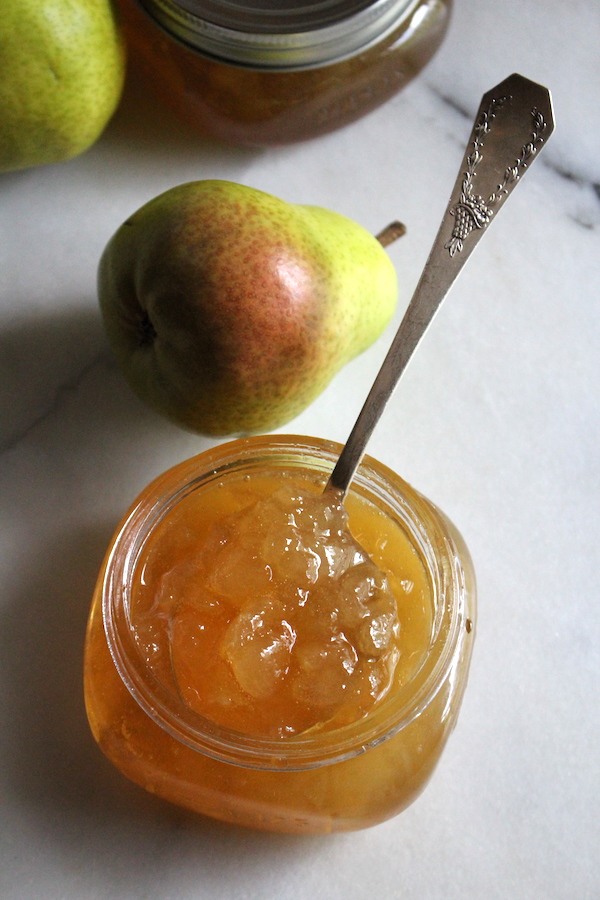
This recipe yields approximately 4 to 5 half-pint jars (8 oz each), depending on how long you cook the jam and how much moisture evaporates. The exact yield also varies based on the water content of your particular pears and the sugar amount you choose.
Pear Jam Variations
While I love the simple three-ingredient version of this jam, pears pair beautifully with warming spices and other flavors. Here are some variations to try once you have mastered the basic recipe.
- Pear Jam with Ginger: Add 2 teaspoons of freshly grated ginger to the jam pot along with the macerated pears. Ginger adds a warm, spicy note that complements the honey-like sweetness of pears beautifully.
- Pear Jam with Vanilla: Scrape the seeds from one vanilla bean and stir them into the finished jam just after removing it from the heat. Adding vanilla at the end preserves its delicate flavor, which would cook off if added earlier.
- Pear Jam with Cardamom: Add 1/2 teaspoon of ground cardamom or place whole cardamom pods in a tea ball and let them infuse during cooking. This creates an exotic, fragrant preserve.
- Pear Cranberry Jam: Replace 1 cup of pear chunks with fresh cranberries. The cranberries are very high in pectin and will help the jam set up firmly while adding a beautiful ruby color and tart contrast. You may want to increase the sugar slightly to balance the tartness. If you have extra cranberries, try canning cranberry sauce for the holidays.
This recipe would also work wonderfully with homemade maple sugar in place of white sugar for a truly local Vermont flavor profile.
Pear Jam FAQs
Lemon juice serves three important functions in pear jam. First, it adds pectin to help the jam gel properly since citrus fruits are naturally high in this gelling agent. Second, it provides acidity that balances the sweetness of the sugar and pears. Third, it prevents the pale pear flesh from oxidizing and turning brown during preparation. While the lemon juice is not required for canning safety in this recipe, it significantly improves both the flavor and appearance of the finished jam.
Pear jam can burn if the heat is too high or if you are not stirring frequently enough, especially during the final minutes of cooking. To prevent burning, use a heavy-bottomed pot that distributes heat evenly. Bring the jam to a boil over high heat, then reduce to medium or medium-high for the remainder of cooking. Stir occasionally at first, then more frequently as the jam thickens. The jam is most likely to scorch in the last few minutes when there is less liquid to buffer the heat.
I strongly recommend against skipping the maceration step. This overnight rest in sugar is what allows the pear chunks to hold their shape during cooking. Without it, the pears will quickly dissolve into a runny pear sauce rather than a proper jam with distinct fruit pieces. If you are absolutely pressed for time, the minimum maceration period is 4 hours, but 12 to 24 hours produces significantly better results.
Traditional pear jam recipes use about 1 cup of sugar per pound of fruit (before peeling), but this creates an extremely sweet preserve. You can successfully make pear jam with anywhere from 2 to 4 cups of sugar for 4 pounds of pears. For a less sweet jam that lets the pear flavor shine, use 2 cups. For moderately sweet jam, use 2.5 to 3 cups. For traditional candy-like sweetness, use 4 cups. Less sugar may result in a slightly softer set, but the jam will still gel properly.
Recipe Tips
- Preventing burning: Use a heavy-bottomed pot that distributes heat evenly. Reduce the heat after the jam comes to a boil, and stir more frequently as the jam thickens during the last few minutes of cooking.
- Managing foam: Jam will foam during cooking, which is normal. Use a pot that is no more than half full at the start to accommodate the foaming. If thick foam accumulates, you can skim it off with a mesh strainer, but the normal bubbling foam will subside once cooking is complete.
- Testing gel stage: The plate test is reliable: chill a small plate in the freezer, spoon a small amount of jam onto it, wait one minute, then push with your finger. If it wrinkles, it is ready.
- Chunk size: Cut pears to the size you want in your finished jam. Unlike many fruits, pear pieces hold their shape through cooking thanks to the maceration step.
- Refrigerator or freezer storage: If not canning, store jam in the refrigerator for 2 to 3 weeks or freeze for up to 6 months. Use freezer-safe straight-sided jars for freezing.
Jam Recipes
If you tried this Pear Jam recipe, or any other recipe on Practical Self Reliance, leave a ⭐ star rating and let me know what you think in the 📝 comments below!
And make sure you stay in touch with me by following on social media!
Pear Jam
Ingredients
- 4 lbs Pears, peeled and chopped into 1/2 inch pieces
- 3 cups Sugar, see note
- 1/4 cup lemon juice
Instructions
- Peel and chop pears: Start by peeling, coring, and cutting the pears into uniform 1/2-inch pieces. The size you chop them now will largely stay the same after cooking since the maceration step firms them up.
- Macerate overnight: Toss pear pieces with sugar and lemon juice, then cover and refrigerate for 12 to 24 hours. This step is essential for drawing out juices and firming the fruit. The absolute minimum is 4 hours, but longer produces better results.
- Prepare canning setup: After maceration, the jam comes together quickly. If you plan to can your jam, set up your water bath canner now. If making refrigerator or freezer jam, skip this step.
- Cook the jam: Pour the pear mixture into a heavy-bottomed jam pot and bring to a boil over high heat. The mixture will foam up, so ensure your pot is large enough. Once boiling, reduce heat to medium-high.
- Stir and mash: Stir frequently to prevent burning, especially as the jam thickens. Cook for 10 to 15 minutes, adjusting heat as needed. If pear chunks are too large, gently crush some with a potato masher.
- Test for gel stage: Continue cooking until the jam reaches 220°F at sea level (reduce by 1°F per 500 feet elevation). Alternatively, place a spoonful on a frozen plate; it should set and wrinkle when pushed.
- Fill jars: Remove from heat immediately and ladle into clean jars, leaving 1/4-inch headspace. Remove air bubbles with a plastic spatula. Wipe rims and seal with two-part canning lids.
- Process jars: Process in a boiling water bath for 10 minutes (15 minutes above 6,000 feet). Turn off heat and let jars rest 5 minutes before removing to a towel-lined counter.
- Cool and store: Let jars cool undisturbed for 24 hours, then check seals. Properly sealed jars keep 12 to 18 months in a cool, dark pantry. Refrigerate unsealed jars for immediate use (2-3 weeks) or freeze for up to 6 months.
Notes
Sugar Amounts
Traditional pear jam recipes include a lot of sugar, around 1 cup of sugar per pound of fruit (before peeling/coring). I tried it that way, and it was way too sweet for my tastes. You can use anywhere between 2 and 4 cups sugar and still get a nice set. I’d suggest these amounts:- Less sweet: 2 cups
- Moderately sweet: 2.5–3 cups
- Traditional sweet: 4 cups
Altitude Adjustments
If above 6,000 feet in elevation, increase canning time to 15 minutes.Shelf Life
For best flavor, consume canned jam within 12–18 months. Refrigerated jam lasts 2–3 weeks; freeze for up to 6 months.Nutrition
Nutrition information is automatically calculated, so should only be used as an approximation.
Canning Recipes
Find the perfect recipe
Searching for something else? Enter keywords to find the perfect recipe!










Would Asian pears sub okay in this recipe? Or would this require adaptation of other ingredients? Thanks!
Asian Pears aren’t quite as acidic as regular pears, and they can’t be substituted into normal pear canning recipes. There is a tested recipe for canning asian pears in syrup (https://practicalselfreliance.com/canning-asian-pears/), but tested instructions for converting them to jam. They’d need a good bit of lemon juice to make them safe, and the exact amount hasn’t been tested at this point.
Easy and tasty!
What is the purpose of the lemon juice?
The lemon juice adds pectin, helps cut the sweetness of the sugar and helps the jam set. It’s not required for canning safety, but is instead used to improve flavor and get a slightly firmer set.
So good! My first time making jam. Mine did take a lot longer than 15 minutes to reach 220 degrees. More like 30 minutes, but it did get there. Thank you for the recipe.
I have little experience with making jam, but I was looking for a recipe that didn’t have too much sugar. This one looked ideal!
Alas, the jam burned. I cooked it as described in the steps – boil on high, stirring occasionally. Should I have reduced the temperature once it was boiling? should I have stirred more often? I don’t know… I wish the recipe was more detailed.
I’m so sorry. It does say in the blog portion of the post to turn it down slightly after it starts to boil but it doesn’t look like that got translated over to the recipe card at the bottom of the post. My other suggestion would be to make sure you have a jam pot that has a really heavy bottom. This helps with the heat distribution and will help with scorching as well.
That should be 222 degrees Fahrenheit. Hope that helps!!
Thank you but I think she was specifically asking about turning the temperature down on the burner because it burnt.
I sold jam through a cottage food license. Moved states but haven’t started here yet. Anywho, make sure you use a spoon that scrapes the bottom, like a wooden one. I also stir more than occasionally but less than constantly. And, once at a boil, I turn it closer to medium than high. My other recommendation is an instant-read thermometer — I cook mine until 220 degrees Fahrenheit. Hope that helps!