
Affiliate disclosure: This post may contain affiliate links. Please see our Privacy Policy.
Staghorn sumac (Rhus typhina) is one of the most distinctive wild edibles in eastern North America, with bright red, fuzzy seed clusters that look like nothing else growing in our hedgerows and old fields. Learn how to identify staghorn sumac, distinguish it clearly from poison sumac and other look-alikes, and use the tart lemony drupes to make sumac-ade, spice, and traditional herbal preparations.
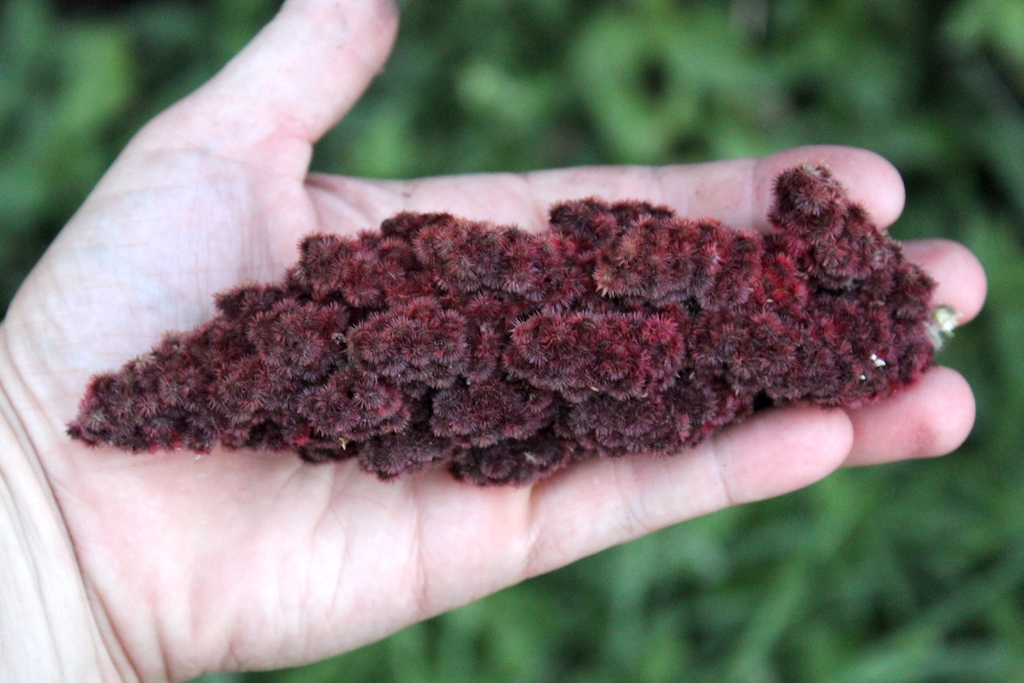
Table of Contents
- Notes from My Homestead
- What Is Staghorn Sumac?
- Is Staghorn Sumac Edible?
- Staghorn Sumac Medicinal Benefits
- Where to Find Staghorn Sumac
- When to Find Staghorn Sumac
- How to Identify Staghorn Sumac
- Staghorn Sumac Look-Alikes
- How to Harvest Staghorn Sumac
- Ways to Use Staghorn Sumac
- Staghorn Sumac FAQs
- Wild Fruit Foraging Guides
Staghorn sumac grows just about anywhere and everywhere all across the eastern part of North America. All it needs is an abandoned field, highway median, or roadside ditch and it’s happy as can be. There’s nothing like a tasty plant that just loves to grow in just about anywhere; it’s a forager’s dream.
Everyone has their gateway plant into foraging, and more often than not it’s something like fresh dandelions on the lawn or a sweet patch of wild chanterelles happened upon in the woods. Mine’s a bit different. For me, sumac changed everything.
I’d been into herbal medicine since my early teens, but I never really considered myself a forager. At one point I found myself reading a herbal manual, learning about some of the medicinal plants traditionally used by Native peoples in the northeast. I came across a description of a plant with bright red, hairy fruit that grows upright in a pyramidal shape. It said they were just about everywhere in Vermont, but to the best of my knowledge, I’d never seen any hairy red fruits.
Of course, no pictures in the manual didn’t help. How on earth hadn’t I noticed sumac, if it does indeed grow everywhere? I kept my eyes peeled for over a year, hoping to spot a hairy red fruit, but no luck.
Then something magic happened. I was pulling out of the parking lot at work, right after I’d given my 2 weeks notice because we were moving to our dream homestead off the grid. At one edge I saw this strange-looking plant and, realizing I had nowhere to be in that strange lame-duck period before you actually finish at a job, I stopped and got out to look. I examined it and found these strange upright clusters of bright red fuzzy seeds. They were beautiful. What on earth could they be?
And then it hit me all at once. The plant I’d been looking for all year had been growing not 50 feet from where I’d parked my car every day for the past 5 years. Sometimes all you have to do is open your eyes, and take the time to stop and really look, and there you find what you’ve been searching for.
Notes from My Homestead

Years after that first sumac discovery, I now have stands of staghorn sumac growing in three different spots on our Vermont homestead, and I notice them everywhere I drive in our part of the state. Late summer is sumac harvest time around here, and I usually go out in late August or early September with a bucket and a pair of pruners, snipping the fattest, brightest red drupes off the ones at the back of our pasture line. The kids have learned that sumac is the wild plant we taste-test by rubbing the fuzz on our fingers and licking it; the bright lemony pop never fails to surprise visitors who don’t know what they’re in for.
Most of our harvest goes into a big jar of sumac-ade, which we sip cold through September. Whatever’s left gets dried and processed into sumac spice for winter, where it stands in for lemon zest in everything from roasted chicken to popcorn. The plant has more than earned its place at the top of my “must-forage” list every year, partly for the flavor and partly for the way it bridges the gap between summer berry season and the fall apple harvest.
What Is Staghorn Sumac?
Staghorn sumac (Rhus typhina) is a deciduous shrub or small tree in the cashew family (Anacardiaceae). It typically grows 15 to 25 feet tall, occasionally reaching 35 feet or more, and forms thicket-like colonies through underground rhizomes that send up new shoots from the parent plant.
The common name comes from the velvety, reddish-brown hairs that cover the young branches, much like the velvet that covers the antlers of male deer (stags) in spring. Other common names include velvet sumac, hairy sumac, and Virginia sumac.
Staghorn sumac is dioecious, meaning male and female flowers grow on separate plants. Only the female plants produce the distinctive cone-shaped clusters of fuzzy red drupes that foragers harvest. If you have a stand of sumac and only some of the trees produce drupes, that’s why; the rest are male.
Is Staghorn Sumac Edible?
Staghorn sumac is fully edible, and the bright red drupes have a lemony, tart, slightly fruity flavor that’s been used as a culinary spice and beverage base for centuries. The same is true of its close relatives, smooth sumac (Rhus glabra) and winged sumac (Rhus copallinum), which can be used interchangeably with staghorn in any recipe.
The flavor lives in the red velvety coating on the outside of the drupes, not in the seed itself. The seeds are hard and woody and aren’t typically eaten; the standard preparation method is to extract the lemony flavor with cold water, or to grind the dried drupes and sift out the seeds for a tangy red spice powder.
Staghorn sumac is also a notable source of vitamin C, which is part of why it was traditionally used by Native peoples for sore throats, coughs, and as a winter source of vitamins when fresh fruit was scarce. It pairs naturally with other northern wild edibles like pine needle tea as a foraged source of vitamin C through the cold months.
The young spring shoots of staghorn sumac are also edible. Foraging author Samuel Thayer describes harvesting the young peeled shoots as a child and eating them raw; he found them sweet and fruit-like, more like a wild fruit than a vegetable. The harvest window for shoots is narrow (late spring to very early summer, before the bark turns woody), and the leaves and outer bark have to be peeled off first.
One important caution: people with cashew or mango allergies should approach sumac carefully. Staghorn sumac is in the same plant family (Anacardiaceae) as those species, and rare cross-reactions are possible. If you’ve reacted to cashews or mangoes in the past, taste a small amount before adding sumac to your repertoire.
Staghorn Sumac Medicinal Benefits
Staghorn sumac has a long history of use in traditional Native American medicine across its range. The Iroquois, Ojibwa, and several other tribes used decoctions of the bark, leaves, and berries for sore throats, fevers, mouth sores, and as a general wash for skin irritations. Some traditions also used the dried, powdered drupes as a styptic to help slow bleeding from minor cuts.
Modern research has begun to validate some of these traditional uses. Sumac extracts contain a high concentration of polyphenols, tannins, and gallic acid, all of which contribute to documented antioxidant, antimicrobial, and anti-inflammatory activity in laboratory studies. Sumac is also a notable source of vitamin C, which historically supported its use as a winter scurvy preventive in northern climates.
For home use, the most common preparations are sumac-ade (cold water infusion of the fresh drupes) for vitamin C and gentle digestive support, and sumac spice (dried, ground drupes) for daily culinary use. As with any wild herbal, consult a qualified herbalist or healthcare provider before using sumac medicinally if you’re pregnant, nursing, taking medications, or have an existing health condition.
Where to Find Staghorn Sumac
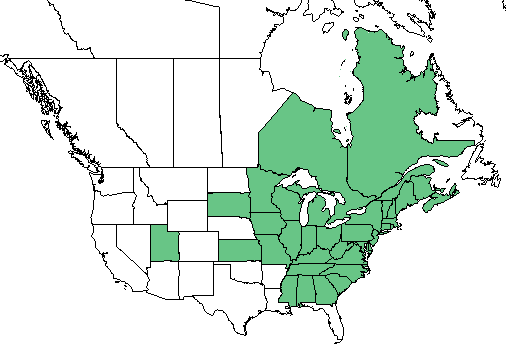
Staghorn sumac is native to eastern North America, ranging from southeastern Canada (Ontario, Quebec, and the Maritimes) south through New England and the mid-Atlantic, west to the eastern Great Plains, and south through the Appalachians to Georgia and Alabama. It’s also been planted as an ornamental across most of the temperate world and has naturalized in parts of Europe and northern Asia.
Sumac is a sun-loving pioneer species that thrives in disturbed soils. Look for it in:
- Abandoned fields and old pastures
- Highway medians, roadside ditches, and railroad cuts
- Forest edges and hedgerows
- Rocky outcrops, gravel pits, and dry slopes
- Older cemeteries and the perimeters of farm fields
Staghorn sumac doesn’t grow in deep shade, deep swamp, or wet bottomland; if you’re seeing a similar-looking plant in those habitats, it’s worth confirming the identification, since poison sumac (Toxicodendron vernix) does grow in swamps and wetlands. More on that distinction below.
Avoid harvesting from busy roadsides and any area near industrial sites, since sumac picks up petroleum residue and heavy metals from contaminated soils. The cleanest harvests come from rural roadsides, organic farm edges, and old pasture lines well away from sprayed crops.
When to Find Staghorn Sumac
Once the seed pods ripen, staghorn sumac persists all throughout the winter. That means it can be foraged at almost any time throughout the year, assuming you can find seed pods in good condition. Depending on the weather and the exact site, the pods may degrade or discolor.
The drupes ripen in late summer (typically late July through September across most of the species’ range), and that’s when the flavor is at its peak. The first hard rains of fall start to wash some of the lemony coating off the drupes, so most foragers prefer to harvest before any prolonged wet stretch. Late summer through early autumn is the sweet spot.
Often the pods become infested with worms in the center too, so the older the pods the more likely they’ve got someone living inside. For the most part that’s not a huge issue if you just strip off the clean-ish seeds on the outside and discard the wormy center of the seed pod.
As the pods age, they begin to lose their flavor. The rain washes them out a bit and they’re not as potent or tasty. By late summer, flavors are waning, but they’re often still great in some locations into October or November.
Nonetheless, they’re one of the wild edibles that can be foraged all winter long if you choose. Even when it’s -20°F here in a Vermont January, there’s still sumac aplenty, much of it still bright and almost as good as new.
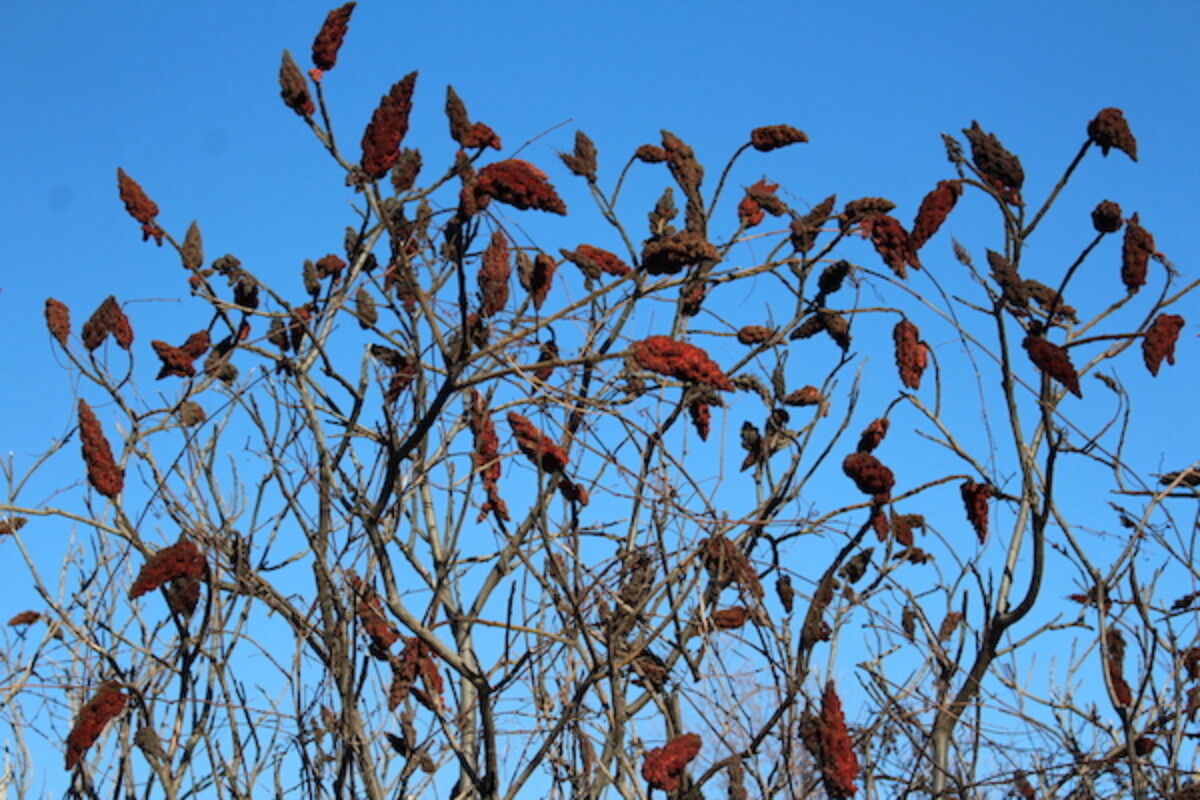
The only time it’s tricky to harvest staghorn sumac is in the late spring, when the old pods have begun to degrade and the new ones are still too green to harvest. You’ll often see the last remnants of last year’s pods picked over by the early spring birds. Generally, birds don’t go in for sumac, but early spring arrivals are less picky.
While spring may be a dry time for sumac pods, the shoots are edible! According to Samuel Thayer’s The Forager’s Harvest, the new shoots in late spring and early summer are sweet, fruit-like, and best eaten raw after the leaves and bitter outer bark have been peeled off. The shoot harvest window is narrow, but the flavor is genuinely worth catching.
How to Identify Staghorn Sumac
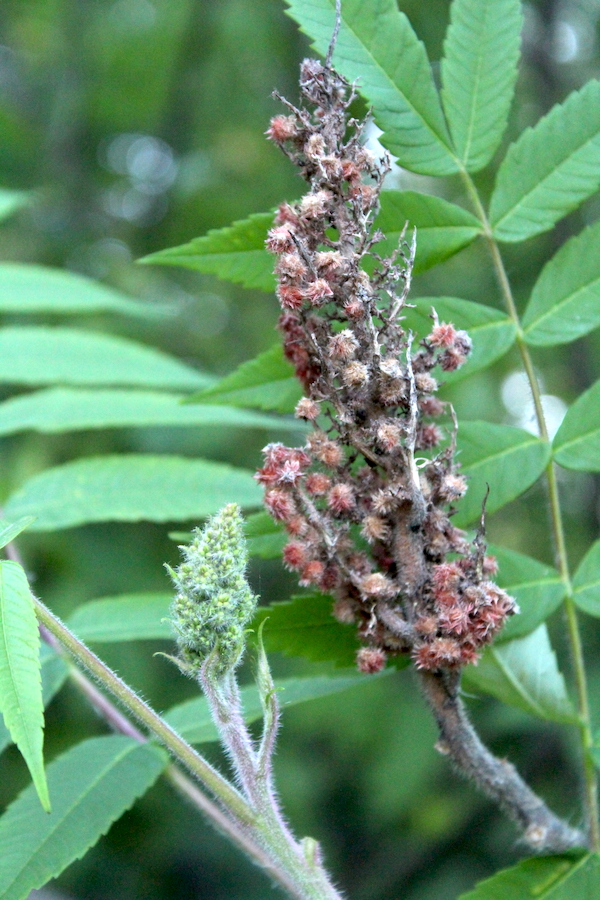
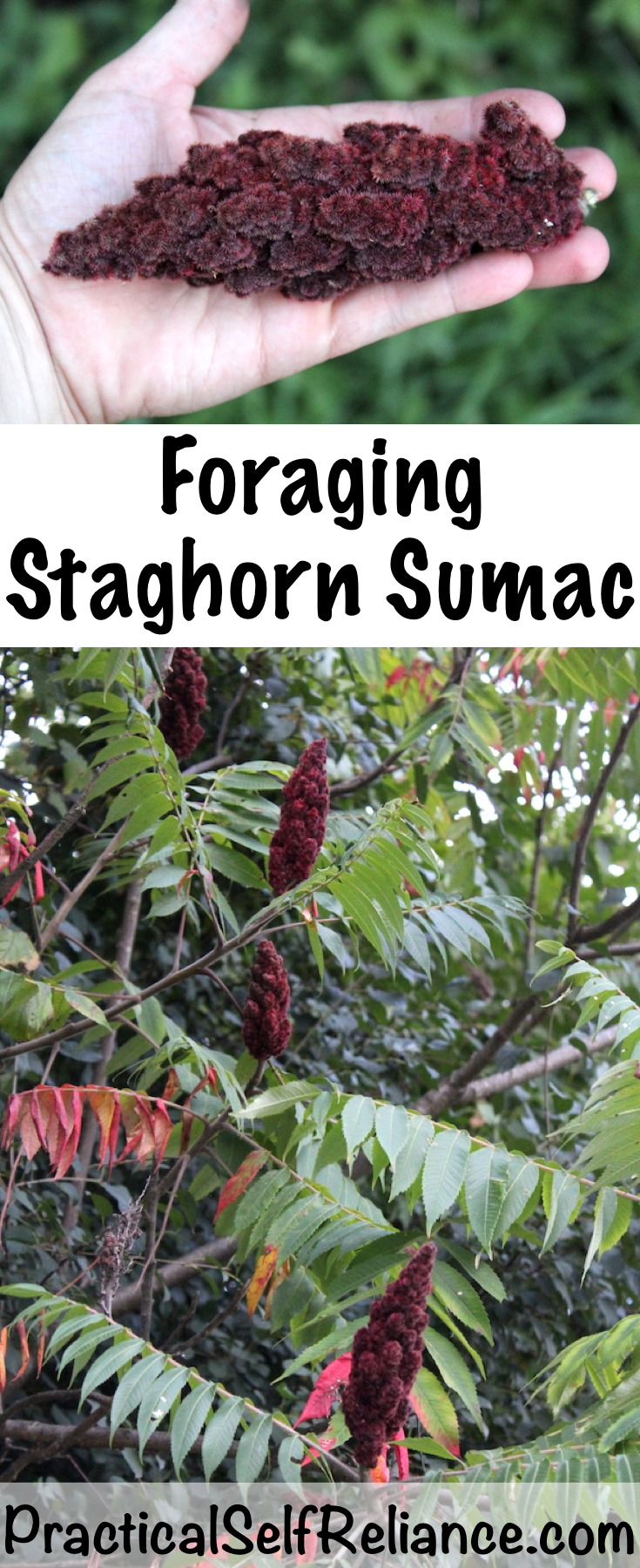
One of the reasons I had such a hard time finding staghorn sumac is that all the descriptions I read of the plant’s fruit and growth habit were absolutely useless. By some definition, it does have bright red “fruit” covered in fuzz, but more practically speaking the “fruits” are just clusters of seeds. Think of it more like the seedhead on millet or sorghum, but tightly packed and tapering to a point at the top.
Botanically, the bright red clusters are technically drupes (a type of fruit with a hard pit, like a cherry or olive), but they’re so tiny and seed-like that “fuzzy red seed cluster” describes them better in practice. The fuzzy outer coating is where all the lemony flavor lives.
Staghorn Sumac Growth Habit
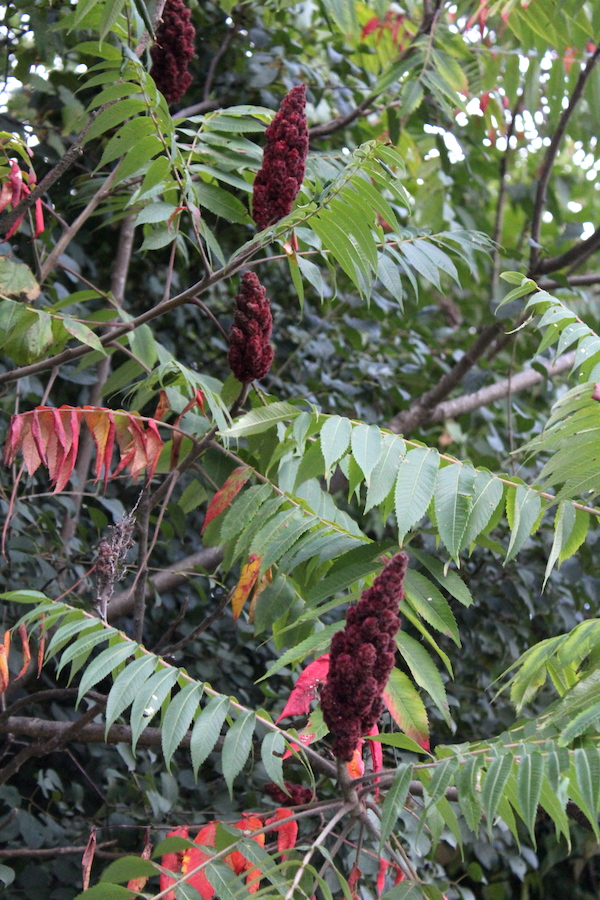
Sumac grows in colonies, with the older trees in the center as the tallest and gradually shorter trees and shrubs radiating out. They’re usually somewhere between 8 and 20 feet tall, occasionally reaching 30 feet or more in good growing conditions. The colony forms by underground rhizomes sending up new shoots, so a single sumac can become a large clonal patch over the course of a decade or two.
Mature stands have a distinctive flat-topped or rounded canopy and a crooked, twisted growth pattern that’s easy to spot in winter against the sky.
Staghorn Sumac Leaves
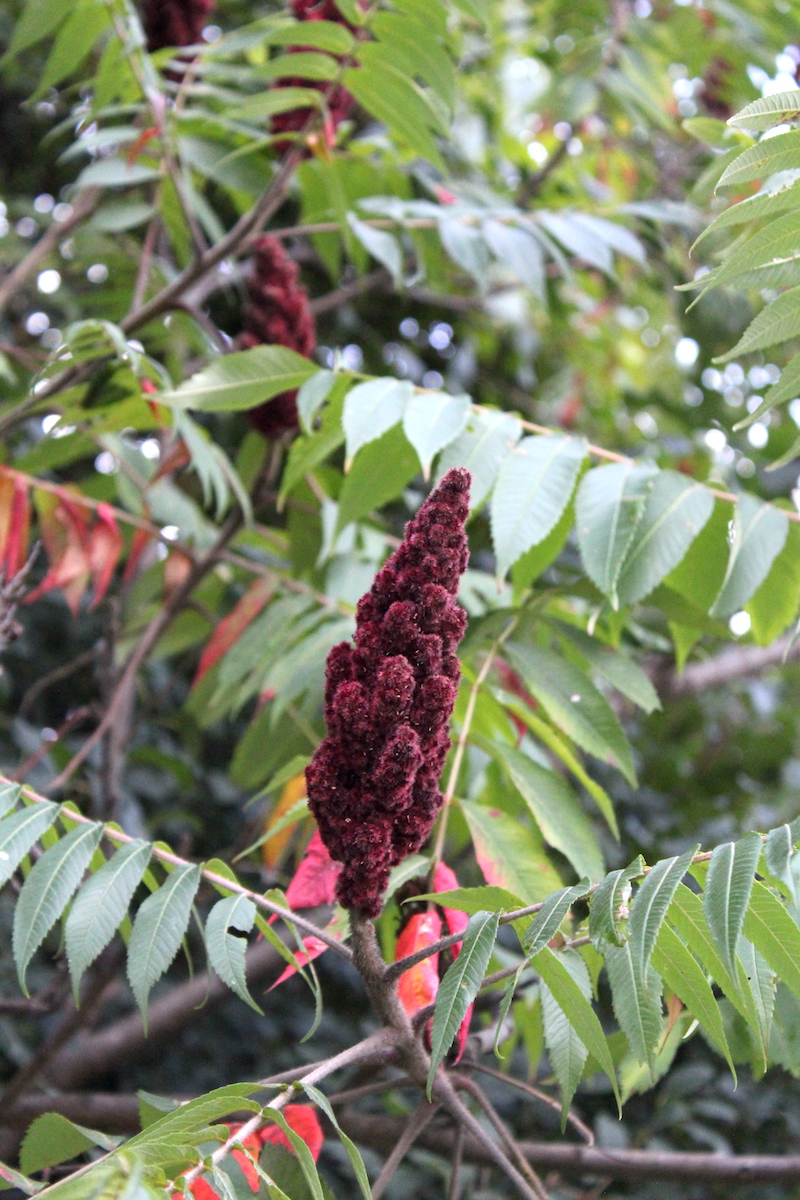
The leaf stalks reaching out from the main branches are large, around 2 feet long, with individual leaves coming out in matched pairs all the way down the stalk. In botany speak, the leaves are pinnately compound, with each leaflet lanceolate and serrated.
A single compound leaf usually has 13 to 27 individual leaflets, each 2 to 5 inches long, with bright green tops and paler undersides. The serrated edges are an important identification characteristic and one of the easiest ways to distinguish staghorn sumac from poison sumac (which has smooth, untoothed leaflets).
In autumn, the leaves turn brilliant shades of orange, red, and burgundy. The fall color combined with the persistent red drupes is one of the most striking displays in the eastern fall landscape.
Staghorn Sumac Stems and Branches
The young stems and branches are covered in a dense coat of soft, reddish-brown hairs, which is where the name “staghorn” comes from; the velvety hairs look exactly like the velvet on a young deer’s antlers in spring. Older bark turns smooth, gray-brown, and develops shallow vertical fissures with age.
If you snap a fresh twig, it produces a milky, sticky white sap. This sap distinguishes sumacs (genus Rhus) from many other compound-leaved plants and is a useful confirmation when you’re learning the species.
Staghorn Sumac Flowers
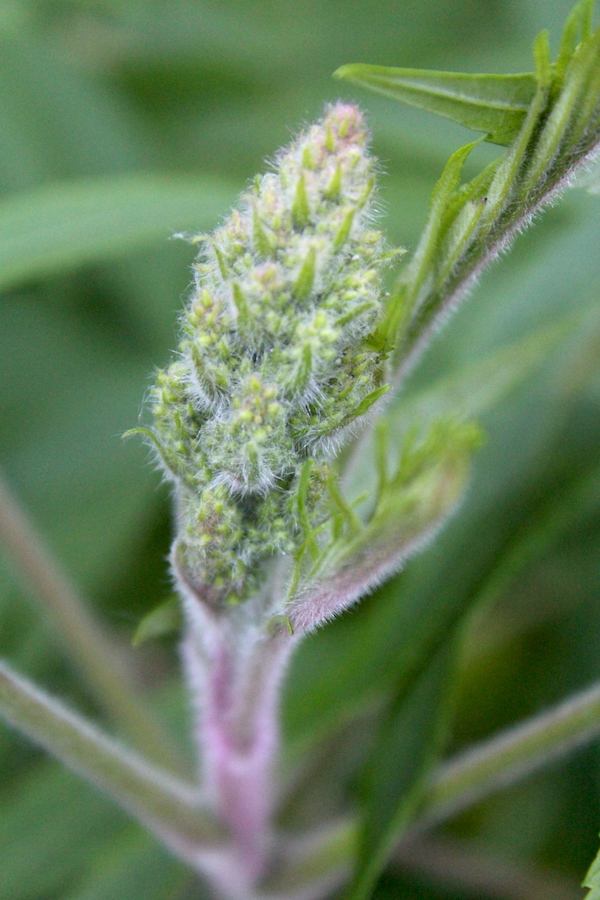
The flowers appear in late spring or early summer (typically June in most of the range) as dense pyramidal clusters of tiny greenish-yellow flowers at the tips of branches. They’re quite different in appearance from the showy red drupes that follow; if you only know sumac from its fall color, the flowers may not look like the same plant at all.
Because staghorn sumac is dioecious, male flowers (which release pollen but never form drupes) and female flowers (which become the red drupe clusters) appear on separate plants. Both flower types are visited heavily by bees, and a stand of male sumacs in full bloom is a remarkable pollinator resource in early summer.
Staghorn Sumac Drupes (Fruit)
The seed pods come out of the top of branches and usually point upward towards the sky. In the early spring, the immature seedheads are green until they slowly develop a pinkish tinge that spreads and gradually turns to a bright velvet red.
Each pod is a tightly packed cluster of small, round drupes covered in fuzzy red hairs. The hairs aren’t really hairs in the usual sense; they’re tiny fibers covered in a sticky resin-like substance that holds the lemony flavor. When you hold a sumac drupe cluster, the fuzz will gently brush off and the aromatic oils will stick to your hands.
The drupes are upright, in tight pyramidal or cone-shaped clusters at the top of branches. This is one of the most diagnostic features of staghorn sumac and the closely related smooth and winged sumacs; the upright cone-shape is impossible to miss once you’ve seen it. Poison sumac, by contrast, has loose hanging clusters of pale green or whitish drupes (more on this in the look-alikes section).
Staghorn Sumac Look-Alikes
The most important look-alike to learn is poison sumac, which is genuinely toxic and shouldn’t be touched. The other “look-alikes” share a name and family but are themselves edible, so confusion among the edible sumacs isn’t a safety problem. Tree of heaven (Ailanthus altissima), an invasive non-sumac, is also sometimes confused with staghorn sumac and worth a quick mention.
Poison Sumac vs. Staghorn Sumac
Poison sumac (Toxicodendron vernix) is considered a “look-alike” though really they’re only alike in name if you’re paying any attention. They’re not even in the same genus; poison sumac is in Toxicodendron (the same genus as poison ivy and poison oak), while staghorn sumac is in Rhus. The two plants are easy to tell apart on close inspection.
- Drupes / berries: Poison sumac produces hanging clusters of pale green to whitish drupes, much like grapes hanging from a stem. Staghorn sumac produces upright cone-shaped clusters of bright red, fuzzy drupes. The two never look alike at fruiting time.
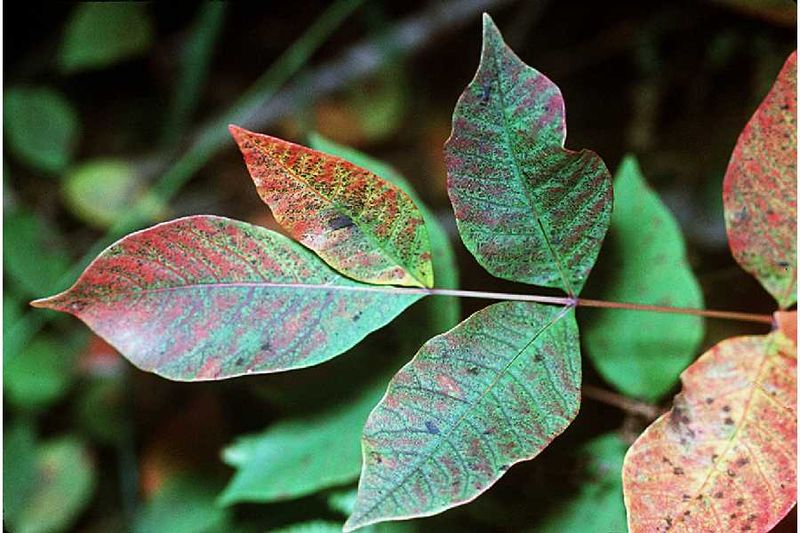
- Leaves: Poison sumac has smooth-edged (untoothed) leaflets that are hairless and shiny. Staghorn sumac has clearly serrated (toothed) leaflets, and the young stems and leaf stalks are densely fuzzy.
- Stems: Poison sumac has smooth, hairless stems and branches. Staghorn sumac has the distinctive velvety reddish-brown hairs on its young branches.
- Habitat: Poison sumac grows almost exclusively in swamps, bogs, and very wet bottomland. Staghorn sumac grows in the opposite habitat: dry, sunny, well-drained soils in old fields, roadsides, and forest edges. If you’re standing in a swamp looking at a sumac, it’s probably poison sumac. If you’re standing on a sunny roadside, it’s probably staghorn (or smooth) sumac.
- Growth habit: Poison sumac is more often a small tree with an open, spreading form, and rarely grows in dense, pure stands. Staghorn sumac forms thicket-like clonal colonies in dense stands.
If you do manage to somehow mistake poison sumac for staghorn sumac, you’ll be sorry. Poison sumac causes skin reactions much worse than poison ivy or poison oak, and the urushiol compound responsible for the reaction is present in all parts of the plant year-round, including dried leaves and twigs in winter. The good news is that the plants don’t really look alike at all once you know what to look for, and they don’t grow in the same habitats.
Smooth Sumac
Smooth Sumac (Rhus glabra) is the closest cousin to staghorn sumac and the most common edible sumac in much of the central and western US. The two species are nearly identical in their drupes, growth habit, and culinary uses, and you can use them interchangeably in any sumac-ade or spice recipe. The main differences:
- Smooth sumac has smooth, hairless stems and twigs (where staghorn sumac is fuzzy).
- The leaflets and the drupe clusters are also less hairy on smooth sumac.
- Smooth sumac is generally a smaller plant, topping out around 10 to 15 feet rather than 20 to 30 feet.
- Smooth sumac extends further west across the Great Plains than staghorn sumac, which is more concentrated in the eastern half of North America.
The two species frequently grow side by side, and they hybridize where their ranges overlap, producing intermediate forms. From a foraging standpoint, you don’t need to distinguish them; both are edible and both have the same lemony flavor in their drupes.
Winged Sumac (Shining Sumac)
Winged Sumac or Shining Sumac (Rhus copallinum) is a more southern species, common from Pennsylvania and New York south to Florida and west to Texas. It differs from staghorn and smooth sumac in two main ways:
- Winged sumac has small “wings” of leaf tissue running along the central stalk between the individual leaflets, which is the easiest way to spot it.
- The leaflets are glossy on top (hence “shining”) and have smooth or only slightly toothed edges.
Winged sumac is also fully edible, and the drupes are widely considered to have one of the best flavors of any North American sumac. If you’re foraging in the southeast, this is the species you’re most likely to find.
Tree of Heaven
Tree of Heaven (Ailanthus altissima) is an invasive Asian tree that’s sometimes mistaken for sumac because of its similar pinnately compound leaves. Tree of Heaven differs from staghorn sumac in several ways:
- Tree of Heaven leaflets are smooth-edged with one or two small teeth at the base, not the consistently serrated edges of sumac.
- Crushed Tree of Heaven leaves have a strong, unpleasant smell often compared to rancid peanut butter or burnt rubber.
- Tree of Heaven produces winged seed clusters (samaras), not the upright fuzzy red drupes of sumac.
- Tree of Heaven grows much taller (often 50 to 80 feet) and has a single dominant trunk rather than the colony-forming habit of sumac.
Tree of Heaven is not edible and shouldn’t be confused with sumac for foraging purposes.
How to Harvest Staghorn Sumac
Once you’ve identified a productive stand of staghorn sumac, harvesting is straightforward. Look for fully ripened, deep red drupes (avoid the dull brown or pale pink ones that haven’t fully developed). Snip whole cone-shaped clusters off the tree with pruning shears, cutting just below the base of the cluster where it joins the branch. A productive stand can yield several pints of clusters in a half-hour of harvest time.
Sumac is best harvested on a dry, sunny day, ideally before any heavy rain has had a chance to wash the lemony coating off the drupes. The first hard rain of fall typically marks the end of peak sumac season, since the rain leaches the water-soluble flavor compounds out of the fuzzy coating.
The drupes don’t keep well fresh; they should be processed within a day or two of harvest, or dried for long-term storage. Drying is straightforward: spread the whole clusters in a single layer on a screen or rack in a warm, dry, well-ventilated spot for about a week, until the drupes are completely dry and brittle. Once dried, they keep for a year or more in an airtight container.
Processing Sumac Pods
So now that you’ve harvested a few staghorn sumac drupe clusters, how do you process them into food?
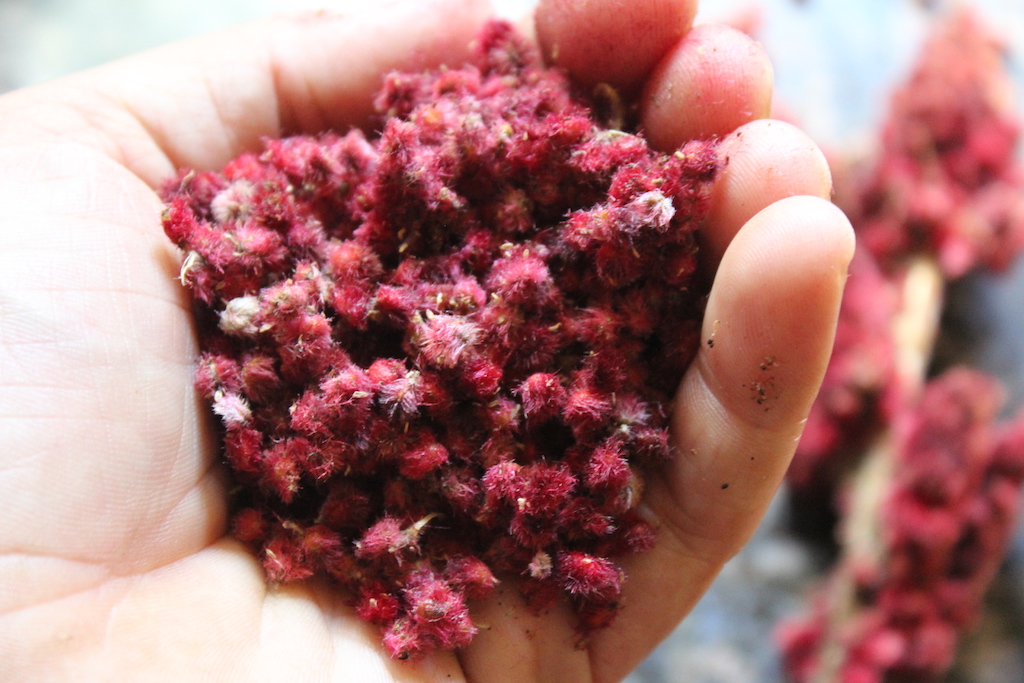
It’s actually the red velvet on the outside of the sumac drupes that’s the tasty part. It has a wonderful sweet/tart citrus taste, that some liken to strawberry lemonade.
Since it already has that flavor, making a sumac lemonade is the obvious thing to do. The seeds and stalks contain bitter alkaloids that are extracted by hot water, so it’s important to only use cold water when making a sumac infusion.
The first step is to break apart the seed heads. In my first harvest, I just stuffed the whole pods into cold water and made lemonade that way, and it was horrible. I cracked open the pods after and found them full of putrid dead worms and worm poop. Mmmm, worm lemonade. Don’t make that mistake; take them apart first. Start by pulling back individual bundles of seeds from the outside of the fruit clusters.
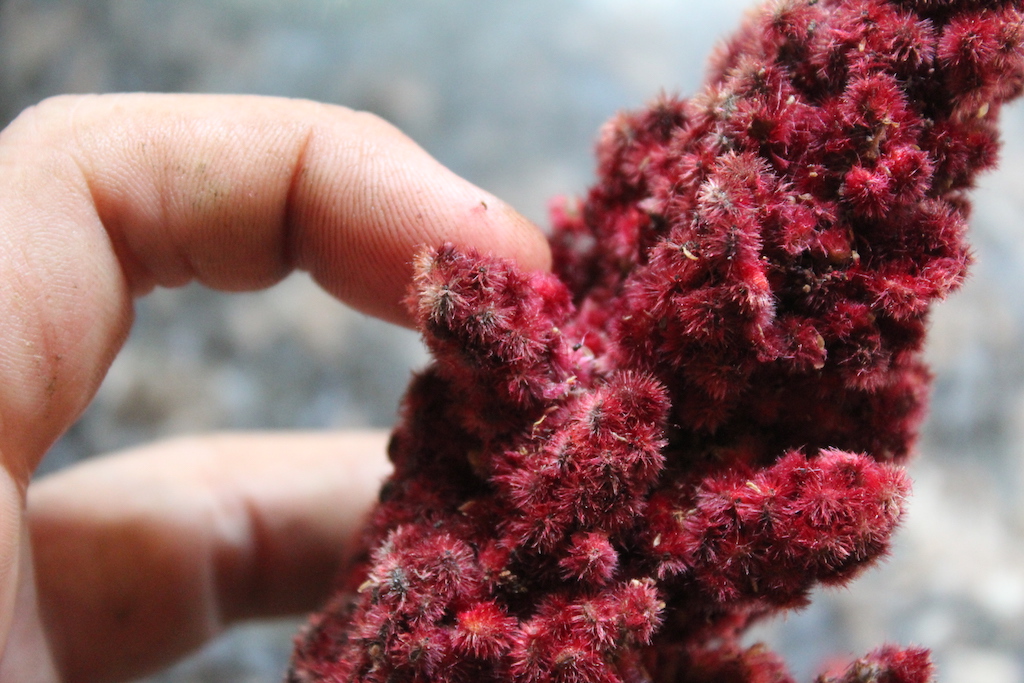
With a little gentle pressure, these break right off into your hand in tiny clusters. Work slowly, because if you do hit a batch of worm poop you can keep the clean sumac separate if you’re careful.
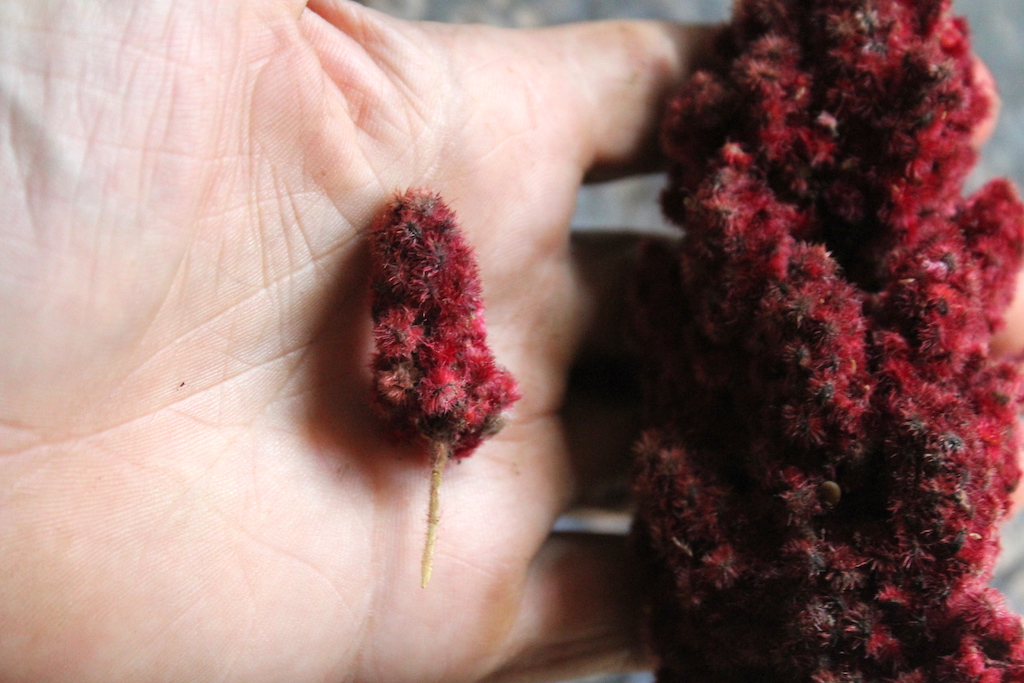
Individual clusters can then be broken down into individual seeds, removing as much of the stem as possible. All the flavor is in the fluff, so try to just get red velvet-covered seeds separated from everything else.
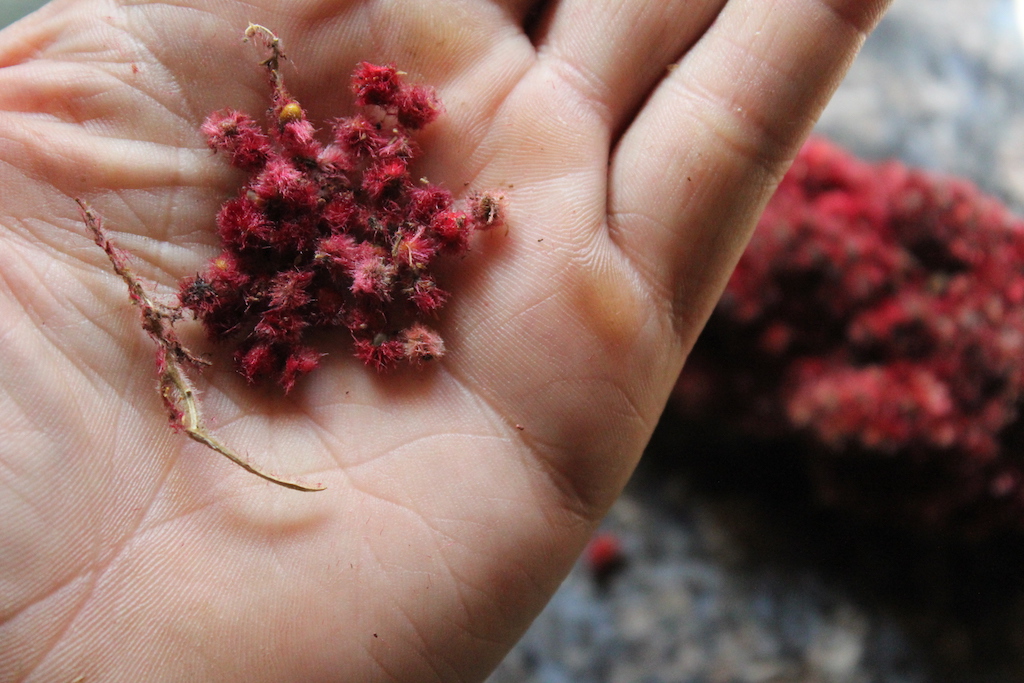
In the past, I’ve found a few sumac pods without worms, but those are rare in my harvests. Just about all of them are full of black worm poop, and this one was no exception. As I pulled off the fluffy outer seeds I hit the poop layer right on schedule. That, obviously, is where you stop. Keep pulling the clean seeds off the outside and leave the wormy parts for the compost heap.
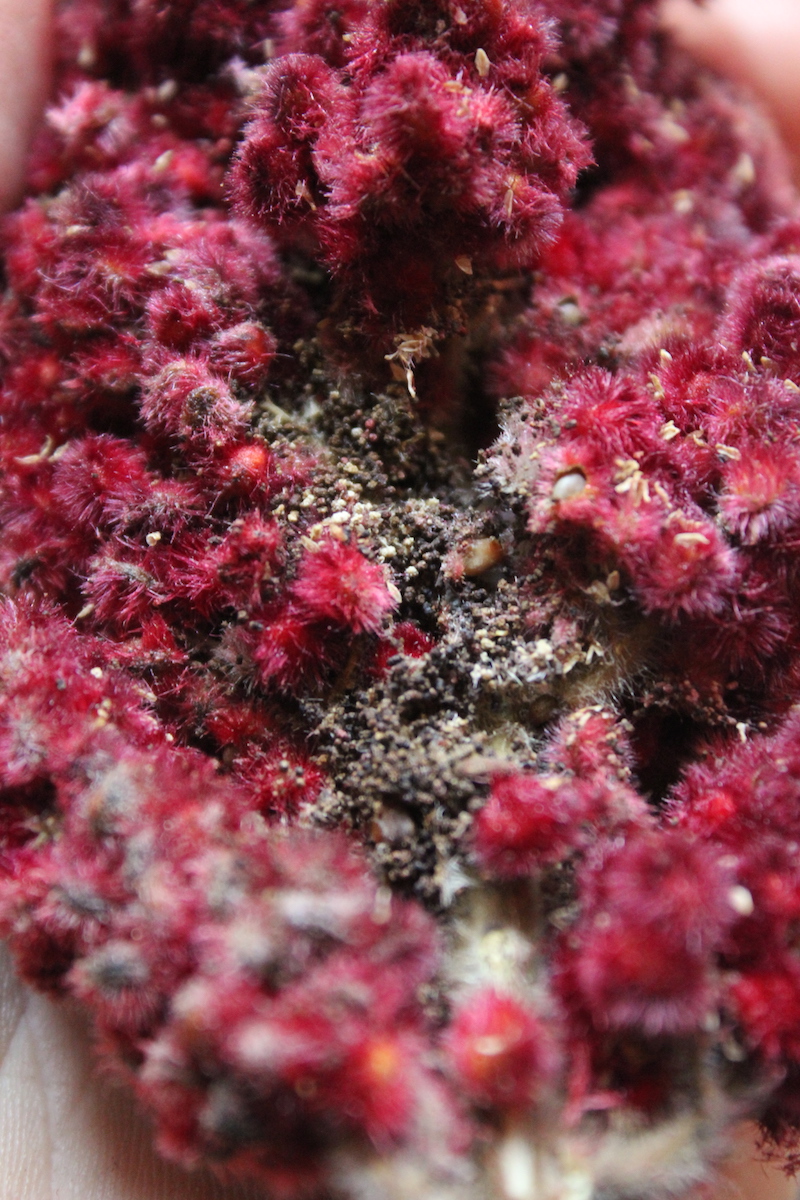
Even a wormy sumac pod still has plenty of velvet-covered sumac seeds to harvest. Work around the outside, pulling off clusters and separating them out from the stems and worms. I generally get a good-sized handful of clean berries from each pod, even the worst wormy ones.
Ways to Use Staghorn Sumac
Once you’ve separated the velvety drupes from the woody seed cores, the most rewarding ways to use sumac fall into two categories: cold infusions for drinks, and dried-and-ground spice for cooking. Both are easy and both make the most of sumac’s bright, tart, lemony flavor.
Sumac Lemonade
A simple overnight cold water extraction is the best way to get to the flavor. My friend Susan at Learning and Yearning suggests allowing sumac lemonade to sit for just half an hour to extract, but I tend to like pretty tart lemonade with barely any sugar and a lot of lemon juice.
For your own tastes, you’ll have to work it out on your own. The drupes aren’t particularly sweet, so add sugar to taste too. Cold water is critical here; hot water extracts bitter alkaloids from the seeds and stems and will produce a harsh, astringent drink rather than the bright lemonade you’re aiming for.
Sumac Spice
Dried and ground sumac is one of the most useful foraged spices, and the flavor is the same as the Middle Eastern sumac (Rhus coriaria) you’ll find in jars at the spice shop. To make sumac spice, dry the harvested drupe clusters completely, then strip the dried red velvet from the seeds and stems.
The easiest way to do this is to pulse the dried clusters in a spice grinder or blender for 30 seconds to break up the velvet, then sift the result through a fine mesh sieve to separate the powdery red velvet from the harder seeds and stem bits. The red powder that falls through is your sumac spice.
Stored in an airtight jar away from light, homemade sumac spice keeps for a year or more. Use it as you’d use lemon zest: sprinkled on roasted vegetables, mixed into hummus and labneh, on grilled chicken or fish, in salad dressings, or as a finishing pinch on popcorn or avocado toast.
Sumac Tea and Other Uses
For foragers in the northeast, where lemons are nowhere to be found, sumac is a great option for extra vitamin C year-round, and it’s a welcome change from the pine needle tea you’d otherwise be drinking for foraged vitamins.
Other traditional uses include sumac wine, sumac vinegar, sumac salad dressing, and sumac-infused honey. The bright lemony flavor pairs especially well with cold-water infusions, so most home preparations stay on the cold-process side. Sumac is sometimes used as a finishing element on cheese boards, where the bright red color and tart flavor make it a striking complement to mild fresh cheeses.
Staghorn Sumac FAQs
Yes, staghorn sumac (Rhus typhina) is fully edible. The bright red, fuzzy drupes have a tart, lemony flavor and have been used as a spice and beverage base for centuries. The flavor lives in the velvety red coating on the outside of the drupes; the hard seeds inside are not typically eaten. Smooth sumac (Rhus glabra) and winged sumac (Rhus copallinum) are also edible and used the same way. The young spring shoots are also edible after the leaves and outer bark are peeled off.
Staghorn sumac and poison sumac (Toxicodendron vernix) are not even in the same genus and are easy to tell apart. Staghorn sumac has upright cone-shaped clusters of fuzzy bright red drupes, serrated leaflets, and densely fuzzy reddish-brown young branches; it grows in dry, sunny habitats like roadsides and old fields. Poison sumac has hanging clusters of pale green to whitish drupes (like grapes), smooth-edged hairless leaflets, and smooth hairless branches; it grows almost exclusively in swamps and wet bottomland. The drupes especially never look alike at fruiting time.
The best time to harvest staghorn sumac is late summer through early fall, typically late July through September across most of the species’ range. The drupes are at peak flavor when they’re fully red and before any heavy rain has washed the lemony coating off. Sumac drupes persist on the tree all winter, so you can also harvest in fall and winter, though the flavor will be milder than at peak. Avoid late spring, when the previous year’s drupes have degraded and the new ones haven’t ripened yet.
You can chew on a fresh staghorn sumac drupe to taste the lemony coating, but the drupes aren’t typically eaten whole because of the hard inner seed and the dry, fibrous texture. The standard preparations are sumac-ade (a cold water infusion of the drupes, strained to remove the seeds), and dried sumac spice (the dried red velvet ground and sifted out from the seeds). Both methods extract just the bright lemony flavor and leave the inedible parts behind.
They’re closely related but not the same species. The sumac spice sold in Middle Eastern grocery stores comes from Rhus coriaria, also called Mediterranean sumac, which is native to the Mediterranean and the Middle East. Staghorn sumac (Rhus typhina) is its North American cousin, in the same genus, with the same lemony flavor profile. They can be used interchangeably in any recipe calling for sumac, and many home foragers prefer the fresh-ground flavor of staghorn over store-bought.
Did you find this Staghorn Sumac foraging guide helpful? Tell me in the 📝 comments below how you use sumac on your homestead!
And make sure you stay in touch with me by following on social media!
Wild Fruit Foraging Guides
Find the perfect foraging guide
Searching for something else? Enter keywords to find the perfect foraging guide!











This was very helpful with good information on staghorn sumac. I live in southern Ohio and a forest of staghorn sumac and did not know much of your info you researched
So glad it helped! A whole stand of staghorn is a good thing to have. The berries make great sumac lemonade, and the clusters hold on the plant into fall if you don’t get to them right away. Just pick after a few dry days, since rain washes off the tart coating that gives it the flavor. Happy foraging!
a memory from michigan….going up to a neighbors cottage, and him complaining that all that grew up there was the ‘damn’ sumac……i thought they were velevety and beautiful and elegant….he was the superintendant of schools in my city……..people come to want to ‘separate’ themselves from….something….i never understood it to this day…..
I have read that they used to make candles (tallow-waxy type) from the Sumac seeds! I can’t find a specific recipe though, just references in the encyclopedias
That’s really cool. I hadn’t heard of that before but I would definitely be interested in learning more about it. Let us know if you find any more information.