
Affiliate disclosure: This post may contain affiliate links. Please see our Privacy Policy.
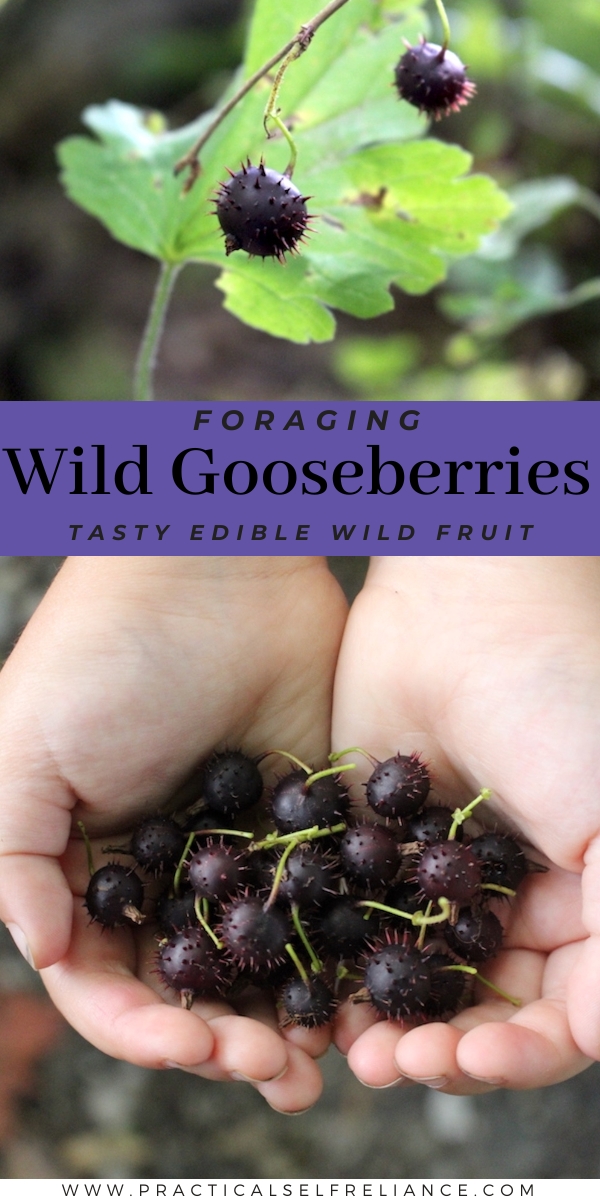
Wild Gooseberries (Ribes sp.) are eye-catching wild fruits that hang from the undersides of branches like spiky little globes. Several native and naturalized species grow across North America, including Missouri Gooseberry (Ribes missouriense), Prickly Gooseberry (R. cynosbati), Pasture Gooseberry (R. hirtellum), Sierra Gooseberry (R. roezlii), and the naturalized European Gooseberry (R. uva-crispa).
The fruit is sweet-tart, often translucent, and ripens through a color sequence from green to pink to deep red or purple. Wild gooseberries are common along moist woodland edges, hedgerows, and forest margins, and they’re well worth the foraging effort despite the spiky stems.
Learn how to identify wild gooseberries, distinguish the major species, harvest carefully around the thorns, and turn the fruit into jam, jelly, wine, or fresh-eating snacks.
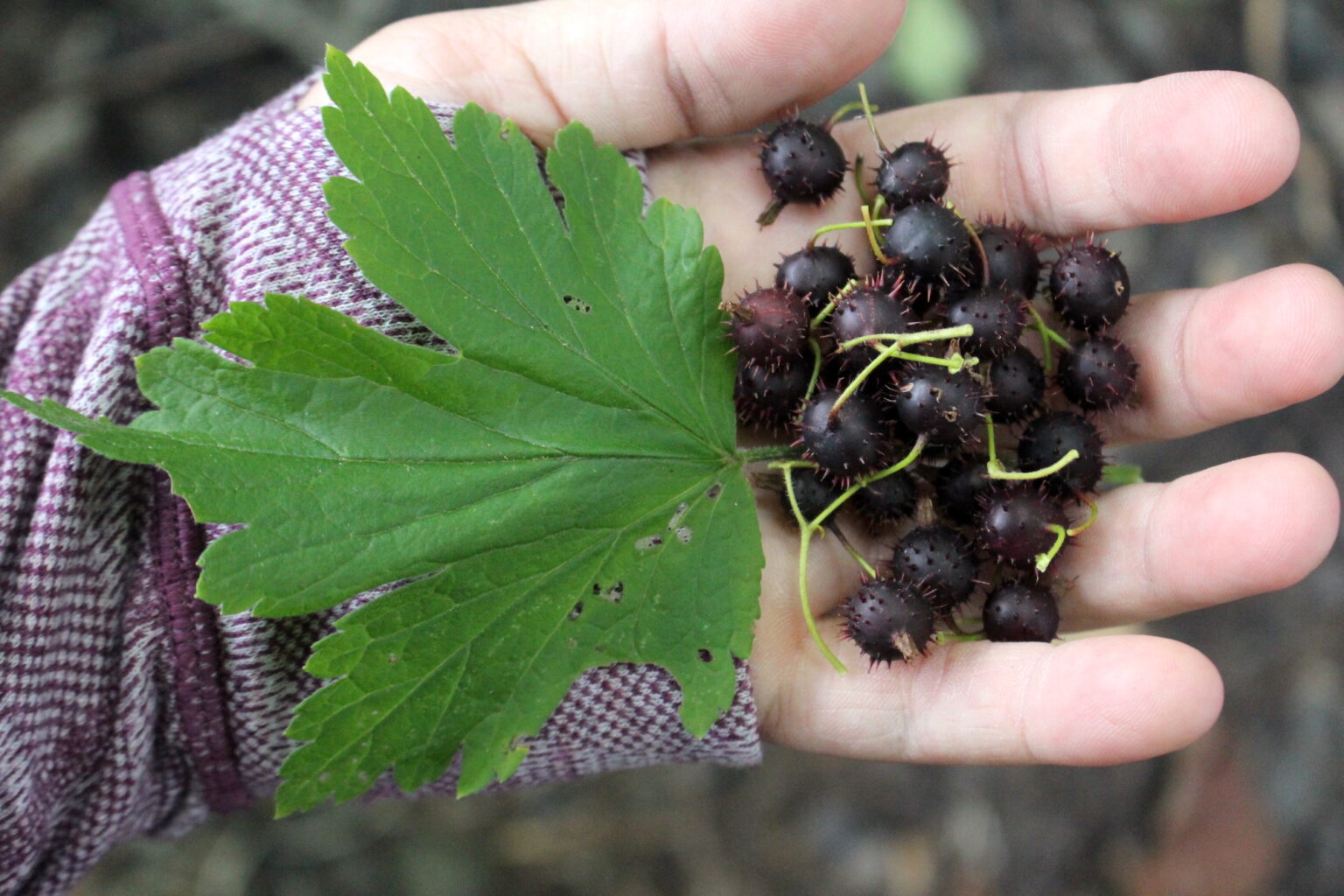
Table of Contents
- Notes from My Homestead
- What Are Wild Gooseberries?
- Types of Wild Gooseberries
- Are Wild Gooseberries Edible?
- Gooseberry Medicinal Benefits
- Where Do Wild Gooseberries Grow?
- When to Find Wild Gooseberries
- How to Identify Wild Gooseberries
- Gooseberry Look-Alikes
- How to Harvest Wild Gooseberries
- Ways to Use Wild Gooseberries
- Gooseberry & Currant Recipes
- Wild Gooseberry FAQs
- Wild Fruit Foraging Guides
Spiky fruit isn’t exactly inviting, but gooseberries are tasty, I promise. We grow gooseberries on our land, and cultivated varieties are a bit more inviting. They don’t tend to have spines on the fruit themselves, just the bushes. They’re prolific producers of sweet-tart fruit and an ideal way to put shady wet spots to good use in a permaculture food system.
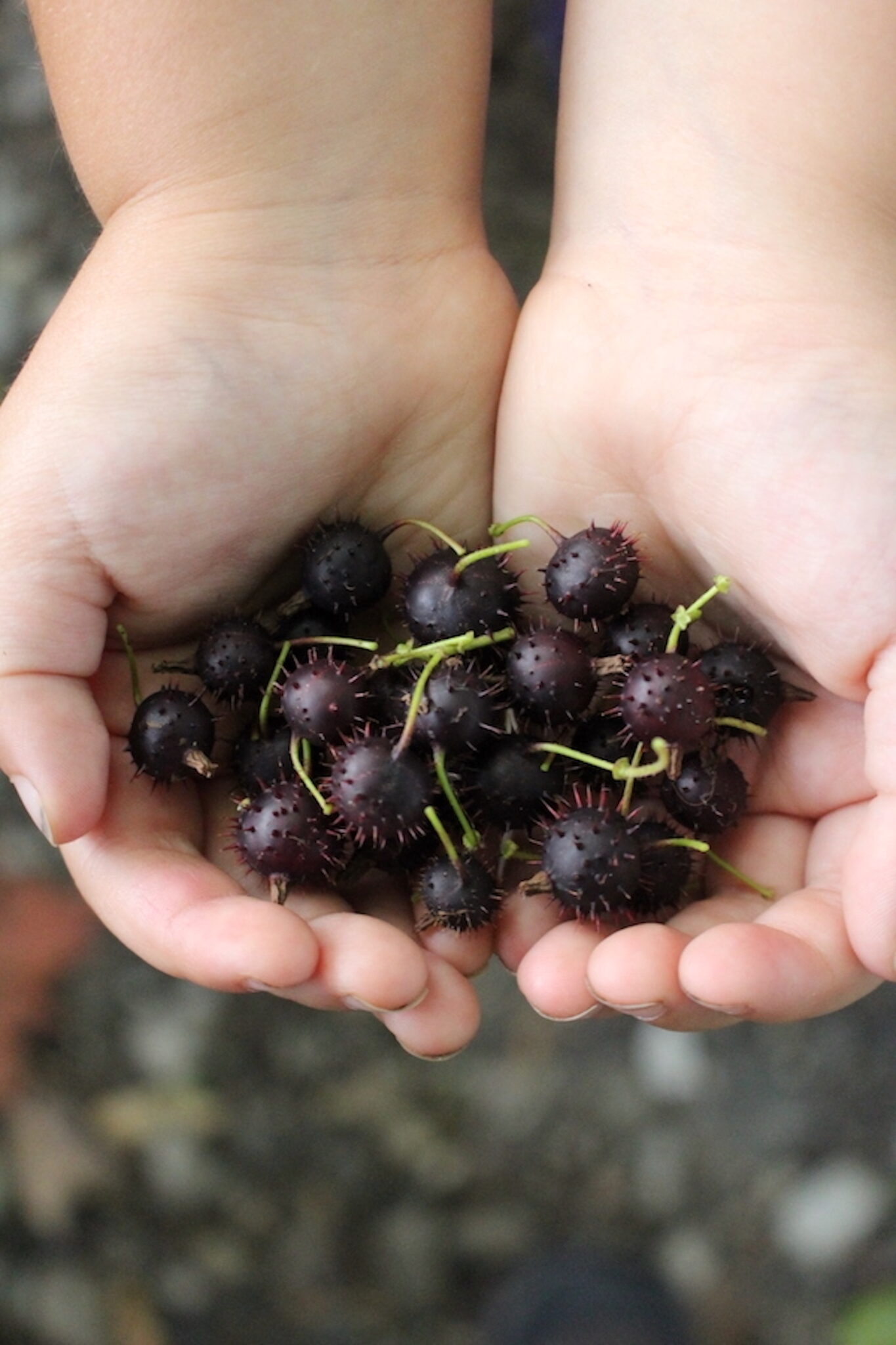
Wild gooseberries are just as prolific, and they’re common in moist woodland locations across the country. They’re a regular sight along woodland trails and forest edges, as well as in more shady locations (though they fruit best in good sun). They may look intimidating, but the spines are reasonably soft on the fruit themselves, and you can eat them out of hand. (Hand one to a toddler, though, and they’re going to be a bit confused about how exactly they’re supposed to eat this spiky thing.)
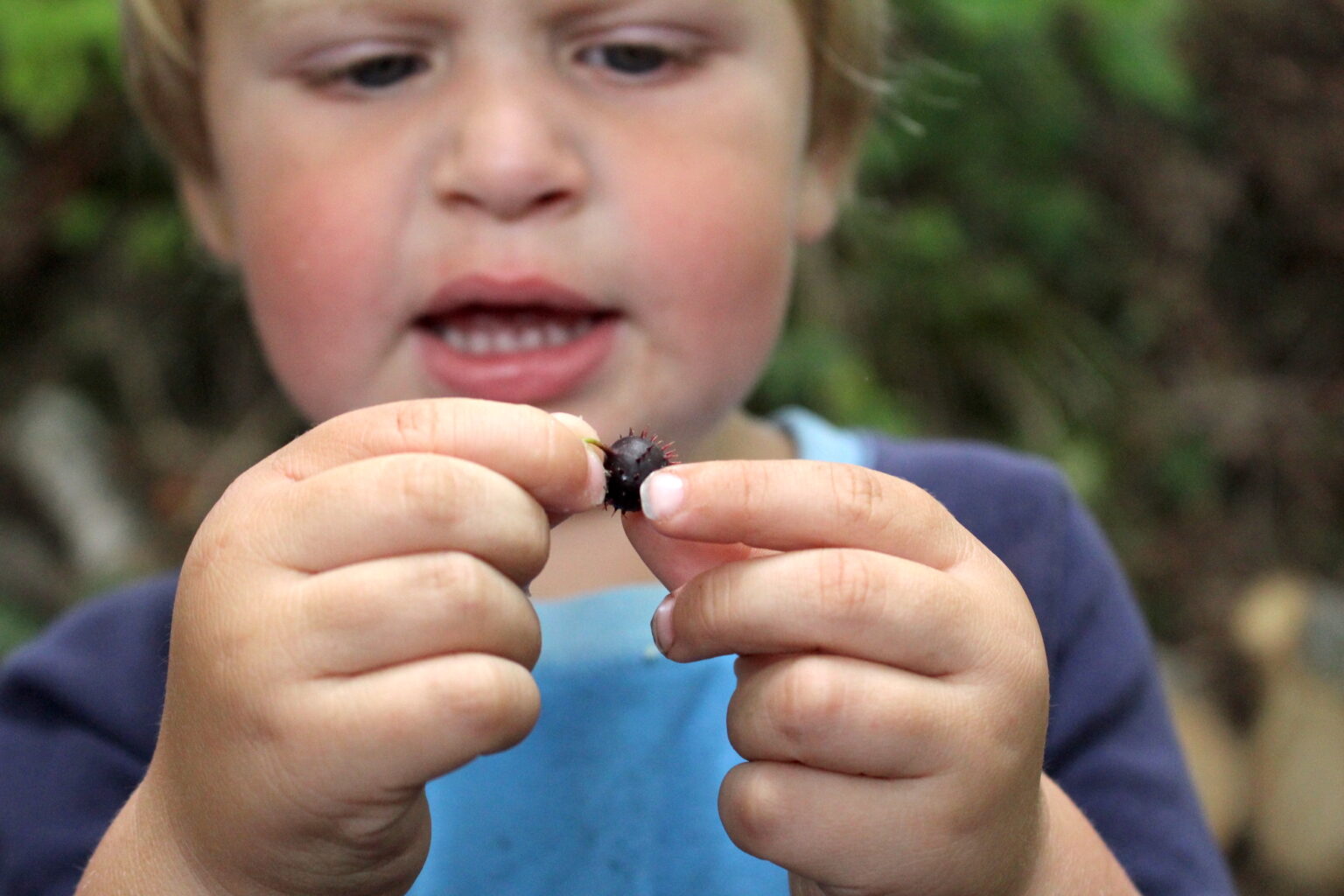
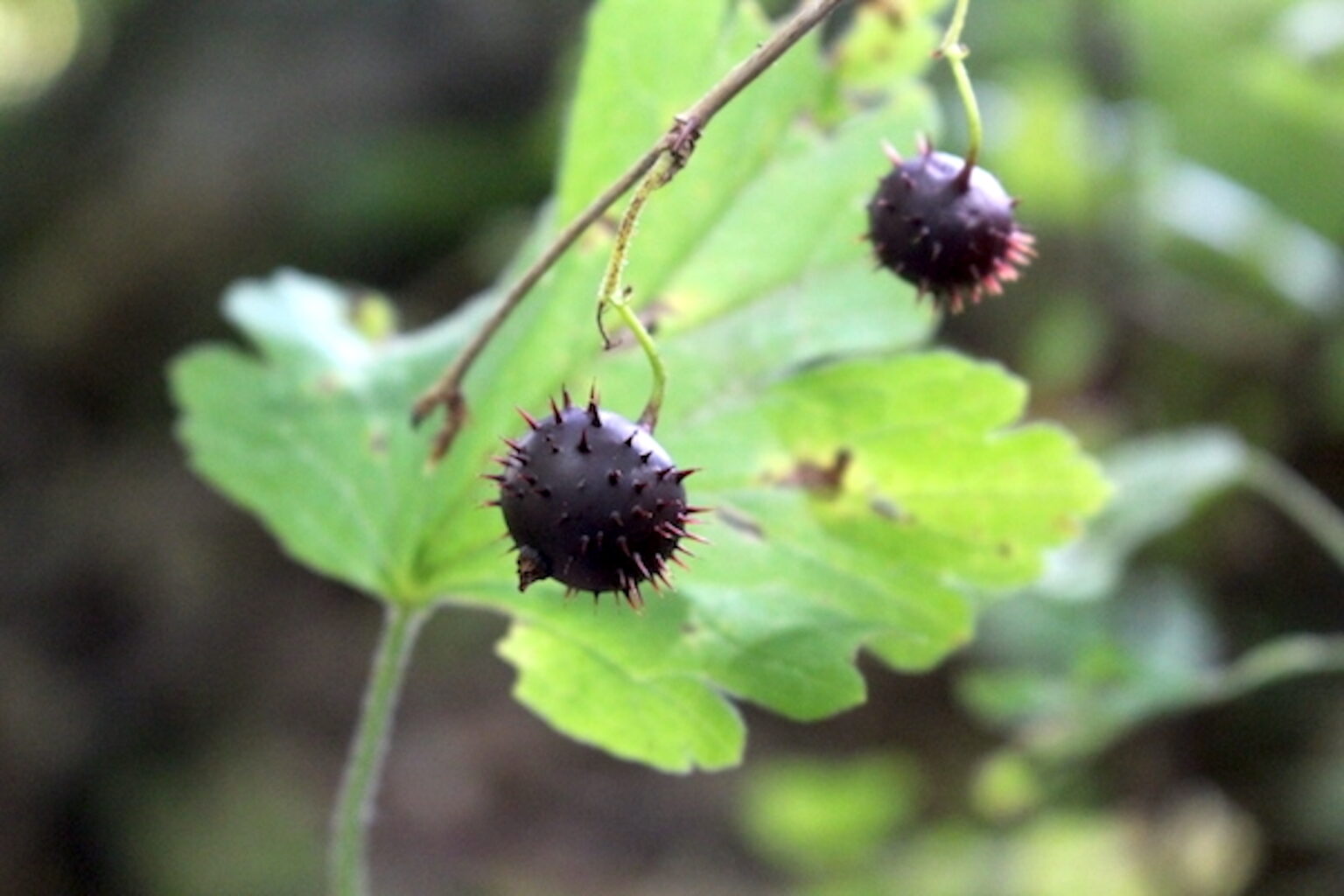
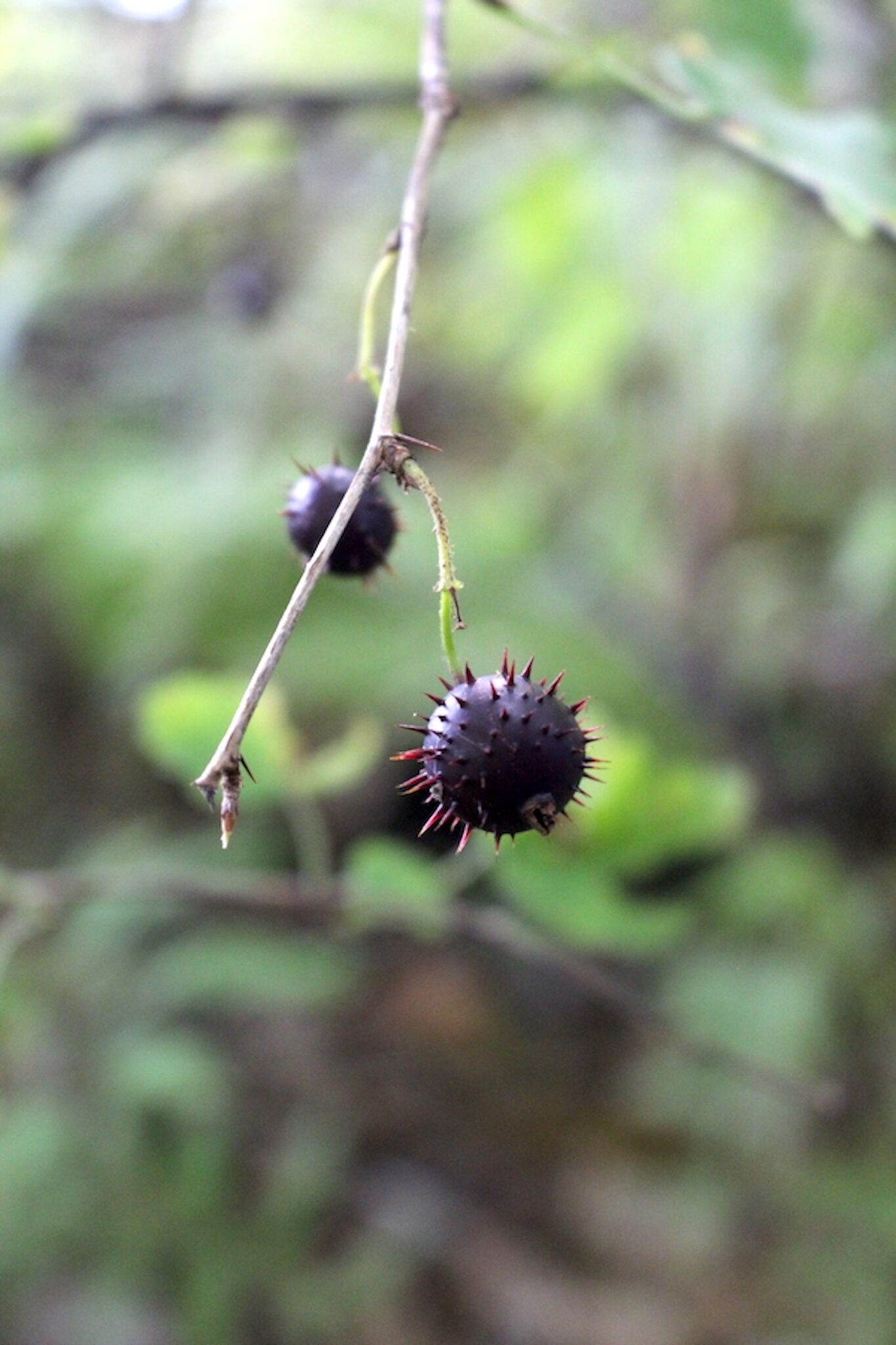
Watch the bushes, though. They have some serious spikes. Wild gooseberries can be harvested with bare hands if you’re careful, avoiding the spiny stems. In mid-summer, the spiky fruit hanging from the undersides of branches is a dead giveaway.
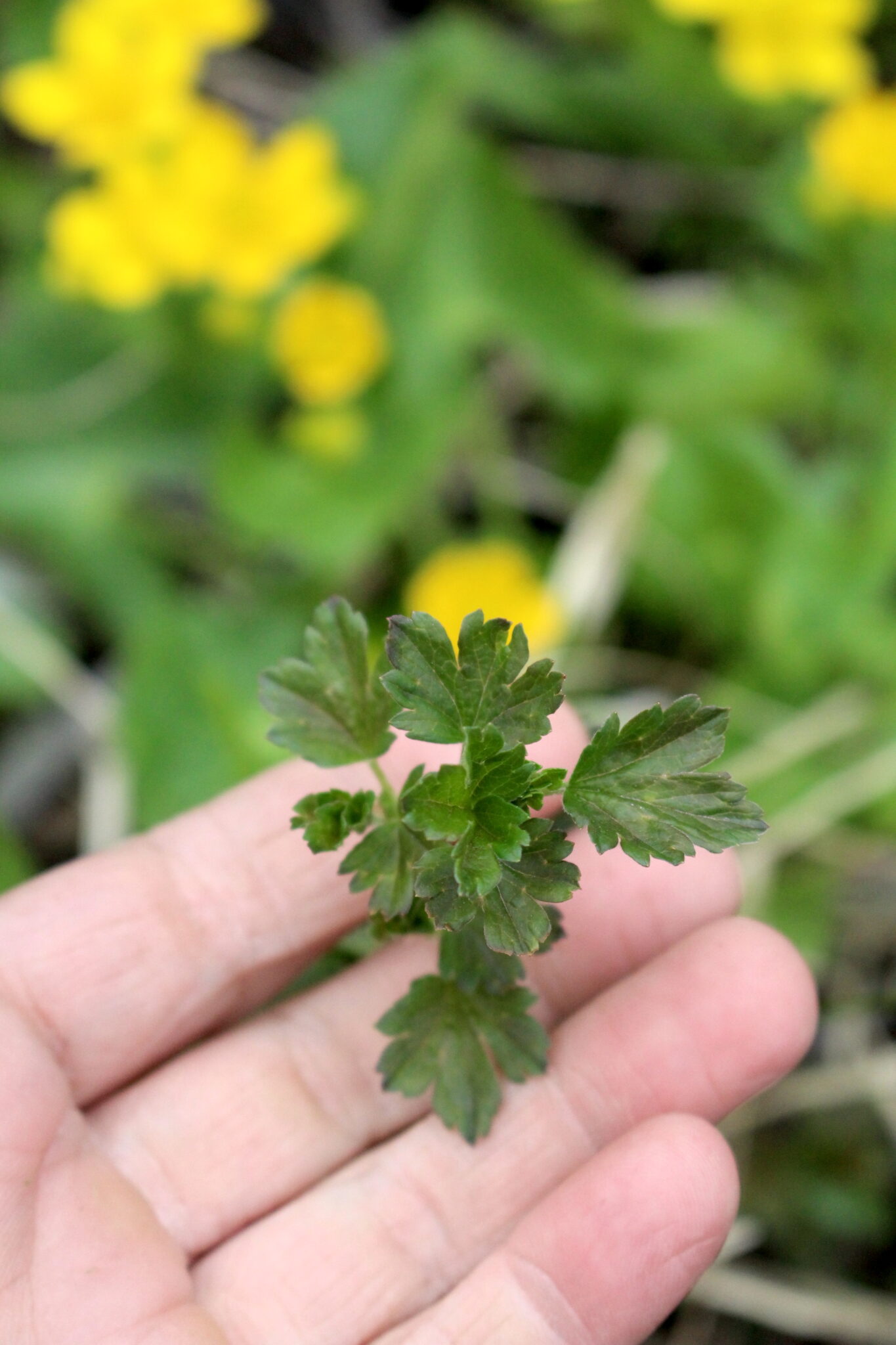
Gooseberries are reasonably easy to identify out of season, too, as they have distinctive lobed leaves and woody stems with characteristic prickles.
Notes from My Homestead

Here in central Vermont, we grow cultivated gooseberries on our homestead, but I also forage the wild ones whenever I run across them on hiking trails. The wild gooseberries here look a lot like our cultivated ones except smaller and a bit spikier. The fruit hangs from the undersides of the branches in a way that’s almost easy to miss if you’re not looking for it. Once you’ve found a productive patch, the fruit is unmistakable: those translucent globes covered in fine spines don’t really resemble anything else in the woods.
The biggest lesson I’ve learned with wild gooseberries is patience around the bushes. The stems carry serious thorns that will absolutely tear up bare arms and hands. Long sleeves, gloves, and a careful approach pay off. The fruit itself is fine to handle, but reaching through the canes to get to it requires the same caution you’d use around a rose bush. The sweet-tart flavor is worth the effort, especially when made into gooseberry jam or gooseberry wine.
What Are Wild Gooseberries?
Gooseberries are perennial deciduous shrubs in the Ribes genus of the currant or Grossulariaceae family. The genus includes both gooseberries (typically with thorny stems and solitary or paired fruit) and currants (typically with smooth stems and clusters of berries). Several gooseberry species are native to North America, while the European Gooseberry (Ribes uva-crispa) is widely naturalized after escaping cultivation.
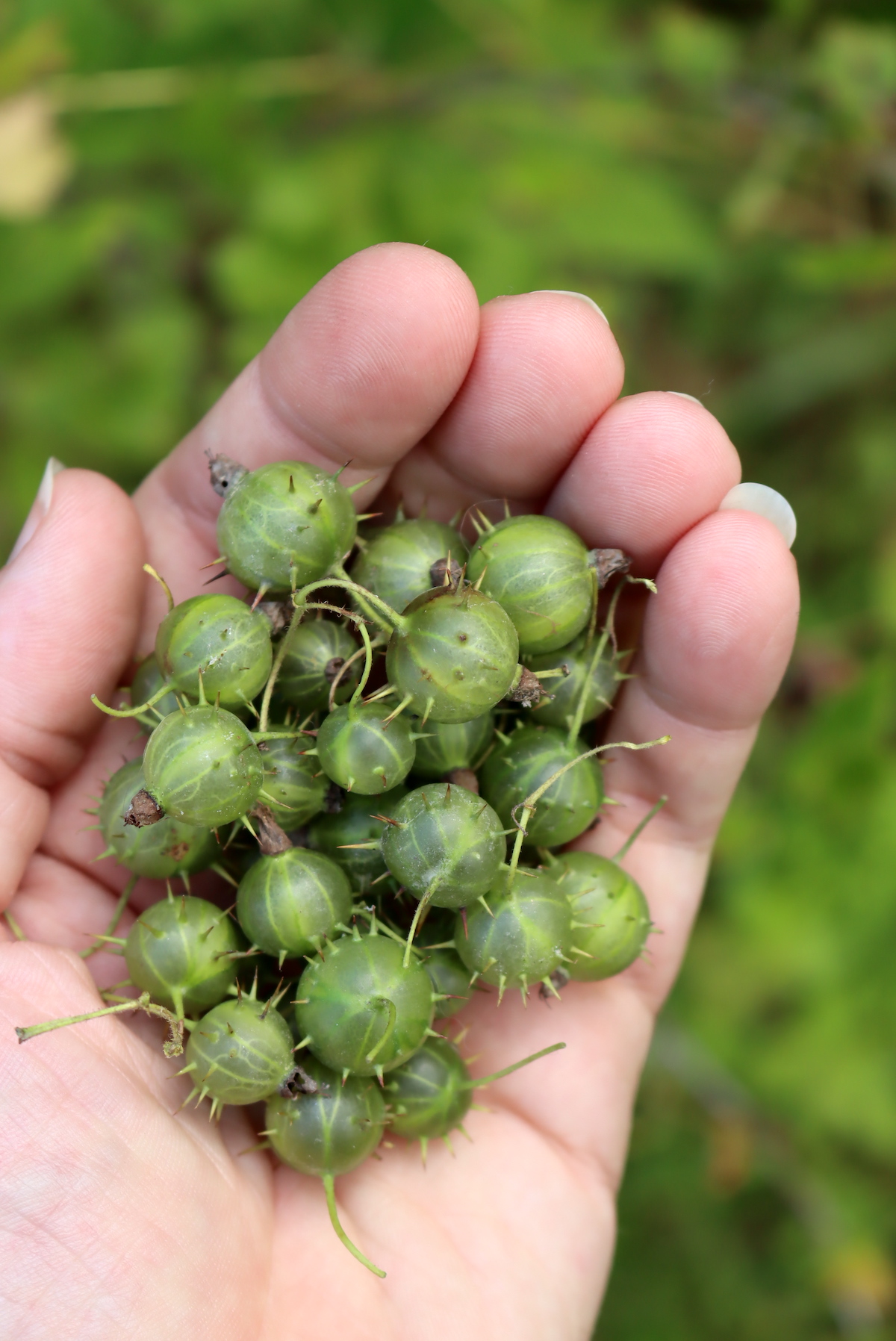
The fruit comes in a variety of colors and ripens through green, pink, yellow, red, and purple stages depending on the species. Most species produce translucent berries with fine vertical stripes, and the dried flower remnant often persists at the tip of the fruit (a useful diagnostic feature for the Ribes genus).
You may also hear gooseberries called by various regional names, including European Gooseberry, English Gooseberry, Goosegog, Feaberry (older British name), and various species-specific common names like Missouri Gooseberry or Sierra Gooseberry. All true gooseberries are in the Ribes genus, regardless of common name.
Types of Wild Gooseberries
Several gooseberry species are native to North America, plus the widely naturalized European Gooseberry. All are edible and used identically in recipes, but they vary in geographic range, fruit appearance, and thorniness.
European Gooseberry (Ribes uva-crispa)
European Gooseberry (Ribes uva-crispa) is native to Europe, Western Asia, and Northern Africa. It’s the species most commonly cultivated for fresh-market fruit and is the parent of nearly all commercial gooseberry varieties. Plants frequently escape cultivation and naturalize in wild areas, especially near old homesteads, abandoned orchards, and the edges of properties where birds have spread the seeds.
European Gooseberry fruit is typically larger than native North American species (½ inch or more on cultivated varieties, smaller on wild plants) and ranges from green to yellow to red to purple at full ripeness. The plants form rounded shrubs 3 to 5 feet tall with armed stems and characteristic three-pronged thorns at the leaf nodes.
Missouri Gooseberry (Ribes missouriense)
Missouri Gooseberry (Ribes missouriense) is the most widespread native gooseberry in the central and eastern United States. It grows in low, open woods and grasslands throughout the Midwest and east to Pennsylvania, south to Arkansas. The fruit is generally larger than other native gooseberries (about ½ inch) and ripens through green to pink to deep purple-black.
Missouri Gooseberry has been used by foragers for generations and is considered one of the best-flavored native species. The fruit can be used at multiple ripeness stages: light green underripe berries make exceptional pies and jellies (the tartness brightens the flavor), while fully ripe purple berries are excellent for fresh eating, jam, and wine.
Prickly Gooseberry (Ribes cynosbati)
Prickly Gooseberry (Ribes cynosbati), also called Eastern Wild Gooseberry or Dogberry, is native to the eastern United States and southeastern Canada. The fruit is the most distinctively spiny of the gooseberries, covered in long stiff prickles that look genuinely intimidating. The fruit is edible despite the spines, but most foragers prefer to cook it (which softens the spines) rather than eat it fresh.
The plants reach 2 to 4 feet tall and grow in moist deciduous woods, often as understory plants beneath maples and beech. The fruit ripens to dull purple in late summer.
Pasture Gooseberry / Smooth Gooseberry (Ribes hirtellum)
Pasture Gooseberry (Ribes hirtellum), also called Smooth Gooseberry or Hairy-stem Gooseberry, is native to the northeastern and north-central United States and Canada. The fruit is smooth (without prickles), small (about ⅓ inch), and ripens to dark purple-black. The plants are smaller and less thorny than other gooseberries, growing 2 to 3 feet tall in cool moist habitats.
This is one of the parent species of cultivated American gooseberry varieties, and the wild fruit has excellent flavor. Pasture Gooseberry is often the easiest wild gooseberry to harvest because of the smooth fruit and reduced thorniness.
Sierra Gooseberry (Ribes roezlii)
Sierra Gooseberry (Ribes roezlii) is native to the Sierra Nevada and other western mountain ranges in California and Oregon. The fruit is purple-red and famously covered in long stiff prickles, sometimes described as looking like miniature satellites or sea urchins. Sierra Gooseberry has excellent flavor but is challenging to handle because of the spines.
Most foragers wear leather gloves to harvest Sierra Gooseberry and process the fruit through cooking and straining (which removes the spines along with the seeds). The resulting juice and pulp make exceptional jelly and syrup.
Coastal Black Gooseberry (Ribes divaricatum)
Coastal Black Gooseberry (Ribes divaricatum), also called Spreading Gooseberry or Wild Black Gooseberry, is native to the Pacific Coast from British Columbia south to California. Unlike many gooseberries, the fruit is smooth-skinned (no prickles) and ripens to dark purple-black. The plants form sprawling shrubs 3 to 6 feet tall and are common in coastal forests, wet meadows, and disturbed areas.
The fruit has excellent sweet-tart flavor and is considered one of the better Pacific Northwest wild fruits. The lack of fruit prickles makes Coastal Black Gooseberry one of the easiest wild gooseberries to harvest in any quantity.
Rocky Mountain Gooseberry (Ribes inerme)
Rocky Mountain Gooseberry (Ribes inerme), also called White-stem Gooseberry, is native to the Rocky Mountains and Great Basin regions of the western US. The species name “inerme” means “unarmed,” and the plants have notably few thorns compared to other gooseberries. The fruit is smooth-skinned, dark red to purple, and excellent for fresh eating.
Rocky Mountain Gooseberry is one of the most forager-friendly species because of the reduced thorniness and smooth fruit. The plants grow in moist mountain meadows and along streams in the western mountains.
Are Wild Gooseberries Edible?
Yes, all wild gooseberries are edible. Despite the sometimes-intimidating appearance (especially the spiny-fruited species), gooseberry fruit is safe to eat raw or cooked. The flavor is sweet-tart, similar to a less-sweet grape with a hint of citrus. Gooseberries can be enjoyed at multiple ripeness stages:
- Underripe (green): Quite tart, excellent for pies, jellies, and savory sauces where the tartness is wanted.
- Half-ripe (pink/yellow): Balanced sweet-tart, good for fresh eating and traditional gooseberry desserts.
- Fully ripe (red, purple, or black): Sweetest stage, excellent for fresh eating, jam, and wine.
Important safety notes:
- Don’t eat the leaves: Gooseberry leaves contain hydrogen cyanide compounds in unknown quantities and should not be consumed. Hydrogen cyanide is also found in small quantities in foods like almonds and stone fruit pits, but consistent leaf consumption is not advisable.
- Spines on the fruit are edible: The fine prickles on the fruit of some species (especially Prickly Gooseberry and Sierra Gooseberry) soften when cooked and don’t pose any safety issue. They can be uncomfortable when eaten raw, which is why most foragers prefer to cook the spiny species.
- Pet considerations: While humans tolerate gooseberries well, the fruit is not recommended in any quantity for dogs. Some authorities list gooseberries as potentially problematic for dogs due to the natural acids and seeds. Consult your veterinarian before sharing any wild fruit with pets, especially dogs with kidney issues. Chickens, on the other hand, generally enjoy gooseberries without problems.
Gooseberry Medicinal Benefits
Herbalists have used gooseberries in their remedies since at least the Middle Ages. The Roman naturalist Pliny the Elder may have alluded to gooseberries in his Natural History, and William Turner included it in his 16th-century Herball.
Historically, herbalists would stew the berries as a laxative or use unripe berries as a spring tonic. Though it isn’t advised today, herbalists of the past also created infusions of the leaves for treating dysentery and menstrual issues. The same infusion was applied externally to help heal wounds, since gooseberry leaves are high in tannins.
The juice of gooseberries was believed to help treat inflammation, and a jelly from the berries was thought to help with exhaustion and nausea. Some accounts from the Plague era even mention treating patients with gooseberries. Gerard’s 16th-century Herball also mentions gooseberries (referred to as Feaberries) as being good for treating ague, an old term for illnesses that cause fevers and shivering.
Today, gooseberries are primarily used as a healthy food. They’re high in antioxidants, nutrients, and fiber that may help prevent illness, keep bowel movements regular, and support metabolic health. Some of those antioxidants may be relevant for treating disease. A 2020 study on berry and leaf extracts indicated that gooseberry’s antiviral properties may make it a good candidate for treating RSV (respiratory syncytial virus).
Nutrients in gooseberries may also be helpful for skin health when eaten or used externally. Modern herbalists sometimes use the fruit pulp cosmetically as a natural face mask. The pulp may help cleanse and refresh oily skin. Some studies have also found that gooseberries may be an effective natural treatment for childhood nocturnal enuresis (bedwetting beyond normal age).
Where Do Wild Gooseberries Grow?
Wild gooseberries grow throughout most of North America, with different species occupying different geographic ranges. Native species are widespread, while the naturalized European Gooseberry shows up in scattered locations near old homesteads and abandoned orchards.
Geographic distribution by region:
- Northeast and Upper Midwest: Pasture Gooseberry (R. hirtellum) and Prickly Gooseberry (R. cynosbati) are most common, plus naturalized European Gooseberry.
- Central US: Missouri Gooseberry (R. missouriense) is the dominant species, often abundant in old fields and woodland edges.
- Rocky Mountains and Great Basin: Rocky Mountain Gooseberry (R. inerme) is widespread, with several other regional Ribes species.
- Pacific Northwest: Coastal Black Gooseberry (R. divaricatum) is common in coastal forests, with Sierra Gooseberry (R. roezlii) in the mountains.
- California: Sierra Gooseberry and several California-endemic species, especially in the Sierra Nevada and Coast Ranges.
- Canada: Pasture Gooseberry, Northern Gooseberry (R. oxyacanthoides), and various regional species.
Wild gooseberries thrive in a variety of habitats:
- Moist deciduous woodlands and forest edges
- Stream banks, ditches, and the margins of small ponds
- Old farm fence lines and hedgerows (especially for naturalized European Gooseberry)
- Mountain meadows and rocky outcrops in the western US
- Coastal forests and disturbed areas in the Pacific Northwest
- Disturbed habitats like clearings, recently logged areas, and abandoned fields
Most gooseberry species prefer well-drained but moist soil, full sun to partial shade, and protection from intense winds. They tolerate a range of soil pH from acidic to slightly alkaline. I most commonly find wild gooseberry in wet places alongside other moisture-loving plants like marsh marigold and cedar.
When to Find Wild Gooseberries
Wild gooseberry shrubs can be spotted year-round, but they’re easiest to identify in different seasons:
- Spring (March-May): Early leaf-out is one of the easiest ways to spot gooseberry, since the lobed leaves emerge before most other deciduous plants. Inconspicuous flowers appear shortly after leafing out.
- Late spring to early summer (May-June): Bell-shaped greenish-yellow flowers bloom, often hanging singly or in pairs. The flowers are easy to miss but distinctive once you key in.
- Summer (July-August): Peak fruiting season. Fruit hangs from the undersides of branches and is unmistakable.
- Late summer to early fall (August-September): Fully ripe fruit and seasonal foliage color. Some species hold fruit into early fall.
- Fall and winter: Bare canes with characteristic prickles. Hardest season for identification but possible for foragers who know their patches.
Most species fruit between July and August, with northern populations and high-elevation populations fruiting later. Since gooseberries ripen through several colors (including starting green and ending green for some species), use texture as well as color to judge ripeness. Fully ripe fruit is slightly soft to the touch and pulls cleanly off the cane with minimal resistance.
How to Identify Wild Gooseberries
Wild gooseberry can be hard to spot at first glance because it’s an unassuming medium-sized shrub. The combination of features that identifies a gooseberry:
- Small to medium woody shrub, typically 2 to 6 feet tall
- Multiple stems growing from the base, often arching or sprawling
- Stems with sharp prickles, often with three-pronged thorns at the leaf nodes
- Maple-like lobed leaves with 3 to 5 (rarely more) lobes
- Inconspicuous bell-shaped flowers in spring, hanging singly or in pairs
- Round translucent fruit hanging from the undersides of branches in summer
- A small “tail” (the dried flower remnant) often persists at the bottom of each fruit, a useful diagnostic feature for the entire Ribes genus
Gooseberry Leaves
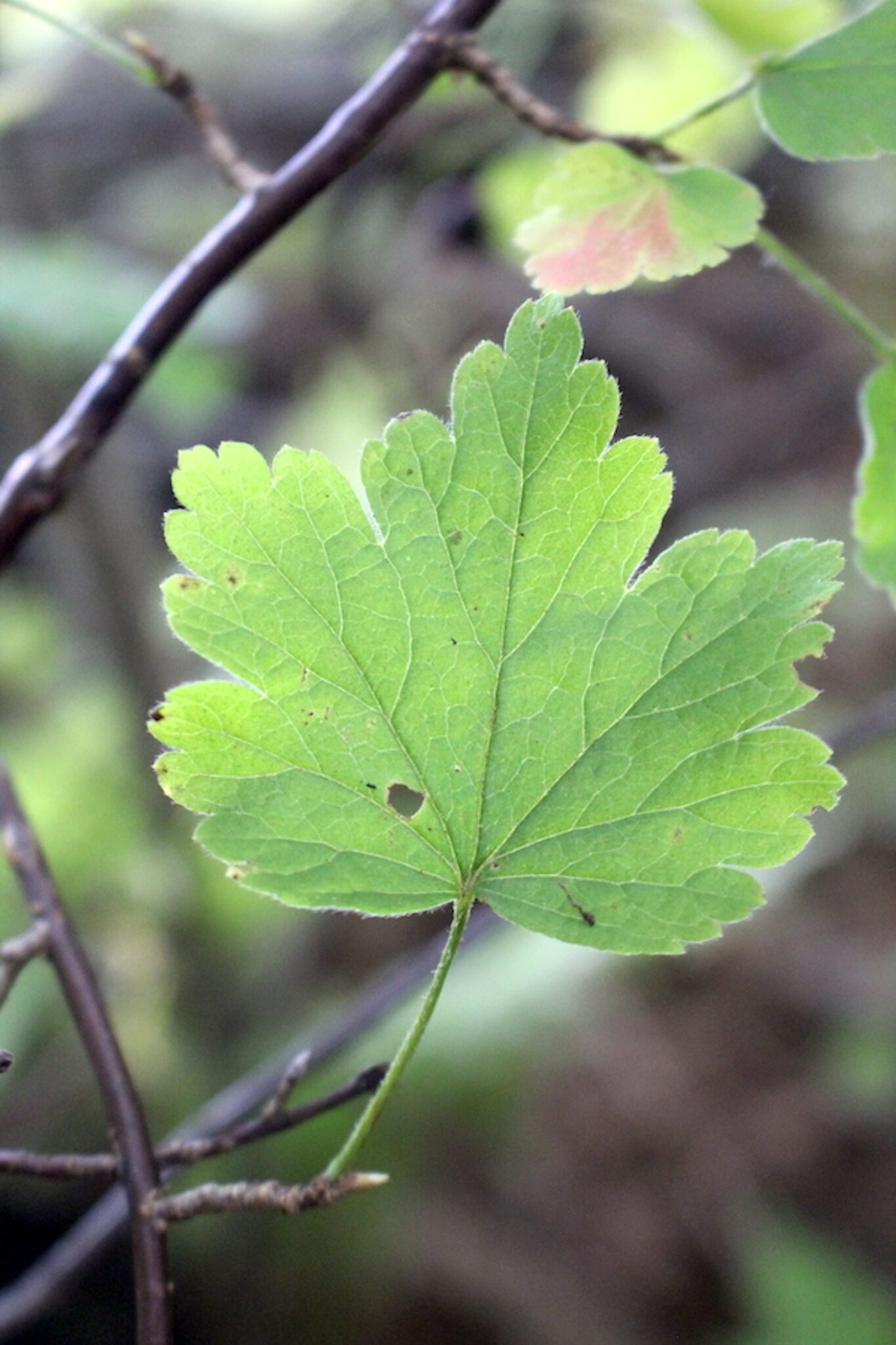
Gooseberries have simple, alternately arranged palmate leaves with 3 to 5 lobes (occasionally up to 7 lobes in some species). The leaves may be dark green or pale green, glossy or covered in fine hairs depending on the species. Each leaf is attached to the main stem by a petiole and has toothed or scalloped margins. Most species have leaves up to 2 inches across, with rounder shapes overall than the more elongated leaves of true currants.
The maple-like leaf shape is one of the most reliable identification features for the entire Ribes genus, distinguishing gooseberries and currants from any superficially similar shrubs.
Gooseberry Stems
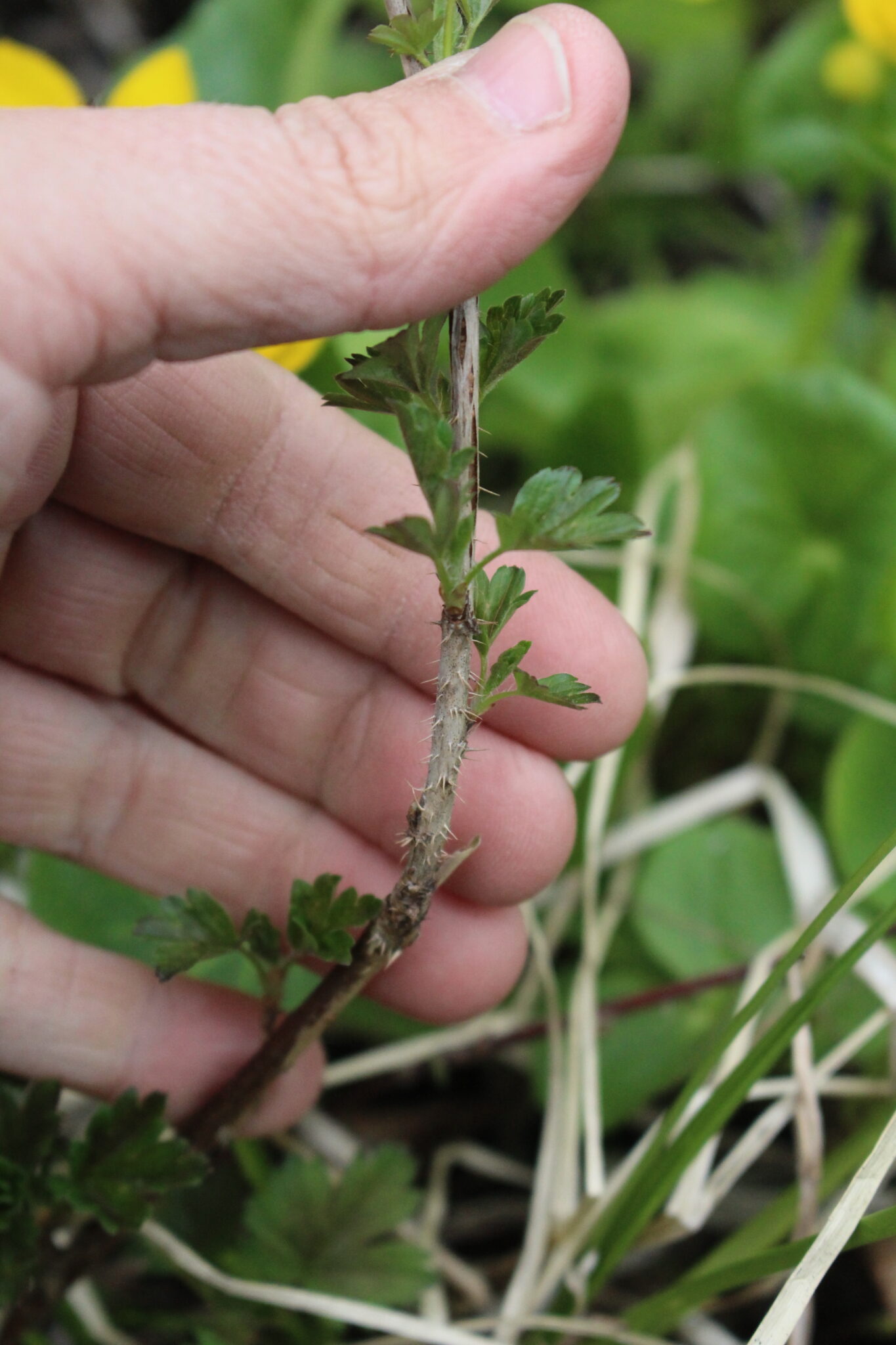
Gooseberries typically have 5 to 16 woody stems growing from the base. The stems may be up to 6 feet long and often droop over, forming a wide, low shrub. The stems are brownish to gray and covered in sharp prickles. Most species have characteristic three-pronged thorns at each leaf node, plus shorter prickles distributed along the internodes.
The thorny stems are one of the easiest ways to distinguish gooseberries from currants in the same Ribes genus. Currants typically have unarmed stems (no significant thorns), while gooseberries are reliably thorny. The exception is Rocky Mountain Gooseberry (R. inerme), which has notably reduced thorns despite being a true gooseberry.
Gooseberry Flowers
Gooseberry flowers form singly or in small clusters of 2 to 4. They are inconspicuous yellow-green or greenish in color, sometimes with pink or red hues. Each flower is bell-shaped and drooping, usually with five petals and five sepals fused at the base, plus four to five stamens.
The flowers are easy to overlook because of their small size and muted color, but they’re a key identification feature in late spring. Currants in the same genus have similar flowers but typically grow in longer clusters of six or more flowers, while gooseberry flowers stay in pairs or small groups.
Gooseberry Fruit
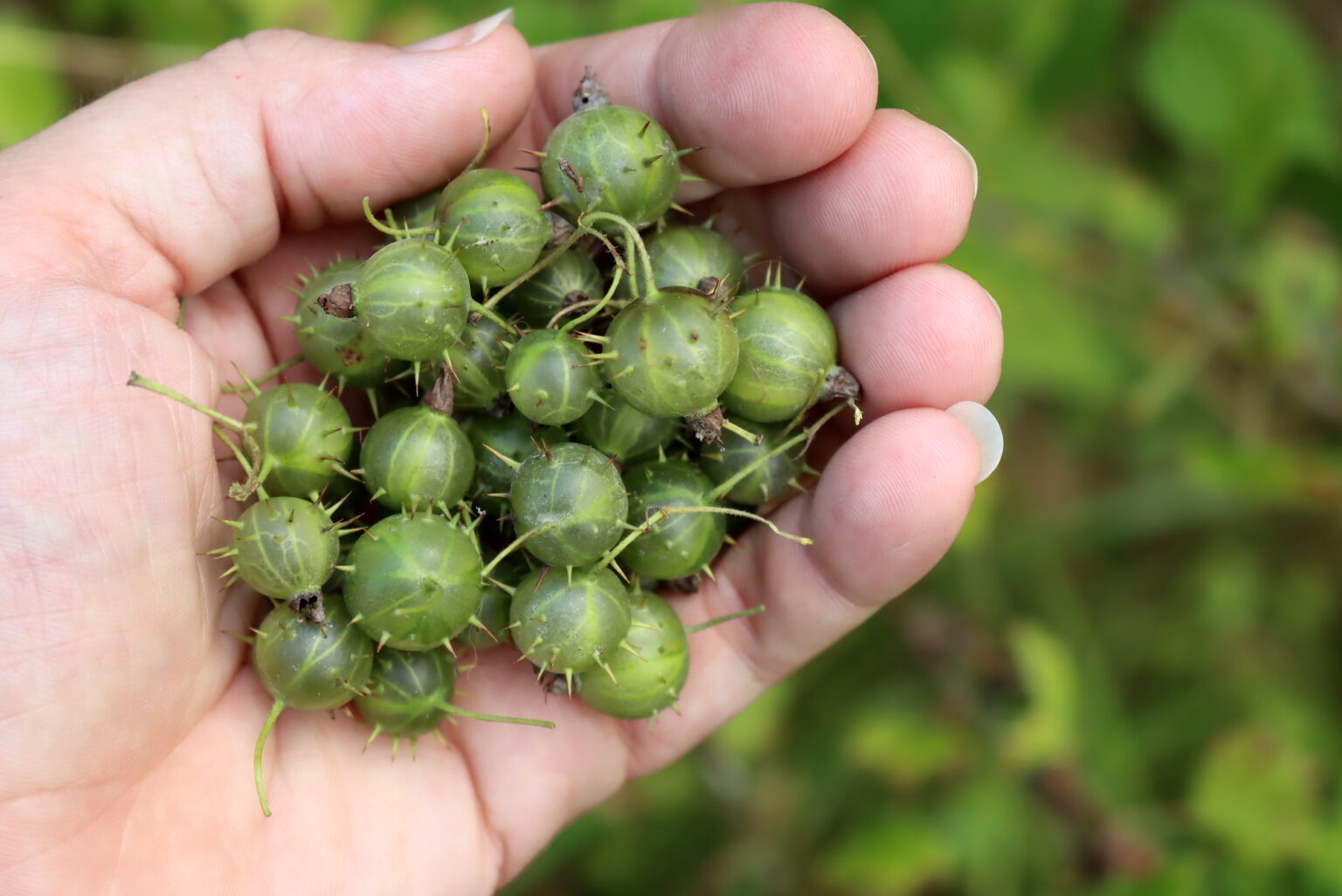
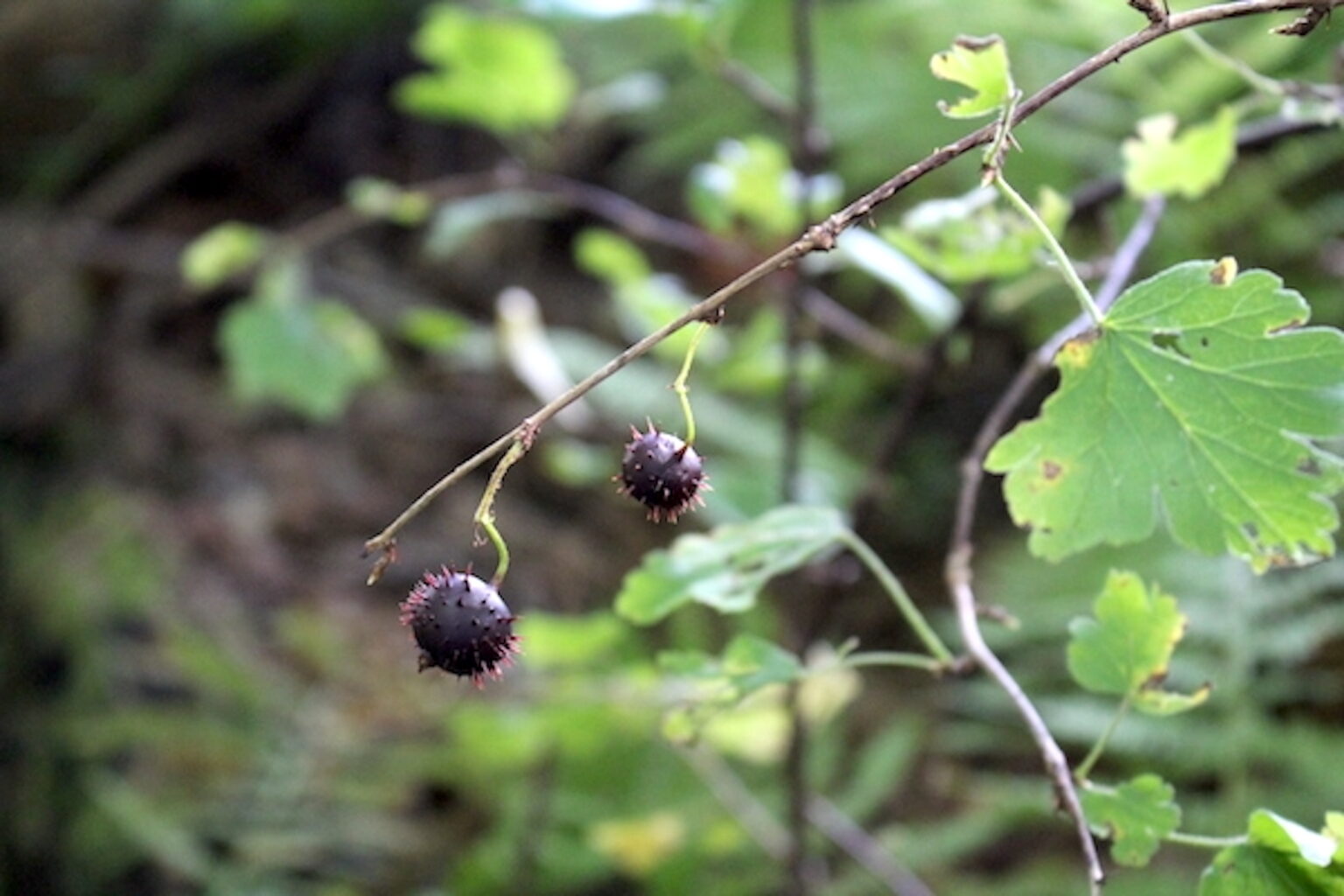
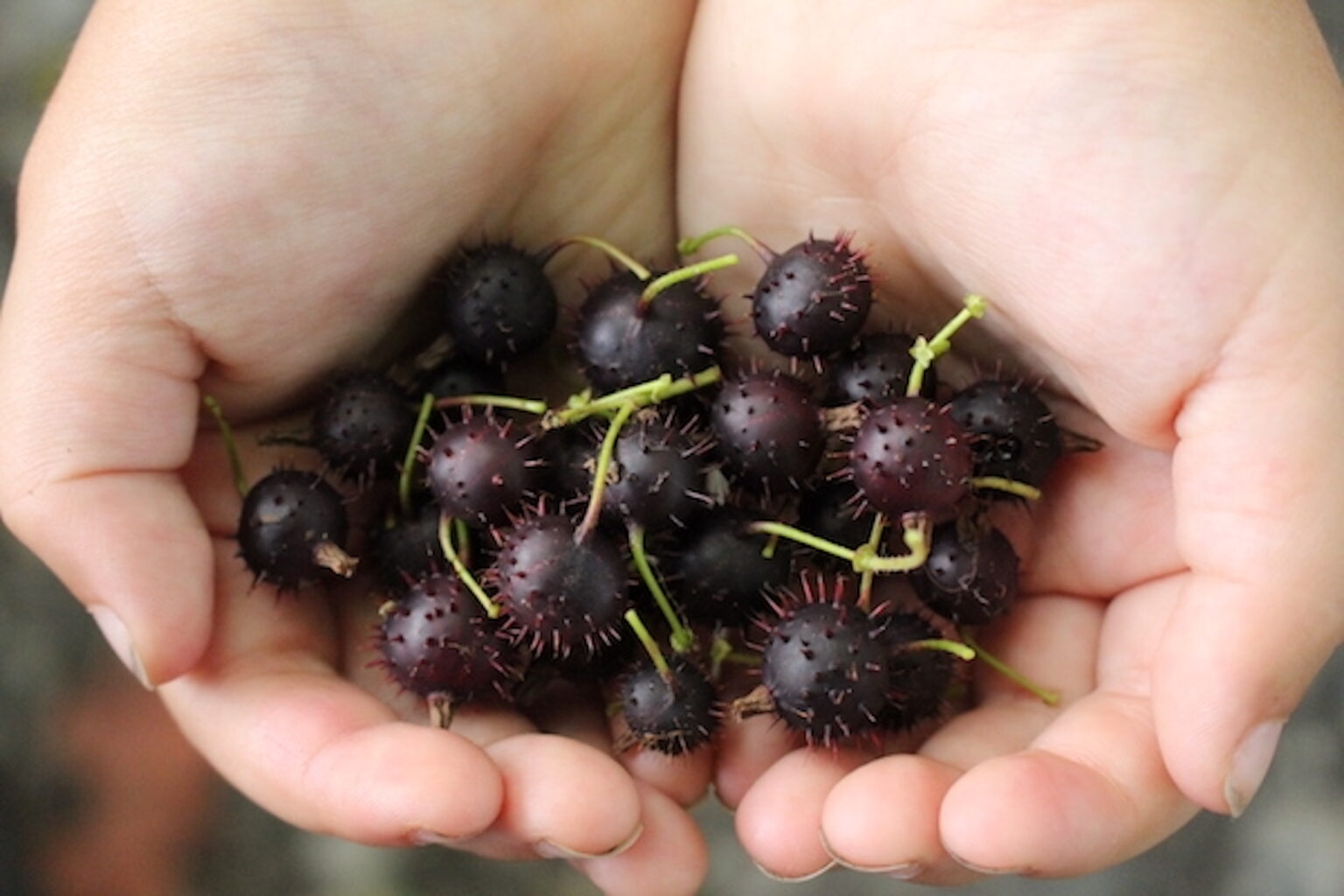
Gooseberry berries are ovate to spherical, usually with fine vertical stripes that run from the stem to the base of the fruit. They are translucent, juicy, and may be smooth or covered in fine prickles depending on the species. The dried flower remnant often persists at the tip of the fruit as a small “tail.”
The berries start green or yellowish-green and ripen through different color sequences depending on species:
- European Gooseberry: Green to yellow, pink, red, or purple
- Missouri Gooseberry: Green to pink to deep purple-black
- Prickly Gooseberry: Green to dull purple
- Pasture Gooseberry: Green to dark purple-black
- Sierra Gooseberry: Greenish to red-purple, with long stiff prickles
- Coastal Black Gooseberry: Green to dark purple-black, smooth
On wild plants, the berries tend to be less than ½ inch in diameter, sometimes much smaller. Cultivated European Gooseberry varieties produce significantly larger fruit, sometimes ¾ inch or more.
Gooseberry Look-Alikes
Wild gooseberries are most easily confused with other members of the Ribes genus. Fortunately, all Ribes species are edible (with no toxic look-alikes), so any confusion is informational rather than dangerous. The most common look-alikes:
Wild Currants (Ribes spp.)
Wild Black Currant (Ribes americanum), Red Currant (R. rubrum), Golden Currant (R. aureum), and other currant species share the genus with gooseberries and have similar leaves and growth habits. The differences:
- Currants typically have unarmed stems (no thorns or prickles), while gooseberries have prominent prickles.
- Currants have flowers and fruit in long clusters of 6 or more berries, while gooseberries hang in pairs or small groups.
- Currant fruit is typically smaller and more uniform in color, while gooseberry fruit is larger with vertical stripes and the persistent flower tail.
- Both genera are edible and used identically in recipes.
Thimbleberry (Rubus parviflorus and R. odoratus)
When not in fruit, both Western Thimbleberry (Rubus parviflorus) and Eastern Thimbleberry (Rubus odoratus) may be mistaken for gooseberry because of similar maple-like leaves. The differences:
- Thimbleberry canes may be up to 10 feet long with reddish-brown, yellowish, or gray bark that peels with age.
- Thimbleberry leaves are larger (up to 10 inches across) with 3 to 7 lobes that are broader and softer than gooseberry leaves.
- Thimbleberry flowers are showy, white or purplish-pink, ¾ to 2¼ inches in diameter with yellow centers, very different from gooseberry’s small bell-shaped flowers.
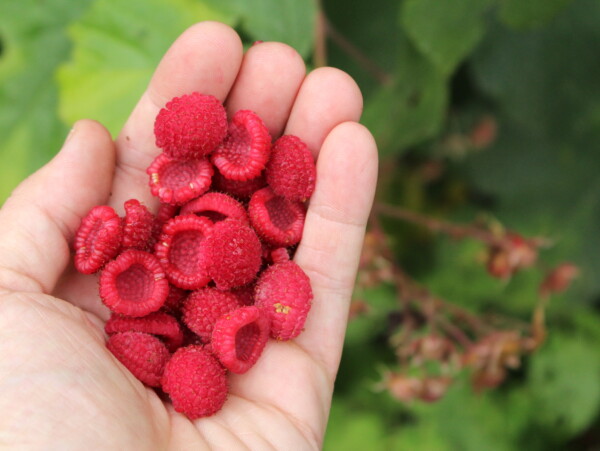
- Thimbleberries are hollow-centered raspberry-like aggregate fruits, very different from gooseberry’s solid translucent berries.
- Both are edible.
Cape Gooseberry / Ground Cherry (Physalis spp.)
Cape Gooseberry (Physalis peruviana) and various Ground Cherry species are sometimes called “gooseberries” but are entirely unrelated to true gooseberries. They’re in the nightshade family (Solanaceae) rather than Ribes. The differences:
- Cape Gooseberries / Ground Cherries grow on herbaceous plants, not woody shrubs.
- The fruit grows inside a papery husk, completely unlike gooseberry’s exposed translucent berry.
- Cape Gooseberries are bright orange when ripe, while true gooseberries ripen to red, purple, or black.
- The plants have completely different leaves and growth habits.
Cape Gooseberries are edible (when fully ripe), but the unripe fruit and other parts of the plant are toxic. PSR has a separate guide for growing ground cherries.
How to Harvest Wild Gooseberries
Wild gooseberry harvest is one of the more challenging foraging experiences because of the thorny stems, but the fruit is well worth the effort. Practical harvest tips:
- Wear long sleeves, long pants, and leather gloves. The stems carry serious thorns that will tear up bare skin.
- Approach from the outside of the bush rather than reaching through the canes. Pull the lower branches gently with a gloved hand to expose the fruit hanging underneath.
- Pick fruit at multiple ripeness stages. Underripe green berries are excellent for jelly and pie (the tartness is wanted); fully ripe berries are best for fresh eating, jam, and wine.
- Use a wide flat container or basket. Gooseberries don’t bruise as easily as raspberries, but they still travel better in a single layer.
- For spiny-fruited species (Prickly Gooseberry, Sierra Gooseberry), don’t bother trying to remove the spines individually. Cook and strain the fruit instead, which removes the spines along with the seeds in one step.
- The dried flower “tail” at the tip of each berry is edible and doesn’t need to be removed for cooked preparations. Some cooks remove it for fresh-eating presentations.
- Process within a few days of harvest. Wild gooseberries keep at refrigerator temperatures for about a week, but they hold flavor much better if cooked or frozen promptly.
- Don’t overharvest. Mark productive patches and rotate which ones you visit each year, leaving plenty of fruit for wildlife and to ensure good cross-pollination for next year’s crop.
A productive wild gooseberry patch can yield several pints of fruit in a careful morning’s work. Once you know where your local patches are, mark their locations and check them every July or August.
Ways to Use Wild Gooseberries
The easiest way to use gooseberries is to eat them fresh off the bush (assuming you’ve found a smooth-fruited species). They’re a tasty sweet-tart snack that works well in salads and other dishes. If you find the fruit too tart for fresh eating, there are plenty of ways to cook gooseberries.
Gooseberries’ combination of sweetness and lemony tang makes them a go-to choice for crumbles, pies, cakes, cobblers, and the classic British dessert called fool. They also make an excellent sauce for savory dishes like mackerel, pork, and game meats.
Gooseberries contain natural pectin, citric acid, and sugars, making them an excellent choice for jellies, jams, and chutneys. Canning preserves are a great way to put up extra gooseberries for winter. You can also preserve gooseberries by dehydrating them for use in oatmeal, baked goods, and trail mixes.
These tasty berries also make for some interesting beverages. Gooseberries can be fermented into a wonderful country wine, and they’re excellent in flavored gin (a traditional British use). In Portugal they’re sometimes mixed with soda, water, or even milk for refreshing summer drinks.
Gooseberry Recipes
I have a long list of gooseberry recipes that work with both cultivated and wild gooseberries, but here are a few to get you started:
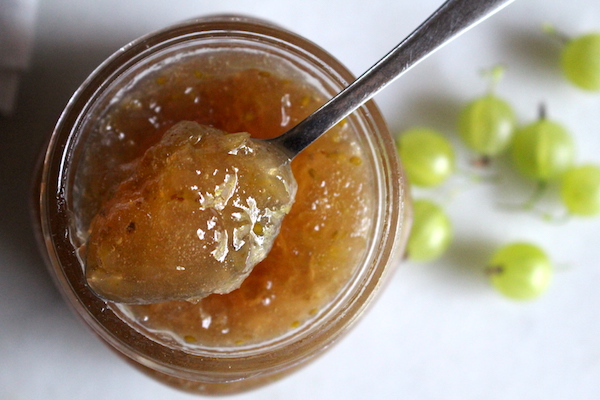
- Gooseberry Jam is the easiest way to preserve a wild gooseberry harvest for winter use.
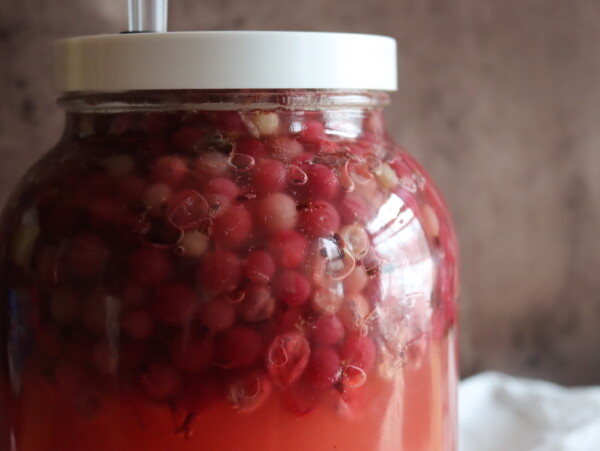
- Gooseberry Wine and Mead is a classic country wine that captures the summer flavor.
- Try this Gooseberry Jelly recipe from Creative Canning for a smooth seedless preserve.
- Looking to add a foraged spin to cocktails? Try this Gooseberry Gin recipe from BBC Good Food.
- If you’re not a gin person, try the Elderflower and Gooseberry Vodka recipe from BBC Good Food.
- For something filling and savory, try these Pulled Pork Burgers with Gooseberry Ketchup from Delicious Magazine.
- For a classic British dessert, try this Gooseberry Fool from Great British Chefs.
- For something simple after a hard day of foraging, try this Easy Gooseberry Crumble from Effortless Foodie.
Gooseberry & Currant Recipes
Wild Gooseberry FAQs
Yes, all wild gooseberries are edible. Despite the sometimes-intimidating spiky appearance of certain species (like Sierra Gooseberry and Prickly Gooseberry), the fruit is safe to eat raw or cooked. The flavor is sweet-tart, similar to a less-sweet grape with a hint of citrus. Underripe green berries are tart and excellent for pies and jellies; half-ripe pink-yellow berries are good for fresh eating; fully ripe red, purple, or black berries are sweetest and best for jam and wine. Don’t eat the leaves, which contain hydrogen cyanide compounds in unknown quantities.
Wild gooseberries grow throughout most of North America, with different species occupying different regions. Missouri Gooseberry is most common in the central US, Pasture Gooseberry and Prickly Gooseberry in the Northeast and Upper Midwest, Rocky Mountain Gooseberry in the western mountains, and Coastal Black Gooseberry and Sierra Gooseberry in the Pacific Northwest and California. The naturalized European Gooseberry shows up in scattered locations near old homesteads and abandoned orchards across the continent. They prefer moist soil, full sun to partial shade, and are common in deciduous woodlands, forest edges, stream banks, and hedgerows.
Gooseberries and currants are closely related, both in the Ribes genus, but differ in several ways. Gooseberries have thorny stems with prominent prickles (often three-pronged thorns at the leaf nodes), while currants have unarmed stems with no significant thorns. Gooseberries produce flowers and fruit in pairs or small groups of 2 to 4, while currants produce them in long clusters of 6 or more. Gooseberry fruit is typically larger and has fine vertical stripes plus a persistent dried flower tail at the tip, while currant fruit is smaller and more uniform in color. Both gooseberries and currants are edible and used interchangeably in many recipes.
You can eat gooseberries raw or cooked. Smooth-skinned varieties (like cultivated European Gooseberry, Pasture Gooseberry, Coastal Black Gooseberry, and Rocky Mountain Gooseberry) are excellent for fresh eating once fully ripe. Spiny-fruited species (like Sierra Gooseberry and Prickly Gooseberry) are best cooked, since the spines soften when heated and can be removed by straining the cooked fruit. Common preparations include jam, jelly, pie, crumble, fool (a classic British dessert), gooseberry sauce for savory dishes, fermented wine, and flavored gin. The fruit can be used at multiple ripeness stages, with green fruit best for tart preparations and fully ripe fruit best for sweet preparations.
Wild gooseberries typically ripen between July and August, depending on the species and location. Southern populations and lower-elevation populations ripen first, while northern and high-elevation populations may extend into September. Since gooseberries ripen through several colors (some species starting and ending green, others ripening to pink, red, purple, or black), use texture as well as color to judge ripeness. Fully ripe fruit is slightly soft to the touch and pulls cleanly off the cane with minimal resistance. The fruit can be harvested at multiple ripeness stages: underripe green berries for jellies and pies (where tartness is wanted), and fully ripe berries for fresh eating, jam, and wine.
Did you find this Wild Gooseberry foraging guide helpful? Tell me in the 📝 comments below how you use wild gooseberries on your homestead!
And make sure you stay in touch with me by following on social media!
Wild Fruit Foraging Guides
Find the perfect foraging guide
Searching for something else? Enter keywords to find the perfect foraging guide!











It is worth noting that gooseberries are the host to a fungus called white pine blister rust which is fatal to white pines. So, if you are trying to grow or preserve white pines, don’t cultivate gooseberries.
Thanks for the note! That ban actually got lifted back in 1966, and most states have dropped their own rules since. The restrictions that are left are mostly about black currants, which are a way stronger host than gooseberries are.
And this one’s about foraging them, not planting them. Wild Ribes are all over the woods here already, usually growing right under the white pines, which is part of why the old eradication crews eventually gave up on it.
But yes, if you have a lot of white pines nearby, it’s reasonable to not plant anything in the ribes family in your yard just for good measure.