
Affiliate disclosure: This post may contain affiliate links. Please see our Privacy Policy.
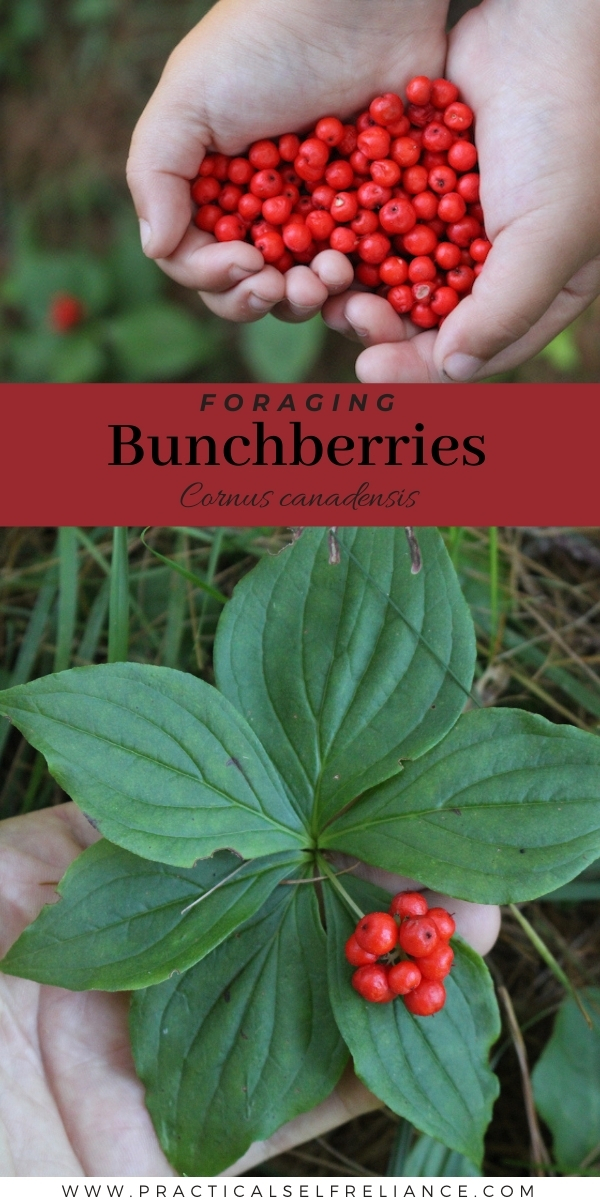
Bunchberries (Cornus canadensis) are an easy to identify wild edible berry with a number of uses (beyond fresh eating). Their sweet, mild flavor combined with a high pectin content makes them the perfect addition to homemade jams, and the colony-forming low ground cover means a productive patch can yield a pint of berries in just a few minutes.
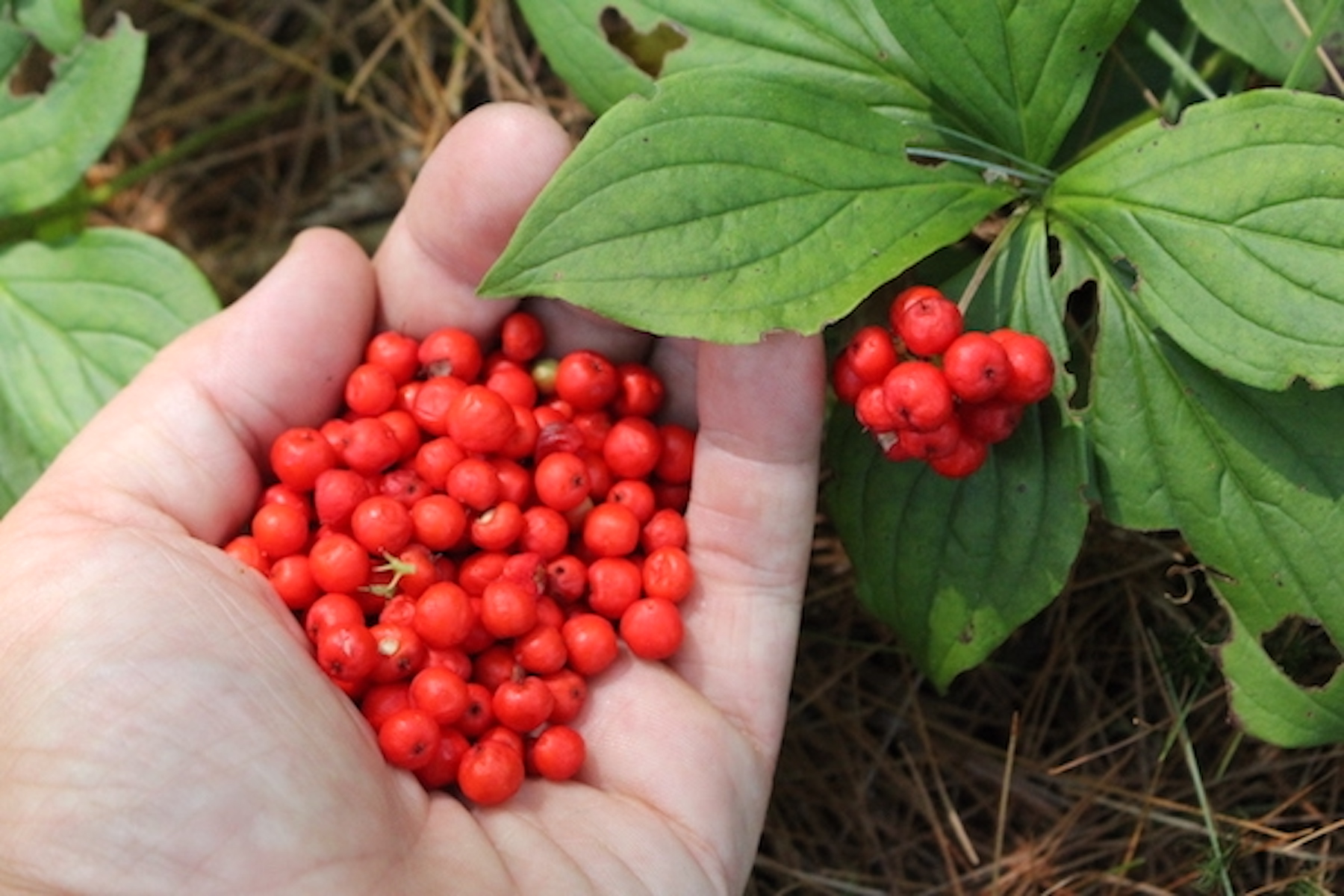
Bunch berries were one of the first edible wild fruits I learned to identify, after the common everyday ones like black raspberries and wild grapes. I was out walking with a friend, and he spotted a colony of low-growing creeping dogwood (as the parent plants are sometimes known), and actually started dancing with excitement.
He was that kinda guy, and though he didn’t know that many wild edibles, the ones he did know brought him immeasurable joy, and he couldn’t help but share this one with me. I didn’t consider myself a forager (yet), and eating a random berry from the forest floor on his say-so seemed a little suspect.
I watched him run from bunch to bunch, harvesting them by the handful and munching them with glee. He was just so darned enthusiastic about these little fruits, I couldn’t help but join him.
On first taste, they’re mild and unassuming, a bit gelatinous, and quite sweet. They don’t honestly taste like a whole lot, except mild sweetness with a thick, creamy texture, like a pudding you forgot to flavor. That texture is exactly why one of their old common names is “pudding berry,” and once you’ve held a fresh bunch in your hand and squeezed gently, you understand the name immediately.
These days, I do forage regularly, but I tend to go after intensely flavored fruits. I love astringent chokecherries and chokeberries, tart wild gooseberries and rose hips, and even obscure fruits like autumn olive and thimbleberry. They’re a bit like a kick in the mouth, but they remind you you’re alive (and that nature has a lot more character than mild grocery store fruits).
The thing is, now that I’m foraging with my kids, I know that those “kick in the mouth” type berries don’t tend to please everyone. Just the opposite, in fact.
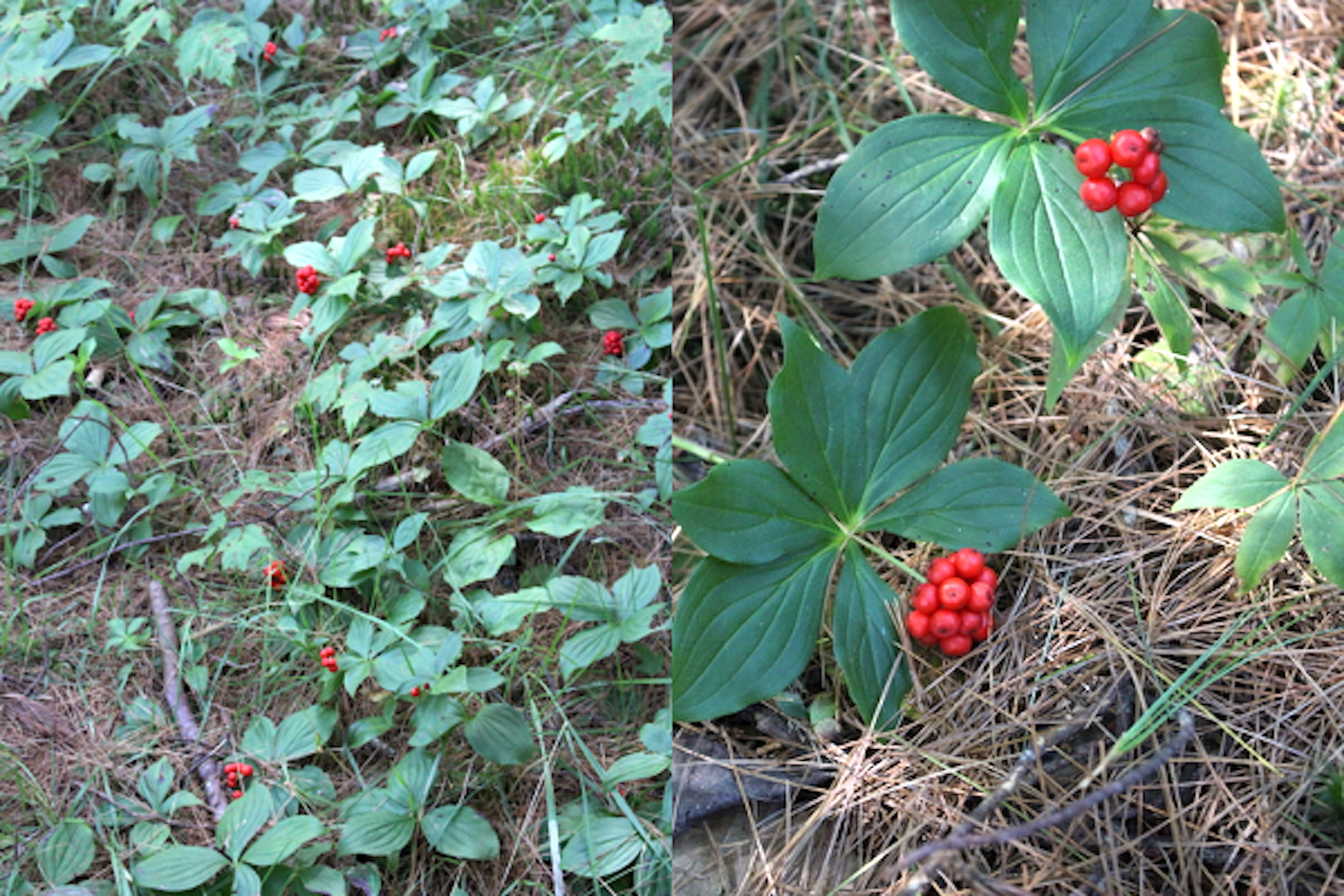
Sometimes you just want mild sweetness, harvested en masse at an accessible-height just a few inches off the ground. Bunchberries grow in dense colonies on the forest floor, and a productive patch puts hundreds of bright red berries within easy reach of even the smallest forager.
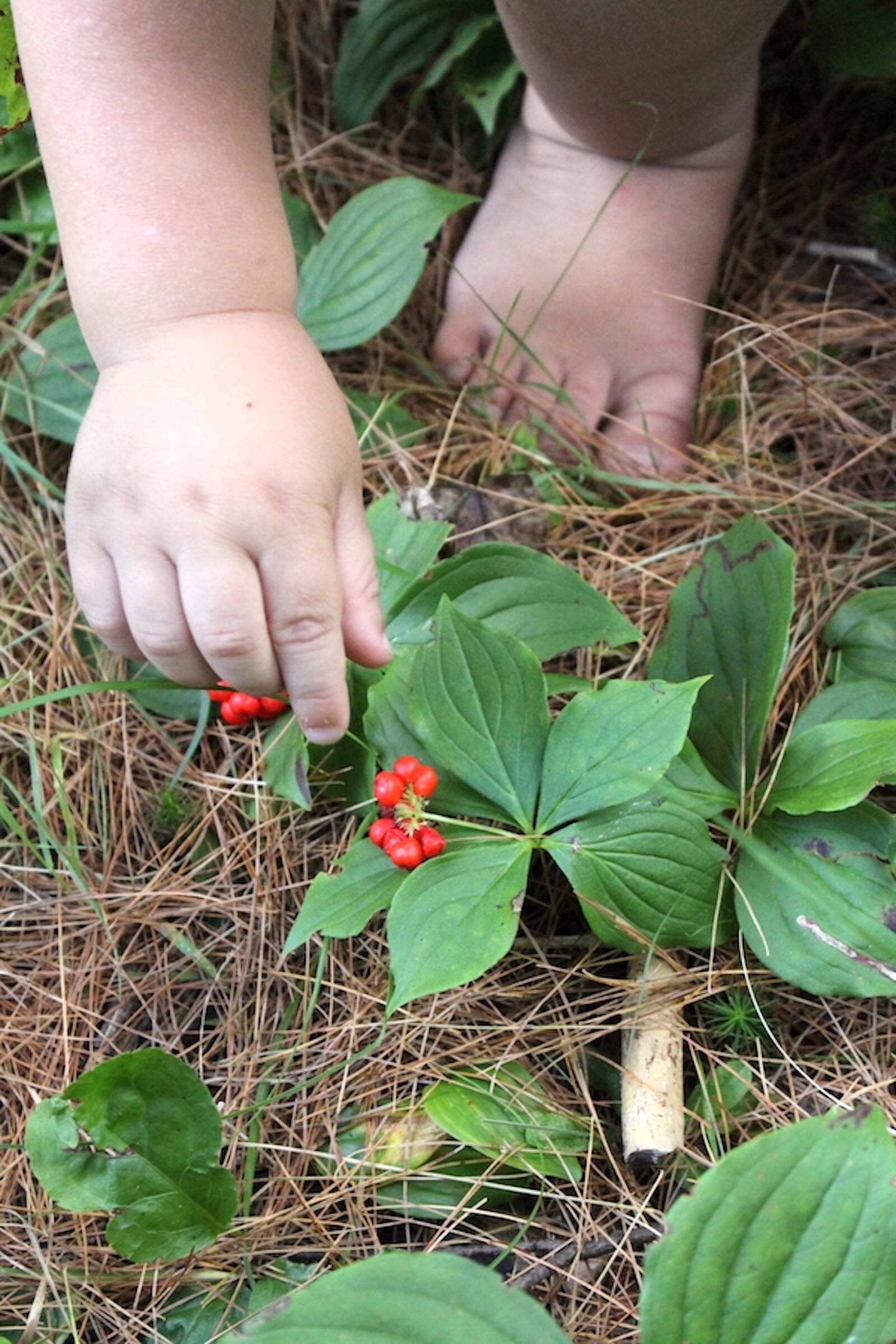
They quickly became a favorite of my two-year-old son, and his pudgy little toddler hands couldn’t harvest them fast enough. I’ll put him to work on a patch of those carpeting a pine forest, and then I’ll go to work harvesting the more intensely flavored rowanberries growing above.
Notes from My Homestead

Our Vermont homestead sits in the kind of acidic, mossy forest where bunchberries thrive. Walk into any patch of mature pine or hemlock here in late summer and you’ll find the carpeting whorls of pointed leaves topped with bright red berry clusters, often growing in colonies large enough to fill a basket. Some of my best bunchberry foraging happens on the same trails where we go for serviceberries earlier in the season, just at ankle height instead of overhead.
The kids are now old enough to recognize them on their own, and I’ve learned that bunchberries are one of those wild foods that work best with a rule: half for the basket, half for snacking. The pectin content is what makes them extra useful in the kitchen, since just a handful tossed into a low-pectin jam (like thimbleberries or even strawberries) brings the whole batch to a gel without commercial pectin. The bunchberry raisins are a quirky bonus, and they’re surprisingly good in oatmeal on a cold winter morning when you need a little reminder of summer pine forests.
What Are Bunchberries?
Bunchberries or “Bunch Berries” (Cornus canadensis) are a fruiting plant in the Dogwood family. They’re also known as Canadian Bunchberry, Bunchberry Dogwood, Dwarf Dogwood, Dogwood Bunchberry, Creeping Dogwood, Pudding Berry, Quatre-Temps, Crackerberry, Canadian Dwarf Cornel, or just plain Dwarf Cornel.
They grow in what’s known as “clonal colonies” where underground runners spread, and then they sprout up as what look like individual plants. This colony growth habit means they tend to grow in dense mats on the forest floor.
Bunchberry is one of just two herbaceous (non-woody) members of the genus Cornus; the other is the closely-related Cornus suecica (sometimes called Northern Dwarf Cornel or Swedish Bunchberry). All other dogwoods are shrubs or trees. The Latin name cornus means “horn,” likely a reference to the dense, hard wood of the larger dogwood species.
Bunchberry vs. Creeping Dogwood
“Creeping dogwood” is just another common name for the same plant. Because Cornus canadensis spreads by underground rhizomes and forms a dense low ground cover, several common names emphasize the creeping habit: creeping dogwood, dwarf dogwood, dogwood bunchberry, and bunchberry dogwood. They all refer to the same species and the same edible red berries.
Out west, especially in the Pacific Northwest, you may also see a closely related species called Western Bunchberry (Cornus unalaschkensis), which has slightly larger lower leaves and partially purple-tinged petals. Both are edible and used in the same ways.
Where to Find Bunchberry
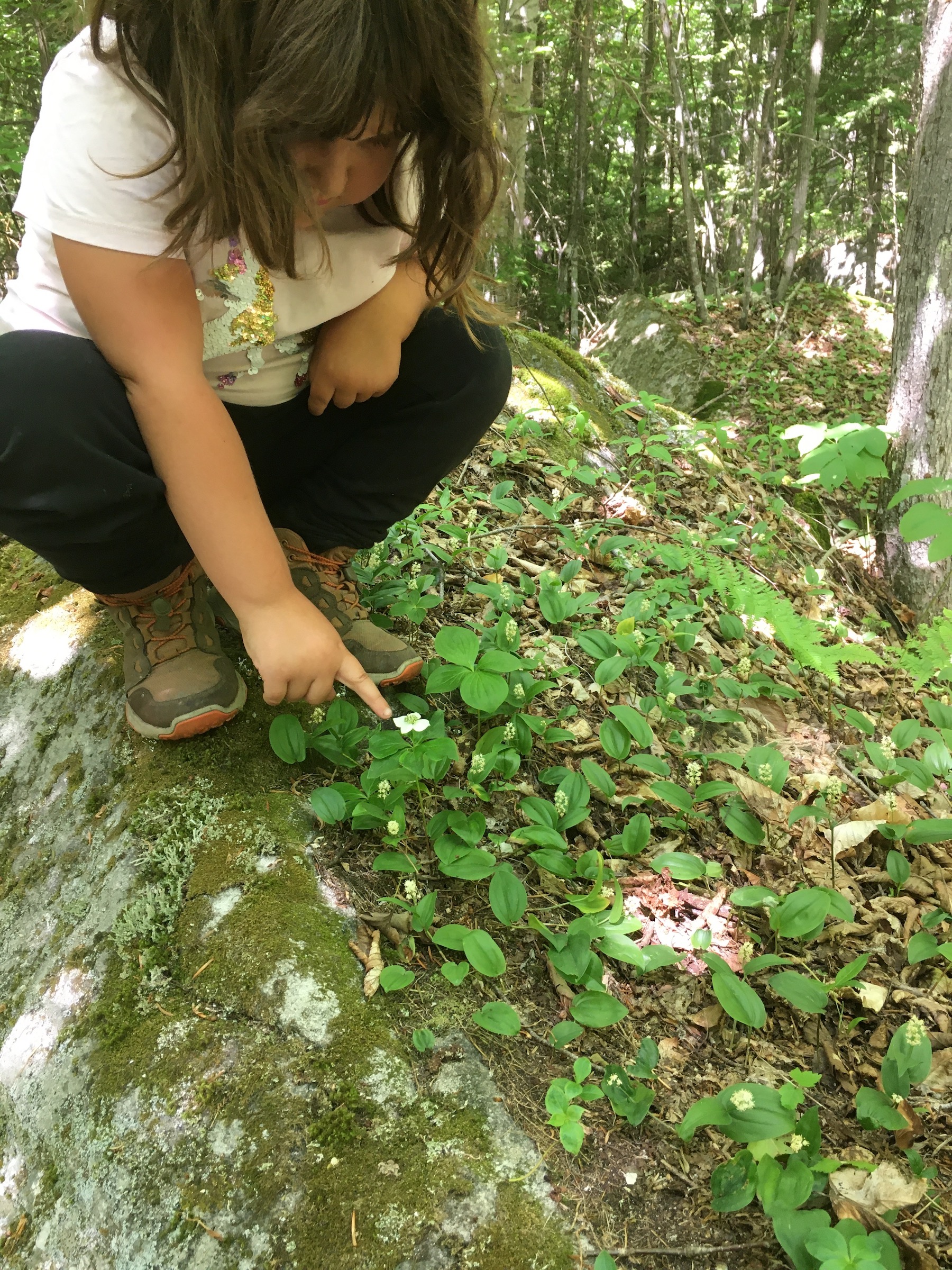
Bunch berries tend to grow in dense colonies on the forest floor, beneath pines and in areas with acidic soil. They’re often found in the shade deep in the woods, or beside trails, near wild blueberries, red blackberries and rowanberries.
They’re native all over the world, anywhere that has cool, moist acidic soils.
Their range includes Asia (Japan, Korea, China), Russia, and Northern Europe, as well as boreal forests in Canada and Greenland. In the US, they can be found in the northern states down to the middle latitudes, as well as down into the high-altitude portions of Colorado and New Mexico, with a southern arm extending through the Appalachians as far as Virginia. The plant prefers shaded forest understory with deep leaf litter, and is especially common on rotting stumps and old logs where the moss is thick.
When to Find Bunchberry
Bunchberry plants emerge in spring as a low whorl of leaves on a single stem. The white flowers appear in late spring or early summer, depending on latitude and elevation, and the berries ripen from green to bright red in mid to late summer. In far northern regions, the berries may not be fully ripe until early autumn.
The bright red berries persist on the plant well into fall unless eaten by birds or wildlife, so the harvest window stretches from late July through September across most of the species’ range.
How to Identify Bunchberry
Bunchberries are perennial plants that tend to grow in clusters or colonies, but they can also be found singly.
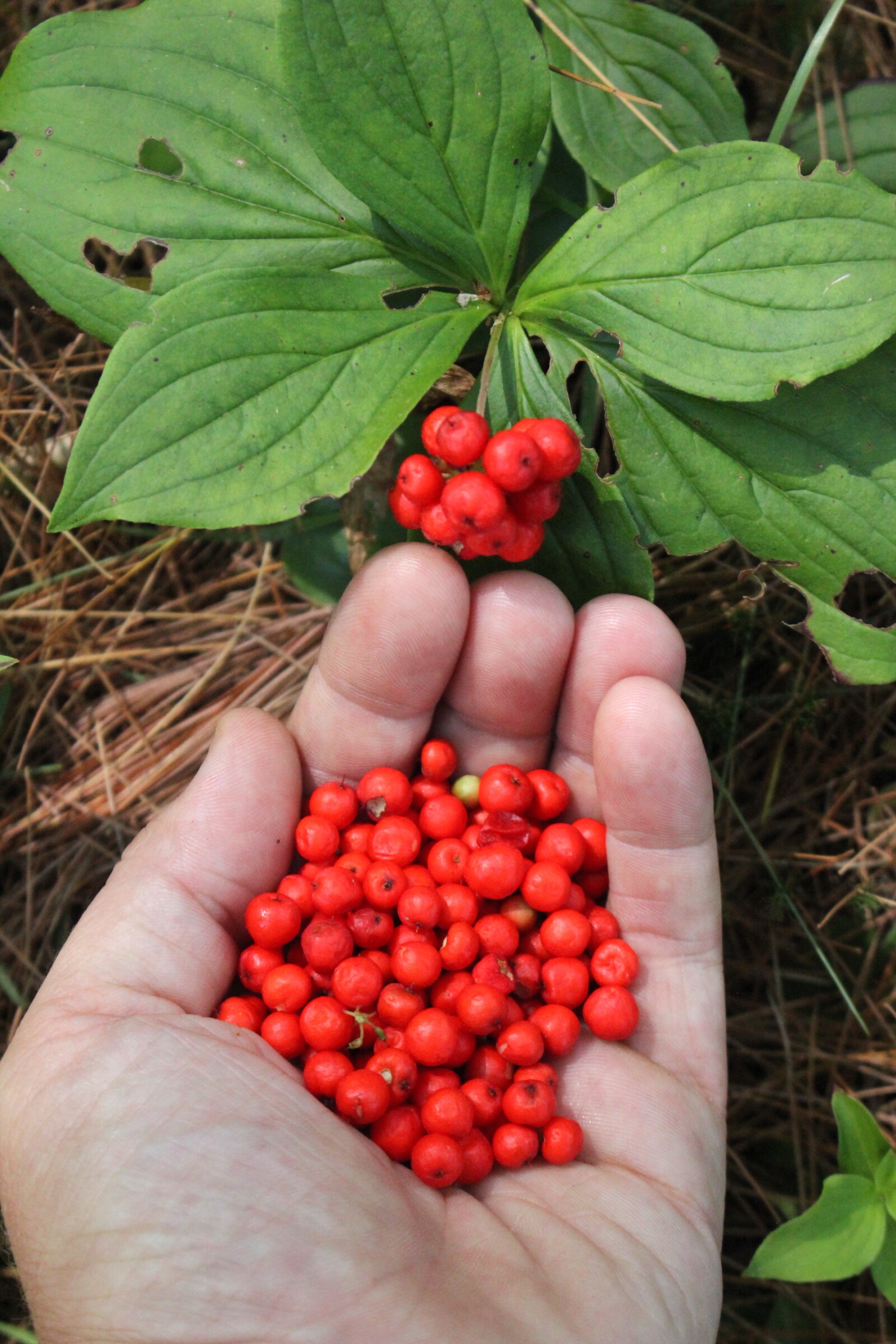
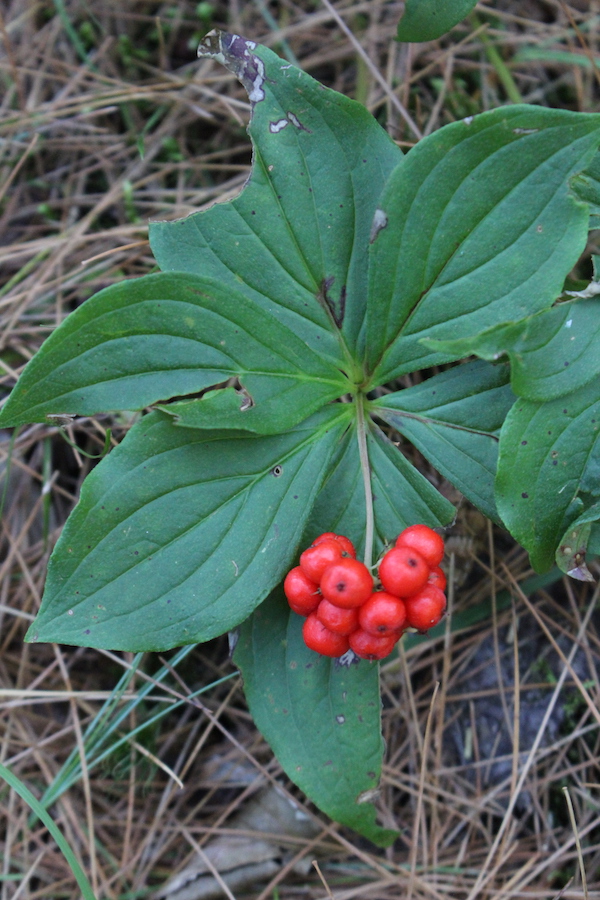
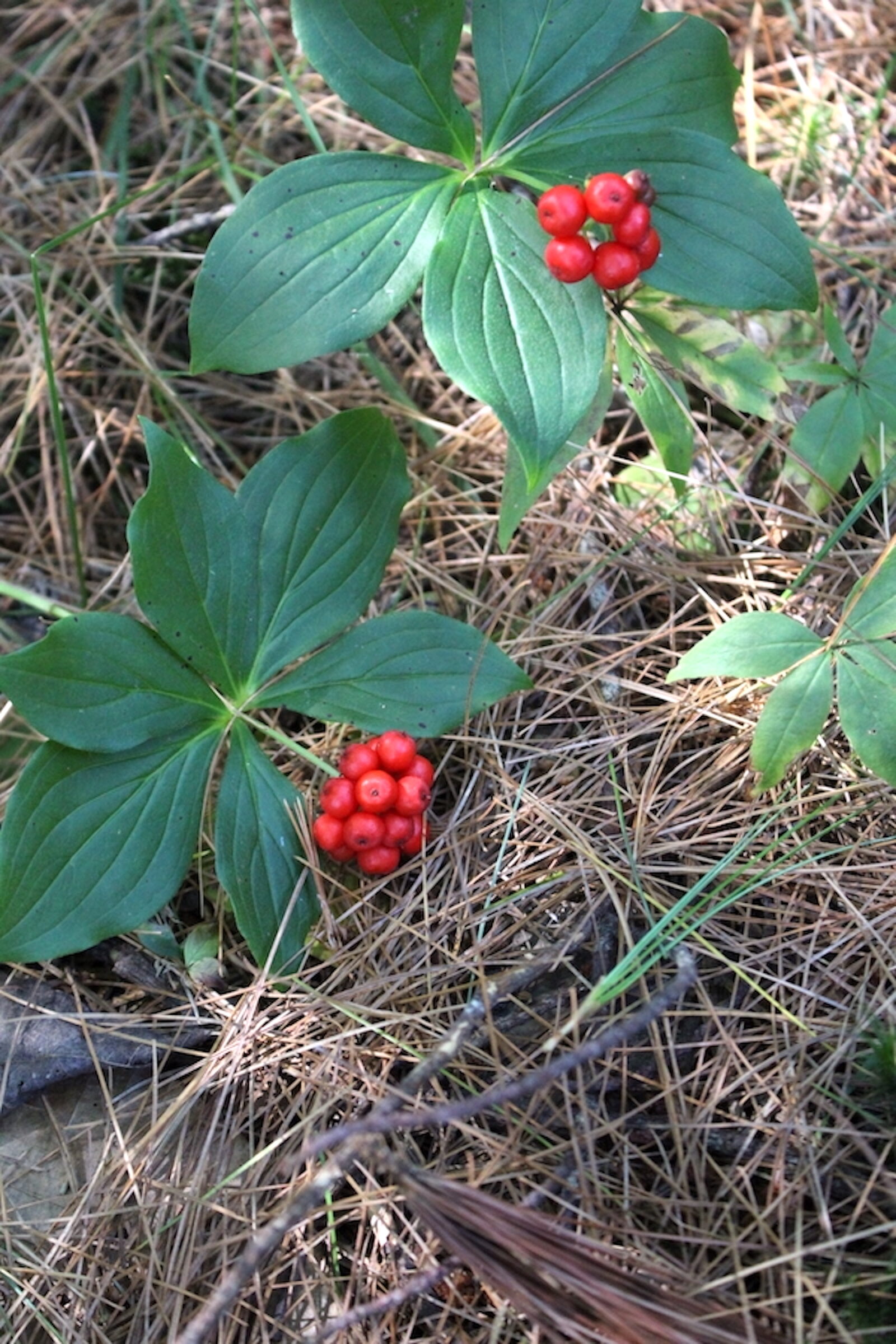
Early in the season, bunchberries emerge from the soil as a small, erect herbaceous green plant. Plants are typically 4 to 8 inches tall at maturity, with a single unbranched stem topped by a whorl of pointed oval leaves and (later in the season) a single flower or cluster of bright red berries.
Bunchberry Leaves
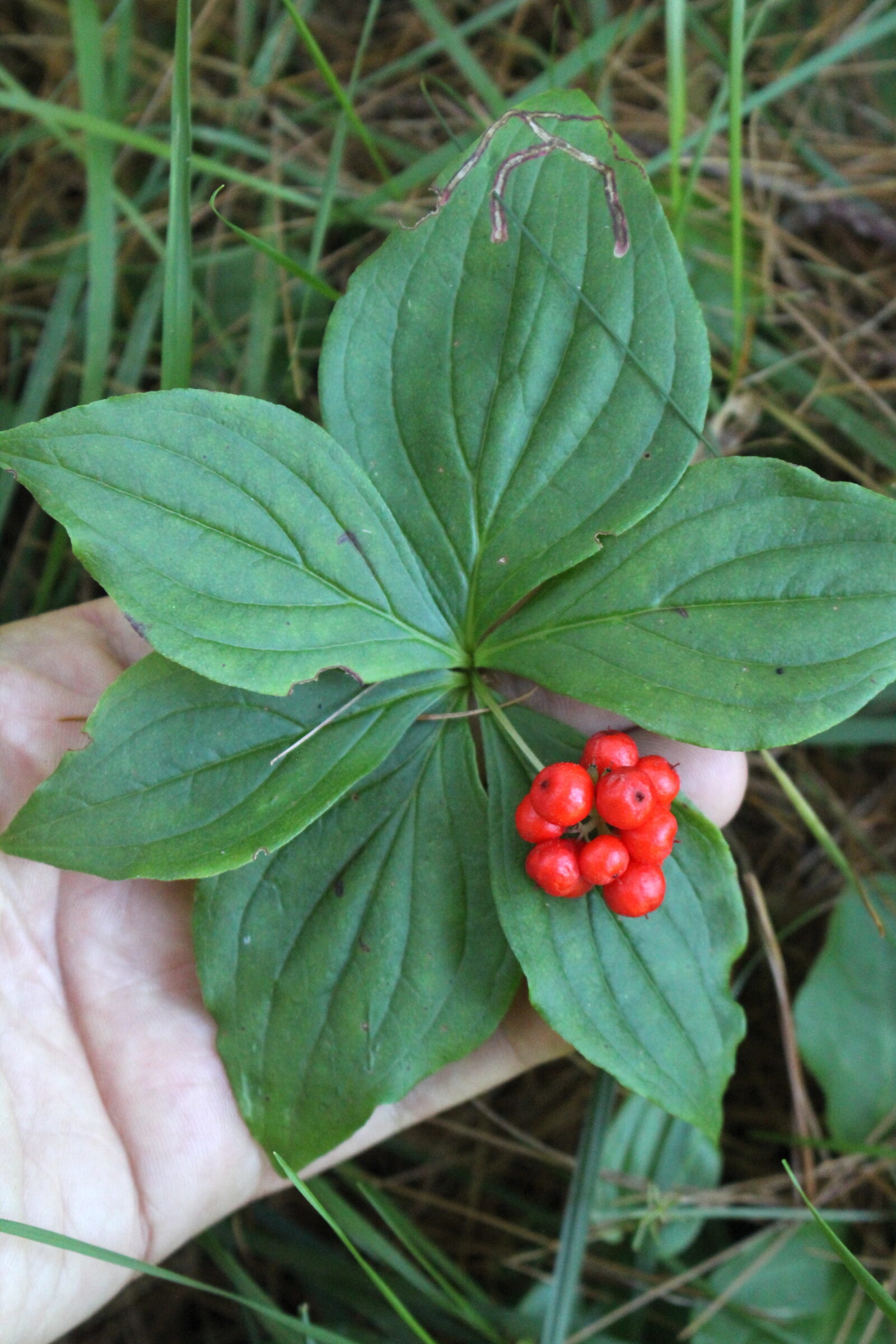
Early in the season, the plants start off as a whorl of 4 to 6 leaves on a single stem. Each leaf has an elongated oval shape with a pointed tip (almost diamond-shaped, but without the side points). The leaves are usually 1 1/2 to 3 inches long, with smooth edges (un-toothed) and they taper to a point at both ends.
The leaves have a distinctive set of curved parallel veins that run from the base of the leaf and converge at the tip; this veining pattern is consistent across all dogwood species and is one of the easiest ways to confirm an identification. The stems come up singly from each rhizome in the colony and are unbranched until they reach the whorl of leaves.
Bunchberry Flowers
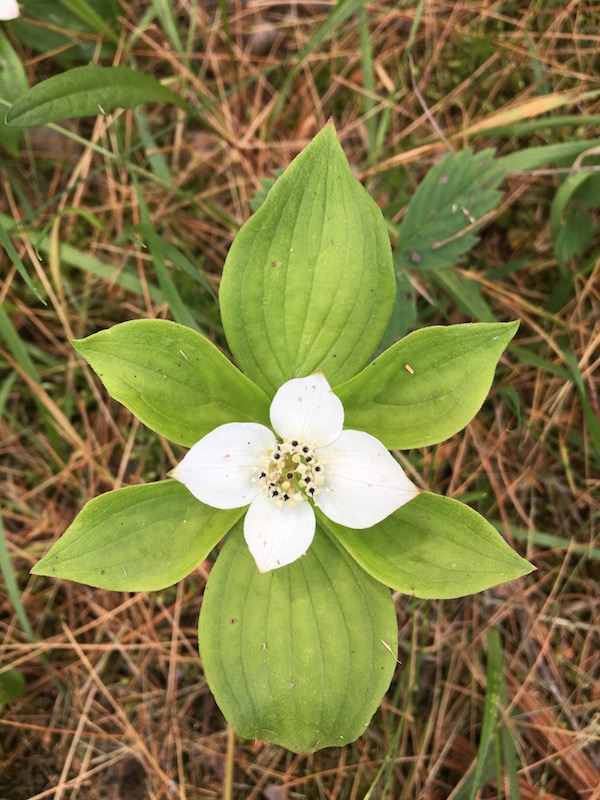
A bit later on in the season, a single distinctive white flower will appear above the leaf cluster. The flowers themselves have 4 petals, and each petal tapers to a point, much like the leaves.
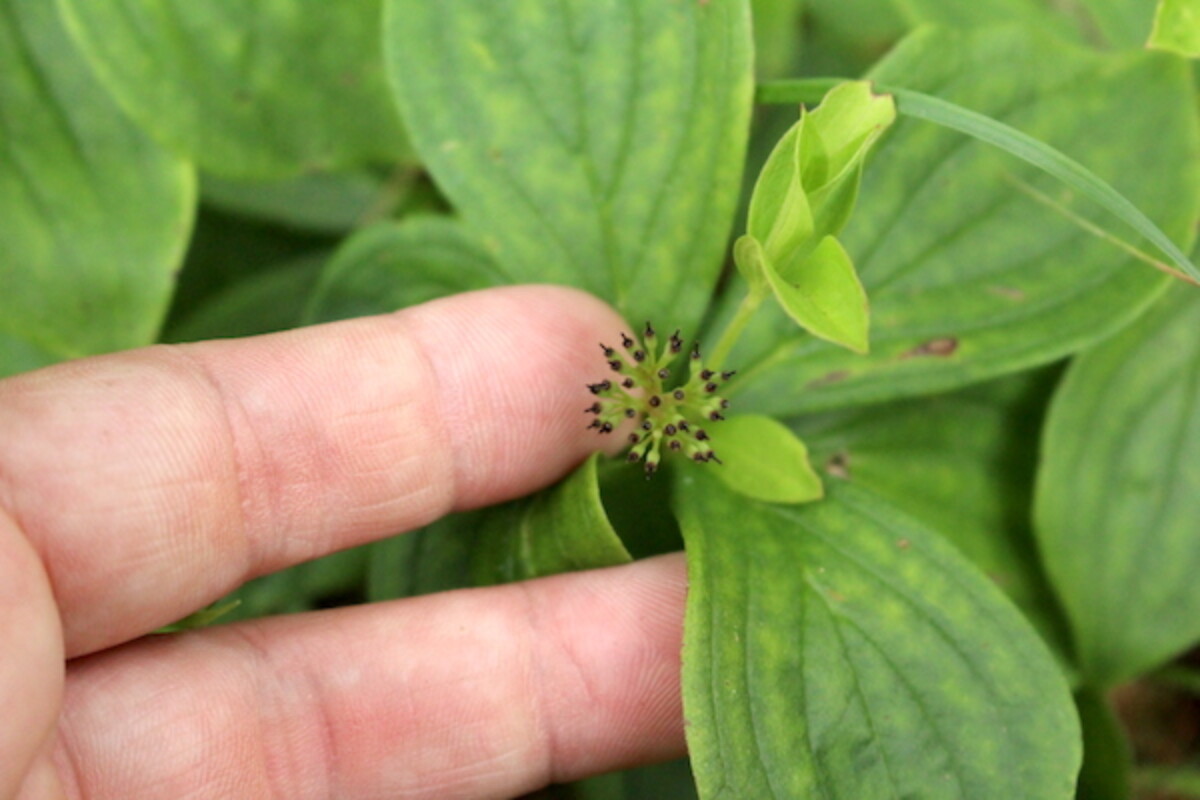
If you look closely, you’ll see that the flower isn’t truly a “single” flower, though it does have the appearance of one. What looks like four white petals are actually four showy bracts (modified leaves) surrounding a tight central cluster of tiny greenish-yellow true flowers. Each true flower in the central cluster, if pollinated, will form a single berry in the bunch (thus, bunchberries).
This is more apparent after pollination after the bracts have fallen off.
The flowers appear in early summer or late spring, and the berries ripen from mid to late summer, occasionally in early autumn in far northern regions. Bunchberry flowers also have one of the most remarkable pollination mechanisms in the plant world; when an insect lands on a ready-to-bloom flower, the petals snap back instantly and catapult the pollen into the air at speeds reaching 24,000 meters per second squared.
The whole motion takes less than half a millisecond, and you need a high-speed camera to actually see it. It’s one of the fastest plant movements ever recorded.
Bunchberry Fruit
The fruit production can vary based on pollination, and sometimes clusters or “bunches” of bunch berries are bigger than others. I tend to see them in clusters of 10-12 individual berries on a plant, but occasionally there are a few more, or just one or two per “bunch.”
They’re ripe when the fruit are bright red in color, and they’re a pale green as they develop. Each berry is about 1/4 inch in diameter and contains one or two hard ellipsoid seeds. Botanically, bunchberries are drupes (the same fruit type as cherries and olives), and the seeds are stones rather than soft seeds.
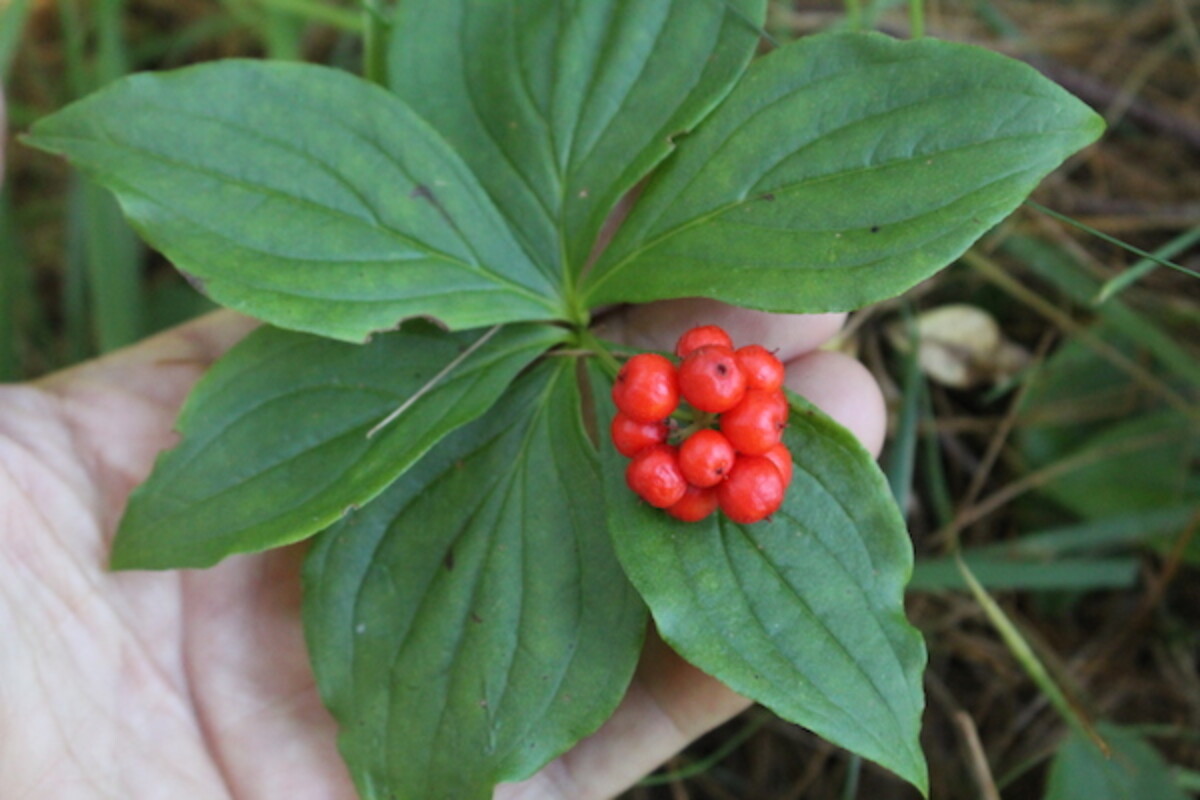
Earlier in the season, the flowers stood on a stem about 1 to 2″ above the whorl of leaves, and as the berries develop they’ll stay above the whorl of leaves.
When they swell, they can make the plant droop over with their weight, but sometimes they’ll stay erect and support the berries just fine. Either way, you’re looking for a cluster of red berries, all tightly packed together above a whorl of distinctive pointed oval leaves with parallel veins.
Bunchberry Look-Alikes
There are plenty of other small red berries in the woods, and some of them are toxic. I’d argue that the leaves and growth habits of bunchberry are incredibly distinctive, and while you will see plenty of red berries, you won’t see any that look all that much like bunchberry plants when you study the whorl of pointed leaves and the tight cluster of berries together. Still, several other species share enough features to be worth a closer look, especially before you put any berries in your basket.
That said, I’m always amazed at how optimistically foragers see the plants they want to find, even in look-alikes that look nothing alike.
Flowering Dogwood (Cornus florida)
Not all dogwood berries are edible. Flowering Dogwood (Cornus florida) is a small tree native to the eastern and southern United States, and its red berries are toxic to humans. The leaves and four-bract flower structure look similar to bunchberry on a much larger scale, which is why some readers searching for “are dogwood berries edible” understandably get confused. The key difference is growth habit:
- Flowering Dogwood is a small tree (15 to 30 feet tall), while bunchberry is a low-growing herbaceous ground cover (typically 4 to 8 inches tall).
- Flowering Dogwood berries appear in loose clusters at the tips of woody branches, while bunchberries appear in tight clusters above a whorl of basal leaves on a single herbaceous stem.
- Flowering Dogwood is most common in the southern US, where bunchberry doesn’t grow.
If you’re south of bunchberry’s range and you see red berries on a low woody shrub or small tree, those are not bunchberries. They’re either flowering dogwood (toxic) or another tree species and should not be eaten.
Red Baneberry
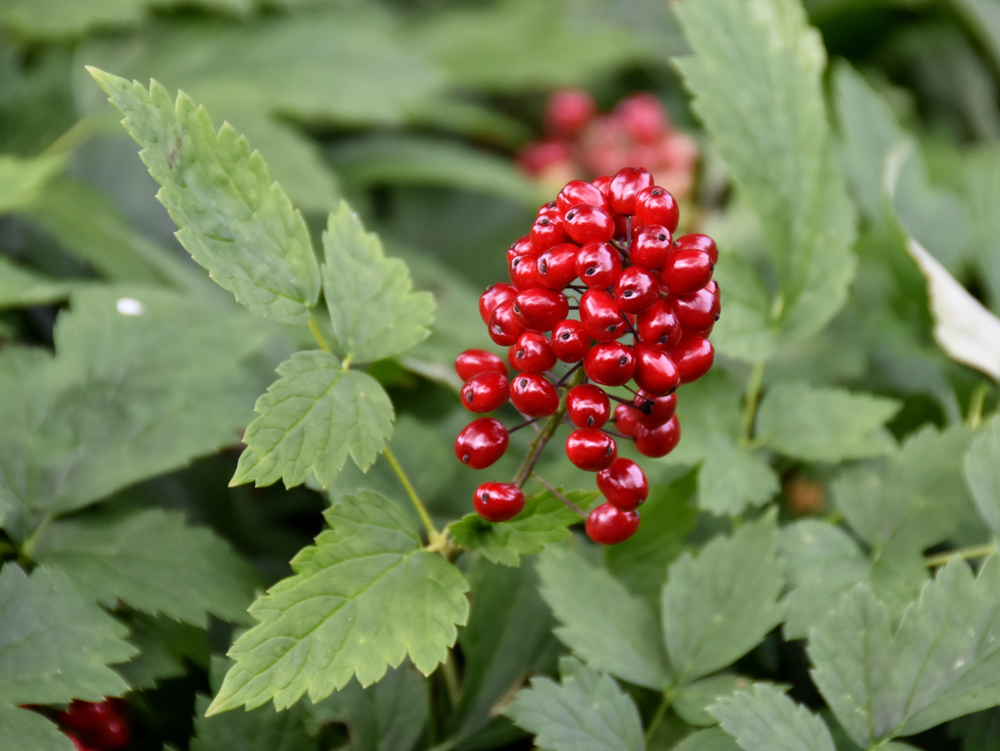
Be sure to watch out for Red Baneberry (Actaea rubra), a poisonous fruit that also has clusters of red berries on a low-growing plant. Red Baneberry differs from bunchberry in several easy-to-spot ways:
- The plant is much larger (1 to 3 feet tall vs. bunchberry’s 4 to 8 inches).
- The leaves are large and deeply divided into many leaflets, not a tidy whorl of pointed ovals.
- The berries are on elongated spikes, rather than small rounded clusters.
- Each baneberry has a distinctive black “eye” or dot at the tip, where the flower style remains attached.
They’re ripe at the same time and occupy many of the same niches ecologically, so it’s worth knowing both plants well if you forage in the same forest understory where bunchberries grow. All parts of red baneberry are toxic, including the berries.
Rowanberries
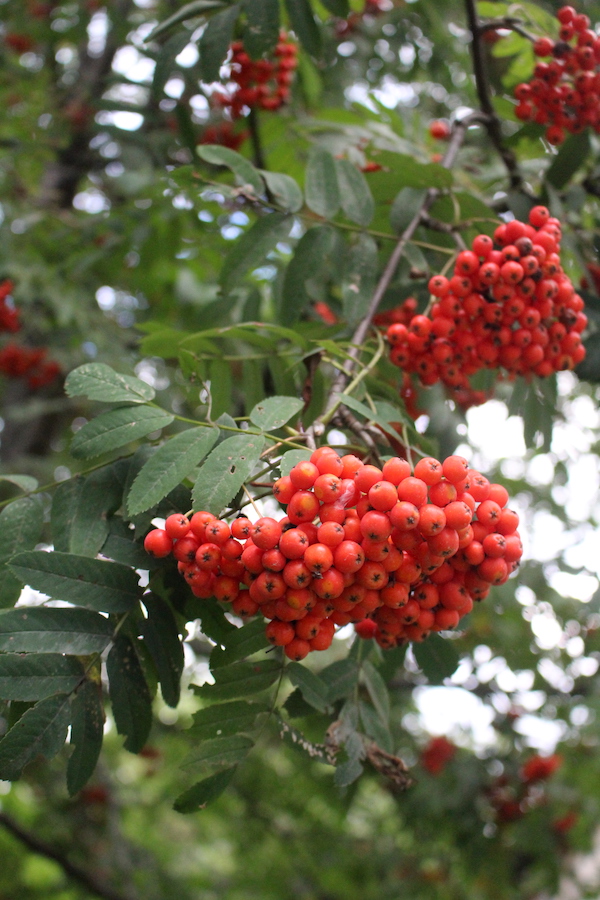
Rowanberries (Sorbus sp.) look very similar to bunchberries, but they grow in clusters on trees. They do happen to grow in the same environment, and you’ll often find bunchberries growing under rowanberries (also known as mountain ash trees).
When the rowanberries fall, they can land among the bunchberries on the forest floor and be collected accidentally. They are edible, but they have a very different taste that many people don’t like.
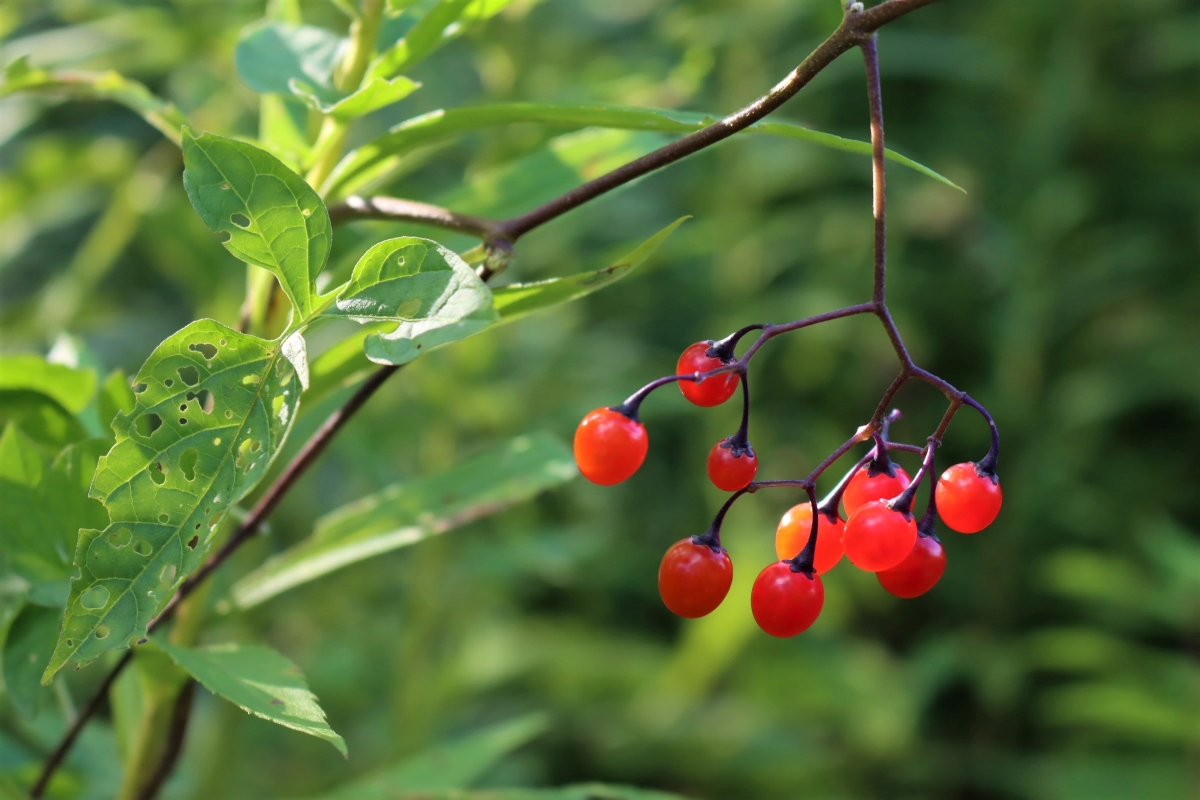
Bittersweet Nightshade
Also, be sure to watch out for red-fruited nightshade species (Solanum dulcamara and others), which also grow low to the ground on occasion. The berries aren’t in tight clusters, and the fruits aren’t all that similar to bunchberry, but it’s possible you could collect them by accident if you’re not paying attention.
The leaves are arrow or heart-shaped (not the pointed-oval whorl of bunchberry), and the plant is typically a sprawling vine rather than an upright herbaceous stem. Bittersweet nightshade berries are toxic and should be avoided.
Harvesting Bunchberries
Once you’ve identified bunchberries, harvesting is pretty straightforward. Reach down and grab a cluster of fruits and give a gentle tug. They’ll easily pull away from the plant and you’ll have 10-12 in your hand in a single motion.
If you have tiny toddler hands, you might not get them all as they pop out and fly everywhere; be sure to grab the whole bundle if you want to keep them.
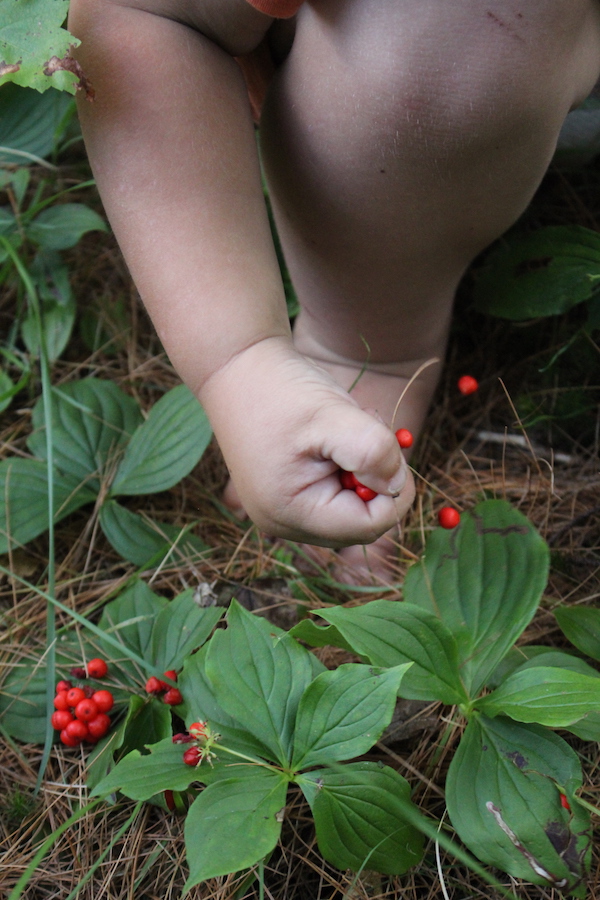
In a colony of bunchberries, it’s easy to collect them en masse in just a few minutes. You can collect a pint in roughly 5 minutes with little effort, if the stand is productive.
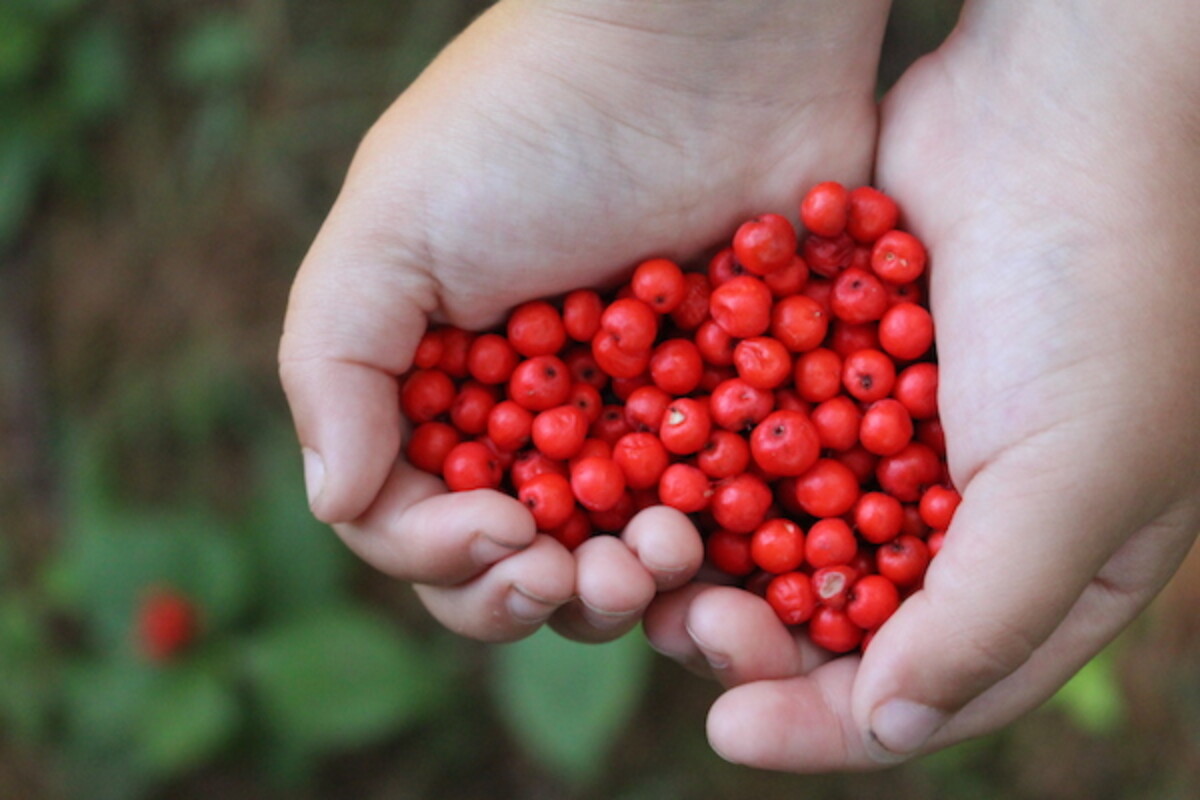
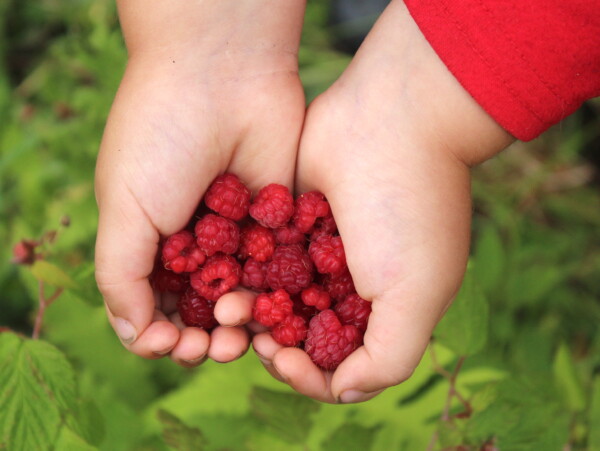
While we’re often able to collect plenty, my kids tend to eat them all as fast as they can pick them. It actually took a lot of work (and some bribery) to get them to pick a handful to let me photograph, rather than going from plant to mouth instantly.
Bunchberries are perishable and don’t keep especially well in the fridge, since the soft pudding-like flesh starts to break down within a few days. Use them within a day or two for fresh eating, or get them into a jam, dehydrator, or freezer right after harvest. They freeze well on a sheet pan, and once frozen they can be transferred to a bag for use in jams or smoothies later.
Bunchberry Medicinal Benefits
Beyond their culinary use, bunchberries have a long history of use in traditional Native American medicine. Various tribes used the leaves, berries, and roots for a range of conditions, including fevers, coughs, sore eyes, kidney issues, and as an anti-inflammatory poultice for skin irritations. The Iroquois and Ojibwa both have well-documented historical uses for bunchberry preparations.
Modern research has identified the genus Cornus as one of several being studied for natural anti-cancer compounds, and the berries are notably high in flavonoids and vitamin C. As with any wild herbal use, consult an herbalist or healthcare provider before using bunchberries medicinally, particularly if you’re pregnant, nursing, or taking other medications.
How to Use Bunchberries
If you are able to collect bunchberries to bring home, without your kids eating them all in the field, then you can use them to make traditional jams and puddings.
They’re incredibly high in pectin, and they have a soft, sweet, pulpy fruit around small hard seeds. It’s not easy to separate the fruit from the seeds without cooking, and if you want to remove the seeds you’ll need to cook them and then press them through a fine mesh sieve.
I think it’s just easier to cook them in a sachet of cheesecloth and let the pectin and sweetness infuse into the cooking liquid, and then remove the whole sachet. I do something similar when I’m using citrus seeds for pectin to make jams and jellies.
The actual amount you need to set a jam will depend on the pectin content of your particular bunchberries, as well as the pectin content and sugar level of your fruit. It’s tricky, and you’ll have to experiment here. The high pectin content makes bunchberries an especially useful addition to other low-pectin wild fruits; a handful of bunchberries tossed into a batch of thimbleberry or wild strawberry jam can bring the whole batch to a perfect set without commercial pectin.
There is a little bit of guidance in this article from a writer in Alaska that used bunchberries to help set a jam made from thimbleberries, but even there, she notes that it’s impossible to give a specific amount.
Bunchberry Jam
Bunchberry jam is one of the most obvious ways to preserve a productive harvest. The natural pectin content means the jam sets without commercial pectin, and the mild flavor pairs well with a squeeze of lemon and a touch of cinnamon or vanilla. Because bunchberries are mild on their own, many foragers blend them with a more intensely flavored fruit (like wild raspberries, thimbleberries, or even just a bit of orange zest) to give the finished jam more character.
For a small batch (about 2 half-pint jars), use 4 cups of fresh or frozen bunchberries, 2 cups sugar, and 2 tablespoons fresh lemon juice. Combine in a heavy saucepan, bring to a boil, then simmer for 15 to 20 minutes, mashing the berries gently as they cook. Test the gel by chilling a spoonful on a cold plate; if the jam wrinkles when nudged, it’s ready. Press through a fine mesh sieve to remove the hard seeds (or leave them in if you don’t mind the crunch), then pour into sterilized jars.
No one has tested the pH of bunchberries to determine if they’re safe for canning, so stick with refrigerator jams. By taste, I’d guess they’re not particularly acidic, and I don’t think they meet the minimum pH required for safe canning (under pH 4.6).
The result is a soft-set, mild, ruby-red jam that pairs beautifully with cream and biscuits or yogurt.
Bunchberry Raisins
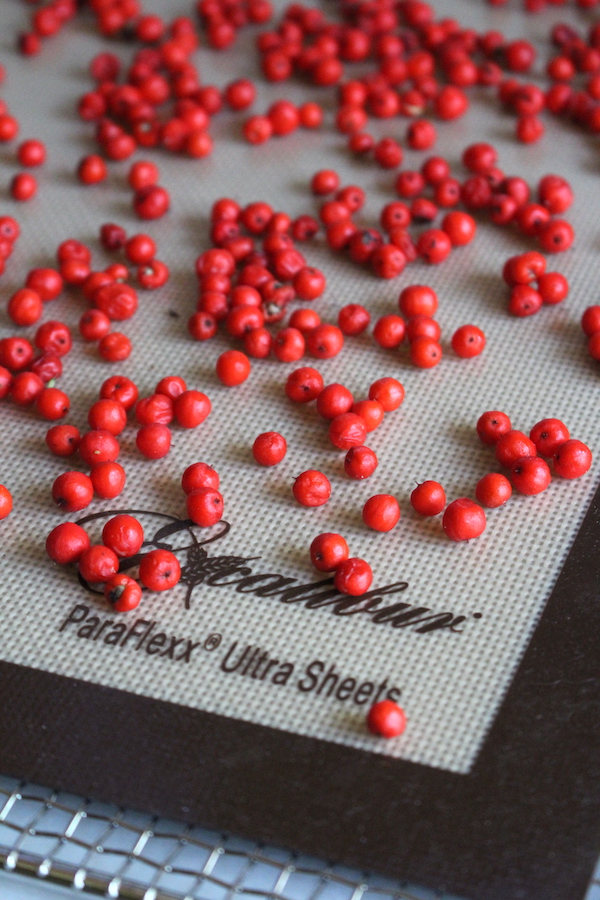
Beyond setting jams and making puddings, bunchberries can also be dehydrated into “bunchberry raisins.” The flavor is sweet and mild, as you might expect from the taste of the fresh fruit. To make bunchberry raisins, spread cleaned berries in a single layer on a dehydrator tray (a silicone sheet helps catch any berries that try to escape), and dehydrate at 135°F for 12 to 24 hours, until the berries are leathery and no longer tacky.
As raisins, they are good in trail mix, granola, and oatmeal. They store well in an airtight jar at room temperature for several months, or longer in the freezer.
Bunchberry Pudding
The “pudding berry” common name comes from one of the traditional ways indigenous peoples in northern North America used bunchberries: cooking them with other ingredients into a soft, mild fruit pudding. A simple version involves simmering bunchberries with a little maple syrup or honey and a splash of water until the fruit breaks down, then thickening with a small amount of cornstarch or arrowroot.
The result is a delicate pink pudding with a similar texture to traditional fruit puddings, mild enough to be served on its own or layered into a parfait with yogurt or cream.
Bunchberry FAQs
Yes, bunchberries (Cornus canadensis) are edible raw or cooked. The fruit is mild and slightly sweet with a soft, almost pudding-like texture and small hard seeds inside. Most people find them pleasant to eat fresh as a trail nibble, though they’re not particularly intensely flavored. Bunchberries are high in pectin and vitamin C, and they work especially well in jams and puddings or dehydrated into bunchberry raisins.
Bunchberries taste mild and gently sweet, with a soft, gelatinous, almost creamy texture (which is why one of their common names is “pudding berry”). They’re not tart or strongly flavored like raspberries or blueberries, and many foragers describe them as tasting like “pudding you forgot to flavor.” The mild flavor makes them especially good for kids, and they pair well with stronger-flavored wild fruits in mixed jams.
No, not all dogwood berries are edible. Bunchberry (Cornus canadensis) is edible, but the red berries of Flowering Dogwood (Cornus florida), the small flowering tree common in the eastern and southern US, are toxic to humans. Several other tree-form dogwoods also produce inedible or toxic berries. The herbaceous bunchberry (a low ground cover only a few inches tall) is the species to look for; if you’re seeing red berries on a woody shrub or small tree, those are not bunchberries and shouldn’t be eaten.
Bunchberries grow in cool, moist, acidic forest soils across northern North America (Canada and the northern US), with extensions south through the Appalachians and into the high-altitude forests of Colorado and New Mexico. They’re also native to northern Europe, Russia, Greenland, and parts of east Asia (Japan, Korea, China). Look for them in the shaded understory of pine, hemlock, or mixed coniferous forests, especially on rotting stumps and old logs where the moss is thick.
Yes, bunchberry jam is one of the best uses for a productive harvest. Bunchberries are very high in natural pectin, so the jam sets without commercial pectin. A typical small-batch recipe combines 4 cups of berries with 2 cups of sugar and 2 tablespoons of lemon juice, simmered for 15 to 20 minutes until thickened. The mild flavor pairs especially well with bunchberry as an addition to other low-pectin wild fruit jams (like thimbleberry or wild strawberry), where a handful of bunchberries can bring the whole batch to a perfect set.
Wild Berry Foraging Guides
Did you find this Bunchberry foraging guide helpful? Tell me in the 📝 comments below how you use bunchberries on your homestead!
And make sure you stay in touch with me by following on social media!
Find the perfect foraging guide
Searching for something else? Enter keywords to find the perfect foraging guide!










thanks very informative
Can’t express my gratitude enough! ✨
How do you typically go about making bunchberry raisins? I love that idea! They would keep much better than the awkward cup shoved on the fridge that my family usually does.
You would just need to dehydrate them.
It’s worth pointing out that not all dogwood berries are edible! CORNUS CANADENSIS is edible, but CORNUS FLORIDA’s berries are poisonous. Down south, we don’t have creeping dogwood, but we have flowering dogwood (a small tree) galore. Don’t assume the red berries on those little trees are edible; they’re deadly poisonous to humans. Leave those ones for the birds!