
Affiliate disclosure: This post may contain affiliate links. Please see our Privacy Policy.
Strawberry wine is one of the most popular homemade country wines, and it’s especially popular in the south. There are even classic country songs about strawberry wine!
This sweet, blush-pink wine captures the essence of summer strawberries in every sip, and it is the perfect way to preserve a bumper crop of fresh berries long after the harvest ends.
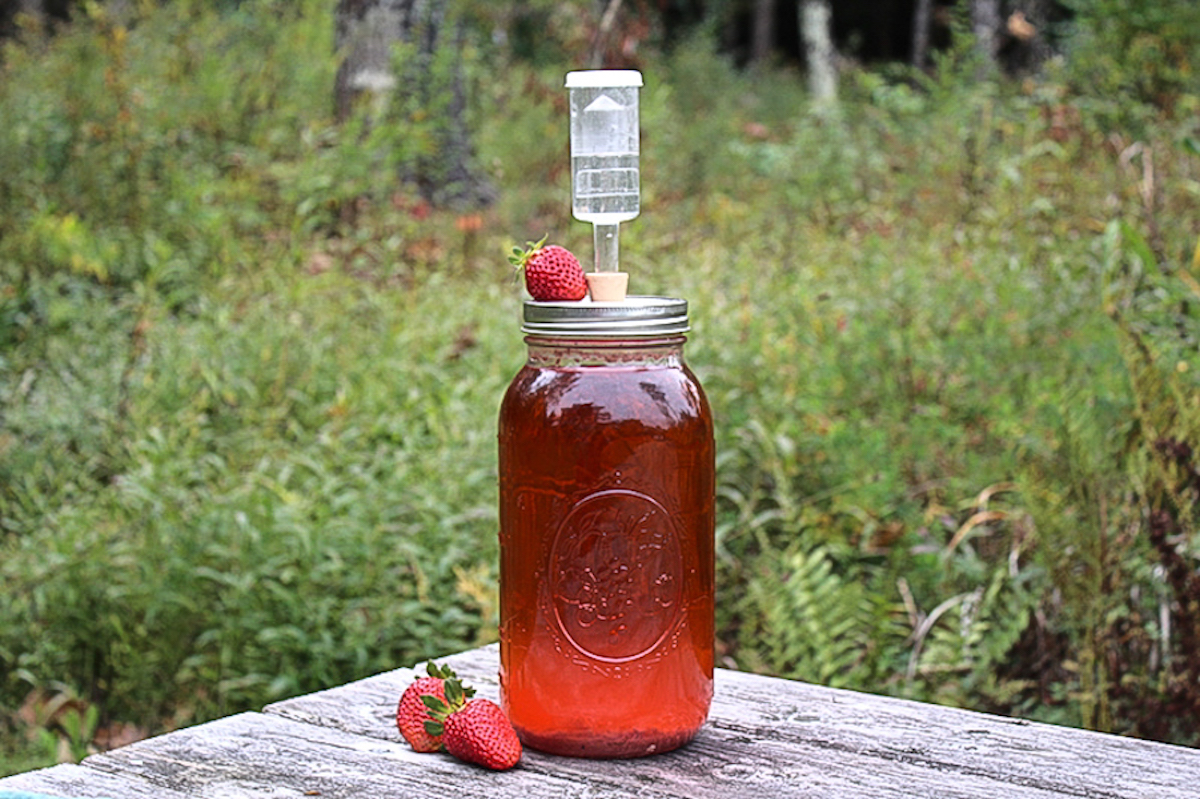
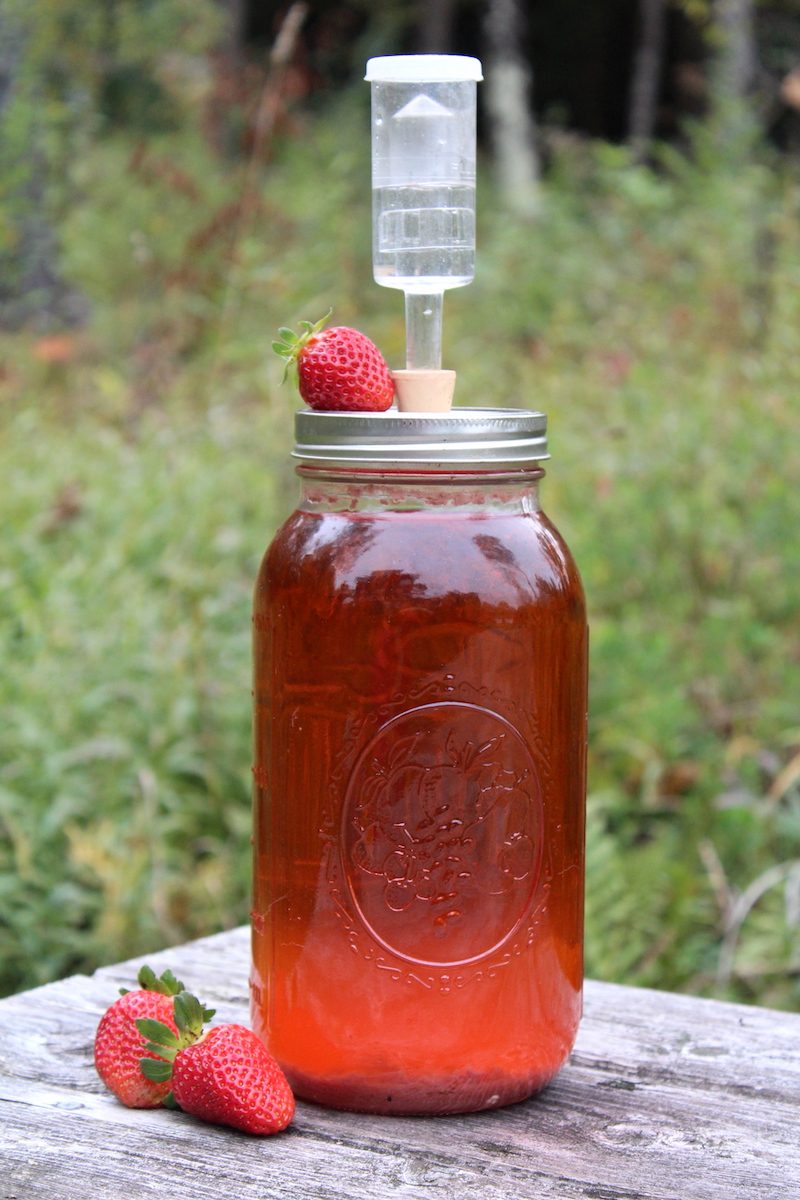
Homemade strawberry wine ferments into a beautiful rose-colored wine with a delicate fruity sweetness that improves with age. The flavor is unmistakably strawberry but refined, with none of the cloying sweetness you might expect from a berry wine.
Fresh strawberries bring natural sugars and a touch of acidity to the fermentation, though we add a few specialty winemaking ingredients to create a balanced wine that will age gracefully for years. You can also make a strawberry mead by substituting honey for some or all of the sugar, which adds complexity and a gorgeous golden-pink hue to the finished wine.
Notes from my Kitchen

We planted a quarter acre of strawberries one year, and boy did they deliver. By midsummer, we were swimming in berries, with buckets coming in faster than we could possibly eat or preserve them. That was the year we made our first batch of strawberry wine, and it became an instant keeper in our household.
There is something magical about cracking open a bottle of homemade strawberry wine in the middle of winter and being transported right back to those sunny June afternoons in the berry patch. The wine improves with each month of aging, and by the time the next strawberry season rolls around, last year’s bottles are drinking beautifully.
This recipe was amazing! Made it with fresh strawberries from our garden and it turned out perfectly. Already planning a bigger batch for next season.
Ingredients for Strawberry Wine
All country winemaking recipes aim to create a balanced fruit wine with enough residual sweetness to be enjoyable, enough acidity to add bright flavor, and enough tannin for good body and mouthfeel. Strawberries bring wonderful color and flavor, but like most fruits (besides grapes), they need a few additions to make a successful wine. Here is what goes into a gallon batch of country wine ingredients:
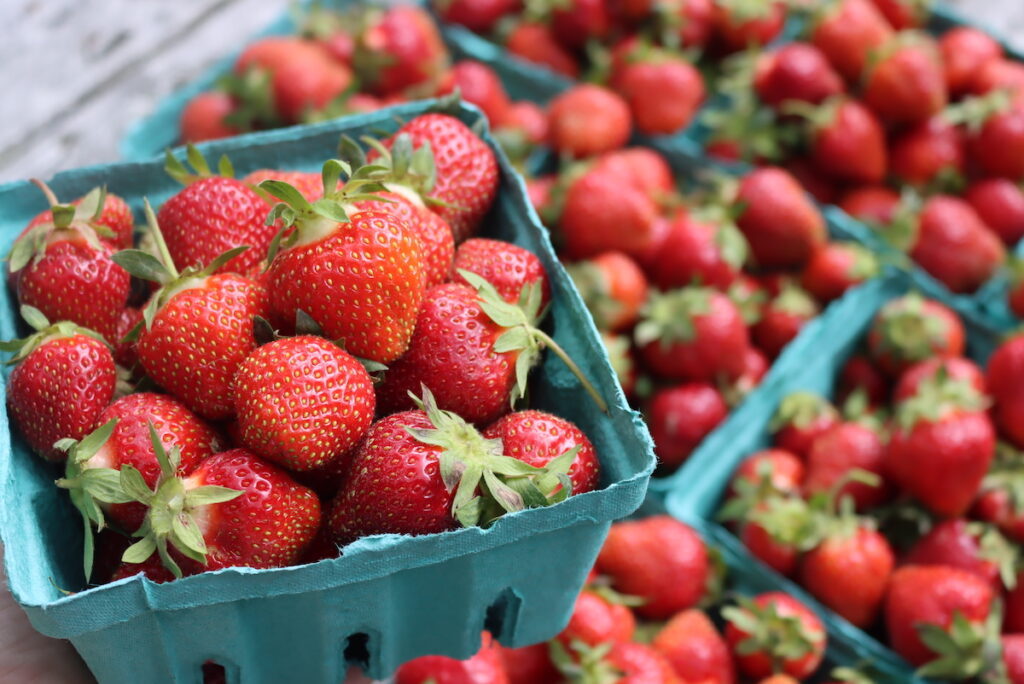
- Fresh strawberries (4-5 pounds per gallon) – The star of the show. Use ripe, fragrant strawberries at peak sweetness for the best flavor. Slightly overripe berries are actually ideal for winemaking since they have higher sugar content and more developed flavors. Frozen strawberries work well too, and freezing actually helps break down the cell walls to release more juice. Avoid underripe or tasteless supermarket berries, as the wine can only be as good as the fruit you start with.
- Sugar (about 2 pounds per gallon) – Required because strawberries are not nearly as sweet as wine grapes, and without enough sugar the yeast will consume it all too quickly and stall out. The sugar is what gets converted into alcohol, so the finished wine will not taste overly sweet since most of it transforms during fermentation. You cannot use indigestible sugar substitutes like monk fruit, stevia, or Splenda since the yeast need to actually digest the sugar, not just taste sweetness. For a strawberry mead, substitute some or all of the sugar with honey.
- Water – Creates the wine base and dilutes the concentrated fruit. Use filtered or spring water if your tap water has a strong chlorine taste, as chlorine can inhibit yeast activity and affect fermentation.
- Wine yeast – Different strains produce dramatically different flavors and alcohol levels. Yeast contribute flavor esters during fermentation that can enhance fruitiness, floral notes, or other characteristics. See the yeast section below for strain recommendations specific to strawberry wine. Never use bread yeast, which produces off-flavors and dies out at low alcohol levels.
- Yeast nutrient – While wine grapes have all the nutrients yeast need to survive, strawberries are deficient in certain minerals. Yeast cannot live on sugar alone and need nitrogen and other nutrients to thrive. You can substitute a handful of golden raisins (sultanas work best for neutral flavor), but powdered yeast nutrient gives more consistent results.
- Acid blend – Serves two purposes: creates the proper pH environment for yeast to work (wine cannot ferment properly without enough acidity), and balances the residual sweetness for better flavor. Strawberries have moderate natural acidity, so you need less acid blend than many fruit wines. You can substitute 1 tablespoon of fresh lemon juice for each teaspoon of acid blend.
- Pectic enzyme – Optional but recommended. Breaks down the natural pectin in strawberries that would otherwise cloud the wine. Strawberries are actually fairly low in pectin compared to fruits like apples or currants, but adding pectic enzyme still results in better clarity in the finished wine. Alternatively, freezing your strawberries for a week before winemaking reduces pectin by about 50%.
- Tannin – Adds body and improves mouthfeel. Strawberries have very little natural tannin, so without adding some the wine can taste thin and watery. Just a hint of tannic astringency balances a wine that would otherwise be cloying. Add a small amount of tannin powder or brew a strong cup of plain black tea as a substitute.
Yeast for Strawberry Wine
The yeast strain you choose has a profound impact on the finished flavor and character of your strawberry wine. Yeast contribute flavor esters as they ferment, and alcohol tolerance determines both final alcohol percentage and residual sweetness. Good options for strawberry wine:
- Lalvin ICV-D47 – My top recommendation for strawberry wine. This yeast enhances fruity and floral characteristics, producing a wine that really showcases the strawberry flavor. Alcohol tolerance around 14-15%, leaving a touch of residual sweetness.
- Lalvin QA23 – Produces clean, crisp fruit wines with excellent clarity. Good choice if you prefer a lighter, more refreshing style. Alcohol tolerance around 16%.
- Red Star Premier Blanc – A reliable all-purpose wine yeast that works well with delicate fruit flavors. Also excellent if you want to make strawberry mead. Alcohol tolerance around 15%.
- Lalvin EC-1118 – Champagne yeast for a dryer, higher alcohol strawberry wine. Very reliable fermenter that powers through even difficult conditions. Alcohol tolerance up to 18%.
One packet treats 5 gallons of wine. For smaller batches, use about 1 teaspoon per gallon. Never use bread yeast, as it will make your wine taste like bread and dies out when the alcohol level reaches only 2-3%.
Equipment for Strawberry Wine
In addition to ingredients, you will need some basic winemaking equipment. The good news is that most of this gear is reusable for batch after batch:
- Wide-mouth gallon jar or fermentation crock (for primary fermentation with the fruit)
- Narrow-neck glass carboy with airlock (for secondary fermentation)
- Auto-siphon or racking cane with tubing for moving the wine to a clean container and bottling
- Wine bottles and corks
- Double lever hand corker (or use flip-top Grolsch bottles instead)
- Brewing sanitizer
- Fine mesh strainer or cheesecloth for straining out fruit
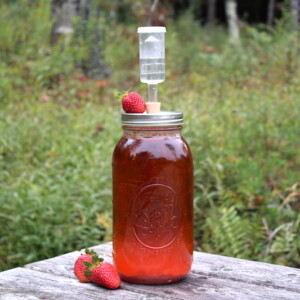
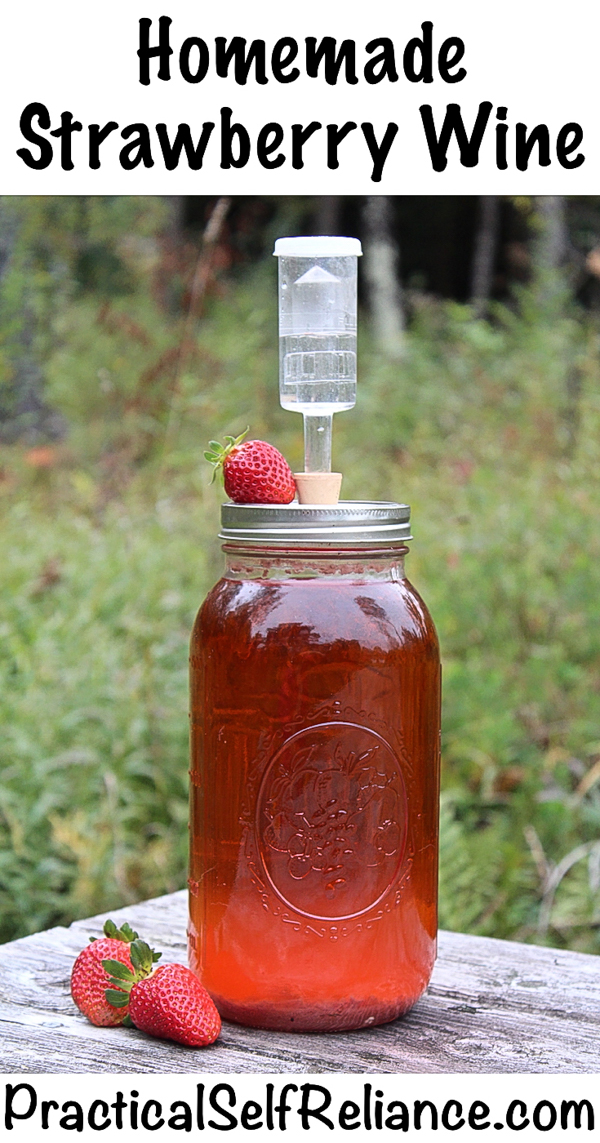
A wide-mouth fermenter is especially helpful for strawberry wine since you will be fermenting with the whole fruit in the primary stage. Mason jar fermentation kits work great for small batches, and many of the airlock lids designed for making sauerkraut work perfectly fine for wine.
How to Make Strawberry Wine
The process follows the same basic method as any small-batch fruit wine. If you are new to winemaking, I recommend reading through my beginner’s guide to making homemade wine first. For mead variations using honey instead of sugar, see my guide on how to make mead.
Preparing the Strawberries
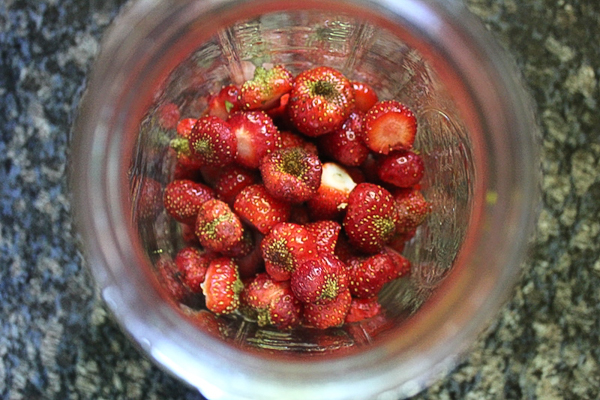
Wash and hull your strawberries, removing the green tops and any bruised or moldy spots. There is no need to chop or mash them at this stage.
If you are using frozen strawberries, let them thaw first but save all of the juice that releases during thawing since it is packed with flavor.
Extracting the Juice
Place the whole strawberries in your primary fermenter and pour the sugar directly over them. I know it looks strange, but trust the process. The sugar pulls the juice right out of the berries through osmosis.
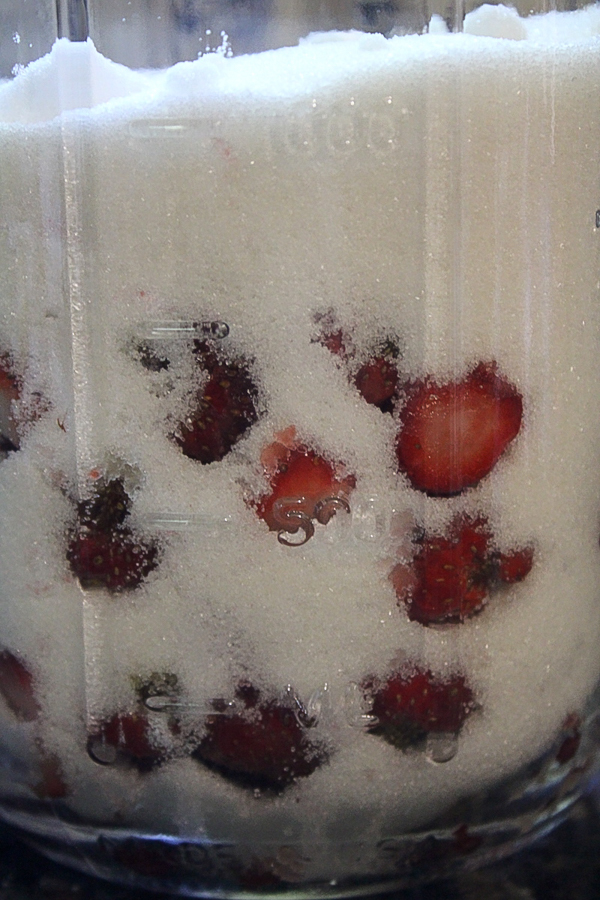
Let this sit for several hours or overnight, and you will come back to find the sugar completely dissolved in a pool of gorgeous strawberry juice. Use a wooden spoon or potato masher to gently muddle the softened berries and release even more juice.
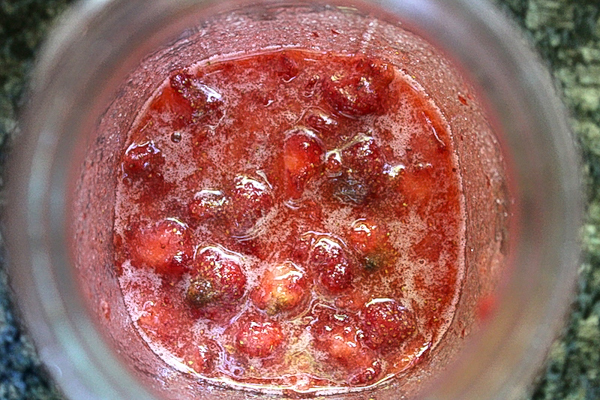
Mixing the Must
Add the acid blend, yeast nutrient, pectic enzyme, and tannin to the strawberry mixture.
Fill the fermenter with water, leaving a few inches of headspace at the top for fermentation activity. Give everything a good stir to combine.
Pitching the Yeast
Once the must has cooled to room temperature (below 90°F), it is time to add the yeast. Rehydrate dry yeast first by dissolving it in about a quarter cup of warm water and letting it sit for 5-10 minutes.
Going straight from a dehydrated packet into a high-sugar solution can shock the yeast and slow fermentation. Be nice and give them a minute to wake up before putting them to work. Pour the activated yeast into your must, give it a gentle stir, and seal with an airlock.
Primary Fermentation
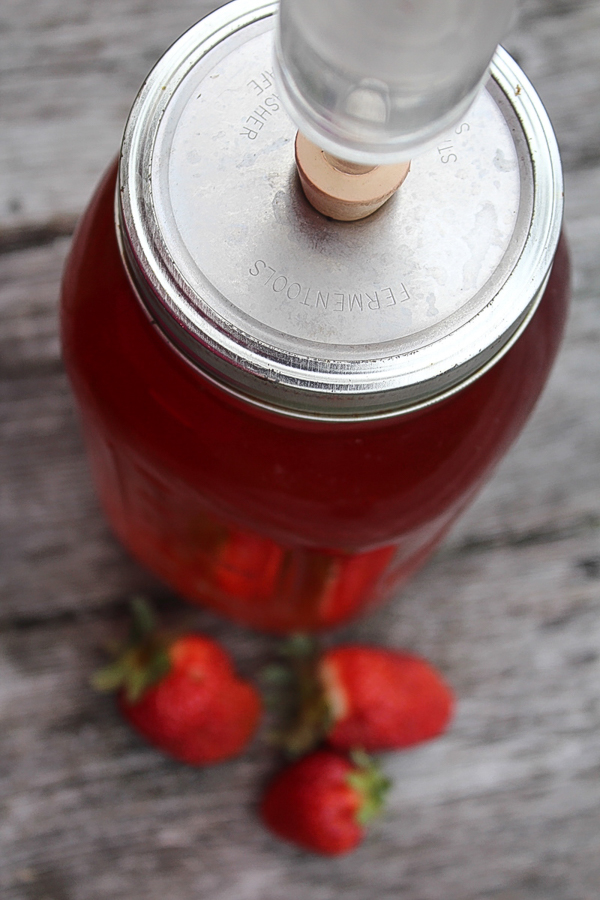
Within a day or two, you should see bubbles forming and the airlock starting to burp. The strawberries will float to the top, forming a “cap” that you should gently push down and stir into the wine once a day to keep everything moist and prevent mold.
Primary fermentation is vigorous and exciting, and your house will smell like a strawberry festival. This stage lasts about 2-3 weeks until the bubbling slows significantly.
Racking to Secondary
When the vigorous bubbling slows and sediment becomes visible at the bottom, it is time to rack the wine into a secondary fermenter. Use your auto-siphon to transfer the wine, straining out all the strawberry pulp through a fine mesh strainer or cheesecloth as you go.
Leave the sediment (called lees) behind in the primary fermenter. Transfer to a narrow-neck carboy, top with an airlock, and store in a cool, dark place.
Secondary fermentation takes another 4-6 weeks as the wine slowly clears and finishes fermenting.
Bottling and Aging
Before bottling, taste your wine. If it is too dry for your preference, you can backsweeten by first stabilizing with Campden tablets, then adding simple syrup to taste. Siphon the clear wine into bottles, leaving behind any sediment, and cork or cap.
Strawberry wine benefits from aging, and while you can drink it young, I recommend waiting at least 3 months. At 6 months to a year, the wine really comes into its own with a smooth, rounded strawberry flavor.
Tips for the Best Strawberry Wine
- Use the ripest berries. Underripe or flavorless strawberries make underwhelming wine. Peak-season, fragrant berries are what you want, even if they are a bit soft or overripe.
- Freeze for better extraction. Freezing strawberries for a week before winemaking breaks down cell walls, releases more juice, and reduces pectin for clearer wine.
- Be patient with aging. Strawberry wine is drinkable young, but the flavors really harmonize after 6 months of bottle aging. Make a big batch so you have bottles to open along the way and some to save.
- Try a strawberry mead. Substitute 2-3 pounds of honey for the sugar to make a beautiful strawberry melomel. The honey adds complexity and pairs wonderfully with the berry flavor.
- Blend with other berries. Strawberry wine blends beautifully with raspberry wine or a splash of elderberry wine for added depth and color.
Frequently Asked Questions
For a standard one-gallon batch, use about 2 pounds of sugar. This produces a medium-sweet wine with around 12-14% alcohol. For a sweeter wine, you can increase to 2.5 pounds, or reduce to 1.5 pounds for a drier result. The exact sweetness depends on your yeast strain’s alcohol tolerance since yeast with higher tolerance will consume more sugar.
Yes, frozen strawberries work excellently for winemaking. In fact, freezing strawberries for at least a week before making wine has benefits: it breaks down cell walls for better juice extraction and reduces pectin content by about 50%, which helps the wine clear more easily. Let them thaw completely before using and include all the juice that releases.
Cloudiness in strawberry wine is usually caused by pectin haze or suspended particles that have not settled yet. Adding pectic enzyme at the start of fermentation helps break down pectin. If your wine is still cloudy after several months, you can try fining agents like bentonite, or simply give it more time. Cold crashing (chilling the wine near freezing for a week) can also help particles settle.
Primary fermentation with the fruit takes about 10 to 14 days. After racking to secondary, expect another 4-6 weeks of slower fermentation. Total time from start to bottling is typically 2-3 months. However, the wine continues to improve in the bottle, and most strawberry wines taste best after aging for 6 months to a year.
You can make a simple strawberry wine with just strawberries, sugar, water, and wine yeast. For substitutions: use 1 tablespoon lemon juice instead of 1 teaspoon acid blend, a cup of strong black tea instead of tannin powder, and a quarter cup of golden raisins instead of yeast nutrient. However, proper wine yeast is essential since bread yeast will produce off-flavors and die at low alcohol levels.
Strawberry Recipes
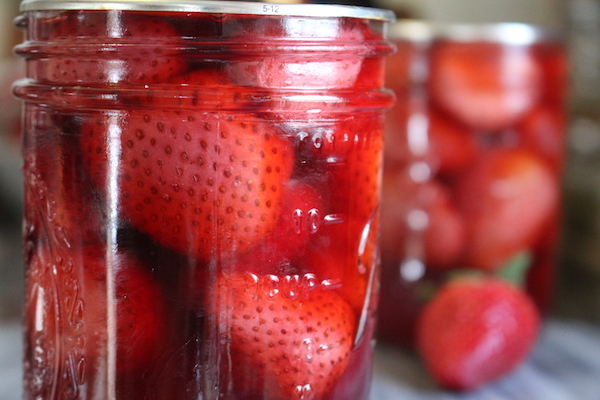
If you tried this Strawberry Wine recipe, or any other recipe on Practical Self Reliance, leave a ⭐ star rating and let me know what you think in the 📝 comments below!
And make sure you stay in touch with me by following on social media!
Strawberry Wine
Ingredients
- 4-5 lbs strawberries, fresh or frozen
- 2 lbs sugar
- 1 tsp acid blend
- 1 tsp yeast nutrient
- 1/8 to 1/4 tsp tannin powder
- 1/2 tsp Pectic Enzyme
- water to fill
- 1 packet wine yeast, see notes
Instructions
- Place the strawberries and sugar into a large bowl or directly into your fermentation vessel. Allow the sugar to pull the juice from the strawberries for a few hours.
- Add the remaining ingredients (except wine yeast) and fill with water to within a few inches of the top of the fermentation vessel. Give it a stir or shake to combine the ingredients.
- Dissolve a packet of wine yeast in about 1/4 cup of water and allow it to rehydrate for at least 5 minutes. Add the dissolved yeast into the wine base and cap the mixture with a water lock.
- Allow the mixture to ferment for about 10 to 12 days and then use a siphon to rack the wine into a new fermenter. Filter through a fine mesh strainer as you go to remove any strawberry chunks and leave any sediment behind.
- Cap with an airlock and allow the strawberry wine to ferment in secondary for about 6 weeks, or until fermentation is complete, before bottling.
- Bottle the wine, leaving behind the sediment. Cork bottles and allow it to age for at least a month, preferably 3-6 months before drinking.
Notes
- 1 tsp Acid Blend = 1 TABLEspoon lemon juice
- ⅛ tsp Tannin Powder = 1 cup strongly brewed black tea
- 1 tsp Yeast Nutrient = ¼ cup golden raisins (sultanas)
- 1 tsp Pectic Enzyme = freeze the fruit for 1 week before making the wine to break down pectin
Nutrition
Nutrition information is automatically calculated, so should only be used as an approximation.
Winemaking Recipes
Strawberry wine is just one of many ways to preserve a bumper crop of berries. If you have more strawberries than you know what to do with, try making old-fashioned strawberry jam or seedless strawberry jelly. Looking for more winemaking inspiration?
Browse my collection of 50+ winemaking recipes or explore 50+ mead recipes for honey wine variations. Other berry wines to try include raspberry wine, blueberry wine, and blackberry wine.
Find the perfect recipe
Searching for something else? Enter keywords to find the perfect recipe!









Hi Ashley. I just put my first batch together and marked the calendar for 2 weeks. It smells wonderful. Where should I store this while it’s doing its thing? 🙂
You can store it anywhere that’s convenient for you. It just needs to sit at room temperature.
I have read s may of your wine recipes I want to make them all! My question is about bottling. It said to leave behind sediment, I get that but, how do you bottle? Do you syphon in to the bottles? Thank you.
Yes, you will want to siphon the wine into the new fermentation vessel leaving the sediment behind in the first.
My first batch started last night so far all is well can not wait untill done . Also do you have a recipe for dandelion wine
That’s great! Keep us updated on it. We sure do have a dandelion wine recipe. https://practicalselfreliance.com/dandelion-wine-recipe/
I m making ur strawberry wine , was confuse about water so I m making with 10 lbs strawberry nd used 3 gallon water , is that will b ok ?
I m making ur strawberry wine , was confuse about water so I m making with 10 lbs strawberry nd used 3 gallon water , is that will b ok ?
For 3 gallons of liquid, you’re looking at more like 12 to 15 pounds of strawberries. It will still work but the strawberry flavor most likely won’t be as strong.
I have citric acid in my cupboard. Can I use that as the acid mix?
The acid blend is a mix of several different acids including citric acid. You could try it out and see but you may not get the same results.
Hey Ashley! Just put a batch in primary. I’ll let ya know how it turns out. Thanks for sharing some great recipes!
You’re welcome. We can’t wait to hear how it turns out.
After racking my wine turned out a little dry and bitter. How much sugar should I add to sweetener a one gallon batch.
You can find some information on back sweetening in this post on apple wine. https://practicalselfreliance.com/apple-wine/
How much water to add to this recipe? You said add water but not how much? What size batch are you making? 1 gall, 2 or 3….? Thanks.
How much water to add to this recipe? You said add water but not how much? What size batch are you making? 1 gall, 2 or 3….? Thanks.
The recipe is for one full gallon batch. Fill water a few inches from the top of your one gallon fermentation vessel.
Hello! I’m currently in the process of making this wine. I’m in the primary fermentation stage – I have the strawberry mixture in a mason jar fermenter with an airlock. It’s been fermenting for a week now. The first few days it was bubbling quite a bit but now it’s not bubbling at all. Does this mean I should rack it into a secondary container? Should I just leave it be for another week in primary fermentation? Thank you so much!
If you watch the airlock for several minutes with no bubbles, it’s ready to move to secondary. Often that’s around 7-10 days, but sometimes it’s as long as 14 and other’s it’s as short as 4-5, depending on your yeast, ambient temperature, etc. You may well be ready.
Thank you! Just one more question – how would I know if secondary fermentation is complete? I racked it into the secondary fermenter and it’s not bubbling – is that normal?
Not bubbling much in secondary is normal. The fermentation is much slower, and if you watch it for a REALLY long time it’s probably bubbling every hour or so. I usually give it 4 to 6 weeks in a cool dark place to slowly work through the last of the fermentation. In this stage, it’s less about building alcohol, and more about enzymes and other fun stuff developing the flavors. So long as the water lock has water in it (and watch that, it’ll evaporate over time), there’s not really “too much” time in secondary. If it still has a lot of sediment or any fruit bits that made it through, rack it again after a week or two, but other than that, leave it alone for 4-6 weeks and then bottle.
If in a pinch or say, during off season, can you use frozen strawberries?
Yes, frozen strawberries would still get the job done.
Thanks for this recipe! How do you strain the strawberries when moving to secondary fermentation? You keep the must for primary right?
Correct!
How would i multiply the ingredients for a 5l Carboy like used in the blueberry wine?
Yup!
Do i need to sweeten it back after fermentation or will there still be sugar left?
It should be sweet enough as is, but everyone’s tastes are different so if you’d like it sweeter, go ahead and add more.
This looks amazing, and I can’t wait to try it! I have a tree full of apricots right now, would this recipe work for apricots as well? Thank you!
You might try substituting apricots in this peach wine recipe instead. https://practicalselfreliance.com/peach-wine/
Thank you for helping me start my wine making journey! Your directions and links made your recipes so doable! I have started aging longer in carboys to allow more sediment fall out before bottling, but for those “beginner’s” bottles I pour the wine through a coffee filter before drinking and they’re fine. The color and taste are superb! I’ve been sharing this site with others. Thank you so much!
You’re very welcome. So glad you’re enjoying making wine. Thanks for sharing.
Can you use champagne yeast? It’s what I have on hand from making sweet mead
Yup, champagne yeast is great. I always have that one on hand, and it is a good neutral substitute for most any wine.
What would you say the alcohol % is of this? I wanna learn how to make my own wine but I don’t want to make something that equates to the same ALC% as a beer, lol. I’m super in love with this recipe!
Honestly, I never measure the alcohol content of my wines, but I’d guess most come out between 12 and 18%.
After about two weeks .I think my wine needs a little more strawberrys.is that possible
Hi Ashley, do you stir your strawberries around during the fermentation? The less I have to fuss over this the happier I will be.
I don’t =)
I forgot to ad the acid and I have completed the first fermentation. Should I leave it out or put it in with the racking?
You can do either, but personally I’d add it, it’ll improve the finished flavor.
Is a water lock and an airlock the same thing? Thx!
Yup!