
Affiliate disclosure: This post may contain affiliate links. Please see our Privacy Policy.
Lambsquarters (Chenopodium album) is a fast-growing wild green that’s easy to find in any garden, lawn edge, or disturbed soil patch worldwide. Learn how to identify lamb’s quarters, distinguish it from its look-alikes, and use the leaves, seeds, and even the natural surface salt this remarkable plant offers.
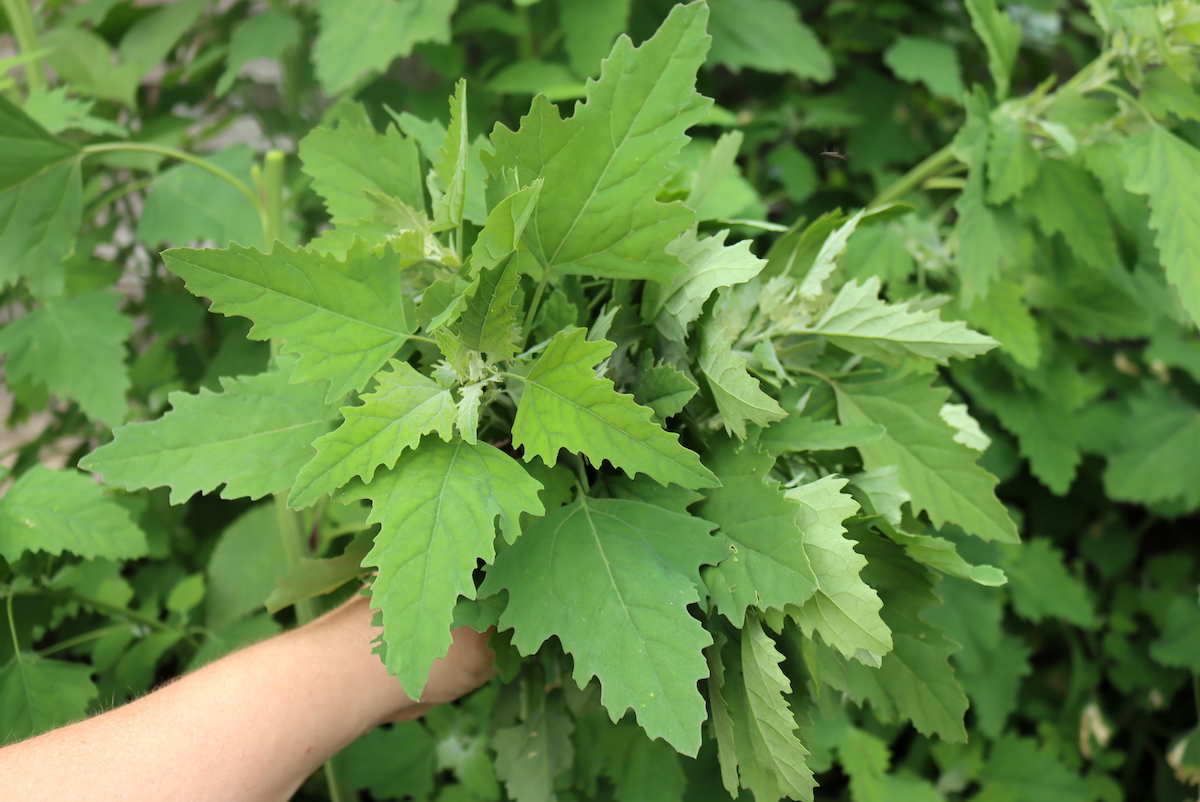
Table of Contents
- Notes from My Homestead
- What Are Lambsquarters?
- Is Lambsquarters Edible?
- Lambsquarters Medicinal Benefits
- Where to Find Lambsquarters
- When to Find Lambsquarters
- How to Identify Lambsquarters
- Lambsquarters Look-Alikes
- How to Harvest Lambsquarters
- Ways to Use Lambsquarters
- Lambsquarters FAQs
- More Foraging Guides
Lambsquarters, or “goosefoot” as it’s sometimes called, is one of the best-tasting wild edible weeds anywhere. Unlike dandelion greens, which are more like a bitter tonic, young lamb’s quarter leaves are sweet and tender like spinach or expensive microgreens. While it’s considered an invasive weed across most of North America, it’s actually cultivated as a food crop in parts of India and Nepal, where it stands up to tropical heat better than regular spinach. The leaves are highly nutritious, and they’re used to help prevent nutrient deficiencies in rural communities in developing countries.
I love to harvest the leaves and snack on them right out in the yard, but they’re also delicious cooked. If you find a mature plant that’s gone to seed, the leaves won’t be quite as tender, but the seed (and seed heads) are edible too. It’s closely related to quinoa, another Chenopodium species, and you can harvest and cook the seed as an edible wild grain. If that’s not enough, lambsquarters also has medicinal uses, and the plant turns out to be one of the most useful wild greens in the foraging toolkit.
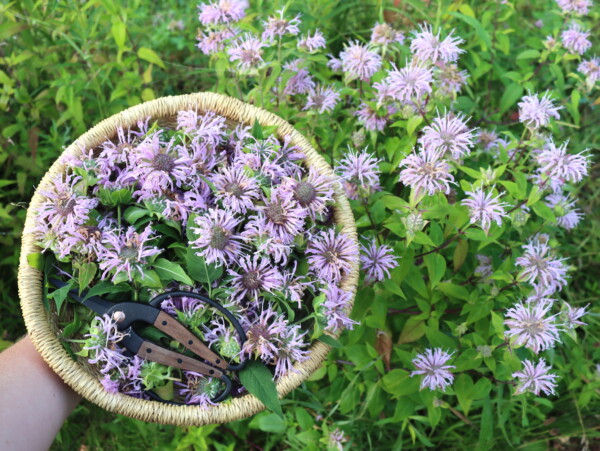
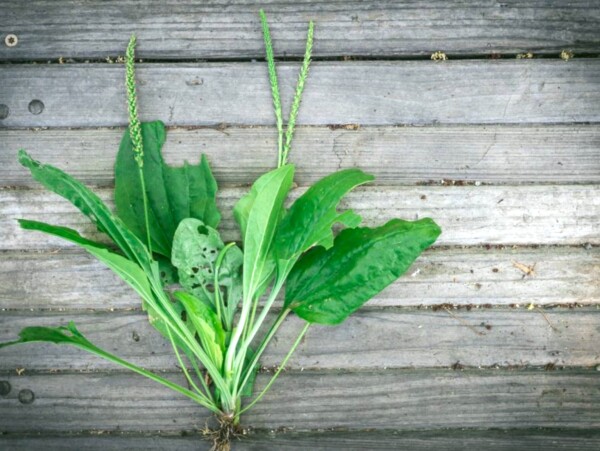
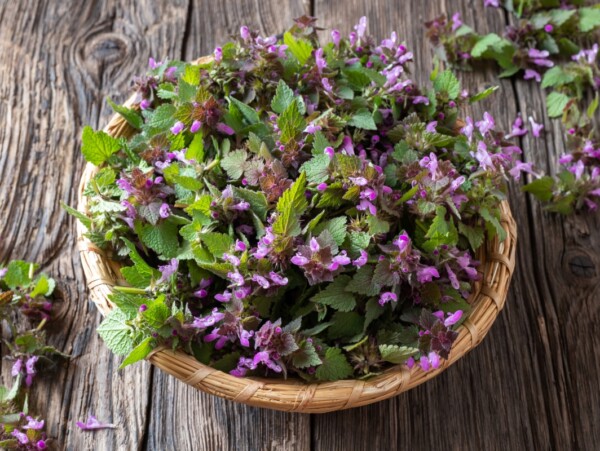
Once you can identify lambsquarters, you’ll find it pairs naturally with the other wild edible greens that show up in summer gardens and field edges, including chickweed, plantain, purple dead nettle, and wood sorrel. It’s a good plant to add to your summer foraging rotation since it’s available from late spring all the way to first frost.
Notes from My Homestead

Lambsquarters shows up every summer in our Vermont vegetable garden, mostly in the rows where I’m trying to grow other things. For years I treated it like every other gardener does, pulling it out by the handful and tossing it on the compost pile. The first time I actually tasted it, I felt a little foolish about all those years of weeding. The leaves are mild, sweet, and so much better than store spinach that I now leave a few plants standing on purpose at the ends of the rows.
My favorite way to use it is the simplest one: a quick cook in butter or ghee with a pinch of salt, served alongside a curry or rice bowl. It wilts down like spinach but holds its texture a little better, and the natural salt that lambsquarters bio-accumulates on its leaves means you usually need less seasoning than you’d think. The kids snack on the small leaves straight from the garden, and by August I’m dehydrating the bigger leaves into a green powder for winter soups. It’s the rare plant where the goal is to grow more weeds, not fewer.
What Are Lambsquarters?
Lambsquarters (Chenopodium album) is a fast-growing herbaceous annual. It’s native to Europe and eastern Asia but has naturalized worldwide. Lambsquarters has several other common names, including fat-hen, melde, white goosefoot, goosefoot, and wild spinach.
In some areas, lambsquarters is extensively cultivated as a food crop, namely India where it goes by the name Bathua. While spinach wilts and bolts in the heat of the Indian subcontinent, lamb’s quarters (or Bathua) will grow like the weed (literally).
For the most part, it’s considered a noxious weed in North America as it can reduce the yield of corn, soybeans, and other major crops. Feel free to harvest as much as you can carry, as there’s no real way to “over harvest” this vigorous (but tasty) wild weed.
Is Lambsquarters Edible?
Lambsquarters is edible. The leaves, young shoots, flowers, and buds can be eaten raw or cooked. The seeds may be used like a grain. All parts of the plant can also be used as poultry feed.
Lambsquarters is also occasionally employed in traditional medicine throughout the world. It’s used both internally and externally to treat various conditions.
You should eat lambsquarters in moderation as it’s high in oxalic acid (as are spinach, rhubarb and many other cultivated plants). Oxalic acid is safe in moderation, but excessive amounts can prevent your body from absorbing essential nutrients and minerals. It may also cause kidney stones.
For the same reason, lambsquarters can also be toxic to sheep and swine when consumed in large quantities over a long period. It’s sometimes used as cattle feed but may affect the flavor of milk in dairy animals.
Avoid harvesting lambsquarters on roadsides or in areas that could be contaminated with pesticides and other chemicals.
Lambsquarters Medicinal Benefits
Lambsquarters is more commonly used as food than medicine but is still occasionally employed by herbalists. Externally, it’s chewed and made into a quick poultice for skin inflammation, sunburn, bug bites, minor cuts, and rashes. For internal use, lambsquarters is typically prepared as a tea to treat or prevent diarrhea, stomachaches, scurvy, gout, and degenerative diseases.
One modern study found that lambsquarters is highly nutritious and has antioxidant and antibacterial properties. The study suggested that increased awareness and use of this plant could help prevent nutrient deficiencies, as well as some diseases in many rural parts of the world.
Results from another study suggested that lambsquarter does have anti-inflammatory properties, supporting its use in helping to soothe skin irritations and other inflammation.
We also know that lambsquarters is an excellent source of vitamin A, higher even than spinach or kale. It’s also a good source of fiber, protein, and other vitamins and minerals that support a healthy body.
Where to Find Lambsquarters
Lambsquarters has been traveling with human populations for hundreds of years, so its exact native range is unknown. However, it’s believed to be native to Europe and East Asia. Today it has naturalized worldwide.
You’re likely to find lamb’s quarters in gardens, waste places, fields, lawns, roadsides, and stream beds. It prefers fertile nitrogen-rich soil but can often be found growing in any disturbed area.
Lambsquarters usually grow in partial to full sun. They thrive in moist, well-drained soil but will tolerate various soil types, including clay and sand, and will tolerate some drought once established.
When to Find Lambsquarters
Lambsquarters is a fairly early weed with seeds germinating as soon as the soil begins warming in the spring. You can find lambsquarters growing between May and November, depending on where you live. It may come up earlier in warm areas like the deep south. Here in Vermont, the first plants are usually up in late May, and they keep producing tender new growth right through to the first hard frost in late September or early October.
How to Identify Lambsquarters
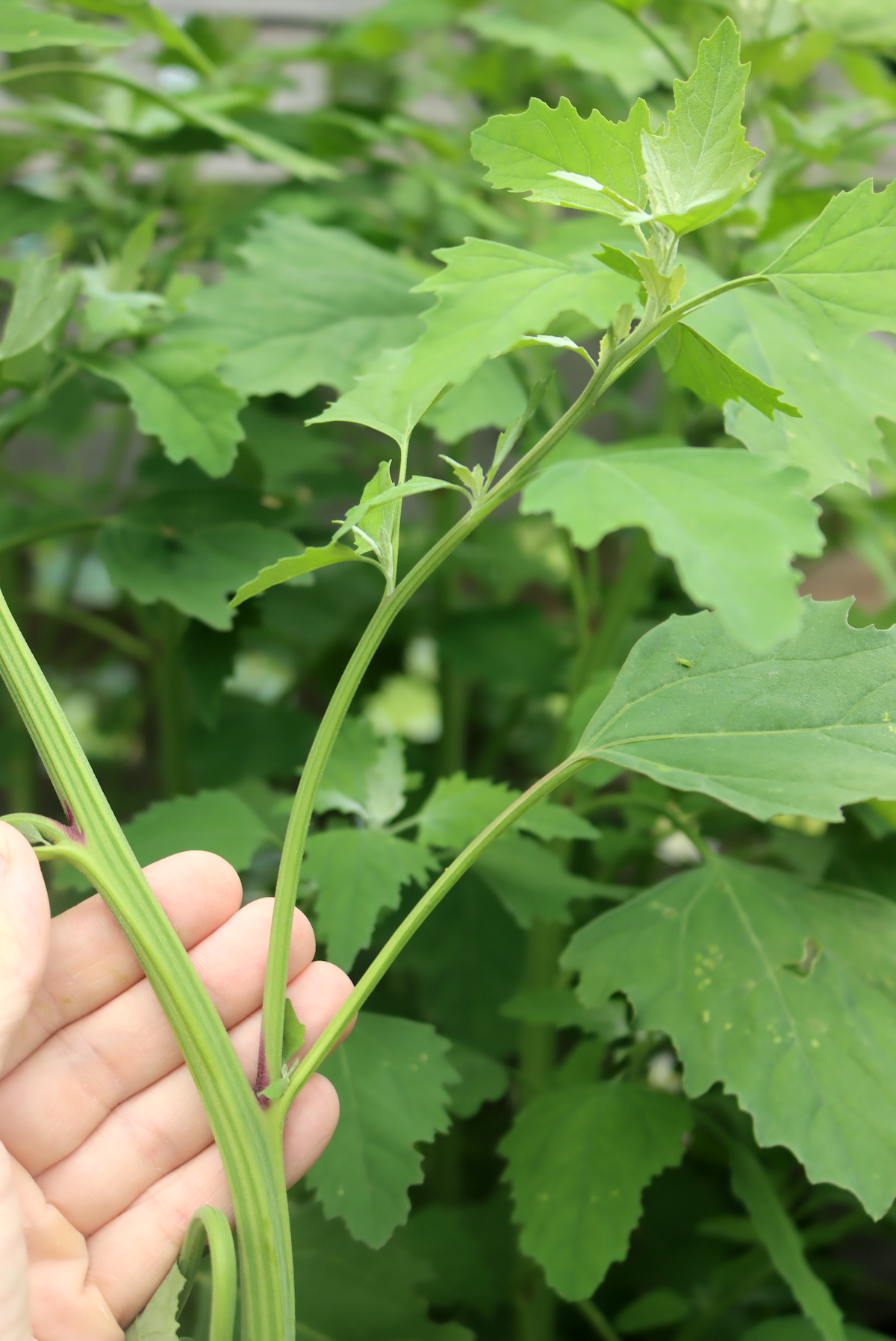
Lambsquarters grows to an average height of three feet but may vary from just a few inches tall to as high as 6 feet. It’s an erect plant with branching stems but may lodge with the weight of seeds later in the season.
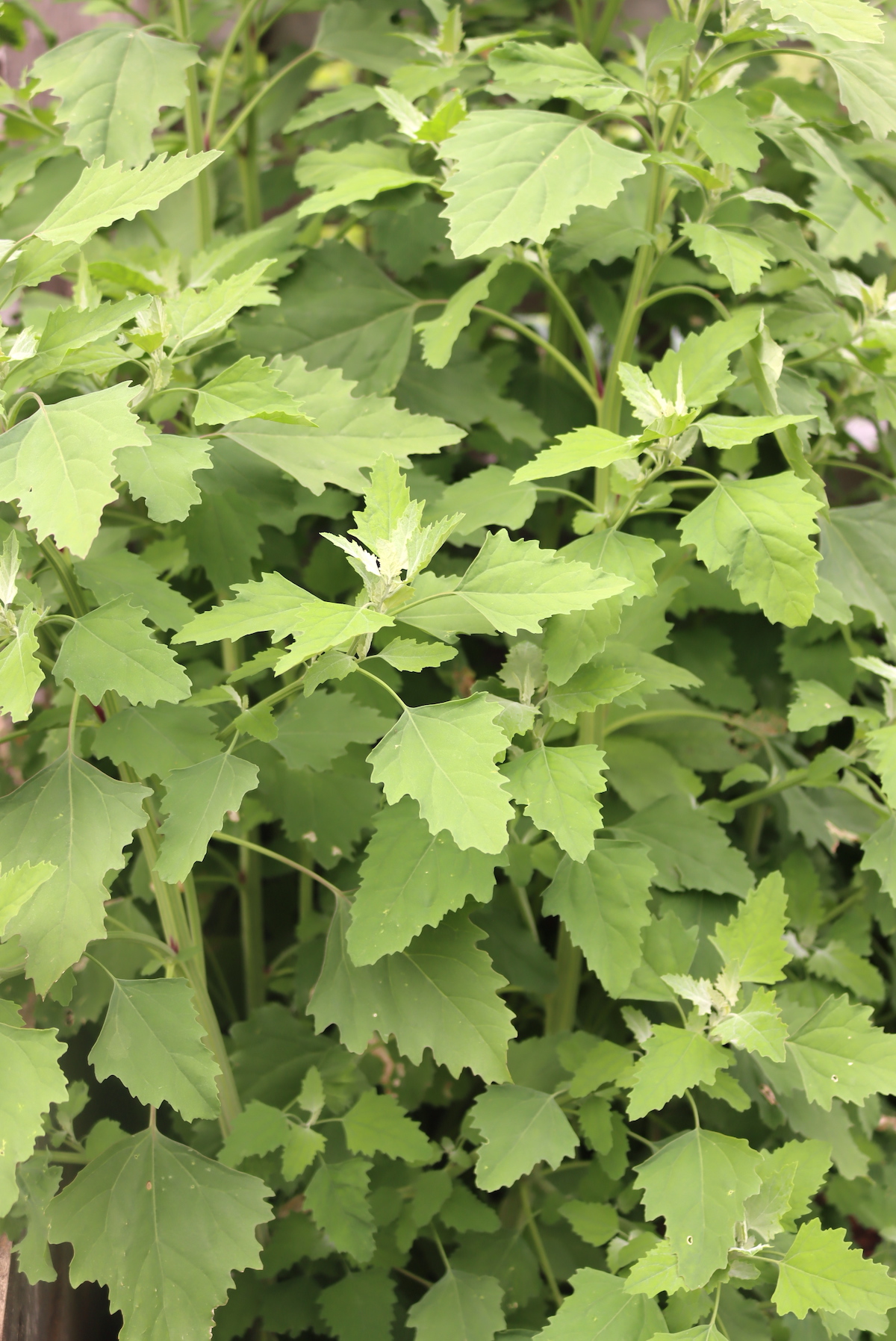
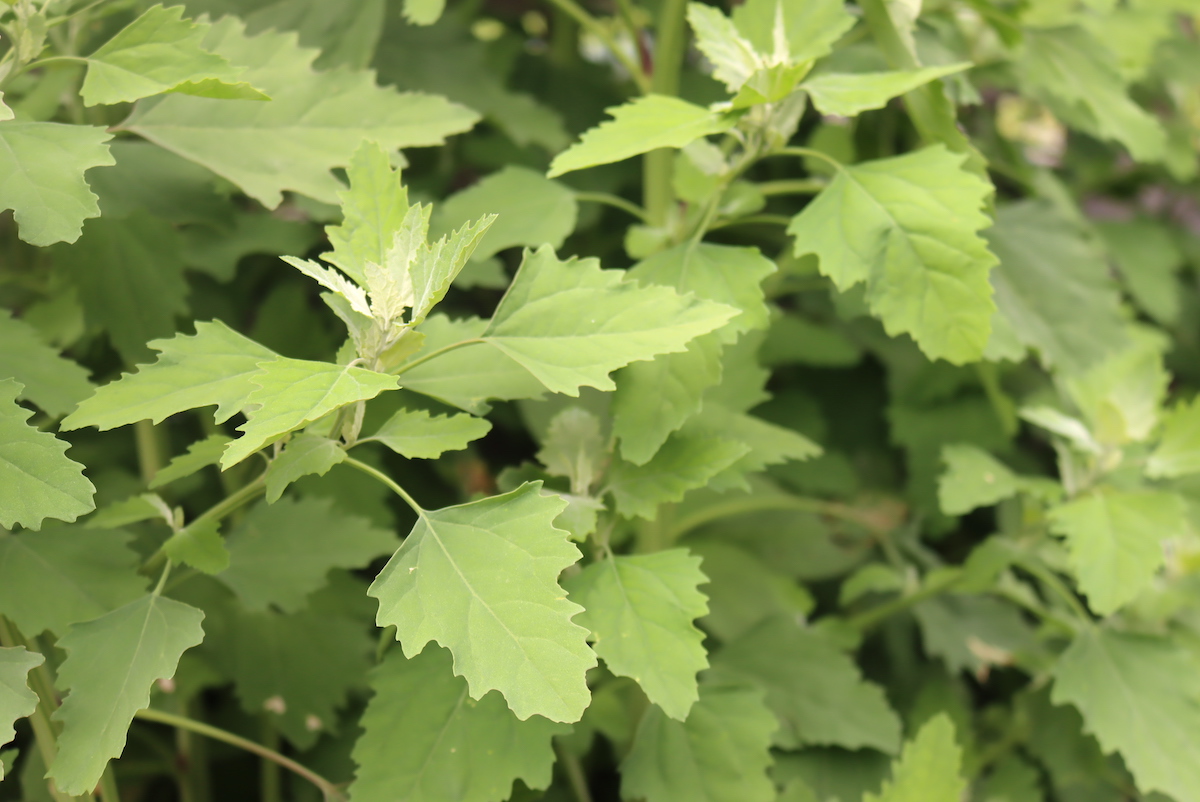
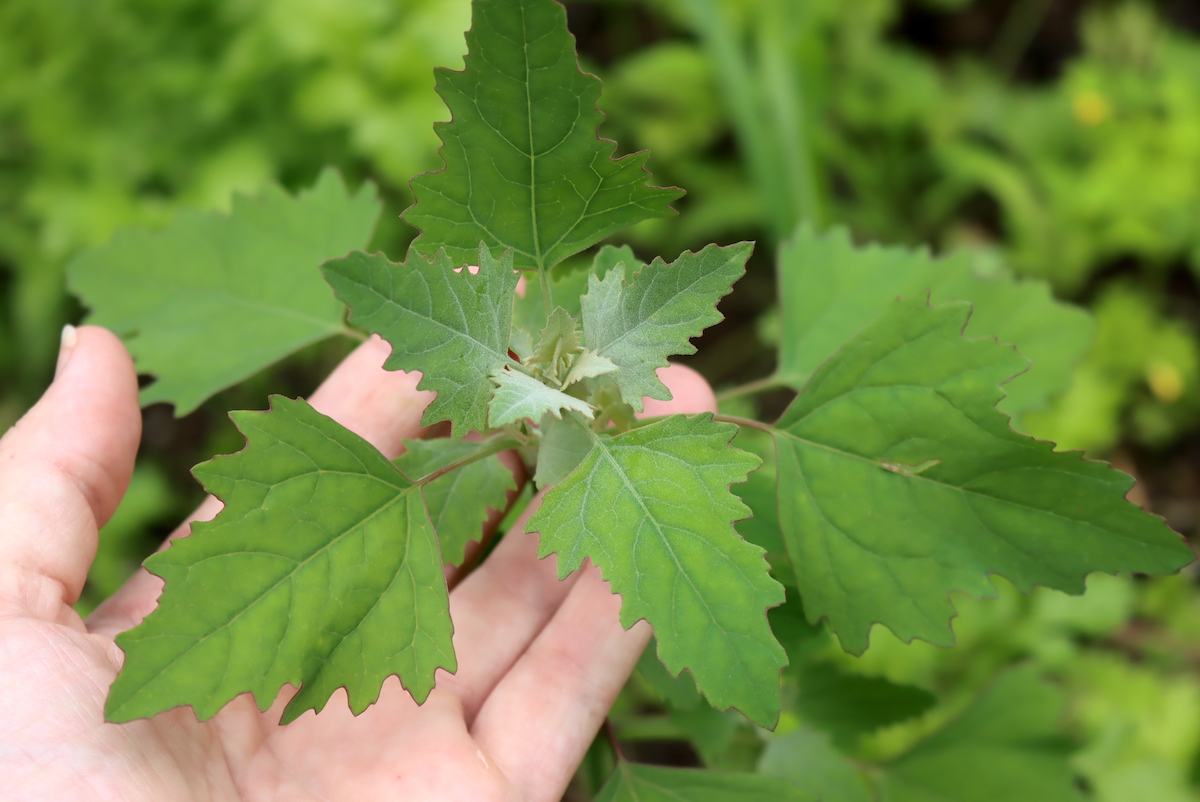
The plant is sometimes easy to spot because of the powdery white coating that covers the new-growth leaves. It gives the plant a soft or frosty look near the branch tips.
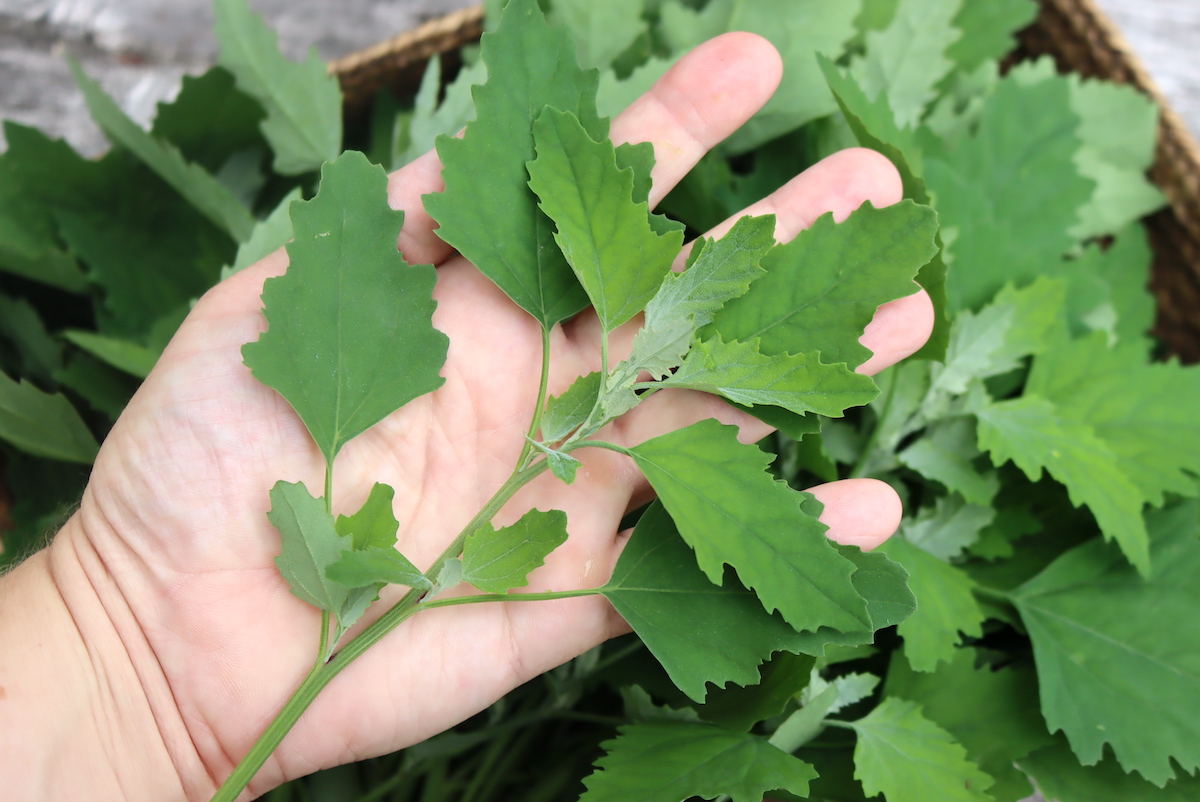
Lambsquarters Leaves
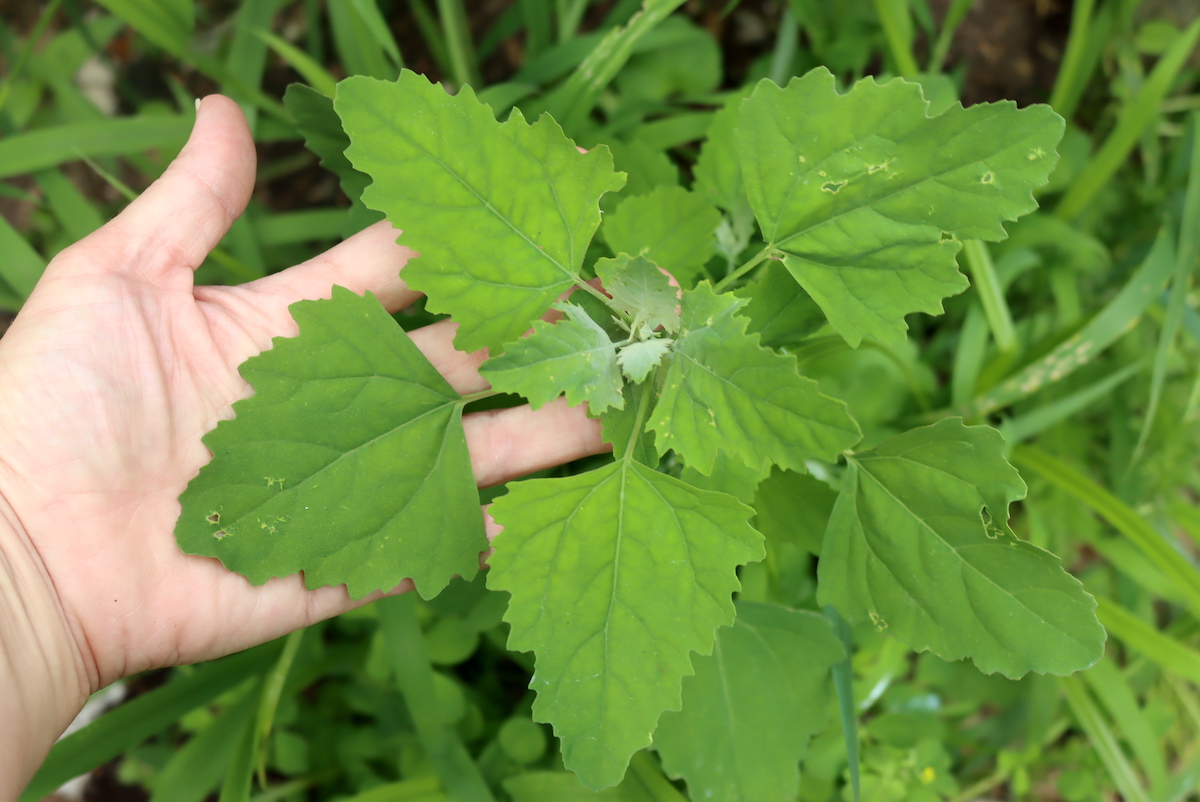
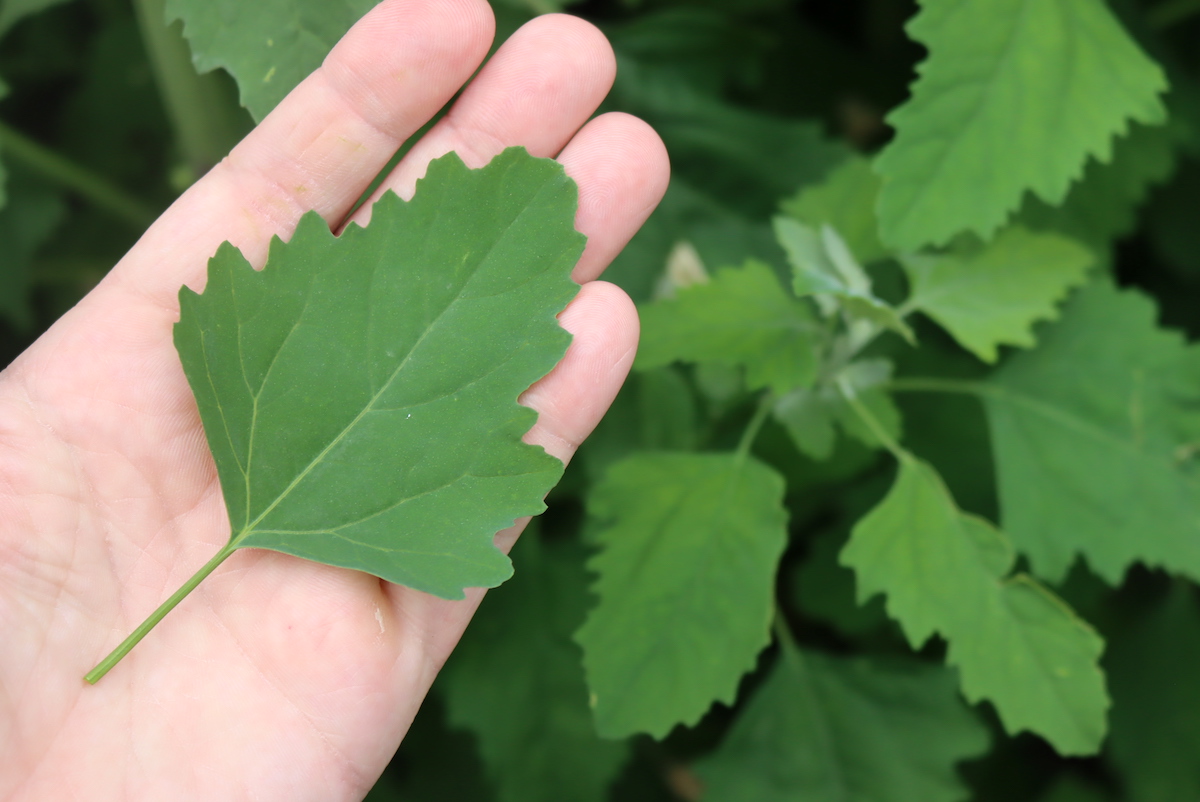
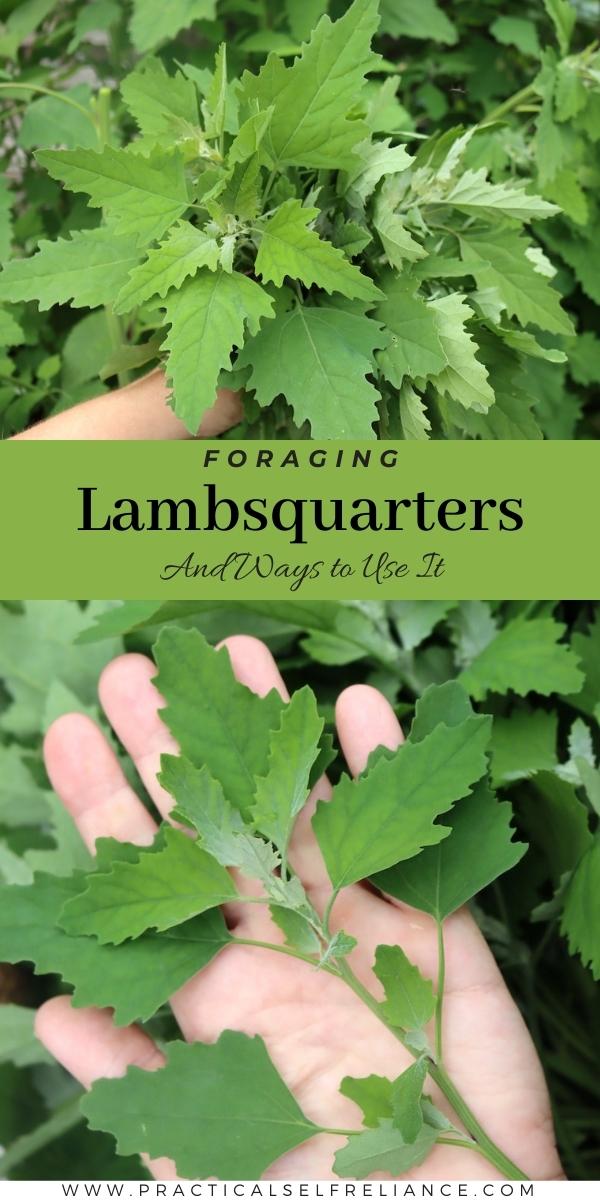
Lambsquarter leaves are alternate and irregularly toothed. They are also irregularly shaped but are often diamond, triangular, or lance-shaped. The leaves are typically 1 to 2.8 inches long and 1 to 2.4 inches wide.
Mature lambsquarter leaves are typically green on top but may have a white or grayish powdery coating below. New growth leaves near the branch tips usually have a white or grayish powdery coating.
Lambsquarters Stems
Lambsquarter stems may grow up to six feet tall but are usually about three feet tall. They are moderately branched and conspicuously grooved with red, purple, or light green stripes.
Lambsquarter Tops
The very tops of lambsquarter plants are often covered in a dusty white coloration, and they almost seem dirty or sprayed. In reality, that is actually natural salts that the plant bio-accumulates. When the leaves are young, there’s so much salt on the surface of the leaves that it looks a downy white, but that color fades as the leaves get bigger and the salt is spread to a larger surface area.
You can actually use lambsquarter as an inland salt source, but more on that later.
Lambsquarters Flowers
Lambsquarter flowers are small, green, and inconspicuous. They are radially symmetrical and have five tepals and stamens. The tepals may have a powdery white coating on the outer surface. The flowers form in clusters at the stem ends.
Lambsquarters Seeds
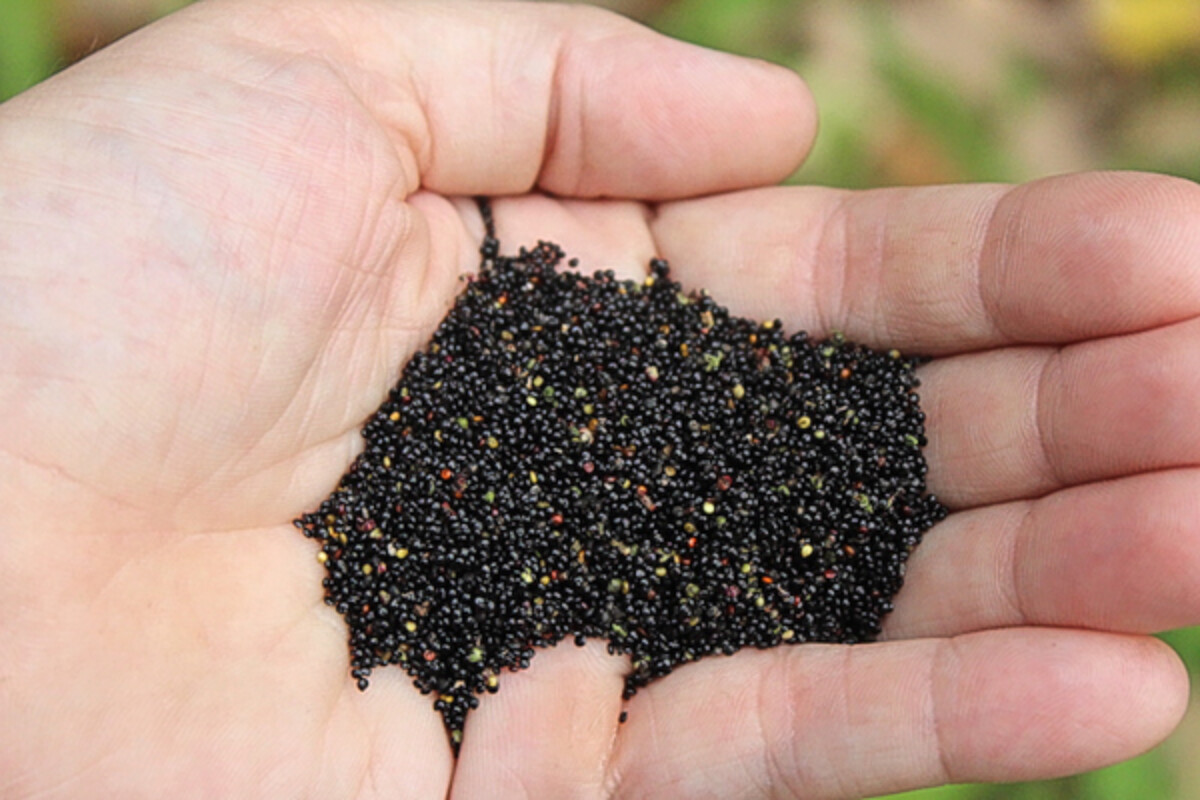
In late summer and autumn, the inconspicuous lambsquarter flowers will turn into seed heads. They’re often green/white, but can sometimes take on a bright magenta color when fully ripe.
The texture of the seed head is somewhat like cauliflower, and sometimes the whole seed heads are harvested, cooked and eaten. (Or eaten raw right out in the field.)
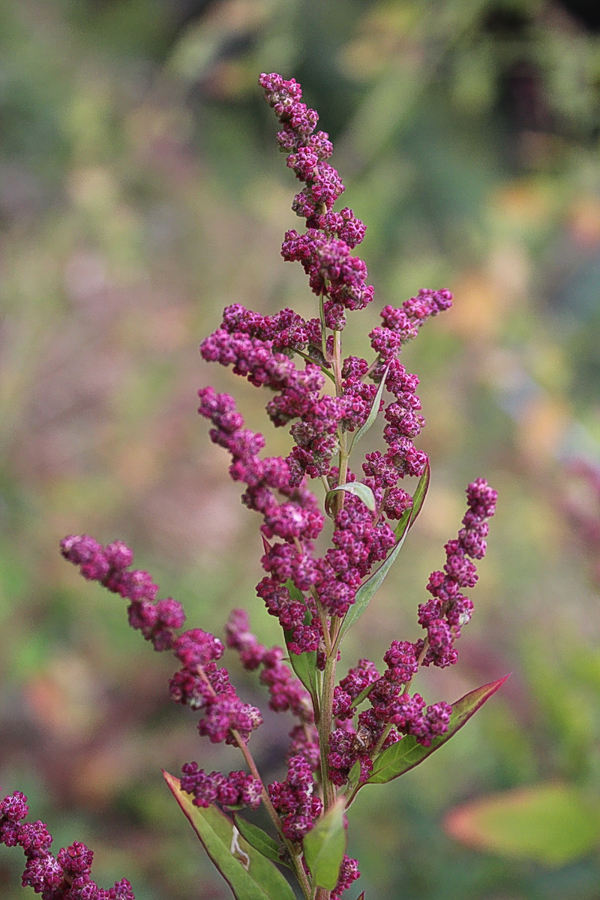
The actual seeds of lambsquarter are shiny, black and lenticular. They’re encased in the “cauliflower-like” fleshy seed heads of the plant.
Since lambsquarter is closely related to cultivated quinoa, the seeds are nutritionally similar. In fact, they’ve been eaten since neolithic times, and various “bog bodies” found in peat bogs had enjoyed lambsquarter seed as part of their last meal.
I have a full tutorial on harvesting and cleaning lambsquarter seed, as actually separating the seed from the chaff can be tricky.
Lambsquarters Look-Alikes
A handful of plants can be confused with lambsquarters, especially when you’re first learning to identify it. Two of the three main look-alikes (orache and amaranth) are themselves edible, but the third (black nightshade) deserves a closer look before you put any in your salad bowl.
Orache or Atriplex
Lambsquarter is sometimes mistaken for a related edible weed, Orache or Atriplex (Atriplex patula). However, Atriplex differs in a few ways:
- The leaves are more arrowhead-shaped or triangular, and the leaf bases have a lobe on each side so that the petiole begins or almost begins in an indent in the leaf.
- The female flowers have triangular bracts.
- They have a more branching, spreading growth habit.
Black Nightshade
Another look-alike is Black Nightshade (Solanum nigrum). Black Nightshade is not as scary as it sounds, but it should still be used with more care than lambsquarters. Fortunately, it also differs in several easy-to-spot ways.
- The leaves are ovate or egg-shaped and may have wavy margins or be sparsely toothed but are less consistently toothed than lambsquarters.
- The petioles are “winged,” meaning that a tiny strip of leaf runs all the way down to the stem.
- The flowers are larger at 1/4″ to 1/3″ across, white or violet, and have five petals.
- Black Nightshade produces small berry clusters that ripen from green to black.
Amaranth
Lastly, lambsquarters can be mistaken for some Amaranth species (Amaranthus spp.). Amaranth is distinguished from lambsquarters in the following ways:
- Amaranth leaves have smooth margins and lack a powdery coating.
- Amaranth flowers form on bristly inflorescences at the top of the plant.
How to Harvest Lambsquarters
In most places, lambsquarter is considered an invasive weed, and you don’t have to worry about over-harvesting. Be careful where you harvest, as it often grows on roadsides and waste places that could be contaminated or sprayed. Be sure to harvest from a clean location.
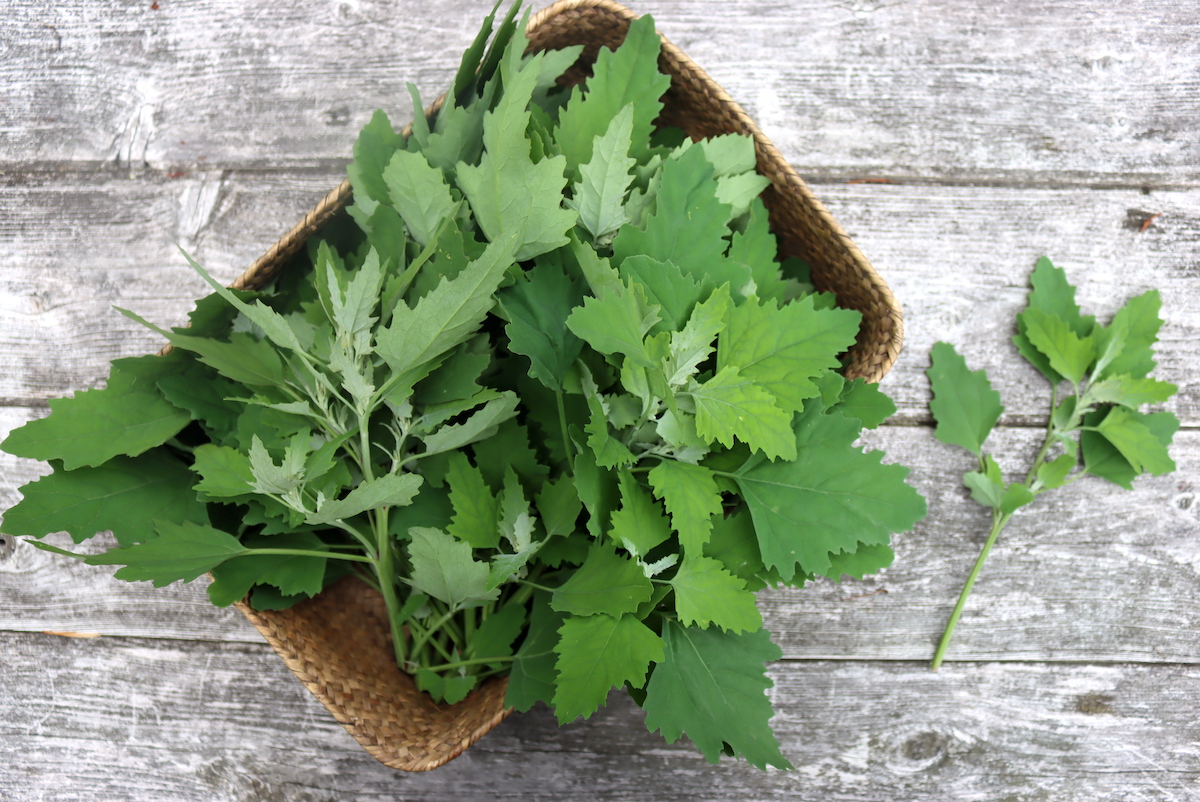
The plants can get quite large, and I’ve seen them at 5 to 6 feet tall in fertile locations. Usually, they’re more like 2 to 3 feet tall when growing under stress.
Older leaves can be tough, a bit stringy, and ever so slightly bitter. Even still, the oldest leaves are still quite good cooked.
For the best flavor and texture, harvest young lambsquarter shoots and side shoots. Even the tallest plants still put out young, tender side shoots. One trick I’ve learned over the years: pinching out the central growing tip on a young plant encourages it to send out more side shoots, which means a longer harvest from a smaller patch.
Since lambsquarter is a relatively sweet, mild wild weed, it tends to attract the same pests as lettuce. Namely, aphids, which drink the vascular fluids within the plant.
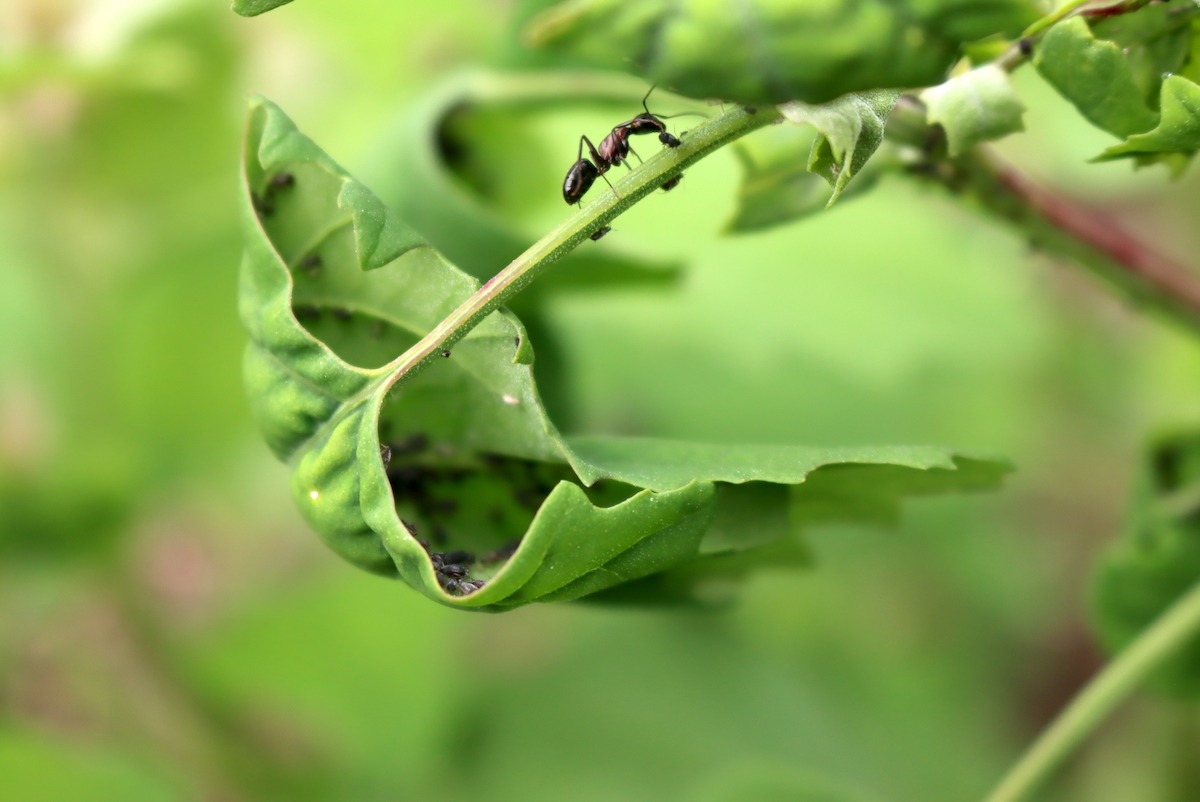
They’re nothing to worry about, and you can easily wash them off (as you would wash them off of lettuce you harvest from your garden). But you should keep an eye out for ants. The ants, believe it or not, actually tend lambsquarter aphids like cattle, and they consume a nectar-like substance that the aphids produce. The ants, in turn, will defend their aphids (and the plants they live on) like any rancher would defend their cattle from wolves.
Check for ants before harvesting, as they can give you a nasty sting. Usually, the leaves will curl when they have a particularly bad aphid infestation, which usually occurs on ant “aphid farms.”
Ways to Use Lambsquarters
As it is a plant we often need to weed out of our gardens, it’s great to find a use for lambsquarters. Thankfully it can be used as both food and medicine for humans and animals.
One of lambsquarter’s common names, wild spinach, is a good indicator of its versatility in the kitchen. Add the young shoots, leaves, buds, and flowers to salad, smoothies, or pesto. You can also cook it as you would spinach, adding it to stews, egg dishes, and stir-fries.
Lambsquarters dehydrates well and can be eaten as a snack or added to various winter recipes like soups and sauces.
Lambsquarter seeds can also be eaten. You can use the seeds raw or roast or dry and grind them. They are excellent in hot cereals and baked goods. Using the seeds in this manner has a long history. Archaeologists found the seeds mixed with other grains in Viking Age, Iron Age, and Roman sites. Researchers also found evidence of them in the stomachs of Danish bog bodies.
In India, lambsquarters are known as bathua, and both the leaves and seeds are used. The leaves and young shoots are often added to soups and stuffed breads, while the seeds are used to make cooked cereal and mildly alcoholic fermented beverages.
In Nepal, lambsquarters are also commonly used, including in two dishes called saag and masaura. Saag is made by stir-frying the lambsquarter leaves with spices, chili, and diced garlic. Masaura is made by dipping the leaves in a lentil batter and letting them ferment in the sun for a couple of days. The masaura is typically added to a curry.
Medicinally, lambsquarters can be used in teas, poultices, salves, ointments, and even tinctures, though the plant is more commonly preserved as a fresh or dried green than as an alcohol extract. Another of lambsquarter’s common names, goosefoot, hints at its use as an animal feed. Both the leaves and seeds are sometimes cultivated and fed to poultry and other livestock.
Lambsquarters Salt
Besides being a tasty edible spinach substitute, lambsquarters is also a natural inland source of salt.
The plants bio-accumulate salt from the soil and it looks like a downy white coating on their leaves. It’s most dramatic on the plant tops, when the leaves are young, but if you look closely you can still see it on older leaves. There’s the same number of white “dots” but they’re spread out over a larger surface area so it’s less noticeable.
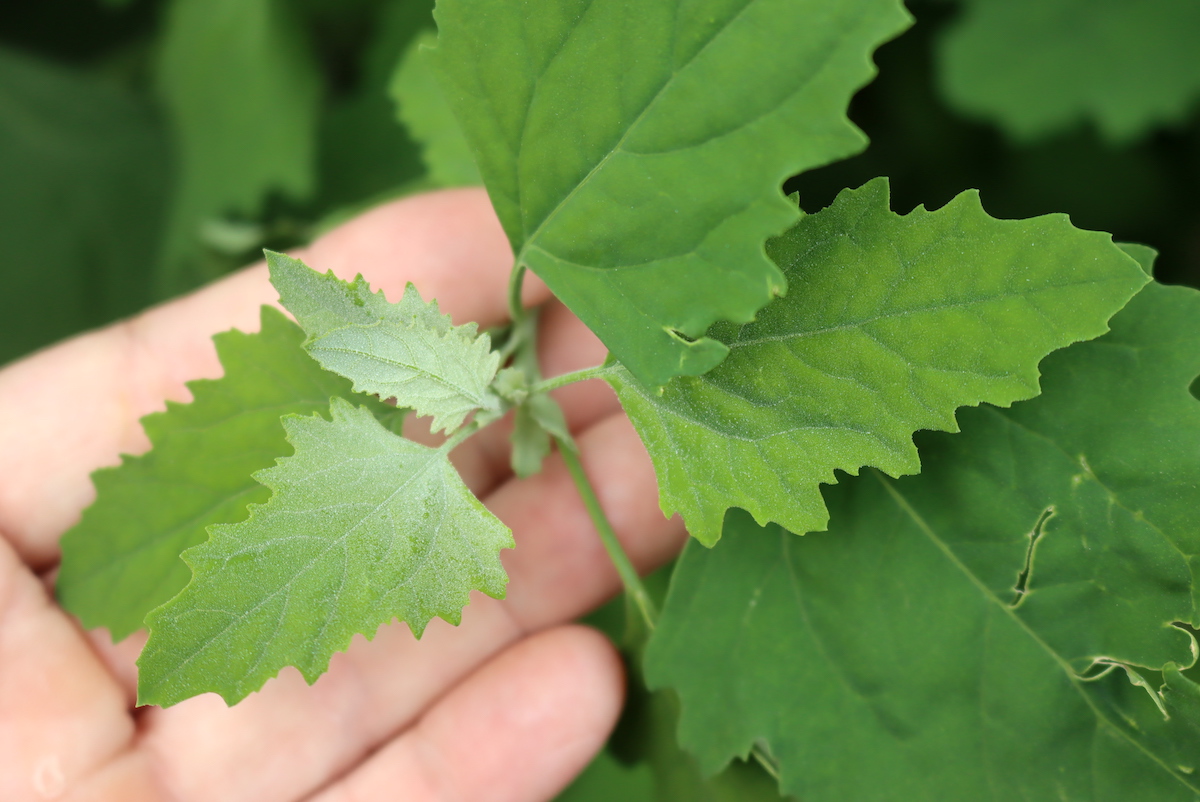
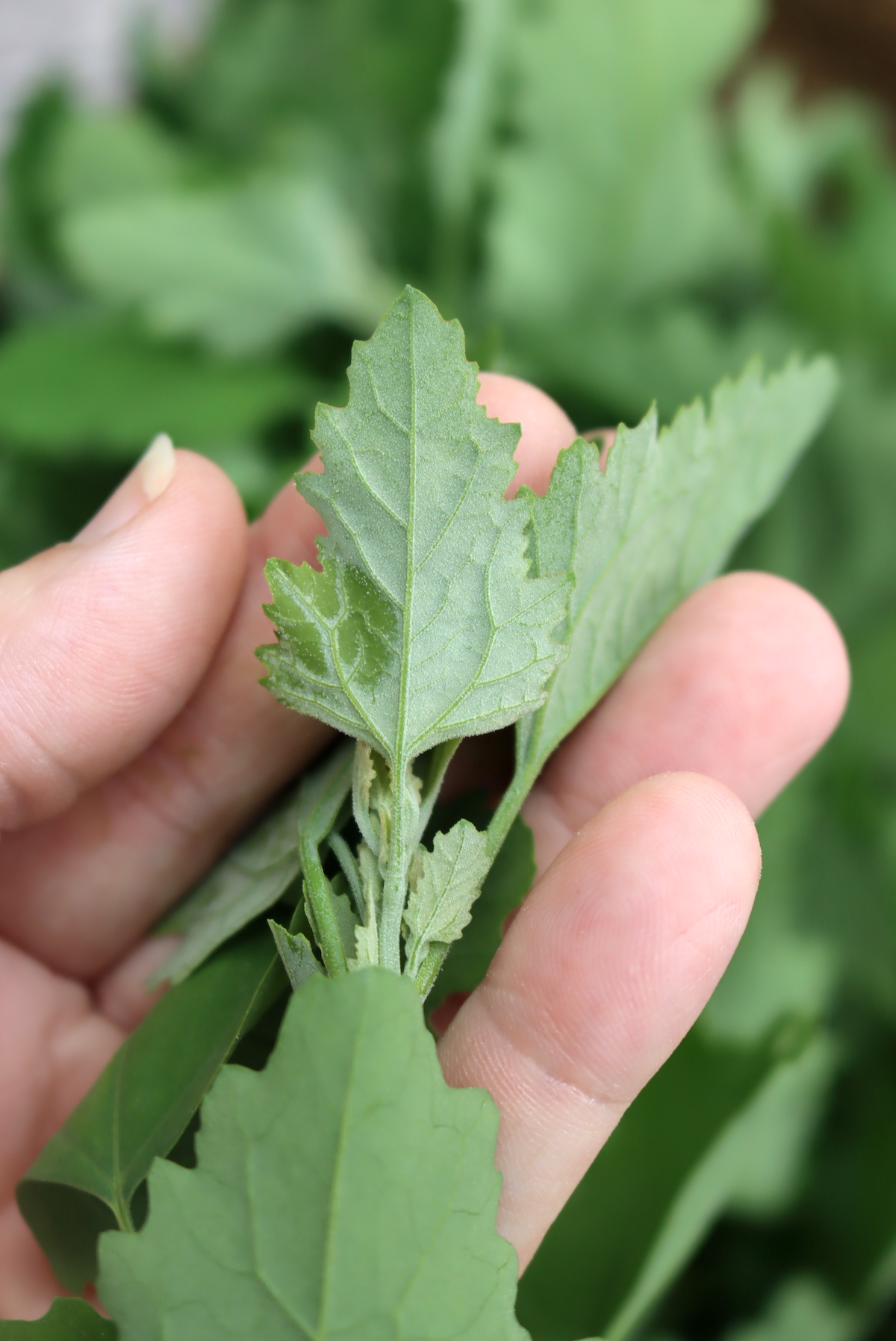
When you flip the leaves over, there’s even more natural salt coming out of the pores of the plant, especially on the smallest leaves. That’s one of the identification characteristics, and the undersides of the leaves should have a dusky white color.
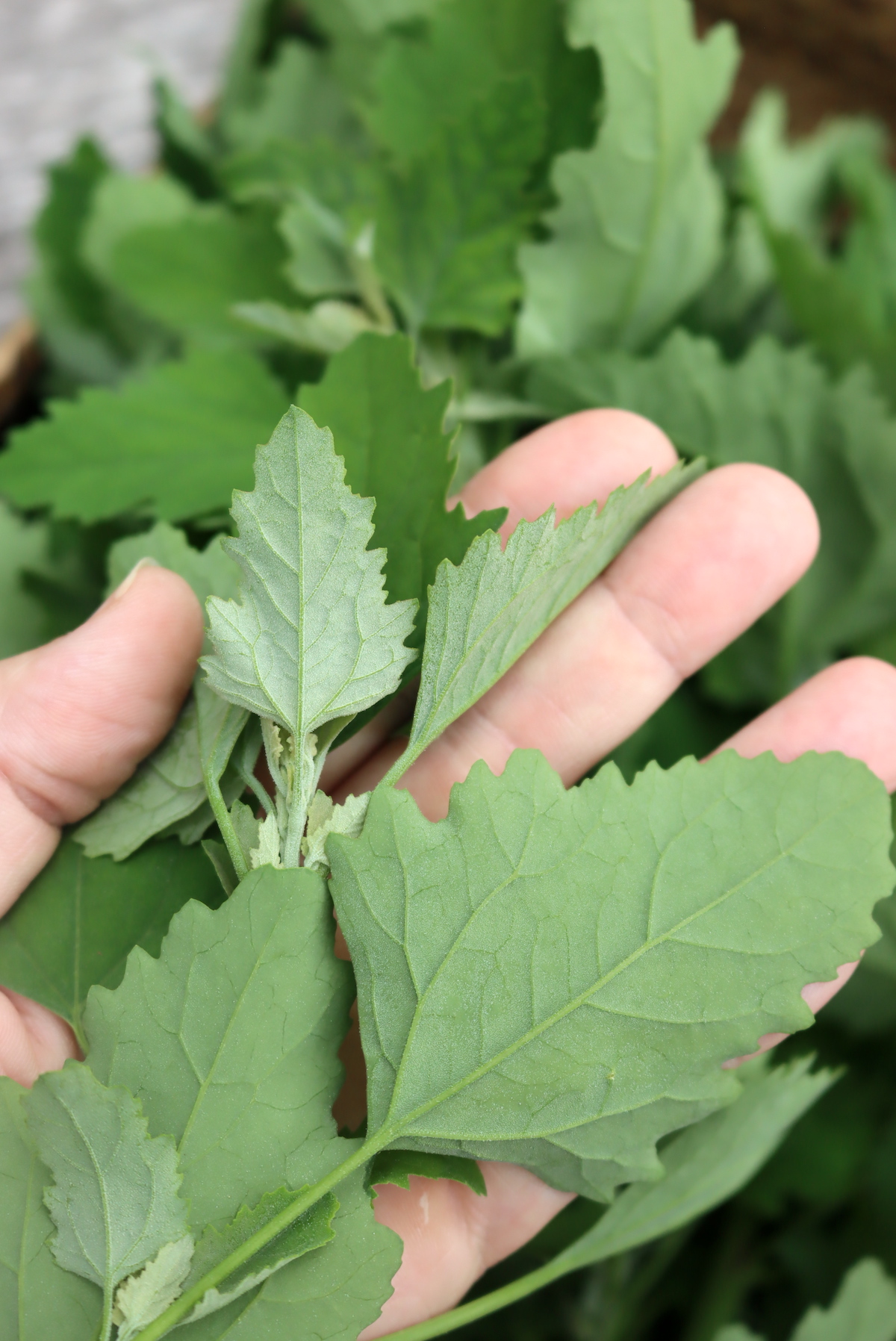
Since the dusky white color on the leaf undersides isn’t actually in the plant tissue but rather salt on the surface, you can actually wipe it away with your finger.
To use lambsquarter as a salt source, the usual method is to dry it completely and then burn the leaves. You then use the resulting ash as a seasoning. (You can also do this with coltsfoot, another wild weed that grows in similar habitats, and coltsfoot salt is better known.)
Since lambsquarters stores its salt on the outside of the leaves, burning isn’t strictly necessary. You could just soak it in water, and repeat that with many plants and the same water until the water is starting to get salty. Finally, cook it down to concentrate the salt.
Lambsquarters Recipes
- Cook lambsquarter stew with this recipe from Nan Away Farmstead.
- Impress your dinner guests with this Wild Spinach Dip from the Forager Chef.
- Grab some fresh eggs and lambsquarter leaves and whip up this frittata from Food52.
- Make fun salt and vinegar lambsquarter chips! Try this easy recipe from Edible Wild Food.
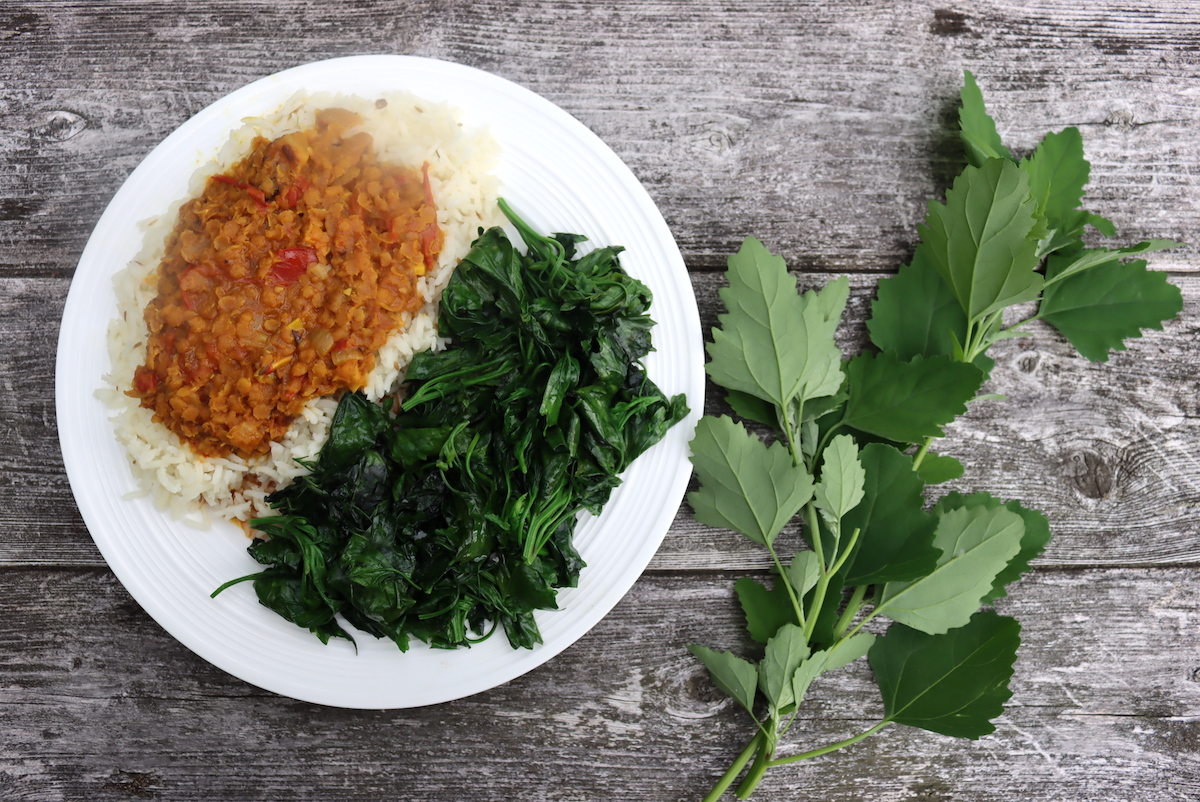
Or, do as I do, and quickly cook lambsquarter greens in a bit of butter or ghee to serve beside curry, like this homemade red lentil dahl with cooked lambsquarter leaves.
Lambsquarters FAQs
Yes, lambsquarters is fully edible. The leaves, young shoots, flowers, buds, and seeds can all be eaten raw or cooked, with young leaves and side shoots being the most tender. Like spinach and rhubarb, lambsquarters contains oxalic acid and should be eaten in moderation, but it’s safe for most people in normal amounts. Avoid harvesting from sprayed lawns or roadside areas where the plant can pick up contaminants from the soil.
Lambsquarters typically grows 2 to 3 feet tall (sometimes up to 6 feet in fertile soil) with branching stems often striped red, purple, or green. The leaves are alternate, irregularly toothed, and shaped like diamonds, triangles, or lance tips. The most distinctive feature is a powdery white coating on the new growth and the underside of leaves, which gives the plant a frosted look at the tips. Tiny green flowers form in clusters at the stem ends and develop into shiny black seeds in late summer.
Lambsquarters tastes like a mild, sweet version of spinach without the tannic edge that cultivated spinach can have. The young leaves and shoots are tender and pleasantly grassy raw, and they cook down beautifully like any other tender green. Older leaves can be slightly tough or stringy and have a bit of bitterness that disappears once cooked. Many foragers prefer the wild plant over store-bought spinach.
Lambsquarters has three main look-alikes: orache (Atriplex patula), amaranth (Amaranthus spp.), and black nightshade (Solanum nigrum). Orache and amaranth are both edible, so confusion with them is harmless. Black nightshade requires more care and isn’t a beginner-friendly plant; its ovate leaves, white or violet five-petaled flowers, and small green-to-black berry clusters distinguish it from lambsquarters, which has irregularly toothed leaves, tiny green flowers in clusters, and never produces berries.
Yes, lambsquarters seeds are edible and have been eaten since neolithic times. The plant is closely related to cultivated quinoa (another Chenopodium species), and the small black seeds can be used much the same way: raw, dry-roasted, or ground into flour for cereals and baked goods. The seeds are encased in cauliflower-like seed heads in late summer and fall. Separating the seed from the chaff takes some practice, and is detailed in the lambsquarter seed harvesting tutorial.
More Foraging Guides

Did you find this Lambsquarters foraging guide helpful? Tell me in the 📝 comments below how you use lamb’s quarters on your homestead!
And make sure you stay in touch with me by following on social media!
Find the perfect foraging guide
Searching for something else? Enter keywords to find the perfect foraging guide!








Love all the information, thank you!
Thank you, so glad you found it useful! Lambsquarters is such an underappreciated green.
Your subscribe button isn’t hot. Have some one from the outside try it, not you.
I would like to subscribe…
cthegarden@gmail.com
Thank you
I just subscribed you, you should be all set.