
Affiliate disclosure: This post may contain affiliate links. Please see our Privacy Policy.
Pickled eggs are the easiest way to turn a spring egg surplus into months of tangy, protein-packed snacks — no canning, no special equipment, just a jar and a flavorful brine.
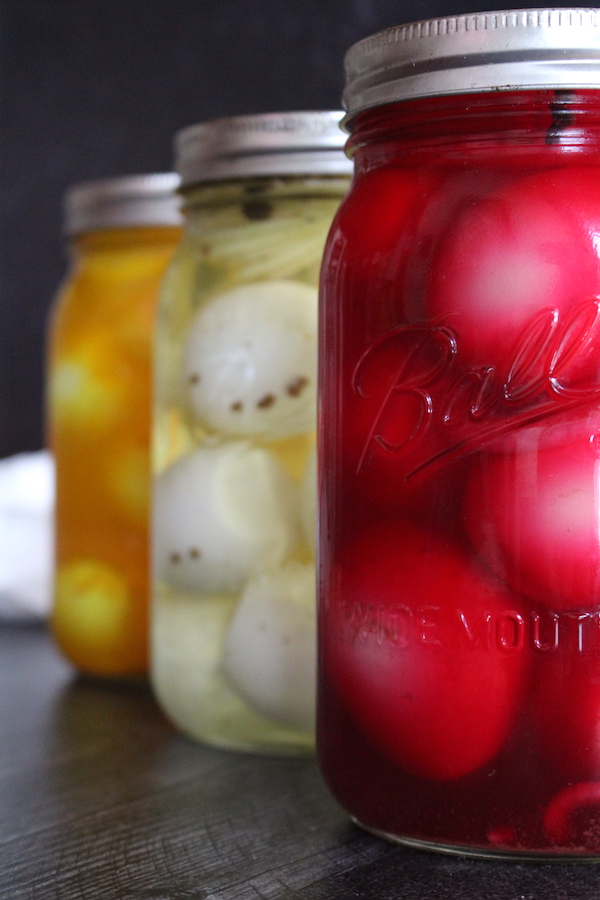
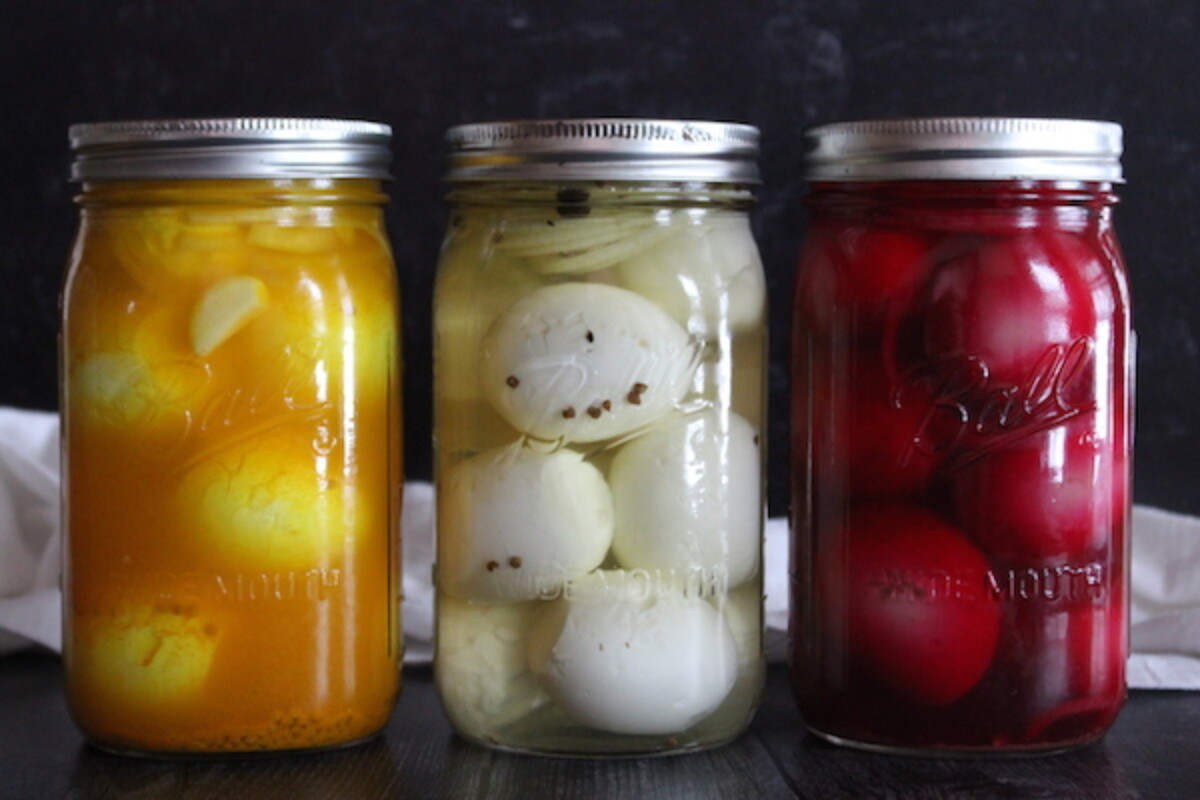
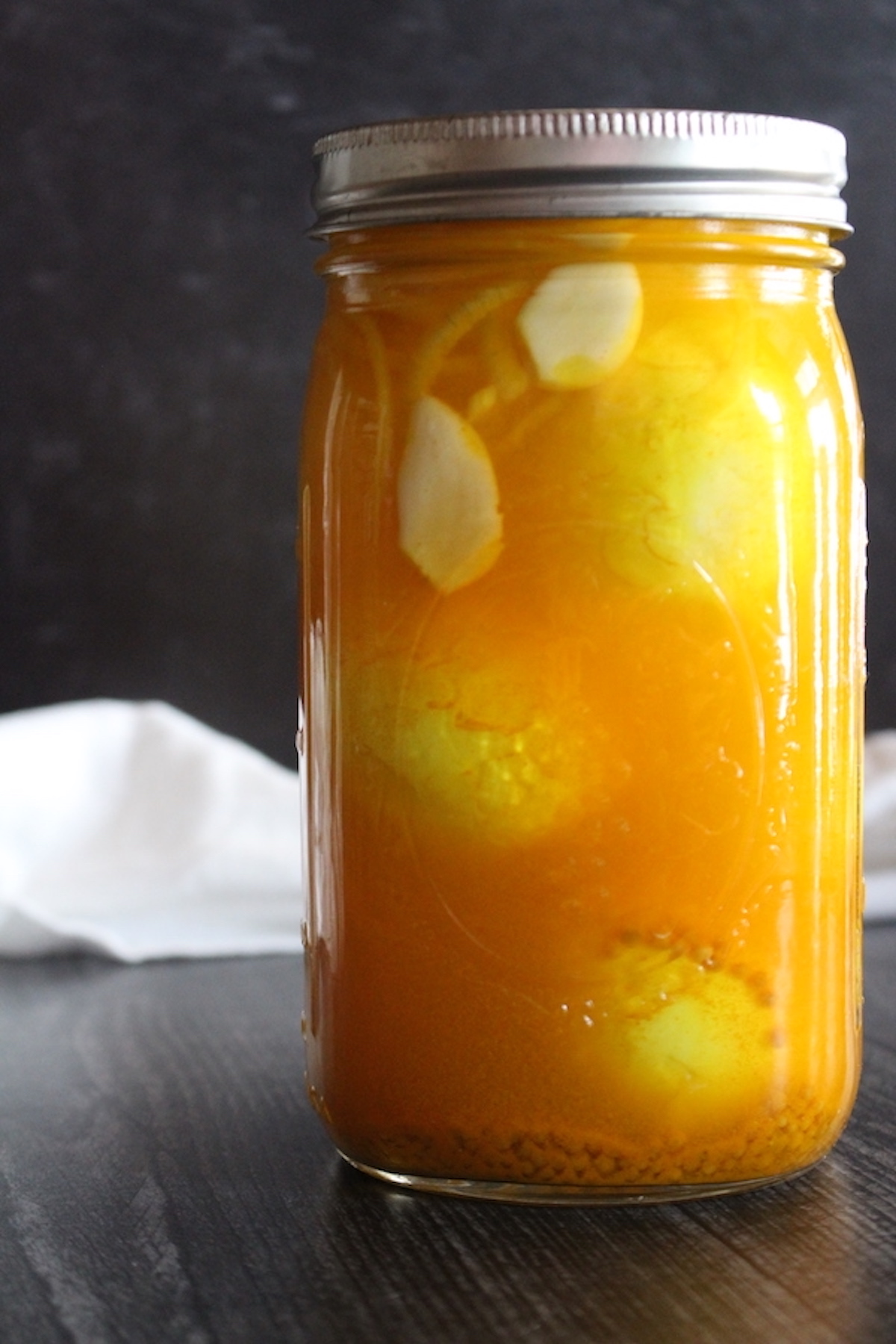
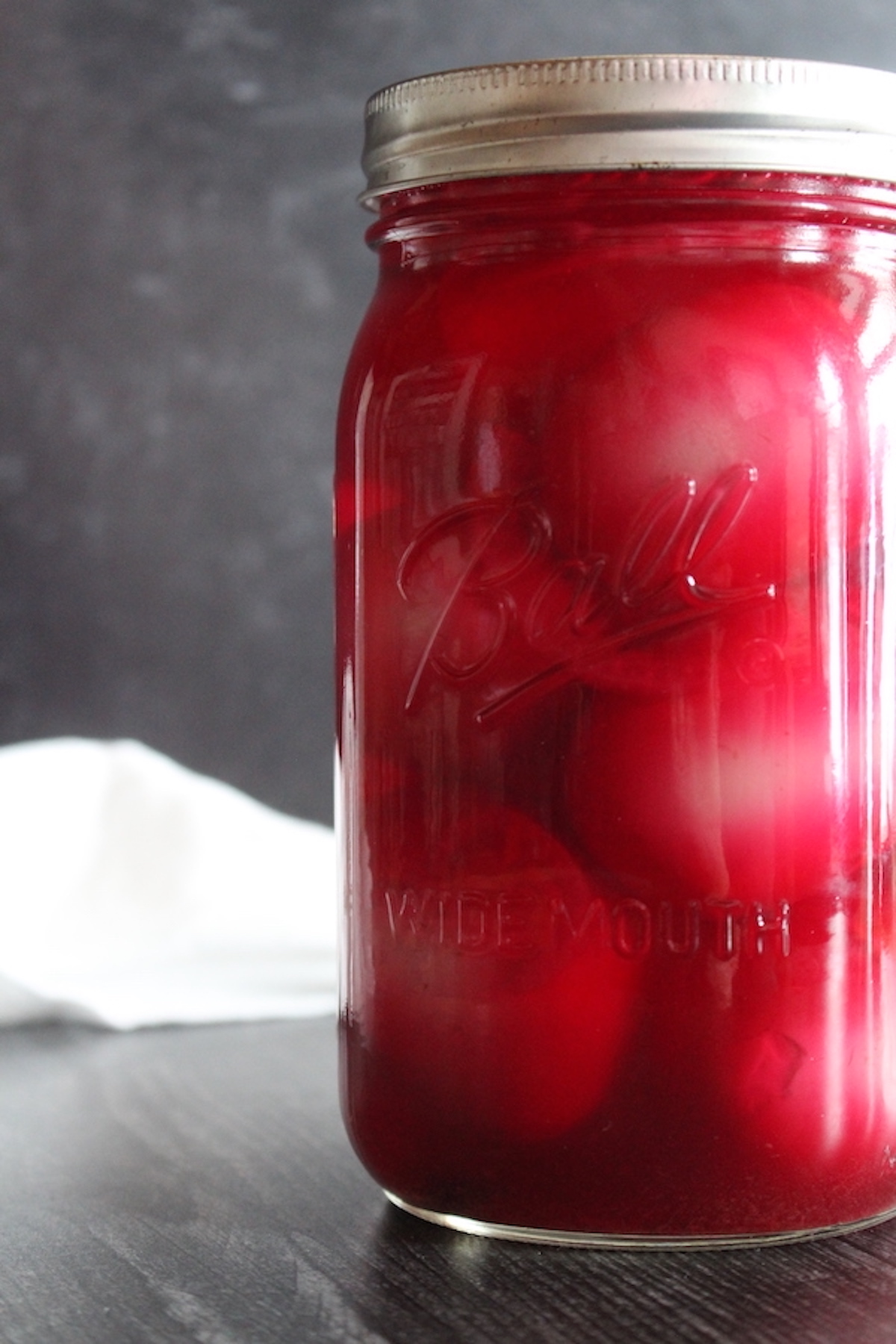
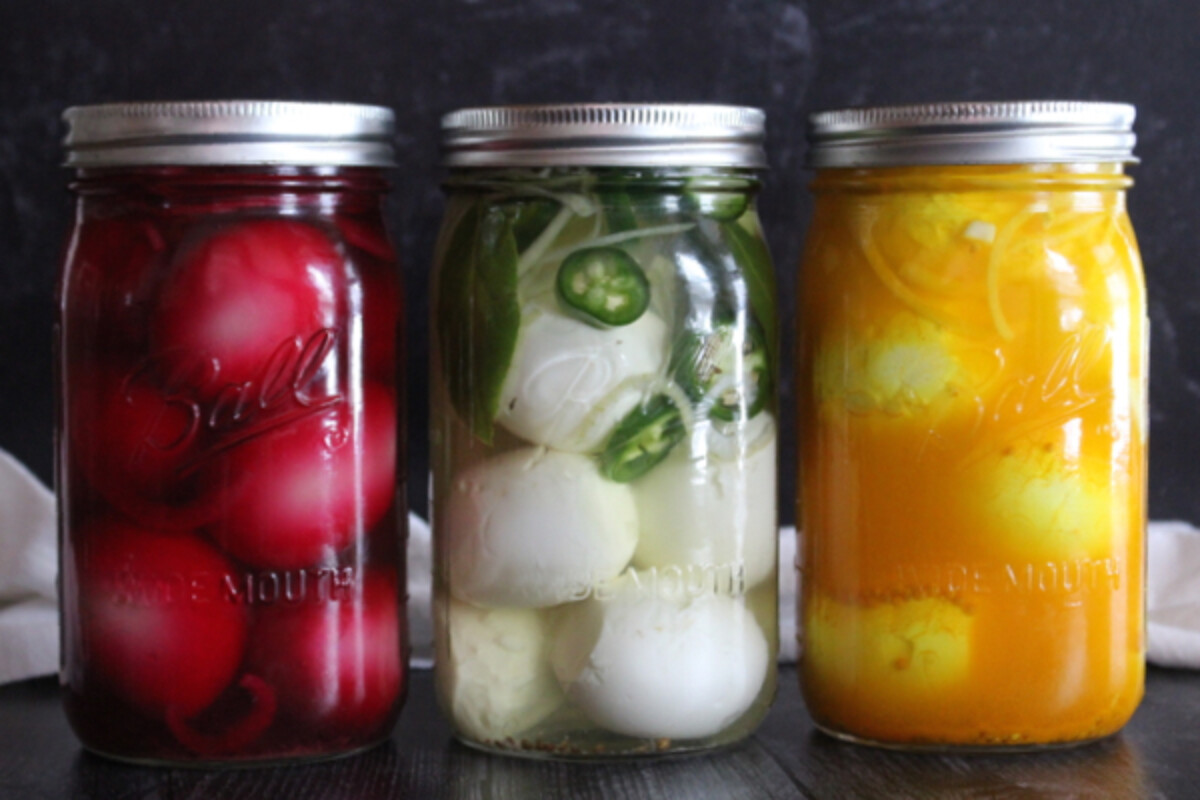
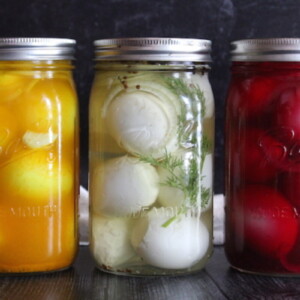
These four variations cover the full flavor spectrum: beet pickled eggs (deep magenta, sweet and warm), dill pickled eggs (the old-school classic), bread and butter pickled eggs (sweet, golden, and bright), and spicy jalapeño pickled eggs (a real kick). All four use the same simple refrigerator method: pour a flavored brine over peeled hard-boiled eggs, refrigerate for at least 24 hours, and enjoy for up to 3–4 months.
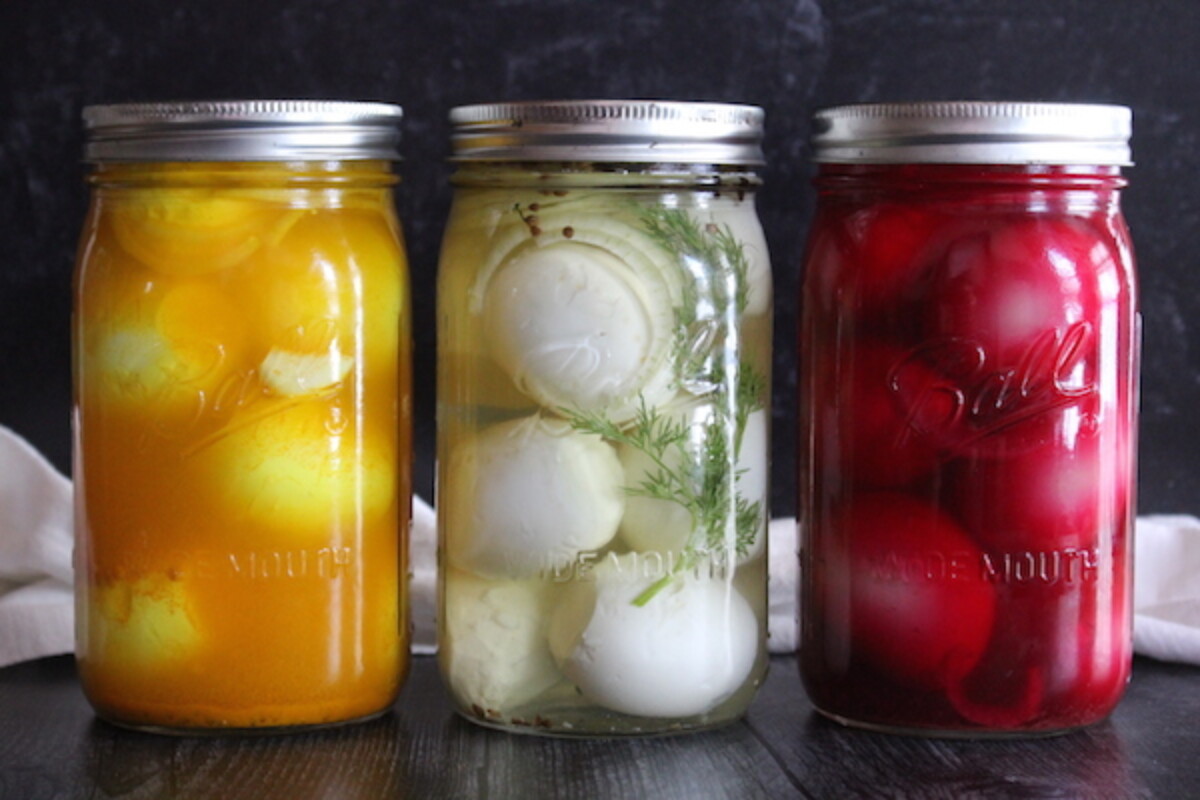
Table of Contents
- What Are Pickled Eggs?
- What Do Pickled Eggs Taste Like?
- Why Make Pickled Eggs?
- Ingredients You’ll Need
- How to Make Pickled Eggs (The Method)
- Step by Step Instructions
- The Easy-Peel Steam Trick
- Substitutions and Variations
- How to Use Pickled Eggs
- Storage and Shelf Life
- Can You Can Pickled Eggs? (No — Here’s Why)
- Frequently Asked Questions
- Ways to Preserve Eggs
- Pickled Eggs Recipe
- Pickling Recipes
I’ll admit I was a skeptic. Pickled eggs sounded like dive-bar food to me — until I tried one at a craft beer bar in Vermont, served on a plate with a drizzle of olive oil and a tuft of microgreens. The bartender clearly took them seriously, and one bite explained why. Where a hard-boiled egg is bland and forgettable, a pickled egg is alive — vinegar tang, salt that seasons the egg from the outside in, a touch of sweetness, and whatever spice or aromatic you’ve layered into the brine.
Ten years later, I make them every spring when our backyard flock goes into overdrive and we have more eggs than we know what to do with. Pickled eggs are the easiest way to put a serious dent in an egg surplus, and the four variations below cover the full flavor spectrum from sweet to spicy.
What Are Pickled Eggs?
Pickled eggs are hard-boiled eggs that have been peeled and submerged in a vinegar-based brine, where they sit in the refrigerator absorbing flavor for at least 24 hours (and ideally 1–2 weeks) before eating. The vinegar penetrates the egg slowly, transforming the bland white into something tangy and bright; salt seasons it; sugar balances the sour; and herbs, spices, beet juice, or jalapeños layer in whatever character you want.
They’re a classic homestead and farmhouse preservation method, traditionally used in spring when chickens lay more eggs than the family can eat. They keep 3–4 months in the refrigerator, which is enough to bridge a spring egg glut into late summer.
What Do Pickled Eggs Taste Like?
Tangy, salty, slightly sweet, with whatever flavor you’ve built into the brine. The texture stays firm but takes on a faint pickle-crisp quality on the outside; the inside stays creamy. They’re a perfect protein snack on their own, and excellent sliced into salads, served on charcuterie boards, or tucked into deviled-egg-style appetizers.
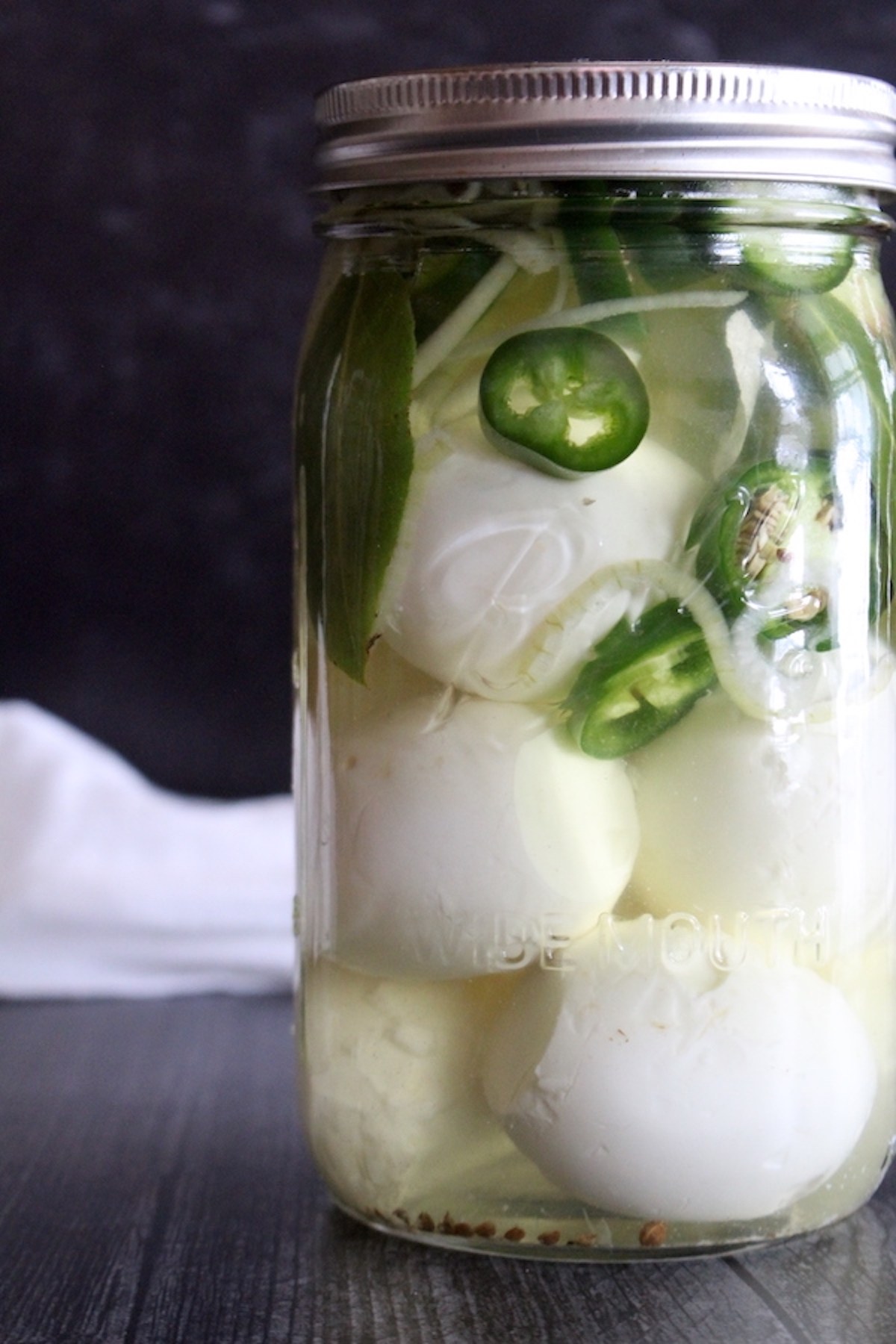
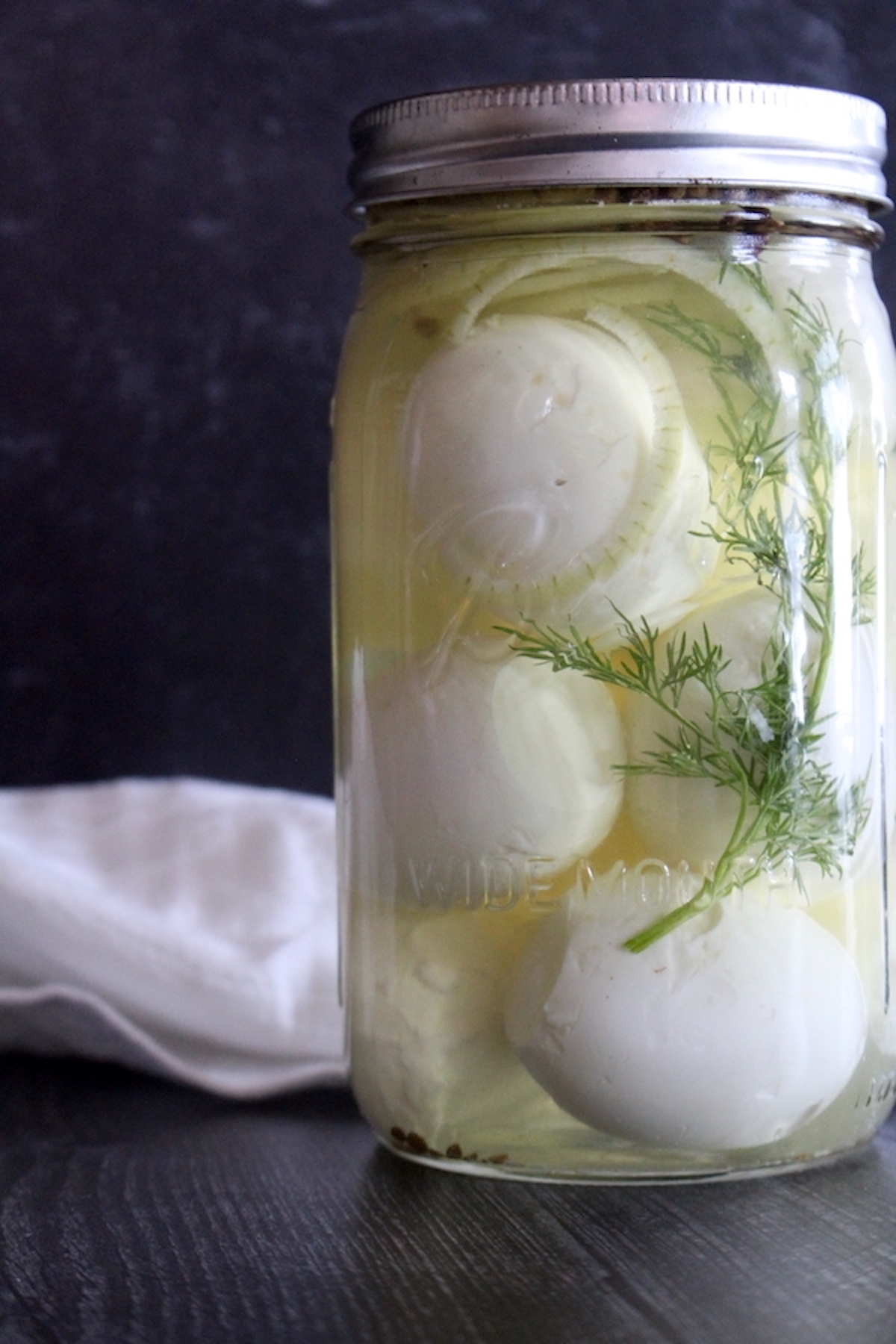
The four recipes below give you a wide flavor spectrum: beet (sweet, earthy, warm-spiced), bread and butter (golden, sweet-tart with mustard seeds), dill (familiar pickle flavor, the family favorite), and jalapeño (genuinely spicy, with garlic and bay).
Why Make Pickled Eggs?
A few good reasons:
- They solve the spring egg problem. A laying flock peaks in late spring and early summer — far more eggs than most families can use fresh. Pickling 2–3 dozen at a time gives you weeks of snacks from what would otherwise pile up in the fridge. (For the full picture, see our guide to ways to preserve eggs.)
- They’re the easiest preservation project there is. Boil eggs, peel them, pour brine over them. No canning, no fermentation, no specialized equipment. If you can boil water, you can make pickled eggs.
- The flavor pays back the effort enormously. Hard-boiled eggs are utilitarian. Pickled eggs are a treat. Even people who claim not to like pickled eggs (mostly because they’ve only had bad ones) often change their mind after one of these.
- They’re a perfect summer snack. Cold, savory, protein-rich, ready to eat from the jar. Excellent on hot days when you don’t want to cook.
- Great for kids. My daughter loves the dill version, which tastes like a familiar pickle. The brine method is also forgiving enough that kids can help (peeling boiled eggs is excellent fine-motor practice).
This isn’t shelf-stable preservation — pickled eggs cannot be safely canned (more on that below). But for refrigerator storage, they keep months and only get better as the flavors develop.
Ingredients You’ll Need
Each of the four recipes below uses a slightly different combination, but the foundation is the same. See the recipe card for exact quantities for each variation.
The base for every pickled egg:
- Hard-boiled eggs — peeled, ideally steamed rather than boiled (see method below for the easy-peel trick)
- White vinegar — the preservative backbone and source of pickle tang. 5% acidity standard distilled white works perfectly.
- Water or beet juice — to dilute the vinegar to your preferred intensity (some recipes are all vinegar, others 1:1)
- Salt — flavor and food safety. Kosher or canning salt; avoid iodized.
- Sugar — balances the vinegar’s sharpness. Even savory pickled eggs benefit from a touch.
The flavor builders (vary by recipe):
- Aromatics — onion, garlic, fresh dill, jalapeño
- Whole spices — mustard seeds, celery seed, coriander seed, dill seed, bay leaves, allspice berries, whole cloves, cinnamon stick
- Ground spices — turmeric (for color)
- Beet juice or cooking water — for beet pickled eggs; gives the magenta color and earthy sweetness
How to Make Pickled Eggs (The Method)
The method is identical across all four recipes, and active time is about 30 minutes. The hard part is waiting — at least 24 hours, ideally 1–2 weeks, before the flavors fully develop.
Step by Step Instructions
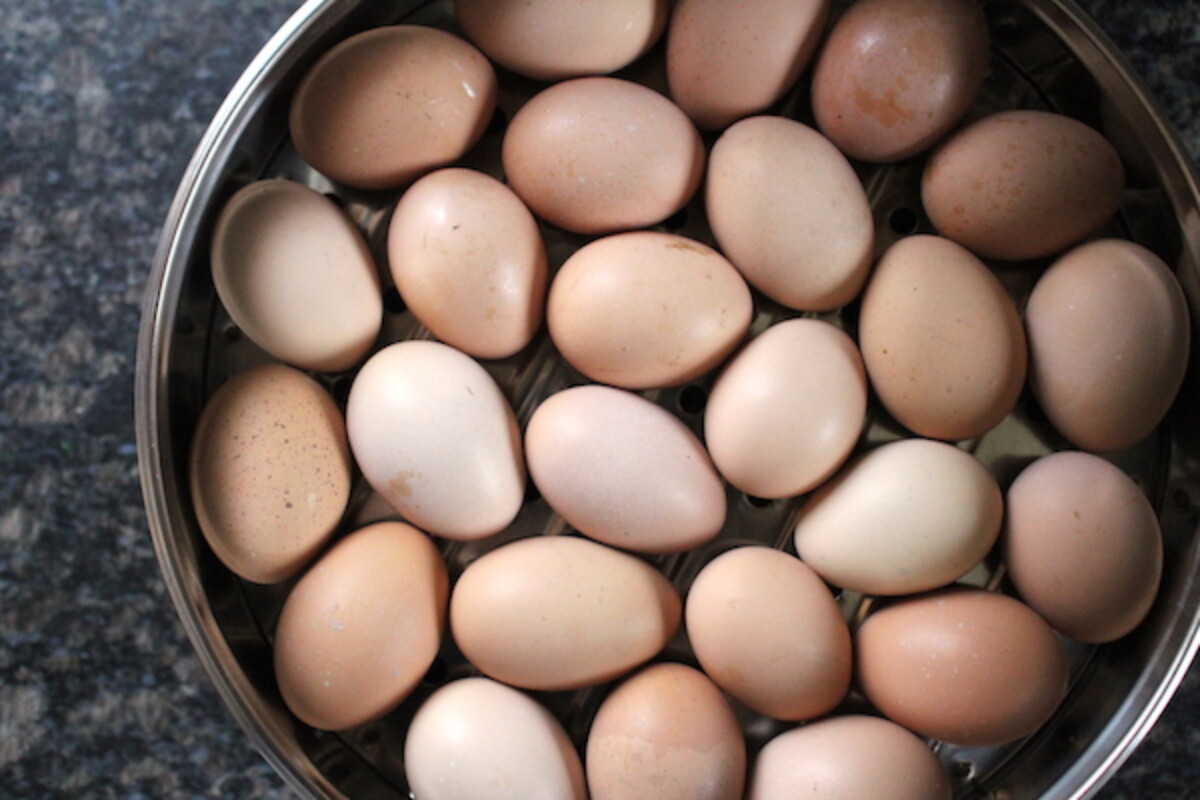
- Steam the eggs for 12 minutes over an inch of boiling water, then transfer to an ice bath until cold. Steaming (instead of boiling) is the single best trick for easy-peel eggs, especially with farm-fresh ones.
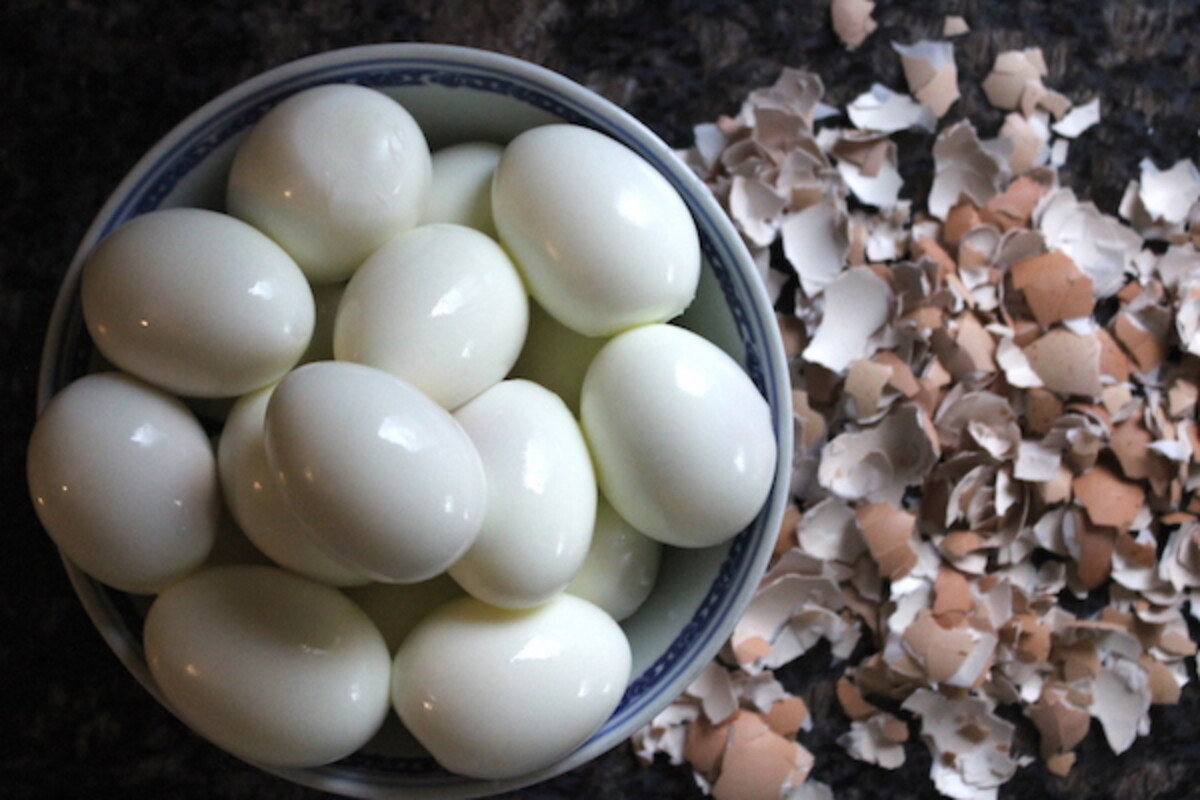
- Peel the cooled eggs under cool running water for easiest removal. Pack 9–10 peeled eggs into each wide-mouth quart mason jar — don’t overpack, or the brine can’t circulate.
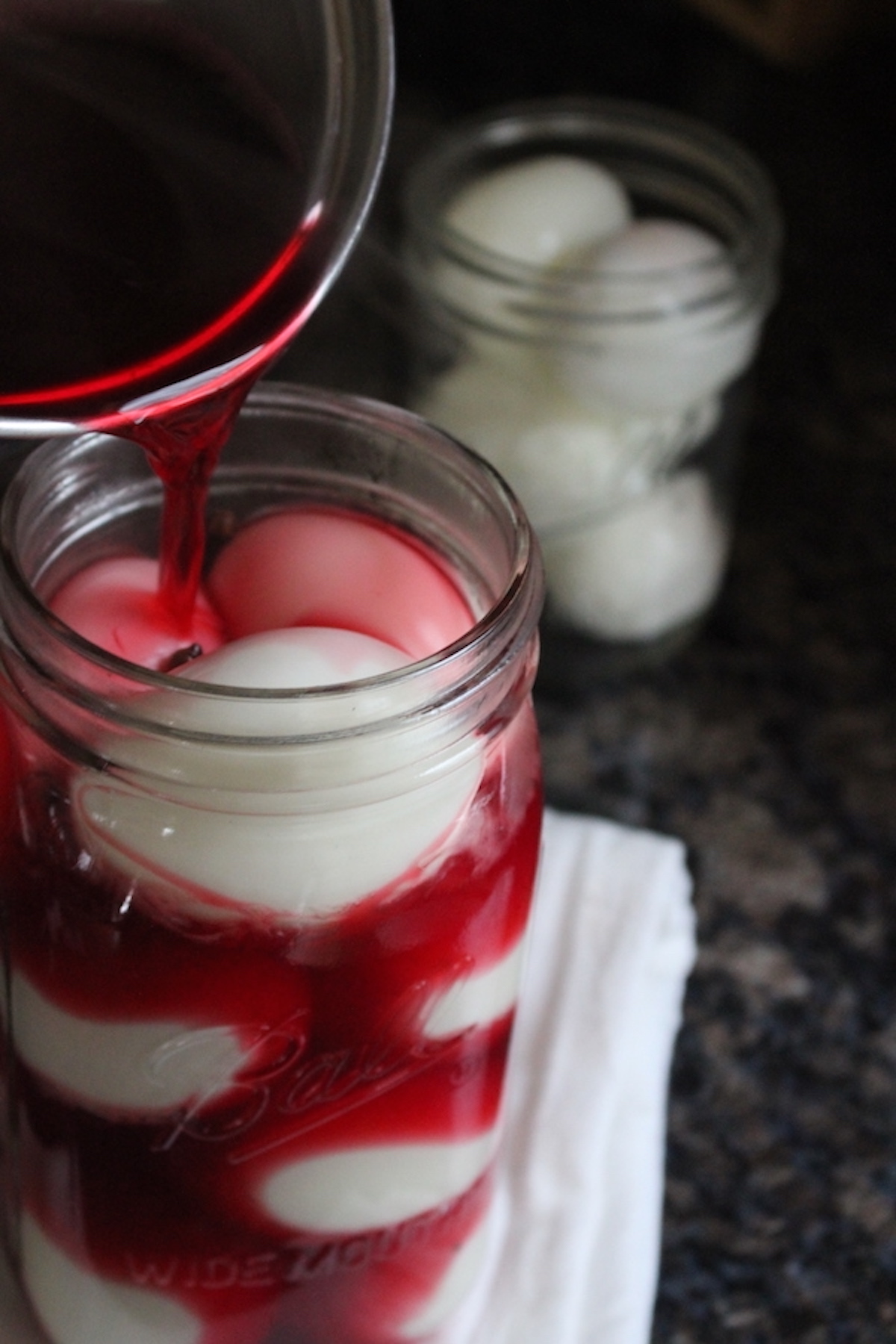
- Make the brine: heat vinegar, water (or beet juice), salt, and sugar in a small saucepan until the salt and sugar dissolve. Add whole spices and aromatics to the jar, then pour the warm brine over the eggs to ¼ inch from the rim, making sure all eggs are submerged.
- Cap with a plastic lid (vinegar will corrode metal canning lids), allow to cool slightly, then refrigerate. Wait at least 24 hours before eating, ideally 1–2 weeks for full flavor. Pickled eggs keep 3–4 months refrigerated.
The Easy-Peel Steam Trick
The hardest part of pickled eggs is peeling. After trying every folk technique (older eggs, ice baths, baking soda, vinegar in the water), the only method that consistently works — even with farm-fresh eggs — is steaming instead of boiling.
Bring 1 inch of water to a hard boil in a stockpot. Place a steamer basket holding the eggs over the boiling water (the water shouldn’t touch the eggs). Cover, and steam for 12 minutes for fully cooked yolks ideal for pickling. Transfer immediately to an ice bath until cold.
The shells slip off cleanly. For large batches, stack stainless steel steamer baskets three levels high in a stockpot and steam several dozen eggs at once.
(Don’t toss the shells — save them for eggshell powder, an excellent calcium supplement for your garden or even your chickens.)
Substitutions and Variations
This recipe family is famously flexible. Here’s what works:
Vinegar: White vinegar is the standard — neutral, clear, and lets the spices lead. Apple cider vinegar works too and adds a fruity note (try it with the beet or jalapeño version). Rice wine vinegar gives a milder tang. Distilled white is the most economical and cleanest-tasting. Don’t go below 5% acidity — pickled eggs depend on vinegar strength for both flavor and food safety.
Sugar: Brown sugar, honey, or maple syrup all work in place of white sugar. Maple syrup is particularly good in the bread and butter version (use homemade maple syrup if you have it).
Salt: Kosher salt and canning salt both work. Avoid table salt with iodine and anti-caking agents — they can cloud the brine.
Spice substitutions: The 4 base recipes are starting points, not gospel. Pre-mixed pickling spice can replace the individual whole spices (1–2 Tbsp per quart). Add hot sauce instead of jalapeño for the spicy version. Add fresh tarragon, thyme, or rosemary if dill isn’t your thing. Smoked paprika is excellent in the jalapeño version. And if you love the dill version, the same flavor profile shines in our classic dill pickle canning recipe for cucumbers.
Brine ratios: The recipes range from all-vinegar (bread and butter) to 1:1 vinegar:water (dill). Don’t go below 50% vinegar — pickled eggs need that much acidity to stay safe in the refrigerator. Above 50% is just personal preference for tang intensity.
Adding sliced beets to the jar for beet pickled eggs is delicious and gives you a bonus pickle (the beets pickle right alongside the eggs). If you have a stash of canned beets already, that brine is the perfect starting point — just drain and use the liquid.
Pre-mixed pickling spice can replace the individual whole spices in any recipe — use 1–2 Tbsp per quart. I prefer making my own blends because store-bought pickling spice tends to sit on shelves all year and lose potency.
How to Use Pickled Eggs
A quart jar of pickled eggs is its own answer to “what’s for snack” most days, but here’s how I actually work them into meals:
As a snack. Whole, halved, or sliced. Sprinkle with cracked black pepper or a tiny drizzle of olive oil. The single best thing to put on a charcuterie board.
On salads. Sliced pickled eggs are exceptional on a green salad with sharp dressing. Beet pickled eggs in particular look stunning on a goat cheese salad. Try them on a Cobb salad in place of the regular hard-boiled egg.
Deviled. Mash the yolks of pickled eggs with mayo, mustard, and a touch of the pickling brine for the best deviled eggs of your life. Beet pickled deviled eggs are showstoppers at potlucks.
With breakfast. A halved pickled egg next to scrambled eggs and bacon is a classic farmhouse breakfast. Sounds redundant; works brilliantly.
On grain bowls. Slice over a rice or farro bowl with greens, avocado, and seeds. The vinegar tang ties everything together. The spicy jalapeño version pairs beautifully with pickled jalapeños for a double-pickle grain bowl.
Storage and Shelf Life
Pickled eggs keep 3–4 months in the refrigerator when stored submerged in their brine. The vinegar acidity and salt prevent spoilage; the cold temperature handles the rest.
A few storage rules:
- When in doubt, throw it out. The signs of pickled eggs going bad are obvious (off smell, cloudy slimy brine, soft eggs). At the first hint, toss the whole jar.
- Always keep refrigerated. Pickled eggs are not shelf-stable. See the canning section below.
- Keep eggs submerged. If they bob to the top, push them down with a clean fork or add more brine.
- Use a plastic lid, not a metal canning lid. The vinegar corrodes metal over time, which can affect both flavor and the seal. The Ball brand grey plastic storage lids are excellent for this.
- Date the jars. Three months is a long time, and you may forget when you made them. A piece of masking tape and a sharpie solves it.
Can You Can Pickled Eggs? (No — Here’s Why)
This is one of the most-searched questions about pickled eggs, and the answer is genuinely important: do not can pickled eggs at home. There is no safe tested method.
The reason isn’t that the brine is too weak or the salt is too low. It’s that eggs are too dense for vinegar to fully penetrate. Sources recommend 2 weeks (small eggs) to 4 weeks (large eggs) of refrigerator pickling for the brine to fully acidify the egg. Even after that, the very center may stay above the safe acidity threshold that home canning requires.
Water bath canning works for cucumber pickles because cucumber tissue is loose and porous — vinegar floods through it during the canning process. Eggs are nothing like cucumbers. The dense, protein-rich center creates exactly the kind of low-acid environment that makes canned eggs unsafe for shelf storage.
There’s at least one documented CDC case of foodborne illness from pickled eggs, though the eggs in that case weren’t even canned — they had been left at room temperature too long. University extensions in the US explicitly warn against canning pickled eggs and note there are no tested safe methods.
The pickled eggs you see at gas stations and bars in commercial jars are made with chemical preservatives that home cooks don’t have access to, and the canning process partially re-cooks the eggs and changes the texture anyway.
The good news: the refrigerator method below keeps pickled eggs perfectly safe and delicious for 3–4 months. That’s plenty of time to work through several quart jars before they go bad. If you want a truly shelf-stable egg preservation method for long-term storage, the traditional lime water method keeps raw eggs fresh for 12+ months without refrigeration — a completely different approach to the same problem.
Frequently Asked Questions
At least 24 hours, but the flavor is dramatically better after 1–2 weeks. The vinegar penetrates the egg slowly — at 24 hours, only the outer layer is properly pickled and the center still tastes like a hard-boiled egg. After 2 weeks, the flavor reaches all the way through. Beet pickled eggs in particular need at least a week for the magenta color to fully penetrate.
Three to four months when stored submerged in the brine in a sealed jar in the refrigerator. The high vinegar content and salt prevent spoilage, but the cold temperature is essential — pickled eggs are not shelf-stable and should never be stored at room temperature.
Two likely causes: (1) the eggs were overcooked before pickling (steam for 12 minutes, no longer), or (2) the brine has too much vinegar without enough water to balance it. Highly acidic brines (above 75% vinegar) will firm up the egg whites significantly over weeks of pickling. If you want softer pickled eggs, use a 1:1 vinegar:water ratio.
Once, with caveats. The first batch of eggs absorbs salt and acidity from the brine, so the second batch will be milder. Refresh the brine with an extra splash of vinegar and a teaspoon each of salt and sugar before using it for a second batch. Don’t reuse a brine more than once, and never reuse brine that’s gone cloudy or smells off.
Yes — and they’re spectacular. See our dedicated recipe for pickled quail eggs. Quail eggs are smaller, so they pickle through more quickly (3–5 days for full flavor) and they’re an absolute showstopper on a charcuterie board.
Ways to Preserve Eggs
If you tried this Pickled Egg Recipe, or any other recipe on Practical Self Reliance, leave a ⭐ star rating and let me know what you think in the 📝 comments below!
And make sure you stay in touch with me by following on social media!
Pickled Eggs
Equipment
- Plastic Mason Jar Lid (Wide Mouth) Ball's Leak Proof Storage Lids work great
- Stockpot for steaming eggs
- Steamer Basket for steaming eggs
- Small Saucepan for cooking brine
Ingredients
Beet Pickled Eggs
- 9-10 whole hard-boiled eggs, peeled
- 1 cup white vinegar
- 1 cup beet juice, or beet cooking water
- 1/2 small onion
- 2 Tbsp. sugar
- 2 Tbsp. salt
- 6-8 whole cloves
- 4-5 whole allspice berries
- 1 whole cinnamon stick
Bread and Butter Pickled Eggs
- 9-10 whole hard-boiled eggs, peeled
- 2 cups white vinegar
- 1/2 small onion, sliced
- 3-4 cloves garlic
- 2 Tbsp. salt
- 1/2 cup sugar
- 1 tsp mustard seeds
- 1 tsp celery seed
- 1 tsp ground turmeric
Dill Pickled Eggs
- 9-10 whole hard-boiled eggs, peeled
- 1 cup white vinegar
- 1 cup water
- 1/2 small onion, sliced
- 3-4 cloves garlic
- 2 Tbsp. sugar
- 2 Tbsp. salt
- 1 tsp mustard seeds
- 1 tsp celery seed
- 1 tsp coriander seed
- 1 tsp dill seed
- 2 Small Fresh dill sprigs, if available
Spicy Jalapeño Pickled Eggs
- 9-10 whole hard-boiled eggs, peeled
- 1 1/2 cups white vinegar
- 1/2 cup water
- 2 Tbsp. salt
- 1 Tbsp. sugar
- 1 or 2 medium Jalapeños, sliced
- 1/2 small onion, sliced
- 3-4 cloves garlic
- 2-4 whole bay leaves
- 1 tsp coriander seeds
- 3-4 whole cloves
- 3-4 whole allspice berries
Instructions
- Choose Variation: This recipe makes four different variations. Choose your recipe from above before you start. All four types have the same instructions.
- Steam the eggs: Bring 1 inch of water to a boil in a stockpot. Place eggs in a steamer basket above the water (water should not touch the eggs). Cover and steam for 12 minutes. Transfer immediately to an ice bath until cold.
- Peel the eggs: Tap and roll on a counter to crack the shell, then peel under cool running water for easiest removal.
- Jar Eggs: Pack into wide-mouth quart jars. 9–10 eggs per quart. Don't overpack.
- Make the brine: In a small saucepan, combine the liquids (vinegar plus water or beet juice), salt, and sugar. Heat gently over medium until salt and sugar dissolve completely. Remove from heat.
- Season: Add aromatics and spices directly to the jar with the eggs (sliced onion, garlic, jalapeño, whole spices, dill, etc.).
- Add Brine: Pour the warm brine over the eggs, leaving ¼ inch headspace. Make sure all eggs are submerged.
- Lid Jars: Cap with a plastic lid (not a metal canning lid). Allow to cool slightly, then refrigerate.
- Pickling Time: Wait at least 24 hours before eating. For best flavor, wait 1–2 weeks. Flavors continue to develop for up to a month.
Notes
Nutrition
Nutrition information is automatically calculated, so should only be used as an approximation.
Pickling Recipes
Find the perfect recipe
Searching for something else? Enter keywords to find the perfect recipe!
More Ways to Preserve Eggs
If you have a backyard flock and a spring egg surplus, there are more ways to preserve them than you might think:
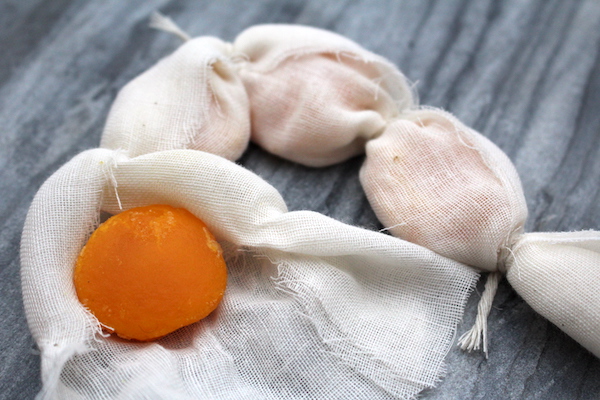
- Salt Cured Egg Yolks — the intense, savory finishing ingredient that fancy restaurants charge $4 for and that you can make at home with two ingredients and a week of patience
- Pickled Quail Eggs — the same brilliant brines, in tiny showstopping form; perfect for charcuterie boards and dinner-party deviled eggs
- Preserving Eggs in Lime Water — the old-world water glass method that keeps fresh eggs for 12+ months at room temperature, no refrigeration
- Ways to Preserve Eggs — the master roundup, with every method we’ve tested
More Pickle Recipes
Once you have the pickling bug, the rabbit hole goes deep:
- Dill Pickle Canning Recipe — crisp, garlicky water-bath pickles that beat anything from the grocery store
- Pickled Garlic Recipe — turns sharp raw garlic into a mellow, snackable condiment
- Pickled Jalapeños — the natural pairing for spicy pickled eggs
- Pickled Garlic Scapes — a spring foraging-the-garden treat
- Lacto-Fermented Pickles — the unpasteurized, probiotic version











Most of the recipes I’ve seen say to boil the brine before adding it. Do you just need to heat till the salt and sugar dissolve or do you need to boil it like they say?
You just need to heat it until everything dissolves, boiling is optional as this is a refrigerator preserve. (With some canned pickles it has to be boiled, but you can’t can these.)
I made 3 different recipes (classic, easy, and dill) from different people and your Dill Pickle Egg recipe was the best. Your Dill Eggs was the first to be finished off and I eventually had to throw the other eggs out because no one ate them. We are going to make it again this year and try another one your recipes.
That’s so good to hear, I’m glad you loved them. My personal favorites are actually the bread and butters. I hope you like the other versions just as much!
Hi, just curious. You said “ People have actually died from eating home canned versions.” But when I went to that reference and read it, it talked about a case of foodborne illness, but no one died in that case. Did you put the wrong reference or do you mean to say that because bot is potentially fatal that this could have been a fatal case and made a typo?
Hi Jack, It looks like I either misread that case I linked to, or simply read it at another source that I can’t find now when searching. Either way, you are correct, I can’t actually find a source as of today that has that information. I can’t even find any current documentation saying that there are any botulism cases connected to canned pickled eggs, the eggs in that article aren’t canned, they were just room temperature stored. And the CDC went on to say that the reason for the contamination was that the eggs were pricked with a toothpick, and that drove botulism spores into the center of the egg where the vinegar hadn’t penetrated. They note that specifically the pricking was the source of the problem, and that regular whole hard boiled eggs do not contain botulism on the interior.
While they Ag Extensions in the US do not support canning eggs or have any tested methods, to date, there are no cases of botulism from home canned pickled eggs. I will go back and correct that in the article.
Here is the article on the topic from one case in 1997 where the eggs were not canned, just stored on a sunny windowsill: https://www.cdc.gov/mmwr/preview/mmwrhtml/mm4934a2.htm
“C. botulinum spores are ubiquitous. Safe food preservation methods destroy spores or inhibit their germination and growth. Conditions that promote germination and growth of C. botulinum spores include absence of oxygen (anaerobic conditions), low acidity (pH >4.6), temperatures >39 F [4 C]), and high moisture content. Most foodborne botulism cases that occur in the United States are the result of improperly home-canned foods. This is the first reported case of botulism related to eating pickled eggs. The amount of toxin detected in the recovered egg yolk suggested that bacterial growth was concentrated in that portion of the egg. Intact eggs that have been hard-boiled should be free of bacteria or spores. Pricking cooked eggs may introduce C. botulinum spores into the yolk. Portions of the yolk that remained anaerobic and inadequately pickled (i.e., not acidified to pH <4.6) may have allowed C. botulinum spores to germinate, grow, and form toxin. Setting the pickling jar in sunlight provided warmth that facilitated bacterial growth and toxin production."
I tried 3 of the recipes, definitely like bread and butter the best! My husband says “I love those yellow eggs!”. The tumeric turns them yellow which is so cool and they taste tangy and sweet but not too sweet! I also cheated and didn’t bother boiling the brine and they seem fine. Ate 3 batches this way! Thank you for the recipes! 🙂
You’re so welcome. We’re so glad you enjoyed them.
Thank you for sharing these recipes. Have you ever tried using leftover juice from a jar of pickles to make a small batch of pickled eggs? I have refrigerator bread and butter pickles in the fridge, and I thought that I would try this with a couple of hard-boiled eggs just to see if there’s enough flavor. Also, I have fermented dills and wondered if I could use that pickle juice to try a couple of dill-pickled eggs. Since I’ve never had a pickled egg, I wondered if this might be an easy way to try them.
I’m not sure. I haven’t ever tried that before.
Hello, I’m Flomm from Germany. I find your website very interesting. What I don’t understand is how many grams or liters the unit of measurement is 1 cup, since there are different sized cups.
Can you send me an email and specify a volume or weight measurement instead of ‘cup’.
Thank you in advance and best regards
We can’t do those conversions for you but if you do an internet search of cups to grams or litres, you should be able to find the answer.
Why use vinegar? Isn’t salt enough?
A salt brine is used to ferment foods. In order to make a pickled egg, you need to use vinegar which is done for both flavor and preservation.
AND … the health benefits of vinegar should never be understated; even distilled white.
I’ve done the salted duck eggs chinese style. Just a lot of salt and water. Recipes are available. Shelf stable. Ate out of that half gallon jar for months after it “pickled”. Made buns. I did not die, nor did I get sick. Very different flavor and texture to anything I’ve had before.
This particular recipe is for pickling eggs which does require vinegar.
You should read the articles you link to. That gentleman did NOT die of botulism from canned pickled eggs. He got botulism from unrefrigerated, uncanned eggs. Make your point with facts; don’t try to scare people into agreeing with you. It is not recommended, but no one has ever died.
There was no attempt to scare people into agreement here. That particular gentleman did not die from canned pickled eggs. That’s true but the editorial note on the article indicates that death can occur from botulism and that adequate acidification is essential to prevent botulism and more specifically that eggs should be refrigerated since they may be acidified inadequately. We apologize for any miscommunication on our part.
The ONLY person recorded in the entire history who DIED from pickled eggs is the man in the article–one out of millions.
If you read the article, you will see that he broke every possible thing incorrectly.
He poked holes in the eggs, left them at room temperature for a couple of days before eating.
erythritol and sweeteners are not healthy choices.
“Truer words,” Carroll, and love that you shared that knowledge. Fortunate for me, I tried them before going keto (and knowing the truth) and disliked them intensely enough to forego sweets.
I recently made a batch of your dill pickled eggs, and they have been the weirdest and best lifesaver for my finicky pregnancy stomach! I can eat (and enjoy1) these no matter how upset my stomach is. Can’t wait to try the other recipes.
The pregnant body can certainly be weird, can’t it? So glad you’re enjoying the pickled eggs.
I cannot use vinegar because of allergies. Have made refrigerator pickles using Lemon juice (usually fresh squeezed Meyer lemons). Will this be okay for pickling eggs? Have made dill pickles and a sweet relish with lemon juice.
Can you help me here?
Olivia
If you have had success using it with pickles and relish, I would definitely give it a try and let us know how it turns out.
Olivia … two years after the fact, so you might have considered this already … Meyer lemons have much less acidity than “regular” lemons so you should take this into account when using citric acids in preservation.
Thank you, JulianChild, I do use Meyer lemons whenever I can. They work well to replace vinegar in many recipes, including mayonnaise, ketchup and mustard.
Can you freeze these after they are cooled?
Possibly? I’d assume that’d ruin their texture, but I honestly don’t know. Try it on a small batch maybe?
I love making pickled eggs. Another variant your husband might like: When heating up the brine, I throw all the spices in too. I also slice up an onion and throw that in. Then, I pour in a can of beer and bring the whole thing to a boil. The alcohol boils away, but the hops and other flavors stay. Then, jar the eggs up. I use the layering method, myself: One layer of eggs, then pour broth (including onions and spices), until eggs are covered. Then, another layer of eggs, then broth…eggs, broth, eggs, broth, etc. The beer gives an extremely hearty aftertaste to the pickled eggs. And, it’s non-alcoholic (the alcohol boils away), so even the kids can eat them
I agree with you about canning being an unsafe practice for pickled eggs. I did want to point out that the link you put about someone dying from home canned eggs was actually a report about a man who ate eggs from an unsealed jar left on a counter in sunlight for 7 days. Also not safe, but it doesn’t relate to canned eggs. Thank you for the recipe ideas!
Just ate the last two eggs out of my batch. they were a little over a year old and still good.
.
BOTULISM
I am confused. IF botulism is an issue in water bath canned eggs it should also be a problem with eggs in your fridge for 4 months! The acid PH does not get to the center of the egg in the fridge and botulism should be as much f an issue.
My take is that botulism is likely not a big risk in either case.
But one thing is for sure, both situations seem to present the same risk.
The difference in having the pickled eggs in the refrigerator is the temperature. It has nothing to do with the acid pH getting to the center of the egg. Botulism does not thrive in cold temperatures.
Can the pickling brine be re-used?
Pickling brine can often be reused in cases where you are storing the food in the fridge. I have never tried it with eggs. Let us know how it works if you decide to try it.
Does it matter what percentage acidity white vinegar you use? I’ve got 6% on hand.
The acidity needs to be a minimum of 5%, so if you’ve got 6% you’re good!
I’ve made all your pickled egg, except the beets, several times. Makes my mouth water just thinking about them. My question, can the recipe safely be doubled and made in half gallon canning jars? Or would it affect the vinegar penetrating the eggs in such a large amount?
You should be able to double it with no problems.