
Affiliate disclosure: This post may contain affiliate links. Please see our Privacy Policy.
Animal fat salve turns rendered tallow, lard, or bear grease into a soft, spreadable balm for chapped hands, dry cracked skin, and leather that needs conditioning. Households made salve this way for centuries, long before cheap vegetable oils showed up on grocery shelves.
The method is the same one I use for every other salve on this site, with rendered fat standing in for olive oil. If you’ve already made a plant oil version, you’ll recognize every step in my guide to making a herbal healing salve.
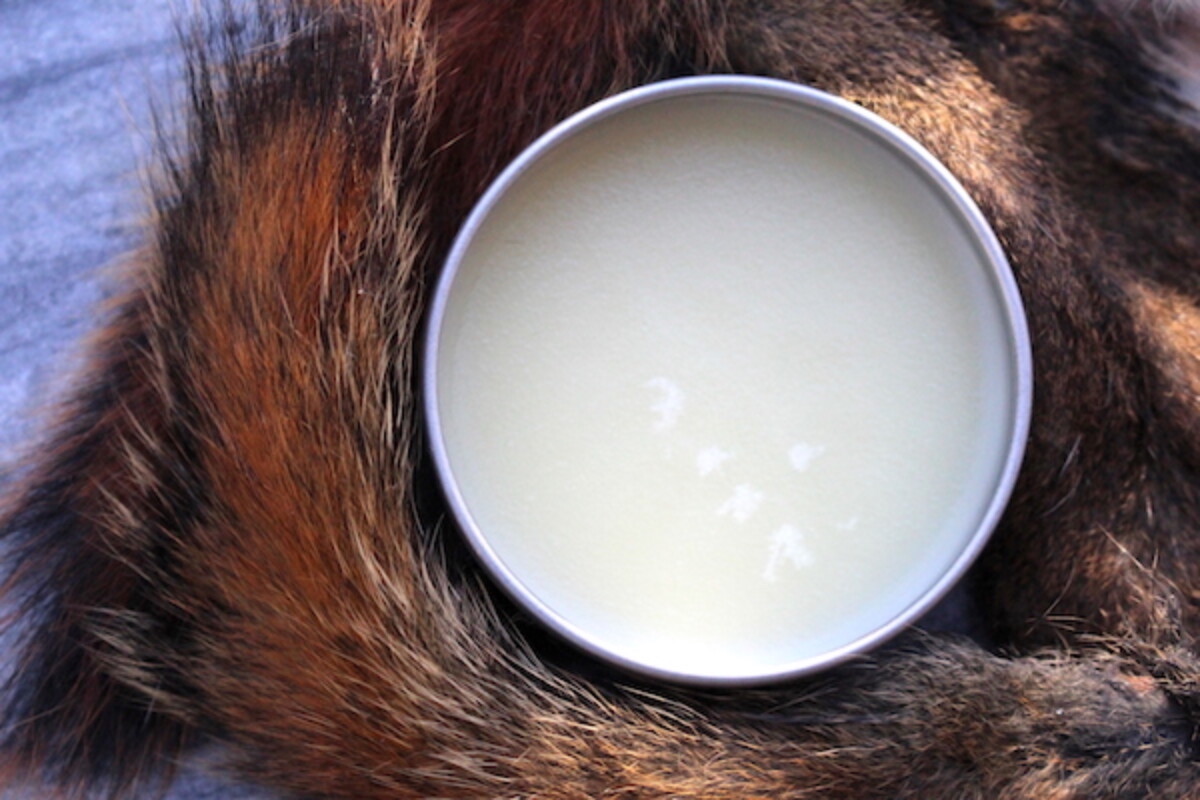
Table of Contents
- Notes from My Homestead
- What Animal Fat Salve is Used For
- Ingredients for Animal Fat Salve
- Equipment for Animal Fat Salve
- How to Make Animal Fat Salve
- Salve Consistency Notes
- Storage and Shelf Life
- Recipe Tips & Variations
- Other Ways to Use Rendered Animal Fat
- Animal Fat Salve FAQs
- Rendering & Using Animal Fat
- Making Fatwax (Animal Fat Salve) Recipe
- Herbal Salve Recipes
A few years back I came across a vendor at our farmers market selling bear fat salve in tiny tins. My first thought, in all honesty, was “hardcore.” My second thought was, wait, you can make a salve out of animal fat? Sure, why not. She had sheep fat salve on the same table, rendered from her own flock, and I bought a tin of each and spent the drive home turning the idea over.
Healing salves have been around for millennia, and for almost all of that time nobody was working with vegetable oil. Olive oil is definitely ancient, but it wasn’t something you could buy cheaply outside the Mediterranean until fairly recently.
Everywhere else, salve got made with whatever fat was already in the kitchen, which usually meant butter, ghee, or rendered animal fat. Plenty of the plant compounds herbalists want for topical use are lipid soluble, meaning they dissolve into fats rather than water, and the fat doesn’t much care whether it came from an olive or a cow.
If you already render your own, you’re most of the way there. I keep rendered tallow and leaf lard in the pantry year round, mostly for cooking, and there’s always a jar or two that’s past its prime for pie crust but still fine for salve. If you’re new to working with fats, my overview of cooking with animal fat covers the differences between lard, tallow, schmaltz, and the rest. I can’t find anyone selling bear fat salve commercially anymore, but Bear Hunting Magazine has a bear grease balm recipe if you have a bear in the freezer and want a version with more ingredients.
Notes from My Homestead

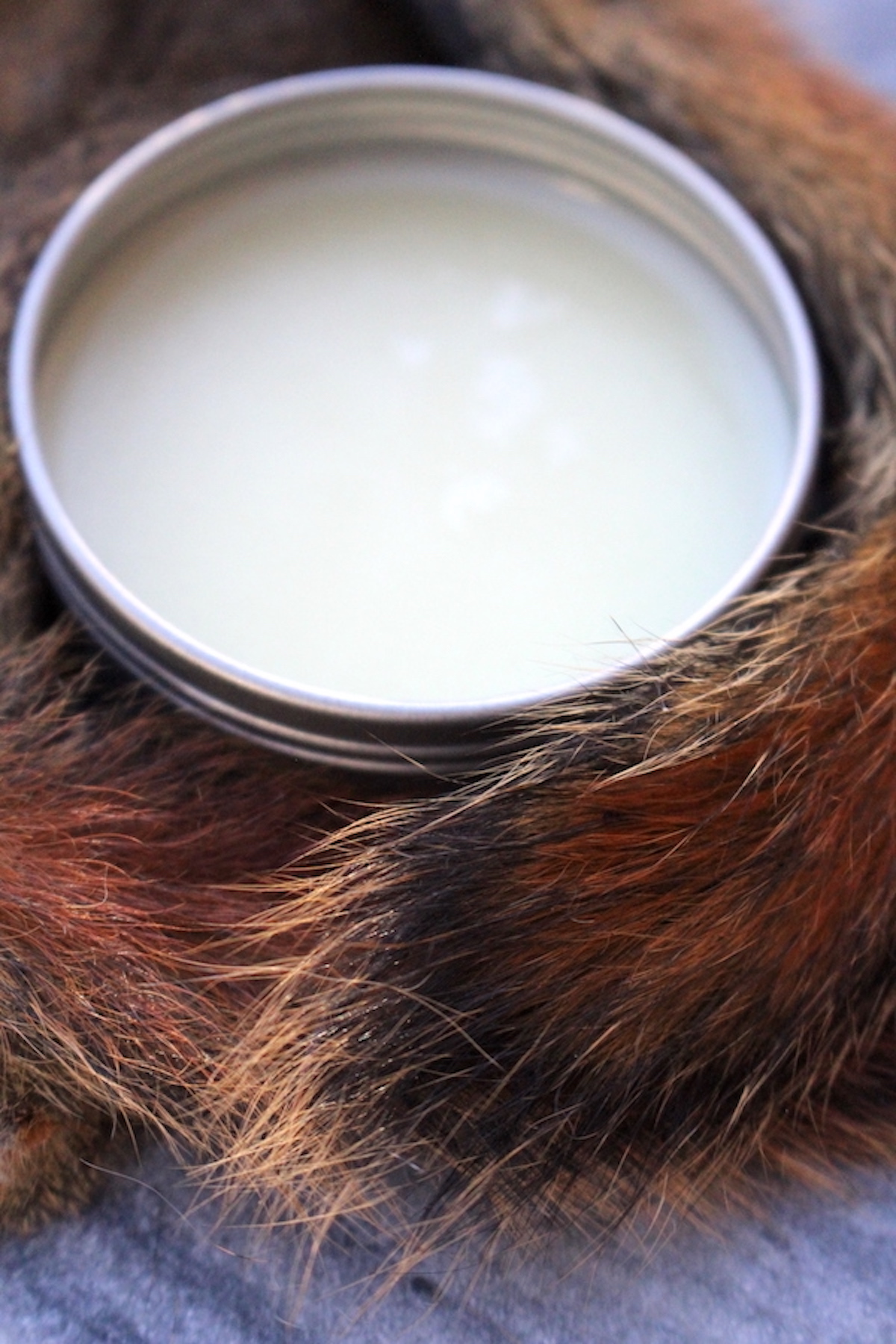
The batch in these photos got made because I had a jar of rendered squirrel fat sitting on my counter with nothing to do. I know, who has that? I do, thank you very much. It came out of a winter project where I tried to bake cookies from entirely wild foraged ingredients. Wild flours were straightforward and homemade maple syrup handled the sweetener, but fat is the hard part unless you’re willing to give up on vegetarian. Most batches were good. The pine bark squirrel fat cookies were less good, though the kids ate every one.
There is a shocking amount of fat on a squirrel, and I still had plenty left over. We spent a whole dinner trying to decide what kind of salve it should become. My husband voted for something to rub on your legs, to help you climb faster and really absorb the squirrel spirit. I mostly knew what I didn’t want, which was to put wild-caught fat anywhere near an open wound. So I left the herbs out entirely and made a plain fat and beeswax salve for boots, sheaths, and tool handles, which is what it’s still doing in the mudroom.
What Animal Fat Salve is Used For
Old-time Vermonters mixed mutton tallow with pine resin to make a drawing salve, the kind you’d put on a splinter or an ingrown toenail to pull it up to the surface. That’s a local version of something that shows up all over the world. Sheep fat gets used as a chest rub in Kyrgyzstan, as a dressing for burns in Ukraine, and as a remedy for sciatica in traditional Islamic medicine. Nobody arrived at those uses through a clinical trial. They arrived at them because rendered fat was on hand, it kept for months, and it stayed put on skin.
There’s a reasonable explanation for why fat works as well as it does. Your skin’s outer barrier is built largely out of ceramides, cholesterol, and free fatty acids, and fatty acids applied to the surface get taken up into that barrier rather than just sitting on top of it. Beeswax does its own share of the work, acting as an occlusive, an emollient, and a humectant all at once, which is why it slows moisture loss without sealing skin off completely. The individual fatty acids in skin lipids also soften and smooth, and a few of them have some antimicrobial activity on their own.
I’d rather be honest than oversell it, though. Tallow skincare has gotten enormously popular in the last few years, and the research has not kept pace with the enthusiasm. Dermatologists reviewing the claims circulating online found that very little research has looked at whole tallow as a product, as opposed to its individual components. Some of those components, like palmitic and stearic acid, do look supportive of barrier repair. Oleic acid, which makes up a large share of most animal fats, can go the other way and loosen the barrier, which means fat-based salves don’t suit everyone. If you have eczema or acne-prone skin, test a small patch and give it a few days before you commit.
Around here it earns its keep for:
- Chapped hands and split knuckles, which is a February problem in this house
- Dry heels, elbows, and the backs of the kids’ hands after sledding
- Conditioning leather boots, knife sheaths, and work gloves
- Wiping down hand tools so they don’t rust in the shed
- Reviving wooden tool handles that have gone gray and thirsty
A note on what this salve isn’t for: Keep it off deep cuts, punctures, serious burns, and anything that looks infected. A fat-based salve seals a wound rather than letting it drain, which is the opposite of what those injuries need. For burns specifically, I’d point you to my herbal burn salve instead, and to a doctor for anything past a minor one. If you’re working with wild-caught fat, as I was, I’d treat it as a skin-and-gear salve only.
Ingredients for Animal Fat Salve
Two ingredients, plus herbs if you want them. The fat carries everything and does most of the conditioning, and the beeswax is what turns a jar of grease into something that holds its shape in a tin.
- Rendered animal fat: Tallow, lard, bear grease, poultry fat, or any wild game fat you’ve rendered yourself. It needs to be fully rendered and strained clean, with no meat solids or water left in it, because those are what cause a salve to spoil. Firmness varies a lot between fats, and that’s the main thing to plan around.
- Beeswax (pellets or grated from a block): Thickens the fat, helps the salve hold its shape, and leaves a breathable film on skin and leather. Pellets are easier to measure out, though a 1 oz bar saves you from weighing anything at all. For a plant-based version, candelilla wax substitutes in at roughly half the quantity, and my vegan herbal salve recipe has the ratios worked out.
- Dried herbs (optional): Anything you’d normally infuse into oil works here. Dried is better than fresh for a fat infusion, since fresh plant material brings water with it and shortens the shelf life. My guide to making a herbal infused oil covers which herbs suit which purpose.
Equipment for Animal Fat Salve
You don’t need much, and most of it is probably already in your kitchen.
- Double boiler, or a heatproof bowl set over a pot of simmering water, for melting everything gently
- Pint mason jar, if you’re infusing herbs into the fat first
- Fine mesh strainer plus a square of cheesecloth for straining the herbs back out
- Small kitchen scale for weighing the beeswax, unless you’re using pre-measured bars
- 2 oz salve tins, or small glass jars, for the finished salve. If you’re making a batch for gifts, the 4 oz tins with a window in the lid show off the color nicely.
How to Make Animal Fat Salve
If you skip the herbs, this takes about twenty minutes start to finish. If you infuse, add a day or two of mostly hands-off waiting. Either way the process is the same three steps: get your fat ready, infuse it or don’t, then melt in the beeswax and pour.
Choosing and Preparing the Fat
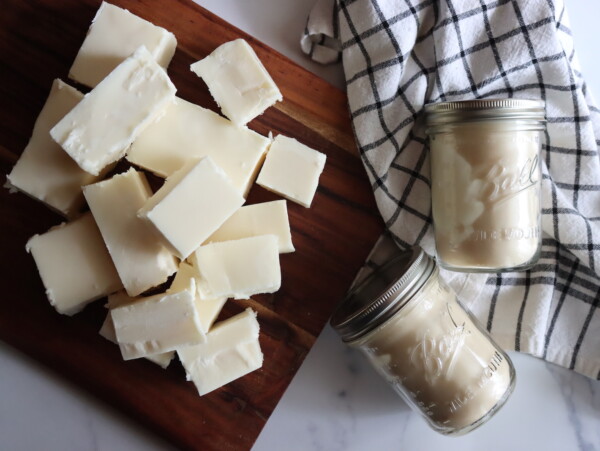
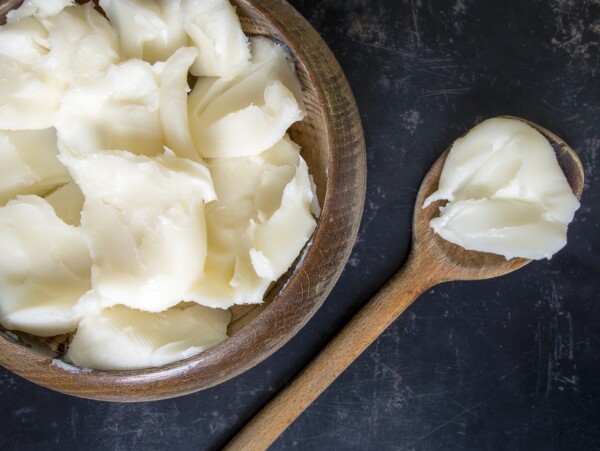
Start with fat that’s already rendered, strained, and cooled. What you choose determines how firm the finished salve turns out, and there’s a wide range. Beef and sheep tallow set up hard and hold a shape well in summer heat. Lard and bear grease land in the middle, soft enough to scoop with a fingertip. Some wild fats barely set at all.
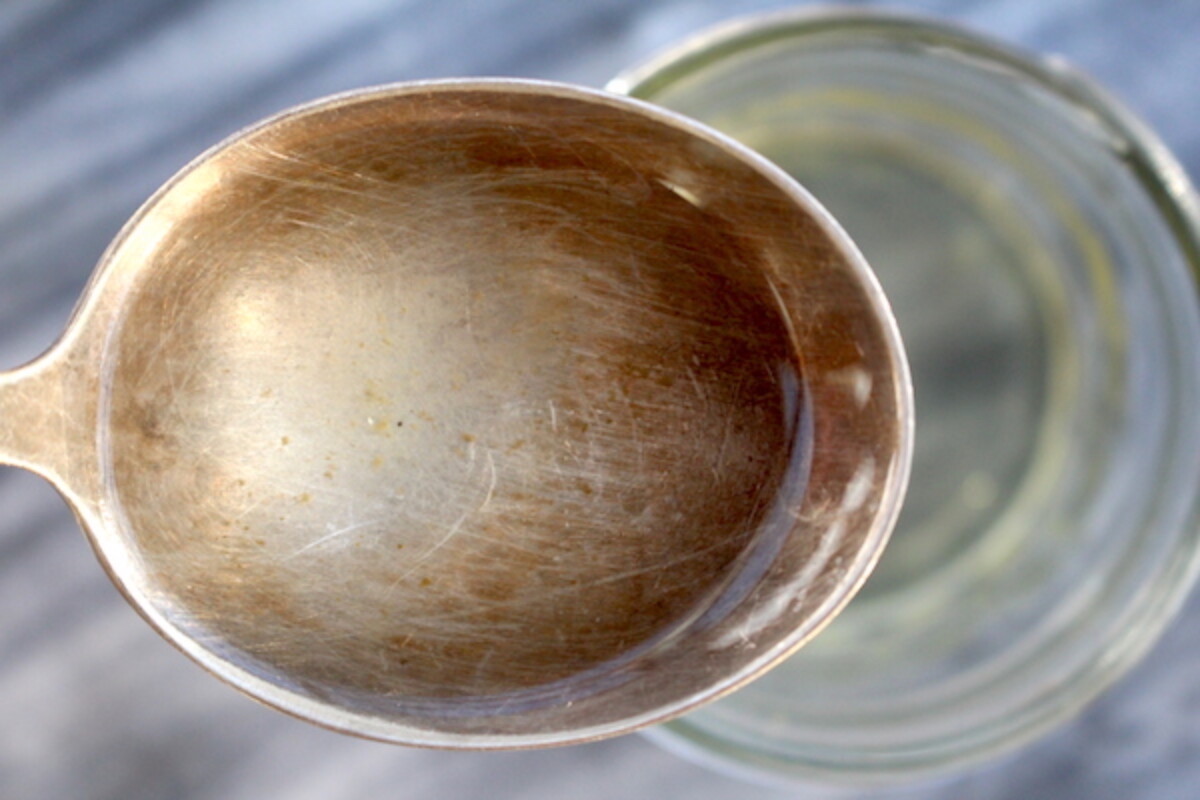
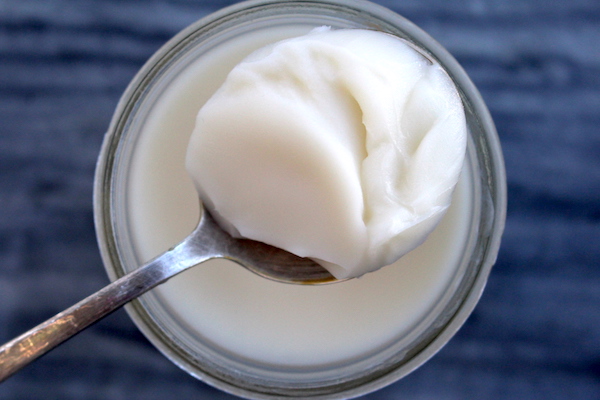
Squirrel fat is the outlier. It pours like vegetable oil at room temperature, which means a standard beeswax ratio gives you a salve that holds its shape in the tin but stays very soft and spreadable. That’s not a problem, it’s just worth knowing before you pour. If your fat is soft at room temperature, plan on the same result. If it’s rock hard, you’ll want to dial the beeswax back.
Infusing the Fat with Herbs (Optional)
Skip this step entirely if you’re making a plain conditioning salve for gear. For a medicinal version, the process is identical to infusing a plant oil. Pack a pint jar loosely with dried herbs, melt the fat and pour it over until they’re covered, and hold the jar somewhere warm for 24 to 48 hours. A dehydrator set around 115°F or an Instant Pot on yogurt mode both hold temperature steadily and need no babysitting.
Keep it under about 120°F. Push past 140°F and you start cooking the plant material instead of extracting from it, and you’ll lose potency along with color and aroma. A slow cooker works as an insulated water bath with the jar sitting in warm water, but not as a direct heat source, since even the keep-warm setting runs closer to 170°F. You can also do a cold infusion over several weeks with fat that stays liquid, though solid fats need at least some warmth to work at all.
Strain the warm fat through a cheesecloth-lined strainer when the time’s up, squeezing gently to get the last of it out, and compost the spent herbs.
Melting in the Beeswax and Pouring
Combine one cup of fat with one ounce of beeswax in the top of a double boiler. Warm it over low heat, stirring now and then, until the wax has fully melted and the mixture looks clear and uniform. Beeswax melts well above the temperature of the fat, so give it a few extra minutes rather than turning the heat up.
Pour into tins right away, before anything starts to set at the edges. Leave them uncovered and undisturbed for a couple of hours until fully firm. Capping a warm tin traps condensation on the underside of the lid, and that water drips back into the salve and shortens its life.
Salve Consistency Notes
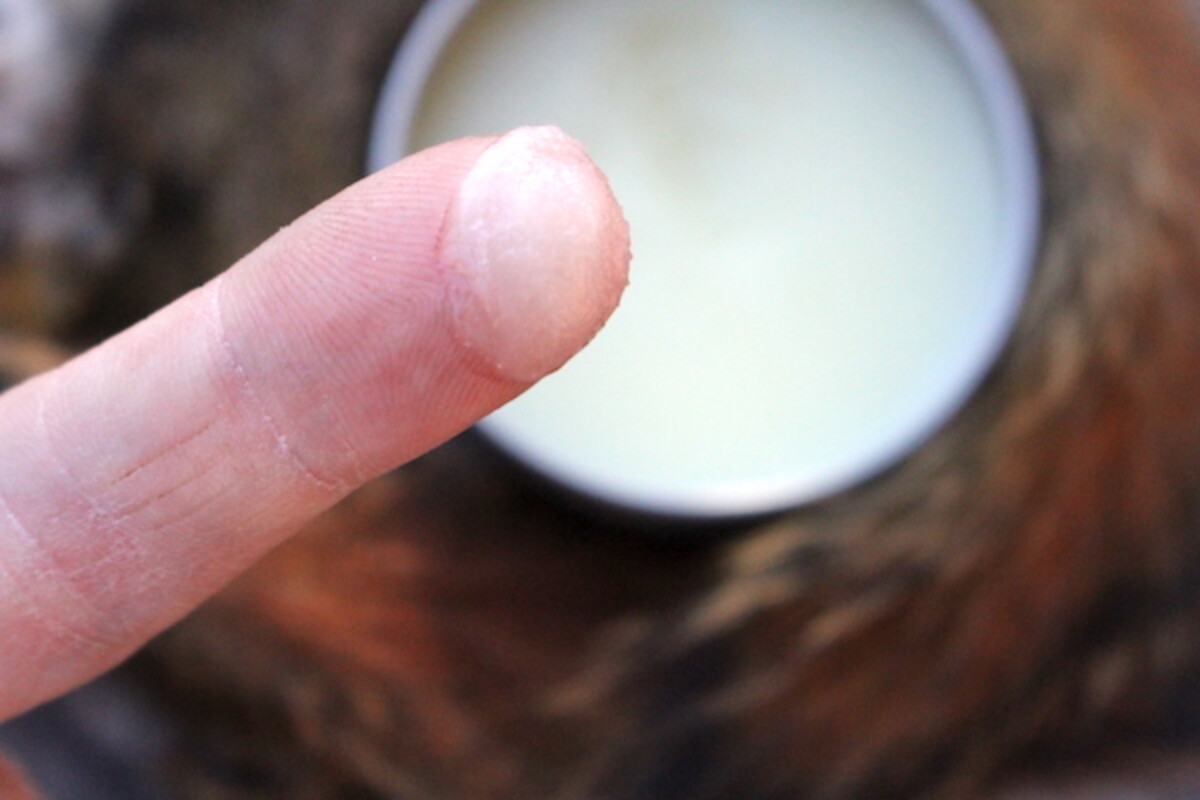
The standard ratio is about 1 ounce of beeswax per cup of fat, which gives a medium-firm salve that softens on contact with skin. Because animal fats vary so much in firmness on their own, treat that as a starting point rather than a rule.
- Test before you pour: drop a spoonful onto a plate from the freezer and let it set for 30 seconds. What you feel is close to what you’ll get.
- Too hard? Rewarm gently and stir in another tablespoon of fat at a time. Hard tallow often wants a little less wax than the standard ratio.
- Too soft? Rewarm and add beeswax a teaspoon at a time. Fats that stay liquid at room temperature usually need a bit more.
- For a hard stick or a leather bar: take the beeswax up to about 1 1/4 oz per cup of fat.
Storage and Shelf Life
Store finished salve somewhere cool, dark, and dry. A pantry shelf, a medicine cabinet, or a drawer in the mudroom all work. Expect about a year before the fat starts to turn, and trust your nose over the calendar. Rancid fat smells sharp and a little like crayons, and it’s unmistakable once you’ve caught it.
Two things shorten shelf life more than time does: water and heat. Fat that wasn’t fully rendered, herbs that weren’t fully dry, or a lid capped on while the salve was still warm will all cut a year down to a few months. A few drops of vitamin E oil stirred in with the beeswax buys you some extra time as a natural antioxidant.
Recipe Tips & Variations
- Blend your fats: Half tallow and half lard splits the difference between a salve that’s too hard to scoop and one that won’t hold its shape. Cutting animal fat with a little jojoba oil gives a lighter feel on skin.
- Add essential oils: Stir in 10 to 15 drops per cup, off the heat, just before pouring. They also help mask the faint meaty note some fats carry.
- Herbs worth infusing: Comfrey and plantain are the two I use most for a working salve. My comfrey salve and plantain salve both translate directly to a fat base, and calendula salve is a gentler option for everyday dry skin.
- A leather and tool version: Skip the herbs entirely and go a little heavier on beeswax. It’s what I keep by the door for boots.
- More salve recipes: My roundup of 20+ herbal salve recipes gives you a plant to match nearly any complaint, and every one of them can be built on rendered fat instead of olive oil.
Other Ways to Use Rendered Animal Fat
Once you’ve gone to the trouble of rendering fat, salve is only one of the places it can go. Most of mine still ends up in the kitchen, because rendered pork fat makes a pie crust I haven’t been able to match with anything else and sheep fat is central to the Mongolian cooking that gets made in my house more than you’d expect in Vermont. Wild game fat is where salve makes more sense, since it tends to be strong-flavored and there’s only so much squirrel you can work into a meal. My collection of squirrel recipes covers the eating side of that equation.
Beyond salve and supper, tallow makes a hard, long-lasting bar of soap, and my tallow soap recipe is a good first project if you’ve never worked with lye. For something closer to a body product, whipped tallow body butter takes the same fat in a lighter direction with no beeswax at all. And if you’re the sort of person who reads a post about squirrel fat salve for fun, you may also enjoy figuring out how to make primitive arrows.
Animal Fat Salve FAQs
Tallow from beef, sheep, or deer, lard from pigs, bear grease, and rendered poultry fat all work. The main difference is firmness. Tallow sets up hard, lard and bear grease stay softer, and some wild fats like squirrel stay liquid at room temperature. Bacon grease works too, though it carries a smoky, salty smell most people don’t want on their hands. Whatever you use, render and strain it well first, since leftover meat solids and water are what cause a salve to spoil.
Yes. Stir essential oils into the melted salve right before you pour it into tins, using roughly 10 to 15 drops per cup of fat. You can use them in place of infused herbs or in addition to them. Add them off the heat so the aroma doesn’t cook off, and start conservatively, since a little goes a long way in a fat base.
Candelilla wax is the usual substitute and the one to reach for if you want a plant-based version. Use about half as much as you would beeswax, since it firms up more aggressively. Carnauba wax also works but sets very hard. If you skip the wax entirely you’ll end up with a soft grease rather than a salve, which is fine for conditioning leather but messy for skin.
Gentle warming is fine as long as you keep the fat below about 120 degrees Fahrenheit and don’t let water into it. Water shortens shelf life far more than heat does, which is why fully dried herbs work better than fresh ones in a fat infusion. Fat that has been rendered thoroughly, strained clean, and kept out of light and heat holds up well.
Stored somewhere cool, dark, and dry, animal fat salve keeps about a year before the fat starts to turn. You’ll know by the smell, which goes sharp and slightly waxy. Freezing isn’t necessary and I wouldn’t recommend it, since condensation forms as the salve thaws and introduces the water that causes spoilage. Refrigeration is the better option if your house runs warm.
Rendering & Using Animal Fat
If you tried this Animal Fat Salve recipe, or any other recipe on Practical Self Reliance, leave a ⭐ star rating and let me know what you think in the 📝 comments below!
And make sure you stay in touch with me by following on social media!
Making Fatwax (Animal Fat Salve)
Equipment
Ingredients
- 1 cup rendered fat
- 1 ounce beeswax
- Herbs to Infuse, optional
Instructions
- Start with fat that has been fully rendered, strained clean, and cooled. Any leftover meat solids or water will cause the finished salve to spoil early.
- To make a plain conditioning salve, skip ahead to melting in the beeswax.
- To infuse herbs, pack a pint mason jar loosely with dried herbs. Melt the fat and pour it over the herbs until they are covered, leaving a little headspace.
- Hold the jar warm at 110 to 120°F for 24 to 48 hours. A dehydrator set to 115°F or an Instant Pot on yogurt mode both hold temperature without babysitting. Avoid a slow cooker as a direct heat source, since even the keep-warm setting runs near 170°F.
- Strain the warm fat through a cheesecloth-lined fine mesh strainer, squeezing gently to release the last of it. Compost the spent herbs.
- Combine the fat and beeswax in the top of a double boiler. Warm over low heat, stirring occasionally, until the wax has melted completely and the mixture looks clear.
- Test the consistency by dropping a spoonful onto a plate from the freezer and letting it set for 30 seconds. Adjust with more fat or more wax before pouring.
- Pour into tins right away, before the edges begin to set.
- Leave the tins uncovered and undisturbed for about 2 hours, until fully firm, then cap them.
Notes
A Note from Your Family Herbalist
I’m a family herbalist, trained by more than 20 years of hands-on work with medicinal plants and rounded out with coursework through the Herbal Academy of New England. That means I know my way around the plants in this post, and I’ve personally made and used the remedies I write about, often many times over. But there’s a real difference between knowing what works on my homestead and knowing what’s right for you.
Medicine is a personal affair. Every body is different, every medical history is different, and herbs interact with medications, pregnancy, nursing, and existing health conditions in ways no general blog post can anticipate. Even mild medicinal plants like chamomile cause allergic reactions in some people, so what sits comfortably on my own medicine shelf might not be the right choice for yours.
For guidance tailored to your situation, there are three directions I’d point you:
- See a local clinical herbalist. A practicing clinical herbalist can take your full health picture into account, recommend the right herb and dose for you, and adjust the protocol as you go. Ask around at your nearest food co-op, herb farm, or natural-foods store; most communities have at least one.
- Talk to your doctor before adding any new herb to your routine, especially if you take prescription medications, are pregnant or nursing, or are managing a chronic condition. A good doctor will welcome the conversation.
- Educate yourself, the way I have. The Herbal Academy of New England runs the courses I credit with sharpening my own practice. Their Introduction to Herbal Medicine course is where I’d start. I’ve also taken and recommend their Mushroom Course and their Botany and Wildcrafting Course. All three are well-paced and easy to follow at home.
Herbal Salve Recipes
Find the perfect recipe
Searching for something else? Enter keywords to find the perfect recipe!







Can I use bacon grease?
You can definitely try it. Apparently this was done all the time. I have read articles where people said that their grandmothers used to use it.
How do I render chicken fat? How will it help with my cough and pain from a sinus issue?
Here is a post about uses for different animal fats. There is a link in the post that gives you specific instructions on how to render the chicken fat. Many times the fat or the wax is simply a medium for the herbs that you might be using to loosen congestion. You would infuse the herbs to the fat in order to make a salve.
Is there a natural alternative to beeswax?
What is it that you don’t like about the beeswax that you want an alternative for?
Can I freeze my animal fat salves after they have cooled completely? I can’t think why it wouldn’t be possible but I would appreciate your opinion. Many thanks, Christina
I’ve never heard of anyone freezing them before. I am assuming you could but I don’t know how the thawing process would affect the finished product. Is there a reason why you are wanting to freeze them?
Can I add just essential oils. I have bear fat that has been rendered and I want to turn it into salve with a chili essence oil.
Yes, you can definitely add essential oils in place of the herbs or in addition to the herbs.
I miss Michigan &!hunting and SC/GA., Farming ! Now in City (E.Coast 🤨😝)! Have a few OLD Processed GOAT hides , from Zabeeha ( Islamic Slaughter), and now they are Cracking ! Have NO idea where to Buy nonPork animal fat !
Hi! I’m glad to have found this! I am planning to make an herb infused emu oil, but I’d dont find cold oil infusions to be particularly strong. I normally use a plant oil, put it in a jar with herbs and put that in a crock pot with water at a low setting for 4ish hours. I was wondering if I could do this with animal fats. My concern is I’m less familiar with working with them and will the low heat negatively impact the oil and make it go rancid more quickly? Thanks!