
Affiliate disclosure: This post may contain affiliate links. Please see our Privacy Policy.
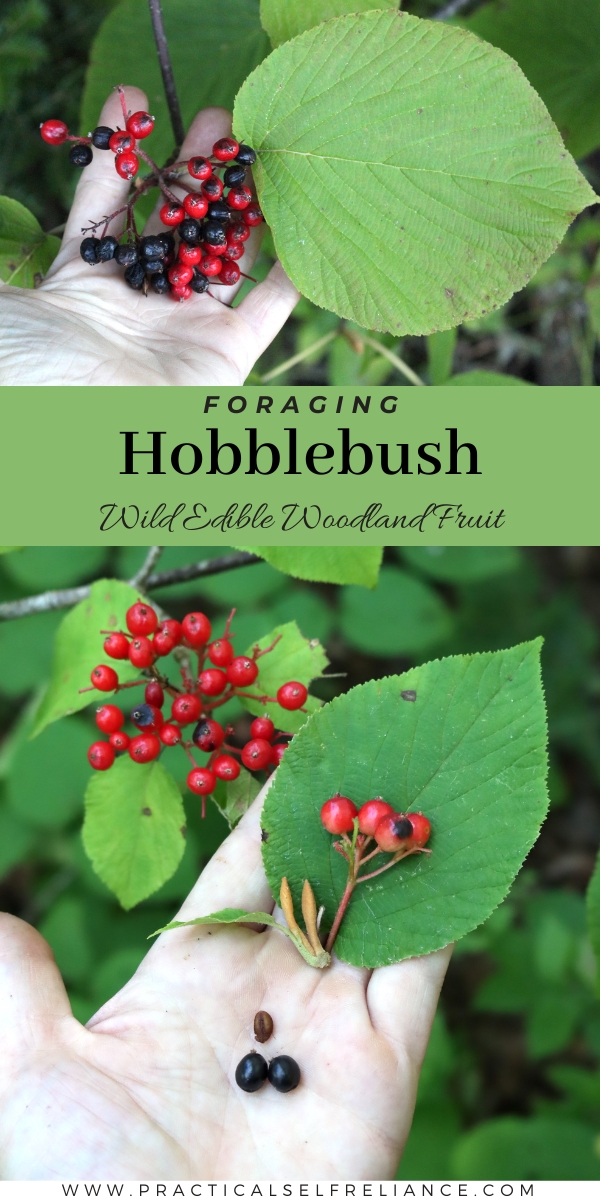
Wild Hobblebush (Viburnum lantanoides), also called Hobbleberry, Witch Hobble, Trip-Toes, Tangle-Foot, or Moosewood, is a native understory shrub of eastern North American forests that produces clusters of sweet, raisin-like edible berries. The fruit ripens from green to red to dark blue-black in late summer and early fall, with each pulp-filled berry tasting like a cross between dates and prunes.
Hobblebush belongs to the Viburnum genus, which includes other tasty edible relatives like Highbush Cranberry, Nannyberry, and Northern Wild Raisin. The shrub is named for its sprawling habit of bending over and rooting along the ground, creating loops that “hobble” or trip woodland hikers.
Learn how to identify hobblebush by its enormous heart-shaped leaves and distinctive copper-colored buds, harvest the berries before wildlife gets to them, and use the fruit for jams, jellies, and fruit butters.
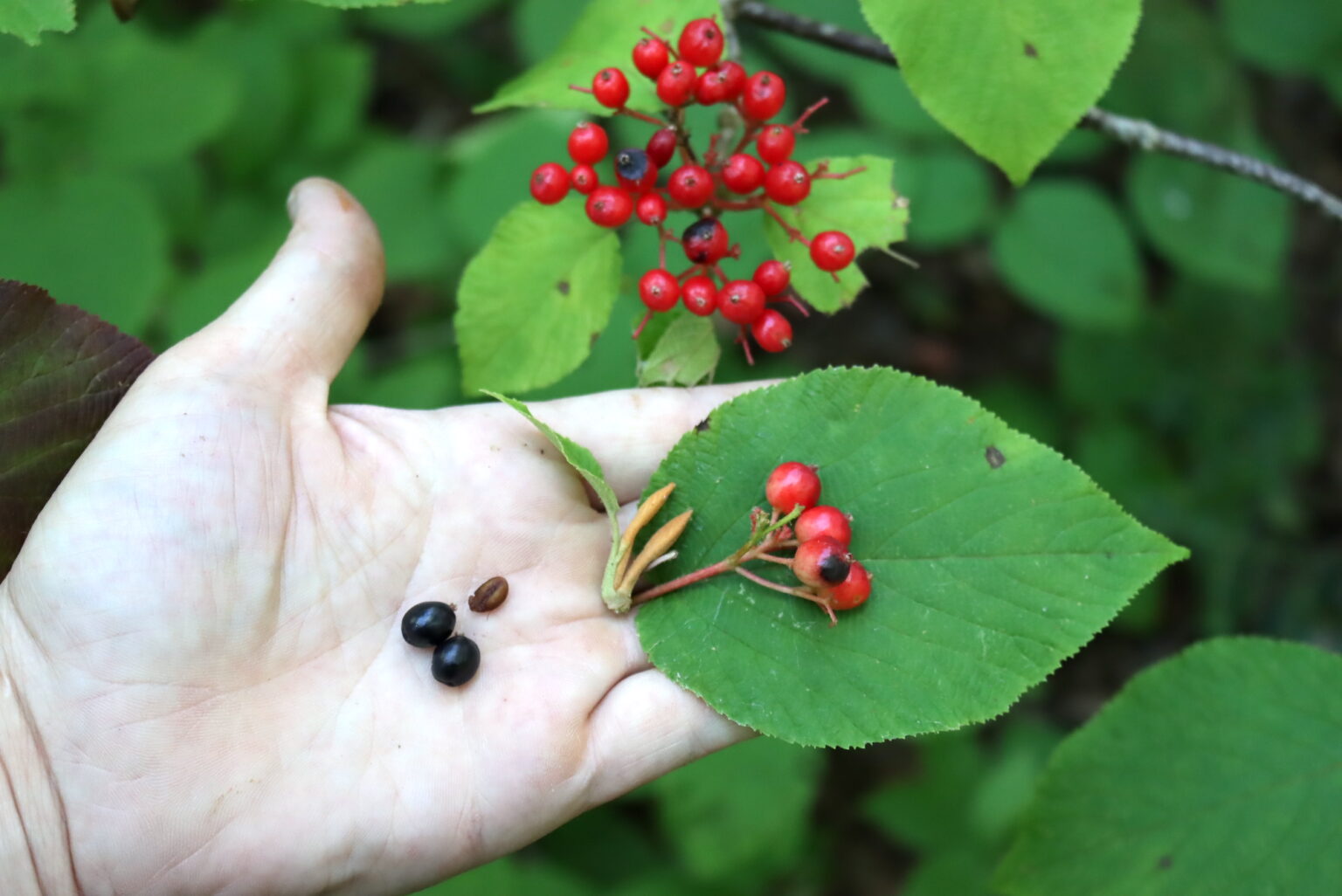
Table of Contents
- Notes from My Homestead
- What Is Hobblebush?
- Are Hobblebush Berries (Hobbleberries) Edible?
- Can You Eat Other Viburnum Berries?
- Hobblebush Medicinal Benefits
- Where Does Wild Hobblebush Grow?
- When to Find Wild Hobblebush
- How to Identify Wild Hobblebush
- Hobblebush Look-Alikes
- How to Harvest Wild Hobbleberries
- Ways to Use Wild Hobbleberries
- More Edible Viburnums
- Wild Hobblebush FAQs
- Wild Fruit Foraging Guides
Hobblebush can be a bit hard to spot, though it grows just about everywhere in the understory of eastern forests. It’s so common that foresters label it a “nuisance,” especially around ski resorts, where the low-growing shrubs take over ski trails through the woods if left unchecked. There’s a reason it’s also called Trip-Toes, Tangle-Foot, and Witch Hobble.
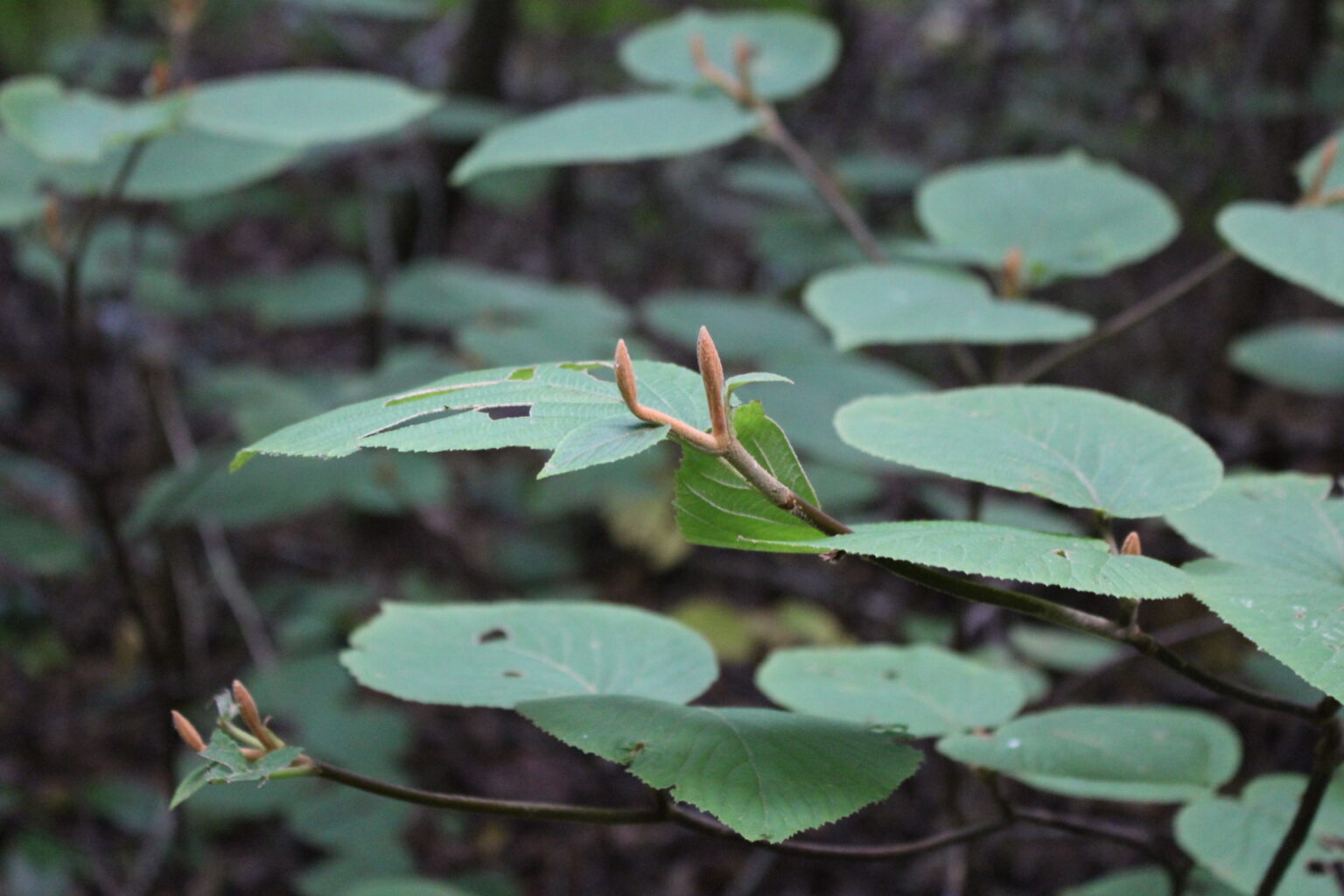
The plants look a lot like young linden trees (Tilia sp.) at first glance, at least in their leaves, and you’ll only really notice them when they’re in flower for a short time in the spring or in fruit in early fall. Most of the year, hobblebush is just an unobtrusive shrub in the forest, only really identifiable by its very large heart-shaped leaves and, if you happen to look closely, its unique copper-colored growing tips. For years, while walking in the woods, I passed right by one of the tastiest understory plants anywhere, and it took adding hobbleberries to my wild edible berries and fruits list to really start paying attention.
Notes from My Homestead

Hobbleberry is surprisingly good, and to my taste it’s by far the best-tasting edible viburnum. Better than highbush cranberry, nannyberry, and wild raisin. The trick with these, though, is that few people ever get a chance to taste them, because hobblebush ripens earlier than the other viburnums, before the animals start hibernating for winter or fly south for the season. The berries are quickly picked off as they ripen, one fruit at a time in a cluster. While you may see the unripe red berries everywhere, as soon as the fruit darkens to that ripe blue-black, the animals know it’s tasty time.
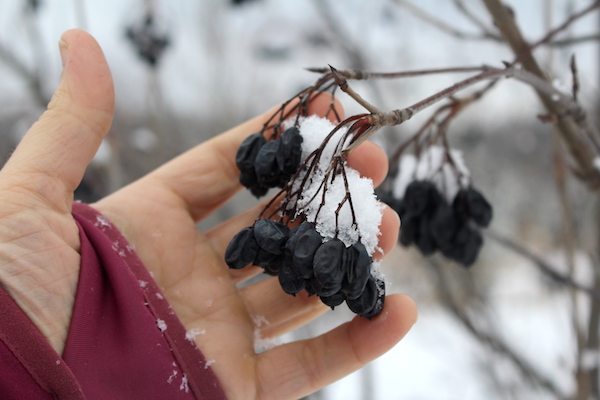
Highbush cranberry and nannyberry, on the other hand, ripen really late, usually after the first snow, and then hang all winter. Plenty of opportunity to forage those even during winter, when everything else is gone. If you want to try hobbleberry, you’ve got to be walking through Vermont woods at just the right narrow window of late August through early September, ideally before the wildlife strips a bush. I’ve learned to mark productive patches in spring when the showy flat-topped flowers bloom, and to come back regularly through August so I don’t miss the brief ripening window. Hobbleberries are now firmly on my forager’s bucket list alongside the other native viburnums.
What Is Hobblebush?
Hobblebush is a perennial deciduous shrub native to eastern North America, scientifically known as Viburnum lantanoides. In some older botanical references, you may find this same species listed under the synonym Viburnum alnifolium, since the species was reclassified relatively recently. Hobblebush has many other common names depending on the region, including Witch-Hobble, Trip-Toes, Tangle-Foot, Adirondack Dogwood, Moosewood, Moose Berry, Alder-leaved Viburnum, and Hobblebush Viburnum.
The shrub belongs to the genus Viburnum, which includes about 200 species worldwide. Several other native eastern North American viburnums also produce edible berries, including Highbush Cranberry (V. trilobum), Nannyberry (V. lentago), and Northern Wild Raisin (V. cassinoides, also called V. nudum). Hobblebush is the most shade-tolerant of these and the only one that thrives as a deep-forest understory species. The Viburnum genus was historically classified in the Caprifoliaceae (honeysuckle family) but has been reclassified into the smaller Adoxaceae (moschatel family) based on modern molecular work.
A similar species, Viburnum grandifolium, is native to the Himalayan region and is widely available as an ornamental garden plant in North America. Common names include Himalayan Viburnum, Grand Viburnum, Flowering Viburnum, and Cranberry Bush. While not closely related to North American hobblebush, the two species are similar enough in appearance that some foragers may encounter both.
Are Hobblebush Berries (Hobbleberries) Edible?
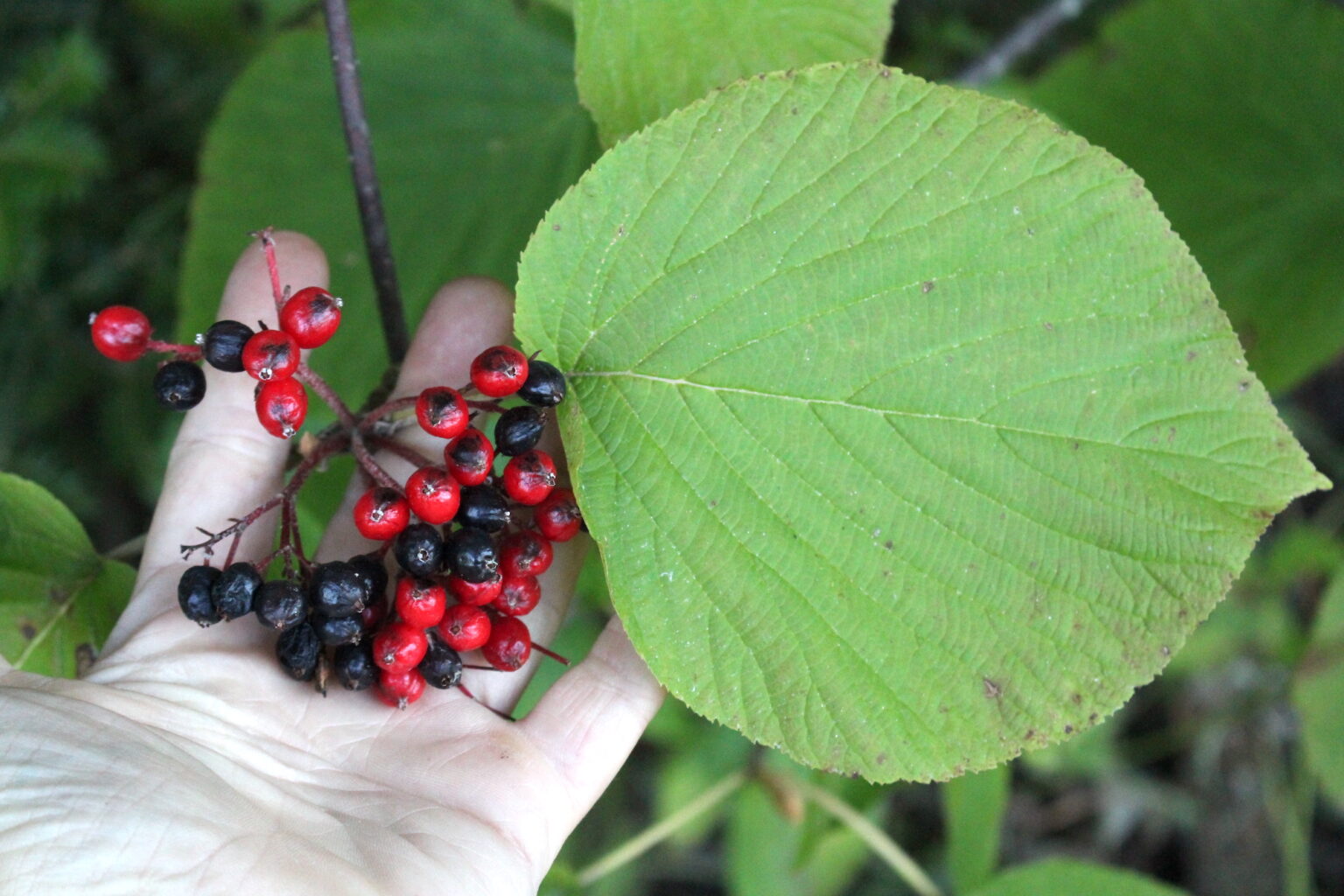
Yes, hobblebush berries (commonly called hobbleberries) are edible and quite tasty when fully ripe. The fully ripe blue-black berries can be eaten raw or cooked, and many foragers liken the flavor to raisins, dates, or prunes mixed with molasses. Unripe red or pink berries are bitter and astringent and should not be eaten until they reach full ripeness. The ripe berries are sweet enough that most foragers eat them straight off the bush without any preparation.
Hobbleberry fruit is a drupe rather than a true berry. Each fruit is mostly a thin layer of sweet, almost dry pulp surrounding a single large flat seed. The seed is hard and inedible, similar to the pits of other viburnum species. If you’re processing hobbleberries for jam, jelly, or fruit butter, you’ll want to mill or strain out the seeds, since they’re large enough to fill most of the inside of each fruit. For trail snacking, most foragers just spit the seeds out as they go.
Some foragers report that hobblebush berries develop their best flavor after the first frost, which softens the fruit and concentrates the sweetness. However, in most regions hobbleberries ripen too early to wait for frost. The wildlife pressure on this species is intense, and most berries are stripped from the bushes by birds, mice, and other animals well before any frost arrives. The conventional wisdom is to harvest hobbleberries as soon as they reach full blue-black ripeness in late August through September, even if frost would theoretically improve the flavor.
Importantly, you should note that hobblebush (Viburnum lantanoides) is protected in some areas. It’s currently listed as endangered in Kentucky and New Jersey, and as a plant of special concern in Rhode Island. Always check local regulations before harvesting, and never strip a bush completely. Wildlife depends on hobbleberries during a critical fall foraging period, so a sustainable harvest takes only a few clusters from any one shrub.
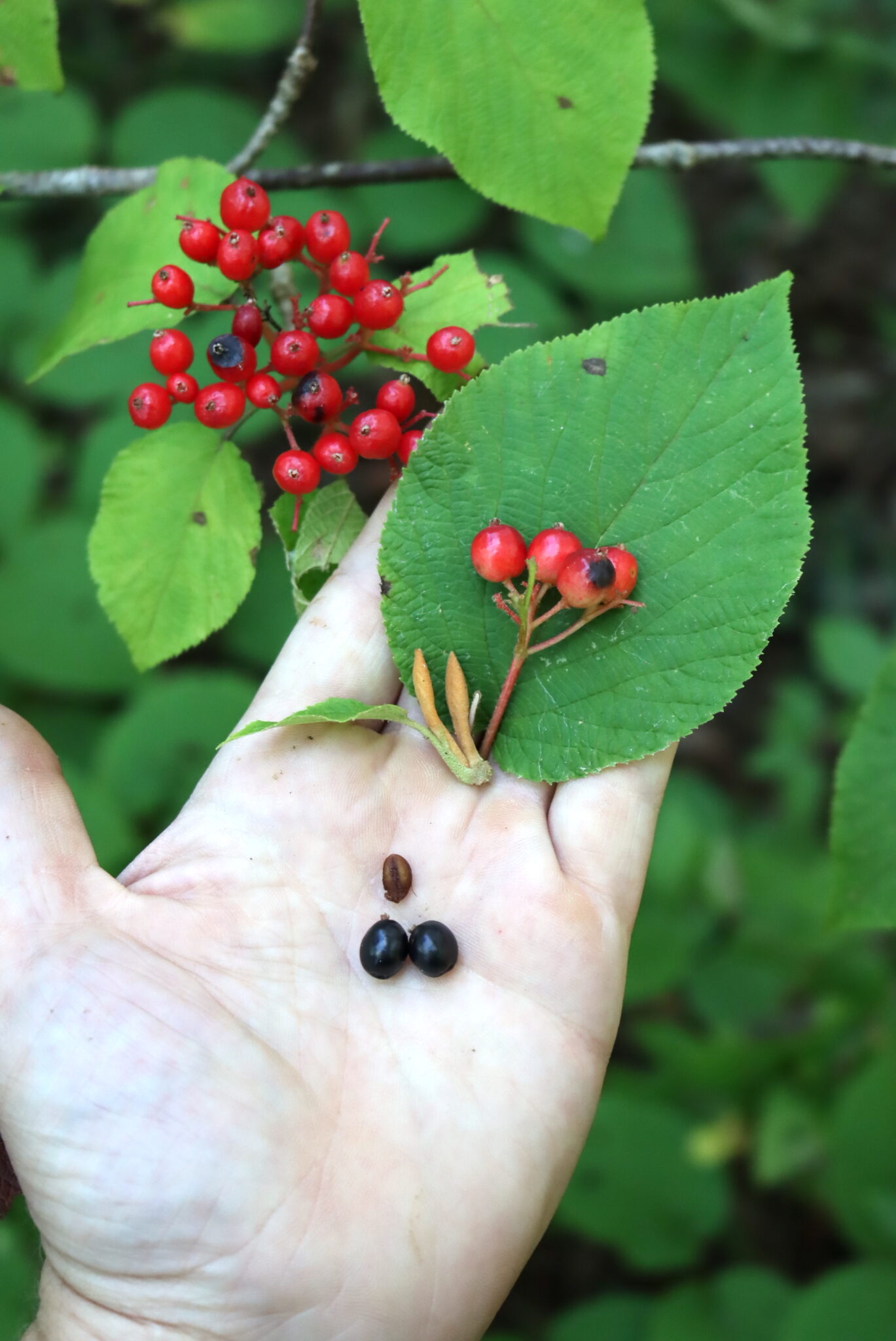
What Do Hobbleberries Taste Like?
Fully ripe hobbleberries taste sweet and complex, with a flavor often described as a cross between raisins, dates, and prunes with notes of molasses. The pulp is dense and almost dry, similar in texture to a date or fig. The flavor is sweeter than most other edible viburnums, which is why many foragers (myself included) consider hobbleberry the best-tasting wild viburnum.
By comparison, nannyberry tastes like a prune-banana hybrid, wild raisin tastes nearly identical to a small commercial raisin, and highbush cranberry is intensely tart and astringent (more like a true cranberry than a sweet fruit). Hobbleberry sits in the sweet, raisin-and-date end of the viburnum flavor spectrum, making it the most appealing for raw eating off the bush.
Unripe red or pink hobbleberries are bitter and astringent, similar to underripe persimmons. Wait until the fruit reaches full blue-black ripeness before tasting. The fruit on a single cluster ripens unevenly, so you’ll often see green, pink, red, and ripe blue-black berries on the same cluster simultaneously.
Can You Eat Other Viburnum Berries?
Some viburnum species produce edible berries, but not all of them. Among the roughly 200 species in the Viburnum genus, only a handful are commonly used by foragers. Edibility varies considerably between species, and some viburnums are mildly toxic when raw. Always confirm the specific species before eating any viburnum berry.
The most commonly foraged edible North American viburnums:
- Hobblebush / Hobbleberry (Viburnum lantanoides): Sweet raisin-date flavor, edible raw when ripe. The subject of this guide.
- Nannyberry (V. lentago): Sweet prune-banana flavor, edible raw when fully ripe. One of the most popular edible viburnums.
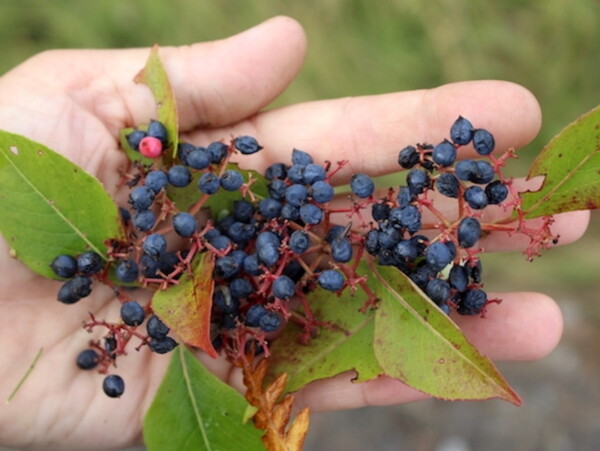
- Northern Wild Raisin / Witherod (V. cassinoides, syn. V. nudum var. cassinoides): Tastes like a small commercial raisin, edible raw when ripe.
- Smooth Wild Raisin / Possumhaw Viburnum (V. nudum): Similar to Northern Wild Raisin, with smaller fruit. Edible when fully ripe.
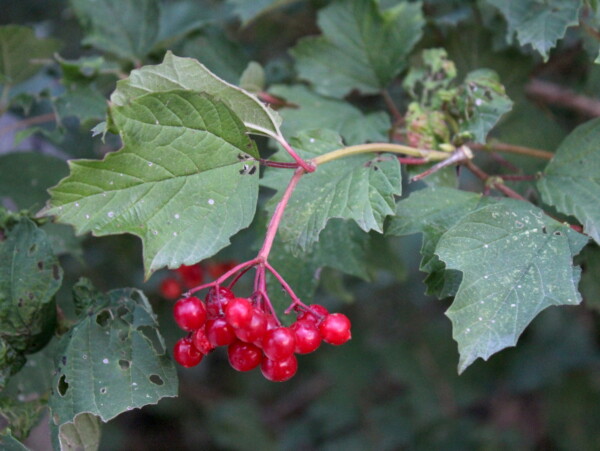
- American Highbush Cranberry (V. trilobum, syn. V. opulus var. americanum): Tart and astringent like a true cranberry, edible cooked. Best after frost.
- Squashberry / Mooseberry Viburnum (V. edule): Northern and western relative of highbush cranberry, similar tart flavor.
- Linden Viburnum (V. dilatatum): Asian native, widely planted as an ornamental in North America. Berries are edible when fully ripe but quite tart, often used in jelly.
- Maple-leaf Viburnum / Mapleleaf Arrowwood (V. acerifolium): Native eastern shrub with maple-like lobed leaves. Berries are edible when fully ripe but mealy and not particularly flavorful.
- Black Haw (V. prunifolium) and Rusty Black Haw (V. rufidulum): Both produce edible blue-black berries similar to nannyberry, with a sweet date-like flavor.
Viburnum species to avoid eating raw or in quantity:
- European Highbush Cranberry / Guelder Rose (V. opulus): The European species (often confused with American Highbush Cranberry) has bitter, mildly toxic raw berries. The fruit is edible cooked but unpalatable to most people. The bark, however, is the herbal medicine “Cramp Bark.”
- Arrowwood (V. dentatum): Bitter berries, generally not eaten by foragers.
- Most ornamental viburnum cultivars: Including Brandywine, Doublefile, Snowball, and many others. Some produce edible fruit but specific cultivars vary, and ornamental plantings are often sprayed with pesticides.
The general rule for foraging viburnums: positively identify the species first, taste a single ripe berry, and wait several hours before eating more. If a viburnum berry is bitter or unpleasant when fully ripe, that’s typically the plant telling you not to eat it in quantity.
Hobblebush Medicinal Benefits
Historically, several Native American groups used hobblebush (Viburnum lantanoides) for its medicinal properties. The leaves may have analgesic properties, and the Algonquin reportedly mashed them and rubbed them on the forehead to treat migraines. The Iroquois reportedly made decoctions from the roots for treating blood issues. Different groups also used the plant as a fertility aid and for treating chest and respiratory problems.
The Himalayan Viburnum (Viburnum grandifolium) also has a long history of use in traditional Asian medicine, where it has been used as a mild laxative, a blood purifier, and to help regulate menstrual flow.
Today, species of the genus Viburnum are experiencing renewed interest from modern medical researchers. A 2021 review of the therapeutic potentialities of the genus Viburnum found that over 200 Viburnum species are used in traditional medicine. These species are reported to have antitumor, antimicrobial, antioxidant, antihyperglycemic, anti-inflammatory, and neuroprotective properties and are used to treat a wide range of ailments, including rheumatoid arthritis, kidney cramps, diarrhea, swelling, and coughs.
A 2018 study tested Himalayan Viburnum against four strains of bacteria and four strains of fungi and further explored the plant’s compounds and properties. Based on the results, researchers felt that Himalayan Viburnum has enough potential to safely be used as an antimicrobial drug. Another study found that this same plant, Himalayan Viburnum, may have potential in treating lung cancer. An extract of Himalayan Viburnum was shown to inhibit lung carcinoma cell viability in laboratory testing. While few studies have focused on the native hobblebush (Viburnum lantanoides) specifically, this renewed interest in the genus will hopefully provide further insights into its medicinal value.
Where Does Wild Hobblebush Grow?
Hobblebush (Viburnum lantanoides) grows throughout eastern Canada down through the eastern United States as far south as Georgia and west to Michigan. It’s particularly abundant in the Adirondacks, the Green Mountains of Vermont, the White Mountains of New Hampshire, and the higher elevations of the Appalachians. The Himalayan Viburnum (V. grandifolium) is native to the Himalayan region, including Tibet, Nepal, Pakistan, and parts of India.
Hobblebush is an understory species that tolerates heavy shade and grows in coniferous, mixed, and hardwood forests. It will grow in various soil types but requires cool, moist habitats with consistent rainfall. You’ll often spot it in:
- Moist deciduous and mixed woodlands
- Hemlock-dominated forests with acidic soil
- Mountainsides and higher elevations
- Stream banks, swamp edges, and bogs
- Shaded ravines and north-facing slopes
- Old-growth forest understory
- Ski trails and woodland paths (where it can become a “nuisance”)
Hobblebush is much more common at higher elevations and northern latitudes, becoming sparse below about 1,500 feet elevation in southern parts of its range. In Vermont, New Hampshire, Maine, and the Adirondacks of New York, it’s often the dominant understory shrub in mature mixed forests. Once you train your eye to it, you’ll start seeing hobblebush everywhere on shaded forest hikes. For gardeners interested in cultivating viburnums, Northern Wild Raisin is generally easier to establish in cultivation than hobblebush, which strongly prefers undisturbed forest soil.
When to Find Wild Hobblebush
As a perennial deciduous shrub, hobblebush can be identified year-round by its distinctive copper-colored leaf buds, but it’s much easier to spot when in flower or fruit. The fruit ripens earlier than most other edible viburnums, and the harvest window is unusually narrow because of intense wildlife pressure on the ripe berries.
Hobblebush typically flowers in May, though in northern areas or in late springs you may not see flowers until late May or early June. The flat-topped flower clusters are showy and protrude above the leaves, making this the easiest time to spot productive plants. The fruit appears after flowering and matures in late summer or early autumn, typically from August through early October depending on latitude and elevation.
Seasonal foraging timing:
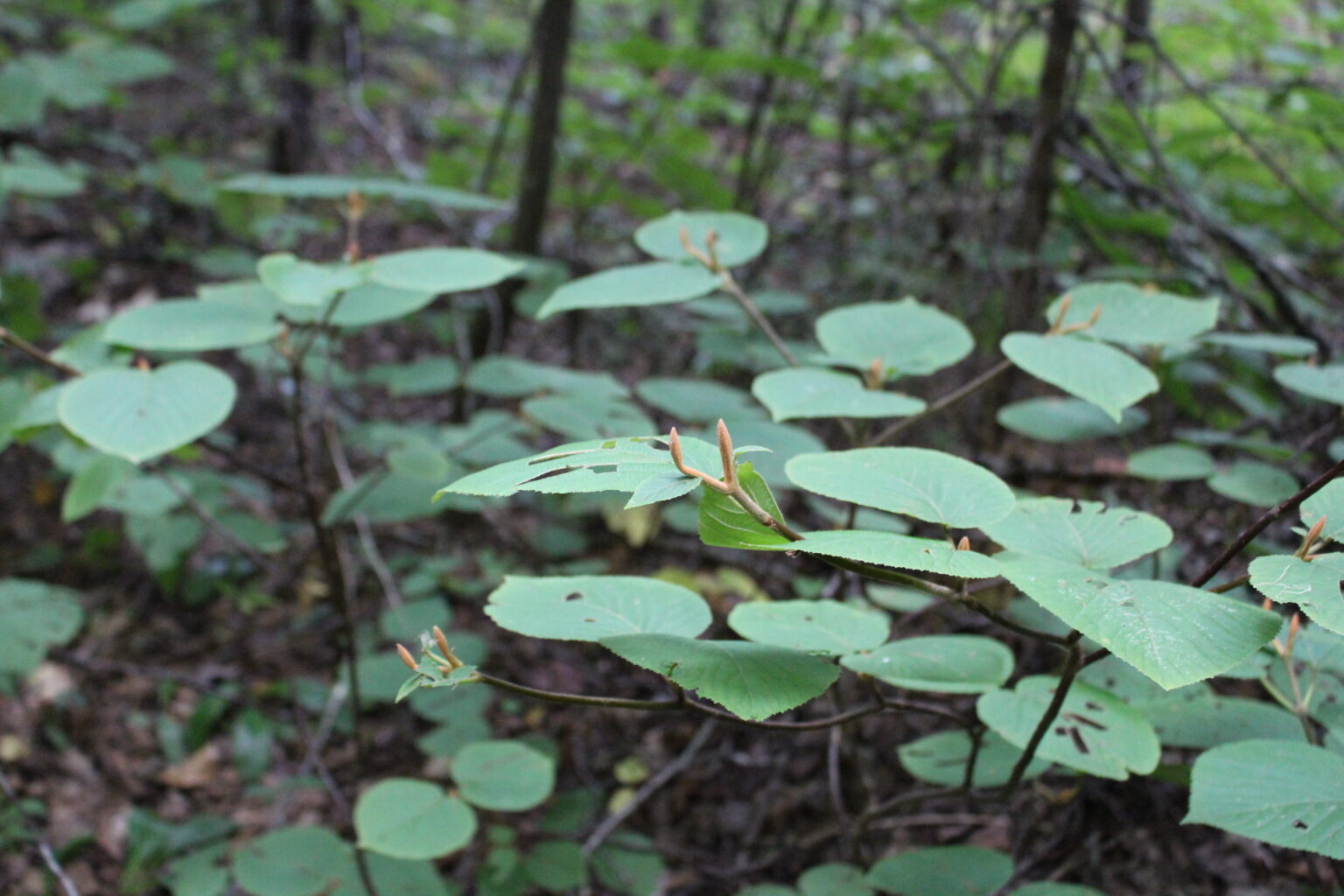
- Late winter (February-March): Distinctive copper-colored leaf buds are visible on bare stems, the easiest winter ID feature for hobblebush.
- Spring (April-May): Buds open and large heart-shaped leaves emerge. The plant becomes very visible against the bare understory.
- Late spring (May-June): Showy flat-topped white flower clusters appear and protrude above the leaves. Best time to mark productive bushes for fall harvest.
- Summer (June-August): Green developing fruit forms in upright clusters above the leaves. Trees are easy to identify but berries are not yet edible.
- Late summer (August): Fruit begins ripening from green to pink to red. Still not ripe enough for harvest.
- Early fall (September): Best harvest window. Individual berries ripen to dark blue-black. Pick clusters at peak color before wildlife strips them.
- Mid-fall (October): Most fruit is gone by this point, eaten by wildlife. The leaves turn brilliant bronze-red to purple, making the plant easy to spot for next year’s planning. Other fall fruits like rose hips and rowanberries reach their peak around this time.
- Late fall and winter (November-March): Bare stems with copper-colored buds. Mark productive locations for next spring.
How to Identify Wild Hobblebush
Hobblebush is a sprawling deciduous shrub usually about three to six feet tall and 4 to 12 feet wide. Occasionally, hobblebush reaches heights of 10 feet. The plant is named for its branches’ habit of bending over and rooting where they touch the ground, creating loops that “hobble” or trip woodland wanderers. In part due to this vegetative spread, hobblebush often forms dense patches that can cover large areas of forest understory.
The combination of features that identifies a hobblebush:
- Sprawling deciduous shrub 3 to 10 feet tall, often forming dense patches
- Large heart-shaped opposite leaves with finely toothed margins
- Distinctive copper-colored upturned leaf buds (especially diagnostic in winter)
- Showy flat-topped white flower clusters in spring with larger sterile flowers around the outside
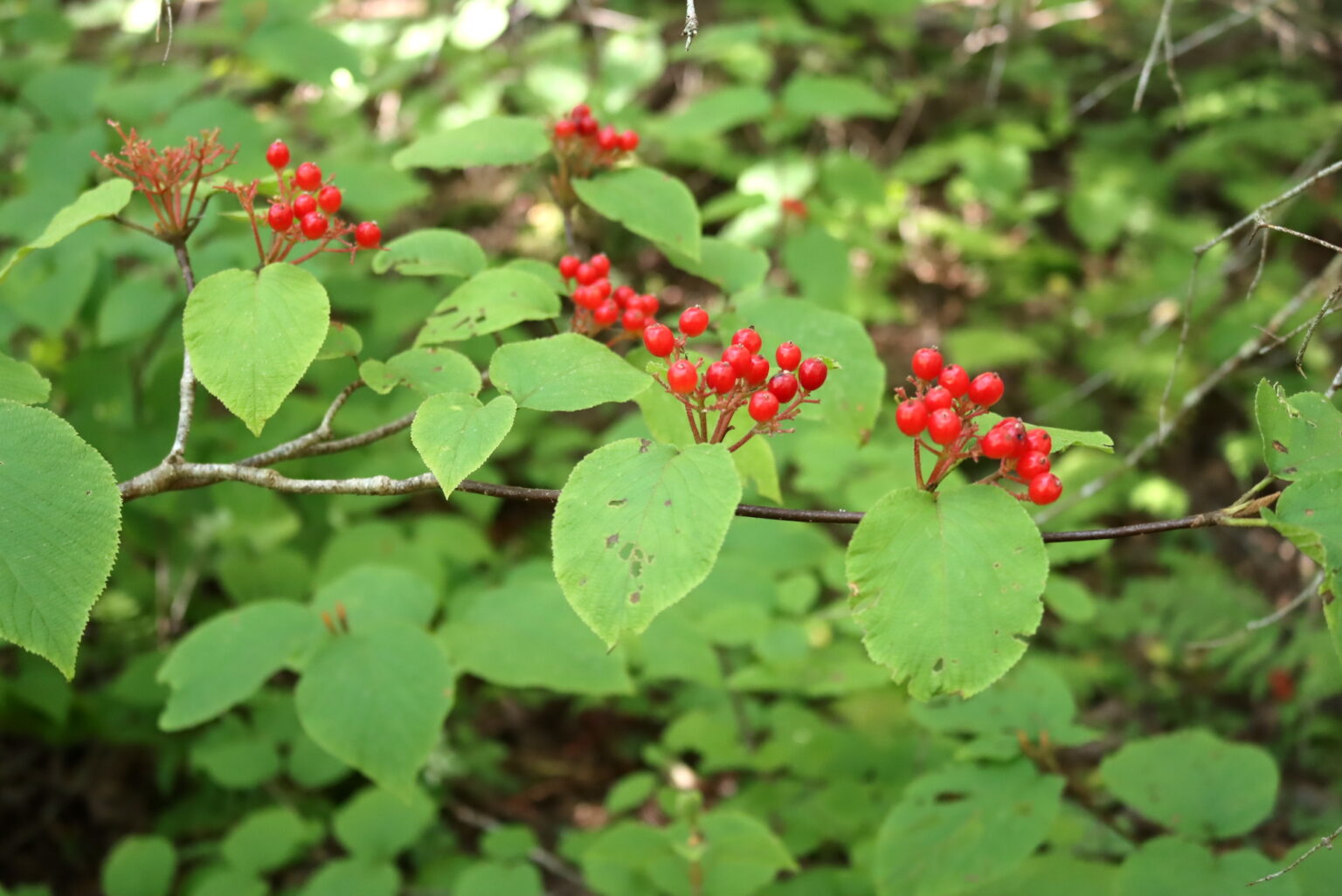
- Upright fruit clusters that protrude above the leaves
- Berries that ripen unevenly from green to red to dark blue-black
- Sprawling stems that bend over and root where they touch the ground
- Brilliant bronze-red to purple fall foliage
Hobblebush Leaves
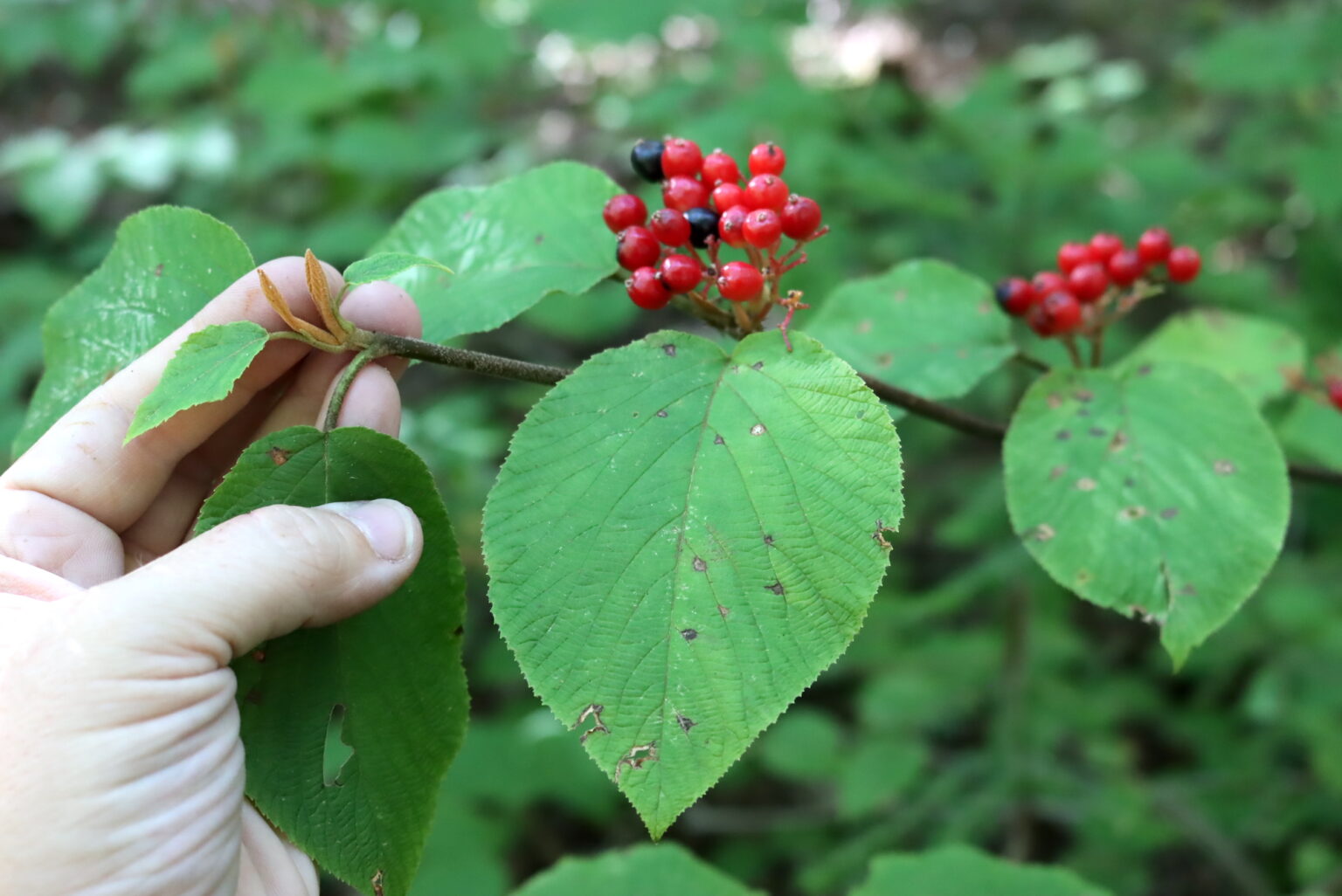
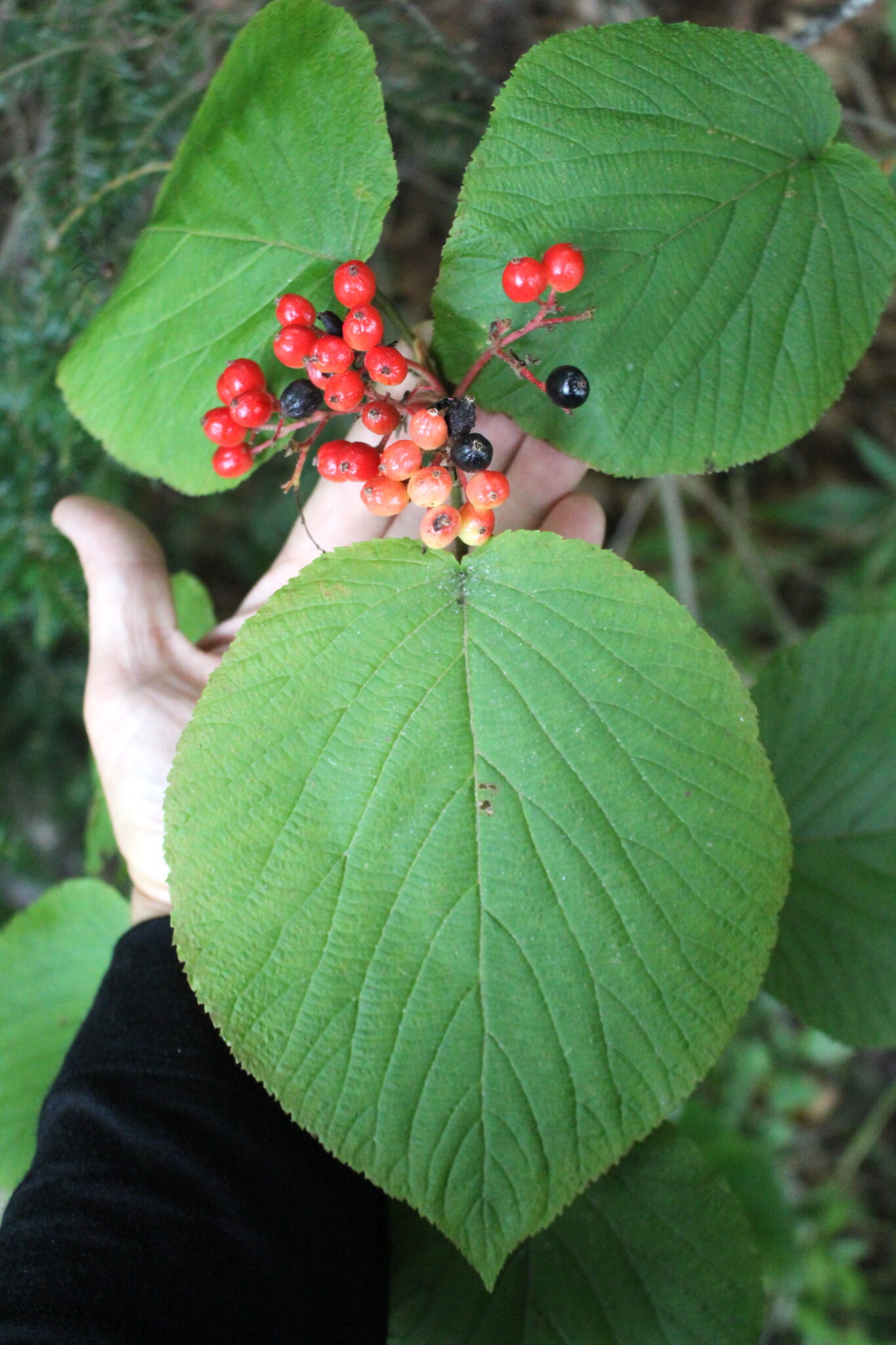
Hobblebush has large, simple, opposite leaves arranged with two leaves per node. Each leaf is about 4 to 8 inches long, finely toothed along the margins, and heart-shaped at the base with rounded lobes. The leaves have prominent veins and rust-colored hairs on their undersides, a useful diagnostic feature when you flip a leaf over. The leaves are green in summer but change to brilliant shades of bronze-red or purple in autumn.
The leaves of Himalayan Viburnum are similar in appearance, except they tend to be more narrowly oval and tapered at both ends. They’re typically 3 to 4 inches long and about half as wide. Himalayan Viburnum leaves are usually downy beneath and form on purplish stems ¾ to 1 inch long.
The large heart-shaped leaves are the easiest summer ID feature for hobblebush, and they often cause confusion with young linden trees (Tilia sp.) at first glance. Hobblebush leaves are larger than most other understory plants in eastern forests, often as large as a hand spread, which helps distinguish it from other small shrubs.
Hobblebush Stems and Bark
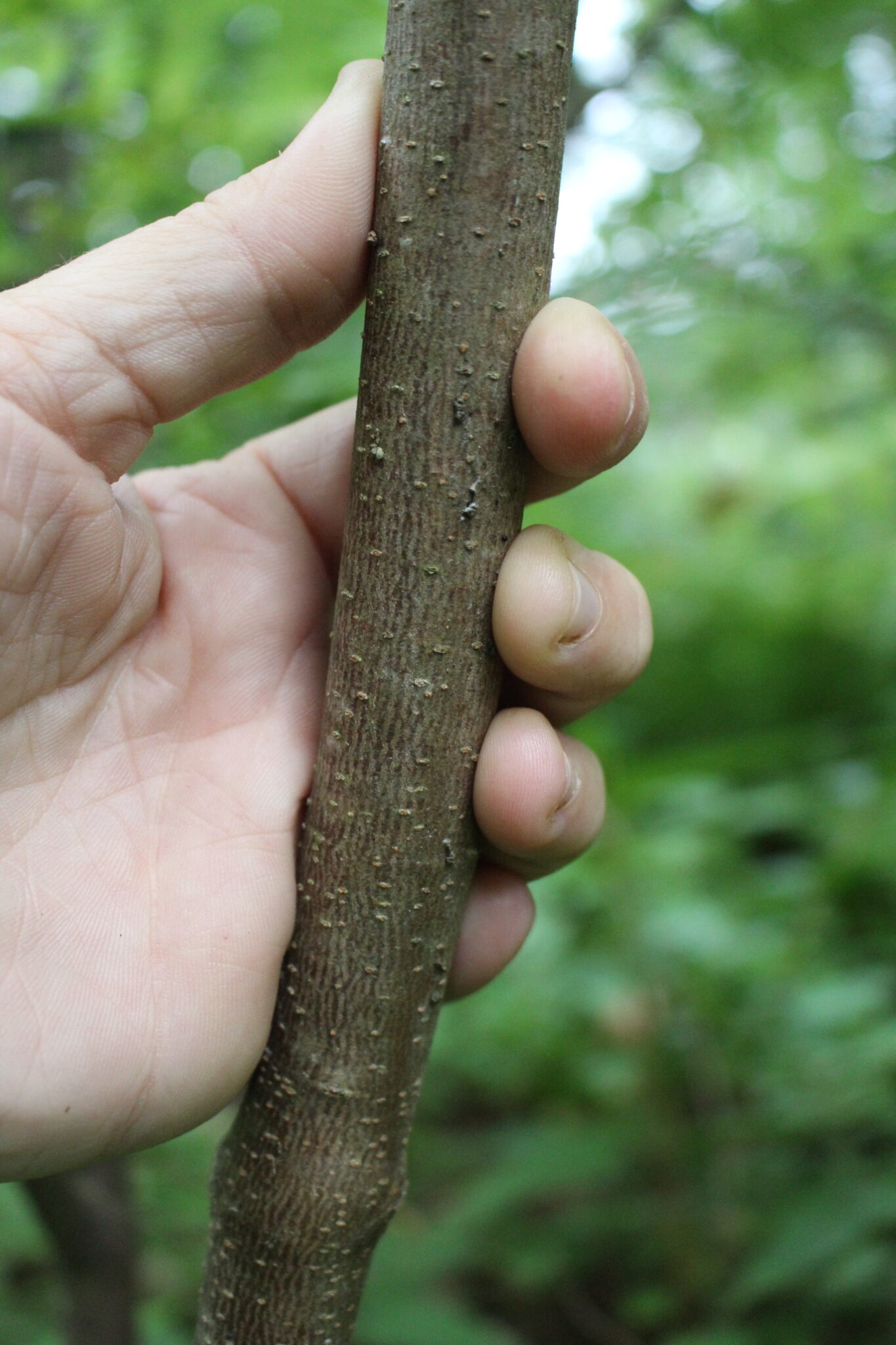
The stems of hobblebush may reach up to 10 feet tall but are typically closer to three to six feet. The shrub is generally described as straggly and doesn’t have a distinct upright form. Older stems become grayish or dark brown with rougher ridged or plated bark. New, young stems tend to be smoother and may be shades of green, red, brown, or purple.
The growing tips and copper-colored upturned leaf buds are distinctive features of hobblebush, visible year-round on younger branches. These naked buds (without protective scales) are unusual among native shrubs and are one of the easiest ways to identify hobblebush in winter when leaves and fruit are absent.
Hobblebush stems reproduce vegetatively by toppling over and touching the ground to root, forming loops that trip passers-by and give the plant its common names. This feature posed a more serious threat in the past, as horses carrying riders or working logging teams would be “hobbled” by the bent-over stems. The wood is strong and flexible, giving the plant another common name: Witch Hobble. The “witch” comes from the Middle English word “withy,” which means a strong, flexible switch-like branch.
Hobblebush Flowers
Hobblebush features flat-topped clusters of white flowers about 2 to 6 inches wide that appear in May or June. The cluster has a distinctive structure with two flower types in the same cluster: large showy white flowers around the outer edge that are infertile, and smaller fertile greenish-white flowers in the center. This pattern is similar to lacecap hydrangeas and is one of the most reliable ways to identify hobblebush in flower.
The flowers are pollinated by bees, beetles, and flies. The showy outer ring of sterile flowers attracts pollinators to the smaller fertile center flowers, where the actual pollination happens. After pollination, only the center flowers develop into fruit, while the outer sterile flowers wither and drop.
Himalayan Viburnum usually has clusters of tubular or trumpet-like white or pink flowers, each about ½ inch long. Many ornamental cultivars have spherical clusters of white flowers, which look quite different from native hobblebush.
Hobblebush Fruit
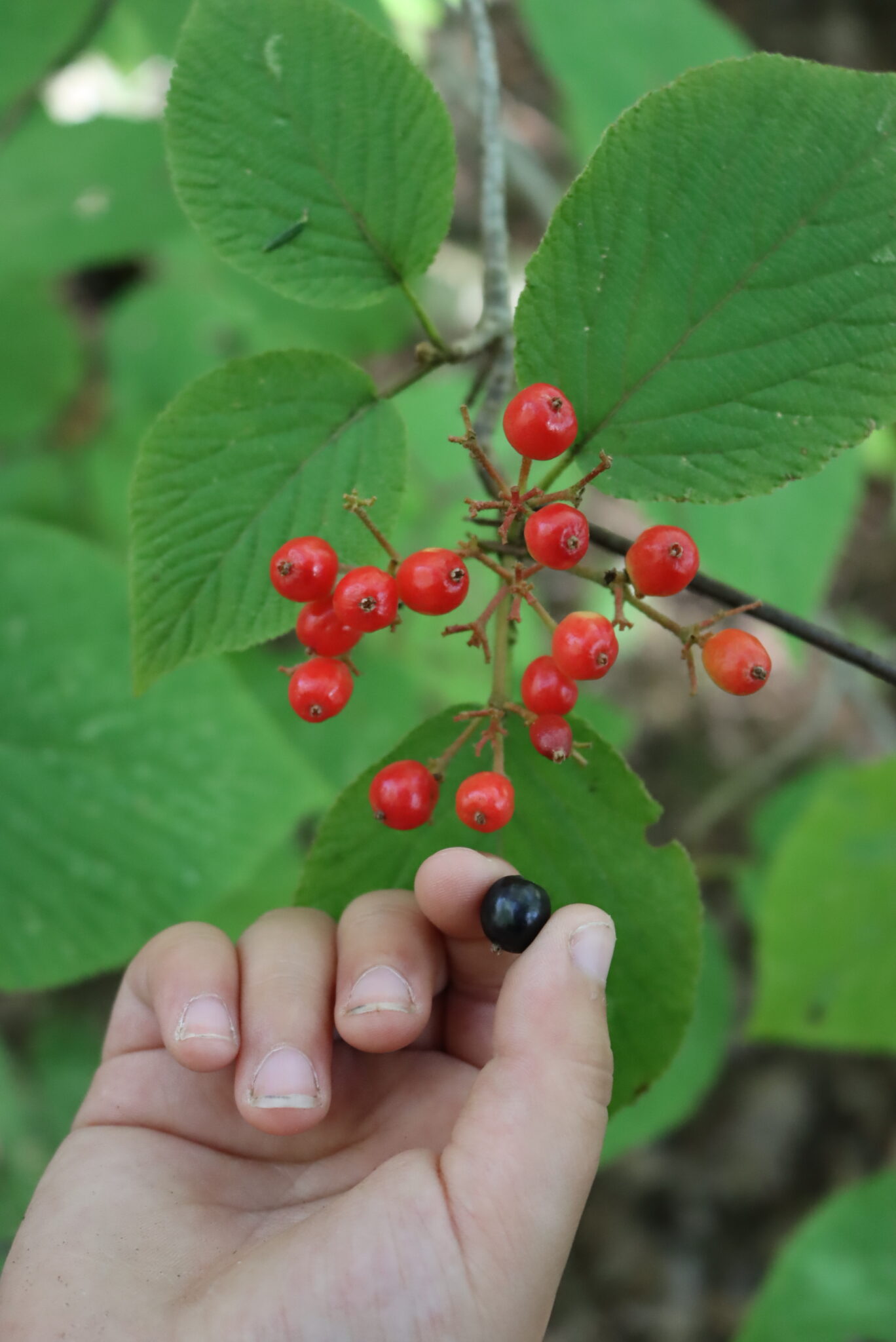
Hobblebush berries form in clusters 5 to 6 inches wide that hold their fruit upright above the leaves rather than dangling below them. This upright fruit cluster orientation is one of the diagnostic features that distinguishes hobblebush from nannyberry and highbush cranberry, both of which have downward-hanging fruit clusters.
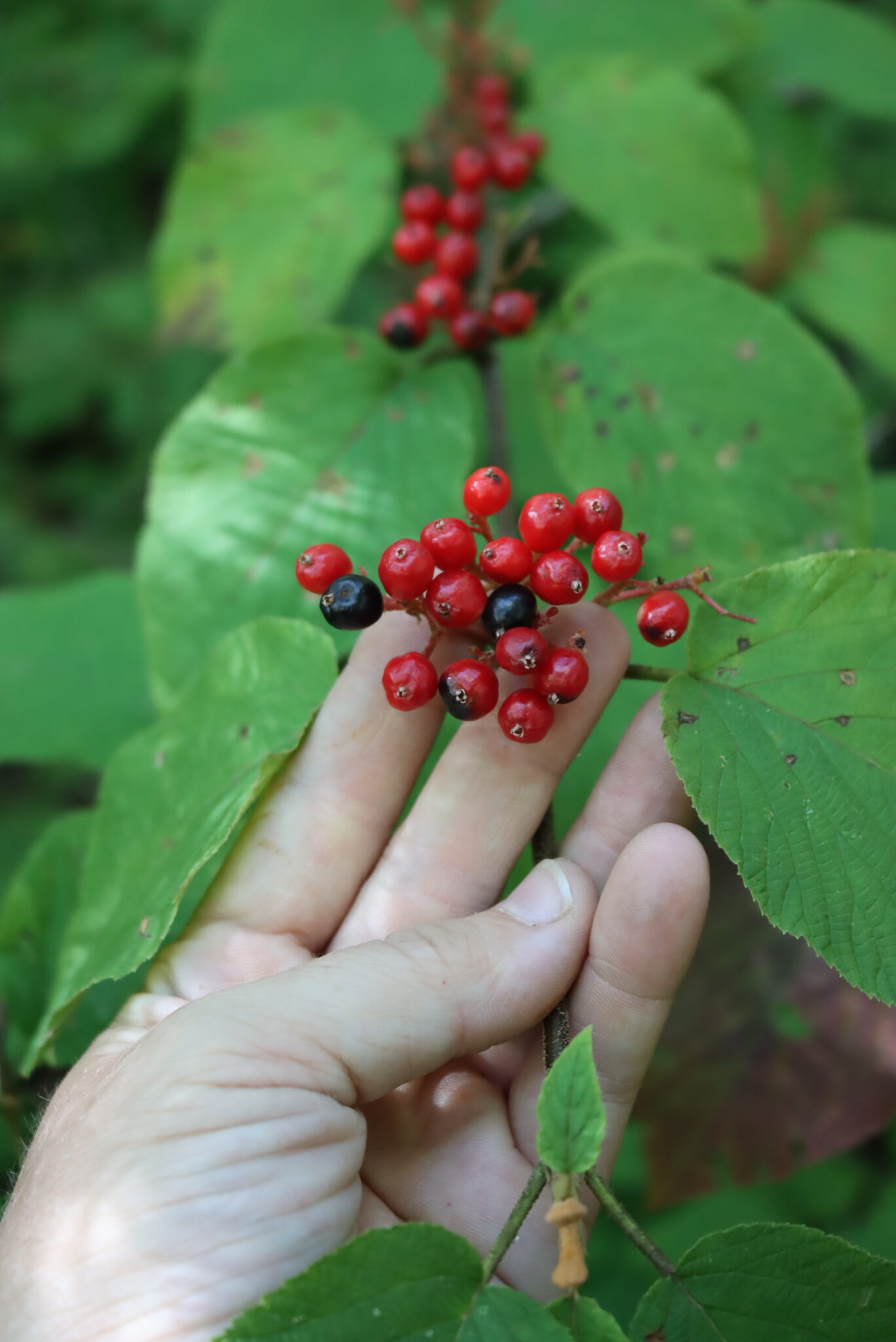
Individual berries are oval and about ⅓ inch long. They ripen unevenly from green to pink to red to a final mature dark blue-black, with all four color stages often present on the same cluster simultaneously. Himalayan Viburnum fruits are similar but tend to be slightly larger, ½ to ¾ inch long.
The fruit ripens just one or two berries at a time within a cluster, unlike most fruits that ripen by the whole cluster. This uneven ripening is one of the reasons hobblebush berries are so often missed by foragers: by the time you see a fully ripe blue-black cluster, wildlife has typically already harvested most of it.
Hobblebush Seeds
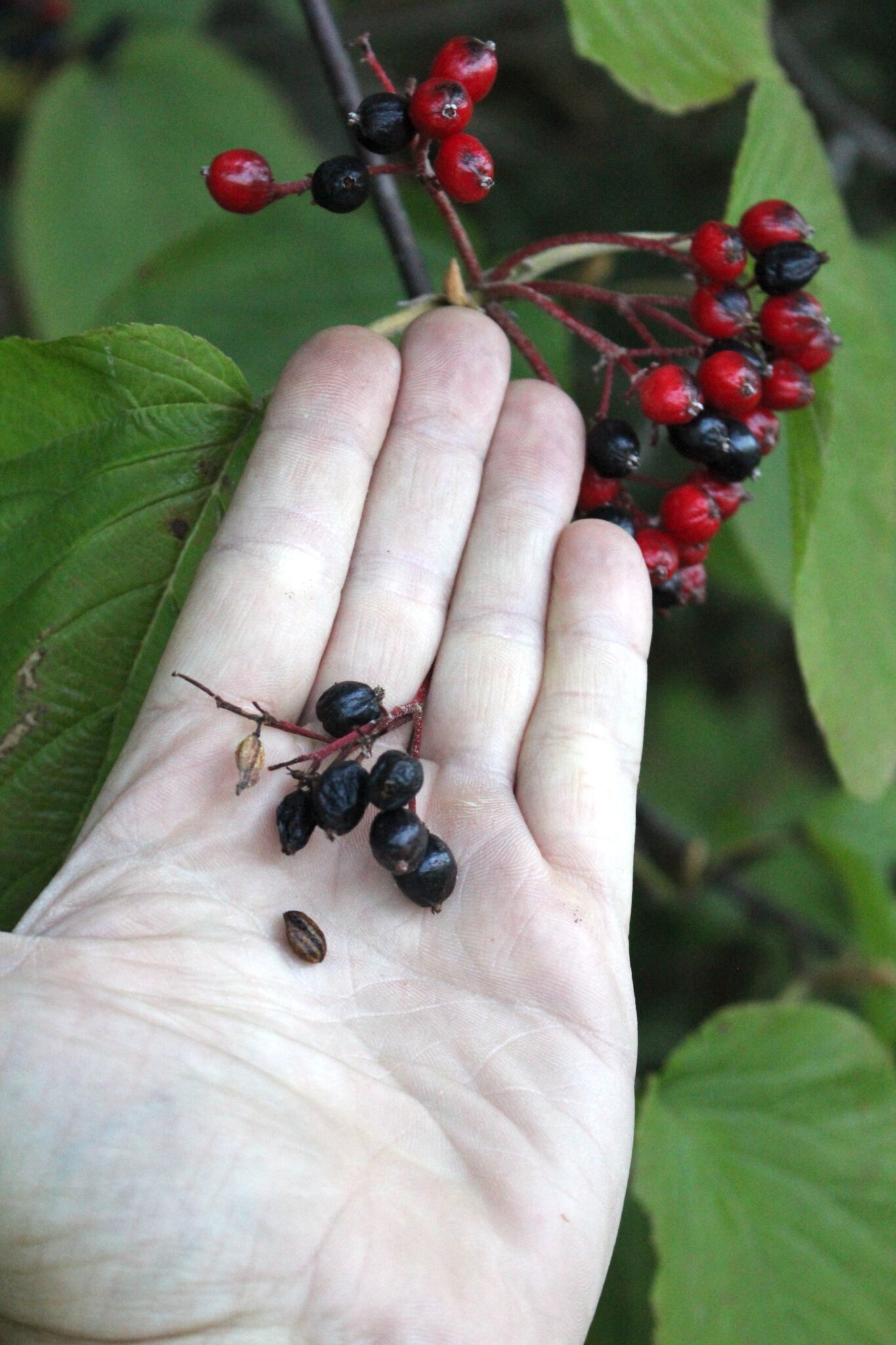
The seeds inside hobblebush fruits are large flat ovals that fill most of the inside of the fruit. The fruit itself is really just a thin layer of sweet flesh around these large seeds, similar to nannyberry, wild raisin, and highbush cranberry. Hobblebush seeds are about the size of sunflower seeds and are not considered edible.
If you’re working with hobbleberries for recipes, you’ll need to put them through a food strainer or food mill to remove the seeds. The Foley food mill or a Victorio strainer works well for this purpose. For trail snacking, most foragers just eat the berries whole and spit the seeds out as they go, the same way you’d eat a small plum or cherry.
Hobblebush Look-Alikes
Hobblebush has a few notable look-alikes, particularly in its leaf shape. Once you’ve learned the distinctive copper-colored growing tips and the large heart-shaped opposite leaves, hobblebush is hard to confuse with anything else. The most important look-alikes:
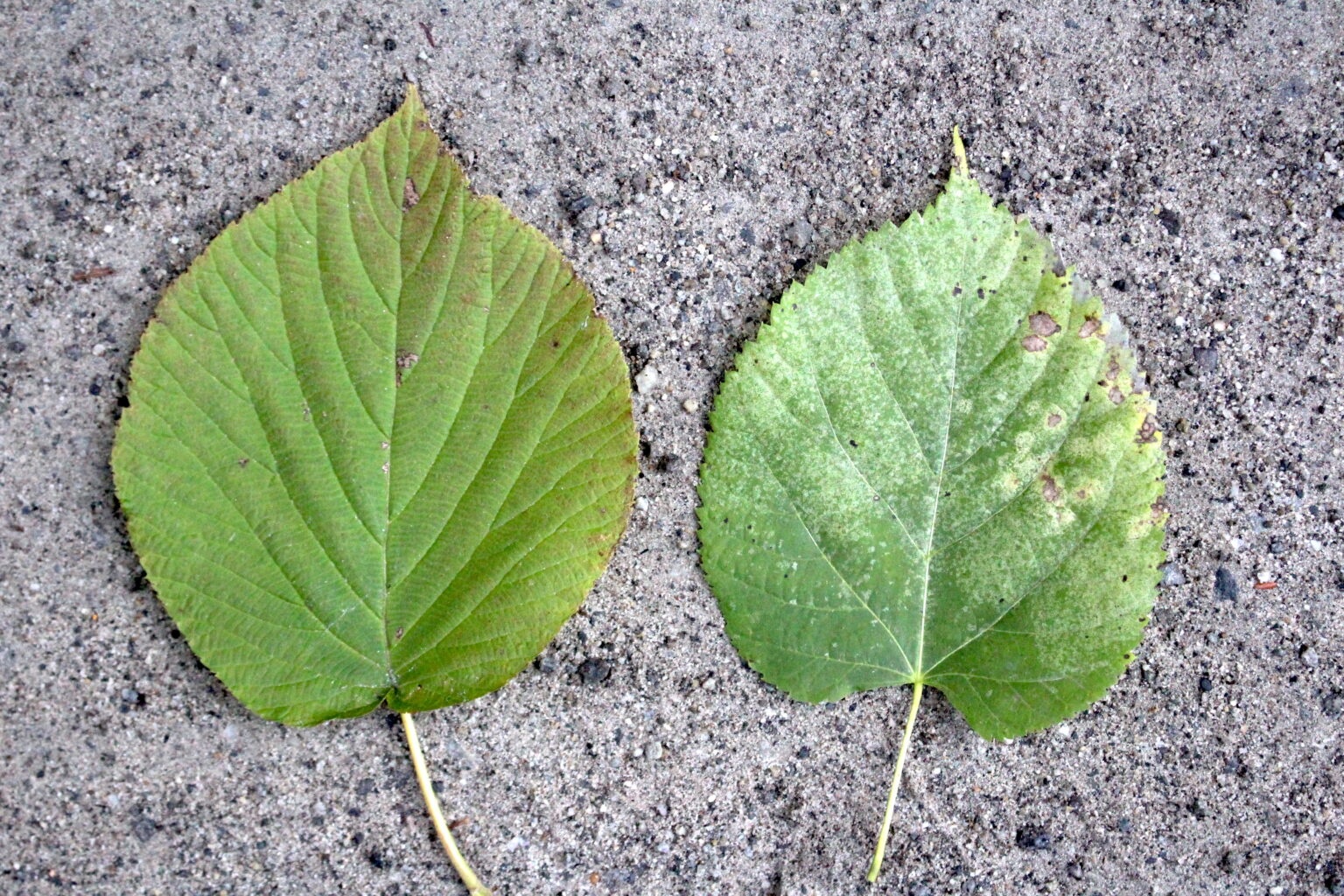
Young Linden Trees (Basswood)
The leaves of hobblebush look surprisingly similar to those of native basswood or linden trees (Tilia sp.), particularly when both are young. Both have large heart-shaped leaves with finely toothed margins and prominent veins. This is only a problem when linden trees are very young saplings, since linden trees mature into 60 to 100-foot tall canopy trees while hobblebush remains a low understory shrub.
The differences:
- Linden trees mature to 60-100 feet tall; hobblebush is a low sprawling shrub.
- Linden has alternate leaves (one per node); hobblebush has opposite leaves (two per node).
- Linden leaves are asymmetric at the base (one side larger than the other); hobblebush leaves are symmetric.
- Linden produces small nutlet fruits attached to a leafy bract; hobblebush produces fleshy berry clusters.
- Linden has gray smooth bark; hobblebush has multiple sprawling stems.
Hydrangeas
Hobblebush flower clusters look very similar to lacecap hydrangea cultivars, with the same pattern of large showy sterile flowers around a center of small fertile flowers. This is mostly only a concern in or near gardens where hydrangeas are planted, since hydrangeas are not common in wild eastern forests. The differences:
- Hydrangeas bloom later in summer (June through September) and have a much longer bloom period than hobblebush, which blooms only in May-June.
- Hydrangea flowers come in a range of colors including pink, blue, purple, white, and red. Hobblebush flowers are always white.
- Hydrangeas produce dry many-seeded capsules rather than fleshy berries.
- Hydrangea leaves are smaller and more uniform in shape, without the heart-shaped base of hobblebush.
- Hydrangeas don’t reproduce vegetatively by topple-rooting.
Striped Maple / Moose Maple
Hobblebush is sometimes confused with Striped Maple or Moose Maple (Acer pensylvanicum), and in northern areas, loggers once called hobblebush “she-moosewood,” believing it was the female form of moose maple. They are not related, and the differences are easy to spot:
- Striped Maple is a small tree that reaches 16 to 33 feet tall; hobblebush is a low shrub.
- The young bark of Striped Maple is striped green and white, hence the common name.
- Striped Maple leaves are broad and soft with three shallow forward-pointing lobes, more like a maple leaf than a heart.
- Striped Maple produces winged seeds (samaras) rather than berries.
Other Edible Viburnums
Hobblebush can be confused with other edible viburnum species, particularly Nannyberry (Viburnum lentago) and Northern Wild Raisin (V. cassinoides). All three are edible, so confusion is informational rather than dangerous. The differences:
- Nannyberry may reach 30 feet tall as a small tree; hobblebush is always a low shrub.
- Nannyberry leaves are smaller (2 to 4 inches long), oval-shaped with rounded bases. Hobblebush leaves are heart-shaped at the base.
- Nannyberry fruit clusters dangle downward; hobblebush fruit clusters are upright.
- Northern Wild Raisin has smaller oval leaves and dense upright fruit clusters of small fruit.
- Highbush cranberry has three-lobed maple-like leaves rather than heart-shaped.
How to Harvest Wild Hobbleberries
Harvesting hobbleberries requires good timing and patience. The harvest window is narrow because of intense wildlife pressure, and the berries ripen unevenly within each cluster. Practical harvest tips:
- Mark productive bushes in spring when the showy white flower clusters are visible. Return to the same locations in late August through September.
- Check productive bushes every few days through August and September. The harvest window can be as short as two weeks before wildlife strips the berries.
- Pick only fully ripe blue-black berries. Unripe red or pink berries are bitter and astringent.
- Pick individual ripe berries from the cluster rather than the whole cluster, since berries within a cluster ripen at different times. Plan to return to the same cluster multiple times.
- Harvest into a small container or basket. Hobbleberries don’t bruise easily but the skin is delicate when fully ripe.
- Don’t strip a bush completely. Wildlife depends on hobbleberries during a critical fall foraging period, and the population pressure on this species is intense. Take only a few clusters from any one bush.
- Confirm hobblebush is not legally protected in your state before harvesting. The species is endangered in Kentucky and New Jersey, and of special concern in Rhode Island.
- Process the berries promptly after harvest. Hobbleberries don’t store as well as some other wild fruits, and they’re best used within a few days of picking.
Even productive hobblebush patches yield only modest harvests. A few cups of berries from an afternoon foraging trip is a good haul, and most foragers focus on hobbleberries as a trail snack rather than a major food source. Consider the harvest more like collecting wild huckleberries or blueberries, where you take what the bush is willing to share rather than expecting a large yield.
Ways to Use Wild Hobbleberries
The most common way to use hobbleberries is to eat them raw right off the bush. Make sure the berries are fully ripe and a deep blue-black color. The sweet pulp around the large flat seed has a delicious raisin-and-date flavor that’s the best of any edible viburnum. Most foragers eat hobbleberries on the trail and enjoy them as one of the best wild snacks of fall.
If you’re lucky enough to have a productive hobblebush patch and gather more than a small handful, several preservation options work well:
- Trail snack: Eat fully ripe berries straight off the bush, spitting out the seeds as you go. The most common use.
- Hobblebush jam or jelly: Cook ripe berries with water, mill out the seeds with a food mill or strainer, then cook the strained pulp with sugar to make a thick jam. The natural pectin content is moderate, so commercial pectin may help with set.
- Hobblebush fruit butter: Cook strained pulp with sugar to a thick spreadable consistency, similar to apple butter. The dense raisin-like flavor works beautifully as a fruit butter.
- Hobblebush fruit leather: Spread strained pulp thinly on parchment and dehydrate at low temperature to make a sweet wild-fruit leather. A great way to preserve a small harvest for later use.
- Pies and baked goods: Add ripe hobbleberries (with seeds milled out) to pies, cobblers, muffins, and quick breads. The flavor pairs especially well with apples and cinnamon, similar to how chokecherries work in baking.
- Hobblebush wine: Ferment ripe berries to make a sweet country wine, similar to aronia wine or other dark-fruit wines.
- Hobblebush cordial or liqueur: Steep ripe berries in vodka or another neutral spirit with sugar to make a sweet wild-fruit cordial.
- Combined with other viburnums: Mix hobbleberry pulp with nannyberry or wild raisin pulp for a more complex flavor in jams and butters.
- External medicine: The leaves may have analgesic properties when crushed and applied externally. Test for skin sensitivity first.
Hobblebush Recipes
Looking to preserve your harvest? Try these recipes:
- Try these recipes for Hobblebush Jam, Hobblebush Jelly, or Hobblebush and Apple Jelly from Ernestina Parziale.
- This recipe for Maple Nannyberry Butter from the Forager Chef would also work beautifully with hobbleberries given the similar flavor profile.
More Edible Viburnums
Wild Hobblebush FAQs
Yes, hobblebush berries (also called hobbleberries) are edible and quite tasty when fully ripe. The dark blue-black ripe berries can be eaten raw or cooked, with a sweet flavor reminiscent of raisins, dates, or prunes mixed with molasses. Unripe red or pink berries are bitter and astringent and should be avoided until they reach full ripeness. The ripe fruit is a thin layer of sweet pulp around a large flat seed, similar to other edible viburnum species. Hobblebush is widely considered the best-tasting wild viburnum, sweeter than nannyberry, wild raisin, or highbush cranberry. Note that hobblebush is endangered in Kentucky and New Jersey and of special concern in Rhode Island, so check local regulations before harvesting.
Fully ripe hobbleberries taste sweet and complex, with a flavor often described as a cross between raisins, dates, and prunes with notes of molasses. The pulp is dense and almost dry, similar in texture to a date or fig. The flavor is sweeter than most other edible viburnums. By comparison, nannyberry tastes like a prune-banana hybrid, wild raisin tastes nearly identical to a small commercial raisin, and highbush cranberry is intensely tart and astringent. Unripe red or pink hobbleberries are bitter and astringent (similar to underripe persimmons), so wait until the fruit reaches full blue-black ripeness before tasting.
Hobbleberries ripen earlier than most other edible viburnums, typically from late August through September depending on latitude and elevation. The harvest window can be as short as two weeks before wildlife strips the berries from the bushes. Pick only fully ripe blue-black berries (unripe red or pink berries are bitter). Berries within a single cluster ripen at different times, so pick individual ripe berries rather than whole clusters and plan to return to the same cluster multiple times. Mark productive bushes in spring when the showy white flower clusters are visible, then check those locations every few days through August and September.
Some viburnum species produce edible berries, but not all of them. Among the roughly 200 species in the Viburnum genus, only a handful are commonly used by foragers. The most popular edible North American viburnums are hobblebush (V. lantanoides), nannyberry (V. lentago), Northern Wild Raisin (V. cassinoides), American Highbush Cranberry (V. trilobum), Squashberry (V. edule), and Black Haw (V. prunifolium). Many ornamental viburnum cultivars produce edible fruit too, including Linden Viburnum (V. dilatatum) and Brandywine cultivars. However, European Highbush Cranberry / Guelder Rose (V. opulus) has bitter, mildly toxic raw berries that need cooking. Always positively identify the specific species before eating any viburnum berry, and taste a single ripe berry before eating more.
There is no difference. Hobblebush and hobbleberry are two common names for the same plant: Viburnum lantanoides. ‘Hobblebush’ typically refers to the shrub itself, while ‘hobbleberry’ typically refers to the edible fruit, but the two names are often used interchangeably in foraging communities. Other common names for the same plant include Witch-Hobble, Trip-Toes, Tangle-Foot, Adirondack Dogwood, Moosewood, Moose Berry, and Alder-leaved Viburnum. The plant is also occasionally listed under the older botanical synonym Viburnum alnifolium in older field guides, though Viburnum lantanoides is the current accepted scientific name.
Did you find this Wild Hobblebush foraging guide helpful? Tell me in the 📝 comments below where you find hobbleberries on your homestead!
And make sure you stay in touch with me by following on social media!
Wild Fruit Foraging Guides
Find the perfect foraging guide
Searching for something else? Enter keywords to find the perfect foraging guide!









Wow! This can be one particular of the most helpful blogs We’ve ever arrive across on this subject. Actually Fantastic. I’m also a specialist in this topic therefore I can understand your hard work.
Thanks so much! I’m so glad it was helpful to you.