
Affiliate disclosure: This post may contain affiliate links. Please see our Privacy Policy.
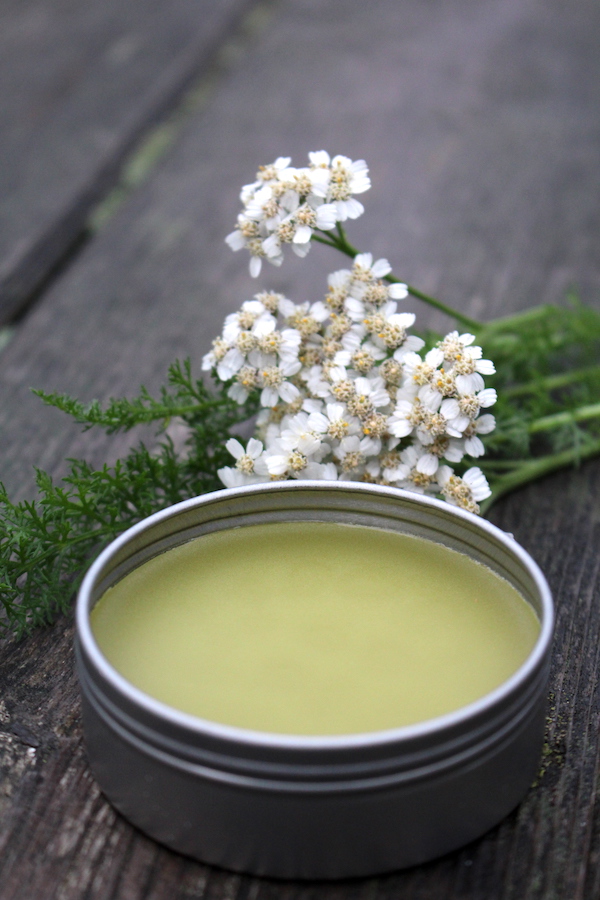
Yarrow salve is an excellent topical balm for minor cuts, burns, bug bites, and skin irritation. Folk herbalism has used yarrow to stop bleeding and ease wounds for thousands of years, and modern research is backing up many of those traditional claims.
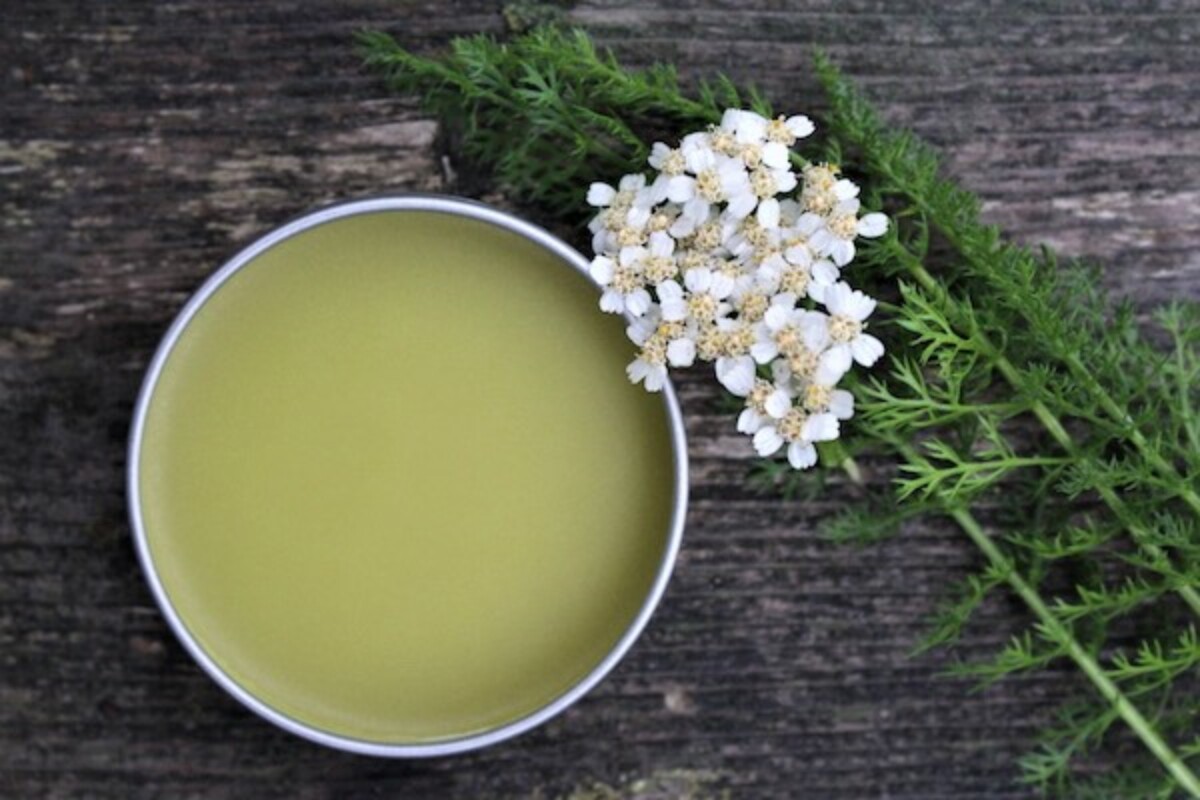
Table of Contents
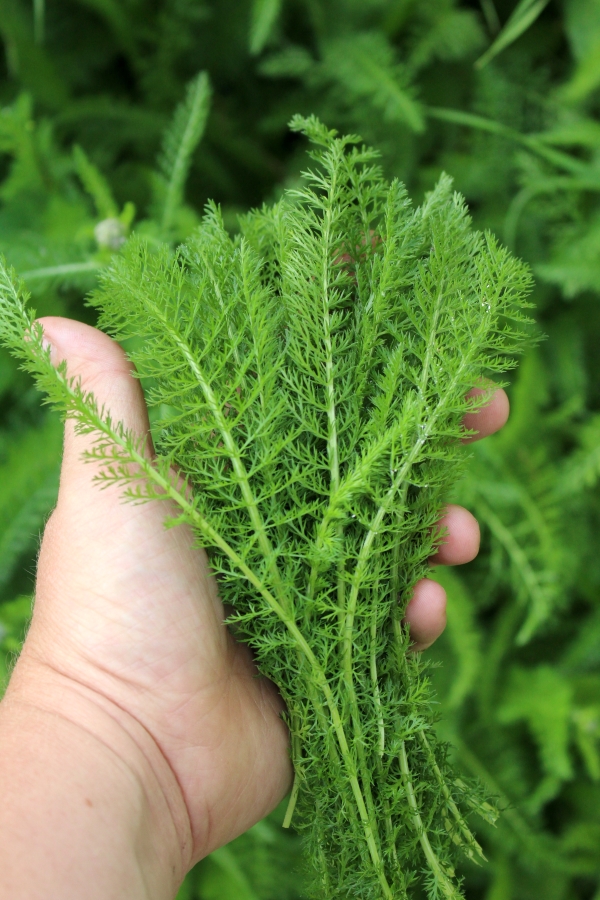
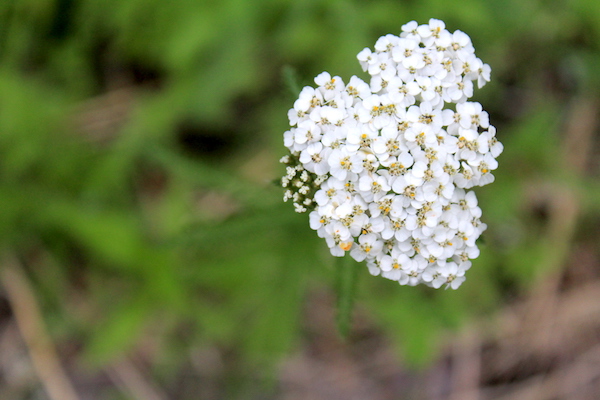
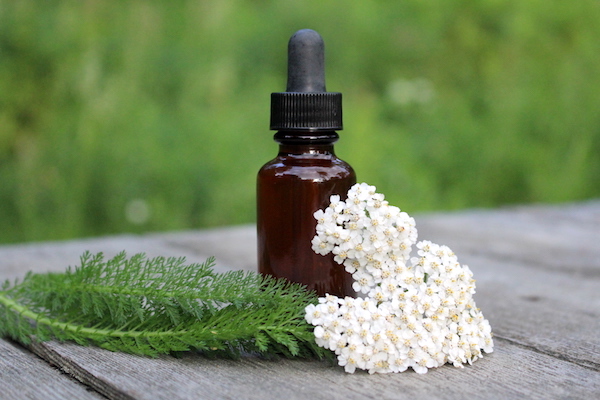
Yarrow (Achillea millefolium) is one of those plants you find almost everywhere once you know how to look. Soft white flower clusters, feathery green leaves that look a little like dill or fern, and a strong herbal scent when you crush them between your fingers. There are dozens of ways to use yarrow in food and medicine, and this salve is one of the most useful ones to keep on hand.
I forage yarrow from the meadows around our Vermont homestead in the summer, but it’s also one of the easier medicinal herbs to grow on purpose, and most garden centers carry it. If you’d rather skip the foraging step, dried yarrow is widely available online from herb suppliers like Mountain Rose Herbs.
If you’re harvesting wild, take a few minutes with my guide to foraging and identifying yarrow first. Several white-flowering plants in the same habitats are toxic, including poison hemlock and water hemlock, so being sure of your ID is accurate.
Notes from My Homestead

Yarrow is the first salve I learned to make, and it’s still the one I’d grab if I could only keep one in the cabinet. My kids are at the age where summer means scraped knees, bug bites, brush burns, and the occasional bee sting. Yarrow salve handles all of it. It goes on smooth, doesn’t sting, and the kids have learned to ask for it by name.
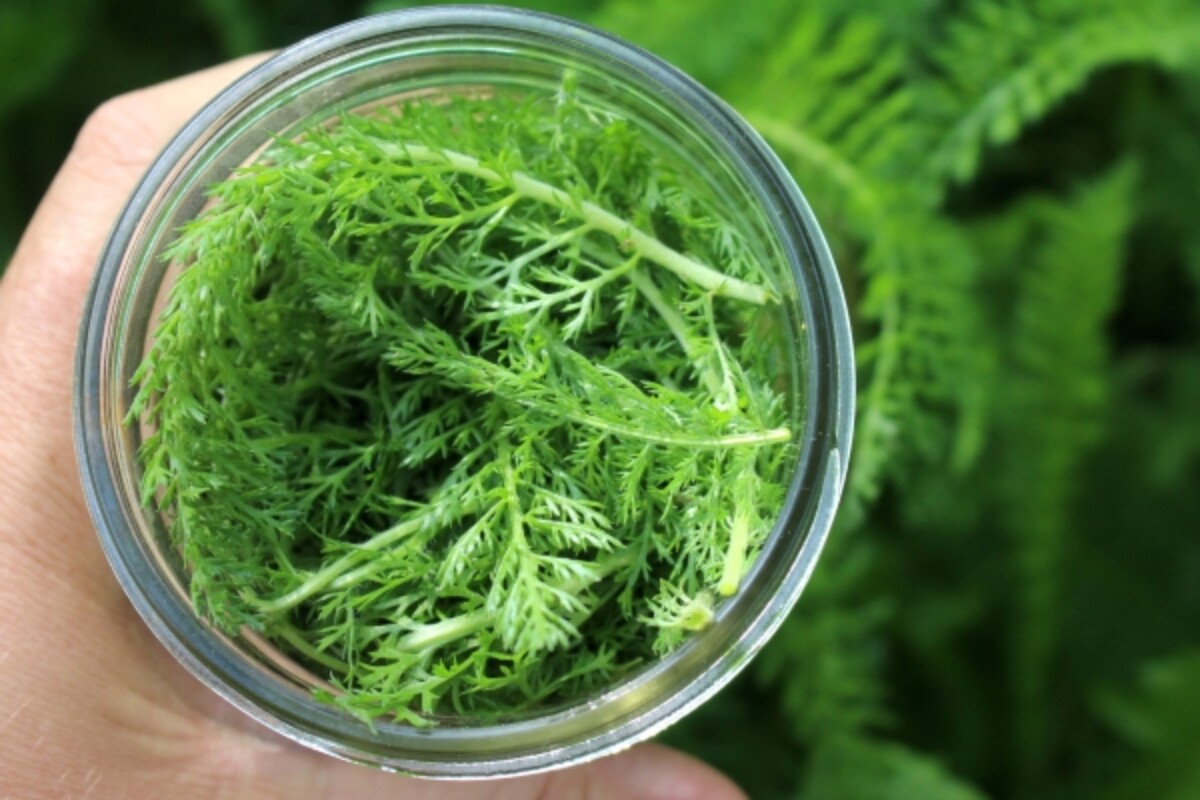
What makes yarrow especially good for our homestead is how much of it grows wild here. I bring a mason jar with me when I’m walking the fence lines in early summer, and I can fill it in about 20 minutes from the edges of the hayfield. By the time I’m back at the house, the leaves are already starting to release their scent. Free medicine, growing in places I was going to walk anyway.
Thanks for the easy guide! My yarrow was getting a bit overgrown so needed something to trim it down for. I ended up making 3 tin fulls. It was informative and fun.
Benefits of Yarrow Salve
Yarrow salve is typically used to treat minor topical injuries: cuts, scrapes, burns, rashes, and bug bites. The healing benefits of yarrow have been known for thousands of years, and the plant’s Latin name (Achillea millefolium) comes from the legend of the Greek hero Achilles, who is said to have carried yarrow onto the battlefield to stop the bleeding of his soldiers’ wounds.
The flowers of the yarrow plant are typically used for internal preparations like teas and tinctures, while the leaves are the part used for topical remedies. Applied to the skin, yarrow leaves have anti-inflammatory, wound-healing, and antimicrobial properties, along with the blood-coagulating effects that gave it its battlefield reputation.
Modern research backs up some of these traditional uses. A randomized controlled study found that yarrow oil extracts applied to irritated skin restored the skin’s natural pH and hydration to pre-irritation levels within seven days of regular use. Other reviews have catalogued the broader pharmacology of yarrow across the white, yellow, and red varieties commonly grown.
Yarrow salve isn’t a replacement for medical care on anything serious. It’s most useful for the everyday minor injuries that don’t need a doctor: small cuts, scraped knees, mosquito bites, sunburn, diaper rash. For deep, contaminated, or severe wounds, see a doctor.
A note on what yarrow salve isn’t for: Yarrow tends to close wounds quickly, so avoid using it on puncture wounds, which need to be able to drain. And because yarrow is in the Asteraceae family along with daisies, ragweed, marigolds, and sunflowers, anyone with allergies to those plants may react to yarrow too. Patch test a small area before using broadly.
Ingredients for Yarrow Salve
This is a three-ingredient salve. The leaves are the active part, but you can include flowers too.
- Fresh yarrow leaves (or dried): Harvest leaves on a dry day from plants that look healthy and vigorous. Enough to fill a pint mason jar fairly densely. Flowers can be included along with the leaves if you have them. Dried yarrow works too, with the cold infusion method covered below. If you’re buying dried, plan on about half the volume you’d use of fresh.
- Olive oil (or another neutral carrier): Olive oil is my default for salves because it’s what I always have on hand. Coconut, sweet almond, grapeseed, and jojoba all work too. Almond oil has nice skin-soothing properties but skip it if anyone using the salve has a nut allergy. See the herbal infused oil guide for more on choosing a carrier.
- Beeswax (pellets or grated from a block): Thickens the oil and gives the salve its set. Pellets are easier to measure and melt, but a block of beeswax grated on a cheese grater also works. For a vegan version, substitute candelilla wax and see the vegan herbal salve recipe for the right ratio.
Equipment for Yarrow Salve
Most of this is probably already in your kitchen.
- Pint mason jar to hold the herb and oil during infusion
- Fine mesh strainer plus a square of cheesecloth for straining the infused oil
- Small saucepan or double boiler for melting in the beeswax at the end
- Small kitchen scale for weighing beeswax (or use pre-measured 1 oz beeswax bars)
- 2 oz salve tins (or small upcycled glass jars or quarter-pint mason jars) for the finished salve
- For fresh-herb warm infusion: a dehydrator, Instant Pot, or warm water bath setup (see below)
How to Make Yarrow Salve
Making yarrow salve follows the same basic process as any herbal salve. The herb infuses into oil, and the oil gets thickened with beeswax.
Choosing Your Yarrow
Fresh yarrow leaves are the traditional choice for this salve, harvested in summer when the plants are in full growth. The leaves carry the strongest topical properties. Flowers can be included too if you have them, though I usually save the flowers for yarrow tincture and tea.
Dried yarrow works as well, and is the only option if you’re making salve outside of the growing season. Buy from a reputable supplier like Mountain Rose Herbs, or dry your own yarrow in a dehydrator or hung in loose bunches in a warm dry spot. Use about half the volume of dried herb as you would with fresh.
One question that comes up often is whether yellow, pink, or red yarrow varieties work the same as the wild white. Honestly, the research on this is thin. The wild white type (Achillea millefolium) is the variety with the most clinical study behind it, and the colored ornamental cultivars are selections off the wild type. They likely retain medicinal properties, but no one has measured exactly how much.
If you have a colored cultivar in the garden and it smells strongly herbal when you crush a leaf, it’s probably fine to use. If you can also get your hands on wild white, that’s still my default.
Infusing the Oil
Pack the yarrow leaves into a pint mason jar fairly densely. If you’ve harvested fresh, finely chop the leaves with garden shears or sharp kitchen scissors first to expose more surface area. Cover the chopped leaves with oil, leaving about an inch of headspace at the top of the jar.
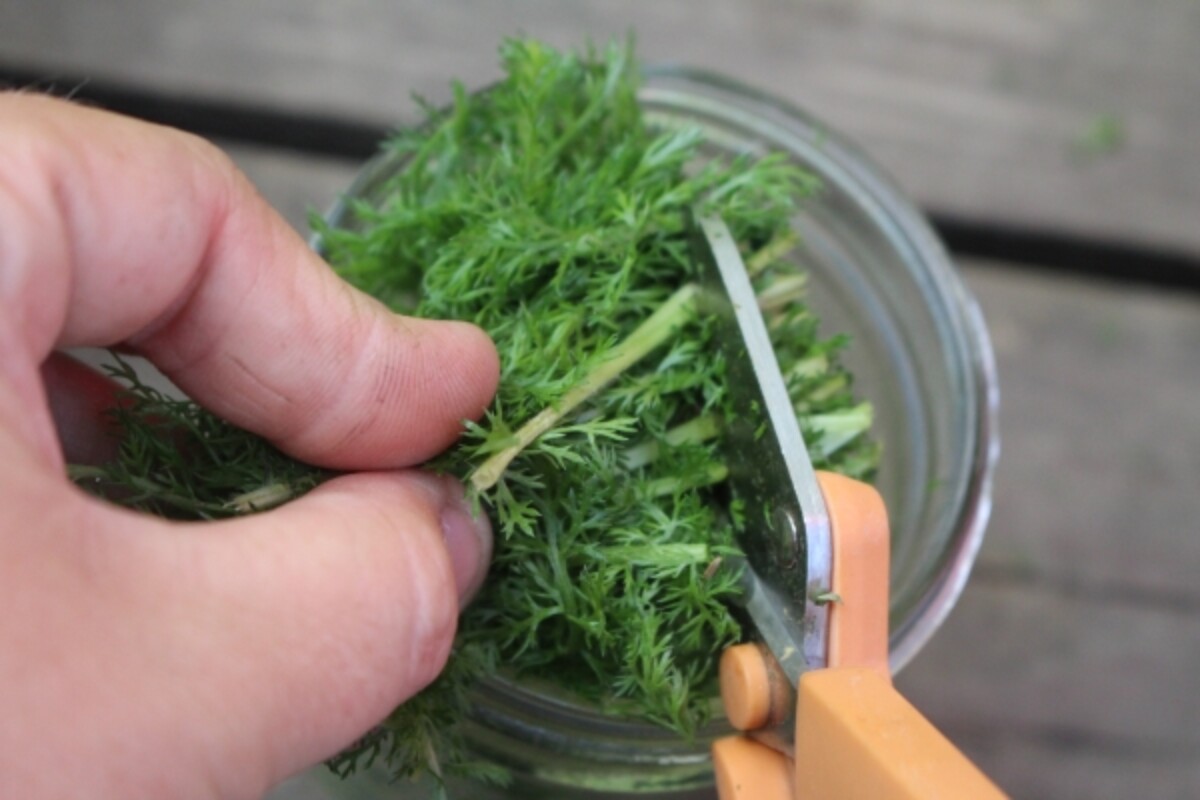
For fresh yarrow, use the warm rapid infusion method. The oil needs to be kept warm at around 110 to 120°F for 24 to 48 hours, kind of like homemade yogurt. There are a few different ways to pull this off, depending on what you have in the kitchen.
The simplest method is to set the jar in a bowl of warm (but not hot) water and check the water every few hours, refreshing it as it cools to keep things warm. An Instant Pot on “yogurt mode” works well and is mostly hands-off. A dehydrator set to 115°F is even easier, since it holds temperature automatically and gives you the steadiest warmth of any method I’ve tried.
A slow cooker on its own is too hot. Even the “keep warm” setting runs at least 170°F, which will cook the yarrow and weaken the finished salve. You can use a slow cooker as an insulator by filling it with warm water around the jar, but you’ll need to refresh that water periodically. It works, but it isn’t set-and-forget. Whatever method you use, leave the jar lid loose or off during a fresh-herb infusion so excess moisture can evaporate.
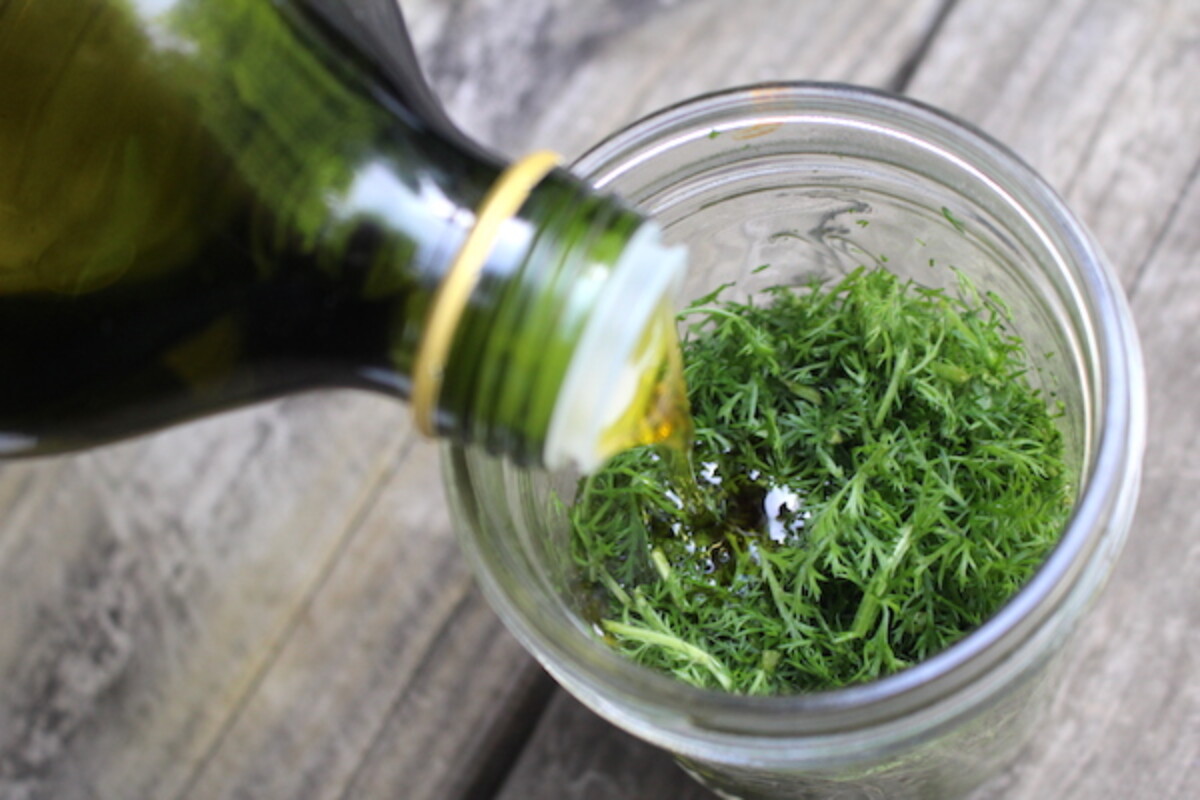
For dried yarrow, the traditional cold infusion method is simpler and produces a slightly more reliable result. Pack the dried herb into the jar, cover with oil, cap, and set the jar on a shelf out of direct sunlight for 3 to 6 weeks. Shake every few days to keep the herb moving through the oil. Longer infusion gives a more potent salve.
Straining and Combining with Beeswax
When the infusion is finished, set a fine mesh strainer over a clean jar or measuring cup, line it with a square of cheesecloth, and pour the oil through. Squeeze the cheesecloth gently to release the last of the oil. Compost the spent yarrow.
The standard ratio for salve is 1 part beeswax to 8 parts oil by weight, which gives you about 4 finished 2-oz tins from a single pint-jar infusion. Return the strained oil to a small saucepan or the top of a double boiler. Add the beeswax and warm gently over low heat, stirring constantly, until the beeswax has melted completely and the mixture looks smooth. If you don’t have a scale and you’re using pellets, one ounce of beeswax is roughly one heaping tablespoon.
Pour the finished salve into your tins or small jars. Let them sit undisturbed for at least 30 minutes to set up before putting lids on or using.
Salve Consistency Notes
The 1 oz beeswax to 8 oz oil ratio gives you a medium-firm salve that softens on contact with warm skin. Adjust to taste:
- To test before pouring: drop a spoonful onto a cold plate from the freezer. Let it set for 30 seconds, then check the texture.
- Too hard? Gently rewarm the salve and stir in a tablespoon of oil at a time until it’s the consistency you want.
- Too soft? Gently rewarm and stir in a teaspoon of beeswax at a time.
- For a stick or lotion bar: increase the beeswax to about 1 1/4 oz per cup of oil.
- Coconut oil substitution: coconut oil is solid at room temperature, so use slightly less beeswax to compensate (around 3/4 oz per cup of oil).
Storage and Shelf Life
Store finished yarrow salve in a cool, dark, dry place. A pantry shelf, a medicine cabinet, or a first-aid kit all work. It keeps its potency for about a year, and stays safe to use beyond that if it still smells fresh, though it may lose some strength over time. The main risk to shelf life is the oil eventually going rancid, so use fresh oil when you make a batch and you’ll get the longest life out of it.
If the salve ever smells rancid or shows any sign of mold, toss it. For longer shelf life, you can add a few drops of vitamin E oil when you stir in the beeswax. It acts as a natural antioxidant. These small tins make excellent gifts and are easy to keep in a hiking pack, a glove compartment, or a camp first-aid kit.
Recipe Tips & Variations
- Leaves vs. flowers: Leaves carry the strongest topical properties, which is why this recipe uses them. You can include flowers along with the leaves if you have them, though flowers are better suited to tea and tincture.
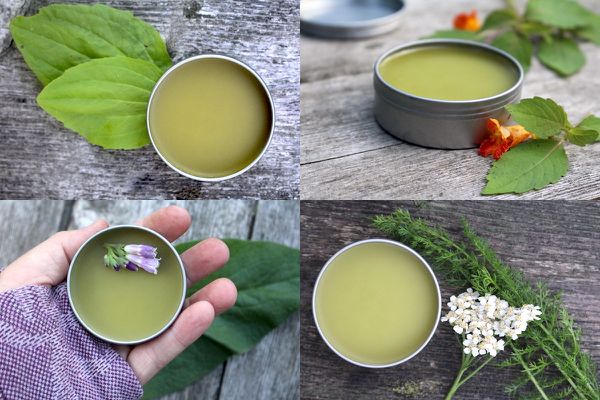
- Combination salves: Yarrow pairs beautifully with plantain for an all-around bug bite and scrape balm, or with calendula and lavender for a gentler skin-soothing version. The 20+ herbal salve recipes roundup has more pairings worth trying.
- Adding essential oils: Stir in 10 to 15 drops of lavender, tea tree, or another skin-friendly essential oil per cup of finished salve, just before pouring into tins. Lavender is a forgiving starting point that pairs well with yarrow’s herbal scent.
- Vegan version: Substitute candelilla wax for beeswax. Candelilla is harder than beeswax, so use about half the amount. See the vegan herbal salve recipe for the right ratio.
- Yarrow flowers leftover? Turn the flowers into a yarrow tincture for internal use, or stir them into a batch of yarrow and witch hazel soap.
Ways to Use Yarrow
Yarrow salve is a good entry point, but yarrow has more uses than almost any other wild medicinal in the meadow. The flowers make a fragrant yarrow tincture for internal use, and the leaves and flowers together can be turned into a gentle yarrow and witch hazel soap. Fresh yarrow leaves can also be applied directly to a bug bite or skinned knee as a quick field poultice when you’re out walking.
For the full picture, the 50+ ways to use yarrow roundup covers food and medicine across the whole plant. And for a broader look at what to grow or stock in a home apothecary, the 100+ medicinal plants guide is a useful starting point.
Yarrow Salve FAQs
Probably, but the research is thin. Wild white yarrow (Achillea millefolium) is the variety with the most clinical study behind it. Colored garden cultivars (yellow, pink, red) were selected off the wild type as ornamentals, and likely retain medicinal properties, though no one has measured exactly how much. If you crush a leaf and it smells strongly herbal, you’ve probably got a usable plant. If you can get your hands on wild white yarrow, that’s the safer default.
Leaves are the part used for topical preparations like salve. They carry the strongest wound-healing and anti-inflammatory properties when applied to the skin. Flowers are typically used for internal preparations like tea and tincture. You can include flowers along with leaves in the salve if you have them on hand, but the leaves should be the main ingredient.
Yes. Dried yarrow works just as well as fresh for salve making, and it’s the only option outside of the growing season. Use about half the volume of dried herb as you would of fresh. With dried herb, you can use the traditional cold infusion method (3 to 6 weeks on a shelf) instead of the warm rapid infusion, which is hands-off and gives reliable results.
Stored in a cool, dark, dry place, yarrow salve keeps its potency for about a year. It stays safe to use longer than that if it still smells fresh, though it may lose some strength over time. A few drops of vitamin E oil stirred in with the beeswax can extend the shelf life. Discard any salve that smells rancid or shows mold.
Yes. Candelilla wax is the standard plant-based substitute. Candelilla is harder than beeswax, so use about half the amount (about 1/2 oz candelilla per cup of oil instead of 1 oz beeswax per cup). Sunflower wax also works. You may need to experiment a bit to get the consistency you want.
Ways to Use Yarrow
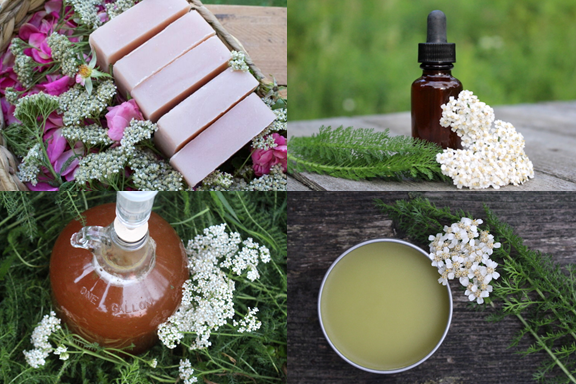
If you tried this Yarrow Salve recipe, or any other recipe on Practical Self Reliance, leave a ⭐ star rating and let me know what you think in the 📝 comments below!
And make sure you stay in touch with me by following on social media!
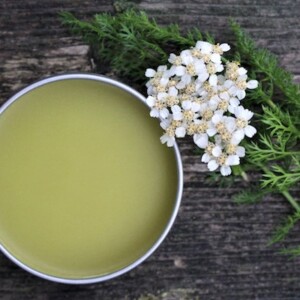
Yarrow Salve
Equipment
Ingredients
- 1 1/2 to 2 cups fresh yarrow leaves, packed, finely chopped; or about 1/2 pint dried
- 1 to 1 1/2 cups olive oil, or coconut, sweet almond, jojoba, or grapeseed
- 1 ounce bees wax, pellets or grated from a block (8:1 oil-to-beeswax ratio by weight)
Instructions
- Chop fresh yarrow leaves coarsely with garden shears or sharp kitchen scissors.
- Pack the chopped leaves into a pint mason jar fairly densely.
- Cover the herb with olive oil, leaving about an inch of headspace at the top.
- Warm infusion (fresh herb): leave the jar lid loose and keep the jar at 110 to 120°F for 24 to 48 hours. A dehydrator set to 115°F or an Instant Pot on yogurt mode work best. A warm water bath in a bowl works if you refresh the water every few hours. Avoid a slow cooker as a direct heat source.
- Cold infusion (dried herb): cap the jar and set it on a shelf out of direct sunlight for 3 to 6 weeks, shaking every few days.
- Strain the infused oil through a cheesecloth-lined fine mesh strainer into a clean heat-proof container. Squeeze the cheesecloth gently to release the last of the oil, then compost the spent yarrow.
- Return the strained oil to a small saucepan or double boiler. Add the beeswax (1 oz per cup of oil).
- Warm gently over low heat, stirring constantly, until the beeswax has melted completely and the mixture is smooth.
- Pour the finished salve into 2 oz tins or small glass jars.
- Let cool undisturbed for at least 30 minutes before putting lids on or using.
Notes
A Note from Your Family Herbalist
I’m a family herbalist, trained by more than 20 years of hands-on work with medicinal plants and rounded out with coursework through the Herbal Academy of New England. That means I know my way around the plants in this post, and I’ve personally made and used the remedies I write about, often many times over. But there’s a real difference between knowing what works on my homestead and knowing what’s right for you.
Medicine is a personal affair. Every body is different, every medical history is different, and herbs interact with medications, pregnancy, nursing, and existing health conditions in ways no general blog post can anticipate. Even mild medicinal plants like chamomile cause allergic reactions in some people, so what sits comfortably on my own medicine shelf might not be the right choice for yours.
For guidance tailored to your situation, there are three directions I’d point you:
- See a local clinical herbalist. A practicing clinical herbalist can take your full health picture into account, recommend the right herb and dose for you, and adjust the protocol as you go. Ask around at your nearest food co-op, herb farm, or natural-foods store; most communities have at least one.
- Talk to your doctor before adding any new herb to your routine, especially if you take prescription medications, are pregnant or nursing, or are managing a chronic condition. A good doctor will welcome the conversation.
- Educate yourself, the way I have. The Herbal Academy of New England runs the courses I credit with sharpening my own practice. Their Introduction to Herbal Medicine course is where I’d start. I’ve also taken and recommend their Mushroom Course and their Botany and Wildcrafting Course. All three are well-paced and easy to follow at home.
Herbal Salve Recipes
Find the perfect recipe
Searching for something else? Enter keywords to find the perfect recipe!









Are there any vegan alternatives you could recommend instead of beeswax?
Yes, check into candelilla wax. When substituting for beeswax, start off with about half the amount of candelilla wax. You may have to experiment a bit to get the consistency that you’re wanting. You can also try sunflower wax. It also doesn’t need as much as beeswax although I’m not sure of the exact measurement.
I live in Canada. The yarrow we have growing wild is yellow. Can I use this?
Thank you
This should work just fine. Different varieties may have slightly different properties. Unfortunately there hasn’t been a lot of research done to know for sure and I have heard differing opinions on this. When you rub the leaves, it should have a very medicinal smell to it.
You say to infuse oil till ready, how do I know when it’s ready? Thanks in advance. Edyt
It depends on whether you are using the slow infusion method with dried herbs which takes 3 to 6 weeks or the warm rapid infusion which is done in 24 to 48 hours. I usually try to let them go as long as possible to get the most medicine out of the herbs.
Hi! Thank you for sharing the yarrow salve recipe! I was just wondering could I infuse it with lavender as well?
Thank you!
You’re very welcome. Yes, you can certainly add some lavender as well. I typically prefer to do my oil infusions separately and then mix them together as needed so that I have a little more flexibility.
I am really looking forward to trying this, but I was wondering if I can do the diffusion in the dehydrator, or would that affect the oil?
Do you mean you want to infuse the oil in the dehydrator?
I don’t know. I have just used Yarrow oil
For pains in my legs.
You can just follow the instructions in the post to make a salve. You don’t need to use a dehydrator to make the actual salve.
Yes, rather than a pot on the stove I can leave the dehydrator running at a low temperature for hours. Would the drying affect the oil?
I guess you could try it. I’ve just never heard of anyone using a dehydrator for oil infusion.
Degrees what? Fahrenheit?
Yes, we are in the U.S. so all temperature measurements are Fahrenheit.
I need to find some yarrow.
Yarrow grows wild in many places. You can also find seeds and plant it in your garden or order dried yarrow from a reputable online source.
Is there a use for the flower? How do I know when to use the leaf vs the flower when using yarrow medicinally?
You can use the flowers or leaves or both together.
Hi! Excited to try this recipe!
If I am using dried yarrow, should I still pack a pint jar full? (That seems like a lot of dried yarrow). Or is there a proper conversion rate from fresh to dried quantities?
Thanks!
You can use about half the amount of dry plant material.
How long will this last before it “expires”?
Making salve is actually a common preservation method. This salve will last a very long time.
Great post and super informative! Trying this out with a slow cooker, fresh leaves, and olive oil. It’s been going about 36hrs but temperature fluctuates a lot with the slow cooker. 80f-120f depending how long I forget about it before bringing the temperature back up. The top of the oil is darkening quite a bit. Doesn’t smell rancid but is this bad? Thinking the inconsistent temp is a problem. Thanks in advance!!
Fluctuation isn’t really an issue as long as it doesn’t get too hot. It may just be getting dark from the plant matter. As long as it doesn’t smell rancid or burnt then it should be fine.
I have an oil infusion machine, similar to a magic butter machine, would I be able to use it to infuse the oil in this recipe? Or do I have to use the slow infusion method? My yarrow is currently fresh but I can dry it if that works better for the oil infusion machine.
You can definitely use the infusion machine for any oil infusion. I would just follow the directions for the machine regarding the infusion and then proceed with the rest of the instructions from there.
i can’t wait to try this over the weekend 🙂
Hi there, I live in the Caribbean, St. Kitts and Nevis if you were to look it up on a map.
Anyway I have several oils, but Yarrow is one of my favs. The problem that i have is
Yarrow isn’t grown here . Can you perhaps direct me to some other herb or flower.
We do grow Marigold flowers here but its really hard to obtain.
Love your site.
There are lots of herbs and flowers that you could use. It really depends on what specific benefits you are wanting to get from the salve. You could also check to see if you are able to grow yarrow there. Just because it isn’t currently growing there doesn’t necessarily mean that it can’t grow there. Yarrow grows in almost every climate. You could look into planting some and growing it yourself.
Hi Ashley, I heard somewhere that only the white yarrow should be used medicinally, but have not found anything online to support this. Do you know if this is true? I hope not because I’ve been making tinctures with pink yarrow from my yard 🙂
There are differing opinions on this. I have only personally worked with wild yarrow. I would recommend rubbing the leaves of the plant and if it smells medicinal then chances are good that it will have strong medicinal properties.
I will try that, thanks!
You’re very welcome.
I’ve enjoyed your website posts, and learned many things. I made the dandelion jelly last month, and had my 11 yrold granddaughter help. I was somewhat laborious, we got nicely brown stained finers, but the result was very good.
I have a question about the yarrow salve. I have a large patch of yellow yarrow which I got from a nursery some years ago. Is it ok to use those leave as well, or only from the white?
That is a darn good question, and one I honestly don’t have the answer to. I’ve looked into this, and no one’s really measured it. The wild type of white yarrow is known for its medicinal benefits, and the garden hybrids are just selections made off the wild type to the best of my knowledge. I’d assume they’d have the same medicinal benefits, but that’s an assumption, and you never know what gets kept or inadvertently bred out when selecting for ornamental varieties.
My herbologist said that you can use the colored yarrows the same was as the white.
You definitely can but many people do believe that the white or wild yarrow has more potent benefits although it’s impossible to know that for sure without specific testing and I’m not aware of any testing that has been done on that.
Thanks for the easy guide! My yarrow was getting a bit overgrown so needed something to trim it down for. I ended up making 3 tin fulls – not sure how fast I’ll use it. It was informative and fun + I followed your blog for more lol. Next time I think I’ll
– add more yarrow
– add more time
(I ended up using a slow cooker and it heated up my oils a bit faster than I liked)
So glad you enjoyed the recipe.
If using the beeswax as a thickener, could Shea butter or Cocoa butter or another type of hard butter be used as a thickener instead??
Yes, you should be fine to make that substitution in a salve.
Hi,
I can’t see the recipe for how much beeswax to add.
The ratio is 1 ounce of beeswax (by weight) to a cup of herb-infused oil. You need to start with a bit more oil, around 1 1/4 to 1 1/2 cups because you won’t be able to get it all off the yarrow after it’s infused.
WOW. Super helpful info. Thank you so much! My 200K tiktok followers will enjoy this too.
You’re very welcome.
I am glad you enjoyed the article. Thanks for sharing.